


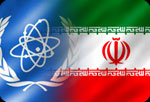
 AFP: UN atomic agency chief Yukiya Amano is expected to outline in a report Friday why its team investigating Iran’s suspected nuclear weapons drive returned empty handed this week, diplomats said.
VIENNA (AFP) — UN atomic agency chief Yukiya Amano is expected to outline in a report Friday why its team investigating Iran’s suspected nuclear weapons drive returned empty handed this week, diplomats said.
IAEA chief inspector Herman Nackaerts and his team returned from Tehran on Wednesday with no progress in their search for answers from Iran on its alleged bid to develop nuclear weapons, leading Washington to brand the trip a “failure.”
It also threw into question the possible resumption of talks between Iran and world powers that Tehran had signalled only last week it was ready for.
Diplomats in Vienna said they have begun discussing what action the 35-member IAEA board will take when it holds its next regular meeting on March 5.
In theory it could pass a resolution condemning Iran and reporting the Islamic republic to the UN Security Council, which has already passed four rounds of sanctions.
This though depends on Russia and China, which have hitherto been more lenient on Iran that their Western counterparts in the UN Security Council.
Diplomats also say that the International Atomic Energy Agency report will give an update on Iran’s progress in fitting out its new facility at Fordo, near Qom, enriching uranium to 20-percent purity.
The facility, under a mountain and kept secret by Iran until late 2009, would slash the time needed to convert Iran’s stockpile of low-enriched uranium to the 90-percent purity needed for a nuclear bomb if it decided to do so, experts say.
How quickly Iran could enrich would also depend on what kind of centrifuges are installed at Fordo.
Indications so far are that Iran is installing “IR-1” older-generation devices, diplomats said, which could be converted to enrich to 90 percent, but which would do the work more slowly than more state-of-the-art models.
One Western diplomat said he expected the IAEA to say that Iran had installed “high hundreds” of centrifuges at Fordo — but not the “thousands” that have been speculated — and of the older kind.
“The newer-generation centrifuges that they have been working on have all been at Natanz,” Iran’s main enrichment site, another diplomat told AFP.
“They are fewer in number, have been problematic, and we haven’t heard from the IAEA that they have moved anything to Fordo.”


