


 Reuters: Iran indicated that some progress was made in talks with the U.N. nuclear watchdog on Wednesday, but that the two sides again failed to finalize an elusive framework deal over the Islamic state’s disputed atomic activity. By Yeganeh Torbati
 DUBAI (Reuters) – Iran indicated that some progress was made in talks with the U.N. nuclear watchdog on Wednesday, but that the two sides again failed to finalize an elusive framework deal over the Islamic state’s disputed atomic activity.
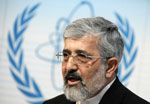
Iran’s ambassador to the International Atomic Energy Agency (IAEA), Ali Asghar Soltanieh, said a new meeting would be held, without giving a date. There was no immediate comment from the IAEA about the one-day meeting in Tehran.
The IAEA had hoped to bridge persistent differences with Iran preventing the U.N. agency from restarting a long-stalled investigation into suspected nuclear weapons research by Tehran. Iran says the allegations are forged and baseless.
The apparent absence of a breakthrough deal in Wednesday’s discussions in the Iranian capital will come as no surprise for Western diplomats, who have accused Iran of stonewalling the IAEA for years, a charge Tehran rejects.
World powers were watching the IAEA-Iran talks for signs that Tehran may finally be ready to start addressing their concerns over its nuclear program, which Tehran says is peaceful but the West fears is aimed at developing weapons.
Soltanieh said Iran and the IAEA had agreed on “some points” in the text of a planned framework agreement on how the IAEA should carry out its investigation, without giving details.
There was no immediate comment from the IAEA, which has been trying for more than a year to nail down such an accord giving it access to officials, documents and sites it says it needs for its inquiry in Iran.
“In addition to removing some differences and agreeing on some points in the text … the two sides decided to review and exchange views about the new proposals that were given in this meeting, in the next meeting,” Soltanieh said, according to Fars news agency.
AGREEMENT “NEAR” – STATE TV
Press TV, Iran’s English-language state broadcaster, cited Soltanieh as saying that the remaining differences would be discussed in the next Iran-IAEA meeting. “Iran, IAEA near agreement on structured framework,” it said in a headline.
The IAEA’s immediate priority is to visit the Parchin military base southeast of Tehran, where it suspects explosives tests relevant to nuclear weapons may have taken place, perhaps a decade ago, an accusation Tehran denies.
The United States late last year set a March deadline for Iran to start cooperating in substance with the IAEA’s investigation, warning Tehran that it might otherwise be referred to the U.N. Security Council.
Iran was first reported to the U.N. Security Council over its nuclear program by the IAEA’s 35-nation board in 2006, and was then punished with U.N. sanctions.
The Islamic Republic denies Western allegations that its nuclear energy program is geared to developing the capability to produce atomic bombs. Iran says it is stockpiling enriched uranium only for civilian energy purposes.
On February 26, Iran and the six world powers are due, after a break of eight months to resume separate, broader negotiations in Kazakhstan aimed at finding a diplomatic settlement to the decade-old dispute and avert the threat of a new war in the Middle East.
The stakes are high: Israel, assumed to be the Middle East’s only nuclear-armed power, has strongly hinted that it might take military action to prevent its foe acquiring weapons of mass destruction.
The six powers – the United States, Russia, China, France, Britain and Germany – want Iran to curb uranium enrichment and cooperate fully with the IAEA investigation.
Iran wants them to recognize what it sees as its right to refine uranium for peaceful purposes, and an easing of sanctions, which are hurting its oil-dependent economy.
(Additional reporting by Zahra Hosseinian in Zurich and Fredrik Dahl in Vienna; Editing by Michael Roddy)


