


 Reuters: The United States said on Wednesday it saw “troubling developments” in Iran’s nuclear program and called on the country’s new president to take concrete steps soon to ease concerns about Tehran’s aims.
By Fredrik Dahl
 VIENNA (Reuters) – The United States said on Wednesday it saw “troubling developments” in Iran’s nuclear program and called on the country’s new president to take concrete steps soon to ease concerns about Tehran’s aims.
Reinforcing the West’s message at a meeting of the U.N. nuclear watchdog that time was of the essence in moving to resolve the decade-old nuclear dispute, the European Union told Tehran that any “further procrastination is unacceptable”.
Both the United States and the 28-nation EU expressed hope that the election of Hassan Rouhani, a relative moderate who took office as new Iranian president in early August, would lead to a softening of the Islamic state’s nuclear defiance.
But they also said Iran had continued to increase its nuclear capacity in recent months and that no progress had been made so far in a long-stalled U.N. investigation into suspected atomic bomb research by Iran, which denies any such activity.
They warned that they may seek diplomatic action against Iran at the next quarterly meeting of the 35-nation board of the U.N.’s International Atomic Energy Agency (IAEA), in late November, if no progress has been achieved by then.
U.S. Ambassador Joseph Macmanus said Washington was ready to work with the new Iranian government “to reach a diplomatic solution that will fully address the international community’s concerns” about Iran’s nuclear program.
“We are hopeful that the Rouhani administration will live up to its assurances of transparency and cooperation by taking concrete steps over the next several months,” he told the closed-door board meeting, according to a copy of his speech.
But, Macmanus added, “should Iran continue its intransigence and obfuscation, we will work with fellow board members at the November board meeting to hold Iran appropriately accountable.”
Iran says it is enriching uranium only for civilian energy and medicine. The West suspects the program is covertly oriented towards developing a nuclear weapons capability.
“TWO TO TANGO”
Iran’s Foreign Minister Mohammad Javad Zarif, tasked with leading nuclear negotiations, said on Wednesday Iran’s nuclear work ought to be operated transparently and under international safeguards, but world powers could not “wish it away”.
Zarif, a U.S.-educated former ambassador to the United Nations, is regarded favorably by Western diplomats.
“Getting to yes is our motto … but it takes two to tango,” he said in a live interview on Iranian broadcaster Press TV.
Iran’s last round of talks with the big powers – the five permanent members of the U.N. Security Council plus Germany, dubbed the P5+1 – was in April in Kazakhstan, before Rouhani’s election, and both sides have said they want to continue soon.
“If the United States and the rest of the P5+1 group are not prepared to get seriously involved in this process then it will be a totally different scenario,” Zarif said in English.
Citing the IAEA’s latest report on Iran, Macmanus said it had expanded its enrichment capacity by continuing to install advanced and first-generation centrifuges. “These are concerning escalations of an already prohibited activity,” he said.
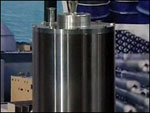
Iran was also making further progress in the construction of the Arak reactor, which can yield plutonium for bombs, including putting the reactor vessel in place and beginning to make fuel.
“All of these are troubling developments,” Macmanus added.
Iran has been engaged in on-off negotiations with major world powers for more than a decade, and has been subjected to several rounds of U.N. and Western economic sanctions.
Separately, Iran and the IAEA have held ten rounds of talks since early 2012 in an attempt by the U.N. agency to resume its investigation into what it calls the “possible military dimensions” to Iran’s nuclear program, so far without success.
A new meeting is set for September 27 in Vienna, seen by Western diplomats as a key test of the new Iranian government’s intentions. “International concerns will only be allayed by concrete actions, not by words,” the EU statement said.
(Additional reporting by Yeganeh Torbati in Dubai; editing by Andrew Roche)


