


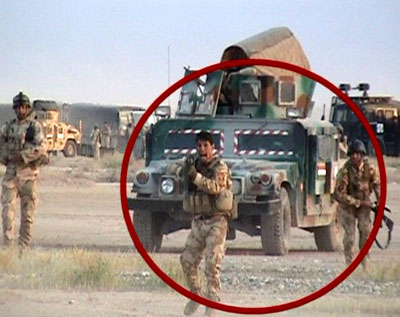
 Tampa Tribune: One year ago, the peace at a refugee camp under the “protection” of Iraq’s government was shattered by the thunder of military vehicles storming the gates. The Tampa Tribune
By LEO MCCLOSKEY, DAVID PHILLIPS, WESLEY MARTIN
One year ago, the peace at a refugee camp under the “protection” of Iraq’s government was shattered by the thunder of military vehicles storming the gates. Iraqi soldiers murdered 36 defenseless Iranian dissidents, and left hundreds injured in the rampage. Despite calls from the U.S. Congress, the European Union and the United Nations, there has been no independent inquiry into the incident. No one has been held accountable.
How could this massacre go unpunished? The answer goes into a dark, uncomfortable place.
This was not the first deadly attack on the unarmed residents, who are members of Iran’s Mujahedin-e-Khalq (PMOI/MEK), living in what is known as Camp Ashraf. There is a pattern of violence and intimidation against them at the hands of the Shiite officials of the Al-Maliki government, a government the United States paid mightily to train and set up.
A cruel irony of America’s sacrifice is that a sphere of influence now exists between Baghdad and Tehran that includes efforts to crush the MEK, the mullahs’ only viable and organized opposition.
The core members of the MEK — who promote a secular, democratic and non-nuclear Iran — were hounded out of Iran and set up Camp Ashraf near Baghdad 26 years ago. In 1997, as the United States pursued a futile policy of dialogue with Tehran, the opposition group became listed as a terrorist organization worldwide, despite the fact that the group shared many values with the free world. In diplomatic parlance, this is called a “confidence-building” gesture.
In 2003, U.S. forces assumed control of Camp Ashraf. At that time a thorough investigation, including background checks and interviews, was conducted on the residents of Ashraf, and it was determined that not one terrorist was among the 3,400 dissidents. The residents voluntarily disarmed to the United States and in return were given official “Protected Persons Status” and protection under the Fourth Geneva Convention.
Iraq assumed responsibility for the camp’s security in 2009 and gave assurances that the refugees would be given “humane treatment.” But then came the brutal attack on the residents of Ashraf.
Video footage showed unarmed civilians being shot in the head at close range by Iraqi soldiers, or being run over by Humvees. Al-Maliki did not stop there — within days he vowed to close Camp Ashraf, which would have sent these defenseless people into the desert to fend for themselves.
Another atrocity was only averted after a massive international campaign compelled the UN to draw up a memorandum of understanding with the Iraqi government to assure the safety and welfare of Ashraf residents.
The Iranian opposition movement leader Maryam Rajavi agreed for the residents to move to a new home, an abandoned U.S. military base known as Camp Liberty. Some 1,500 have already relocated there. However, reports from inside the camp describe conditions as prison-like and not meeting the bare-minimum humanitarian standards. The residents fear another disaster is looming around the corner.
The issue at hand is now more than a humanitarian crisis; the people scattered between camps Ashraf and Liberty represent the only viable check on the power and ambitions of the Iranian regime. There is, however, one simple way the U.S. State Department can stop this persecution: Delist the MEK as a foreign terrorist organization.
Why, at a time when international tensions with Iran are escalating, when policy options for rolling back Tehran’s nuclear program are dwindling, when Secretary of State Hillary Clinton is condemning Iran for “interfering with neighbors” (in reference to Syria) and “exporting terrorism,” would unleashing the opposition be off the table?
Why would the U.S. government go so far as to launch an investigation into Americans who have dared to expose some dark truths about U.S. policy, as the Treasury Department recently did against several former senior U.S. officials from both parties?
Why would the U.S. government go so far as to investigate and harass American former senior officials who have spoken out against the unwarranted designation of MEK? That the United States is dragging its heels over delisting them is inexplicable, given that the UK and EU removed the MEK from the blacklist more than three years ago.
The United States and the U.N. need to expedite the process of relocating these vulnerable men and women to third countries and getting the MEK into the struggle to contain Iran. The United States needs to recognize the humanitarian crisis and the strategic value of the Iranian opposition before it is too late.
Lt. Col. Leo McCloskey (ret.), is a Tampa resident and was the commander of Joint Interagency Task Force at Camp Ashraf, Iraq, until January 2009. Brig. Gen. David Phillips (ret.), is the former chief of the Military Policy School at Fort Leonard Wood and former commander of all police operations in Iraq, which included the protection of Camp Ashraf. Col. Wesley Martin (ret.), served as the senior antiterrorism/force protection officer for all coalition forces in Iraq and was the first colonel in charge of Camp Ashraf.


