


 Bloomberg: Iran suffered a massive 7.8 magnitude earthquake this morning — one more demonstration of why the country’s nuclear program is an albatross it should shed. Bloomberg
By Marc Champion
Iran suffered a massive 7.8 magnitude earthquake this morning — one more demonstration of why the country’s nuclear program is an albatross it should shed.
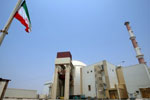
Just last week, that a smaller 6.1 magnitude quake hit 100 miles from Iran’s only nuclear plant, Bushehr on the Persian Gulf, killing 37 people and injuring 950. Fortunately, that quake was too small to damage the Bushehr reactor and today’s was too far away, on the border with Pakistan.
There were conflicting reports of how many died either side of the border, but the toll is likely to be relatively small for such a big tremor, because the area is sparsely populated. (For comparison, a smaller 6.6 earthquake in 2003, in the adjacent Iranian province of Kerman, killed more than 26,000).
These two narrow escapes should be extremely worrisome for Iranians and the Persian Gulf city-states across the water from Bushehr. In Dubai this morning, swaying buildings were evacuated because of the strength of an earthquake more than 400 miles away. After last week’s quake, gulf-state officials said that they wanted to send inspectors to check Bushehr for themselves. Their capitals are downwind from the plant, and much closer to it than Tehran. Bushehr’s Russian operators said again today that the plant was unaffected.
Bushehr is unique, a Russian reactor bolted onto a different German design after a consortium led by Siemens AG ceased work at the time of the 1979 revolution. It is a bespoke nuclear plant, which in terms of safety and predictability is a bad thing. Mismatches in the design were one reason (there were many) why it took so long and cost so much to build.
Iran insists it wants to make nuclear fuel only for civilian purposes. So it’s worth a quick recap of why the Iranian program hurts Iran: Bushehr provides just 2 percent of the country’s electricity, so it isn’t necessary; Iran has the world’s second largest reserves of natural gas after Russia and the world’s fourth-largest proven reserves of oil, so again nuclear isn’t necessary; in part because of sanctions imposed over Iran’s economically worthless nuclear program, investment in the country’s gas and oil extraction has suffered, and production and exports are well below where they should be — this was true even before sanctions got tough last year.
Most important, Iran’s lack of training and equipment and the failed response to the 2003 is one of the countries least well equipped to deal with major disasters, whether natural or nuclear. The direct implication is that many more people would probably die in Iran than elsewhere should anything go wrong. As an excellent recent study from the Carnegie Endowment for International Peace says, Iranians might be a lot less supportive of their country’s nuclear program if they were fully informed about how their lives and prosperity are being risked and sacrificed to achieve it.
(Marc Champion is a member of Bloomberg View’s editorial board. Follow him on Twitter.)


