


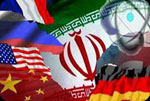
 Washington Post: The plan of action signed this weekend in Geneva covers not just various confidence-building measures but also principles that will define the final agreement. Western powers are negotiating with a state that has demonstrated scant respect for international norms.
The Washington Post
By Ray Takeyh, Updated
 The accord on Iran’s nuclear program provides some indisputable advantages for the West, such as imposing a measure of restraint on Iran’s nuclear trajectory and impeding its uranium enrichment to 20 percent. Still, the agreement acknowledges a set of principles that could condition a final agreement to Iran’s advantage. Going forward, the challenge of diplomacy will be to alter that calculus.
Iranian President Hassan Rouhani and his foreign minister, Mohammad Javad Zarif, bring a unique perspective to diplomacy. A seasoned team much experienced with Iran’s nuclear program, they believe that the most important thing about the initial round of diplomacy is not the capabilities that are conceded in the short term but the principles that are laid down. The plan of action signed this weekend in Geneva covers not just various confidence-building measures but also principles that will define the final agreement. While debate rages about how many centrifuges are being traded for how much sanctions relief, Zarif has returned home with the international community’s acceptance that Iran may one day have an industrial-size nuclear infrastructure.
Much has been made of Iran’s right to enrich. It is impossible to read the agreement without appreciating that the pathways of diplomacy are leading to legitimization of Iran’s enrichment capability. The accord acknowledges that a “comprehensive solution would involve a mutual defined enrichment program.” As a matter of long-standing policy, the United States does not interpret the nuclear Non-Proliferation Treaty as giving anyone the right to enrich. In practice, however, Washington is respecting the reality of enrichment on Iranian soil. After years of wrangling, the great powers have subtly conceded to Iran’s contention that it has a right to indigenously enrich uranium under conditions to be negotiated.
One of the presumptions of Zarif’s diplomacy is that even a “final” agreement is, in fact, an interim one. The Islamic Republic contends that once a comprehensive accord is signed, presumably after six months, its restrictions cannot be permanent. Thus, the capabilities are conceded and whatever restrictions are agreed upon would lapse after a certain period. The Geneva document stipulates that the final settlement would have a “specific long-term duration to be agreed upon.” What constitutes a “long-term duration” is likely to be a subject of much contention, with the Iranians pressing for little time and U.S. officials insisting on a longer period. It’s not clear whether Washington can hold its alliance together over this issue.
Zarif’s diplomacy has managed to do away with the notion that, as a leading sponsor of terrorism, Iran has to be treated differently than other states that enrich uranium, such as Brazil or Japan. It has also persuaded many to accept the notion that the Islamic Republic is just another errant signatory of the Non-Proliferation Treaty. As such, Iran must be considered a reliable custodian of sensitive nuclear technologies.
At this point, it is important to focus on not just the technical aspects of the interim agreement but also the parameters of the final accord. Washington should not limit its concerns to the duration of the agreement but should insist on a veto power before Iran is allowed to construct an industrial-size nuclear infrastructure. As part of a final deal, Iranian issues should still be brought back to the U.N. Security Council and Iran must be granted a waiver to proceed with expansion of its program. Then, Washington could always have the final say about whether Iran can advance beyond the limits of a prospective comprehensive deal.
Western powers are negotiating with a state that has demonstrated scant respect for international norms. It would behoove them to consider how to discipline Iran should a final agreement be signed and the sanctions regime begins to erode. The task at hand is not just to negotiate an agreement but also ensure compliance over a protracted period. The best means of guaranteeing such adherence is to make certain that sanctions relief is always provisional and can be reconstituted if Iran violates its obligations.
Ray Takeyh is a senior fellow at the Council on Foreign Relations.


