


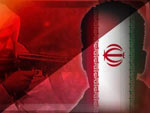
 Fox News: For nearly 35 years since the 1979 Islamic Revolution, Tehran has been the world’s central banker for international terrorism. It has armed and financed terrorists and state sponsors of terrorism on an equal-opportunity basis, including Sunnis like Hamas and Taliban, and Shia like Hezbollah in Lebanon and Iraqi Shia who attacked American forces.
FoxNews.com
By John Bolton
Whole forests have been sacrificed since the stunningly swift military advances of the Islamic State of Iraq and the Levant (”ISIL”) to provide enough newsprint for the debate over who bears responsibility for the current debacle in Iraq. Inevitably, analysts are rearguing George W. Bush’s decision to overthrow Saddam Hussein, Barack Obama’s complete withdrawal of U.S. forces, and virtually everything else Iraq-related in between.
This is all beside the point for today’s decision-makers confronting the question of what, if anything, to do as Iraq nears disintegration. America must instead decide what its national interests are now, not what they were five or ten years ago. As economists love to remind, the “sunk costs” fallacy warns against revisiting past mistakes to recreate a history we wish had unfolded.
None of the parties to Iraq’s current conflict have anything to recommend them. ISIL is a terrorist organization, and even conceding its (perhaps temporary) schism with Al Qaeda, it is precisely the terrorist enemy we have been fighting since September 11, 2001 (and before, although we didn’t realize it until too late).
Ranged against ISIL are Assad’s regime in Syria, Maliki’s regime in Iraq, and their puppet-masters in Iran. None of them smell any sweeter. (The Kurds are a special case, but they first need to make their goals clear before we decide how to respond.)
Nonetheless, some argue we should assist Maliki to prevent the complete loss of America’s heroic effort to oust Saddam Hussein and give Iraqis the chance for representative government. From a very different perspective, people who always (or at least sometimes) opposed the second Iraq war, now suggest we should aid Maliki because it would provide an opportunity to work with Tehran, presumably building mutual confidence thereby.
Both these arguments are wrong and their policy implications misguided. Instead, we should pursue two courses of action, one tactical, one strategic.
First, regarding the immediate hostilities, we should stand aside, hoping the conflict damages all the combatants, as in the 1980’s Iran-Iraq war, of which Henry Kissinger reportedly quipped that he hoped both sides would lose.
Second, strategically and most importantly for U.S. regional and global interests, we must increase (more accurately, renew) our efforts to overthrow the ayatollahs in Tehran. The reasons this objective deserves priority also explain why aiding an Iranian surrogate like Maliki’s regime does not benefit America today.
Maliki has had his chance, and he has failed; aiding him is likely a fool’s errand. Even if Washington conditioned its assistance on Maliki effectively breaking with Tehran, there is precious little chance he would agree. And if he did, there is every chance he would break his commitment — or Iran would break it for him — at the earliest opportunity once ISIL was crushed.
Iran is clearly the strongest, most threatening power in this conflict. It is rapidly approaching (or has already all but reached) a deliverable nuclear-weapons capability.
For nearly 35 years since the 1979 Islamic Revolution, Tehran has been the world’s central banker for international terrorism. It has armed and financed terrorists and state sponsors of terrorism on an equal-opportunity basis, including Sunnis like Hamas and Taliban, and Shia like Hezbollah in Lebanon and Iraqi Shia who attacked American forces. A nuclear Iran could engage in even greater terrorist activity with relative impunity, something Taliban and Al Qaeda lacked the luxury of contemplating while we were overthrowing their regime in Kabul after 9/11.
Thus understood, it becomes perfectly clear that we should not aid our stronger adversary power against our weaker adversary power in the struggle underway in Iraq. There is little in it for us. The main beneficiary would be Tehran, especially if Obama, reprising Roosevelt’s World War II infatuation with Joseph Stalin, decided to do business with the ayatollahs. “Uncle Ali” Khamenei, Iran’s Supreme Leader, would undoubtedly have the last laugh.
U.S. strategy must rather be to prevent Tehran from re-establishing its scimitar of power stretching from Iran through Iraq and Syria to Lebanon. Our interests dictate not being content with a Middle East where Iran and its puppets predominate. Balancing against Iran by aiding friendly Arab regimes (which Maliki’s is not) is inadequate. At best, we would produce a regional status quo filled with sworn enemies of America.
Instead, our objective should be to remove the main foe, Tehran’s ayatollahs, by encouraging the opposition, within and outside Iran, to take matters into their own hands. There is no need to deploy U.S. military power to aid the various opposition forces. We should instead provide them intelligence and material assistance, and help them subsume the political differences that separate them. Their differences should be addressed when the ayatollahs’ regime lies in ashes. And as Iran’s regime change proceeds, we can destroy ISIL.
Unfortunately, there is no chance Obama will adopt anything like this strategy. Indeed, given the president’s limp June 13 statement, it is doubtful Washington will even perform coherently in the months ahead. It is not a matter whether Obama’s Iraq “policy” is correct, but whether he is even interested.
Possibly, Iraq’s potential disintegration, together with the broader collapse of U.S. influence and interests now unfolding, could give impetus to a major national debate, long overdue, about America’s proper place in the world. Let it begin now, whether Obama is inclined to participate or not.
John Bolton is a Fox News contributor, a senior fellow at the American Enterprise Institute, and former U.S. Ambassador to the UN.


