Home Blog Page 107

Iran’s 2025 Budget: Massive Oil Revenues for Military, State Assets Transferred to IRGC

The detailed text of Iran’s new budget bill (which started on March 21) was released by the Iranian government on Monday, March 31. It not only highlights the massive share of oil revenues and national budget allocated to the military and security forces but also facilitates these institutions’ acquisition of state assets.

For several years, a portion of Iran’s oil exports has been allocated to military forces, particularly the Islamic Revolutionary Guard Corps (IRGC), under the “Strengthening National Defense” program. However, this year, not only has the military’s oil share increased significantly, but government budget expenditures to finance them have also grown. Additionally, the authorization for direct crude oil deliveries has expanded to include other institutions and projects, such as Iran’s nuclear program.

Furthermore, the budget law text indicates that the government has allowed IRGC-affiliated institutions, such as the Khatam al-Anbiya Construction Headquarters, as well as organizations under the control of Iranian regime’s Supreme Leader Ali Khamenei, including the “Execution of Imam Khomeini’s Order” (EIKO), to settle government debts through the transfer of state assets.

The Military’s Oil Share

The government of Masoud Pezeshkian, the President of Iran’s regime, has planned for daily oil exports of 1.85 million barrels this year. One-third of this amount (valued at $12.4 billion) will be directly allocated to the armed forces and their special military projects. This figure is three times higher than last year.

The remaining exported oil (along with all exported gas) will be shared among the government budget, the National Development Fund, and the National Iranian Oil Company, totaling $33.5 billion.

The Iranian Regime’s Economic Crisis in a Critical Year

Another crucial point is that the government has set the exchange rate for the oil given to the armed forces at approximately 600,000 rials per euro, while the euro’s current free market rate in Iran is 1,140,000 rials.

This creates a massive financial advantage for the military, allowing them to sell oil and generate significant profits by exchanging the revenue at free market rates.

Moreover, the military has priority in selling oil. Any decline in Iran’s oil exports will primarily impact the non-military sector. If the armed forces fail to export the oil they receive, the government must compensate them with equivalent cash payments.

While Masoud Pezeshkian has planned for daily oil exports of 1.85 million barrels for the current fiscal year, data from commodity intelligence firm Kpler indicates that Iran’s daily oil offloading at Chinese ports—its only customer—was about 1.34 million barrels in the first three months of this year. This is down from an average of 1.5 million barrels per day last year.

Meanwhile, the administration of U.S. President Donald Trump launched a “maximum pressure” campaign aimed at reducing Iran’s oil exports to zero. Several oil tanker tracking firms and energy consultancy companies had previously predicted that Iran’s oil exports could drop by about 500,000 barrels per day in the coming months.

The decline in Iran’s oil exports to China comes as the government has also granted direct oil export rights (from the state’s share) to five other entities and projects, including “nuclear energy projects.”

Given that Iran’s regime has no new nuclear power plant construction projects planned for this year, the allocated funds are likely to be used for nuclear activities unrelated to electricity generation, such as uranium enrichment, a highly sensitive part of Iran’s nuclear program.

Another point is that, in addition to revenue from direct oil sales under the so-called “Strengthening National Defense” program, Iran’s military and security forces receive a 10% share of the government’s general budget for paying military personnel salaries.

Transfer of State Assets to the Military

In the absence of transparency in the economic activities of the IRGC and institutions controlled by the regime’s Supreme Leader, Ali Khamenei, unofficial reports suggest that these entities dominate nearly half of Iran’s shadow economy.

Over the past two decades, a significant portion of the government’s privatization initiatives has deviated from its original goal of transferring assets to the genuine private sector. Instead, state-owned assets have been handed over at deeply discounted prices to the IRGC and entities under Khamenei’s control.

Organizations under the IRGC and Khamenei’s leadership have extensive involvement in Iran’s construction and infrastructure projects.

The exact amount of government debt owed to the IRGC and entities under the Supreme Leader’s office for construction projects remains unclear. However, Iran’s 2025 budget law (effective from March 21, 2025) explicitly names the IRGC-affiliated Khatam al-Anbiya Construction Headquarters and the Execution of Imam Khomeini’s Order (EIKO), which operates under Khamenei. These institutions are allowed to claim up to $2 billion worth of state assets in exchange for government debt sum equivalent to roughly 13% of the government’s total asset sales plan for this year.

Given the weakened and marginalized state of Iran’s private sector, it is expected that once again, institutions under the IRGC and the Supreme Leader’s office will dominate the acquisition of state assets during the privatization process, just as they have in the past.


The Iranian Regime’s Economic Crisis in a Critical Year

The Iranian year 1404 (starting on March 21) begins with a widespread consensus among Iranians of all political beliefs that the country is in an economic crisis. This crisis indicates an even grimmer future. One of the signs of this is a budget deficit of 8,700 trillion rials (approximately $8.7 billion) and an inflation rate exceeding 40%.

Continued Inflation Growth

According to the Iranian regime’s Statistics Center, the price of goods and services used by the public has increased by 35% compared to last year. The situation for workers’ wages is even more painful, as their value has dropped by nearly 50% over the past 14 years.

“The minimum dollar wage of workers, which was nearly $300 in 2012, has dropped to below $150 in 2025, nearly halving. In other words, Iranian workers’ purchasing power has drastically declined during this period.” (State-run EcoIran, March 29, 2025)

Surging Inflation in the New Iranian Year

Last year was, in fact, the year of economic bankruptcy for the Iranian regime. The financial imbalance, particularly in the energy sector, led to the shutdown of industries, schools, and even government offices.

Continuous Money Printing by the Government

Mahdi Pazouki, a government-affiliated economist, stated:
“The most critical economic problem Iran faced in 2024 was economic instability. The key indicator of this instability is rising inflation. Another issue is the budget deficit. When government expenditures exceed revenues, it results in a deficit, which in turn fuels inflation. When the Central Bank is ordered to print money, it leads to increased liquidity.”

Governments’ Addiction to Raiding the National Development Fund

The administration of Masoud Pezeshkian, the current president of the Iranian regime, like previous governments, turns to the National Development Fund whenever it fails in economic policies.

The electronic voucher program, which had been suspended since early last year, will now be reinstated under a new cabinet decision, financed by a $1 billion withdrawal from the National Development Fund.

The Banks of Iran: Serving the Economy or Corrupt Capitalism?

Electronic vouchers will provide low-income groups (bottom three deciles) with 5 million rials per person (~$5) and middle-income groups (deciles 4–7) with 3.5 million rials per person (~$3.5) to purchase 11 essential goods.

The voucher program covers meat, chicken, eggs, rice, pasta, cooking oil, milk, cheese, yogurt, legumes, sugar, and sweeteners.

Billion-Dollar Withdrawals from the Fund

In September 2024, at the start of Pezeshkian’s presidency, the Iranian regime’s supreme leader, Ali Khamenei, approved his request to withdraw $8 billion from the fund to settle government debts to wheat farmers, nurses, and truck drivers.

More recently, a $17 billion withdrawal from the fund was approved to finance the South Pars gas pressure-boosting project and to channel funds to the Khatam al-Anbiya Construction Headquarters (a branch of the Islamic Revolutionary Guard Corps) and several front companies.

Economy in Crisis, Without an Economy Minister!

Meanwhile, the Minister of Economy has been impeached and removed from office.

“An economic expert stated: One of the major challenges facing businesses is the performance of the Industry Minister, who, due to foreign currency shortages, has restricted currency allocations. This situation has led to reduced production, rising prices, and increased inflation.” (State-affiliated newspaper Eghtesad Online, March 27, 2025)

Iran Heading Towards More Crises

The Iranian’s problems extend far beyond the economy. Weak foreign policy, fears of potential wars, uncertainty over succession for the regime’sSupreme Leader, and the possibility of popular uprisings have made the Persian year 1404 (March 2025-March 2026) a year of crisis and potentially the beginning of the regime’s downfall.


U.S. Treasury Secretary Consults Global Banks on Iranian Oil Sanctions

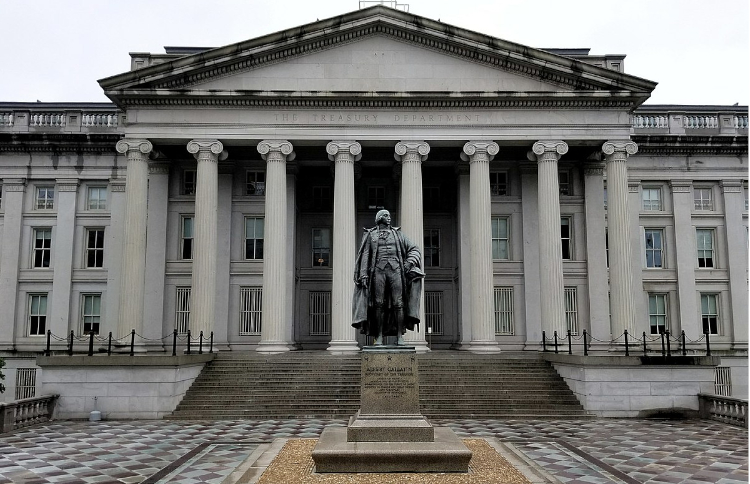
Scott Bessent, the U.S. Treasury Secretary, met with representatives of 16 global banks and federal law enforcement agencies to discuss U.S. sanctions policies against the Iranian regime, particularly efforts to reduce Iran’s oil exports. He also hinted at the possibility of increased sanctions against Tehran.

On Wednesday, April 2, in Washington, D.C., Bessent announced that the Trump administration is exerting maximum pressure on the Iranian regime to prevent it from accessing financial resources, which are used to fund Hamas and other militant groups in the Middle East, as well as the Iranian regime’s nuclear program.

He stated that these financial resources include billions of dollars that the Iranian regime earns annually from oil sales, which it uses to fund its dangerous programs and support several terrorist groups.

U.S. Imposes New Sanctions on Iran’s Drone Supply Network

On February 4, former President Donald Trump issued an executive order to resume the maximum pressure policy on the regime. This order specifically emphasized that Iranian oil exports must be reduced to zero.

U.S. Sanctions

In March, the U.S. Treasury Department imposed sanctions on oil tankers carrying Iranian oil and an independent Chinese refinery known as “Teapot,” which processes Iranian oil. Due to concerns over U.S. sanctions, China’s state-owned refineries have stopped purchasing Iranian oil.

Bessent, in his remarks, referenced sanctions on the small Shandong refinery and its CEO, who had purchased and processed hundreds of millions of dollars’ worth of Iranian crude oil. This oil included shipments from vessels linked to the Houthis and Iranian regime’s Ministry of Defense.

The U.S. Treasury Secretary stated that the purchase of Iranian oil by small Teapot refineries serves as a major economic lifeline for the Iranian government.

Warning About Iran’s Secret Banking Network

Bessent also warned banks that the Iranian government conducts its foreign currency transactions through a shadowy and secret banking network. He added that his message to financial institutions worldwide is clear: Protect your institutions from exploitation by this malicious network so that you can serve your legitimate customers with integrity.

Washington’s Tools to Counter Iran

Bessent stated that the U.S. Treasury Department utilizes tools such as the meeting held on Wednesday, April 2, to bring together financial institutions, regulatory bodies, and law enforcement agencies to counter what he described as Iran’s illegal revenue channels.

He also told Bloomberg in an interview that additional sanctions might be imposed on the Iranian regime.

The U.S. Treasury Department did not disclose which banks and institutions participated in the meeting.

In an interview with NBC News, Donald Trump threatened to impose secondary tariffs on buyers of goods from Iran and Russia. In March, he signed an executive order to enforce similar tariffs on buyers of Venezuelan oil.


U.S. Imposes New Sanctions on Iran’s Drone Supply Network

The U.S. Department of the Treasury, in coordination with the Department of Justice, announced a new round of sanctions against an international network linked to Iran’s drone program. This network includes six entities, and two individuals based in Iran, the United Arab Emirates, and China, all involved in supplying components for Iran’s drone industry.

According to U.S. officials, this network operated in support of Qods Aviation Industries, one of Iran’s primary military drone manufacturers. It also played a role in supplying equipment to other entities affiliated with Iran’s military-industrial complex, including the Iran Aircraft Manufacturing Industries Company (HESA) and Bagheri Industrial Group.

The U.S. Department of Justice also announced that an indictment has been issued in the Eastern District of New York against Hossein Akbari (63) and Reza Amidi (62), both Iranian nationals, as well as an Iranian company named Rah Roshd.

According to the indictment, they are accused of attempting to provide material support to the Iranian regime’s Islamic Revolutionary Guard Corps (IRGC) and participating in a scheme to transfer U.S. technology for use in Iran’s attack drones. Akbari and Omidi remain fugitives and are currently at large.

History of Drone-Related Sanctions

Russia’s extensive use of Iranian drones in its invasion of Ukraine has drawn global attention to this aspect of Iran’s weapons program.

The U.S. Department of the Treasury has published a comprehensive guide on Iran’s drone industry, identifying 13 customs tariff codes for components that could be used in drone manufacturing.

However, Iran continues to import essential drone components on a large scale through private companies.

History of Drone-Related Sanctions Against Iran

In November 2023, the U.S. Department of the Treasury sanctioned 10 entities and four individuals based in Iran, Malaysia, Hong Kong, and Indonesia for supporting Iran’s drone production program. Among those sanctioned were Hossein Hatefi Ardakani, chairman of Kavan Electronic Behrad Company, and the Saman Industrial Group, affiliated with Iran’s Ministry of Defense.

In March 2024, the U.S. imposed sanctions on 16 individuals and two additional entities involved in facilitating Iran’s drone production. The U.S. Treasury stated that the sanctioned individuals were acting on behalf of the Islamic Revolutionary Guard Corps-Quds Force (IRGC-QF) in collaboration with drone manufacturers.

In April 2024, following Iran’s drone and missile attack on Israel, the United Kingdom announced sanctions against Iran’s military drone industry. The U.S. and Canada also imposed new sanctions targeting Iran’s Ministry of Defense’s drone production sector.

In October 2024, the U.S. Department of the Treasury sanctioned two individuals and two entities for their involvement in the development and supply of critical navigation systems for Iran. Additionally, the U.S. State Department imposed sanctions on the deputy commander of the IRGC Aerospace Force and two Iranian entities for supporting Tehran’s ballistic missile and drone development programs.

The most recent sanctions prior to the latest round came on February 27, 2025, when the U.S. Department of the Treasury sanctioned six entities based in Hong Kong and China for their role in purchasing and supplying key drone components to Iran.

In its statement, the Treasury Department emphasized that this action was part of Donald Trump’s “maximum pressure campaign” against the Iranian regime.


“No to Execution Tuesdays”: Hunger Strike in 38 Iranian Prisons

The “No to Execution Tuesdays” campaign, in its 62nd week, continued its protest against the implementation of death sentences in Iran, with the participation of prisoners from 38 prisons across the country.

This campaign, which began in February 2024, is held every Tuesday through a hunger strike by political prisoners in protest against the expansion and continuation of executions by Iran’s regime.

“No to Execution Tuesdays” Campaign; Prisoners’ Hunger Strike in Iran

In its latest statement, the campaign announced that the Supreme Court has upheld the death sentence of Hamid Hosseinnejad Heidaranlou, a political prisoner from Chaldoran.

The “No to Execution Tuesdays” campaign, noting that executions continue even during the Persian New Year (Nowruz) and the holy month of Ramadan, has called on all freedom-loving people and families of prisoners sentenced to death to organize protest gatherings in public places and in front of prisons to demand the abolition of this inhumane punishment. The campaign emphasizes that protesting against death sentences is a natural and legitimate right of every free human being.

The full statement of the campaign is as follows:

“The Iranian regime has not stopped the inhumane punishment of execution even during Nowruz and Ramadan. In recent days, several prisoners have fallen victim to the insatiable appetite of Iran’s rulers for executions and repression.

“In this period, the death sentence of political prisoner Hamid Hosseinnejad Heidaranlou from Chaldoran, who has been accused of ‘armed rebellion (baghi),’ was upheld by the Supreme Court of the regime and was officially communicated to him on March 24. The risk of his execution is therefore very serious, and it is essential that we raise our voices for him and other death row inmates.

“We warn against the likelihood of resuming after the holidays, especially for those whose unjust sentences have been confirmed.

“The case of Varisheh Moradi is currently in the Supreme Court. We demand the immediate annulment of Varisheh Moradi’s death sentence by the Supreme Court, as this is not a judicial decision but rather a premeditated state-sanctioned murder. We express our deep concern over the confirmation of this sentence and that of other prisoners and will resist it.

“The ‘No to Execution Tuesdays’ campaign strongly condemns the brutal executions and inhumane death sentences regardless of the charges and calls for the abolition of the death penalty in Iran.

“As we have witnessed in recent weeks, families of prisoners sentenced to death have gathered in protest in front of Lakan Prison in Rasht, Evin Prison in Tehran, Saqqez Prison, and in the city of Sonqor. In solidarity with these families, we call on all freedom-loving people and families of prisoners sentenced to death to organize protest gatherings in public places, in front of prisons, or any other location to demand the abolition of the inhumane death penalty.

“This is the most natural, legitimate, and logical right of families, all free individuals, and the general public to protest against the cruel death sentences.”

On Tuesday, April 1, in its 62nd week, the ‘No to Execution Tuesdays’ campaign will hold a hunger strike in 38 prisons.


Iran’s Power Shortages Will Not Be Resolved Within One or Two Years

0

As the Iranian regime continues to struggle with supplying electricity to the country, Mostafa Nakhaei, a member of the Energy Commission of the Majlis (parliament), highlighted growing concerns about the energy crisis expected in the upcoming summer. He emphasized that resolving the electricity shortage will not be possible within one or two years.

On March 30, Nakhaei stated in an interview with the regime’s ISNA News Agency, affiliated with the Basij paramilitary force: “Electricity shortages, especially in the summer, are an undeniable reality that have accumulated over the years, and naturally, they cannot be resolved within one or two years.”

The Ongoing Electricity Crisis in Iran

He pointed out that electricity consumption in the country increases by about five percent annually, while power generation capacity has not seen significant growth in recent years.

In recent months, multiple reports have emerged regarding Iran’s energy shortages and the government’s inability to effectively manage various sectors of the country.

Hamidreza Salehi, Secretary General of the regime’s Energy Export Federation, warned on March 25 that, due to the potential shutdown of hydroelectric power plants caused by water shortages, the country will face a power deficit of 24,000 megawatts this summer.

In another part of his interview with Daneshjoo News Agency, Nakhaei stated that Masoud Pezeshkian’s administration has declared in commission meetings that developing renewable energy sources, particularly solar power, is a “key solution” on their agenda. However, this solution appears to be far removed from the current reality.

As Iran’s regime continues to struggle with electricity supply challenges, Abbas Aliabadi, the Iranian regime’s Minister of Energy, urged citizens on March 22 to invest in the country’s electricity industry to help overcome this crisis.

Between March 21, 2024, and March 21, 2025, there were 291 working days in total, but some provinces declared 72 of those days as non-working due to gas or electricity shortages.

In recent months, many citizens have staged protests in various parts of the country in response to the Iranian regime’s inefficiency in energy supply and repeated power outages.


Around 200,000 People in Iran Suffer from Hepatitis C

0

Ghobad Moradi, head of the Center for Communicable Disease Control at the Iranian regime’s Ministry of Health, stated that approximately 200,000 people in Iran are infected with hepatitis C.

On Sunday, March 30, in an interview with the state-run ILNA news agency, Moradi discussed the number of hepatitis C cases in the country, stating: “Our estimate is that fewer than 200,000 people in the country are infected with hepatitis C.”

He added: “If we can identify and treat these individuals, we can significantly reduce the prevalence of this disease.”

Iranian Regime MP Warns About Intensified Medicine Shortages

Earlier, in January 2025, Rashid Ramazani, head of the Hepatitis Disease Monitoring Unit at Iranian regime’s Ministry of Health, noted that around 200,000 people in the country have hepatitis C and reported that 204 people die from the disease annually.

Ramazani pointed out that 30% of hepatitis C cases occur among “injecting drug users,” making this group the most affected by the disease.

The Ministry of Health official noted that the most common route of hepatitis C transmission is through contaminated blood. He added that hepatitis B and C viruses are the leading causes of chronic liver disease, which can lead to cirrhosis, liver cancer, and death.

In another part of his interview with ILNA, Moradi mentioned that vaccination programs involve many details, stating: “For example, the hepatitis B vaccination program is gradually bringing our country to a level where we can hope to obtain certification for the elimination of mother-to-child hepatitis B transmission.”

In March 2025, reports surfaced about contaminated blood transfusions in thalassemia centers in Sistan and Baluchestan province, leading to the infection of dozens of patients with hepatitis C.

Salman Es’haghi, spokesperson for the Health Commission in the regime’s Majlis (parliament), reacted to the issue on March 10, stating that tests conducted on 323 patients out of 1,200 thalassemia patients under the supervision of Chabahar University of Medical Sciences in Sistan and Baluchestan province confirmed that 113 individuals were infected with the hepatitis C virus.

According to Es’haghi, a single unit of blood was simultaneously transfused to two or even three thalassemia patients on the same hospital bed.

He denied that the blood used for thalassemia patients was contaminated but did not explain the cause of their hepatitis C infections.


Khamenei: I Don’t Think We’ll Be Attacked from the Outside

Ali Khamenei, the Supreme Leader of the Iranian regime, addressed growing speculation about the possibility of a military attack against his regime in his speech following the Eid al-Fitr prayer. He stated that he does not believe the regime will be struck “from the outside.”

On Sunday, March 30, in Tehran’s prayer hall, Khamenei said: “They threaten to commit evil acts. We are not very certain, and we do not consider it highly likely that such evil will come from the outside. But if it does happen, they will certainly receive a strong counterblow.”

He added: “If the enemies think of inciting sedition inside the country, the Iranian nation itself will respond to them.”

These remarks come a day after U.S. President Donald Trump warned that if the Iranian regime does not agree to a deal on its nuclear program, it will be bombed.

He further stated that if an attack on Iran were to take place, “this bombing will be unlike anything they have ever seen.”

On March 30, the Tehran Times, a newspaper affiliated with the Iranian government, reported that, according to information it had received, the regime’s missiles have been mounted on launchers in all underground missile cities and are ready for launch.

Khamenei: Our Stance Against the U.S. and Israel Has Not Changed

In his remarks, Khamenei reaffirmed the continuation of the Iranian regime’s foreign policy, stating: “Everyone should know that our positions remain the same; the enmity of the U.S. and the Zionist regime is also the same as it was.”

Repeating his previous positions, he claimed that his regime does not have proxy forces and that the only proxy force in the region is Israel, which “invades countries on behalf of colonialists.”

On March 7, U.S. President Donald Trump announced that he had expressed his willingness in a letter to Khamenei to negotiate over Iran’s nuclear program instead of taking military action against the regime.

The news outlet Axios reported on March 19 that the letter had a harsh tone and set a two-month deadline for reaching a new nuclear agreement.

On March 27, Abbas Araghchi, Iranian regime’s Foreign Minister, announced that Tehran had responded to Trump’s letter “appropriately and through Oman.”

The full text of Tehran’s response has not yet been officially published. However, on March 29, the Arabic-language newspaper Al-Araby Al-Jadeed reported that in its response, the Iranian government reaffirmed its long-standing positions, including refusing to negotiate over its missile program or proxy groups and refusing to engage in talks beyond the framework of the JCPOA.

Years of fruitless negotiations with Tehran have proven that this regime is only seeking to buy time and that nothing stops it from interfering in regional countries and expanding terrorism. The Iranian regime faces a legitimacy crisis and the threat of popular uprisings, and it will do anything to avoid confronting the Iranian people. In this regard, even the threat of bombing will change nothing. The only solution is to pave the way for the people and their resistance to rid the region of this regime once and for all.


Isfahan Erupts: Farmers Clash with Riot Forces in Shatur over the Plundering of Zayandeh Rud Waters

Tensions and clashes continue to escalate in the city of Eslamabad Shatur, in Isfahan Province, where courageous farmers persist in their struggle to reclaim their natural right to irrigation water. In response to their legitimate and vital demands, riot forces affiliated with the Iranian regime have been deployed, meeting the farmers with batons, tear gas, and rubber bullets in an effort to silence and suppress them.

This struggle is no longer just about water—it has become a fight for dignity, justice, and the right to life. Despite injuries, including several cases of farmers losing their eyesight due to direct fire, the protesters remain resolute. They have declared their intention to continue sit-ins, vowing to hold Eid al-Fitr prayers on the dry bed of the Zayandeh Rud River, specifically on the historic Khaju Bridge, as a symbolic act of defiance against years of neglect and broken promises.

Today witnessed one of the fiercest confrontations in Shatur, where a farmer drove his vehicle toward riot police in a dramatic protest. The situation remains highly volatile, with limited information emerging from the ground.

Isfahan Farmers Protest Against Water Shortages; Protesters Break Water Pipeline to Yazd

At the heart of the crisis lies the systematic diversion of Zayandeh Rud’s water to steel industries controlled by the Islamic Revolutionary Guard Corps (IRGC). Farmers accuse the IRGC of running a mafia that monopolizes national resources for profit, leaving agricultural communities to suffer the consequences. They are no longer willing to remain silent and view their current resistance as a fight against the institutionalized corruption of the regime and the IRGC’s stranglehold over the country’s lifelines.

One farmer from eastern Isfahan stated: “They think they can blind us and silence us with teargas and bullets, but each shot only makes us stronger and more united. We are standing here for our rights, and this fight will continue until we reclaim what is rightfully ours.”

The farmers’ uprising in Isfahan is not just a local protest—it is a national cry for justice, and a stand against the oppressive grip of the IRGC mafia over the lives and livelihoods of Iran’s people.

Surging Inflation in the New Iranian Year

In the early days of the new Iranian year (which began on March 21), Iran’s economy is grappling with crises such as the rapid depreciation of the national currency, a lack of investment, inflation of at least 35%, a noticeable decline in people’s purchasing power, and issues arising from energy imbalances.

The Research Center of the Iranian Parliament previously reported that in the year 1404 (starting March 21, 2025), Iran’s economy will face serious challenges, including declining economic growth, rising inflation, and increasing poverty.

These economic issues, combined with sanctions and regime’s diplomatic crises, have led many experts—and even some government officials in Iran—to warn about the country’s economic situation in 1404 (2025).

The Iranian regime neither has the ability nor the intention to control inflation. Even raising nominal interest rates is not an option, as it could lead to the collapse of Iran’s already fragile banking system and widespread bankruptcies.

Iran: Rising Inflation and Exchange Rates, Economy on the Brink of Collapse

The policy of “artificial exchange rate control” requires constant currency market interventions, which is a continuation of the failed strategy of past years. This policy has led to the depletion of over $100 billion (and, according to some estimates, more than $200 billion) in foreign exchange reserves over the past decade, while the price of the US dollar has continued to rise.

As the most indebted economic entity in the country, the Iranian regime actually benefits from inflation—as long as it does not trigger social unrest—because higher inflation erodes the real value of government debt.

The root cause of Iran’s economic problems, including inflation, lies within the regime and its policies. In other words, while external factors such as sanctions, global political conditions, and geopolitical risks do have an impact, they are not the main causes of these issues; rather, they only exacerbate the existing problems.

The Iranian regime has estimated oil exports at two million barrels per day, but given the policies of the new U.S. administration, this target is unlikely to be achieved, which will further deepen Iran’s budget deficit.

Severe Inflation Wave and the Legitimacy Crisis of the Iranian Regime in 2025

All these factors indicate that Iran’s economy will face a severe wave of inflation in 2025, with some economists predicting inflation rates as high as 50%.

A functional government would never block its own paths to free trade and economic, political, and cultural exchanges with the world. However, the Iranian regime, in order to maintain its grip on power and continue its dictatorship, will never abandon its interventionist policies in the region or its expansion of terrorism.

Ali Khamenei, the Supreme Leader of the Iranian regime, will intensify repression in parallel. The prospect of change through negotiations with the Iranian regime is nothing but a mirage. This claim is backed by 45 years of deception, hostage-taking, warmongering, torture, and executions—all tactics the regime has used to maintain its grip on power.

In the year 1403 (March 21, 2024 – March 21, 2025), the Iranian regime executed more than 1,153 people.

Widespread government corruption and a lack of investment in the oil and gas sector have prevented these resources from meeting the needs of society, causing people to become increasingly impoverished. This mounting economic and social pressure will ultimately lead to large-scale uprisings in Iran.

In 2024, following the killing of Mahsa Amini by the regime’s security forces, the Iranian regime was on the brink of collapse. However, through extreme repression and the killing of more than 750 protesters, it temporarily managed to suppress the nationwide uprising.

In the oil and energy sector, external pressures and sanctions have eliminated any possibility of short-term solutions or temporary relief. These pressures will only intensify further.

Iran is currently deprived of any cooperation, services, or technology from Western companies. Due to limited oil exports and a lack of investment, it cannot even procure these resources indirectly through intermediaries except at significantly higher costs. As external pressures mount, Iran’s energy sector will continue its downward spiral at an accelerated pace.

All these factors highlight the Iranian regime’s inability to resolve crises and mega-crises, the roots of which date back many years. Not only has the government failed to implement any real solutions, but in many cases, its officials have actively worsened these crises.

However, the fundamental issue is the Iranian regime’s legitimacy crisis among the public. This crisis has manifested in various ways, from widespread anti-government uprisings to historically low voter turnout in elections.

Despite all this, Iranian officials continue to insist on maintaining their past approaches, particularly in domestic, foreign, and economic policies. Given the escalating economic and social crises in Iran, it is inevitable that new waves of anti-regime uprisings will emerge, and the Iranian regime should brace itself for major upheavals.