Home Blog Page 125

Nurses and Retirees Hold Strikes and Protests in Iran Over Economic Hardships

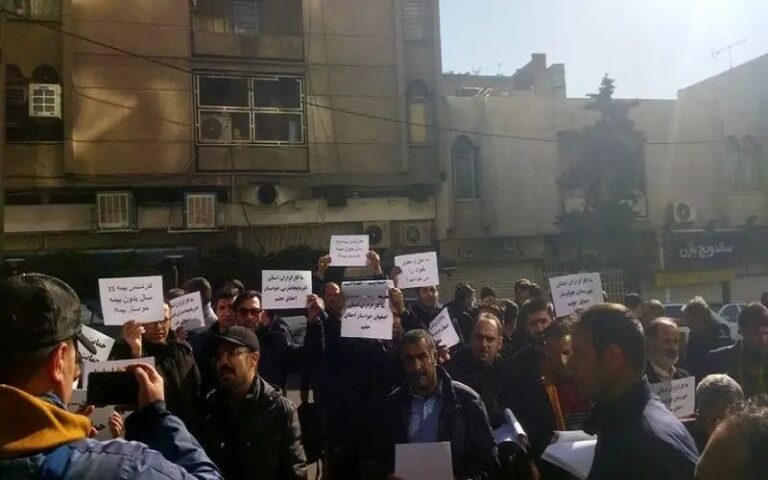
Economic protests in Iran continued on Sunday with a strike and gathering of nurses and healthcare staff at Milad Hospital in Tehran, as well as demonstrations by retirees in several provinces.

According to reports on social media on Sunday, February 16, in addition to the strike by Milad Hospital’s healthcare staff and a protest gathering by its nurses and employees in Tehran, a group of retirees also gathered in protest against economic conditions in the provinces of Isfahan, Khuzestan, and Kermanshah.

Nurses and staff at Milad Hospital in Tehran, protesting the lack of response to their demands and the worsening economic crisis, chanted: “Without nurses, the system collapses,” and “Where did our tariffs go? Look whose pockets they filled.”

Protests by Various Groups of People in Iranian Cities

The nurses’ strike at Milad Hospital, now in its third day, is in protest against the reduction of base wages in their pay slips and overall economic hardships. The protesters have demanded the resignation of officials.

Simultaneously with the nurses’ strike in Tehran, a group of retirees from the steel and mining industries gathered in Isfahan.

Protesting retirees in Ahvaz, the capital of Khuzestan province, chanted, “How long will you keep lying to the nation?” as they voiced their opposition to the Iranian regime’s officials.

Retiree protests also took place in Kermanshah. The protesters, chanting “From Kerman to Tehran, the killing of our children,” reacted to the death of Amir Mohammad Khaleghi, a 19-year-old student at the University of Tehran, as well as the deaths of several students in a school trip bus accident.

Protesting retirees in Shush, another city in Khuzestan province, expressed their frustration with economic conditions by chanting, “Inflation and high prices are the people’s disaster.”

Amid a sharp rise in inflation and currency exchange rates, the minimum cost of a household’s essential living expenses has surpassed 300 million rials (approximately $323), while the minimum wage for a worker with two children is around $120. Economic conditions in Iran have triggered protests from various professional groups, including workers, teachers, and retirees.

The expansion of professional group protests—including retirees, industrial workers, teachers, defrauded investors, and nurses and healthcare workers—reflects the worsening economic struggles in Iran and the neglect of the regime’s officials.


Simultaneous Rise in Inflation and Theft in Iran

While experts emphasize the direct link between economic crises and rising crime rates, an Iranian regime official admitted, following the release of official data, that “economic problems have a direct connection to the rise in social harms.”

According to the state-run Jamaran website, an analysis of data from Iran’s Central Bank and statistics presented in Chapter 15 of the National Statistical Yearbook for 2021 reveals a direct and simultaneous correlation between rising inflation and the rate of theft in the country.

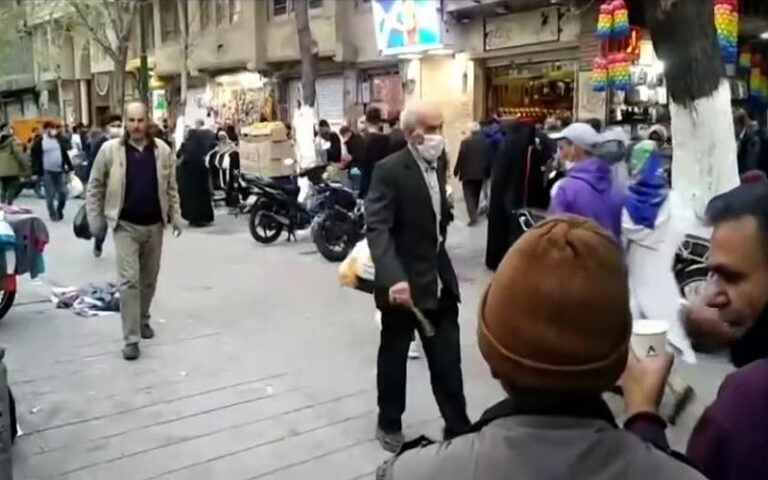
Unprecedented Inflation And Rising Prices In Iran’s Food Market

The report indicates that economic recession, unemployment, inflation, and household financial conditions play a decisive role in the occurrence of crimes.

Additionally, rising inflation and its negative consequences have directly contributed to social disorders and increased crime rates—an issue consistently raised by independent experts who have warned of the repercussions of ignoring it.

Mohammad Bathaei, Deputy Minister of Interior and head of the Social Affairs Organization, acknowledged the link between people’s livelihood struggles and the rise in social harms, stating, “For some types of social issues, the economic situation of the people has a strong correlation with their increase.”

He claimed, “At least in some cases, it is necessary to improve the country’s economic situation in order to control these harms.”

However, evidence suggests that the Iranian regime has taken no tangible steps to control inflation, reduce poverty, or create sustainable employment. Instead, misguided economic policies and an inefficient governance system continue to exacerbate these issues.

One of the most controversial aspects of analyzing social harms is the absence of official reports since 2016.

In response to the question of why the Ministry of Interior has not released a report on the country’s social conditions in recent years, Bathaei promised that the “Social Conditions Report” will be published by the second quarter of 2025 in collaboration with two reputable universities.

This delay in publishing reports comes at a time when inflation and unemployment have worsened, and the rates of theft and other social crimes have increased.

Another key point in Bathaei’s remarks was linking social harms to the presence of foreign nationals, particularly Afghans, in Iran.

While Bathaei stated in another part of his speech that “these two issues should not be linked,” he simultaneously emphasized that “the Ministry of Interior’s policy is to first expel unauthorized foreign nationals in an appropriate manner.”

Referring to the “re-entry of deported foreign nationals,” this senior government official added, “Therefore, the Ministry of Interior, in coordination with the Ministry of Foreign Affairs, law enforcement, and other relevant agencies, is making determined efforts to remove unauthorized foreign nationals from the country.”

Despite repeated statements from social experts that the main causes of social harms are domestic economic crises, systemic corruption, and failed government policies, regime officials continue to blame “foreign nationals” to conceal their inability to provide for the population and their structural failures in addressing social issues.


Massive Demonstration in Munich Calls for a Firm Stance Against Iran’s Regime

0

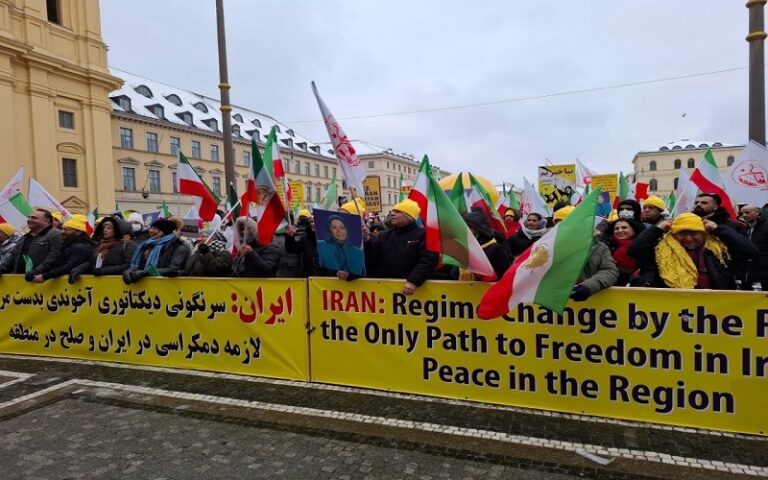
Munich, February 14, 2025 – Amid freezing temperatures of -12°C, hundreds of Iranian Resistance supporters held a large demonstration near the Munich Security Conference (MSC2025), urging European leaders and international policymakers to adopt a firm stance against Iran’s regime.

The demonstrators, supporters of the National Council of Resistance of Iran (NCRI), called for an end to Western appeasement policies toward Iran’s regime and demanded the designation of the Islamic Revolutionary Guard Corps (IRGC) as a terrorist organization. Additionally, they stressed the urgency of reinstating UN Security Council resolutions regarding Iran’s nuclear program, warning of Tehran’s continued pursuit of nuclear weapons as a threat to regional and global stability.

Calls for a Shift in Western Policy

Holding banners and chanting slogans, the protesters denounced the Iranian regime’s domestic repression, regional destabilization efforts, and nuclear ambitions. Their demands focused on three key points:

  1. A fundamental shift in Western policies toward Iran – Protesters rejected any engagement that grants legitimacy to the regime and urged European governments to adopt a firm approach toward Tehran.
  2. Reinstating UN Security Council resolutions on Iran’s nuclear program – They called for full activation of the “snapback mechanism” to counter Tehran’s nuclear ambitions.
  3. Blacklisting the IRGC – The demonstrators urged the EU and the UK to officially designate the IRGC as a terrorist entity, emphasizing its role in repression and terrorism.

Mohammad Mohaddessin, Chairman of the NCRI Foreign Affairs Committee, took to social media to highlight the long-standing warnings about the Iranian regime’s threats.

“If the Munich Security Conference wants to take an effective step, it must make confronting the threats of Iran’s regime a priority,” Mohaddessin wrote. “33 years ago, we declared ‘Islamic fundamentalism is the new global threat’ led by the mullahs. Those in power did not take it seriously, otherwise fate would have been different, and great tragedies such as 9/11, the bloody tragedy of Syria, Iraq, Lebanon, and Yemen, and the current war in the region could have been prevented.”

Rejecting All Forms of Dictatorship

Beyond their demands for a firm international stance, the protesters made it clear that they reject both the ruling theocracy and any return to monarchy, chanting: “Down with the oppressor, be it the Shah or the Mullahs.” They called for a secular, democratic republic in Iran.

Meanwhile, a group of prominent German figures issued a statement urging world leaders at MSC2025 to support the Iranian people’s struggle for democracy.

“We denounce the clerical dictatorship for its oppressive governance and human rights abuses, and we also reject the dictatorship of the former Shah,” they wrote, stressing the importance of standing with Iranians fighting for freedom.

The signatories also expressed support for the Free Iran Rally in Paris on February 8, which carried the slogan: “No to the Dictator, be it the Shah or the Mullahs, Yes to a Democratic Republic.” They endorsed the 10-point plan of NCRI President-elect Maryam Rajavi, which has received backing from over 4,000 MPs and 137 former world leaders, as a blueprint for a free Iran.

Calling on governments worldwide to recognize the Iranian people’s right to self-determination, the statement concluded: “The time for change is now; the people of Iran deserve freedom, justice, and democracy.”


Iran’s Economic Crisis; Dollar Above 1,000,000 Rials and the Risk of Political Instability

Hossein Raghfar, an economist who has held positions in reformist administrations of the Iranian regime, predicted that the exchange rate would exceed 1,000,000 rials per US dollar based on the correlation between currency value and gold coin prices. He emphasized that this situation is “fuel for regime overthrow.”

In an interview with the state-affiliated website Didban Iran, Raghfar discussed recent turmoil in Iran’s foreign exchange market. He dismissed the possibility that the government was speculating or manipulating currency exchange rates for profit, stating, “The government currently has no foreign currency reserves to inject into the market […] The government has no power.”

The Devaluation of Iran’s Rial Has Accelerated

He added that previous currency interventions had already taken place and emphasized, “National interests have been sacrificed for the benefit of oligarchs and mafias.”

Raghfar’s remarks come just two weeks after the heads of the three branches of government approved the transfer of Iran Khodro’s management—despite widespread criticism and the explicit opposition of the Competition Council—to a conglomerate owned by two families convicted of financial crimes. Previously, the Iranian regime’s Iran’s Supreme Leader, Ali Khamenei, had personally endorsed the transfer of Iran Khodro, the country’s largest automobile manufacturer, to the Krouz family after consulting with Hamid Keshavarz Tuchaei, a businessman accused of economic corruption.

Raghfar further warned that the continuation of these conditions would undermine the country’s political foundations. He stated, “The economic and social foundations have long been eroded, and from now on, we should expect the political foundations to suffer even greater damage than they already have.”

On February 6, former Iranian president Hassan Rouhani, in his last periodic meeting with his cabinet ministers, had issued warnings about dealing with Donald Trump and the dangers of making poor decisions.

He stated that the Iranian regime was in a critical situation and that a single mistake could destroy everything.

Raghfar, a professor of economics at Alzahra University, noted that the exchange rate could reach 1,000,000 rials per dollar or even higher. He explained, “There is evidence for this scenario. Currently, four billion dollars’ worth of gold imported from abroad is being sold at exchange rates of 1,100,000 to 1,200,000 rials per dollar.”

He emphasized, “When this gold is converted into coins, the exchange rate is calculated at approximately 1,100,000 rials per dollar.”

On February 9, the exchange rate in Iran’s free market reached a historic high of 940,000 rials per dollar.

In conclusion, Raghfar described the country’s situation as a “disaster” and stressed, “In my opinion, this is fuel for regime overthrow, and foreign elements are intensely active in this area. Their agents and operatives are strongly present in the media, academic institutions, and decision-making centers.”

Raghfar’s statements come as another major challenge facing the Pezeshkian administration is the impending increase in gasoline prices.

Since 198990, after Khamenei assumed leadership of the regime, successive governments have increased gasoline prices on average every two years across 15 different occasions until 2019. However, for over five years since November 2019, gasoline prices have remained unchanged.

Evidence and statements indicate that the government and parliament of the regime plan to at least change the gasoline rationing system by Nowruz 1404 (March 21, 2025).

On February 7, former interior minister Abdolreza Rahmani Fazli, in a televised program, warned about this issue, stating, “Today’s situation is far more concerning than in 2019.” He emphasized, “The gasoline issue is no longer merely economic; it has become political, social, and security-related.”

In 2019, after gasoline price hikes, widespread protests erupted across Iran, resulting in the Iranian regime killing 1,500 protesters.


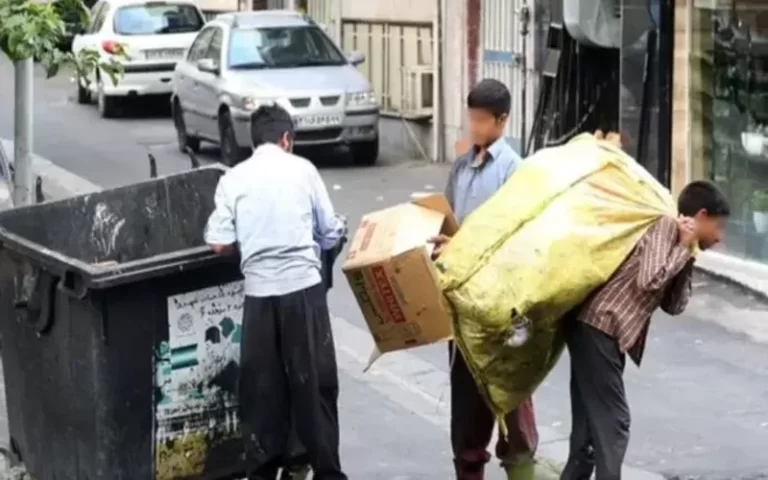
As Widespread Poverty Grips Iran, Household Expenses Continue to Rise

With one month left until the end of the Iranian year, the minimum cost required for a household’s subsistence basket has surpassed 300 million rials (approximately $323). Meanwhile, Iran’s Welfare and Family Health Deputy at the Khomeini Relief Committee announced a “40% increase in financial aid” for the committee’s beneficiaries in the coming year. He stated, “The monthly allowance for a three-person household will be 28 million rials, and for a four-person household, it will be 35.77 million rials (approximately $30 to $39).”

The Spread of Poverty in Iran

However, some experts believe that the recent surge in the exchange rate, surpassing 900,000 rials per U.S. dollar, will drive inflation to 50% in the coming year. They estimate that the minimum cost of a household’s subsistence basket will rise to 450 million rials (approximately $484) in major cities.

According to the state-affiliated website Didban Iran, the Welfare and Family Health Deputy of the Khomeini Relief Committee stated that more than 4.776 million people are under the support of this organization, with most households consisting of one or two members.

He further stated that in the coming year, based on the 2025 budget law and the 40% increase in financial aid, the allowance for a single-person household will rise from 10 million rials to 14 million rials (approximately $11 to $15). The allowance for a two-person household will increase from 14.2 million rials (approximately $15) to 19.88 million rials (approximately $21.3).

This official from the Khomeini Relief Committee also stated that the monthly allowance for a three-person household will be 28 million rials (approximately $30), and for a four-person household, it will be 35.77 million rials (approximately $38.5). With the 40% increase factored in, families of five or more will receive 44.1 million rials (approximately $47.5) in the next Iranian year, starting on March 21.

The promotion of this financial aid increase comes while the households under the support of this committee, which is affiliated with the Iranian regime, lack the ability to earn an income.

Furthermore, the latest report from the Iranian Statistics Center on January inflation states that the prices of one-third of food items have increased by 30% to 50%, while one-fourth of food items have risen by more than 50%.

Additionally, the latest report from the Iranian Statistics Center indicates that out of 53 selected food items in urban areas, 27 items have experienced a price increase higher than the year-on-year inflation rate in cities.

Meanwhile, as the deadline for setting the minimum wage for workers in the coming year approaches, employer representatives and the government are attempting to keep wage increases below 30%.

Iran’s economic conditions have led to protests by various labor groups, including workers, teachers, and retirees.

Over the past 46 years, one of the world’s wealthiest countries has been looted by Iran’s rulers, plunging millions into poverty and misery. Instead of addressing these crises, Iran’s leaders allocate the nation’s revenues to domestic repression and regional conflicts.


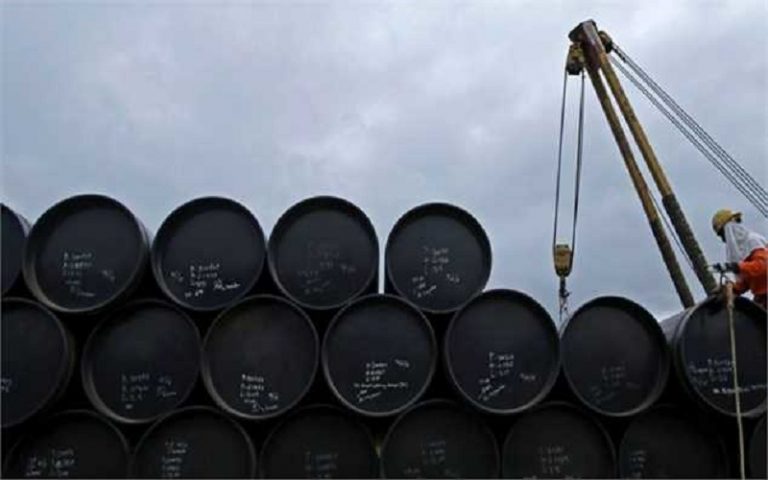
U.S.: Under ‘Maximum Pressure,’ Iran’s Oil Exports Will Again Be Reduced to 100,000 Barrels Per Day

Scott Bessent, the U.S. Secretary of the Treasury, stated on Friday, February 14, that the United States intends to implement a “maximum pressure” policy to reduce Iran’s oil exports to 100,000 barrels per day.

In an interview with Fox Business, he stated that the Iranian regime is currently exporting between 1.5 million and 1.6 million barrels of oil per day, using the revenues to finance its terrorist activities worldwide.

The U.S. Treasury Secretary emphasized that the Trump administration is committed to reducing this figure back to 100,000 barrels per day, as had been achieved by the end of Trump’s first term.

Scott Bessent stated that China and possibly India are purchasing Iranian oil despite the sanctions, calling this unacceptable.

U.S. Congress Proposal to Push Three European Countries to Trigger Snapback Mechanism Against Iran

The U.S. Treasury Secretary added that imposing maximum pressure on the Iranian regime and reducing its daily oil exports to 100,000 barrels would put the already fragile Iranian economy—grappling with massive inflation and a severe budget deficit—under even greater financial strain.

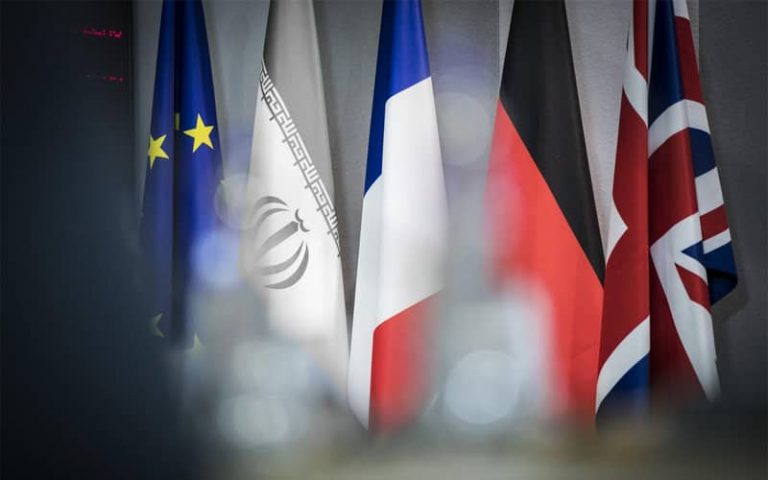
In connection with this, a group of U.S. lawmakers introduced a new resolution calling for the reinstatement of strict United Nations sanctions against the Iranian regime, accusing its officials of repeatedly violating the Joint Comprehensive Plan of Action (JCPOA).

According to Fox News, this resolution, which has bipartisan support in the U.S., urges the United Kingdom, France, and Germany to swiftly activate the “snapback mechanism” through the United Nations Security Council and reimpose sanctions on the Iranian government.

On Tuesday, February 4, former U.S. President Donald Trump signed an executive order reinstating the maximum pressure campaign against Iran, with the full text available on the White House website.

Reinstating Maximum Pressure on Iran’s Regime

U.S. President Donald Trump signed a National Security Presidential Memorandum (NSPM) that reinstates maximum pressure on Iran’s regime, blocks its pathways to acquiring nuclear weapons, and counters the regime’s malign influence abroad.

In 2020, Trump declared that as long as he remained in office, Iran’s regime would never be allowed to obtain nuclear weapons.


Grossi: Iran Seeking to ‘Sevenfold’ Its Production of 60% Enriched Uranium

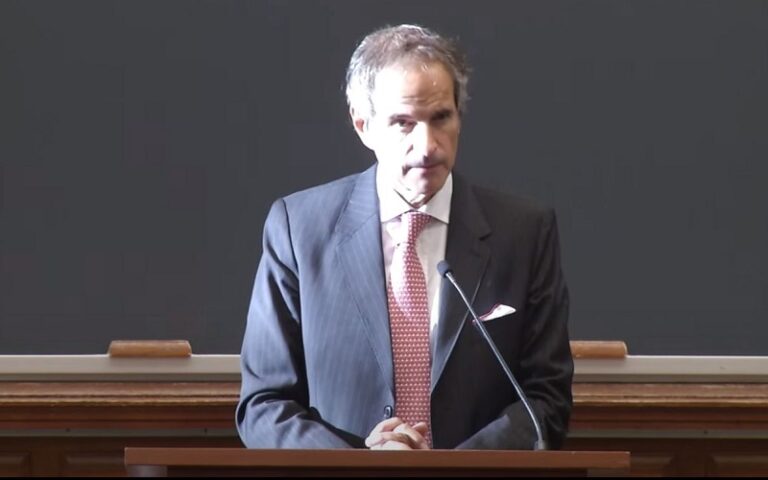
As the Iranian regime continues to insist on high-level uranium enrichment, Rafael Grossi, Director General of the International Atomic Energy Agency (IAEA), warned on Friday, February 14, about the sharp increase in Iran’s enriched uranium stockpile. He stressed that time is running out for reviving the JCPOA (Joint Comprehensive Plan of Action).

Despite widespread international opposition, the Iranian government continues to enrich uranium to 60%, bringing it dangerously close to the 90% enrichment level required for nuclear weapons production.

Iran’s Regime Says It Will Increase Uranium Enrichment

Speaking on the sidelines of the Munich Security Conference, Grossi warned that time for reviving the JCPOA is running out but added that this does not mean it cannot be accomplished quickly.

According to Grossi, the IAEA possesses all the necessary information, but decision-making rests with the Agency’s member states.

The IAEA chief stated that Iran is in the process of increasing its monthly production of 60% enriched uranium by sevenfold. He added that by the time the Agency releases its quarterly report next month, the Iranian regime’s stockpile of 60% enriched uranium could reach 250 kilograms.

According to IAEA standards, this amount of uranium, if further enriched, would be sufficient to produce six nuclear bombs.

Grossi warned that the international community must take this issue very seriously, emphasizing that time should not be wasted. He expressed hope that the Iranian regime would once again become a focal point of global attention.

The IAEA Director General stated that he eagerly awaits the White House’s appointment of a U.S. special envoy for Iran so that discussions and consultations on the next steps regarding the Iranian regime can begin. Grossi also noted that the IAEA remains in contact with the Trump administration.

Grossi’s remarks come as U.S. President Donald Trump reinstated the “maximum pressure” campaign against Iran’s regime by signing an executive order on Tuesday, February 4.

According to this directive, maximum pressure on the Iranian regime will be reinstated, pathways to acquiring nuclear weapons will be blocked, and efforts will be made to counter the Iranian regime’s malign influence abroad.

Another section of the directive states that Donald Trump will not tolerate the Iranian regime’s possession of nuclear weapon capabilities or its continued support for terrorism, particularly against U.S. interests.


U.S. Congress Proposal to Push Three European Countries to Trigger Snapback Mechanism Against Iran

Several members of the U.S. House of Representatives and Senate have introduced proposals urging the three European signatories of the JCPOA to follow the maximum pressure policy against Iran’s regime and to trigger the snapback mechanism, reinstating all sanctions on Tehran.

Senator Pete Ricketts introduced this proposal to the Senate, while Claudia Tenney is behind the initiative in the House of Representatives.

On Thursday, February 13, Pete Ricketts described the reinstatement of all sanctions against Iran’s regime (snapback mechanism) as a key factor in the success of Donald Trump’s maximum pressure policy. He stated that his proposal sends a strong message to the United States’ European allies.

In a video message, the Republican senator referred to Iran’s regime as the world’s leading state sponsor of terrorism and warned that its acquisition of nuclear weapons would pose a threat to the security of the U.S. and its allies.


Emphasizing that Donald Trump took decisive actions against Iran’s malign activities within the first month of his presidency, he urged France, the United Kingdom, and Germany to act swiftly and trigger the snapback mechanism before October, after which the opportunity would be lost. He described this measure as essential for curbing Iran’s nuclear ambitions and other malign activities.

This proposal has been introduced to the U.S. Senate by Pete Ricketts with the support of 13 other senators.

Claudia Tenney, while introducing the proposal to the House of Representatives, stated that the initiative sends a clear message to the three European countries: “It’s time to step up.”

The snapback mechanism refers to a process that leads to the immediate and automatic reinstatement of all United Nations sanctions against Iran and remains valid until the expiration of the JCPOA in October 2025.

U.S. President Donald Trump has repeatedly stated in recent weeks that he would prefer not to have to resort to the maximum pressure policy against Iran and instead reach a verifiable nuclear agreement with Tehran.

In his latest remarks in an interview with Fox News, he stated that Iranian officials were worried and fearful and willing to negotiate. He stated that he preferred to reach a better nuclear agreement with Iran rather than resort to military action.


Iranians Can’t Afford to Buy Homes

The inability to afford housing has become one of the most significant challenges for Iranian households in recent years. Here’s a brief look at the root causes of this issue.

Some housing policymakers believe that the housing market imbalance is physical in nature. They argue that a shortage of 5 million housing units is the main cause of this imbalance. However, the real issue is the lack of purchasing power among households.

Since 2011, investment growth in construction has been negative 4%. Additionally, from 2019 to the final quarter of 2024, capital formation in buildings has recorded a negative growth rate of 5%.

Severe Housing Price Increases: Home Ownership, a Distant Dream for Many Iranians

Disruptions in housing supply and demand have been caused by imbalances in key macroeconomic variables. These imbalances have pushed the housing market into an abnormal state.

Since 2014, the housing production slump has continued, and construction volume has remained below the minimum required for market balance. Estimates indicate a housing unit shortage of approximately 2.6 million units nationwide.

However, three key factors indicate that physical imbalance is not the root cause of the housing crisis.

Those advocating for the mass construction of housing cite the household density index as evidence.

They argue that urban housing shortages amount to approximately 1.5 million units. However, in Iran, high inflation and economic risks have led to many housing units remaining vacant.

In 2016, while there were 18.1 million urban households, only 17.4 million residential units were occupied. The household density index indicated a shortage of one million units.

However, in the same year, nearly 5 million vacant or second-home properties existed.

The Issue Is Not Supply Shortage; The Real Problem Is Poverty

This indicates that when considering both occupied and vacant housing units, the market in 2016 faced an oversupply, not a shortage.

In recent years, a portion of existing housing has remained out of the consumer market. If these units were made available, a significant part of the housing imbalance would be resolved.

Physical imbalance can be addressed if economic imbalance is resolved. However, as long as economic issues persist, solving the physical imbalance alone will not yield results.

The experience of constructing 2.3 million “Mehr Housing” units in 2007 demonstrates that even after seven years, 15% of all housing units in the country remained unused.

Additionally, the experience of the state-backed Maskan Melli (National Housing) project in the past three years has shown that many eligible households cannot afford the initial payment.

Out of over 5 million registered households, only 1 million have been able to provide the required upfront payment.

The dominance of speculative and real estate investment profits is another obstacle preventing new housing units from entering the consumer market.

Between 2011 and 2023, approximately 5.5 million new housing units were constructed. However, at the same time, over 1 million new households joined the ranks of renters.

House Rent Prices at Record High in Iran

These figures indicate that a portion of new housing units was acquired by existing property owners rather than increasing supply for new buyers.

During this period, the number of urban households grew by 6 million, while 5.5 million new housing units were built.

However, the number of renters increased from 4.5 million to nearly 6 million, and the number of homeowners rose from 9.4 million to 13.6 million households. These statistics confirm that the real issue is the economic imbalance in the housing sector—household poverty.

Housing: A Necessity or a Tool for Speculation by Government Entities?

Currently, 1.5 million urban renters live in absolute poverty, a figure that has increased 1.5 times since 2011.

Additionally, over 4 million households in cities and rural areas lack adequate housing.

Half of Iranian households spend more than the acceptable limit on housing costs. This economic reality indicates that the housing crisis is driven more by economic imbalance than by a physical shortage of homes.

For developers to increase housing production, they need to sell or rent out their constructed units.

However, as long as household financial difficulties persist, the housing market will not experience growth. High inflation and low economic growth have driven up living costs.

In this situation, households struggle to afford basic necessities such as food, medicine, and clothing, leaving them unable to pay for housing.

As a result, demand for purchasing or renting housing has declined, pushing the market into a deeper recession.

Improving the housing market requires sustainable economic solutions

Unless inflation is controlled and household incomes increase, neither construction will thrive nor will the housing market imbalance be resolved.

In short, Iran’s housing crisis stems from the lack of purchasing power and economic deprivation of citizens, not from a shortage of housing units.

Many powerful and wealthy entities have exploited the housing market for speculation, reaping enormous profits.

It was previously revealed that over 2 million vacant homes in Tehran are owned by state-affiliated banks, and no taxes are paid on them.


 

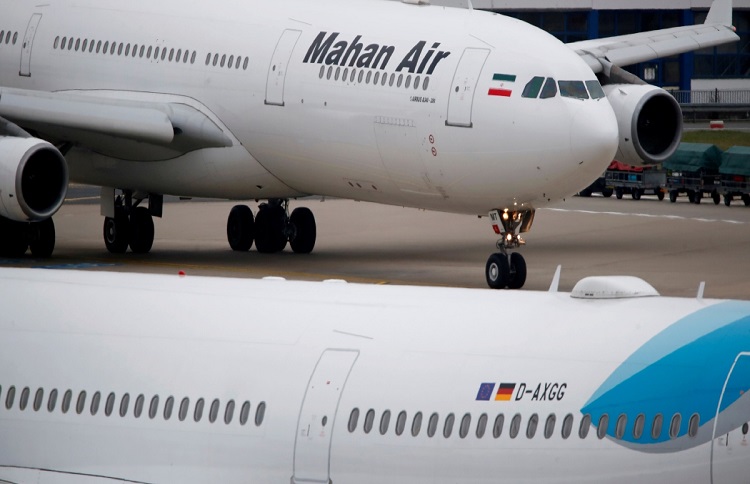
Lebanon Cancels Mahan Air Flight Directing Money From Tehran To Hezbollah

After the cancellation of a Mahan Air flight to Lebanon, Hezbollah supporters blocked the roads leading to Beirut airport.

This flight was scheduled to depart from Tehran to Beirut on Thursday, February 13, but Lebanon’s Civil Aviation Authority canceled it.

An official at Beirut’s Rafic Hariri International Airport told Agence France-Presse (AFP) that, based on an order from Lebanon’s Ministry of Transport, the airport informed Mahan Air that it could not accommodate two of its flights scheduled for Thursday and Friday.

Following the news of the flight cancellations, a number of protesters holding Hezbollah flags and pictures of the group’s leaders blocked the roads leading to Beirut airport.

Videos posted online also show protesters burning tires and chanting slogans.

Iranian Plane Inspected in Beirut Airport on Suspicion of Carrying Aid to Hezbollah

A few hours before the news of the Mahan Air flight cancellation, the Israeli military announced that Iran’s Quds Force, a branch of the Islamic Revolutionary Guard Corps (IRGC), was attempting to transfer money to Hezbollah in Lebanon using civilian flights.

Avichay Adraee, the Arabic-language spokesperson for the Israeli military, wrote on X that the Iranian regime and Hezbollah had made several attempts in recent weeks to transfer money for attacks against Israel, and they estimate that some of these smuggling efforts were successful.

According to Adraee, the Israeli military, which is in contact with the ceasefire monitoring committee, regularly provides the committee with necessary intelligence.

The Israeli military previously warned that Hezbollah is attempting to rebuild itself with financial and military support from Iran.

Hezbollah suffered heavy losses in the recent conflict with Israel, including the deaths of many senior commanders as well as Hassan Nasrallah, the group’s leader.