Home Blog Page 131

Amnesty International warns of the imminent execution risk of two political prisoners

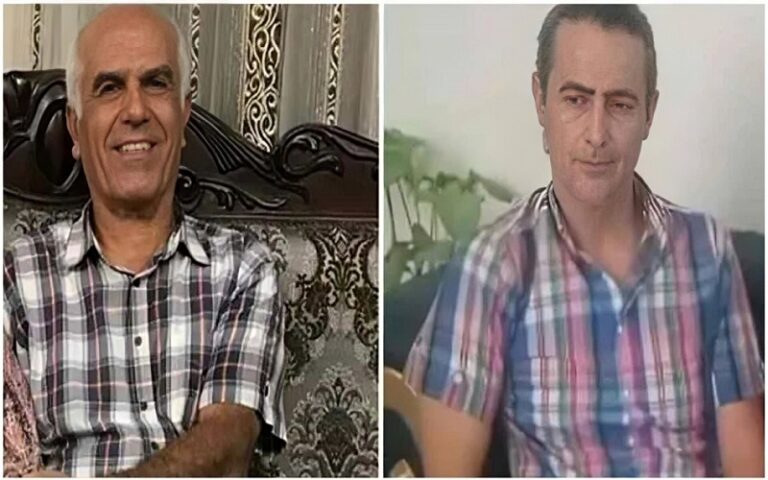
Amnesty International has warned of the imminent execution of two political prisoners, Mehdi Hassani, 48, and Behrouz Ehsani, 69, supporters of the People’s Mojahedin Organization of Iran (PMOI), and has called for an immediate halt to any plans by Iranian authorities to execute them.

On Monday, January 27, Amnesty International announced that the sudden transfer of these two death-row political prisoners on Sunday, January 26, from Evin Prison to Ghezel Hesar Prison in Karaj, Alborz Province, has heightened concerns about the risk of their imminent execution.

This human rights organization described the trial of these two political prisoners as “grossly unfair” and reported allegations of “torture and forced confessions” against them.

Growing Concerns Over Possible Execution of Two Political Prisoners in Evin

Amnesty International has urged Iranian authorities to halt any plans for the execution of Behrouz Ehsani and Mehdi Hassani, overturn their charges and convictions, and ensure their regular access to their families and necessary medical care.

The international organization has also requested Iranian authorities to ensure the right of these two political prisoners to independently choose their lawyer, protect them from further torture and mistreatment, and investigate allegations of torture, prosecuting the perpetrators in fair trials without resorting to the death penalty.

Behrouz Ehsani Eslamloo and Mehdi Hassani were sentenced to death in mid-September 2024 on charges of “rebellion, waging war against God, and spreading corruption on earth” in Branch 26 of the Revolutionary Court presided over by Iman Afshari.

The charges against them also include “gathering classified information, assembly and collusion against national security, and membership” in the PMOI.

Also A coalition of 260 prominent international experts and NGOs has urgently called on Volker Türk, the United Nations High Commissioner for Human Rights, to intervene in the case of Iranian political prisoners Behrouz Ehsani, and Mehdi Hassani

According to previous reports from human rights sources, at least 54 “political and security” prisoners currently face death sentences in Iranian regime prisons on charges such as “rebellion, waging war against God, and spreading corruption on earth.”

The U.S. State Department has condemned the “increasing use of executions by the Iranian regime to suppress the people” and emphasized its continued support for the Iranian people in the face of the “unrelenting human rights violations” by the Islamic Republic.


Why Did Foreign Investors Leave Iran?

The recent departure of several foreign investors from Iran has highlighted new dimensions of “isolation” and “monopoly” in the country’s turbulent economy. With the sharp rise in the free-market exchange rate of the U.S. dollar and the prospect of Donald Trump’s return to the White House, exporting oil and attracting investments have become more challenging for the Iranian regime. As a result, the few remaining foreign investment firms are pulling out their capital from Iran.

It was previously reported that the Turkish investor of the “V One” chain stores had been removed from the list of the store’s shareholders.

Major Saudi Food Company Exits Iran After 20 Years

In early January, it was announced that “Savola Group” of Saudi Arabia, a giant in the Middle Eastern food industry, had exited the Iranian market after two decades of significant presence in the cooking oil sector. Some experts attribute this departure to escalating “political tensions” and “declining profitability.”

But the story doesn’t end here. Hyperstar and Digikala, two prominent brands in Iran’s retail and e-commerce markets, have also recently witnessed the departure of their foreign shareholders. The Emirati company “Majid Al Futtaim” has left Hyperstar’s list of shareholders, and the European investment firm “IIIC,” which owns about 33% of Digikala’s shares, is set to exit Iran in the near future.

Is Iran on the verge of losing its last opportunities to attract investment?

In a statement released on January 1, Savola Group cited its “strategy of timely withdrawal from non-core markets” as the reason for ceasing its operations in Iran. However, speculation about the underlying reasons for the Saudi investor’s exit suggests that political factors and Iran’s international conditions likely played a role in the decision.

Some point out that the company had previously withdrawn from the Moroccan and Iraqi markets, arguing that the decision was solely based on marketing strategies. On the other hand, some argue that since the company supplies over 40% of Iran’s cooking oil and owns 80% of the shares of the prominent “Behshahr Industries,” its decision to leave Iran is still inconsistent with standard economic criteria.

Declining Purchasing Power and a Challenging Business Environment

Iran has faced severe economic challenges in recent years. Rising inflation, extreme currency fluctuations, budget deficits, and increased government taxation have collectively reduced consumers’ purchasing power. This reduction has directly impacted the profitability of businesses, diminishing the appeal of investing in the Iranian market.

Iran has consistently ranked among the lowest countries in international business environment indices. According to the latest rankings by the UK-based “Economist Intelligence Unit,” Iran ranked 81st out of 82 countries from 2014 to 2018, ahead of only Venezuela. However, in the most recent rankings, Iran did not even appear on the list, indicating a further deterioration in the country’s business environment.

In the World Bank’s Ease of Doing Business rankings, Iran stands at 127th out of 190 countries.

The consistent decline in the investment growth rate over the past decade underscores that not only foreign investors but also domestic capital is exiting Iran. A report by the Economic Research Division of the Iranian Chamber of Commerce shows that the average annual investment growth rate in 2010 was -4.7%.

According to official reports, capital flight from Iran significantly accelerated in 2015, peaking in 2017 when the United States withdrew from the JCPOA (Iran nuclear deal). That year, Iran’s net capital account was more than $19 billion in deficit.

Changing Regulations and the Phenomenon of “Shadow Governments”

The instability in regulations and economic policies, particularly rent-seeking mechanisms, has made Iran’s business environment increasingly opaque. Foreign companies that operate based on transparency and fair competition struggle to sustain themselves in Iran’s economy, where many economic opportunities are dominated by rentier and security-affiliated institutions.

The involvement of unofficial entities, such as companies linked to security and religious organizations, has further complicated the economic landscape.

One of the most notorious examples of shadow government interference and security entities disrupting foreign investment in Iran is the 2004 inauguration of Imam Khomeini Airport. The Turkish-Austrian company “TAV” was set to complete all phases of the airport within two years. However, on the opening day, the Islamic Revolutionary Guard Corps (IRGC) blocked the airport’s runway, preventing aircraft operations and effectively terminating the contract. Decades later, subsequent phases of the airport remain incomplete.

The Return of Trump and International Pressures

Some speculations in Iran attribute the foreign investors’ exodus to the return of Donald Trump to the U.S. presidency. Trump’s return raises the likelihood of increased international pressures and sanctions against Iran’s regime. Many multinational companies investing in Iran also have significant operations in Western markets, making continued collaboration with Iran a risk that could subject them to Trump’s stricter policies.

Are Opportunities Lost Forever?

Many experts and private sector representatives are warning of an intensified wave of investor departures from Iran.

The long-term consequences of foreign investors leaving Iran, amid the absence of a clear prospect for attracting new investments, have become alarming. The economic challenges facing the Iranian regime will not be resolved even with the lifting of international sanctions.

In the past decade, Iranians have repeatedly taken to the streets, demanding regime change due to harsh economic and political conditions. In the not-too-distant future, Iran is likely to witness even larger uprisings, ultimately leading to change.


In Iran, One-Third of Patients Refrain from Purchasing Medication

Following the recent rise in medication prices, many patients have refrained from obtaining their prescribed drugs, with some pharmacists reporting that one-third of patients forgo purchasing medication due to its high cost.

Mohammad Abdozadeh, chairman of the Iranian Syndicate of Human Pharmaceutical Industries, told the state-run IRNA news agency that the root of rising medication prices lies in the country’s macroeconomic conditions and the budget deficit of the Ministry of Health.

He added: “While the Ministry of Health avoids adjusting prices in line with inflation, the costs of drug production—including raw materials, packaging, and transportation—have sharply increased due to the exchange rate and inflation.”

Preferential Currency for Medicine Will Be Removed in Iran

According to Abdozadeh, the increase in medication prices not only stems from manufacturers’ need for domestic and foreign resources but has also exacerbated the decline in production capacity.

Alireza Azani, a pharmacist, also highlighted the challenges faced by manufacturers, noting that companies are grappling with severe issues due to liquidity shortages and unpaid receivables from drug distribution companies.

The pharmacist further stated that some factories are operating at only 30 to 40 percent capacity, leading to protests within these companies.

He added that the average collection period for receivables has exceeded 400 days, creating significant liquidity challenges for pharmaceutical companies.

Shahram Ghafari, Deputy Director of Treatment at the Social Security Organization of the Iranian regime, told IRNA that the increase in drug prices was implemented by the Food and Drug Administration but without coordination with basic insurance organizations.

He added that this lack of coordination led to higher out-of-pocket payments for patients, and some medications have yet to be updated in the insurance systems.

According to this official, this period of misalignment lasted about a week, resulting in increased costs for both patients and insurers.

Despite these price increases, Abdozadeh emphasized that the pharmaceutical industry is not inclined to raise prices but, given the economic pressures and prevailing inflation, pharmaceutical companies need “price adjustments” to continue production.

In recent weeks, Mohammadreza Zafarghandi, Iran’s Minister of Health, announced the removal of subsidized exchange rates for drugs, stating that the import of pharmaceutical items would be conducted using NIMA rates, and the preferential exchange rate for medical equipment would also be eliminated.

The uncontrolled rise in drug prices continues despite his claim about a month ago that after removing subsidized exchange rates for drugs and medical equipment, “monitoring” would prevent placing pressure on patients.

Resolving the challenges of insurance and healthcare has consistently been one of the primary demands raised in the economic protests of retirees and workers from various industries in Iran.


Growing Concerns Over Possible Execution of Two Political Prisoners in Evin

On Sunday, January 26, judicial authorities in Evin Prison have transferred Mehdi Hassani and Behrouz Ehsani, two political prisoners on death row for supporting the People’s Mojahedin Organization of Iran (PMOI/MEK), to Ghezel Hesar prison, according to a statement by the National Council of Resistance of Iran (NCRI). The event has raised fears about their possible execution.

According to the report, Evin Prison officials removed Mehdi Hassani and Behrouz Ehsani from wards 8 and 4 of the prison on Sunday morning under the pretext of a visit to the infirmary. Hours later, the two political prisoners had yet to return to their wards.

Following several hours of no information, cellmates and relatives of these political prisoners expressed concern over the risk of their execution. A group of political prisoners held a protest gathering in front of the prison guard office.

Iran’s Regime Sentences 6 Political Prisoners to Death

Meanwhile, Mustafa Nili, a lawyer, announced on the social network X on Sunday that a request for a retrial for Behrouz Ehsani “was filed last week and referred to one of the Supreme Court branches yesterday, Saturday.”

The transfer of these prisoners to an undisclosed location has also caused concern among other prisoners, and they gathered in front of the prison guard office, chanting slogans in protest against the possible execution of the two prisoners, including “This is the final message; if you execute, there will be an uprising,” “Death to the dictator,” “By the blood of our comrades, we stand to the end,” and “I will kill the one who killed my brother.”

Behrouz Ehsani Eslamloo, 70, and Mehdi Hassani, 48, were sentenced to death in mid-September 2024 by Branch 26 of the Iranian regime’s Revolutionary Court, presided over by Iman Afshari, on charges of “rebellion, enmity against God, and corruption on earth.”

Other charges attributed to the two prisoners include “gathering classified information, assembly and collusion against national security, and membership in the PMOI/MEK.”

Amnesty International recently highlighted the “horrifying increase in executions” in Iran and called on Iranian authorities to immediately revoke the death sentences of these two political prisoners.

According to previous reports from human rights sources, at least 54 political and security prisoners currently face death sentences in Iranian regime prisons on charges such as “rebellion, enmity against God, and corruption on earth.”


Rising Prices of Potatoes and Appliances in Iran Due to Supply and Exchange Issues

A month after the establishment of the commercial foreign exchange market, the exchange rate allocated for the import of non-essential goods has reached approximately 664,000 rials per dollar. These changes, due to the rising cost of imports, have caused a 5% to 20% increase in the prices of household appliances.

Meanwhile, the dollar’s price in the open market stands at approximately 840,000 rials.

According to the state-run Etemad Online newspaper, this change in the exchange rate over the past month has caused a roughly 22% increase in the cost of the dollar for importers. Producers and sellers of household appliances have also factored this increase into their product prices.

Decline in Rice Production and Rising Prices in Iran Amid Inflation Growth and Public Protests

According to this report, the household appliance market had previously experienced instability when the dollar exchange rate rose to 840,000 rials, leading sellers to set varying prices. Now, with factory prices of household appliances adjusted to the new exchange rate, the market has become active again, and prices have stabilized at roughly uniform levels.

However, as Etemad writes, many raw materials and components required for manufacturing household appliances were imported months ago at lower exchange rates. Therefore, price increases under the pretext of exchange rate changes are not economically justifiable.

The economic report states that while price increases in the household appliance market continue, market stagnation has slightly slowed the unregulated rise in prices.

In another report by the state-run ILNA news agency, the head of Iran’s “National Potato Association” attributed the increase in potato prices to 500,000–600,000 rials to heavy rainfall and frost in Kerman province.

Khosrow Talebi Rahiq added that “particularly” in the southern part of this province, unfavorable weather conditions have slowed the harvesting and transportation of potatoes to the market.

He claimed that these issues have significantly contributed to the shortage of this product, resulting in price hikes.

Talebi Rahiq emphasized that the association had warned the Ministry of Agriculture on April 20, 2024, about the need to stockpile potatoes for the winter season. However, due to negligence in funding, this stockpiling did not take place.

The head of the National Potato Association added: “If 50,000 to 60,000 tons had been stockpiled, the market would not be facing shortages and sharp price increases today.”

According to Talebi Rahiq, the rise in potato prices is not due to a decline in production but rather because of issues in market supply.

He further explained that while strategic stockpiling was carried out in 2023, these reserves were not utilized in the domestic market, and the Ministry of Agriculture also did not permit exports. This led to an oversupply of potatoes in the market and losses for producers.

This industry representative stressed that Iran’s potato exports have decreased due to rising prices, although exports to the Gulf countries, Caspian Sea nations, Afghanistan, and Iraq are ongoing.


Decline in Rice Production and Rising Prices in Iran Amid Inflation Growth and Public Protests

The import of rice from March 21 to December 21, 2024, has decreased by approximately 20%, while the Ministry of Agriculture has claimed that with the production of 2.7 million tons of rice this year, the country’s need for imports has reduced.

According to the state-run Tasnim News Agency, Shayegan Adibi, introduced as an agricultural expert and the former “rice project manager” at the Ministry of Agriculture, stated that according to the latest official report by the ministry, the area under rice cultivation in 2023 was announced to be approximately 700,000 hectares. Including re-cultivation and ratoon harvests, this figure reached 790,000 hectares.

The Food Safety Crisis in Iran: Contaminated Rice Imports

This agricultural expert, citing existing records, estimated the actual cultivated area to be around 600,000 hectares, with 67% of it located in the provinces of Gilan and Mazandaran.

Adibi also described the Ministry of Agriculture’s claim about aerial mapping as “lacking technical validity” and said, “Such a plan has not been implemented on a large scale.”

Adibi added that the area under rice cultivation in 2023 had not changed compared to the previous year.

He explained that, according to the official report of the Ministry of Agriculture, the paddy production this year, including the first cultivation, re-cultivation, and ratoon harvests, was estimated at about 3.485 million tons, equivalent to the production of 2 million tons of white rice.

The former “rice project manager” also added that due to issues in accessing agricultural inputs, a reduction in the distribution of high-quality seeds, and a lack of progress in cultivation methods, rice production has not increased this year.

Adibi emphasized: “The claim of producing 2.7 million tons of white rice in 2024, which implies a 35% increase in production compared to the previous year, does not align with the realities of production in 2024.”

This agricultural expert warned that unprofessional estimates, in addition to impacting the increase in rice prices in the market, will raise the production costs for the 2025 agricultural year, particularly the wages of farmers, further burdening both consumers and producers.

Previously, Majidreza Khaki, spokesperson for the Rice Importers Association, stated that the price of Iranian rice had increased by 30% in less than a month.

Reports citing official statistics also indicate that sugar increased by 66%, Iranian rice by 56%, and cooking oil by 40% in December compared to the same month last year.

The price increases come at a time when the Central Bank of the Islamic Republic of Iran recently claimed that the 12-month inflation rate reached 36% in December 2024, the lowest in the past 50 months.

The inflation in Iran is influenced by economic policies, the Iranian regime’s actions outside its borders, the ongoing devaluation of the rial, and the power and gas outages in industries. This situation has been reflected in the protests of retirees, workers, and other wage earners, who have voiced their objections to the Iranian government officials.


Iran: Housing Constitutes 70% of Workers’ Expenses

Members of the Iranian regime’s Supreme Labor Council have reported from wage determination meetings that housing accounts for more than 70% of workers’ expenses. This has led labor and employer groups to pursue the issue of building housing for workers in collaboration with the government. However, many labor activists view this with skepticism, believing it to be an excuse for the government and employers to avoid raising wages in line with inflation and workers’ basic needs.

In this context, Mohammad Reza Tajik, a member of the Wage Committee of the Supreme Labor Council, told the state-run Tasnim news agency that one of the issues discussed was providing low-interest loans to workers. Another proposal was to rezone some land around industrial towns so employers could provide housing for workers.

Houses in Iran Shrink as Poverty Grows

According to this labor activist, workers may not be able to build housing with their limited savings and capital, but if cheap or free land is provided to them, they could become homeowners through partnerships with builders.

Critics argue that raising issues such as housing provision is a diversion tactic, as it is a time-consuming process that allows the government to avoid addressing the immediate financial needs of worker households. Media outlets have also reported on the dire conditions of workers. The Tabnak website wrote: “The rapid rise in the prices of essential goods and repeated price increases have significantly reduced workers’ purchasing power. Although wages were supposed to match inflation, the pace of inflation is so fast that it fails to offset workers’ expenses.”

This media outlet highlighted the gap, noting that the maximum income of a married worker is less than 150 million rials (approximately $178). In comparison, according to Faramarz Tofighi, a former member of the Supreme Labor Council, the minimum cost of living for a household in metropolitan areas in September 2024 was 320 million rials (approximately $380) and 283 million rials (approximately $356) in smaller cities.

Wages of Iranian workers cover only 30% of household expenses

In this regard, the inspector of the Supreme Assembly of Workers’ Representatives announced that the cost of the livelihood basket for a 3.3-member worker’s family has reached 400 million rials (approximately $475), while the average wage of workers is only 150 million rials, covering merely 30% of household expenses. According to the state-run Tasnim news agency, Hamidreza Emamqoli Tabar, the inspector of the Supreme Assembly of Workers’ Representatives, stated, “About 9% of workers in some provinces receive wages below the labor law, between 70 to 80 million rials (approximately $83 to $95).”

Meanwhile, critics believe that instead of supporting wage adjustments and improving workers’ living standards, the Iranian regime is looking for a formula to suppress wages. These individuals refer to recent comments by Ahmad Meidari, Iran’s Minister of Cooperatives, Labor, and Social Welfare, who stated, “It is not correct for us to determine the minimum wage based on the minimum cost of living and inflation. This figure should be set according to the level of work hardship in various industries.”

The issues raised and the government’s and employers’ approach to determining workers’ wages come as, in October of this year, the state-run ILNA news agency reported an increase in the cost of the household livelihood basket to 367.8 million rials (approximately $437) and wrote, “Wages do not even cover one-third of living expenses.”


New U.S. Secretary of State: Snapback Mechanism to Be Activated Against Tehran

U.S. Senator Ted Cruz announced that Marco Rubio, the new U.S. Secretary of State, supports activating the snapback mechanism against the Iranian regime. According to Cruz, Rubio responded to the Senate Foreign Relations Committee, stating that implementing the snapback mechanism is essential for U.S. national interests.

Elise Stefanik, Trump’s nominee for the United Nations, also identified the revival of the snapback mechanism as one of her main goals. She emphasized that countering the Iranian regime’s policies is a priority in her agenda at the United Nations.

The snapback mechanism refers to the automatic reinstatement of United Nations sanctions against the Iranian regime. This process is outlined in the Joint Comprehensive Plan of Action (JCPOA) and is valid until October 2025. According to UN Security Council Resolution 2231, countries have until fall of next year to activate the snapback mechanism.

The reinstatement of international sanctions would obligate the Iranian regime to halt uranium enrichment activities and research and development. It would also prohibit the transfer of related materials and equipment to Iran.

The snapback mechanism also reinstates conventional arms embargoes. All countries would be required to inspect shipments to and from Iran, and any prohibited cargo would be confiscated.

The U.S. cannot activate the snapback mechanism due to its withdrawal from the JCPOA during Trump’s presidency. However, European powers have until October of next year to activate this process.

Germany, France, and the United Kingdom announced in November 2024 that they were ready to activate the snapback mechanism. This announcement followed a report by the International Atomic Energy Agency (IAEA) about Iran’s 60% uranium enrichment. The European parties also pointed to the Iranian regime’s military support for Russia and adopted a tougher stance.

European Troika’s Threat to Activate the Snapback and the Clerics’ Pleas

The IAEA Board of Governors adopted a resolution against the Iranian regime in November 2024. This resolution condemned the expansion of Iran’s nuclear activities and its lack of cooperation with the agency. It was the second resolution in six months.

Abbas Araghchi, the Iranian regime’s Foreign Minister, warned that the reinstatement of sanctions might alter the nature of Iran’s nuclear program. His remarks have been interpreted as a potential reference to the possibility of nuclear weapons development.

The UK, France, and Germany held negotiations with the Iranian regime in Vienna ahead of Trump’s return to the White House. The goal of these talks was to discuss the conditions for activating the snapback mechanism and reimposing sanctions.

The snapback mechanism is a tool to pressure the Iranian regime. It can reinstate all sanctions and impose severe restrictions. Global powers use this mechanism to curb Iran’s nuclear program.

Until the expiration of the JCPOA, the snapback mechanism will remain one of the most important international tools for controlling the Iranian regime. If conditions remain unchanged, the likelihood of activating this mechanism will increase. Global powers will use this tool to ensure regional and international security.

On Monday, January 13, Majid Takht-Ravanchi, the Iranian regime’s Deputy Foreign Minister for Political Affairs, and his counterparts from France, the UK, and Germany attended a confidential meeting. No details from the

session have been released. Kazem Gharib Abadi, the Iranian Deputy Foreign Minister for Legal and International Affairs, was also present.

This meeting was the second round of negotiations in the past two months. The talks, held in Geneva, involved Iranian regime officials and the European Troika. Trump supporters in the U.S. deemed these negotiations futile and have urged Washington not to trust the Iranian regime.

Fear of Snapback Activation and Seeking Negotiations Despite Official Denial

Senator Ted Cruz accused the Biden administration of yielding to Tehran.

Joe Wilson, a member of Congress, made similar remarks. He stated that the Iranian regime is deceitful and seeks only chaos. He added that maximum pressure will soon be imposed on the regime and assured that Trump will rectify the situation.

Marco Rubio, the newly appointed U.S. Secretary of State, commented that the Iranian regime is exploiting opportunities to expand its nuclear program. Rubio emphasized that these actions are escalating tensions in the Middle East.

Abbas Araghchi, Iran’s Foreign Minister, rejected direct negotiations with Washington. He stated that the regime is unaware of the new U.S. administration’s position on the JCPOA.

Araghchi declared that negotiations between the Iranian regime and the U.S. have only been indirect. He referred to the Oman talks, which he called the “Muscat Process.”

Meanwhile, some Iranian officials have spoken about the necessity of direct negotiations. Ali Abdolalizadeh announced that the regime has reached a point of needing “face-to-face negotiations” and emphasized that talks should be held with Trump.

Mohammad Javad Larijani, an advisor to Khamenei, expressed a similar sentiment, saying, “If it serves the interests of the regime, even in the depths of hell, negotiations with the devil are possible.”

The threat of the snapback mechanism has created significant concern within the Iranian regime.

In recent months, the Iranian regime has been in its weakest domestic and international position. The snapback mechanism brings the return of sanctions and international pressures. This mechanism will lead to the

suspension of Iran’s nuclear activities. The snapback mechanism poses a serious threat to the Iranian regime and has generated significant fear.


Iran’s Rial Continues to Plunge, Hits All-Time Low At 840,000 Against the Dollar

One day after the Supreme Leader of the Iranian regime, Ali Khamenei, expressed concern about Iran’s economic dependence on the U.S. dollar, and simultaneously with the release of images of Massoud Pezeshkian digging in Khuzestan, the value of the rial plummeted again, with the price of one U.S. dollar in Iran’s free market exceeding 840,000 rials.

According to reports from Iran, on Thursday, January 23, the price of one U.S. dollar in the free market was 840,350 rials.

In recent hours, as the price of the dollar and other currencies continued to rise in Iran’s free market, users on social media reacted to the falling value of the rial.

Some users pointed out that the 840,000-rial record for the dollar and the gold coin price reaching 600 million rials (approximately $712) occurred just two days after Donald Trump assumed the U.S. presidency, while the Iranian regime had sent former Foreign Minister Mohammad Javad Zarif to Davos to stabilize the market.

Khamenei’s remarks about removing the dollar from trade in Iran coincided with news that one day after Donald Trump was sworn in as the 47th U.S. president, Saudi Crown Prince Mohammed bin Salman had contacted Trump to propose a $600 billion investment in the United States.

Several users compared the U.S. and Iranian presidents, referencing images of Massoud Pezeshkian digging with work clothes in oil-rich Khuzestan. They noted that while the dollar’s value crossed 840,000 rials, the Iranian president was shoveling in Khuzestan, whereas Donald Trump had attracted billions of dollars in investment for his country in just two days.

Earlier, Steven Mnuchin, Donald Trump’s nominee for U.S. Treasury Secretary, said on Thursday, January 16, that the dollar must remain the world’s reserve currency.


The Banks of Iran: Serving the Economy or Corrupt Capitalism?

The chaotic state of banks in Iran is one of the main causes of the country’s economic crisis. Instead of playing a supportive role in production, they have become tools serving the ruling establishment. This shift has led to an increase in debt and inflation.

The latest list of major bank debtors, dated mid-December 2024, was recently published by the Central Bank. According to the report, the overdue claims of banks have exceeded 7,890 trillion rials (approximately $9.85 billion). This figure is the result of large loans taken by state-owned, semi-state-owned companies and influential individuals.

The resources come from public deposits. The uncertainty in the repayment of these debts harms the public rights of the Iranian people.

The Iranian Regime’s Debt to Banks Has Increased By “Two and A Half Times” In Past Three Years

High bank interest rates have led to an increase in liquidity. The competition among private banks to pay higher interest rates has fueled liquidity growth, becoming a driver of inflation and an expansion of the monetary base.

Banks have entered various markets without accountability. This dangerous action has disrupted production and destabilized the economy. High bank interest rates have reduced productive activities. While economic growth has stalled, banks in Iran are engaged in non-productive activities.

Banks have altered the path of the economy. They do not extend loans to the private sector in Iran, sidelining it. Bank-affiliated companies, state-owned, and semi-state-owned companies take large loans but fail to repay them.

In reality, banks have directed financial resources to their affiliated entities. Easy loans to insider companies have created massive bank debts, leading to significant economic problems.

Currency fluctuations and the rising price of coins show that the banking system is actively involved in informal markets. Productive activities in the country do not yield similar profits. This indicates that the banking system has moved its capital into speculative currency and coin markets.

In the 2000s, the entry of the banking system into the housing market caused an uncontrolled surge in prices. This growth led to severe recessions, the effects of which are still present.

In recent years, mismanagement within the banking system has led to a decline in public trust. Many people have withdrawn their deposits from the banking system due to the poor performance of banks. This loss of confidence has put additional pressure on the economy.

The lack of transparency in the banking system’s operations is one of the main reasons for the crisis. Banks do not fully disclose their financial reports. This lack of transparency has made oversight of their operations difficult. Insufficient supervision has allowed banks to continue their harmful activities without accountability.

The latest list of major bank debtors, dated late December, was recently published by the Central Bank.

The list includes updated names of debtors from various banks, such as Shahr, Eghtesad Novin, Refah Kargaran, Sarmayeh, and Iran Post, updated through late autumn 2024. Other banks on the list include Export Development, Middle East, Karafarin, Keshavarzi (Agriculture), Iran Zamin, Ayandeh, Dey, Sina, Iran-Venezuela, Gardeshgari (Tourism), and Melli banks.

Subsidiaries of the banking system are all listed among the top bank debtors.

According to the Central Bank, the Iran Government Trading Corporation and the Amir Mansour Arya Group are the largest debtors of Bank Melli. Additionally, companies such as Mazandaran Wood and Paper, Isfahan Steel, and Iran Steel Industrial Group are among the major debtors of Bank Melli.

Railway companies, Verdin Pazan, and Rail Transportation are also included in this list.

Various banks are still struggling to recover their large claims. These debts have not only pressured the banking system but have also harmed Iran’s economy.

The banking system, instead of supporting production, has exacerbated the economic crisis. Their policies have effectively hindered economic development. In Iran, the banking system uses public capital for the ruling establishment’s profiteering purposes. This has widened social inequality and increased poverty.

The banking system in Iran operates as a tool of the ruling establishment. Instead of being accountable to the people, they implement government policies. This has caused banks to lose their intended role in the economy.