Home Blog Page 137

Schools in Many Provinces of Iran Closed Due to Cold Weather, Gas Shortages

0

With a drop in temperatures across various regions of Iran, officials in 15 provinces announced the closure of schools to “manage energy consumption.”

Schools in the provinces of West Azerbaijan, East Azerbaijan, Ardabil, Tehran, North Khorasan, Razavi Khorasan, South Khorasan, Zanjan, Semnan, Qazvin, Qom, Kermanshah, Golestan, and Mazandaran were declared closed and shifted to remote learning for Sunday, December 15.

In Khuzestan Province, schools were also closed due to air pollution and a red alert for dust storms.

Government offices and institutions in most of these provinces were also declared closed, with only Semnan and Golestan provinces starting operations with a two-hour delay.

Provincial authorities cited “the arrival of a precipitation system and a cold front in the country, along with the need to manage energy consumption” as the reasons for these closures.

A few days ago, Saeed Tavakoli, CEO of the National Iranian Gas Company, stated that gas reserves are at their lowest levels this year and warned that gas shortages would worsen in the coming days as temperatures drop further.

Meanwhile, Iranian regime President Massoud Pezeshkian urged people to “lower their home heating by at least two degrees” as winter approaches, so his government could conserve more fuel and distribute it more effectively.

Gas shortages have become a serious challenge in Iran in recent years, and it was recently announced that a mazut (heavy fuel oil) shortage has also compounded the problem.

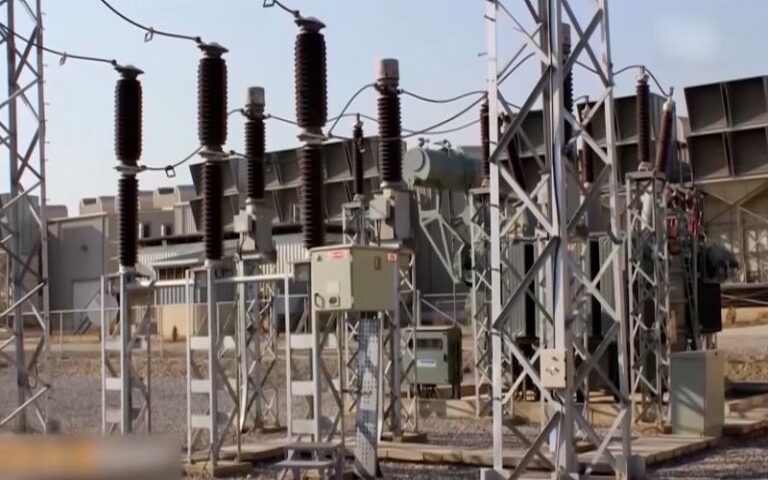
A few days ago, Mohsen Zabihi, Deputy Coordinator for Distribution at Iran’s Power Generation and Distribution Company (TAVANIR), attributed power outages in various regions to “insufficient fuel deliveries to power plants.”

Widespread blackouts have returned to Iranian cities despite the Ministry of Energy announcing less than three weeks ago that “blackouts have ended” and the fuel crisis at power plants had been resolved.

Power outages have caused various issues, including water disruptions in residential buildings. A few days ago, the Ministry of Communications also announced that internet disruptions were due to power cuts.

On the other hand, many social media users have criticized mismanagement in the unscheduled and unannounced power cuts, as well as delays in announcing school closures.

Over the past ten days, air quality indices in Tehran have consistently been recorded as unhealthy or unhealthy for all.

Gas Shortage Crisis in Iran Despite Being the Holder of the World’s Second-Largest Natural Gas Reserves

Iran, with the world’s second-largest natural gas reserves, is recognized as one of the largest potential producers and exporters of this energy resource.


Eleven Baluch, Kurdish, and one female prisoner executed in Iran

Despite repeated warnings from human rights activists, on Sunday, December 15, the death sentences of 11 prisoners, including nine Baluch, one Kurdish, and one woman, were carried out in central prisons of Yazd and Zahedan. These individuals had previously been convicted of charges such as drug-related crimes and murder.

According to the Haalvsh website, five Baluch prisoners, one Kurdish prisoner, and one woman were executed in Yazd prison.

These individuals, many of whom had several children, had been arrested years ago on drug-related charges and sentenced to death.

Local sources reported that Reza Kharkouhi, one of the executed individuals, suffered physical disability due to medical negligence in prison and had been using a wheelchair in the final years of his life.

Four Baluch prisoners were also executed in Zahedan prison. They had been arrested on drug-related charges as well.

Sources indicated that the families of the prisoners had their last meetings with them the day before the executions.

According to the report, the Baluch community, which comprises only 5-6% of Iran’s population, consistently ranks highest in the country’s execution statistics.

Many of these individuals belong to the impoverished and marginalized segments of society, burdened with the responsibility of supporting large families due to economic hardships.

Most of these executions are carried out for drug-related charges, despite repeated calls from international organizations and human rights experts to reform punitive policies and abolish the death penalty for such crimes.

Notably, the Islamic Revolutionary Guard Corps (IRGC) of the Iranian regime is one of the largest drug cartels in the region. Recently, following the fall of Bashar al-Assad’s regime in Syria, warehouses and workshops producing Captagon pills were discovered in Syrian military compounds. The Iranian regime and the IRGC were major supporters of Bashar al-Assad.


Political Prisoner Transferred for Execution Amid Rising Executions in Iran

0

Mohammad Amin Mahdavi Shayesteh, a political prisoner sentenced to death, was recently transferred from Evin Prison to a solitary confinement cell in Qezel Hesar Prison in Karaj for the execution of his sentence.

The Iranian Human Rights Organization, on December 13, announced the transfer of Mahdavi Shayesteh to solitary confinement. They reported that he was tried by Branch 15 of the Tehran Revolutionary Court, presided over by Judge Abolqasem Salavati, and sentenced to death on charges of “insulting Islamic sanctities” and “collaborating with the enemy.”

This human rights organization emphasized that the case against this political prisoner is so lacking in evidence that a “single empty pistol magazine” and “a pepper spray” were used as proof of “collaborating with the enemy” to substantiate the charges.

In recent months, the issuance of death sentences for political prisoners in Iran has increased.

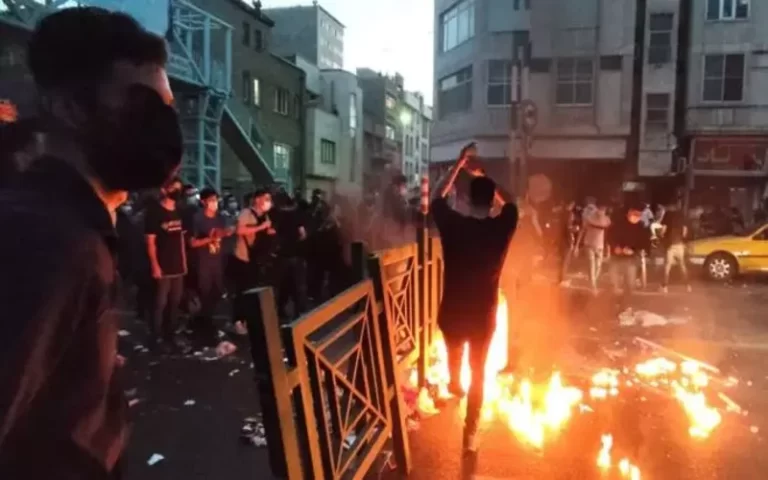
Since the beginning of the nationwide uprising against the Iranian regime in September 2022, the government’s suppression of civil, political, and protest activists has intensified and continues to this day.

The Iranian Human Rights Organization stated in its report that Mahdavi Shayesteh, after his arrest in the fall of 2023, confessed to collaborating with Israel under pressure and torture by Iranian regime security forces during interrogations.

According to this report, these confessions formed the basis for many charges against him, including “insulting Islamic sanctities,” in his indictment.

The human rights organization stressed that the “charge of collaborating with Israel was used to issue a hasty death sentence” based on confessions obtained under torture.

The Iranian Human Rights Organization described the regime’s determination to execute Mahdavi Shayesteh as “a political decision related to recent tensions with Israel” and called on the international community to take timely action to prevent his execution.

The Iranian regime is experiencing the greatest crises in its history and resorts to intimidating its populace by executing defenseless prisoners to prevent public protests and cover up its regional failures. The global community must strive to prevent the execution of prisoners in Iran.

In recent weeks, the issuance of death sentences for political prisoners and the increased execution rate in Iran have sparked widespread protests both domestically and internationally. Over the past two months, the Iranian regime has executed more than 300 individuals.

Also Saman Mohammadi Khiyareh, a Kurdish political prisoner from Sanandaj, who had previously been sentenced to death by the Tehran Revolutionary Court on charges of “enmity against God” (moharebeh) through “membership in opposition groups,” has been transferred to solitary confinement in Ghezel Hesar Prison in Karaj for the implementation of his death sentence. His family has been summoned for a final visit.


Cyberattacks by the Iranian Regime on Critical Infrastructure in the U.S. and Israel

0

Reports indicate that cyber groups affiliated with the Iranian regime have used the IOCONTROL malware to attack critical water and fuel systems in the U.S. and Israel.

This malware, designed to infiltrate internet-connected devices, can control systems such as fuel pumps, routers, and security cameras.

The Internet of Things (IoT) encompasses devices connected to the internet that send and receive data, such as cameras, sensors, and household appliances.

This technology is widely used across industries but can cause widespread disruptions in essential services if infiltrated by malware.

According to a report by the cybersecurity firm Claroty, this malware was discovered in a fuel management system targeted by a group linked to the IRGC. The attackers managed to disrupt fuel services and steal customers’ credit card information.

These attacks are part of the Iranian regime’s broader cyber activities targeting critical infrastructure in various countries over the past years.

Such activities include the 2012 cyberattack on Saudi Arabia’s Aramco oil company and attacks on water and power systems in the Middle East and Europe aimed at disrupting public services.

On December 2, Israel’s domestic intelligence agency, Shin Bet, announced it had identified more than 200 Iranian regime phishing cyberattacks aimed at obtaining personal information from senior Israeli officials.

According to Shin Bet, senior security, political, academic, and media figures in Israel were among the victims of these cyberattacks.

Shin Bet revealed that the hackers crafted personalized messages to avoid arousing suspicion among their targets. In one instance, a hacker posed as a cabinet minister and told the victim they were arranging a meeting between them and the Israeli prime minister.

Shin Bet stated that it had identified the victims of this cyber campaign and notified them accordingly.


Power outages in Iran have disrupted people’s lives

On Friday, December 13, the Associated Press reported that the frequent power outages in Iran in recent months have “disrupted people’s lives and businesses.”

The news agency stated that while multiple factors, such as mismanagement, reduced energy reserves, ongoing droughts, budget deficits, and sanctions stemming from the Iranian regime’s nuclear activities, likely contribute to the power outages, some suspect that cryptocurrency mining is also playing a role.

The rise in Bitcoin prices has led some to suspect, as reported by the Associated Press, that organized cryptocurrency mining, which consumes significant amounts of electricity, has contributed to the recent outages in Iran.

The report cited comments made earlier this summer by Mostafa Rajabi, CEO of Iran’s state-owned electricity company, who said: “Unfortunately, some opportunistic and exploitative individuals are using subsidized electricity, public networks, and other unauthorized resources to mine cryptocurrencies.”

The Associated Press also quoted Masih Alavi, CEO of a government-licensed mining company called “Vira Miner,” who stated that determining energy consumption by miners is challenging, especially since they use virtual private networks (VPNs) that hide their locations.

The report noted that approximately three years ago, an estimate suggested that Iran had processed “$1 billion in Bitcoin transactions.” It added that with the increase in Bitcoin prices, this value has likely risen, coinciding with the power outages in Iran.

According to the Associated Press, the U.S. Treasury Department and Israel claim that Iran’s Islamic Revolutionary Guard Corps (IRGC) relies on cryptocurrencies to finance the regime’s proxy militant groups in the Middle East. Therefore, the IRGC may be involved in cryptocurrency mining farm activities.

Earlier, in May 2024, U.S. Senators Elizabeth Warren and Angus King wrote to senior officials in the Biden administration, urging a deeper investigation into the Iranian regime’s cryptocurrency activities. They expressed concerns that the regime may be using cryptocurrencies for money laundering, financing terrorism, and evading sanctions.

U.S. Senate Bipartisan Gathering Highlights Support for Iranian People’s Freedom Movement

0

On Wednesday, December 11, a gathering was held in the United States Senate discussing Iran. During this bipartisan gathering, Senate members expressed their support for the Iranian people’s struggle for freedom.

In addition to Mrs. Maryam Rajavi, the President-elect of the National Council of Resistance of Iran (NCRI), notable speakers included Senators Ted Cruz, Thom Tillis, Jeanne Shaheen, and Cory Booker.

Mrs. Rajavi stated:
I have consistently emphasized that our goal is not to seize power but to restore it to its rightful owners, the people of Iran and their vote.

“Our resistance has a practical roadmap for regime change and establishing a free and democratic society. The people, who are deeply discontented and angry, along with the Resistance Units, who are part of the Army of Freedom and the main force for change in Iran. They are preparing an organized uprising.”

Referring to recent developments, including the “fall of Syria’s dictatorship,” Mrs. Rajavi described it as a “strategic blow to the clerical regime” and its primary proxy force, Hezbollah in Lebanon.

Several Republican and Democratic senators attended the meeting, emphasizing their support for the Iranian people’s pursuit of freedom and democracy while advocating for intensified actions against the Islamic Republic of Iran.

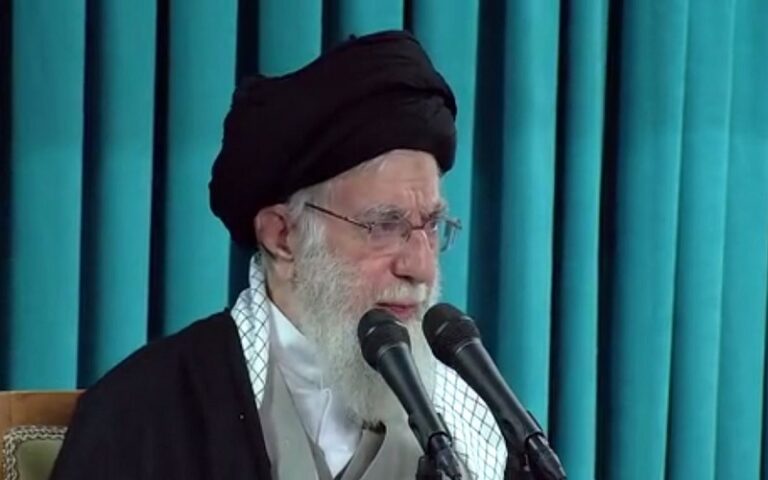
Senator Ted Cruz underscored that the Iranian people would achieve democracy and free elections. Addressing the implications of Donald Trump’s presidency for Iran’s regime, he remarked that “no one had a worse day on election day than [Iranian regime Supreme Leader Ali] Khamenei.”

The U.S. senator added, that if history has taught us anything, it is that dictators understand only the language of power.

Senator Cruz reiterated that with Donald Trump’s administration, the policy of maximum pressure would return. He asserted that Khamenei is trembling with fear because every aspect of this brutal and oppressive regime is being shut down from every angle.

Jeanne Shaheen, a senior Democratic Senator, stated in her speech that the Iranian regime has suffered a significant blow, and developments in Syria reveal its fundamental weaknesses in regional strategy and policies.
She stressed the need to work on shared values such as democracy, human rights, and justice. She said that the Iranian people have paid the price for these values for years and the world needs to find ways to support the Iranian people’s rights to choose their future government.

Thom Tillis, a Republican Senator and member of the U.S. Senate Judiciary Committee, shared that he has been following Iran’s situation since 1978. He remarked that the leaders of this regime and the mullahs have destroyed the wealth and heritage of a rich nation, but perhaps one day, the people will celebrate democracy’s triumph in Tehran.
Senator Tillis emphasized that the mullahs’ regime must not be appeased and instead there needs to be an increase in the pressure and create opportunities for a democratic and peaceful Syria and Iran. He asserted that the American people stand with those who desire a free, modern, secure, and proud Iran.

Another speaker at the gathering, Democratic Senator Cory Booker, stated, the suffering of the Iranian people stems from an unjust regime that imposes horrific violence on its citizens, violates human and civil rights, tortures, and abducts people.
He described the Iranian regime as the primary exporter of international terrorism and violence, emphasizing that American ideals align with the aspirations of the Iranian people.

The event also featured speeches from General James Jones, former U.S. National Security Advisor (2010) and former NATO Commander; General Keith Kellogg, National Security Advisor to Vice President Mike Pence (2021); General Tod Wolters, NATO Commander (2019–2022); Ambassador Sam Brownback, U.S. Ambassador for Religious Freedom (2021) and former Kansas Governor and Senator; Ambassador Mohammed Abdullah al-Hadhrami, Yemen’s Ambassador to the U.S. and former Foreign Minister of Yemen (2020); and Ambassador Marc Ginsberg, former U.S. Ambassador to Morocco.

Amnesty International Condemns Iran’s Mandatory Hijab Law as a Violation of Women’s Rights

0

Amnesty International has condemned Iran’s mandatory Hijab and Chastity Law, set to take effect on December 13, as “shameful.”

Amnesty International stated that the Hijab and Chastity Law, passed by the Iranian regime’s parliament, further erases the rights of women and girls under the Iranian regime and “intensifies” their oppression.

In a statement on Tuesday, December 10, the organization explained that this law, which according to Mohammad Bagher Ghalibaf, the Speaker of Parliament, will take effect on December 13, not only punishes women who do not comply with the mandatory hijab but also enables law enforcement and vigilante forces to commit violence against women without fear of legal consequences.

The law, comprising 74 articles, sentences women who fail to adhere to the regime’s dress code to penalties such as flogging, heavy fines, lengthy prison terms, travel bans, and deprivation of education and employment.

Amnesty International described the law as “shameful” and emphasized that even private companies failing to enforce the mandatory hijab would face punishment.

Amnesty International also noted the increasing resistance of women to the mandatory hijab following the 2022 protests and stated that under this law, any opposition to the hijab mandate, such as sending unveiled photos to foreign media, could be punished as “corruption on earth,” a charge that carries the death penalty.

The organization stressed that the intricate network of fines, prison sentences, and other harsh penalties outlined in this law indicates that the Iranian government seeks to control women through fear and economic pressure.

Diana Eltahawy, Amnesty International’s Deputy Regional Director for the Middle East and North Africa, stated that Iranian authorities aim to strengthen the “suffocating system” with this law.

“The international community must not stand idly by as Iranian authorities further codify repression and even resort to the death penalty to suppress dissent against compulsory veiling. They must use their leverage to press the Iranian authorities to withdraw this law and abolish compulsory veiling in law and practice. They must also pursue legal pathways to hold Iranian officials accountable for committing widespread and systematic human rights violations against women and girls through the implementation of compulsory veiling.”

It is worth noting that the regime’s parliament passed the Hijab and Chastity bill on September 20, 2023, a year after the death of Mahsa Zhina Amini and the widespread protests that followed.

This bill, which includes severe punishments and numerous fines for opponents of the mandatory hijab, was approved by a special committee. Its passage sparked widespread opposition from human rights advocates and civil activists on social media.

Nevertheless, Mohammad Bagher Ghalibaf, the Speaker of the Parliament, announced on November 28 that the Hijab and Chastity law would be implemented starting December 13. He explained that the law delineates the responsibilities of various institutions regarding the hijab.

Amnesty International had previously described the passage of this law in September as a “vile assault” on women’s rights under the Iranian regime.

3,000 Prominent Figures Support “No to Execution” Campaign in Iran

0

On Human Rights Day, Iran Human Rights Monitor announced that 3,000 global leaders, including former presidents, ministers, ambassadors, UN officials, Nobel laureates, and human rights organizations, have endorsed the call to end executions in Iran. This coincides with the “No to Executions Tuesdays” campaign, initiated by political prisoners in 26 Iranian prisons.

The statement underscores concerns that Iranian authorities use executions as a political tool to instill fear and suppress uprisings. Signatories also support opposition leader Maryam Rajavi’s steadfast commitment to abolishing the death penalty, as outlined in her Ten-Point Plan for Iran’s future. Rajavi reaffirmed this call at the International Jurists’ Conference on August 24, 2024, in Paris.

According to Amnesty International, Iran accounted for 74% of global executions in 2023, with 342 reported since the new president assumed office. October 2023 alone witnessed 152 executions, including 10 women. Among the executed were political dissidents like Reza Rasaei, detained during the November 2022 uprising in Shahriar, Tehran province.

A March 2024 report by the Independent International Fact-Finding Mission on Iran (FFMI) highlighted summary trials leading to death sentences, with Iranian authorities expediting executions under political directives. The FFMI’s findings classify these violations as crimes against humanity, encompassing murder, imprisonment, torture, and sexual violence.

Professor Javaid Rehman, the UN Special Rapporteur on human rights in Iran, reiterated these concerns in his July 2024 report, describing the 1988 massacre of 30,000 political prisoners as genocide. Rehman noted evidence of mass killings and torture against members of the People’s Mojahedin Organization of Iran (PMOI), conducted with genocidal intent. The global community’s prolonged inaction has emboldened Iran’s regime to continue its oppressive practices.

Since early 2024, political prisoners across 20 Iranian prisons have participated in weekly hunger strikes as part of the “No to Executions” campaign. The movement has gained traction internationally, with over 1,500 prominent figures from 78 countries joining the call. Supporters include over 450 parliament members, former leaders, Nobel laureates, ambassadors, and human rights experts.

Maryam Rajavi’s leadership remains central to this campaign, with her vision for a future Iran anchored in justice and human rights. The “No to Execution” movement reflects growing global solidarity against Iran’s use of executions and the urgent need to halt these human rights violations.


Urban Fringe Slums in Iran Is Causing Environmental Problems

0

With the rise of urban fringe slums in Iran as a result of soaring housing prices, official statistics indicate that there are now more than six million marginalized residents in the country. The head of the Environmental Protection Organization states that marginalization in Tehran and other major cities has caused environmental problems.

Sheena Ansari, head of the Environmental Protection Organization, during a panel discussion at Sharif University, identified migration from small towns to the peripheries and outskirts of Tehran and other major cities as a factor causing environmental issues.

In the past decade, the emergence of environmental issues following the increase in marginalized populations has been frequently highlighted. In July 2021, a conference on this topic was held in Eslamshahr, which was historically one of the hubs of marginalization in Tehran.

The Social Studies Office of the regime’s Majlis (parliament) Research Center also published a report in December 2022 titled “Marginalization in Iran: Approaches, Policies, and Actions.”

According to this report, in 2021, there were 6,187,105 people living in city outskirts across the country.

The report indicates that the average growth rate of marginalization was about 7% between 1978 and 1981. In the subsequent period, from 1981 to 1996, the marginalized population grew at an average of 11%.

The growth of marginalization reached 19% between 1996 and 2006, and between 2006 and 2018, it increased to approximately 23%.

As a result, the current population of marginalized residents living in informal settlements nationwide has reached about 6.2 million.

The reasons for the growth of marginalization in earlier periods included factors such as the industrialization of agriculture before the 1978 revolution and the impacts of the war during the 1980s and early 1990s.

However, in the latter half of the 2010s, the cause of marginalization changed. In March 2023, Baitollah Sattarian, a faculty member at the University of Tehran, stated that in major cities, due to pressure in the housing market, residents of certain neighborhoods can no longer afford to remain there and are forced to move to smaller spaces or city outskirts, often resorting to informal housing. This was also confirmed by Ahmad Vahidi, the Minister of Interior in Ebrahim Raisi’s government.


Car Manufacturers, Aging Vehicles, Fuel Quality: What Is the Cause of Air Pollution in Iran

Officials of the Iranian regime state that 60% of the air pollution in Iran, which kills 25,000 people annually, is caused by motorized transportation. Could the main cause of air pollution be the non-implementation of the Clean Air Act, the role of car manufacturers, the failure to scrap aging vehicles, or “petrochemical gasoline”?

According to statistics, since 2016, the capital has had clean air only 15% of the year, with residents breathing polluted air almost six days a week.

The annual death toll attributed to air pollution nationwide is reported to be between 20,000 to 30,000, with 7,000 in Tehran alone.

The annual financial damage caused by air pollution in Iran is estimated at $12 billion. The Iranian regime is facing an environmental crisis, of which air pollution is only a part.

Most major cities suffer from dust storms in the first half of the year and “temperature inversion” as the weather cools in the second half.

While the government prioritized passing and enforcing the so-called “Chastity and Hijab” law earlier this year, the Clean Air Act, passed in 2017, has been sidelined for nearly seven years.

The Role of Aging Public Transportation and Car Manufacturers

Alireza Raisi, the Deputy Minister of Health of the Iranian regime, stated on December 9 that 60% of the country’s air pollution is related to the motorized transportation system.

According to Raisi, 11 million out of 12 million motorcycles and 2.5 million out of 14 million vehicles in the country are aging.

Non-aging vehicles in the country are mainly produced by Iran Khodro and SAIPA, the duopoly car manufacturers. According to Ruhollah Lak Aliabadi, a Majlis (parliament) member from Doroud, “They care neither for people’s lives, the environment, nor air pollution.”

Although officials and some media outlets are discussing the share of vehicles in causing air pollution, coinciding with rumors of fuel price increases, it seems that the environmental mega-crisis in Iran cannot be solely attributed to transportation.

During the COVID-19 pandemic, when transportation in cities decreased unprecedentedly due to travel restrictions, air pollution persisted. The other side of this crisis lies with power plants and industries.

On December 10, the state-run Sazandegi newspaper highlighted the roles of sanctions and the “policy of keeping gasoline prices low” as factors contributing to Tehran’s air pollution.

In May 2024, before the death of Ebrahim Raisi, the government invested $3 billion in producing a type of naphtha known as “petrochemical gasoline.” This product is much cheaper than real gasoline but also significantly more polluting.