Home Blog Page 138

Rising Tensions Within IRGC After Assad’s Downfall

0

The British newspaper The Telegraph has reported on growing discord among the ranks of the Islamic Revolutionary Guard Corps (IRGC) over the fall of Bashar al-Assad.

According to the newspaper, IRGC commanders are angered by the collapse of Bashar al-Assad’s government and blame each other for its downfall and the subsequent loss of the Iranian regime’s influence in the region.

Two IRGC officials, quoted by the newspaper, stated that no one is willing to take responsibility for this matter.

An IRGC official told The Telegraph, “No one expected Assad to flee, and the reason for their interest in him was not personal but to maintain proximity to Israel and Hezbollah.”

In addition to intervening in the Syrian civil war, the Iranian regime has spent billions of dollars to support Assad’s regime.

Previously, Bahram Parsaei, a former Iranian parliament member, wrote on X: “While I was in parliament, Syria and Bashar al-Assad’s debt to Iran was $30 billion, which had not been approved by parliament, contrary to Article 80 of the Constitution.”

The Telegraph pointed out in its report that under Bashar al-Assad’s rule, Syria was the main route for Iran to supply weapons to Hezbollah in Lebanon.

Another IRGC official told The Telegraph that the Iranian regime’s military officials are now focusing on how to escape this deadlock.

He added, “Some within the IRGC blame Esmail Qaani, the commander of the Quds Force.”

The IRGC official said, “No one dares admit it, but he did nothing to prevent the loss of Iran’s interests and merely observed the events from Tehran.”

The first IRGC official referenced rumors of the Iranian regime’s leader Ali Khamenei ordering the replacement of Qaain, stating, “Many are calling for his replacement.”

He added, “Khamenei recently summoned IRGC commanders multiple times as rebel forces opposing Assad advanced toward Damascus.”

The Assad regime was a central part of what Iran calls the “Axis of Resistance” in the Middle East, and its fall has significantly weakened the Iranian regime’s regional influence.

The French news agency AFP, in an analysis, referenced the “unimaginable” images of Assad’s opponents entering the Iranian regime’s embassy in Damascus, discussing the destruction of this “key link in the Axis of Resistance,” and added that the Iranian regime is trying to adjust to Syria’s new reality.

France’s Channel 24 also aired footage showing Assad’s opponents in the Iranian regime’s embassy in Damascus, including torn images of Ruhollah Khomeini, Ali Khamenei, Qassem Soleimani, and Hassan Nasrallah, describing it as a “turning point.”


Qarchak Prison One of the Darkest Symbols of Human Rights Violations in Iran

A new report by the Iranian Human Rights Organization sheds light on the abysmal conditions of Qarchak Prison, near Varamin.

According to the Iranian Human Rights Organization, the wards of Qarchak Prison are essentially repurposed poultry sheds. For years, they have been used to house female prisoners, including political detainees, without adhering to any standards.

The report states that Qarchak Prison in Varamin not only violates global standards but also disregards the most basic principles of human dignity.

The Iranian Human Rights Organization reports that women in Qarchak Prison (southeast of Tehran) are held in extremely cramped spaces, without adequate ventilation or sufficient light. They endure unsafe drinking water, poor-quality food, inadequate health and medical services, and humiliating, gender-based treatment as part of their daily suffering.

Originally converted from a poultry farm to a men’s addiction treatment center, this facility was later repurposed as a women’s prison. However, no significant structural changes were made. The wards lack windows, and when the iron doors of the exercise yards are closed, the only visible scenery is walls.

Many prisoners are deprived of sleeping space due to severe overcrowding and a lack of basic facilities.

On average, between 1,500 and 2,000 women are incarcerated in this prison most months of the year. Each hall in Qarchak Prison is designed to hold fewer than 100 individuals, but they usually house over 150, and at times, this number has reached 600, leaving prisoners without even floor space to sleep.

According to the report, poor hygiene conditions, lack of facilities, and harsh punitive measures have turned Qarchak Prison into an “exile zone for many female political and civil prisoners.”

The Iranian Human Rights Organization warned that the existence of such facilities, especially in the 21st century, is a stark reminder that justice and human dignity are still sacrificed in many parts of the world. It emphasized the urgent need to close Qarchak Prison and transfer all detainees to facilities meeting minimum international standards.

Prisoners reported the abundance of pests and vermin in their living areas, including cockroaches, mice, salamanders, lizards, water bugs, and even venomous tarantulas.

Prisoners stated that the prison water is undrinkable and, if not boiled and purified, causes various gastrointestinal and kidney diseases.

Political prisoners who were temporarily exiled to this prison reported that the water is unfit even for bathing.

A political prisoner recounted developing severe eczema due to bathing with the mineral-laden water of Qarchak Prison, requiring about a year of treatment after release.

The report revealed that Qarchak Prison lacks a water purification system. Women, many of whom have no financial means, are forced to buy overpriced bottled water from the prison store for drinking.

Moreover, the poor-quality tap water is frequently cut off during the hot season.

Due to frequent water outages, prison authorities turn off the evaporative coolers in the wards, creating unbearable heat that often escalates psychological tensions and severe conflicts among inmates.

The Iranian Human Rights Organization reported that each hall, housing an average of 150 prisoners, has at most three or four toilets, which lack proper sewage disposal systems.

Sewage overflow on the floors attracts insects and creates toxic odors, leading to respiratory issues for prisoners.

The issue of inadequate sanitary facilities affects not only prisoners but also visitors, who have no access to toilets despite traveling long distances.

Despite the high number of sick inmates, medical visits are severely limited, with a maximum of five prisoners per ward being seen by a doctor.

Ophthalmologists and dentists rarely visit the prison, and dental care, apart from extractions, must be paid for by the patients themselves.

The report added that the prison’s medical laboratory cannot perform most tests, and if prisoners are referred to external medical centers, they must cover the costs themselves.

A political prisoner reported that in several instances where inmates working in the kitchen suffered severe burns from boiling water, the authorities refused to transfer them to a hospital, instead prescribing painkillers and burn ointments before sending them back to their wards.

While authorities are extremely restrictive in prescribing essential medications for prisoners, they frequently distribute sedatives and painkillers, using them as a means to pacify inmates.

The principle of separating prisoners based on the nature of their crimes is not observed, and most political prisoners are currently housed in Ward Seven alongside dangerous inmates.

Additionally, addicts and inmates with infectious diseases, including HIV and hepatitis B, are not segregated from other prisoners.


Tourists Avoiding Iran Out of Security Concerns

0

Mohammad Ali Ashraf Vaqefi, a member of the “Iran Tour Operators Association,” stated that the arrival of tourists to Iran has been “almost halted” and attributed this to the lack of a “sense of security” for foreign tourists.

Ashraf Vaqefi, the former vice president of the Iran Tour Operators Association, told the state-run Khabar Online website that “currently, only tourists from Arab countries, especially Iraq, are traveling to Iran.”

This member of the “Tour Operators” community emphasized that “at present, almost no European or American tourist groups are traveling to Iran, and the tourist market is restricted to Russians and Chinese.” He added that even these numbers have “significantly declined compared to the past.”

Ashraf Vaqefi pointed out that “one of our main challenges is the sense of security among foreign tourists” and noted that although Iran is “objectively” safe, “foreign tourists do not feel secure.”

Without addressing the government’s policies of imposing cultural and social restrictions and ideological lifestyle on society, he attributed “regional incidents and events” to causing “negative propaganda” against Iran, which has “directly and indirectly” affected the country.

He reported that travel agencies “are not interested in operating in Iran,” and the spring tourist season in Iran has already been “lost.”

In March, Moslem Shojaei, the then acting director of the Foreign Tourism Marketing and Development Office of the Ministry of Cultural Heritage and Tourism, reported a sharp decline in incoming tours to Iran and admitted that the ministry’s plans to attract Chinese tourists had also failed.

The then chairman of the board of the Professional Association of Iranian Tourist Guides also reported on February 4 that 30% of tour guides had left the industry or emigrated from the country.

According to data from the World Tourism Organization, the total number of incoming tourists to Iran in 2023 decreased by more than 37% compared to 2019.

Multiple factors, including the lack of service infrastructure, unconventional social restrictions, Iran’s inclusion on the FATF blacklist, and the lack of governmental determination to attract foreign tourists, have contributed to the decline of Iran’s tourism sector in recent years.


Mounting Concern In Europe Over Iran’s Nuclear Program

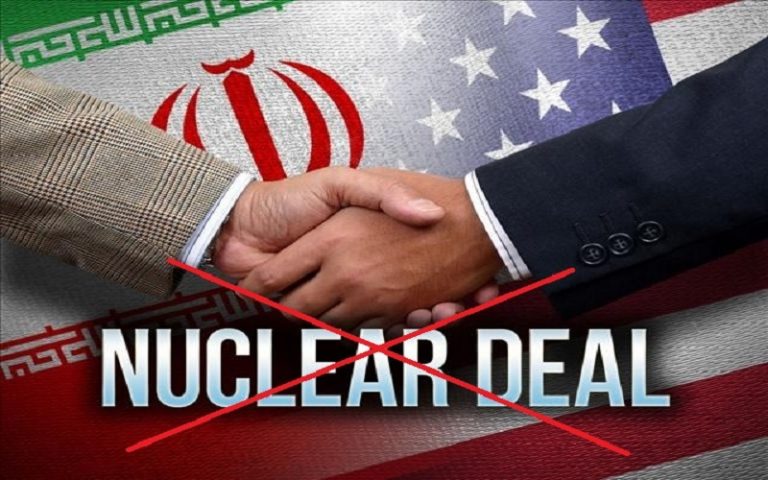
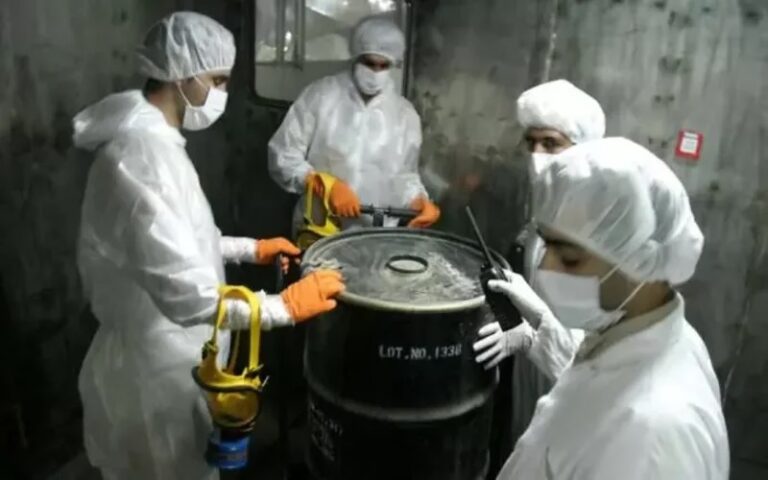
The European members of the Joint Comprehensive Plan of Action (JCPOA) issued a joint statement condemning Iran’s recent actions to accelerate the production of high-enriched uranium, as reflected in the International Atomic Energy Agency (IAEA) report.

According to the statement published on Tuesday, December 10, on the websites of the foreign ministries of Britain, France, and Germany, these three countries expressed concern over the increase in the number of centrifuges and Iran’s preparations to install new ones.

The IAEA’s recent report highlighted a significant acceleration in the enrichment of uranium to 60% purity at Iran’s Fordow facility.

IAEA Director General Rafael Grossi stated on December 6 that Iran is increasing its production of 60% enriched uranium by at least eightfold.

The three European JCPOA members also referred to their meeting last week with Iran’s nuclear negotiation team regarding its nuclear program and sanctions, emphasizing that both sides reiterated their commitment to constructive dialogue and engagement.

They noted that during these talks, it was stressed that Iran’s actions further hollow out the JCPOA and increase its stockpile of enriched uranium, which lacks any credible civilian justification.

The statement urged Iran to reverse its recent actions and immediately halt its nuclear escalation.

In a confidential report on Friday, the IAEA specified that Iran plans to raise its monthly production of 60% enriched uranium at Fordow to over 34 kilograms, up from the previous rate of six kilograms per month at its two nuclear sites, including Fordow.

On November 22, the IAEA Board of Governors condemned the expansion of Iran’s nuclear activities, issuing a resolution demanding Tehran’s immediate cooperation with the agency and instructing the Director General to prepare a “comprehensive report” on Iran.

In response to this censure resolution, Iran announced it would activate advanced centrifuges.

Meanwhile, U.S. State Department Spokesperson Matt Miller, responding to a journalist’s question yesterday about concerns over Iran moving toward nuclear weapons amidst its regional position weakening, said, “We remain concerned, but the United States is committed to preventing Iran from acquiring a nuclear bomb.”


Schools Closed in Several Cities Across Iran

0

Schools in several cities across Iran were closed and shifted to online classes due to severe air pollution. Simultaneously, reports have emerged regarding the reasons and circumstances of the resumption of mazut (fuel oil) burning at three power plants.

Local authorities in various provinces of Iran announced that schools in dozens of cities would hold online classes on Tuesday, December 10.

In Khuzestan Province, schools in 17 cities were declared closed. In recent days, air quality in some cities of this province has been in the “red status,” and on Monday, schools in 19 cities of Khuzestan were also closed.

In Isfahan Province, schools in 12 cities were announced to be online for Tuesday and Wednesday.

In East Azerbaijan Province, schools in Tabriz and urban areas of four other cities were declared closed for Tuesday.

In other provinces, cities such as Qazvin, Arak, Urmia, Abyek, and Alborz also announced closures for all or some school levels.

Air quality in Tehran was in “red status” on Monday. Despite families waiting until the evening, no announcement was made about whether schools would be online or in-person the following day.

Finally, on Monday night, state television reported, citing Tehran’s governorate, that the air pollution emergency committee had not convened, and therefore, schools in the capital would hold in-person classes on Tuesday.

In recent days, some citizens have criticized the late announcements regarding school closures or continuations.

On Monday evening, Tehran’s Air Quality Control Company reported an air quality index of 158 for the capital, indicating “red status and unhealthy for all age groups.”

Tehran’s governorate stated that the air pollution emergency committee would decide on Tuesday whether schools would be closed or open on Wednesday and Thursday.

Uncertainty about mazut burning in power plants

The intensification of air pollution in various Iranian cities comes amidst controversy over the resumption of mazut burning in some power plants.

Last month, the government of Iranian regime’s President Masoud Pezeshkian announced that mazut burning would be halted at three power plants in Arak (Shazand), Karaj, and Isfahan to “protect public health.”

However, a few days ago, Sedigheh Torabi, an official from Iran’s Environmental Protection Organization, confirmed reports about the resumption of mazut burning at these three power plants and said the organization intends to file complaints against the “violating ministries.”

Nevertheless, according to environmental journalist Zeynab Rahimi, the resumption of mazut burning by the Oil and Energy Ministries was authorized by the Supreme National Security Council.

In recent years, the reason cited for resorting to mazut burning for power plant fuel was a “gas shortage.” However, according to a recent report by the Parliamentary Research Center, there is currently a shortage not only of gas and diesel but also of mazut itself.


Bashar al-Assad’s Actions Cost Iran’s Regime Dearly

0

The Financial Times, citing a source within the Iranian government, reported that Tehran had lost its trust in Bashar al-Assad long ago.

The source told the Financial Times, “Bashar al-Assad‘s inaction cost us dearly. He aligned himself with regional actors who promised him a future that never materialized.”

According to the report, Tehran had been “disappointed” with Bashar al-Assad for over a year. Some considered him an obstacle and a burden, while others labeled him a traitor.

The newspaper quoted its source saying that in a recent meeting with Abbas Araghchi, Bashar al-Assad had stated that his forces’ withdrawal from Aleppo was “tactical.” However, Iran’s foreign minister responded that Iran was no longer in a position to send additional forces to support him.

Meanwhile, Abbas Araghchi stated during a televised interview on Sunday night that Bashar al-Assad had not requested military assistance from Tehran.

In the past 24 hours, following the fall of Bashar al-Assad’s government, harsher criticisms of him have emerged in Iranian media.

For instance, on Sunday night, the state-run Iranian TV news channel aired a program in which an expert named Asghar Zarei harshly criticized Bashar al-Assad, mentioning “the troubles he caused” in his dealings with Iran.

In an interview with state TV, Zarei stated, “Rebuilding Iran’s position will be very challenging,” and added, “We must ensure that this does not happen in Iraq or Yemen.”

The Financial Times also described Assad’s fall, after his family’s over five-decade rule over Syria, as a devastating blow to Iran’s foreign policy.

Tehran has, for decades, based its strategy on the “Axis of Resistance” against the U.S. and Israel, utilizing a network of proxy forces across the region.

Syria was a key link in this chain, serving as a gateway for financing and arming Hezbollah in Lebanon, Shia militias in Iraq, and the Houthis in Yemen. This link has now been severed with Damascus falling into the hands of Assad’s opposition.

However, a senior Israeli official told the Financial Times that Tel Aviv does not expect Iran’s influence in its backyard to disappear easily.


U.S. Secretary of State: Assad’s Reliance on Iran’s Regime and Russia Led to His Downfall

U.S. Secretary of State Antony Blinken stated on Sunday night that after 14 years of war, the Syrian people finally have a reason to hope.

Blinken emphasized that the collapse of Syrian President Bashar al-Assad’s government was due to its unwillingness to participate in a credible political process and its reliance on military support from Russia and the Iranian regime.

The U.S. Secretary of State also announced that the United States supports a peaceful transfer of power to a responsible Syrian government through a Syrian-led political process.

Blinken said, “The Syrian people have the right during this transitional period to demand the preservation of state institutions, the resumption of essential services, and the protection of vulnerable groups and communities.”

He also stated that the United States would closely monitor future developments and, alongside its regional partners, work to hold Assad’s government and its supporters accountable for crimes and human rights violations, including the use of chemical weapons and illegal detentions, such as the detention of American journalist Austin Tice.

In his statement, the U.S. Secretary of State referred to recent comments by Assad’s opposition leaders and emphasized that the U.S. would evaluate not only their words but also their actions.

Antony Blinken called on all parties to respect human rights, take necessary measures to protect civilians, and adhere to international humanitarian laws.


Iran: Students Protest Dormitory Poisoning with a Sit-In

0

A group of Beheshti University students staged a sit-in and protest on Sunday, December 8, in the university courtyard to object to the poisoning of female students caused by a gas leak in their dormitory.

These students criticized university officials for neglecting the poor living conditions in the dormitory and demanded the resignation of the university president.

Videos shared online show the protesting students chanting slogans such as, “Student, raise your voice / Shout out for your rights,” “Students demand welfare and dormitories,” and “Incompetent president, resign, resign.”

On December 6, coinciding with Student Day in Iran, 44 students from Beheshti University’s women’s dormitory in Velenjak were poisoned by carbon monoxide and hospitalized.

Subsequently, Tehran’s fire department announced that the incident was caused by a technical failure in the dormitory’s boiler room.

On December 7, Beheshti University students declared that they would hold a protest in the university courtyard on December 8 in response to the disregard for students’ safety.

Hours later, the Amir Kabir Students Newsletter reported, quoting students, that the second block of the women’s dormitory at Beheshti University had experienced another gas leak, and the heating system and radiators were shut off.

The Ensaf News website also reported that students felt endangered and, after leaving their rooms, were forced to disperse in the courtyard or relocate to other floors in the same block or other dormitory blocks.

Meanwhile, Babak Yektaparest, the spokesperson for the National Emergency Organization, reported that 85 people had died in the country from carbon monoxide inhalation over the past 77 days, with the highest fatalities occurring in Tehran (12), Isfahan (12), and Razavi Khorasan (7).

According to Yektaparest, between September 22 and December 7, 1,497 people in the country suffered carbon monoxide poisoning.

In recent weeks, protesting students at various universities in Iran have staged sit-ins and protests for various reasons.


The Food Safety Crisis in Iran: Contaminated Rice Imports

The sharp criticism by Majlis (parliament) members of the Iranian regime regarding the importation of rice contaminated with arsenic and zoonotic diseases has once again brought the issue of food security in Iran to the forefront.

During a public session of the Majlis on Sunday, December 8, MP Ali Asghar Bagherzadeh criticized the allocation of foreign currency for importing contaminated rice. Citing official statistics, he stated, “11.5% of the imported rice is contaminated with arsenic, and another 4.5% is tainted with rodent-related pollutants and zoonotic diseases.”

Bagherzadeh emphasized that allocating foreign currency to such products, especially when the country faces shortages of essential goods and medicine, poses a serious threat to domestic agriculture and national food security.

The Long History of Contaminated Rice Imports

The issue of contaminated rice imports in Iran is not new. In the early 2010s, news of contamination in some imported rice reached the media.

In 2013, following revelations about imported rice contaminated with arsenic, Masoumeh Ebtekar, then head of the Environmental Committee of the Tehran City Council, warned: “Reports of contaminated rice imports have been received, and the harmful effects of arsenic have been confirmed. We urge people to pay special attention to their children’s health.”

The main issue lies in the conflicting statements from responsible organizations. In 2013, the Food and Drug Administration announced that 12 samples of imported rice were contaminated, while the Standards Organization identified only 11 contaminated samples.

Since then, multiple cases of imported rice contaminated with lead and arsenic have been reported.

Ambiguity in the Import Process and Potential Corruption

One of the most pressing unanswered questions is how this contaminated rice enters Iranian markets. According to current laws, imported goods are only allowed into the country after receiving approvals from the Food and Drug Administration.

However, experts question how contaminated rice has passed through the oversight processes and been made available in the market.

Experts believe this points to a serious flaw in regulatory mechanisms. Some also suspect corruption in the import process, particularly as the importation of contaminated goods has repeatedly occurred without any clear accountability from officials.

In December 2022, the head of the Health Committee in the Majlis, during a special session for World Food Day, addressed one of the most controversial topics in the country’s food industry.

He revealed that the then-director-general of Tehran’s Standards Office was forced into retirement after exposing the contamination of imported rice. At least 13 types of imported rice were officially declared contaminated, but under pressure, some officials were forced to claim the rice was safe.

Monopolies in Food Imports

The case of currency fraud and Debsh Tea exposed the monopolistic power of certain familial groups in the country’s food industry.

These groups, controlling the import of items such as rice, oil, and tea, have managed to manipulate state currency allocations to their advantage.

Reports indicate that these groups also use their influence to bypass food safety and standards regulations.

In March 2023, the secretary of the Rice Importers and Suppliers Commission announced the resumption of rice imports from India, claiming, “All imported rice undergoes rigorous testing, and any contaminated cases are not allowed into the country.”

Experts argue that insisting on rice imports amidst a shortage of foreign currency resources is only justifiable if domestic rice production cannot meet market demands.

This point was challenged in September by the head of the Program and Budget Committee of the Majlis, who revealed that 500,000 tons of rice were imported at a cost of $560 million, despite the need being only 100,000 tons.

No information has yet been released about identifying or prosecuting those responsible for this misconduct.

Syria’s “30 Billion Dollar” Debt to Iran

Two former members of the Iranian parliament have highlighted the uncertainty surrounding the settlement of Syria’s “30 billion dollar” debt to Iran right before Bashar al-Assad’s regime fell to opposition forces.

Bahram Parsaei, a former member of parliament, wrote in a post on X (formerly Twitter) on December 7: “When I was in parliament, Syria and Bashar al-Assad‘s debt to Iran was 30 billion dollars, which, contrary to Article 80 of the Constitution, had not been approved by the parliament.”

Parsaei further emphasized that this debt, “at an exchange rate of 700,000 rials per dollar, equals twenty quadrillion rials. What is the fate of this huge amount?”

Simultaneously, Heshmatollah Falahatpisheh, the former head of the parliament’s National Security Commission, wrote: “In response to the profiteering entities of war and sanctions who say, ‘Stop negotiations because of unrest in Damascus!’ the Syrian war is not Iran’s war. The government has yet to clarify the billions of dollars spent on the previous war and should not put the lives and assets of Iranians at new risk.”

In May 2024, he also stated that Bashar al-Assad’s regime owed Iran “30 billion dollars.”

Part of this debt is due to oil shipments provided by Iran’s Islamic Revolutionary Guard Corps (IRGC) to Syria.

Data from the commodity intelligence firm Kpler indicates that in recent years, the Iranian regime has delivered an average of 70,000 to 80,000 barrels of oil daily to Syria. The annual value of this oil is estimated at around 2 to 2.5 billion dollars.

Amid the rapid advance of Bashar al-Assad’s opponents, reports suggest the beginning of the withdrawal of IRGC forces from Syria.

Kpler’s data indicates that Iran was still delivering oil to Syria as of the end of last month.

The “30 billion dollar” debt to Iran is equivalent to three times Syria’s total gross domestic product (GDP).

The risk of losing such a significant amount of debt from Syria comes at a time when the Iranian regime has spent substantial sums funding proxy forces in Iraq, Yemen, and Lebanon. Recently, the Secretary-General of Hezbollah in Lebanon announced that, with financial assistance mostly provided by Iran, each household whose home was completely destroyed in Beirut by Israeli attacks would receive a total of “14,000 dollars.”

Meanwhile, Iranian citizens face poverty, rampant inflation, and a housing crisis, and Iran’s President Masoud Pezeshkian recently disclosed severe monetary imbalances and a massive budget deficit.