Home Blog Page 161

Young Man Dies from Torture in Custody of Iranian Regime’s Security Forces

Reports from several local media outlets in Gilan province, Iran, indicate the death of a young man due to “torture and beating” at the Langarud police station.  

According to the state-run Borna News Agency, in a statement from the Public and Revolutionary Prosecutor’s Office of Lahijan published on Wednesday, August 28, the identity of the young man was not disclosed. However, local media in Gilan province identified him as “Mohammad Mir-Mousavi.”

This statement was issued after several local media in Gilan published images of a bloodied young man’s body being washed at a morgue, reporting that signs of severe “torture and beating” were evident on his body.  

Following the release of this shocking video, the identity of the young man was confirmed as “Mohammad Mir-Mousavi,” 36 years old.

According to reports, he was arrested by special unit forces of the county’s police during a local altercation and died after being “severely beaten” at the Langarud police station.

Reports indicate that the young man died on the day of his arrest but given the autopsy marks on his chest and abdomen seen in the video, it is unclear when his body was handed over to his family.

His burial ceremony was held on August 27.

The death of this young man comes on the eve of the anniversary of Mahsa Zhina Amini’s death while in the custody of the Morality Police in 2022, which sparked widespread protests across Iran.

This is not the first time news has emerged about the deaths of prisoners and detainees in Iranian prisons and detention centers.

The death of this young man has been compared on social media to the death of Sattar Beheshti, a worker and blogger who was killed under interrogation after being arrested by the Cyber Police (FATA).

Amnesty International had previously reported that between January 2010 and September 15, 2021, at least 72 deaths occurred in 42 prisons and detention centers across various cities in Iran.

According to this report, in 46 of these deaths, torture or other physical abuse by prison officers and authorities was the main cause.

Director of Iran-Backed Islamic Center of Hamburg Ordered to Leave Germany

One month after the Islamic Center Hamburg was banned from operating in Germany, a spokesperson for the Hamburg Ministry of Internal Security announced on Thursday, August 29, that the deportation order for Mohammad Hadi Mofatteh, the director of the center, had been issued this week and communicated to him.

According to this report, Mofatteh, 57, has been asked to leave Germany within 14 days or face deportation to Iran at his own expense. His deadline expires on September 11.

Furthermore, Mofatteh is prohibited from re-entering Germany, and if he ignores this order, he faces up to three years in prison.

Mofatteh has been the director of the Islamic Center Hamburg since the summer of 2018.

“Islamic Center Hamburg, Promoter of Extremist and Totalitarian Islamist Ideology in Germany”  

On the morning of Wednesday, July 24, German police raided the Islamic Center Hamburg and more than 50 affiliated centers, banning their activities.

The German Interior Minister declared in a statement that the evidence collected during the investigations “confirmed serious suspicions to such an extent that we issued the ban order today.”

Meanwhile, Iran’s Foreign Ministry summoned the German ambassador to protest the ban on the activities and closure of the Islamic Center Hamburg and more than 50 affiliated centers.

Germany’s Office for the Protection of the Constitution had previously stated that there was evidence indicating that this Islamic center was “an important propaganda center for Iran in Europe” and “a branch of the Islamic Republic.”

According to the ruling of the Hamburg Administrative Court, the Islamic Center in this city, also known as the “Blue Mosque,” has been classified as an “extremist Islamist organization.”

Hamburg government officials issued the deportation order for “Soleiman Moussavi-Far,” the deputy director of the “Islamic Center Hamburg,” in June 2022, and he was deported from Germany three months later.

At that time, German officials expressed confidence that Soleiman Moussavi-Far supported extremist Shia paramilitary organizations as well as terrorist groups.

The Islamic Republic’s Retaliation against “Goethe”  

Last week, Iranian regime security agents attacked two branches of the German language Goethe Institute in Tehran, forcefully removing teachers, staff, and visitors, and tearing down the sign of this center, which operated under the supervision of the German embassy.

The Sabereen News Telegram channel, affiliated with the Islamic Revolutionary Guard Corps (IRGC), announced that “this is a retaliatory measure for the closure of cultural and Islamic centers in Germany.”

Mizan News Agency, the media outlet of the Iranian regime’s judiciary, also issued a statement calling the Goethe Institute “illegal centers affiliated with the German government” and accusing it of “violating national laws.”

The Goethe Educational Institute, with years of experience, offers various German language courses for adults at different levels and conducts official and international language proficiency exams.

The Iranian Regime Collaborates with Ransomware Criminals  

0

U.S. intelligence agencies have warned that the Iranian regime is collaborating with cybercriminal groups to conduct ransomware attacks against organizations in the United States, Israel, Azerbaijan, and the United Arab Emirates.

On Wednesday, August 28, the FBI, the Pentagon’s Cyber Crime Center, and the U.S. Cybersecurity and Infrastructure Security Agency (CISA) announced that in recent times, Iran has targeted not only government institutions but also educational, healthcare, and defense sectors in these countries.

The FBI’s assessment indicates that a significant percentage of these Iranian cyber hacking operations have been conducted to gain access to the networks of these institutions through ransomware.

In addition to deploying ransomware, hackers linked to the Iranian regime have pursued extensive campaigns to steal sensitive technical data from Israeli and Azerbaijani institutions.

The three U.S. intelligence agencies based their report on data provided by several organizations that had been affected by these malicious activities.

The findings of these three agencies indicate that hackers linked to Iran either use ransomware themselves or collaborate with prominent ransomware operators in espionage and data theft operations.

U.S. agencies have concluded that hackers associated with Iran, in exchange for assisting in deploying ransomware, receive a share of the information obtained through these cyber traps.

In some cases, hackers have collaborated with ransomware groups that lock victims’ networks and seek to extort them.

Multiple hacking operations targeting Israeli organizations and companies  

The report by these three U.S. agencies noted that cyber actors linked to the Iranian regime have been behind multiple hacking operations targeting Israeli organizations and companies over the past four years. The primary motive was not financial extortion but rather to embarrass Israel by sharing the stolen data from these Israeli entities online.

The report mentioned the Iranian technology company “Danesh Novin Sahand,” which it described as a “cover for the cyber activities” of the Iranian regime. According to U.S. agencies, this company exploited vulnerabilities in cybersecurity products such as Check Point or Palo Alto Networks VPN equipment.

Hackers backed by the regime, upon entering the victim’s network and before expanding their infiltration operations and data theft, created a user account under the name “John McCain,” a prominent late U.S. senator.

The hackers disable antivirus programs or security software on the victim’s computer to freely operate within the compromised network without triggering any warnings, allowing them to carry out their intended actions, steal information, and monitor the victim’s activities.

U.S. government cybersecurity experts believe that the hackers typically do not conceal their affiliation with the Iranian regime and deliberately keep the origin of their actions ambiguous.

In their advisory, the three U.S. intelligence agencies wrote that merely addressing the vulnerabilities in the software used on victims’ computers is insufficient for protection. Instead, organizations must take additional measures to protect themselves from these traps and report any ransomware attack or cyber incident.

The U.S. agencies identified four specific vulnerabilities in the software used on computers that need to be addressed.

The report by the three U.S. agencies was released amid renewed attention by U.S. intelligence organizations on Iran’s cyber activities aimed at influencing the upcoming U.S. presidential election.

Microsoft also reported on Wednesday that hacking agents linked to the Islamic Revolutionary Guard Corps (IRGC) have installed malware on computers in the satellite, oil, gas, and communications sectors of the United States and the United Arab Emirates.

The Iranian regime, in its effort to bolster its intelligence capabilities, is increasingly using cyberattacks and, more recently, artificial intelligence.

Annual Subsidence Over 10 cm in 10 Provinces of Iran

0

While global statistics indicate that an annual subsidence of more than four millimeters signifies entering a critical condition, reports show that the average annual land subsidence in Iran has reached “18 centimeters, with subsidence in 14 provinces exceeding 10 centimeters.”

At the same time, a government official in Iran stated that the excavation of numerous wells and excessive water extraction in the vicinity of the Marvdasht plain have caused “land subsidence in the Persepolis area.”

According to a land subsidence index table published by the state-run Tejarat News website, the annual land subsidence exceeds 20 centimeters in the provinces of Kerman, Alborz, Markazi, Qom, Khorasan, and Hamedan.

Additionally, in Fars and Isfahan provinces, the annual land subsidence reaches 16.5 and 15 centimeters, respectively.

Tejarat News has reported that the average annual land subsidence in Iran “has reached 18 centimeters, with subsidence in 14 provinces exceeding 10 centimeters.”

On the other hand, the deputy director of the Fars Provincial Department of Environmental Protection warned about land subsidence in the Persepolis and Naqsh-e Rostam areas, stating that the main reason for the subsidence in these areas is the “excavation of numerous wells and excessive water extraction in the vicinity of the Marvdasht plain.”

Qasem Nahavandi added that the underground water tables cover a wide area, and with their depletion, “Naqsh-e Rostam is also at risk.”

The construction of numerous dams without considering environmental consequences and the excessive extraction of groundwater have been identified as the main causes of land subsidence in Iran.

Nevertheless, despite the depletion of groundwater resources and the endangerment of life in Iran’s climate, the Iranian regime continues to insist on goals such as self-sufficiency in agricultural production and population growth.

Iran: Price Increase of Some Medications by Up to 50 Percent

Two pharmaceutical companies in Iran have received permission from the Food and Drug Administration to increase the prices of seven and 10 of their products by up to 50 percent. With the addition of four other companies that had previously received similar approval, a total of six major pharmaceutical companies are now raising the prices of their products.

According to information released by the Stock Exchange, Pars Pharmaceutical announced that the selling prices of seven active items of its products have been increased based on the attached document with the approval of the Food and Drug Administration.

Zahravi Pharmaceutical also announced that the prices of some of its products have been adjusted by 7 to 50 percent by the Food and Drug Administration due to the increase in the cost of production.

The increase in drug prices in Iran comes at a time when pharmaceutical inflation over the past three years has caused significant problems for patients. Issues in the production, supply, and distribution of drugs persist, and it is predicted that the country will face a severe drug shortage in the second half of the Persian calendar year (starting from September 22).

In this context, Abbas Ebadi, Deputy Minister of Nursing at the Ministry of Health, stated on Wednesday, August 28, that addressing the drug situation and paying the overdue salaries of health system staff, especially nurses, are two priority programs considered by the Ministry of Health.

The issues in the healthcare sector, particularly in drug supply, in recent years have led the regime’s Health Commission of the Majlis (Parliament) to investigate the reasons behind drug shortages and the high prices of medical supplies. However, after reading the report prepared on April 23, the representatives opposed referring the matter to the judiciary.

Significant Recession in Iranian Industries Following Electricity Restrictions

0

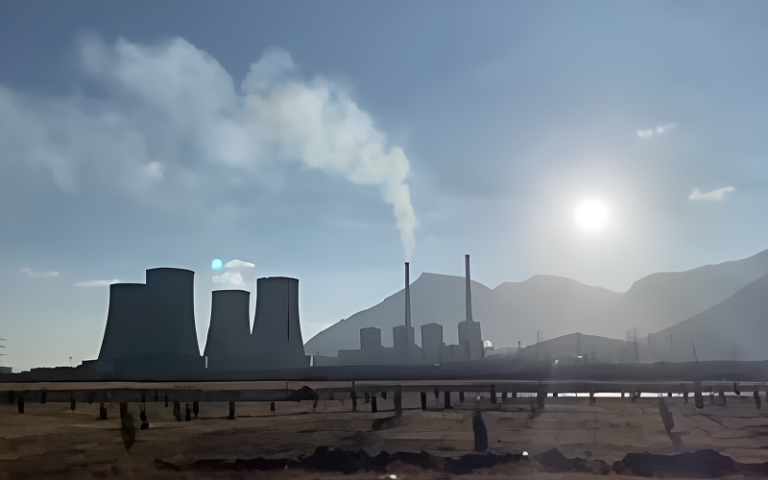
The Research Center of the Iranian regime’s Parliament (Majlis) has reported a significant recession in the country’s industries during the first month of summer electricity supply restrictions. It states that in July of this year, industrial enterprises experienced a deeper recession in terms of production and sales indices compared to the spring season.

Data from the Majlis’s Research Center report shows that in the first month of this summer, the sales index decreased more than the production index, indicating a worsening crisis of effective demand in Iran’s economy.

The state-run newspaper Donya-e-Eqtesad, citing this report, wrote: “The continuation of the current situation will cause more enterprises to operate at half of their production capacity, which will gradually decrease, ultimately putting them at risk of closure.”

According to this report, in July 2024, the production and sales indices of stock-listed industrial companies not only decreased by 8% and 10%, respectively, compared to the previous month, but also dropped by 3.5% and 5.4%, respectively, compared to July of the previous year. This indicates that the industrial sector’s recession is due to factors beyond just the summer electricity shortages.

The recession in the industrial sector in July occurred while the electricity shortage in August and September is much more severe than in July. It is expected that industrial production and sales have plunged even further last month; indeed, in August this year, the stock market saw a decline in the balance index of 29 out of 30 major industries listed on the stock exchange.

As power outages continue in various cities across Iran due to electricity shortages, on Monday, July 26, a union official announced that power cuts in some industrial areas of Tehran have led to street protests.

Mehdi Bostanchi, the head of the Industrial Towns Coordination Council, wrote: “Yesterday, street protests occurred in the Khavaran Industrial Town due to power outage.”

Details from the Majlis’s Research Center report show that the pharmaceutical sector experienced a 17% decline in production in July.

In recent months, numerous reports have emerged about the dire state of the pharmaceutical sector, including large overdue government debts to this sector, insufficient allocation of foreign currency for importing raw materials for medicines, cash flow shortages in pharmaceutical companies, and even power outages affecting these facilities.

The food and beverage sector has also experienced a decline of over 10%.

The Majlis’s Research Center states that in July 2024, out of fifteen stock-listed industrial activities, only four saw an increase in the sales index, and six had an increase in the production index.

Central Bank data shows that last year, the industrial sector contributed only 0.7% to the 4.5% economic growth.

Femicide in Iran: 17-Year-Old Girl Killed By Father

In one of the latest cases of “femicide” in Iran, a 17-year-old girl named Mobina Zainivand was shot and killed by her father in Darreh Shahr County, Ilam Province.

The Hengaw website reported on Tuesday, August 27, that Mobina Zainivand, a 17-year-old girl from Darreh Shahr in Ilam Province, was “killed by her father.”

According to Hengaw, citing an informed source, Rahim, Mobina’s 56-year-old father, killed the teenage girl at home on Monday, August 26, due to suspicions of her having a “relationship with a teenage boy.”

The report states that “Mobina’s father, due to family disputes” with the boy’s family, “wanted to end their relationship” and “killed his daughter for this reason.”

Under the Iranian regime’s law, if the father is the perpetrator, he is practically immune from punishment, citing the “right of blood” as the “guardian of blood” under the regime’s laws. In cases of spousal or femicide, the regime’s penal code provides loopholes that allow the perpetrator to claim immunity under pretexts like “honor” or suspicion of “illicit relationships.”

According to Iranian penal law, the punishment for “homicide” is “retribution” (Qisas). However, under Article 630 of the regime’s penal code, “If a man catches his wife in the act of adultery with a stranger and is certain of her consent, he can kill them both at that moment. If the woman is coerced, he can only kill the man.”

Civil activists and human rights defenders have protested against discrimination against women in Iran’s laws for decades. International organizations and the United Nations have repeatedly called on the Iranian regime to abolish discriminatory laws, a demand that has gone unanswered for four decades.

In the first half of this year, femicide in Iran increased by 60% compared to the same period last year.

Protests of Nurses and Emergency Personnel in At Least 9 Cities Across Iran

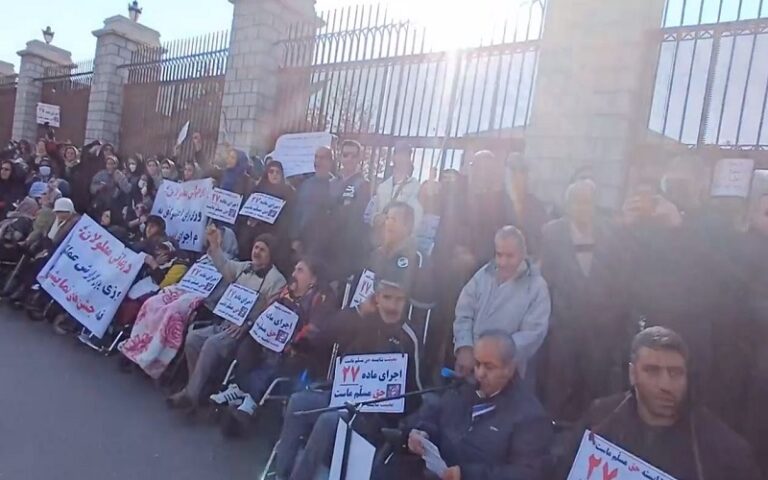
As the protests by nurses, healthcare staff, and emergency personnel continued in at least nine cities—Isfahan, Neyshabur, Bandar Abbas, Kermanshah, Tehran, Bushehr, Hamedan, Yazd, and Ilam—on Tuesday, August 27, government agents clashed with the gathering of medical emergency staff in Bushehr, arresting several of them.

Several nurses and emergency medical staff have been arrested in Bushehr.

The exact number of those arrested remains unknown, and Iranian security officials have not provided any information on the matter.

Security forces were also highly visible during the nurses’ protests in Tehran, attempting to disperse the demonstrators.

However, the protesters insisted on continuing their demonstrations until their demands are met, chanting, “You think it’s just today, but we’re here every day.”

In Hamedan, protesting nurses gathered in front of the governor’s office, chanting, “Enough with the promises, our tables are empty.”

Protest slogans were also repeated during the nurses’ rally in Kermanshah, where demonstrators held placards demanding “Transparent payment of nursing fees” and “Full implementation of the productivity law according to nursing services.”

In Yazd, protesting nurses went on strike at Sadoughi Hospital, staging a sit-in in the hallways and chanting, “Nurses will die, but will not accept humiliation.”

Nurses at the Issa Bin Maryam Hospital in Isfahan chanted, “Overtime pay is 200,000 rials ($0.33), shame, shame.”

Nurses across the country protest low payment

In Bandar Abbas, protesting nurses gathered in front of the Hormozgan governor’s office, chanting, “We don’t want promises, we want our rights,” and “Nurse, shout out, scream for your rights.”

Nurses and medical staff at public hospitals have escalated their protests and strikes in at least 16 provinces of Iran since mid-August, emphasizing the fulfillment of their professional and livelihood demands. According to reports, several protesters have been arrested on charges of being “troublemakers.”

The nurses are protesting against the non-implementation of the tariff law, mandatory overtime, and meager wages, and they insist that the Ministry of Health must listen to their voices and meet their demands.

In recent years, Iranian regime officials have responded to labor protests with similar rhetoric, promising to address the demands, but in practice, some of these promises have been partially fulfilled or not implemented at all.

According to Mohammad Sharifi-Moghaddam, Secretary-General of the House of Nurses, “For the first time in 100 years of modern nursing in Iran, protests have taken the form of work stoppages,” and “The situation has reached a point where nurses don’t care if they get fired for striking.”

According to reports in Iranian media, security and administrative crackdowns on protesting nurses continue, and they are being threatened for pursuing their professional demands. These threats have persisted since the beginning of the Masoud Pezeshkian administration.

In this regard, the state-run Tejarat News website wrote on Monday, August 26: “Instead of working to resolve the issues and meet the demands of the nurses, the officials have resorted to sending letters and making phone calls to threaten the nurses, forcing them to continue working under these substandard and illegal conditions.”

Sharifi-Moghaddam told Tejarat News: “What the nurses are demanding is their legal rights, and they want the law to be properly enforced,” adding, “This inappropriate practice of threats and intimidation not only fails to solve the problems but may also lead to a worsening of the situation.”

He emphasized, “Threatening nurses with wage deductions, when a nurse’s salary in many cities doesn’t even cover their commuting costs to the hospital, is unlikely to bring them back to work.”

Nurses say that their unmarried colleagues with master’s and doctoral degrees earn slightly more than 120 million rials (approximately $200), while the highest salary for a married individual with child allowances and marriage benefits does not even reach 150 million rials (approximately $250).

Iran’s Aging and Outdated Air Fleet

0

Saeed Chalanderi, the CEO of “Khomeini Airport City,” stated, “For 10 years, 20 scrapped airplanes have been parked in the airport premises. These aircraft should be turned into scrap.” Approximately 60% of Iran’s air fleet is grounded, and its average age is about 20 years older than that of neighboring countries like Iraq.  

In an interview with the state-run ILNA news agency, Chalanderi mentioned that airplanes parked near the radar point of Khomeini Airport are causing issues. “We have informed the airlines that if they do not take action to resolve the status of these scrapped airplanes, we will increase the parking fees.”  

The CEO did not specify the exact parking costs, but the financial records of the company show that from March 21, 2023, to March 21, 2024, the airport generated approximately 4,180 billion rials (about 7 million dollars) in revenue from aircraft parking services. This marks a 122% increase compared to the 1,870 billion rials earned in the same period the previous year.  

60% of Iran’s Air Fleet is Grounded  

Ali-Reza Manzari, a former deputy of the Civil Aviation Organization, stated in an interview with the state-run Ham-Mihan newspaper in May 2024 that out of the country’s 350 aircraft, only 150 are operational. This means that 60% of the country’s air fleet is grounded.  

Manzari further pointed out the outdated condition of Iran’s air fleet, saying, “Sanctions have created an unfavorable situation for the industry and have prevented the import of new aircraft. In the past 35 years, the import of new aircraft has been zero. However, these sanctions have not led to the shutdown of the country’s aviation industry.”  

A year before Manzari’s recent interview, in May 2023, Mohammad Mohammadi-Bakhsh, the head of the Civil Aviation Organization, stated in an interview with the Etemad newspaper that out of 330 aircraft in the country’s air fleet, 173 were operational.  

These data indicate that in May 2023, approximately half of Iran’s air fleet was grounded, and this number increased by 10 percentage points to 60% in May 2024, according to Manzari’s statements.  

Iran’s Air Fleet: 19 Years Older Than the UAE’s  

In June 2024, in an interview with the state-run ISNA news agency, Mohammadi-Bakhsh highlighted the achievements of Ebrahim Raisi’s government, stating, “The average age of Iranian aircraft has decreased from 28.5 years at the start of Raisi’s administration to 26 years after nearly three years of the 13th government’s operation.”  

The situation is entirely different among Iran’s neighbors. In Iraq, a country that has experienced two major foreign wars and years of internal conflict, the average age of the Iraqi Airways and Fly Baghdad fleets is about eight years.  

The average age of the fleets of Pakistani airlines such as PIA, Air Blue, and Serene Air is about 13 years. The average age of Turkish aircraft is eight years, while the average age of the United Arab Emirates’ aircraft is around seven years.

The 7% Decrease in Demand for Food in Iran

The Iranian regime’s Majlis’ (Parliament) Research Center has reported a worsening crisis in effective demand within the economy. The center’s report indicates that the food and beverage industry’s sales index show a 7.3% decrease in June compared to the same month last year, and a 7.6% decrease compared to the previous month. This reflects the significant impact of rising prices on people’s livelihoods, leading to a lighter and more restricted food basket.

According to the center’s report, which was published by the state-run newspaper Donya-e-Eqtesad under the title “Industry in Red Status,” the production index of all sub-sectors, except the oil industry, has decreased. Furthermore, compared to the same month last year, the production and sales indices of all food and beverage industry sub-sectors have also declined.

Donya-e-Eqtesad, relying on this report, described the state of the country’s industries by stating, “The continuation of the current situation will cause more firms to operate at half their production capacity, and this capacity will gradually decrease, eventually leading them to the risk of closure.”

From analysts’ perspectives, the decline in production and sales indices across all industries indicates a very critical situation in the productive sector of the economy, pushing the economy to the brink of collapse.

A more important aspect of this report, however, is the demand crisis in the food and beverage industries. The 7% decrease in this sector indicates that people’s food baskets are becoming lighter and more limited.

These statistics become more significant when considering last week’s statements by Mohammad Esmail Motlagh, the regime’s head of the Secretariat of the Supreme Council of Health and Food Security, who announced that eight provinces in the country require more attention regarding nutrition. At that time, critics interpreted the phrase “need more attention in eight provinces” as an unofficial acknowledgment of malnutrition in these provinces.

In fact, the head of the Secretariat of the Supreme Council of Health and Food Security has issued a warning about provinces that are considered economically disadvantaged.

Now, with the decrease in demand for food, it seems that the livelihood crisis has expanded further, and the population affected by malnutrition is increasing.

The state-run newspaper Ettela’at also criticized the economic conditions of the people in May 2024, warning about this issue and writing, “The undeniable reality in the lives of many families with fixed incomes and constantly fluctuating and rising expenses is this: there is a crisis in the general livelihood of the people.”

The decline in people’s purchasing power, along with the rising production costs, are factors contributing to the decrease in demand in the food and beverage sector.