Home Blog Page 162

Power Outages in Tehran’s Industrial Towns “Led to Street Protests”

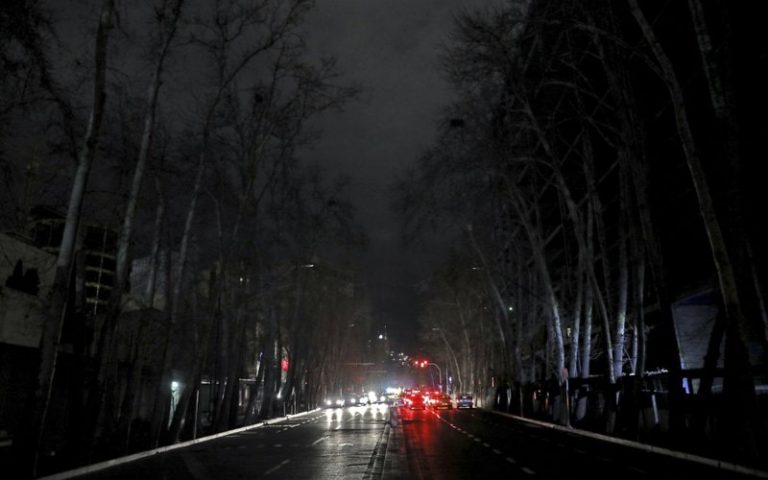
As power outages continue in various cities across Iran due to electricity shortages, Mehdi Bastanchi, the regime’s head of the Coordination Council of Industrial Towns, stated that power cuts in some industrial areas of Tehran have led to street protests.

On Monday, August 26, Bastanchi wrote, “Yesterday, street protests occurred in the Khavaran Industrial Town due to a power outage.”

This industrial official added on his X account that electricity in Khavaran Town, which is “the largest industrial town in Tehran,” was cut off on Monday and is scheduled to be out for another 24 hours starting Tuesday.

In recent weeks, numerous reports have surfaced about the two-week closure of some factories in Mashhad at the request of the electricity department and the shutdown of certain shifts in Tehran’s industrial towns. Some of these reports were denied or corrected by government officials.

A few days ago, Samad Hassanzadeh, the head of Iran’s Chamber of Commerce, Industries, and Mines, stated that power outages in production units have disrupted the activities of the private sector.

In his latest message, Bastanchi also mentioned that small and medium-sized industries in industrial towns are “dying.”

Meanwhile, on Monday, Tavanir, Iran’s national electricity company, announced that due to the extreme heat, which has been “unprecedented in the last 50 years,” all electricity consumers must reduce their consumption by 10%.

Last year, the electricity supply deficit in Iran was 16%, but this year it has increased to 22%. The chairman of Iran’s Electricity Syndicate also warned that the electricity shortfall could reach 37% in the next ten years.

Official statistics from the Ministry of Energy show that 13% of the country’s generated electricity is lost in the outdated and worn-out transmission and distribution network. This significant figure is equivalent to 40% of the country’s total household electricity consumption.

Retirees Hold Protest Rallies in Several Cities in Iran

On Monday, August 26, retirees from the Telecommunications Company and the Social Security Organization held economic protests in several cities across Iran. In their chants, the protesters demanded the removal of “incompetent managers,” accountability from “lying and incompetent officials,” and the attainment of “fair rights.”  

According to reports on Monday, the weekly protests by retirees of the Telecommunications Company saw additional retirees from other organizations, including the Social Security Organization, joining in. These protests took place in several provinces, including Zanjan, Gilan, East Azerbaijan, Khuzestan, Isfahan, and Kurdistan.  

Retired protesters in Zanjan chanted, “Incompetent managers must be fired.”  

In Gilan, dozens of retired telecommunications workers gathered in front of the Telecommunications Department, chanting, “Lying manager, where are the results of your promises?”  

In Tabriz, the capital of East Azerbaijan Province, retired protesters criticized the mismanagement and financial corruption of officials, chanting, “Incompetent official, you’ve plundered the company.”  

In Shush, a city in Khuzestan Province, protesting retirees highlighted their economic hardships, chanting, “The retiree’s fridge is emptier than before.”  

Retired telecommunications workers in Isfahan Province also chanted, “Incompetent manager, shame on you.”  

Retirees protesting in Kurdistan Province chanted, “Oppressive shareholder, shame on you.”  

The executive bylaw of Article 24 of the Civil Service Law, passed in 2010, outlines the tasks that can be delegated and how services can be purchased from the private sector. It states that “until the obstacles to delegation are removed,” the responsibility of providing services to the workforce remains with the executive body, i.e., the government. However, 14 years after the adoption of this bylaw and in light of the ongoing and frequent protests by these retirees, it appears that neither the “obstacles to delegation” have been removed nor has the executive body fulfilled its duties towards the protesters.  

The weekly protests by retirees of the Telecommunications Company have been ongoing for months. The reasons for these protests include the failure to update welfare allowances in 2022 and 2023, management’s disregard for the 2010 bylaw, issues with supplementary insurance, and the failure to pay past dues at current rates.  

Protests by oil and gas industry workers in Asaluyeh  

Simultaneously with the retirees’ protests, oil and gas industry workers also protested on Monday, with a group of employees from the Pars Oil and Gas Company in Asaluyeh marching in protest.  

Dozens of employees from the Pars Oil and Gas Company in Asaluyeh emphasized the demands of oil industry workers, chanting, “Our pay decreases, but oil and gas keep being produced,” and “Fair wages are our undeniable right.”  

The demands of these protesting workers include the removal of incompetent and corrupt officials, the elimination of the salary cap, the removal of retirement benefit limitations, and the revision of the retirement fund’s bylaws.  

The expansion of labor protests among various groups, including retirees, workers in different industries, teachers, victims of financial fraud, and nurses and healthcare workers, reflects the growing economic difficulties in Iran and the disregard of Iranian regime officials.

Record Electricity Consumption in Iran During the Current Summer

0

Mostafa Rajabi Mashhadi, CEO of Tavanir (Iran Power Generation, Transmission, and Distribution Management Company), stated that on Saturday, August 24, during peak consumption hours, the electricity demand reached 77,000 megawatts.

This energy official added that on Saturday, “we surpassed last year’s electricity consumption demand for 42 days and 42 instances with unbelievable numbers.”

This year, the increase in temperature, coupled with the government’s failure to increase electricity production, has raised the imbalance to 17,000 megawatts.

While the relative drop in temperature last week brought hope for resolving the power outage problem, reports indicate that a new heatwave is expected by the end of the week, which will further increase electricity consumption.

On Sunday, Rajabi Mashhadi told the state-run Mehr News Agency: “The country’s electricity consumption demand has been higher than last year’s peak for 42 days.”

According to Rajabi Mashhadi, as reported by the Meteorological Organization, this August has been the hottest in the past 50 years, and although the Meteorological Organization predicted a slight temperature drop from yesterday, the temperature did not decrease, and reports indicate that the unusual heat will persist until the end of this week.

He further urged the public to “help reduce the challenges of providing stable and continuous electricity in the country by saving at least ten percent.”

Possibility of Increased Electricity Consumption This Week

Meanwhile, Maziar Jamshidi, the Director of Operation and Network Control of the National Electricity Grid told IRNA News Agency: “We are in the last week of August, and the temperature continues to rise, so we expect an increase in temperature and, consequently, an increase in electricity consumption in the country until the end of this week.”

Jamshidi said, “Electricity consumption in the country on Saturday, August 24, increased by about 500 to 600 megawatts compared to last week.”

The record-breaking electricity consumption in Iran during the summer heatwave has previously made headlines.

Ali Akbar Mehrabian, the Minister of Energy in Ebrahim Raisi’s government, stated earlier in August that Iran has experienced about a 9% increase in electricity consumption compared to last year due to unprecedented heat, adding, “The ten-year average growth rate of Iran’s electricity industry is 4.7%; in such a situation, it can be said that this year the country has experienced double the average electricity consumption growth of previous years.”

Two days ago, the Chairman of the Board of the Iran Electrical Syndicate said that by 2035, the electricity imbalance would reach 37%, equivalent to one-third of the country’s electricity demand. Hasanali Taghizadeh described this imbalance as extremely “dangerous,” adding, “The electricity imbalance this summer was 17,000 megawatts, while last year it was 12,000 megawatts.”

The unprecedented heatwave has now engulfed many countries, even large parts of Europe, but while Iran is grappling with the heat issue, it is also struggling with the inability to meet its electricity consumption needs.

Despite all measures and warnings, there have been numerous reports of scattered, repeated, and widespread blackouts in many cities across the country in recent weeks.

According to the Ministry of Energy, overall electricity consumption in Iran “is more than half of the consumption of the 27 European Union countries combined.” However, the main issue remains the increasing electricity deficit in the country.

It is worth noting that Iran has the world’s second-largest gas reserves but is still unable to supply sufficient electricity. Moreover, due to its geographical location, Iran has great potential to generate electricity from renewable sources, but the regime has made no investment in this area. Instead, the Iranian regime has spent billions of dollars on its nuclear program and has allocated much of the country’s resources to regional interventions, yet it remains incapable of producing adequate electricity.

12 million Liters of Fuel Smuggled Out of Iran Every Day

A member of the Iranian regime’s Chamber of Commerce, Industries, and Mines reported that 12 million liters of fuel are smuggled daily from Iran to neighboring countries, adding that the annual value of this smuggled fuel is 4 billion dollars, with 3.5 billion dollars being “pure windfall profit.”

On Sunday, August 25, Ali Shams-Ardakani added that smugglers take the fuel to the city of Van in Turkey, where they barter it for clothing, shoes, and other products.

Ardakani also claimed to have the names of those involved in fuel smuggling to Turkey but refrained from disclosing them.

He stated that the price of gasoline in Afghanistan is 400,000 rials (approximately $0.66) and that Iranian fuel is also being smuggled into this market.

Reuters news agency reported last fall, citing Pakistani officials, that 4 million liters of fuel are smuggled daily from Iran to Pakistan, where it is sold cheaply at gas stations.

Ardakani did not explain how the daily smuggling of 12 million liters of fuel, requiring hundreds of large tanker trucks, could be carried out by ordinary people, but The Washington Post reported in January 2022, citing sources, that the Islamic Revolutionary Guard Corps (IRGC) is at the center of the large fuel smuggling network in Iran.

Transparency International ranks Iran 149th out of 180 countries in terms of financial corruption.

Due to the sharp decline in the value of the rial in recent years, Iran offers the cheapest gasoline in the world to its citizens, and the significant price difference between domestic and international markets fuels smuggling.

Ardakani states: “The smugglers illegally export fuel and simultaneously bring in contraband goods to sell in Iran for cash. In other words, they send out fuel and bring in clothing, curtains, shoes, and other items.”

This member of the Chamber of Commerce described the situation as “smuggling within smuggling,” explaining that fuel smuggling to Turkey is exchanged for smuggled clothing. He added, “I estimate that this type of smuggling has destroyed nearly sixty thousand jobs in our consumer industries.”

So far, Iranian regime officials have provided various figures on the volume of fuel smuggling out of the country.

Jalil Salari, the former head of the National Iranian Oil Refining and Distribution Company, said in July of this year that by monitoring the transportation sector and digitizing shipping documents, 10 million liters of gasoline are saved daily.

He explained: “According to reports, fuel smuggling occurs in such a way that diesel, which is priced at 7,000 rials per liter (approximately $0.011) domestically, is sold for 130,000 rials per liter (approximately $0.216) at the border of neighboring countries. This price difference brings significant profits to opportunists and fuel smugglers.”

According to government-set prices, state-subsidized diesel is sold for 3,000 rials per liter (approximately $0.005) and at the free market price of 6,000 rials per liter (approximately $0.01).

However, distribution service stations sometimes sell each liter of diesel for much more than the set price, ranging from 25,000 to 70,000 rials (approximately $0.041 to $0.011).

Meanwhile, Malek Shariati, a member of the Iranian Parliament and the Energy Committee, estimated that 5 million liters of gasoline and 10 million liters of diesel are smuggled daily.

90,000 People In Iran Own 500,000 vacant homes

Abolfazl Norouzi, Director General of the Housing Economics Office at the Ministry of Roads and Urban Development, stated that there are more than 500,000 vacant housing units in the country, owned by no more than 90,000 individuals.

On Friday, August 23, Norouzi warned the owners of vacant homes, saying that the Ministry of Roads and Urban Development is identifying these empty houses under certain articles of the Direct Tax Law and reporting them to the Tax Administration.

He added that the necessary warnings have been issued to the owners of the identified units, with priority given to those who own more than 100 housing units.

According to this official from the Ministry of Roads and Urban Development, among the owners of these 500,000 vacant homes, some possess more than 50, 20, 10, or 3 vacant houses, and they are next in line to be reported to the Tax Administration.

Mr. Norouzi says that the government’s approach to this issue is “not revenue-oriented,” but rather aimed at bringing these homes to the market. However, he had previously predicted that “30 trillion rials (approximately $50 million)” in taxes could be collected from vacant homes.

In June 2023, Abolfazl Norouzi announced that the Ministry of Roads had “detailed residency information for 73 million Iranians” and warned that if heads of households did not register their home information in the “National Real Estate and Housing System,” they would be fined.

Ebrahim Raisi’s government claimed that the plan to tax vacant homes was an effort to reduce the rising prices of housing and rent. However, more than a year after the implementation of this plan, reports indicate that housing prices continue to rise.

Less than three years after Raisi’s government took office, the housing crisis in Iran has reached unprecedented levels, with an ordinary worker now needing to wait over two centuries to buy a standard apartment in Tehran.

Davood Beigi-Nejad, Vice President of the Real Estate Union, also reported on August 18 that the market for rent, buying, and selling properties is experiencing stagflation, noting that the average rent in Tehran has increased by over 50%, and considering the rising housing prices, renters no longer think about buying a home.

Moreover, Central Bank statistics show that under Raisi’s government, housing prices in Tehran have increased by 2.7 times.

Price Of Food In Iran Almost Tripled In Three Years

New data from the Statistical Center of Iran shows that from the beginning of the Persian calendar year1400 (March 21, 2021) to August 21, 2024, the prices of food and beverages in the country have increased by 194%.

Thus, during the three-year period of the 13th government, food prices have nearly tripled.

The report from the Statistical Center, published on its website, also shows that inflation for the 12 months leading up to August this year was 34.8% compared to the same period last year.

During this period, Esfahan, West Azerbaijan, and Kurdistan experienced the highest annual inflation growth, while Sistan and Baluchestan saw the lowest, with an annual inflation rate of 25%.

Additionally, the prices of goods and services in August this year increased by 31.6% compared to August last year (point-to-point inflation).

The highest point-to-point inflation in August was in Ilam, and the lowest was in Sistan and Baluchestan.

Annual and point-to-point inflation rates in urban areas in August were higher than those in rural households.

Last month, the highest price increase compared to August 2023 was in public transportation services, which saw a 54% jump, followed by housing and rent inflation, both of which were reported to be 43%.

The Statistical Center’s report also claims that the price of oils and fats in August this year, compared to the same month last year, not only did not increase but actually decreased by 0.7%.

This claim comes despite the fact that oils and fats, following red meat, have had the highest price increase among food items since March 2021, with a 278% rise in prices since then.

Overall, the highest inflation rates since March 21, 2021, were recorded in the winter of 2022 and the spring of 2023, during which the Statistical Center and Central Bank suspended the publication of monthly inflation reports for several months.

However, after the Statistical Center resumed the publication of monthly inflation reports last summer, it became clear that point-to-point inflation had exceeded 50% during those months.

Iranian Authorities Close Khavaran Cemetery to Families of Prisoners Executed in 1980s

Iranian regime agents once again prevented the families of political prisoners executed in the 1980s from entering Khavaran Cemetery in Tehran to hold a memorial ceremony.

A group of families of political prisoners executed in the 1980s visited Khavaran Cemetery on Friday, August 23, to commemorate their loved ones.

According to the report, in addition to closing the cemetery gates, the government agents also removed the photos and flowers that the families had placed at the entrance of the cemetery.

For some time now, the Iranian government has been preventing Khavaran families from visiting the cemetery while simultaneously forcibly burying the bodies of Baha’i citizens in the section designated for political prisoners executed in the summer of 1988.

The Khavaran families believe that the Iranian regime’s goal is to erase the “evidence of the crime of massacring political prisoners in the 1980s, especially in the summer of 1988,” and they have repeatedly protested this practice.

Khavaran Cemetery, located in southeastern Tehran along Khavaran Road and adjacent to several cemeteries belonging to religious minorities, contains the bodies of thousands of political and ideological prisoners executed in the summer of 1988. They were buried secretly and without identification in mass graves.

These political prisoners, who were members and supporters of opposition political organizations, especially the People’s Mojahedin Organization of Iran (PMOI/MEK), were executed by order of the so-called “Death Committee.”

A recent report by Javaid Rehman, the UN Special Rapporteur on Human Rights in Iran, designated the executions of political prisoners in the 1980s as “atrocity crimes” and “crimes against humanity.” The 1988 massacre, in particular, was described as a “genocide.”

Iran’s Regime Owes 1.1 Quadrillion Rials to Wheat Farmers

According to the Iranian state television news agency, Gholamreza Nouri Ghezeljeh said in a television program, “Since the formation of the government, the payment of wheat farmers has been semi-officially pursued, and we were looking for resources.” He added that the remaining government debt will be paid in October.

He did not explain how this massive debt to farmers would be paid within less than two months and with what financial resources.

In recent months, Iranian regime officials have repeatedly promised to settle the accounts with wheat farmers, but these promises have not yet been fulfilled. This issue has led to protests by farmers, including gatherings.

In this connection, according to the Coordinating Council of Teachers’ Associations in Iran, dozens of wheat farmers in Kermanshah gathered in front of the governor’s office on Wednesday, August 21, to protest the non-payment of their dues and the low price of wheat.

Meanwhile, the Shargh newspaper reported that “in about 10 days, autumn planting will begin in the cold regions of Iran,” but noted that “farmers are empty-handed and have been forced to go into debt to buy fertilizer, pesticides, seeds, and rent machinery.”

The newspaper emphasized that “the government owes a heavy sum to wheat farmers and constantly delays the settlement,” and quoting the National Wheat Farmers Foundation, it stated that the government’s debt to farmers exceeds 1.1 quadrillion rials.

According to this report, “Since March 26 of this year, when spring wheat farmers delivered their wheat to the government, the payment for the purchased wheat has not been settled.”

Shargh pointed out that to date, the government has purchased “more than 11.6 million tons” of wheat from farmers, and the purchase of wheat continues, but there is no news of the payment.

One of the farmers in Ardabil province told this newspaper that the government does not pay the farmers’ wheat money or pays it with a significant delay, which has disrupted the farming schedule and reduced agricultural productivity.

A farmer said the banks are not willing to easily provide loans, and some farmers have been forced to sell their cars, carpets, and household items to resume farming.

He noted that no store is willing to sell seeds, fertilizer, or pesticides on credit to farmers, which has put farmers under pressure, and added that banks are also not willing to easily give loans, forcing some farmers to sell their cars, carpets, and household items to resume farming.

Another farmer in Semnan province told Shargh that rural household income is lower than urban household income, and farmers do not have the ability to save, and this behavior of the government has put rural household livelihoods under pressure.

According to this report, citing the Statistical Centre of Iran, the average annual income of urban households in 2022 was about 1.67 billion rials (approximately $2,784), and the average annual expenditure of urban households was estimated at about 1.37 billion rials (approximately $2,284). Meanwhile, the average annual income of rural households was only about 980 million rials (approximately $1,634), and the average annual expenditure of rural households was about 790 million rials (approximately $1,317).

Wheat is considered one of the most important strategic commodities in the agricultural sector, playing a significant role in household consumption.

The delay in the government’s payment of debts to wheat farmers in recent years has led to farmers’ protests, where each public protest has resulted in the payment of part of the debts, but the government has still not properly fulfilled its commitments regarding the “guaranteed purchase” of wheat from farmers.

Meanwhile, farmers face other problems that have put them under greater economic pressure.

Ali Naqi Imani, regime’s Vice President of the National Wheat Farmers Foundation, told Shargh that farmers are facing great difficulties in obtaining fertilizer for autumn planting, and urea fertilizer has become scarce in the market.

According to him, petrochemical companies have refused to supply fertilizer to the Agricultural Support Services Company in the past two to three months to increase the price of urea fertilizer, and the price of urea fertilizer has now risen by 132%. This is while the guaranteed purchase price of wheat this year has only increased by 16%.

He emphasized that the situation of other agricultural inputs is the same, and farmers’ incomes do not match their expenses at all, and the economic strength of farmers is weakening year by year.

Minimum Price of Land and Housing Construction in Tehran is $1,134 Per Square Meter

Farshid Pourhajat, the Secretary of the National Association of Mass Builders of Iran, stated that the “minimum cost” of housing construction in Tehran, considering land prices and excluding ancillary costs such as permits, is at least 680 million rials (approximately $1,134) per square meter.

On Thursday, August 22, Pourhajat told the Entekhab website that the inability of the middle and lower classes to purchase homes was evident from the beginning of this year (March 21) due to “the continued inflation in housing.”

The Real Estate Consultants’ Union had also predicted in March of this year that with the rise in the dollar exchange rate, there is a likelihood of repeating the experience of stagflation in the housing market this year.

Pourhajat, dismissing the government’s “fabricated statistics” as unrealistic, stated that the real data corresponds to the actual market prices. He explained, “In Tehran, the average price has risen above 800 million rials (approximately $1,334), and in smaller cities, you can’t find a house for less than 40 billion rials (approximately $66,667).”

He mentioned that the minimum cost of housing construction, excluding land prices and other expenses such as permits, risk costs, and processes, is 180 million rials (approximately $300) per square meter.

According to the Secretary of the National Association of Mass Builders, land prices in Tehran are currently not less than 500 million rials (approximately $834) per square meter.

On July 29, the ISNA news agency reported that “the price of housing in the capital has reached 860 million rials (approximately $1,434) per square meter.” The report stated, “Since December 2017, housing prices in Tehran have increased by 1,590%, rising from an average of 50.9 million rials to 859 million rials.”

In mid-September last year, Hamshahri newspaper, the official news outlet of the Tehran Municipality, confirmed the recession in the housing and construction sector in a report, stating that the housing market entered one of its hardest recessions after the unreasonable price surge in the winter of 2022.

The report pointed to the decline in cash flow in the housing market and the inability of some mass builders to continue construction, emphasizing that the halt in cash injections from the banking system is one of the factors contributing to the recession in construction.

In his interview with Entekhab, Pourhajat emphasized that the production ceiling is “below 400,000 units per year.”

According to him, statistics for the first two months of the year have not been fully extracted, but field surveys indicate a “decrease in production compared to last year.”

On April 29 of this year, Baitollah Sattarian, a housing expert, stated in an interview that Iran needs one million housing units annually, but only 200,000 homes are being built.

Ebrahim Raisi, the president of the fourteenth government, had promised during his election campaign to build one million housing units annually.

However, Masoud Pezeshkian, the fourteenth president, during his election debates, emphasized that “it is not possible to build one million housing units per year” and without providing further details, said, “I will implement whatever is legally possible and within my capacity.”

In mid-October 2023, after eight months of withholding and censoring data, the Statistical Centre of Iran reported a record annual housing inflation rate of 84% in the capital in October.

A look at rental prices reveals that, contrary to the claims of Iranian regime officials, rents have increased by an average of 130% in Tehran and other cities.

Currently, rent has become one of the most significant economic concerns for Iranians.

Average GPA of Iranian High School Seniors Drops to 10.89/20

0

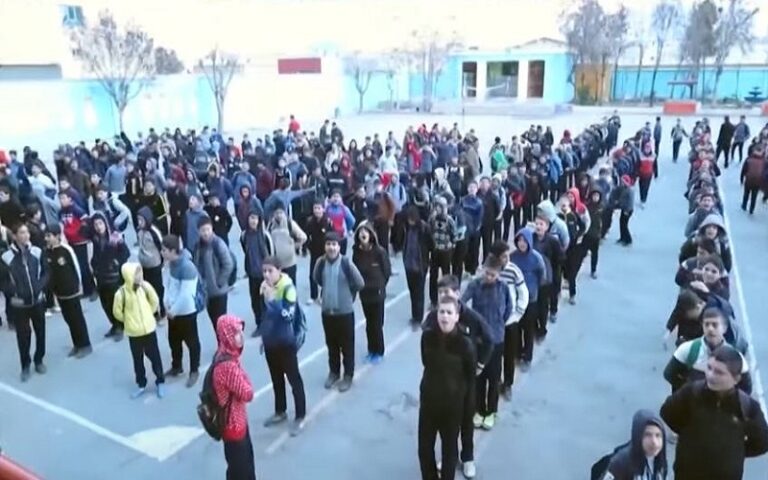
The head of the Iranian regime’s Education Evaluation and Quality Assessment Center says that the average GPA for the three main fields of Experimental Sciences, Mathematics, and Humanities in the 12th grade, the final year of high school, is “10.89” (out of 20).

On Wednesday, August 21, Mohsen Zarei, evaluating these scores as “satisfactory,” stated: “There has been a 0.55 increase in scores across the three fields.”

Mr. Zarei also announced that the average GPA for 12th graders in the Experimental Sciences field has reached “12,” in Mathematics “11.82,” and in Humanities “9.13.”

He further stated: “The performance of 10th-grade students has been better compared to those in the 11th and 12th grades.”

According to this education official, the average final exam scores of non-governmental schools in all three grades are lower than those of public schools.

While Mohsen Zarei described this year’s high school students’ scores in Iran as “satisfactory,” some journalists and teachers’ union activists have attributed these scores to poor “policy-making” by the ministry.

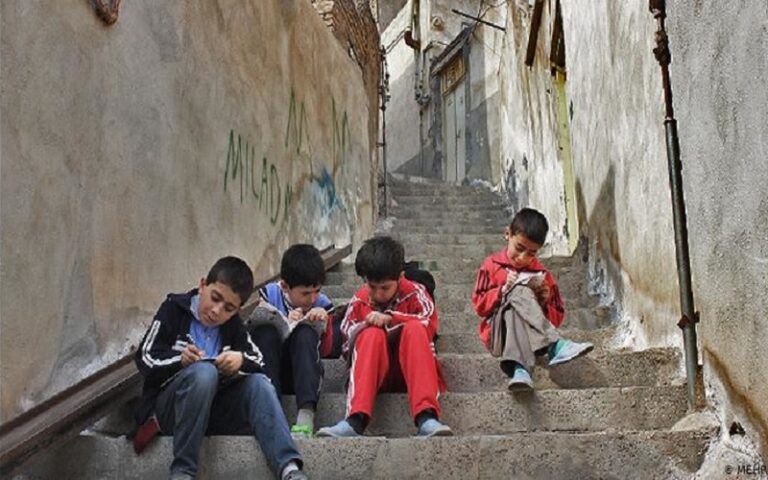
In the new academic year, more than 1.19 million students have been deprived of education.

Additionally, the country is facing a shortage of more than 200,000 educational staff, and the share of education in the public budget bill is “9.83 percent.”

Previously, the education policies had faced severe criticism from many professional organizations.

The Iranian regime has recently forced experienced teachers into retirement and has employed clerics as teachers in many schools to exert greater control over the youth.