Home Blog Page 172

Only $1.5 Million Paid Out of $70 Million in Taxes Owed by Luxury Homeowners in Iran

According to the Iranian regime’s Tax Authority, 135,509 luxury residential units and garden villas have been subjected to taxes amounting to 44.63 trillion rials (approximately $69.8 million), of which only 940 billion rials (approximately $1.471 million) have been collected.  

According to the organization, the threshold for luxury home tax in 2024, based on the budget law, is set at 350 billion rials (approximately $547,730). All residential units and garden villas valued above this amount must pay taxes on the excess.  

Failure to pay taxes by luxury homeowners comes at a time when reports show that tax evasion by the wealthy has become commonplace. According to the Tax Authority, in the spring of 2024, government revenues from income and salary taxes grew by 15%, revenues from goods and services taxes grew by 36.5%, while wealth tax revenues dropped by 28.5%.  

Government performance indicates that in recent years, due to the decline in foreign exchange revenues, the regime has focused its efforts on collecting taxes to cover some of its ongoing expenses.  

On September 24, the head of Iran’s Tax Authority stated that the organization’s revenue collection in the first half of this year had increased by 49% compared to the same period last year, saying: “We collected a total of 511.389 trillion rials (approximately $8 billion), which is about 1.67 quadrillion rials (around $2.6 billion) more than the same period last year.”  

In May 2024, *Mehr News Agency* reported that government tax revenues had risen from 1.09 quadrillion rials (about $1.7 billion) in 2018 to about 8.06 quadrillion rials (around $12.6 billion), marking a 740% increase over six years.  

While tax revenues have increased, many experts believe that the government does not provide services commensurate with the amount of taxes collected. Moreover, there is no transparency or report on how tax revenues are being spent.  

This comes at a time when a significant portion of the economy, estimated by experts to account for over 50% of Iran’s total economy, is under the control of Supreme Leader Ali Khamenei and exempt from taxes. In fact, the largest share of tax evasion relates to the assets of the regime’s leaders.

Iran: Amnesty International Raises Concern Over Potential Execution of Four Political Prisoners in Ahvaz

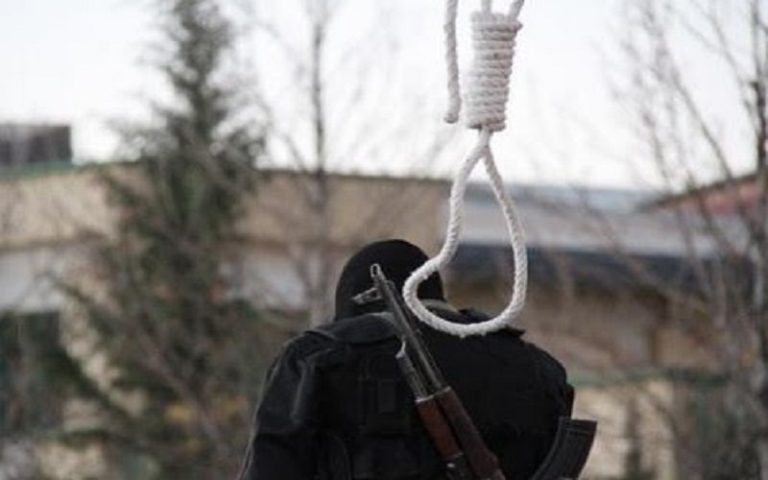
In a statement, Amnesty International Germany announced that the transfer of four political prisoners to solitary confinement in Ahvaz prison indicates the possibility of their execution in the coming days.  

According to this human rights organization, Ali Mojadam, Moein Khenfari, Mohammadreza Moghaddam, and Adnan Ghabishavi are at risk of execution. 

In Amnesty International Germany’s statement, it was noted that the status of two other prisoners involved in the same case as these four political prisoners is unclear. It is unknown whether Salem Mousavi and Habib Deris have also been transferred to solitary cells.

In recent days, civil rights activists and human rights organizations have continued to respond to the news of the possible execution of the four political prisoners in Ahvaz.  

According to reports, on February 14, 2023, Branch 4 of the Iranian regime’s Revolutionary Court in Ahvaz sentenced “Ali Mojdam, Habib Deris, Salem Mousavi, Mohammadreza Moghaddam, Adnan Mousavi, and Moein Khenfari” to death on charges of moharebeh (waging war against God). On March 6, 2023, Mizan News Agency, affiliated with Iran’s judiciary, officially announced the issuance of death sentences for these political prisoners, accusing them of killing two Basij members, a police officer, and a soldier.  

The charge against these four prisoners and their two co-defendants is the “murder of four security officers” in Khorramshahr and Sarbandar. However, Amnesty Internationa emphasized that these “six Arab political prisoners were tortured to make forced confessions and sentenced to death for the charge of baghi (armed rebellion).”  

This is the second time these individuals have been transferred to solitary confinement. In May 2023, the Iran Human Rights Organization also announced that “six Ahvazi Arab political prisoners, sentenced to death on security-related charges, were moved to solitary confinement in Sheyban prison in Ahvaz for the execution of their sentences.” The organization identified these six political prisoners as Ali Mojdam, Mohammadreza Moghaddam, Adnan Mousavi, Salem Mousavi Alboshoukeh, Moein Khenfari, and Habib Deris.

Amnesty International Condemns Iran’s Death Sentence for Juvenile Offender in Shiraz

Amnesty International, on Friday, October 18, issued a statement urging Iran’s regime to not execute Mohammad Reza Azizi, a 21-year-old who was only 17 at the time of the crime he was charged with.

Amnesty International stated that Iranian authorities plan to carry out Azizi’s execution on Monday, October 21, in Shiraz.

The international human rights organization condemned Azizi’s death sentence as a violation of international laws that prohibit executing individuals who were under 18 at the time of the alleged crime, a commitment to which Iran’s regime is also a signatory.

Mohammad Reza Azizi, a juvenile offender incarcerated in Shiraz Central Prison, was arrested and sentenced to qisas (retribution) for “premeditated murder.”

Azizi, born on August 24, 2003, was arrested on September 19, 2020, when he was just 17 years and 27 days old.

In response, Sara Hashash, Amnesty International’s Deputy Regional Director for the Middle East and North Africa, said:  

“The planned execution of Mohammed Reza Azizi puts on full display the Iranian authorities’ cruelty. Their repeated flagrant disregard for the right to life is an abhorrent assault on children’s rights. Using the death penalty against someone who was a child at the time of the crime is prohibited under international human rights and customary law and violates Iran’s international obligations.”

Amnesty International has called for the immediate cancellation of Azizi’s death sentence and urged the regime to give him a retrial, fully adhering to international standards, without resorting to the death penalty.

Amnesty International claims to have reviewed the legal documents of the case and found that the Iranian Legal Medicine Organization, under the supervision of the judiciary, concluded—without explaining the circumstances of the crime—that Azizi had reached mental maturity at the time of the offense.

The “No to Executions on Tuesdays” campaign, made up of prisoners on hunger strike in over 22 Iranian prisons, issued a statement on October 15, announcing that more than 36 people had been executed the previous week. Among them were two juveniles, Mehdi Barahoui and Ali Shirvani, aged 17 and 15 at the time of their arrest, who were executed in violation of the “Convention on the Rights of the Child.”

The Iranian regime has repeatedly sentenced juvenile offenders to death, and Iran has the highest number of executions of minors in the world.

Despite the fact that the Convention on the Rights of the Child and the International Covenant on Civil and Political Rights prohibit the sentencing and execution of individuals under 18, the Iranian regime continues to enforce such sentences, justifying it as being in accordance with Sharia law and domestic regulations.

Escalating Student Protests and Public Demonstrations Across Iran

On Wednesday, October 16, protests by various segments of the public were accompanied by a student protest.

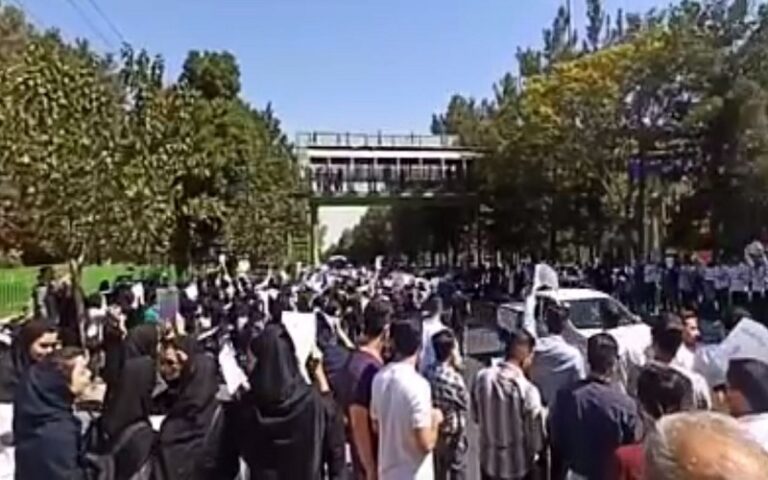
On Wednesday, the second protest by medical students from Islamic Azad University Science and Research Branch took place in front of the Secretariat of the Supreme Council of the Cultural Revolution.

First-year students in medicine, dentistry, and pharmacy at the Science and Research Branch of Islamic Azad University protested the sudden increase in tuition fees without prior notice.

The students had also held a similar protest in front of the Science and Research University the previous day.

The new students are protesting the sudden tuition hike that was announced after the final 2024 entrance exam results. Tuition fees for these programs have increased from 300 million rials (approximately $471) per semester to 900 million rials (approximately $1,413).

In Bushehr, car buyers gathered in front of the sealed “Bustan Arya Khodro” car dealership, hoping for action to recover their money.

They said, as usual, all the city officials are complicit, and these cases have gotten nowhere so far. “A knife doesn’t cut its own handle!”

Additionally, disabled individuals in several cities held protests in front of the Welfare Organization and provincial government offices, demanding the allocation of a budget for the full implementation of Article 27 of the Law on the Rights of Persons with Disabilities in the 2025 budget bill.

Protests by disabled individuals took place in Tehran, Kerman, Ardabil, and in front of the Khuzestan Governor’s Office in Ahvaz.

Expansion of Anti-Regime Protests

Tehran—Supporters of Esteghlal Football Club also held a protest in front of the Persian Gulf Holding in Tehran.

Similarly, service staff at Vali-e-Asr and Mousavi Hospitals in Zanjan held protests in front of Zanjan University of Medical Sciences.

Holding placards and banners, these individuals demanded fairness in wage payments and protested the current practices in the hospitals.

One of the service workers said, “It’s not clear at all what our duties are in the hospital!”

He criticized the behavior of hospital officials towards service workers, saying, “The way the hospital treats service staff is like slavery, and they have no respect for us just because we are called service workers.”

Hospital officials, in response to the service workers’ protest, said, “Wait two months until we leave, and the next government and president will address your issues.”

Another service worker at the protest said, “The hospital is facing a shortage of service staff, so we can’t even take leave under the most urgent circumstances.”

“Ten days ago, we asked the university president to solve our problems, but nothing has happened.”

Iran’s Social Security Fund on the Brink of Bankruptcy

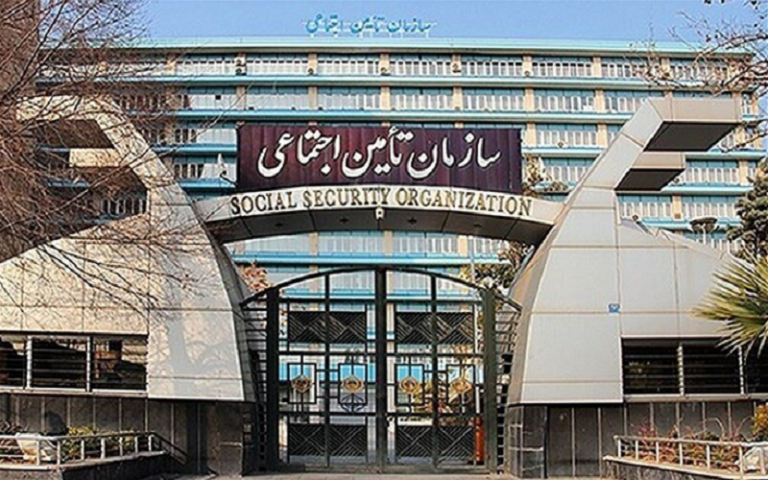
In recent years, Iran’s Social Security Fund, a key pillar for the economic security of retirees and workers, has faced serious challenges. A sharp decline in the ratio of contributors to pensioners, massive government debt, rising retirement costs, and mismanagement have pushed this fund to the brink of crisis.

This situation has not only affected the lives of millions of retirees but has also cast a shadow over the entire national economy. The government-affiliated newspaper Jahan-e Sanat analyzed the condition of the Social Security Fund on October 15. This analysis is based on their report.

Current Situation and Challenges

The significant decline in the number of contributors relative to pensioners is severely threatening the financial stability of the fund. This is due to increased life expectancy, declining birth rates, and the growing elderly population. The government’s debt to the Social Security Fund has reached astronomical figures. This massive debt has severely limited the fund’s financial resources, reducing its ability to meet its obligations.

With the rising retirement age and inflation, the cost of paying pensions has increased dramatically, placing immense pressure on the fund’s financial resources. Mismanagement, corruption, and a lack of transparency have led to resource wastage and a loss of public trust. Complex and inflexible regulations have increased production costs and discouraged employers from hiring formal employees.

Consequences of the Social Security Fund Crisis

Low pensions and rising inflation have significantly reduced retirees’ purchasing power, leaving them with serious livelihood challenges. Burdensome regulations and high insurance costs have pushed employers toward hiring informal workers, leading to a rise in unemployment. The problems of the Social Security Fund have impacted the entire economy, leading to reduced production and economic growth.

Root Causes of the Crisis and Can They Be Fixed?

The government’s flawed economic and social policies, including failure to repay debts to the fund, rising government expenses, and lack of structural economic reforms, have exacerbated the crisis. Demographic changes, including the increasing proportion of elderly in the population, have put immense pressure on the fund’s resources. The lack of transparency and administrative corruption have resulted in resource wastage and diminished public trust.

In Iran, all budget deficits are covered by drawing from the pension fund. This causes the crisis to directly impact the lives of retirees, who are already under severe economic pressure. For this reason, retirees are frequently protesting in the streets to demand their rights.

Saving the Social Security Fund from Crisis

The Social Security Fund is heading toward a deep crisis that could lead to its financial collapse, along with rising unemployment and poverty. The regime is unable to settle its debts to the fund. However, in a democratic government, both the people’s demands are met, and economic pressures on their lives are alleviated.

Khamenei’s Orders the Acceleration of Iran’s Nuclear Weapons Program

Simultaneously with the rise of Massoud Pezeshkian as the president of Iran’s regime, supreme leader Ali Khamenei ordered the Islamic Revolutionary Guard Corps (IRGC) to complete and expedite the nuclear weapons project. Prior to this, the Iranian regime had tried to hide the project or portray it as purely for peaceful purposes. However, the Iranian opposition group the People’s Mojahedin Organization of Iran (PMOI) exposed the regime’s atomic bomb project. Only then did the public become aware of the scale of this project, as well as the regime’s missile program.  

These days, Iranian regime officials openly talk about building an atomic bomb, revealing their original intentions.  

The primary reason for this is a strategic escape from the quagmire of war and the survival of the Iranian regime through nuclear weapons.  

The nuclear project began in 1990, one year after then regime supreme leader Ruhollah Khomeini’s death. In a confidential internal report from the IRGC addressed to the leaders of the nuclear project, Khamenei’s desired path is explained:  

“Given the course of war in the region and the prospect of its expansion, Iran needs a higher level of deterrence. The current balance is insufficient for the next stages of war. In these circumstances, the best way is to change the nuclear doctrine and design a new model of balance of power. In a conventional battle, the enemy’s capabilities, backed by imperialist support, create problems.”  

The Iranian regime will face difficulties in a prolonged, conventional war. Therefore, according to regime officials, the time has come to take the “final step.”  

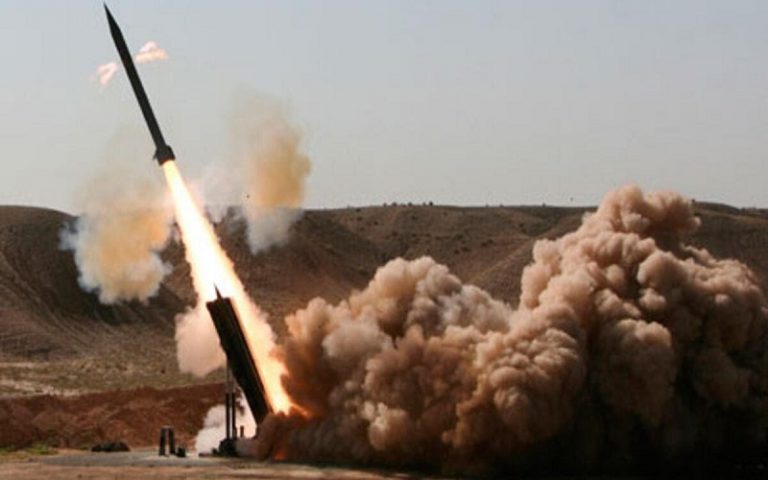
In another report following Iran’s second missile attack on October 1, it was revealed that the “True Promise 2” operation used Khorramshahr, Ghadr, Emad, Kheibar, Qiam, Shahab-3, and the hypersonic Fattah-1 ballistic missiles. However, “repeating similar missile attacks will yield no new results.” Therefore, the next step must establish a balance of power with “high destructive capability and heavy casualties” and “a higher level of deterrence.”  

Some senior officials have publicly addressed this issue in Iranian state media.  

For example, on October 5, Hassan Khomeini explicitly said: “Our military deterrence must rise to a higher level; deterrence comes from power, not smiles.”  

He also added that negotiations are useful, but “velvet gloves hide iron fists.” If we lack power, our hands will be crushed.  

On October 9, 39 members of the regime’s parliament wrote a letter to the Supreme National Security Council, calling for a change in defense doctrine to include nuclear weapons.  

Hassan Ali Akhlaghi Amiri, a member of the parliament’s cultural commission, referred to Khamenei’s fatwa on the prohibition of nuclear weapons, saying: “Time and place influence rulings, and secondary rulings can replace primary ones.”  

On the same day, Mohammad Reza Sabaqian, another parliament member, announced that they would ask Khamenei to change the strategy and fatwa on nuclear weapons if deemed appropriate.  

He added: “Building a nuclear weapon will be easy for us, and under the current conditions, creating deterrence capabilities and ensuring national security is essential. The enemy seeks to weaken Iran’s deterrence.”  

On October 11, Kamal Kharazi, head of the Strategic Council on Foreign Relations, said in an interview with Al Jazeera: “If Israel harms Iran’s nuclear facilities, our level of deterrence will change, and if Iran’s existence is threatened, we will be forced to change our nuclear doctrine.”  

On October 11, Brigadier General Ahmad Haq-Talab, commander of Iran’s “Nuclear Facilities Protection Corps,” said: “Revising Iran’s nuclear doctrine and departing from previously announced considerations is likely.”  

Meanwhile, since June 1991, the National Council of Resistance of Iran (NCRI) has held 120 press conferences, notably exposing uranium enrichment projects at Natanz and heavy water projects at Arak, to raise awareness of this threat among the Iranian people and the world.  

The council emphasizes the need to invoke the snapback mechanism in UN Security Council Resolution 2231 and reactivate halted resolutions related to the regime’s nuclear projects.  

Delays and inaction in this regard give the Iranian regime the opportunity to advance its plans. The NCRI, led by Maryam Rajavi, sees the overthrow of the mullahs’ regime by the Iranian resistance and people as the final solution to the regional crisis, stressing that external attacks will not bring down the mullahs.


Workers on Strike at Several South Pars Gas Refineries in Iran

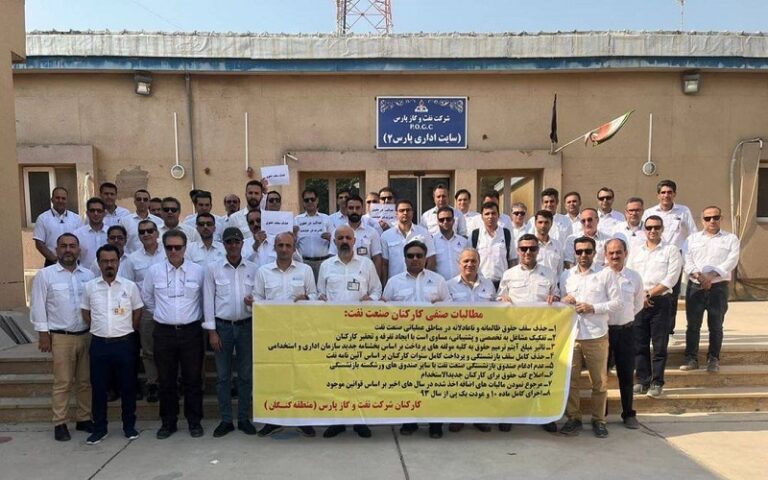
 On 15th October, workers at several gas refineries in Iran’s South Pars complex went on strike. This strike, as part of the “Protest Tuesdays,” entered its eleventh week. Workers held large gatherings demanding their unmet needs.

   According to the report by the Council for Organizing Protests of Oil Contract Workers on Tuesday, October 15, contract workers at refineries 7, 8, 9, 10, 11, and 12 in the South Pars Gas Complex went on strike.

   According to this report, these refinery workers “held large protest gatherings, pursuing their unmet demands.” These protests continue despite “obstructions by security forces, managers, and contractors.”

   The main demands of the protesters include “the right to form labor unions and protest, the complete elimination of contractor middlemen, reinstatement of dismissed protesting workers, an end to security crackdowns on protesting workers, enforcement of prior agreements on vacation entitlements and camp pay, and the fair implementation of a 14-day work and 14-day rest cycle.”

   According to Article 10 of the “Duties and Powers of the Ministry of Oil” law, which was passed by the Iranian regime’s Majlis (parliament) in April 2012, the administrative and employment system, as well as the pay and benefits of employees in the operational and specialized units of companies under the Ministry of Oil, are exempt from the National Civil Service Law. Instead, their system is prepared with the recommendation of the Ministry of Oil and the approval of the Vice President’s Office of Development and Human Resources.

   The Council for Organizing Protests of Oil Contract Workers also reported that on Monday, official employees of the oil and gas industry “refused to issue work permits in operational areas of the refineries as a form of protest.”

   The council, quoting protesting contract workers, reported that “in solidarity, we have stopped work, and even in the refineries where our protests have been blocked, work has completely halted.”

   In the past weeks, on Mondays, employees in the oil-rich southern regions, oil platforms, and all sectors involved in the oil industry have gone on strike, and on Tuesdays, the strikes at various refineries in the South Pars Gas Complex and protests by official colleagues have continued.

   The Council for Organizing Protests of Oil Contract Workers has announced that it supports and backs the protests and strikes “of all sectors working in the oil industry.”

How Iran’s Regime Fans the Flames of Civil War in Sudan

The Washington Post reported on Tuesday, October 15, that weapons secretly supplied by foreign countries to both sides of the conflict in Sudan—including ammunition and drones sent by the Iranian regime and the United Arab Emirates—are fueling Sudan’s devastating civil war.

In the section concerning Iran, the report, based on classified assessments, a report funded by the U.S. State Department, and evidence collected from weapons seized in Sudan, revealed that the Sudanese army has been using foreign-armed drones, particularly those covertly supplied by the Iranian regime, since late last year.

The report tracked seven flights between Iran and Sudan from December 2023 to July 2024, identifying four as military flights that returned to the Iranian Air Force base at Tehran Airport. According to the report, three other planes turned off their transponders when landing in Iran, a “suspicious behavior” suggesting they were also carrying military cargo.

Although Sudanese military officials denied receiving drones from the Iranian government, a Sudanese security official confirmed the accuracy of the report in an interview with The Washington Post. The newspaper said Iranian regime officials did not respond to requests for comment.

Sudan’s civil war began in April 2023 after months of escalating tensions between the military and the so-called Rapid Support Forces (RSF).

In addition to Iran and the UAE, countries such as Egypt, Saudi Arabia, Turkey, and Russia are closely monitoring developments in Sudan due to its strategic location on the Red Sea, through which about 12% of the world’s shipping passes.

In 2023, Sudanese military leaders restored relations with Tehran after an eight-year break in ties between Sudan and Iran.

The report states that secret flights from Iran to Sudan began in December of the same year, using an aircraft previously identified by the U.S. government as being involved in transporting weapons to Syrian fighters linked to the Iranian regime.

According to the report, these flights were operated by the Iranian company Fars Air Qeshm, originating from Tehran’s Mehrabad Airport, stopping in Bandar Abbas, and then heading to their destination in Port Sudan.

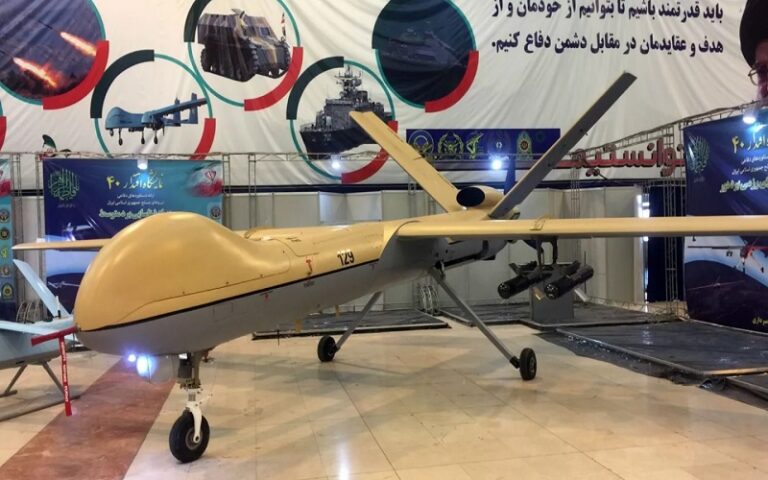
The report highlights the growing presence of Iranian-made weapons in Sudan, citing the downing of an Iranian-made Mohajer-6 drone in Khartoum, a Mohajer-6 ground control station, and significant quantities of Iranian-made artillery and ammunition discovered in the country.

U.S. Warns Iran’s Regime: Any Assassination Attempt on Donald Trump Will Be Considered An “Act of War”

The United States has warned Iran’s regime that any assassination attempt against Donald Trump, the former president and current candidate for the U.S. presidency, will be considered an “act of war” and will be met with a response.

On Monday, October 14, Reuters news agency quoted a U.S. official as saying that the United States warned the Iranian government to halt all plots against Donald Trump, stating that Washington considers any assassination attempt on him an act of war.

This official, who wished to remain anonymous, said that Joe Biden, the president of the United States, is regularly informed about the threats and has instructed his team to counter the Iranian regime’s plots against Americans.

According to the Reuters report, senior U.S. officials, under Biden’s orders, have sent messages to the highest levels of the Iranian government, warning them to stop all plots against Trump and former U.S. officials.

According to this U.S. official, Iran has been told that Washington would consider any assassination attempt on Trump an “act of war.”

Meanwhile, the Iranian regime has denied any involvement in U.S. affairs.

On September 24, Trump’s campaign team announced that U.S. intelligence officials had informed Trump of threats from the Iranian government.

The White House, emphasizing that the U.S. has been closely monitoring Iranian threats against Trump for years, warned of “severe consequences” should the Iranian regime attack any American citizen.

Sean Savett, spokesperson for the National Security Council, said that this is considered a national security matter of the highest priority, and the U.S. strongly condemns Iran for these brazen threats. He added that any attack by Iran on any American citizen—including those currently serving or formerly serving the U.S.—would have severe consequences.

Previously, the U.S. Department of Justice charged three Iranians, allegedly employed by the Islamic Revolutionary Guard Corps (IRGC), with targeting members of Trump’s election campaign in a wide-ranging cyber plot.

Iranian officials have repeatedly stated that they would take revenge for the killing of Qassem Soleimani, the former commander of the Quds Force.

Reuters reported that since 2020, the Iranian regime has been involved in at least 33 assassination or kidnapping attempts in Europe and the United States.

In connection with this, a Pakistani citizen, accused of attempting to hire a “hitman” on behalf of the Iranian government in the United States, has been arrested and is set to face trial.

In this regard, a Pakistani citizen was previously arrested in the United States on charges of attempting to hire a “hitman” on behalf of the Iranian government and is set to stand trial.

EU Sanctions Iran Air and Iran’s Deputy Defense Minister over missile shipments to Russia

On Monday, October 14, European Union foreign ministers gathered to discuss the escalating conflicts in the Middle East, as well as new measures to support Ukraine against Russia, and they approved new sanctions against the Iranian regime.

The EU sanctions target companies and individuals involved in Iran’s ballistic missile program, who have transferred these missiles and other weapons to Russia for use in the war against Ukraine.

During this meeting, the EU decided to impose new sanctions on 14 individuals and entities connected to the Iranian regime, including Iran Air.

The EU has added three Iranian airlines—Iran Air, Mahan Air, and Saha Airlines—along with two logistics companies to its sanctions list.

These companies have been identified as responsible for transporting and supplying Iranian-made drones and related parts and technologies to Russia through their logistics suppliers, with these weapons being used in the aggression against Ukraine.

Two companies that manufacture rocket and missile launchers have also been added to the EU sanctions list.

The European Council also sanctioned Seyed Hamzeh Qalandari, Iran’s regime’s Deputy Defense Minister, as well as commanders of the Quds Force of the Islamic Revolutionary Guard Corps (IRGC), the Khatam-al-Anbiya Construction Headquarters, and the IRGC Aerospace Force, along with the CEOs of the Iran Aircraft Manufacturing Industrial Company (HESA) and the Iran Aerospace Industries Organization.

The list of individuals sanctioned by the European Union includes: Behnam Shahriyari, Ali Shadmani, Ali Jafarabadi, Mehdi Gogardchian, Reza Khosravi Moghadam, Seyed Mirahmad Noshin, and Seyed Hamzeh Qalandari.

These individuals will be subject to asset freezes and travel bans to the European Union. Additionally, the provision of financial and economic resources, either directly or indirectly, for the use of these individuals or their affiliated entities is also prohibited.

Iran Air, Mahan Air, and Saha Airlines, as well as Basamad Electronic Pouya Company, Teyf Tadbir Engineering Company, Iran Alumina, and Shahid Haj Ali Moheb Research Center.

The European Council had warned earlier this April that if the transfer of drones, ballistic missiles, and related technologies to Russia continued, Iran would face punitive actions, including sanctions.

Iran’s regime has repeatedly denied the accusations of sending ballistic missiles to Russia, particularly since the start of the Ukraine war and their alleged use against Ukraine.

The European Union is struggling to find a way to control and halt the escalating violence in the Middle East and to prevent it from turning into a full-scale regional war.