Home Blog Page 179

Tehran’s Housing Crisis Worsens with Skyrocketing Rents

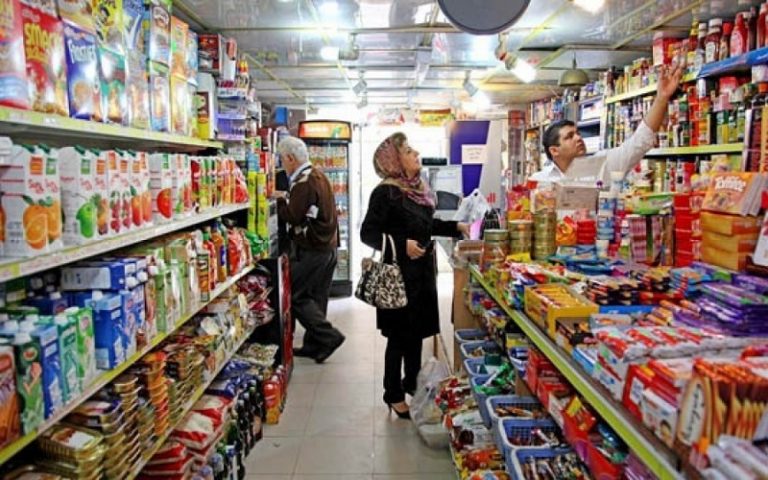
In recent years, the rental crisis for tenants in Tehran and other cities across Iran has become one of the major social and economic problems.

The uncontrolled rise in rental prices, the shortage of suitable housing, and economic pressures have forced many Tehran residents to leave the city and move to the outskirts. This issue has not only affected individuals’ quality of life but has also created new problems.

Families who lived in the city center until a few years ago are now forced to relocate to the outskirts. It is still unclear how long this trend will continue.

The fate of tenants depends not only on inflation but also on factors such as housing prices, the exchange rate of the dollar, housing deposit loans, and overall government policies.

Since 2019, housing inflation has specifically outpaced the national average inflation rate, with rental rates increasing more than the inflation rate each year.

According to official statistics, housing costs account for between 40 to 60 percent of monthly household expenses.

The market does not support 60 to 70 percent increases in housing prices seen in 2020 and 2021. Some more optimistic forecasts suggest that the market cannot even support last year’s 50 percent increase.

Based on inflation expectations for this year, the rental inflation rate will be around 45 percent. Last year, this rate was about 40 percent. In recent years, the cost of renting housing in Tehran has increased sharply, and many tenants are unable to pay these amounts.

For example, in some central areas of Tehran, rental prices have risen so high that even middle-income families cannot afford to rent housing.

Issues and Challenges Faced by Tenants

This uncontrolled increase in rental prices is due to various factors including inflation, the devaluation of the national currency, and a shortage of housing in the market.

The lack of suitable housing in Tehran is another factor contributing to the rental crisis and tenant issues. With population growth and domestic migration to Tehran, the demand for housing has increased.

However, the supply of housing has not kept pace with this demand, resulting in a housing shortage. Many new housing projects have been delayed due to financial and administrative problems, and some have been halted due to the lack of suitable investors.

This shortage of suitable housing has caused prices to rise sharply, putting more pressure on tenants. Economic pressures from the recession, unemployment, and reduced purchasing power have also exacerbated the rental crisis and tenant issues in Tehran.

Many families, due to unemployment or low income, are unable to pay high rents. These economic pressures have caused people to seek cheaper housing in the outskirts of the city.

The rental crisis and rising prices have forced many Tehran residents to leave the city and move to its outskirts.

The outskirts of Tehran have become the primary destination for these individuals due to lower housing prices, but this move also comes with its own set of problems.

In an interview with the state news agency ISNA, Mohammadreza Bakhshipour, head of the Education Department of Neka County, described migration from villages to cities as a serious crisis leading to the depopulation of rural areas. He mentioned that unfortunately, the number of students in rural schools has decreased to the point where each class has only 10 students.

One of the most significant problems of living in the outskirts is the lack of urban infrastructure and public services. Many peripheral areas of Tehran suffer from shortages in healthcare, education, and welfare facilities. The lack of adequate public transportation also means that people face serious difficulties accessing city centers.

Additionally, population growth in the outskirts can lead to social and environmental problems.


Iran’s 60% Enriched Uranium Stockpile Growing, IAEA Warns

Two confidential reports from the International Atomic Energy Agency (IAEA) state that Iran’s stockpile of uranium, enriched to near the threshold required for making a nuclear bomb, is continuously increasing and talks to improve cooperation between Iran and the agency have stopped.

The agency faces numerous challenges in carrying out its mission in Iran, and Rafael Grossi, the Director General of the agency, says Iran is implementing only a small portion of its commitments under the joint agreement signed last year.

In one of the confidential reports sent to the agency’s members, a copy of which Reuters obtained on May 27, it is stated that there has been no progress in the past year regarding the implementation of the provisions of the March 4, 2023, agreement.

About two weeks ago, Rafael Grossi traveled to Tehran to discuss with Iranian officials the aim of improving bilateral cooperation and enhancing agency oversight.

On May 7, upon returning from his trip to Iran, the Director General of the International Atomic Energy Agency called the state of Iran’s cooperation with the agency unacceptable and demanded a change in Iran’s approach.

He also announced in a conversation with reporters in Vienna that both parties had reached a mutual understanding and that Tehran had told him it was ready to work on specific actions.

However, following the death of Ebrahim Raisi, the President, and Hossein Amir-Abdollahian, the Foreign Minister of the Iranian regime, in a helicopter crash, negotiations between Tehran and the agency have stopped.

In another part of its confidential report, the International Atomic Energy Agency states that its Director General, in contact with the new Iranian government, has emphasized the necessity of continuing negotiations and the agency’s readiness to resume high-level technical talks that began on May 6 and 7.

“France and Britain are pushing for a new resolution at next week’s Board meeting, which the United States has so far not supported, diplomats say. Iran usually bristles at such resolutions, taking nuclear-related steps in response,” Reutersadded.

It has been about 18 months since the last resolutions of the agency’s Board of Governors against the Iranian regime were passed.

In these resolutions, Iran was ordered to promptly provide the necessary conditions for the agency’s snap inspections and to answer the agency’s questions regarding the discovery of uranium traces at undeclared facilities.

Although the number of facilities under investigation has since been reduced to two, Iran has not yet explained how the uranium traces ended up at these facilities.

In another part of the new report to the agency’s Board of Governors, referring to the discovered uranium traces, it is stated that the Director General regrets the unresolved old issue regarding safeguard regulations at Iran’s facilities.

Reuters also reported on May 24, citing diplomats, that the United States and three European countries have disagreements over dealing with Iran through pursuing a resolution against the country in the IAEA Board of Governors.

The Wall Street Journal also claimed on the morning of May 28 that the Biden administration is pressuring its European allies to ease off on pressuring Iran over its nuclear program to avoid escalating tensions with Iran before the November U.S. presidential election.

The report states that the United States opposes the efforts by Britain and France to criticize Iran at the Board of Governors meeting scheduled for June and is even pressuring some other countries not to participate in the resolution vote at the Board of Governors session.

The Iranian regime usually describes the adoption of such resolutions as a political move against Iran’s interests and reacts by taking new steps in its nuclear program.

In the second IAEA report, it is noted that Iran’s stockpile of 60% enriched uranium increased by 20.6 kilograms in the quarter ending May 11, bringing it to over 142 kilograms. However, shortly afterward, Iran reduced the enrichment level of 5.9 kilograms of this stockpile.

This is while the agency reported in its March report that Iran had reduced its 60% enriched uranium stockpile, which is close to the weaponization threshold, compared to November 2023.

According to the agency’s measurement criteria, the volume of Iran’s 60% enriched uranium is sufficient that, if further enriched to 90%, it would be enough to produce three nuclear bombs.

Western powers say that enriching uranium to 60% concentration has no credible civilian justification. In contrast, Iran has always emphasized that the goals of its nuclear programs are peaceful.

Iran’s Government Budget Deficit Worsened During Ebrahim Raisi’s Presidency

Reports from the Central Bank of the Iranian regime indicate that government debts to the banking system have doubled during Ebrahim Raisi’s presidency, and the government’s budget deficit has worsened.

The Central Bank of the Iranian regime recently released annual budget details for the period from 2017 to 2020, showing an annual deficit of 30%.

Despite this, the Central Bank has still refrained from reporting on the budget realization status during Raisi’s term.

In 2018, then–president Hassan Rouhani had instructed the Central Bank to stop publishing the country’s budget realization reports, citing the need to keep government information confidential due to US sanctions.

Pro-government media in the Iranian regime are attempting to highlight the 5% growth in GDP in 2023 as a success for Raisi.

However, details from the Statistical Center’s report show that the only reason for the relatively higher GDP growth last year was a 21.8% increase in oil production and a 16.7% increase in government spending.

Meanwhile, none of the mentioned GDP growth drivers have had a positive impact on people’s livelihoods and are not sustainable.

In March, after a six-month halt, the Central Bank of the Iranian regime published the inflation report for December of the previous year, which indicated that the 2023 inflation rate broke the 49% record set in 1995.

According to the Central Bank, in December 2023, the point-to-point urban inflation rate was 54.2% and the average urban inflation rate was 55.9%.

However, in March and April, the Central Bank, in its debt and dowry payment calculation table, announced the annual inflation rate for 2024 to be 52.3%, the highest annual inflation rate in the past 80 years.

At the same time, the Statistical Center of Iran, by publishing the point-to-point inflation rate for 2023, announced that among commodities, various types of meat led the price increases with a 50.9% inflation rate.

According to published statistics, the inflation rate this year was 32.24%, and the public transportation services sector topped the price increases with 58% inflation.

Inflation in Iran has been increasing daily, and a recent report from the Statistical Center at the end of May showed that inflation in the red meat and poultry group was about 74% in the 12 months leading up to May 2024.

According to this report, inflation in the housing sector was over 40%.

Official reports, including the report from the Parliamentary Research Center, show that the pressure from rising costs on one hand and the lack of proportionate wage increases on the other has caused families to reduce their consumption of food and beverages.

According to a report published by the Parliamentary Research Center in April and May 2024, the calorie intake of Iranians in 2022 was below the standard level.

According to official data recorded on changes in the rental index, the highest growth record in rental rates in the history of recorded rental data was registered under the 13th government.

Rental rates jumped by 44% and 52% in 2022 and 2023, respectively, which is unprecedented in Iran’s economic history since the rental index was recorded.

Tejarat News website, in a comparative report, announced: “Ebrahim Raisi‘s government holds the record for the highest increase in gold coin prices in the first two and a half years of activity among the governments of the past 40 years.”

According to this report, in the first 32 months of the 13th government’s activity, the price of gold coins jumped by 291%, the highest increase among the post-1979 revolution governments.

In the first two and a half years of Hassan Rouhani’s government, the price of gold coins increased by 11%.

The price of the dollar also grew by 160% in the first two and a half years of Raisi’s government, whereas it had increased by 10% in the first 32 months of Rouhani’s government.

Australia Lists Yemen’s Houthi Rebels as Terrorist Organization

0

The Australian Government announced on Friday, May 24, 2024, that it has designated Yemen’s Ansar Allah, also known as the Houthis, as a terrorist organization under its Criminal Code Act 1995. This decision marks a significant stance against the group, which is backed by Iran and often referred to as a proxy force.

Attorney-General Mark Dreyfus stated in a media release that Ansar Allah’s violent activities in the Gulf of Aden and surrounding regions have resulted in civilian casualties, hostage-taking, and severe disruptions to maritime navigation. These actions, according to Dreyfus, undermine both maritime security and global prosperity.

“The Government’s decision to list Ansar Allah follows advice from Australia’s security agencies that Ansar Allah is directly or indirectly engaged in the preparing, planning, assisting in, or fostering of terrorist attacks,” Dreyfus said. “Listing as a terrorist organization under the Criminal Code supports the prosecution of a range of terrorism offences and puts the community on notice that it is a criminal offence to assist that organization.”

Under Division 102 of the Criminal Code of Australia, being a member of, associating with, participating in, training with, or providing support to a terrorist organization is punishable by up to 25 years imprisonment. The addition of Ansar Allah brings the total number of listed terrorist organizations under Australian law to 30.

This decision follows a recent incident reported by the UK Maritime Trade Operations, which noted an attack on a vessel near the Yemeni port of Hudaydah in the Red Sea. Additionally, since October last year, the Houthis have launched multiple attacks on international shipping in the Red Sea, allegedly targeting Israeli vessels following the war in Gaza.

The United States reinstated the Houthis on its list of terrorist organizations in January, a reversal from their removal in February 2021 by the Biden administration.

The Arab League has also condemned the Houthi attacks on ships in the Red Sea and Gulf of Aden, highlighting the broader international concern over the group’s activities.

Iran: Labor Strikes Continue Over Wages

Labor strikes over wages continued on Wednesday, May 22, by project workers of “Azmoon Metal, Electrical and Instrumentation of Niro Ara Andish Company.”

The protesters are demanding an immediate wage increase and the payment of overdue salaries, some of which have not been paid since March.

According to the report, on Tuesday, May 21, several project workers went on strike in various facilities including Asaluyeh  Petrochemical, Bushehr, Sar Cheshmeh Copper Complex, and Dehloran Petrochemical.

According to this report, workers from “Gostaresh Sanat Padena Company,” electrical and instrumentation workers of “Setareh Taraz Company” at Site One in Bushehr, electrical and instrumentation workers of “Jahanpars Company” in Sar Cheshmeh Copper Complex, “Dehloran Petrochemical” in Dasht Abbas, and the paint and insulation workers of “Sazeh Pad Company” at Site One in Bushehr walked out of their workshops in protest.

Earlier, more than 1,200 workers employed in Phase 14 of Kangan had gone on strike on Saturday, May 18.

The protesters, citing the skyrocketing inflation, demanded a 45% wage increase and warned that if their demand was not met, the protests would escalate further.

The Iranian government has not been successful in controlling inflation, and currently, with an 80-year record broken, the inflation rate has surpassed 52%.

In recent years, labor protests in various regions of Iran have been on the rise. The reasons for these protests, which manifest as strikes and gatherings, include delayed wage payments, low wage levels, improper implementation of job classification, worker layoffs, privatization, and the demand for improved working conditions.

Iranian Regime Forces Businesses to Close for Raisi Mourning

0

While numerous video reports of people celebrating the death of Ebrahim Raisi have been published in recent days, some sources report mandatory business closures for mourning the president of the Iranian regime in certain cities.

A video report from the city of Baharestan in Isfahan province, published on Wednesday, May 22, shows the forced closure of the daily market under the pretext of “public mourning” following the death of Ebrahim Raisi.

While a police car is seen in the image, a citizen says, “They didn’t let people come and sell their goods today,” and those who “set up their stalls had to come with cars to take their goods away, and unfortunately, they are not letting people do their work.”

In another report, in the city of Mahabad, the managers of the “Asghari and Tanakora” bazaars were pressured to “completely close these two complexes on the day of Ebrahim Raisi’s burial.”

An informed source said that intelligence officials “went to these two bazaars on Tuesday afternoon” and “warned the management of these two commercial complexes that if the shops were open on the day of Ebrahim Raisi’s burial, they would be dealt with.”

According to this report, these two bazaars are “one of the main destinations for travelers during official holidays in the country” and their shopkeepers have “never closed under any circumstances” and even during Nowruz holidays, the anniversary of Ruhollah Khomeini’s death, and Ashura, “these bazaars see the highest number of visitors and customers.”

According to this report, on Sunday, coinciding with the announcement of the disappearance of the helicopter carrying Ebrahim Raisi and other regime officials, government forces “were stationed near Mahabad Boulevard Bridge to prevent any expressions of joy by the people.”

According to citizen reports, some guilds and unions have also sent messages to their members announcing that Wednesday is an “official holiday” and that “tradespeople, guilds, and markets are also closed.”

Following the death of Ebrahim Raisi and his companions, which Iranian regime officials confirmed in the early hours of May 20, Iranians inside and outside the country are celebrating and dancing, distributing sweets and chocolates on the streets, with some calling it the “National Helikotelet Festival.”

“Helikotelet” is a humorous combination of the words “helicopter” and “kotlet,” an Iranian meat dish similar to a hamburger. This term is used sarcastically and humorously to refer to the death of Ebrahim Raisi and his companions in a helicopter crash.

The term “kotlet” was first used for Qassem Soleimani, the regime’s chief terrorist and head of the IRGC Quds Force, after he was killed in a drone strike in Iraq.

The mandatory business closures come as people’s celebrations over Raisi’s death even spread to prisons; simultaneously with the Iranian regime’s announcement of a five-day “public mourning,” a human rights source reported that political prisoners in Iran declared five days of “public food.”

Some citizens have also reacted to Ebrahim Raisi’s death by posting humorous content on social media.

In response, Iranian regime officials, warning users about their comments regarding Raisi’s death in the helicopter crash, have summoned and arrested several citizens.

Athletes Executed During Ebrahim Raisi’s Judicial Tenure

0

During the judicial responsibilities of Ebrahim Raisi in the 1980s and 2000s, several prominent Iranian athletes were executed.

The most controversial execution case during Raisi’s tenure as head of the judiciary was the hanging of Navid Afkari in Shiraz prison, which garnered global attention and elicited reactions from numerous renowned athletes worldwide.

Navid Afkari
Navid Afkari

Afkari, a wrestler who had made it to the national team camp as a teenager, was executed in September 2020. He was charged with the murder of a security officer during the Shiraz protests, in a trial that legal experts criticized heavily.

His brothers, Vahid and Habib, also suffered beatings and prolonged solitary confinement. They reported severe torture to extract confessions during their detention.

Navid Afkari’s mother stated in a video message that her sons were tortured to testify against each other, and one of them attempted suicide under physical and mental pressure in prison. Navid was not even allowed a final farewell with his family.

Despite widespread protests and domestic and international appeals before and after Navid Afkari’s execution, Ebrahim Raisi, then head of the judiciary, completely disregarded these pleas.

After Raisi’s death in a helicopter crash on May 19, Saeed Afkari, Navid’s brother, commented, “I haven’t seen my mother this happy in years.” He posted on X, “After Navid’s murder, Raisi’s representatives came to Adelabad. They told Vahid, ‘Either come on TV and say I am guilty, or we will execute Habib first in front of you, then you.'”

Three decades before his presidency over the judiciary, Raisi had executed other prominent athletes.

In the summer of 1988, as the Deputy Prosecutor General of Tehran, he was a member of Ruhollah Khomeini’s four-member committee, known as the Death Committee, which executed 30,000 political prisoners without judicial process.

Most of these prisoners were members of the People’s Mojahedin Organization of Iran (PMOI/MEK).

Forouzan Abdi, captain of the women’s national volleyball team, was sentenced to five years in prison in 1981 but was not released after her sentence ended and was hanged in Evin prison in August 1988.

Forouzan Abdi, captain of the women's national volleyball team
Forouzan Abdi, captain of the women’s national volleyball team

Mahshid (Hossein) Razaghi, a member of the Homa football team, was executed in Gohardasht prison in August 1988. The victims of the 1988 mass executions were buried in mass unmarked graves and their families were not informed of the place where their loved ones were interred.

Mahshid (Hossein) Razaghi, a member of the Homa football team

Zain al-Abidin Kazemi, a well-known wrestler from Langaroud, was another prominent athlete killed in September 1988 by the Death Committee, which included Ebrahim Raisi as a member.

Habib Khabiri, the captain of Iran's national team
Habib Khabiri, the captain of Iran’s national team

Habib Khabiri was the captain of Iran’s national team and a player for the Homa Football Club of Tehran. He had 18 international caps to his name. In 1980, he was removed from the national team due to his membership in the Mojahedin organization.

In 1983, he was arrested by the Pasdaran (Revolutionary Guards) and in June 1984, at the age of 29, he was executed by firing squad. At the time of Khabiri’s execution, Ebrahim Raisi was the prosecutor of Karaj.

Iranians Celebrate Raisi’s Death Across the World

0

The death of Ebrahim Raisi, the President of the Iranian regime, elicited diverse reactions within the Iranian community. The government and some official groups announced mourning and condolences, with several world leaders also offering their sympathies, which were met with sharp reactions.

However, the reaction of the Iranian people was quite different, with many celebrating and rejoicing at the news worldwide. Raisi was widely despised for his various roles in suppressing protests and violating human rights, particularly for his brutal crackdown on protests following the death of Mahsa Amini in morality police custody.

In social media and on the streets, people responded to Raisi’s death with celebrations, highlighting their deep-seated hatred for him due to his inhumane policies. Raisi was a member of the so-called “Death Committee” in 1988, which issued execution orders for approximately 30,000 political prisoners, mostly from the People’s Mujahedin of Iran (PMOI/MEK), after brief trials.

In response to the public’s celebratory reactions, Mohammad Movahedi Azad, the regime’s Attorney General, issued a directive for all public and revolutionary prosecutors to take necessary measures against those “misusing social media” to “disturb public opinion” regarding the incident. This includes “spreading false information and insults,” with a call for “quick and deterrent action” according to regulations.

Following this directive, regime supporters on social media, especially on X (formerly Twitter), began collecting information about users who expressed joy over Raisi’s death, urging their like-minded peers to gather data on opponents and those rejoicing in the death of regime officials to hand over to security and judicial authorities.

Despite the regime’s announcement of five days of public mourning and a one-day holiday following the deaths of President Ebrahim Raisi, Foreign Minister Hossein Amir-Abdollahian, and several other officials, the widespread joy among the Iranian people was evident.

Families of the victims of the 2022 nationwide protests also shared videos of their children dancing on social media.


The war-torn people of Gaza and Syria expressed their happiness following the death of Ebrahim Raisi by distributing sweets and celebrating.

Additionally, Iranians around the world joined in the celebrations.

Iran:

Hamedan-Iran

Stockholm:


Germany:

EU Politicians Face Backlash After Sending Condolence Messages for Death of Ebrahim Raisi

0

After the death of Ebrahim Raisi, the President of the Iranian regime, in a helicopter crash, Josep Borrell, the High Representative of the EU for Foreign Affairs and Security Policy, and Charles Michel, the President of the European Council, sent messages of condolence. This prompted protests from members of the European Parliament and parliamentarians from various countries with the hashtag “Not in My Name.” They referred to Raisi as the “Butcher of Tehran” responsible for the killing and massacre of people in Iran and the region.

The European Commissioner for Crisis Management, Janez Lenarčič, clarified that he was not offering “political support” to the Iranian regime after ending a post confirming the provision of satellite assistance to Iranian rescuers with “#EUSolidarity.”

As neighboring countries offered assistance in locating the crash site, Lenarčič announced on X that the EU was activating its Copernicus emergency satellite mapping service to help find the downed helicopter. He concluded his tweet with the hashtag #EUSolidarity, which sparked immediate backlash.

David Alexander Lega a Member of European Parliament from Sweden wrote on his X account:


Dennis RADTKE an MP from Germany wrote on X: “Have Josep Borrell, Charles Michel, and Janez Lenarčič ever seen such images? Then why do they express sympathy and solidarity with someone responsible for these actions? These three no longer have a place at the high levels of European leadership.”


Robert Jenrick, former UK Minister of State for Immigration wrote: “The death of the butcher of Tehran will not be mourned by oppressed Iranians, nor their Western allies. The EU’s weakness on Iran is again clear for all to see. And to think Labour would rush into a foreign policy pact with the Commission.”


“I am shocked that [Lenarčič] posted a message on behalf of the EU proposing to activate EU solidarity to save the Iranian president,” Flemish MEP Assita Kanko said. “European solidarity? With whom. And with whose money?”

Marie-Agnes Strack-Zimmermann, one of the liberals’ lead candidates for June’s European election, wrote: “It is an absolute mystery to me how the EU Commission can show #EU solidarity with Iran. What a miserable hashtag, what a mockery of the brave fighters for human rights in Iran. I expect an explanation for this.”


Who is Mohammad Mokhber, the Vice President of Iran’s regime?

0

The Vice President of Iran’s regime has assumed the executive responsibilities of the Iranian government following the death of Ebrahim Raisi.

According to Article 131 of the Iranian Constitution, “In case of the death, dismissal, resignation, absence, or illness of the President for more than two months, or in cases where the term of the presidency ends and the new President has not been elected due to certain obstacles, or other similar matters, the Vice President, with the approval of the Supreme Leader, assumes the duties and responsibilities of the President.”

Additionally, based on this law, “a council consisting of the Speaker of the Parliament, the Head of the Judiciary, and the First Vice President is obliged to organize the election of a new President within a maximum period of fifty days.”

Currently, Mohammad Mokhber, the First Vice President of Iran, has unexpectedly taken on this new mission.

Who is Mohammad Mokhber?

Mohammad Mokhber Dezfuli was born on June 26, 1955, in Dezful, located in the Khuzestan province in southwestern Iran.

During the 2000s, he rose through the ranks within the institutions under the office of Iran’s Supreme Leader by working with the Mostazafan Foundation. He held various government and state positions, including Deputy for Commerce and Transportation of the Mostazafan Foundation, Chairman of the Board of Sina Bank, and Deputy Governor of Khuzestan Province.

In 2007, he was appointed as the head of the Execution of Imam Khomeini’s Order (EIKO), where he outlined his program’s main principles as “being Islamic, revolutionary, and disciplined” during his introduction ceremony.

In January 2020, while serving in this position, he was placed on the U.S. sanctions list.

Earlier, in 2010, Mohammad Mokhber was sanctioned by the European Union due to his alleged involvement in Iran’s missile and nuclear programs. However, his name was removed from the EU sanctions list two years later.

In 2013, Reuters published a report estimating the assets of EIKO, overseen by Iran’s Supreme Leader, at around $95 billion.

Other reports estimate that EIKO, along with Astan Quds Razavi and the Foundation of the Oppressed, and Khatam-al Anbiya (a company owned by the Revolutionary Guards), control more than half of Iran’s economy.

The assets and activities of these institutions are not overseen by the parliament and are independent of the national budget.

In July 2019, Mokhber hosted several commanders from Hashd al-Shaabi, the most significant militia group supported by Iran in Iraq, with reports and photos of the meeting published by official news agencies.

Since 2021, he has been serving as the seventh First Vice President in the thirteenth government of Iran.

Given that Ebrahim Raisi had no prior executive experience, some observers believed that Mohammad Mokhber Dezfuli effectively managed Raisi’s government and even played a direct role in selecting economic ministers.

Activities Related to Corruption

The name of Sajad Mokhber, Mohammad Mokhber’s son, has been associated with corruption cases related to the sale of Iranian oil, and according to some reports, he is one of the bank debtors.

Transparency International consistently ranks Iran among the most corrupt countries in its annual reports.

Additionally, during Ebrahim Raisi’s presidency, Mohammad Mokhber was appointed to head a committee tasked with “monetizing government assets,” under the support of Iran’s Supreme Leader, Ali Khamenei, which aims to sell public assets and properties.