Home Blog Page 184

European Countries Submit Critical Resolution Against Iran to IAEA Board of Governors

France, Britain, and Germany on Monday, June 3, in a draft resolution to the International Atomic Energy Agency (IAEA) Board of Governors, criticized Iran’s lack of cooperation with the agency.

Agence France-Presse (AFP) confirmed the submission of this critical resolution against Iran, quoting two diplomats.

Reuters also reported that in the draft submitted to the Board of Governors on Monday, it once again called for clarification about the uranium particles found at three undeclared sites in Iran, similar to two years ago.

The Wall Street Journal and Reuters reported last week that the United States did not support the submission of this resolution against Iran.

Reports indicate that France, Britain, and Germany, the three European countries that are part of the JCPOA (Joint Comprehensive Plan of Action), distributed a draft resolution against Iran to the members of the IAEA Board of Governors last week.

The five-day meeting of the IAEA Board of Governors began on Monday at the agency’s headquarters in Vienna, and it is expected to focus specifically on the status of Iran’s nuclear program.

IAEA Director General Rafael Grossi said on Monday at the start of the Board of Governors meeting that despite his visit to Tehran last month, he is deeply regretful that Iran has not yet reversed its decision to bar the agency’s experienced inspectors.

According to Mr. Grossi, Iran has increased its 60% enriched uranium stockpile and has halted its commitments under the Additional Protocol for over three years, during which the agency has been unable to access supplementary information in Iran and has lost continuous knowledge about the production and inventory of centrifuges, rotors, heavy water, and uranium ore concentrate in Iran.

The IAEA Director General clarified that no progress has been made in resolving the outstanding safeguards issues, Iran has not provided credible technical explanations regarding uranium particles of human origin found at the Varamin and Turquzabad sites, and it has not informed the agency about the current locations of nuclear materials and equipment contaminated with uranium particles.

Diplomats told the Wall Street Journal last week that if a resolution against Iran is not issued by the IAEA Board of Governors, the agency’s authority as a nuclear watchdog will be weakened, and the West’s credibility in countering potential proliferation threats will be undermined.

These diplomats emphasized that the three European countries believe the time has come to take a firm stance against Tehran’s continued non-compliance with non-proliferation commitments.

The last time the IAEA Board of Governors passed a resolution against Iran was 18 months ago, calling for immediate cooperation from the Iranian regime with the agency, particularly in clarifying the discovery of uranium traces at three undeclared sites.

In confidential reports sent to its members and a copy of which was obtained by Reuters on Tuesday, May 27, the IAEA states that no progress has been made in the past year on implementing the provisions of the March 4, 2023, agreement.

Tehran also continues to prevent many senior IAEA uranium enrichment experts from entering the country.

Three diplomats previously told Reuters that the draft resolution submitted by the three European countries to the Board of Governors focuses on investigations into Iran’s nuclear program and likely calls for Rafael Grossi to provide a “comprehensive report” on Iran’s nuclear activities, which would be more extensive than the usual quarterly reports of the agency.

In its latest quarterly report, the IAEA says that Iran has increased its 60% enrichment level to such an extent that if enrichment continues to the 90% level, it will have the capacity to produce three nuclear bombs.

Western powers say that such a level of enrichment has no civilian justification, and the IAEA has also stated that no other country enriches uranium to this level without the intention of building a nuclear weapon.

The Iranian regime claims that it does not intend to produce nuclear bombs and that its nuclear program is peaceful.

One day after Rafael Grosi’s statements regarding the status of the Iranian regime’s nuclear program and the possibility of reviewing and approving a resolution regarding Iran at the current meeting of the Council of Governors, Mohammad Eslami, the head of the Atomic Energy Organization, said, “If a resolution is approved or political pressure is applied, we will definitely react, and we have announced this.”

During his trip to Shahr-e Kord on June 4, Eslami stated, “We are in the phase of reducing commitments, and the criterion for us is the strategic action law of the Islamic Consultative Assembly to lift sanctions.”

Grossi: Enriched Uranium Stocks in Iran Have Increased

Rafael Grossi, Director General of the International Atomic Energy Agency (IAEA), an organization affiliated with the United Nations, said on Monday, June 3, that Iran’s enriched uranium stocks, including uranium enriched up to 60 percent, continue to increase.

He made this statement in a speech to members of the IAEA Board of Governors, announcing that this issue has been included in the latest verification and monitoring report on Iran’s nuclear program, which has been made available to the Board members.

The Board of Governors is one of the two policy-making bodies within the IAEA.

Rafael Grossi also stated that Iran has limited the IAEA’s oversight of its nuclear program, resulting in the disruption of the Agency’s information on the production of centrifuges, the number of stored centrifuges, their rotors and blowers, heavy water, and uranium ore concentrate.

He said it has been more than three years since Iran temporarily halted the implementation of the Additional Protocol, and therefore, the IAEA has not been able to have supplementary monitoring access to Iran’s nuclear program for over three years.

Grossi, addressing other challenges the IAEA faces with Iran, stated that there has been no progress in resolving the remaining safeguards issues.

He said that the Iranian government has not provided the IAEA with “credible technical explanations” regarding uranium particles found in Varamin and Turquzabad, nor has it informed the Agency about the current location or locations of nuclear materials or contaminated equipment.

Those uranium particles were of anthropogenic origin, meaning they were not naturally present there. Grossi said that Iran has not yet implemented the modified Code 3.1, as it claims to have suspended its implementation.

This provision requires Iran to provide the IAEA with design information as soon as it decides to construct any nuclear facility. He stated that these unresolved issues must be addressed to enable the IAEA to ensure that Iran’s nuclear program is exclusively peaceful.

He also expressed concern over public statements by Iranian officials regarding the government’s ability to produce nuclear weapons and the potential change in nuclear doctrine, saying that these actions only heighten his concerns about the accuracy and completeness of Iran’s safeguard declarations.

In recent months, Iranian officials have threatened that the government might produce nuclear weapons.

Grossi visited Tehran in early May and met with Hossein Amir-Abdollahian, who was then the Iranian Foreign Minister, and Mohammad Eslami, head of the Atomic Energy Organization of Iran. He said that during this visit, he presented “several concrete proposals” to reinforce the joint statement issued on March 4, 2023, for increased oversight of Iran’s nuclear program.

However, Grossi expressed deep regret that Iran has not reversed its decision to prevent some of the most experienced IAEA inspectors from entering its nuclear facilities.

He said he still welcomes Iran’s agreement that the March 2024 joint statement continues to provide a framework for cooperation with the IAEA and resolving the remaining issues.

He once again called on the new Iranian government to continue the high-level dialogues and technical exchanges initiated during the May meeting with Hossein Amir-Abdollahian (the Foreign Minister who was killed along with Raisi) and Ali Bagheri Kani, the current Acting Foreign Minister.

Khamenei: Hamas Attack on Israel Was Exactly What the Region Needed

On Monday, June 3, during a government ceremony marking the anniversary of Ruhollah Khomeini’s death in southern Tehran, Iranian regime supreme leader Ali Khamenei said, “The Hamas attack on Israel was ‘exactly what the region needed,’ and Israel has ‘suffered setbacks from which it will not recover.'”

According to Khamenei, the Hamas attack coincided with a plan by the United States, Israel, and “some regional countries to change the dynamics in the region.”

The President of the Palestinian Authority, in this statement, highlighted the devastating consequences of the Hamas attack on Israel on October 7, including the death of “more than 36,000” Palestinians, the injury of “83,000 people,” and the destruction of Gaza’s infrastructure, including hospitals, schools, mosques, churches, and the displacement of thousands of Palestinians. He described Khamenei’s remarks as sacrificing the blood of Palestinians and thousands of Palestinian children, women, and elderly.

Ten days ago, Hassan Nasrallah, the leader of Lebanon’s Hezbollah group, which is designated as a “terrorist group” by the US and some Western countries, said that Iran supports its proxy groups with “money, weapons, training, expertise, and experience,” and that Ebrahim Raisi had “a great commitment” in this regard.

In the same session, Khamenei, in remarks seemingly directed at supporters of negotiations with the West, said that Raisi “did not trust the enemy’s smile.”

Khamenei also attacked critics of Raisi, who was killed in a helicopter crash, saying, “I felt sorry for Raisi; during his lifetime, some were not willing to say a word of these things.”

Immediately after the Hamas terrorist attack on October 7, Iranian regime officials, while expressing their firm support for it and continuing their decades-long policy, repeatedly called for the destruction of Israel.

The day after the October 7 terrorist attack, Lebanon’s Hezbollah, the main proxy arm of the Iranian regime, began launching rockets toward northern Israel, and tens of thousands of Israeli citizens have been forced to leave their homes.

In this context, Yemen’s Houthis, also supported by Iran’s regime, have attacked commercial ships passing through the Red Sea and the Bab-el-Mandeb Strait, causing disruptions in global shipping.

Other militia groups supported by the Iranian government in Iraq, Syria, and Lebanon have also occasionally carried out attacks against Israel and US military bases in the region.

Decrease in Demand for Fish Meat Due to Reduced Purchasing Power of People in Iran

Mehdi Yousefkhani, the head of the Tehran Union of Poultry and Fish Sellers, reported a decrease in demand for fish due to the reduced purchasing power of the people.

Yousefkhani told the regime’s ILNA news agency on Sunday, June 2, “The current trend in the market for various aquatic animals, including fish, is that the prices of both farmed and wild-caught fish are higher than what people can afford.”

He added that currently, throughout all seasons of the year, there is a decline in demand for both wild-caught and farmed fish.

According to this trade official, the price of fish plays a significant role in people’s choices and given that the prices of farmed fish are significantly lower than those of wild-caught fish, the demand for farmed fish is higher.

ILNA news agency reported that the current prices are 6.75 million rials per kilogram for sturgeon, 2.4 million rials per kilogram for farmed salmon, and 2.3 million rials per kilogram for farmed trout.

Additionally, the price for red snapper is 2.5 million rials per kilogram, and various types of fresh shrimp are sold for an average of 4 million rials per kilogram.

This is not the first time that trade officials, government centers, and media outlets have reported a decrease in the purchase of fish and other protein products in Iran.

Previously, the Vice President of the Iranian Canning Syndicate had stated that canned tuna was a staple food for workers and students, but now many people have removed canned tuna from their shopping baskets due to its high price.

Earlier this year, the Statistical Center of Iran, by publishing the year-on-year inflation rate for 2023, announced that various types of meat were leading in price increases with a 50.9% inflation rate.

On Saturday, June 1, the Statistical Center of Iran also announced that among the 53 food items in May, the highest price increase compared to the previous month was for lamb, beef, and veal.

Following the death of Iranian regime president Ebrahim Raisi, media outlets supporting the regime tried to highlight the 5% growth in GDP in 2023 as Raisi’s success.

However, according to experts’ assessments, none of the mentioned GDP growth drivers have had a positive impact on people’s livelihoods and are not sustainable.

Meta Deletes Dozens of Accounts Linked to Iran’s Regime

0

Meta announced the deletion of dozens of accounts linked to the Iranian regime for violating the company’s policies on creating fake accounts and engaging in coordinated activities to mislead people. All these accounts were directed from Iran.

According to the published report, Meta identified and deleted 22 Facebook accounts, 8 pages, 8 groups, and 23 Instagram accounts in the first quarter of 2024.

The fake accounts belonged to fictitious personas in this network, consisting of several distinct subsets, and posed as Israeli citizens living inside or outside the country.

These seemingly Israeli individuals managed groups, pages, and also handled content posting.

Meta emphasized that the Iranian regime’s deception operations through these accounts were not limited to the company’s platforms, and the mentioned personas were also active on other platforms like Telegram, YouTube, X (formerly Twitter), and TikTok to legitimize their activities.

According to Meta, individuals in this network primarily published news and current events about Israel in Hebrew. A group of these accounts introduced themselves as right-wing supporters of Benjamin Netanyahu and published content in his support until the October 7th Hamas attack against Israel.

However, immediately after the start of the Hamas-Israel war, these accounts began posting content criticizing the Israeli government’s policies regarding the ongoing war.

One branch of this network, in an effort to create division, published content supporting Itamar Ben-Gvir, an Israeli politician and Minister of National Security.

Another group of identified accounts posed as liberal Israeli women and published content about anti-government protests in Israel.

The published report noted that these network accounts were identified and deleted before they could gain a significant audience. The groups and pages of this network had a total of 2,300 followers before being deleted.

On Instagram, about 2,300 followers followed the accounts of this network. Last year, Meta also reported the deletion of fake accounts belonging to the Iranian regime.

In one of these instances, a regime-affiliated network, posing as independent media, published content aligned with Iranian government policies to influence the opinions of Turkish citizens.

In recent days, other companies, including TikTok and OpenAI, have reported identifying and deleting accounts of the Iranian regime from their platforms in similar reports.

In its report, OpenAI stated that a media cover group named International Union of Virtual Media was misusing ChatGPT services for propaganda activities.

TikTok’s report also indicates that the Iranian regime was creating fake accounts on this social network to attract an audience and influence the minds of American and British citizens.

Will Iran’s Energy Crisis in Iran Be Contained by the Fourteenth Government?

The crash of the helicopter carrying Ebrahim Raisi and his entourage, followed by the change of the head of government, signifies the beginning of a new chapter in the Iranian regime’s domestic policy, foreign affairs, and energy diplomacy.

Iran’s energy industry faced numerous challenges during Raisi’s administration, but after his helicopter crash, regime media frequently talked about the increase in Iran’s oil exports in recent years despite ongoing U.S. sanctions and the successful diplomacy of Raisi’s government.

According to the International Energy Agency, Iran spent $100 billion on energy subsidies last year, which could undermine the government’s efforts to reduce the budget deficit. Ultimately, the financial burden of these subsidies will fall on the people, who often face inflation and reduced purchasing power due to government borrowing.

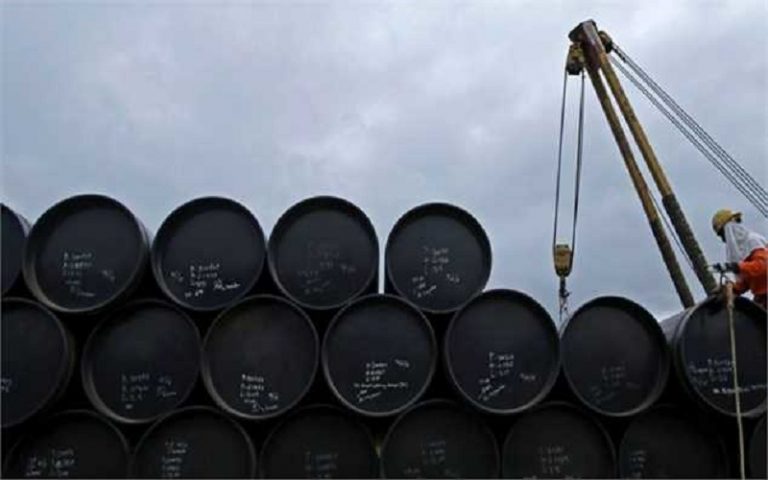
Iran’s $36 Billion Oil Exports in 2023

On March 21, Mohammad Reza Rezvani-Far, Deputy Minister of Economic Affairs and Finance and Head of Iran Customs Administration, stated that Iran exported $35.87 billion worth of oil, $370 million worth of electricity, and $1.293 billion worth of technical and engineering services last year.

Increased Oil Exports by Offering Greater Discounts to China

The topic of increased Iranian oil exports in recent years, especially during Raisi’s presidency, is highlighted by the fact that China, as a major buyer of Iranian oil, has benefited the most from importing cheap oil from Iran following the U.S. withdrawal from the Joint Comprehensive Plan of Action (JCPOA).

Nevertheless, independent energy experts, citing statistics and global oil prices, have expressed doubts about the amount of Iranian oil sold last year.

If, according to the oil minister Javad Owji, Iran managed to sell $35 billion worth of oil and gas condensates last year, it should be noted that part of this export, as previously mentioned by Owji, came from gas condensates stored by the previous government (about $5 billion).

Considering the price of oil at $83, if the cash sales figure claimed by Owji is divided by the average oil price, the price of the oil sold can be easily determined.

Last year, Iran received payment for only 1.153 million barrels of oil per day.

For example, if the Oil Ministry claims exports of 1.25 million barrels per day, the discount amounts to $3 billion, which is 8%.

If exports were 1.5 million barrels, the discount would be $10 billion, or 28%, and if exports were 1.8 million barrels, the discount would be $19 billion, or 54%.

It is noteworthy that sanctions not only impact export discounts but also lead to reduced production and the deterioration of oil industry equipment.

The Unsolvable Problem of Energy Imbalance

Despite the efforts of various governments in Iran over the past decade, the problem of natural gas and gasoline shortages has not been fundamentally resolved. Gholamreza Dehqan Nasrabadi, a member of the Iranian regime parliament, pointed out: “Energy imbalance is a reality. In the gas sector, the average annual imbalance is 132 million cubic meters, and during peak consumption, this amount reaches 315 million cubic meters per day, leading to gas cuts in industries and a halt in gas exports, which affects the country’s foreign exchange earnings.”

Continued Imbalance in Gasoline Production and Consumption

The gasoline imbalance is related to various factors, such as the aging of vehicles.

Iran-made cars consume twice as much fuel as the global standard, and if global gasoline consumption standards were applied to domestically produced cars, Iran could reduce its daily gasoline consumption to 60 million liters and earn $15 billion by exporting 50 million liters of gasoline.

Imbalance in the Diesel Sector

Until last year, there was a balance between diesel production and consumption in Iran, but gradually the imbalance in diesel production and consumption became apparent. However, it should be noted that diesel consumption differs from gasoline.

According to official statistics, about 20% of the diesel allocated to power plants in the country is smuggled.

To partially address the diesel imbalance, Raisi’s government imported approximately $830 million worth of diesel last year.

Emergency Plan to Increase Iran’s Oil Production Capacity

At the second meeting of the Economic Council, chaired by acting president Mohammad Mokhber, the plan to increase crude oil production by the National Iranian Oil Company and the plan to reduce petroleum product consumption were reviewed and approved.

According to this plan, the country’s oil production must increase from 3.6 million barrels per day to 4 million barrels per day, which would increase crude oil production by up to 400,000 barrels per day.

This plan was approved despite the current oil production capacity of Iran not reaching 3.6 million barrels per day, and the next government will also not be able to easily increase Iran’s oil production capacity to 4 million barrels per day in the short term.

One should not overlook the gradual decline in Iran’s oil production capacity, as 80% of Iran’s oil wells are in the second half of their production life.

The current situation of Iran’s energy industry has become more complicated due to international sanctions and weak infrastructure.

The reduction in foreign investments and fluctuations in the global oil market have exacerbated these problems.

U.S. Welcomes New EU Sanctions Against Iranian Regime

0

Abram Pili, Deputy Special Representative for Iran Affairs, welcomed the new European Union sanctions against individuals and entities within the Iranian regime on Friday, May 31, stating that the United States will continue to counter Iran’s range of threats.

In a post on the social media platform X, Abram Pili wrote:

“We welcome today’s sanctions by the EU against several Iranian individuals and entities involved in developing missiles and drones and proliferating them to militant proxies and terrorists.”

On Friday, May 31, the Office of Foreign Assets Control (OFAC) of the U.S. Department of the Treasury announced in a statement the sanctioning of four entities and one individual involved in the Iranian regime’s drone program.

“Treasury’s Office of Foreign Assets Control (OFAC) is targeting four entities associated with OFAC-designated Rayan Roshd Afzar Company (RRA) that have procured critical parts for Iran’s unmanned aerial vehicle (UAV) program. Additionally, OFAC is targeting an Iranian executive of Iran Aviation Industries Organization (IAIO), a subsidiary of Iran’s Ministry of Defense and Armed Forces Logistics (MODAFL) that oversees UAV manufacturers Iran Aircraft Manufacturing Industrial Company (HESA) and Qods Aviation Industries (QAI).”

On the same day, the European Union also sanctioned six individuals and three entities of the Iranian regime for their roles in transferring drones to Russia and providing drones and missiles to “militant groups and entities undermining peace and security in the Middle East and the Red Sea.”

The individuals sanctioned by the EU include Esmail Qaani, Mohammad Reza Ashtiani, Gholamali Rashid, Afshin Khajehfard, Hossein Hatefi Ardakani, and Mehdi Dehqani Mohamadabadi. The three entities added to the EU’s sanctions list are Khatam-al Anbiya Central Headquarters, the IRGC Navy, and the Kavon Electronics Company.

Iranian Regime Agents Destroy Bahá’í Farms

0

Reports indicate the destruction of rice fields belonging to Bahá’í families in the village of Ahmadabad, Sari County, the capital of Mazandaran Province, by regime agents.

Based on videos released, a group of agents from the regime used bulldozers to destroy the rice fields and their crops on Tuesday, May 28.

More than 80 Bahá’í families in Ahmadabad, a village in the Kalijan district of Sari County, have owned agricultural land and have been farming for generations to earn their livelihood.

The destruction of rice fields by the Iranian regime is cruel, constitutes economic apartheid, and aims at religious cleansing to drive Bahá’ís from their lands.

In March 2023, the regime’s forces, on behalf of the government, claimed ownership of about 100 hectares of agricultural land, rice fields, and walnut orchards belonging to Bahá’í families in Ahmadabad.

According to this report, the agents have not provided any official documentation or compensation to justify the confiscation of the land.

The systematic repression of Bahá’ís, the largest non-Muslim religious minority in Iran, and the confiscation of their lands is considered forced displacement.

At the same time as the destruction of the Bahá’í rice fields, two members of a Bahá’í family were arrested by IRGC intelligence agents in Rasht.

No information has been released about the charges or the whereabouts of these two Bahá’í citizens.

Since the current regime came to power in Iran in 1979, extensive deprivations have been enforced against the Bahá’ís.

Human Rights Watch has described the Iranian regime’s actions in persecuting Bahá’ís in Iran as crimes against humanity.

Additionally, on Monday, May 27, a Bahá’í citizen was arrested by the IRGC’s terrorist intelligence agents in Ahvaz.

According to human rights sources, this Bahá’í citizen was taken to an unknown location after being arrested.

Sepideh Rashidi was arrested in Ahvaz

Sepideh Rashidi’s family home was searched by intelligence agents in January 2024, and some of her personal belongings, such as a computer and mobile phone, were confiscated.

Memorial Ceremony for Raisi at the United Nations Held with Mostly Empty Seats

0

On Thursday, the United States boycotted the memorial ceremony for Ebrahim Raisi at the United Nations, declaring that he was repeatedly and horrifically involved in human rights violations and that this global organization should stand with the people of Iran.

The United Nations General Assembly, comprised of 193 countries, traditionally holds a memorial ceremony for any world leader who dies while in power.

On Thursday, the General Assembly held a program to memorialize Ebrahim Raisi, the President of the Iranian regime, who recently died in a helicopter crash. The ceremony included speeches about Ebrahim Raisi.

The majority of seats in the General Assembly Hall were empty, with few attendees present at the ceremony.

The Associated Press wrote about the ceremony, noting that what happened on Thursday was highly unusual, as only representatives from the regional groups of Africa, Asia-Pacific, and Latin America and the Caribbean spoke.

The report adds that at the memorial ceremony for Ebrahim Raisi in the General Assembly, there were no remarks from the Western European or Eastern European groups, nor from the United States, which is usually the last representative as the host country.

Iranian Resistance supporters protest UN emmorial for Ebrahim Raisi
Iranian Resistance supporters protest UN memorial for Ebrahim Raisi

While the tribute ceremony was being held in the General Assembly, supporters of the Iranian Resistance rallied outside the United Nations headquarters held banners reading “Shame on the UN for holding a memorial for Raisi, the Butcher of Tehran.”

Iranian Resistance supporters protest UN emmorial for Ebrahim Raisi
Iranian Resistance supporters protest UN memorial for Ebrahim Raisi

Before the Assembly convened, 45 officials, experts, ambassadors, and current and former prosecutors of the United Nations sent a joint letter to António Guterres, the UN Secretary-General, protesting the tribute to an individual involved in mass atrocities.

Raisi was involved in numerous severe human rights violations, including the extrajudicial executions of thousands of political prisoners, primarily members of the People’s Mojahedin Organization of Iran (PMOI/MEK) in 1988. Some of the worst human rights abuses occurred during his tenure.

Ebrahim Raisi, once considered a potential successor to Ali Khamenei, the Supreme Leader of the Islamic Republic, is accused of numerous human rights violations. He was one of the four-member “Death Committee” responsible for sending over 30,000 political prisoners to execution squads in the summer of 1988. He was also implicated in the massacre of protesters during the nationwide protests in 2022, the murder, arbitrary detention, enforced disappearance, and torture of thousands of protesters, and the violent harassment of women and other serious human rights violations.

The United States Will Not Attend the UN General Assembly’s Tribute to Ebrahim Raisi

0

Reuters reported on May 29, citing an American official, that the United States will boycott the UN General Assembly’s tribute to Ebrahim Raisi and the victims of the helicopter crash on May 30.

According to the Reuters report, this American official, who requested anonymity, emphasized that “some of the worst human rights abuses on record, especially against the women and girls of Iran, took place during Raisi’s tenure as head of the government of the Islamic Republic.” The official stressed that US representatives “will not participate under any circumstances” in this UN event, which was scheduled for Thursday, May 30.

It is said that the 193-member UN General Assembly traditionally convenes to pay respects to leaders who were heads of state at the time of their death, during which speeches about the deceased leader are delivered.

A minute of silence by the UN Security Council in memory of the victims of the helicopter crash involving senior officials of the Islamic Republic, held on May 21 with the presence of the US Deputy Ambassador to the UN and the UN Secretary-General at the office of Iran’s UN representative, paying respects to Ebrahim Raisi, the head of state, and his Foreign Minister Hossein Amir-Abdollahian, faced widespread protests from Iranians and political figures from other countries.

The administration of US President Joe Biden was also severely criticized by some Republican members of Congress for expressing condolences to Iran over the death of Ebrahim Raisi and his associates. These Republicans called Ebrahim Raisi the “Butcher of Tehran” and deemed the US government’s condolence message inappropriate. However, White House National Security Spokesman John Kirby considered the message customary and stated that Raisi was undoubtedly a man whose hands were stained with the blood of many Iranians.

Ebrahim Raisi, the head of the thirteenth government of the Islamic Republic, his Foreign Minister Hossein Amir-Abdollahian, the Friday prayer leader of Tabriz, and several others were killed after their helicopter crashed in a forest in East Azerbaijan Province on May 19.