Home Blog Page 207

Germany Accuses Iran of Involvement in Conspiracy to Attack Synagogue

0

On December 19, the German Foreign Ministry summoned an official from the Iranian regime’s embassy in Berlin for the alleged involvement of “regime institutions” in a plot to set fire to a synagogue in the city of Bochum.

The High Court in Dusseldorf confirmed on Tuesday that a conspiracy to set fire to a synagogue in Bochum last year had taken place with the cooperation of Iranian regime institutions.

According to the court’s announcement, “Babak J.,” who was identified as the perpetrator of a November 2022 school fire in Bochum, and a 36-year-old German-Iranian citizen, received orders from an individual inside Iran. The primary target of the arson attack was a synagogue located next to the school, not the school itself.

The High Court in Dusseldorf stated that “Babak J.” attempted to involve one of his acquaintances in the attack on the synagogue, but that acquaintance informed the police after refusing to cooperate with him. The suspect, unable to set the synagogue on fire, threw an incendiary device into the adjacent school instead.

According to the German magazine Der Spiegel, the suspect has been sentenced to 33 months in prison by the High Court in Dusseldorf.

Following the summoning of the Iranian regime official in Berlin, the German Foreign Ministry emphasized that there will be no tolerance for any violence carried out by foreigners in Germany, and the government will not allow the lives of Jews in thecountry to be attacked or endangered.

On March 5, 2023, The Washington Post reported, citing intelligence and security officials, that the mastermind behind a series of recent attacks on Jews and synagogues in Germany is an Iranian-German citizen named Ramin Yektaparast, who fled from Germany to Iran. According to the report, Yektaparast had been in contact with “Babak J.”

According to the report, Mr. Yektaparast had been running a brothel in the city of Leverkusen for a while and, due to his familiarity with criminal gangs in Germany, effectively acted as a remote contractor for the Islamic Revolutionary Guard Corps (IRGC) in achieving their objectives in Germany.

US-led Coalition To Secure Gulf of Aden Against Iran-Backed Houthis

0

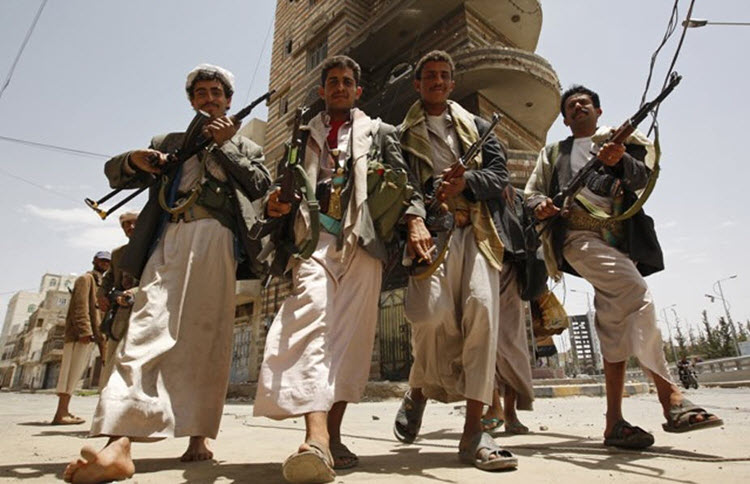
Ten countries, led by the United States, have agreed to jointly patrol the southern Red Sea and the Gulf of Aden to protect commercial ships from Houthi insurgent attacks.

Since the start of the conflict between Hamas and Israel, the Houthis, supported by the Iranian regime, have targeted Israeli ships and even those heading towards Israel under the pretext of supporting the people of Gaza against Israeli attacks.

Lloyd Austin, the United States Secretary of Defense, announced during his visit to Bahrain that several countries would participate in this initiative as part of an international force. It is unclear whether these countries will engage in the same activities as the US warships have done in recent days, which involve intercepting Houthi missiles and drones and providing assistance to attacked commercial vessels, or if their involvement will be symbolic.

The seriousness of the Houthi attacks, some of which have caused damage to ships, has prompted several shipping companies to instruct their vessels to remain in place and avoid entering the Bab el-Mandeb Strait until the security situation is resolved.

“This is an international challenge that demands collective action,” Austin said in a statement. “Therefore today I am announcing the establishment of Operation Prosperity Guardian, an important new multinational security initiative.”

In addition to the United States, other countries such as the United Kingdom, Canada, France, Italy, Norway, Spain, Seychelles, and Bahrain are expected to be part of this coalition led by the United States.

The US Central Command (CENTCOM) stated in a statement that on Monday, December 18, the Houthis once again attacked two commercial ships in the southern Red Sea. The oil tanker Swan Atlantic was targeted by a drone and an anti-ship ballistic missile. CENTCOM also reported a separate incident around the same time where the cargo ship MSC Clara experienced an explosion near its location. However, no damage to either of the vessels has been reported.

Yahya Saree, the spokesperson for the Houthis, claimed responsibility for the attacks on the two ships on December 18 and emphasized that these actions were taken because the crews of these two tankers did not respond to Houthi contacts. The Houthis have threatened to target all ships heading to Israel regardless of their nationality and have warned international shipping companies against dealing with Israeli ports.

Mohammed al-Bukhaiti, a member of the Houthi political office, stated on Monday that his group could confront any coalition led by the United States that could be stationed in the Red Sea.

Mohammed Abdul-Salam, the chief negotiator for the Houthi rebels in Yemen, also told Reuters on Tuesday, December 19, that the group would not change its stance on the Gaza conflict due to the formation of a multinational naval coalition to protect shipping in the Red Sea.

AbdulSalam, describing the multinational naval coalition led by the United States as “essentially unnecessary,” pointed out that all waters adjacent to Yemen are safe, and only Israeli ships or ships heading towards Israel should be cautious. He attributed this insecurity to what he called an “unjust aggression against Palestine.”

On December 18, the US State Department announced that, Antony Blinken, the Secretary of State, condemned the Houthi attacks on commercial ships in a call with Prince Faisal bin Farhan, the Saudi Arabian Minister of Foreign Affairs.

According to a senior US military official present in Bahrain, as reported by the Associated Press, under the new mission, the military ships that have increased their presence in the area do not necessarily escort a particular vessel but position military ships in a way that creates a security umbrella to protect them when needed.

Mr. Austin, in his statements on Tuesday, December 19, at a ministers meeting regarding the new naval mission, said that in the past four weeks, Houthi militias have attacked or seized 12 commercial ships, and 25 crew members of the Galaxy Leader oil tanker are still held hostage by Yemeni forces. The United States is actively pursuing the participation of member countries in this mission and increasing the number of naval forces present in this international coalition.

Some countries are expected to be involved in the patrols, while others will provide intelligence support in the southern Red Sea and the Gulf of Aden.

An unnamed US defense official stated that several other countries have also agreed to participate in these operations but prefer to remain anonymous while cooperating with the coalition.

Child Bride Samira Sabzian Executed in Iran After 10 Years in Prison

0

On December 20, Iran’s regime executed Samira Sabzian, a child bride who was convicted of “intentional murder” of her husband and sentenced to “qisas” (retribution in kind), in Karaj’s Qezel Hesar Prison.

For years, Samira Sabzian had been a victim of gender apartheid, child marriage, and domestic violence, and today she became a victim of the execution machinery of a dictatorial and corrupt regime that has only kept itself alive through killing and intimidation. The regime’s supreme leader, Ali Khamenei and other officials of the Iranian regime must be held accountable for this crime.

According to reports, the execution of Samira Sabzian was scheduled to take place on December 13, but it was postponed after widespread coverage and the reaction of civil society.

According to human rights sources, Samira Sabzian was forced into marriage at the age of 15. According to her relatives, she had been a victim of domestic violence by her husband.

In December 2014, she was arrested in Malard city, Tehran province, on charges of murdering her husband. She was sentenced to death. Since then, she was held in Gharchak Prison, Varamin. Mrs. Sabzian was only 19 years old at the time of her arrest.

At the time of the murder, Samira Sabzian had two children. She was deprived of seeing them for the past 10 years since her imprisonment.

She met her children for the last time before the execution was carried out, which was the first meeting with her children in these years.

Since the beginning of the current calendar year, at least 20 women prisoners have been executed in Iranian regime prisons. Samira Sabzian is the 21st woman to be executed by the Iranian regime this year. Iran continues to hold the record for the highest number of executions of women worldwide.

Swedish Court of Appeal Confirms Life Imprisonment Sentence for Hamid Nouri

0

On Wednesday, December 19, the Swedish Court of Appeal upheld the life imprisonment sentence for Hamid Nouri, who was accused of involvement in the mass execution of political prisoners in the 1980s.

Hamid Nouri, also known by the alias Hamid Abbasi, a former deputy in the judicial system of the Iranian regime, was arrested in November 2019 following a court order in Sweden.

After 93 trial sessions at the Stockholm District Court, on July 14, 2022, he was convicted of complicity in the massacre of political prisoners in 1988 and sentenced to life imprisonment. He was also ordered to pay compensation to the families of the victims.

It is possible that Hamid Nouri’s lawyers may attempt to appeal this decision to the Supreme Court of Sweden.

The confirmation of Hamid Nouri’s sentence has been met with support from the opponents of the Iranian regime and the supporters of the People’s Mujahedin of Iran organization (PMOI/MEK). Some of them celebrated in Stockholm. In the summer of 1988, the regime executed more than 30,000 political prisoners, most of whom were supporters and members of the MEK. The event became known as the 1988 massacre.

Iranian authorities have been pressurizing Sweden to release Nouri, threatening them with hostage-taking and blackmailing.

In March 2023, the Iranian regime arrested Johan Floderus, a Swedish employee of the European Union diplomatic apparatus. Masoud Setayeshi, the spokesperson for the Iranian judiciary, announced on November 8 that the case of this Swedish citizen had been sent to court to issue an indictment.

The Swedish prosecutor’s office had accused Hamid Nouri, using the alias Hamid Abbasi, of deliberately causing the death of a large number of prisoners, members or supporters of the MEK and other opposition groups, when he served as an assistant to the deputy prosecutor or a similar position at Gohardasht Prison in the summer of 1988.

The Iranian regime claims that Hamid Nouri was deprived of basic rights, such as the right to contact his family and access to medical care during his detention, and that he was tortured during this period. Sweden has rejected these claims. Ironically, the prisoners who were executed by Nouri and his associates were tortured and deprived of their most basic rights, including a fair trial and access to a lawyer of their choosing.

On the other hand, the Iranian regime continues its policy of hostage-taking and putting pressure on Western countries.

On May 26, the Omani government disclosed its role in facilitating a prisoner exchange between Belgium and Iran’s regime. However, the release of Assadollah Assadi, a convicted terrorist diplomat from Tehran, drew strong condemnation from the Iranian opposition coalition, the National Council of Resistance of Iran (NCRI).

Before this incident, the Belgian Constitutional Court had issued a mandate requiring Brussels to inform the victims before extraditing the convict to Iran, granting them the opportunity to seek legal recourse. Shockingly, Assadi was released without notifying the victims, blatantly disregarding their rights and violating the court order.

Tehran will persist in its nefarious acts of terrorism and hostage diplomacy, utilizing its embassies as hubs for these activities. European countries must confront the clerical regime’s terrorism sooner rather than later.

Food Shortage Risk in Iran as Production, Import of Essential Goods Drop Considerably

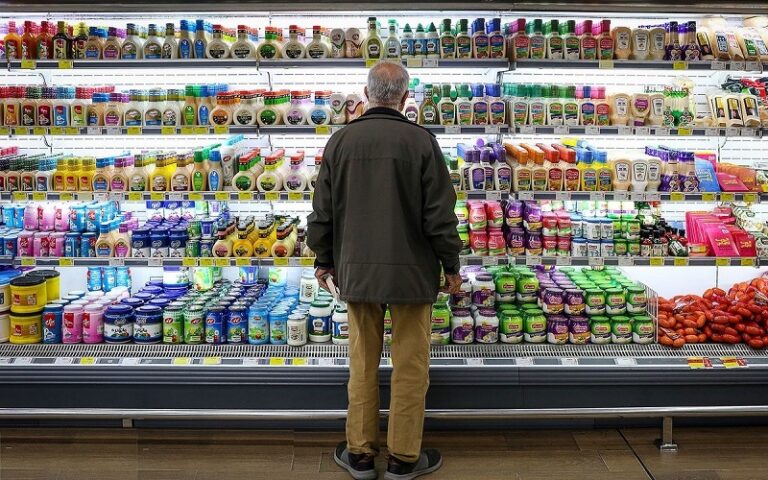
Reports indicate that Iran’s imports of essential goods have decreased by an average of 50% in the past eight months. Red meat production has also decreased by 30% in November compared to the previous year, a trend that analysts believe signals a major crisis in food supply and a shortage of food items in the market.

According to a report by the Tasnim News Agency, affiliated with the Islamic Revolutionary Guard Corps (IRGC), based on customs statistics, the imports of dry tea, rice, raw sugar, poultry, and wheat have decreased by 57.69%, 53.89%, 51.98%, 48.11%, and 46.20%, respectively, in terms of value in the eight-month period of this year compared to the same period last year.

In another report, the Statistical Center announced on December 16 that the performance of the country’s official slaughterhouses in November 2023, compared to the same month in 2022, indicated a 30% decrease in the amount of red meat supply in the official slaughterhouses of the country.

The same center stated in another report that the supply of poultry in the country’s official slaughterhouses in November 2023 had decreased by about 6% compared to the previous month.

The downward trend in the import of essential goods occurs while in May 2023, Kaveh Zargaran, the head of the Iranian Grains Association, declared the reserve status of some essential goods as critical and warned of possible shortages in 2023.

Analysts believe that with the significant reduction in the import of essential goods in the coming months, the market will undergo price and inventory fluctuations. It is predicted that the initial impact of this reduction will be an increase in prices, followed by shortages and rationing in the market.

One of the main reasons for the significant decrease in imports is the lack of necessary foreign currency for essential goods, as well as raw materials and essential items, which has caused complaints and concerns among importers and producers.

In this regard on October 16, Jabraeil Baradari, the head of the Agricultural Jihad Organization of Tehran Province, attributed one of the current problems in poultry production to the excessive delay in the clearance of soybean-carrying ships at the country’s ports, which he also linked to the issue of foreign currency allocation.

The status of supply and storage of essential goods in the country and the over 50% inflation rate of food items have raised alarm bells for the officials of the Iranian regime and the regime’s supreme leader, Ali Khamenei.

The regime’s Khabar Online website has stated that in simpler terms, the Supreme Leader is asking Ebrahim Raisi what has happened on the ground, meaning what has actually happened apart from the reports.

Government officials have claimed over the past two years, with the announcement of statistics that many experts consider to be “statistical manipulation,” that the country’s conditions are favorable and improving. However, many reports published by the media and social networks present a different picture of the societal situation and livelihood challenges.

Houses in Istanbul Cheaper than Tehran

According to an analysis of the real estate market in Turkey and Iran by the state-run Tejarat News, house prices in Istanbul, as one of the country’s major cities, were on average lower than Tehran in 2023.

Tejarat News refers to official statistics on housing prices in Tehran and states that the housing sector has experienced unprecedented price growth in recent years, to the point where the average price of an apartment in November 2023 has approached the range of 800 million rials (approximately $1,603) per square meter.

The report states that the economic data related to Turkey indicates that the country has faced numerous problems, including rising inflation, in line with Iran’s economy in recent years.

In comparing the real estate market data of Tehran and Istanbul, it is stated that the average house price in Tehran in January 2022 was around $1,300 per square meter, while during the same period, the price of houses in Istanbul exceeded $1,500 per square meter.

This report emphasizes that the price of houses in Istanbul has been on a downward trend and has reached $1,600 by September, while the price of houses in Tehran has started a new growth period and has reached $1,500.

Abdullah Meshkani, an economist, has attributed the lower cost of land and construction in Istanbul as the reason for the lower property prices compared to Tehran.

Reports indicate that the increase in housing prices in Iran has led to an increase in housing poverty.

In this regard, the media has reported a mandatory change in people’s preferences towards smaller houses of 40 square meters or less.

Based on this, the regime’s Donya-ye-Eghtesad newspaper reported on November 7 that statistics indicate a record number of inhabitants in houses with an area of up to 40 square meters in the capital during the current year.

According to the report, the share of “very small” houses with an area of up to 40 square meters in Tehran’s transactions has increased from 3.3% in 2018 to over 5.2% in 2023.

The report from the Iranian Statistical Center also shows that the average price per square meter of apartments has increased from 62 million rials (approximately $1,088) in spring 2018 to over 808 million rials (approximately $1,603) in September 2023.

The Iranian regime’s president, Ebrahim Raisi, had promised to build one million housing units per year during his election campaign.

On November 29, the state-run Ham-Mihan newspaper reported the remarks of Habibollah Sattarian, a university professor, saying, “For more than two decades, it has been necessary to build one million housing units every year, but ultimately only 300,000 units are produced.”

This housing economist added: The annual construction of “300,000 housing units” has also decreased in the past two years and has reached “200,000 housing units.”

In a situation where, based on the data published on November 20 by Iran Open Data, the price of “one serving of rice and Kebab” is twice the “daily food cost” of a worker, the idea of homeownership has become an unattainable dream for many income levels in Iran.

According to the early November report from the Donya-ye-Eghtesad newspaper, in the two-year project of “building one million housing units per year,” which Ebrahim Raisi repeatedly promised during his presidential election campaign in June 2021, the effective supply volume has reached “600,000 units,” and the effective demand has reached “650,000 individuals.”

On the other hand, in line with the housing crisis, Iranian regime-linked media announced on November 9, citing official statistics published in this sector, that this year’s contracts for tenants saw a “55% increase” compared to the previous year, which is more than twice the “historical average of this rate.”

Iran’s “SMA Patient Ambassador” Hospitalized Due to Lack of Medicine

0

The hospitalization of Sina Alikhani, a young person suffering from Superior mesenteric artery (SMA), in Iran due to the lack of medication and the release of a video of him lying on a hospital bed has once again drawn attention to the importance of providing medication for specific diseases and the indifference of Iranian authorities to this issue.

After releasing a video of himself requesting the provision of medication for SMA patients in front of the regime’s parliament, Sina Alikhani became known as the “SMA Patient Ambassador.”

Sina recently stated in one of his Instagram posts that after two years and three meetings with the regime’s President, Ebrahim Raisi, he is still deprived of the necessary medication.

Morteza Alikhani, Sina’s father, told the regime’s IRNA news agency that some patients’ conditions become critical, and they lose their lives due to the lack of medication.

In December 2021, when a group of SMA patients’ families gathered in front of the parliament for several days, Ebrahim Raisi went among them and promised to resolve their problems soon.

Last week, once again, a group of SMA patients gathered in front of the Presidential office and protested against the shortage of a medication that was being distributed in limited quantities among SMA patients due to insufficient budget and the “negligence” of the regime’s authorities.

In the midst of all this, the Iranian regime and official media have repeatedly attributed problems in the field of treatment and healthcare to sanctions. However, contrary to these claims, medication and medical supplies have always been exempted from sanctions and could be procured and imported as exceptions.

The state-run Sharq newspaper reported in a coverage of this gathering that the Ministry of Health claimed to “localize” medication in Iran.

Saeed Azamian, the CEO of the SMA Patients Association, says, “The Ministry of Health has no plan other than the vague claim of localizing medication, which is very ambiguous and non-transparent, to provide medication for patients.”

The problem of drug shortages in Iran

The problem of drug shortages and high treatment costs in Iran is not exclusive to SMA patients.

Hamidreza Adraki has announced that there are about 1.5 to 2 million rare disease patients in the country, and so far, 6,500 of them have been registered.

Experts consider SMA to be the most expensive rare disease in Iran.

In addition to specific medications for this disease, the use of pain relievers and rehabilitation therapies to improve the quality of life for these patients in Iran is also limited due to high costs.

On the other hand, due to mobility limitations, patients have to use electric wheelchairs, which are estimated to cost over 400 million rials (approximately $793).

The CEO of the Rare Diseases Foundation in Iran has reported an increase in the number of these diseases in the country, stating that they have reached from 422 to 433 types.

The restriction in the supply and access to medication in Iran affects a wider range of individuals every day, and even in cases where the government claims to provide and import medication, according to media reports, patients receive nothing but low-quality drugs.

Since November-December 2022, no foreign currency has been allocated for the procurement of raw materials for drugs or medical equipment.

Due to the lack of currency allocation, shortages have emerged in all sectors of the pharmaceutical industry, and even the supply of simple medications has become problematic.

At present, vital medications such as amiodarone for heart conditions, clopidogrel for preventing blood clots usually used after a heart attack, and inhaler capsules for asthma and bronchitis are also scarce.

Superior mesenteric artery (SMA) syndrome is a rare condition that involves compression of the third portion of the duodenum which is the upper part of the small intestines just past the stomach. This condition occurs when the third part of the duodenum is compressed between two arteries – the main artery of the body called the abdominal aorta (AA) and one of its branches called the SMA.

US, UK Slap Sanctions Against IRGC Quds Force

0

The United States and the United Kingdom have imposed sanctions on several individuals associated with the Iranian regime’s IRGC Quds Force and paramilitary groups.

The U.S. Department of the Treasury announced in a statement on December 15 that it has imposed sanctions on Majid Zaree, a Quds Force official. Majid Zaree has been accused of supporting groups such as Hamas and Hezbollah.

Wally Adeyemo, the Deputy Secretary of Treasury, stated in a statement that the United States, in coordination with its partners, including the United Kingdom, continues to confront terrorism financing and threats posed by Iran.

This action blocks the assets of this individual in the United States and prohibits Americans from conducting transactions with him. Individuals who engage in transactions with the sanctioned person will also be subject to sanctions.

Earlier, the UK Foreign Office also announced in a statement that new sanctions against the Islamic Republic, which will be implemented from December 14, provide the country with new comprehensive powers to hold the Iranian regime and its agents accountable for human rights abuses, violent suppression of protesters, and destructive international activities.

The list of individuals sanctioned by the UK Foreign Office list includes Ismail Qaani, the top commander of the notorious Quds Force. He leads Iran’s operations outside the country and supports regional allies and proxy groups.

The statement mentions that seven individuals and one other entity have been sanctioned, all of whom are associated with Hamas and Palestinian Islamic Jihad, due to their involvement in hostile activities by these armed groups under the protection of the Iranian regime, including actions aimed at threatening, planning, or causing destabilization.

Also sanctioned were Mohammed Saeed Izadi, the head of IRGC-QF Palestine branch, and three other members from that branch: Ali Marshad Shirazi, Majid Zaree and Mostafa Majid Khani.

The entire branch itself is subject to asset freezes, the government said, while Hamas and PIJ representatives to Iran, Khaled Qaddoumi and Nasser Abu Sharif, respectively, also face travel bans and asset freezes.

“The behaviour of the Iranian regime poses an unacceptable threat to the UK and our partners,” UK foreign minister David Cameron said in a statement.

“It continues to threaten people on UK soil and uses its influence to destabilise the Middle East through its support to armed groups, including Hamas and Palestinian Islamic Jihad (PIJ).”

Iran: Prices Soar on Verge of Yalda Celebrations

0

In Iran, prices are soaring on the eve of the longest night of the year, known as Yalda. Iranian media outlets have been examining the market conditions and people’s purchasing power for celebrating this festival, but reports indicate a lack of hope and only highlight the resentment and high prices associated with the arrival of Yalda.

The state-run ILNA news agency reported on the Yalda market, stating, “By roaming through the market, we observe various prices for fruits, sweets, and nuts. Citizens are merely spectators, and according to market sellers, most people only ask the prices and do not make purchases.”

ILNA also referred to statistics from the Ministry of Industry, Mine, and Trade, indicating a 30 percent average increase in commodity prices from the beginning of the year until now. Some items have even experienced a 60 percent increase.

This is just part of the story. On the other hand, Amir Tanabi, the head of the Association of Dried Fruit and Nut Sellers in Urmia (northwest Iran), said, “People are adjusting their lives to cope with societal inflation and no longer have the purchasing power for buying nuts as they did in the past.”

Amir Tanabi emphasized that sales have drastically declined, and at present, bulk nut sellers are facing difficulties in procuring nuts.

Mohammad Aghaverdi-Zadeh, the head of the Confectionery Union in Urmia, also reported a 50 percent increase in the prices of raw materials such as sugar, oil, especially various types of nuts, coconuts, and chocolates used in confectionery production.

According to Aghavardi-Zadeh, the price of one kilogram of confectionery has reached 2 million rials (approximately $4), and other pastries have reached 2.5 million rials (approximately $5).

The Director-General of Industry, Mine, and Trade in West Azerbaijan, in an interview with ILNA news agency, announced the implementation of a monitoring plan for the Yalda market in the province and stated, “The execution of this plan will continue in the province until December 21.”

Reviewing the statistics published by the Statistical Center indicates that in the second month of autumn, the annual inflation rate for households in the country reached 44.9 percent. This is while the wage increases this year was 27 percent, and employees and workers are facing livelihood problems.

Currently, the average monthly wage of workers is around 80 million rials (approximately $159), and according to media reports, the poverty line in the country has exceeded 200 million rials (approximately $397), and in Tehran, it has exceeded 300 million rials (approximately $595).

Monthly Income of the Middle Class in Iran is Decreasing

Morteza Afghah, an economist and university professor, has stated that claims about the “reduction in the poverty rate” in Iran have been reversed due to the increase in subsidies, and the “high inflation rate” will swallow up all indicators.

Afghah criticized the latest report from the Majlis (parliament) Research Center, which claimed a “one percent reduction in the poverty rate” in the past two years coinciding with the inauguration of the government of Ebrahim Raisi, considering it incorrect.

He has added that these government institutions set the “poverty rate measurement criteria” at the minimum subsistence and poverty line, stating that if the poverty rate is calculated based on this criterion, it was conceivable that “low-income individuals,” who usually have larger households, would receive “more subsidies” after the elimination of preferential currency allocation.

The latest report from the Parliamentary Research Center claims a 1% reduction in the poverty rate in the “past two years” and reaching “30 percent” after an 11 percent growth from 2020 to 2021.

On November 22, the Tasnim News Agency, linked to the IRGC, reported that despite workers putting in extra efforts and working two jobs, with “70 percent” of them struggling to sustain their lives, an event that experts refer to as “struggling to survive.”

In a report on September 7, the state-run ILNA news agency also addressed the inflation and the economic situation of Iranian households, stating that the “minimum subsistence basket” in the worst-case scenario, with the addition of housing costs in Tehran, exceeds “230 million rials,” (approximately $457) and in major industrial cities like Mashhad, Isfahan, and Tabriz, it ranges from “200 to 220 million rials. (approximately $397-437) ”

Morteza Afghah reiterated the warning of a “group of experts” to the government at the time of the decision to increase the “subsidy payment ceiling” and added: “It was announced at the same time that, despite the possibility of a reduction in the poverty rate in the first year due to the ‘upcoming inflation rate,’ the ‘high inflation rate’ will swallow up all these indicators.”

He stated that for several years, the trend of “eliminating the middle class” has been initiated in the country and said: With wrong policies, people’s tables have become smaller, and every month, the income of an increasing number of middle-class households is decreasing.

Meanwhile, Masoud Pezeshkian, a member of the regime’s Majlis, rejected the government’s prediction about the Seventh Development Plan regarding the economic outlook of Iran in the coming years on September 27, stating: “An eight percent economic growth mentioned in the bill is not feasible.”