Home Blog Page 210

Inflation rate in Iran shows no sign of improvement

0

According to the official report from the Iranian regime’s Statistical Center, the inflation rate has only decreased by one percent since the start of the Persian calendar year (March 21), despite the fact that the regime’s supreme leader, Ali Khamenei, named it the year of “Containing Inflation, Promoting Production.”

The latest report from the regime’s Statistical Center, which is the government’s official report on the inflation situation in the country, has reported an average inflation rate of 45.5 percent. This is in contrast to the officially announced inflation rate of 46.5 percent in February and March 2022.

Comparing the changes in the inflation rate since the formation of the government under Ebrahim Raisi also shows that despite his promises to reduce the inflation rate, he has not achieved any success in this regard.

High inflation in Iran has been a primary economic issue for over three decades and a source of concern for the people. Despite the numerous promises made by the regime’s officials to reduce the inflation rate, persistent budget deficits and reckless money printing have slowed down the growth and development of Iran’s economy, resulting in “sticky inflation.”

Sticky inflation is an economic hypothesis that suggests that even if prices decrease, there are often conditions and assumptions that reinforce the motivation to keep prices high. In fact, when sticky inflation exists, the standard of living declines more rapidly, and even changes in monetary policies can have negative effects on the standard of living of the people.

Despite the promises of regime officials to reduce the inflation rate, an analysis of the inflation rate changes from 2019 onwards shows that this influential variable on Iran’s economy has not decreased by more than 40 percent.

During the presidential election campaign two years ago, Raisi stated that if elected, he would cut the inflation rate in half, and then it would move towards becoming a single-digit figure. However, after two years of his presidency, not only has this promise not been fulfilled, but there is still no sign of a downward trend in inflation.

Ecoiran website reported before the release of October inflation data by the Statistical Center that the inflation rate in Iran had reached 54.3 percent.

The regime’s Central Bank immediately denied this, but based on a table published by Ecoiran, the price index based on the 2016 base year has crossed the threshold of one thousand.

Meanwhile, the discrepancy between the two official economic statistics sources, the Statistical Center and the Central Bank, has always perplexed economic analysts.

Although the announced statistics from these two official sources are close to each other, they have always been different from each other to the extent that it was decided in the Fifth Development Plan Law to assign the official statistics authority to the Statistical Center.

However, the discrepancy between these two sources is unresolved. The latest case is related to economic growth statistics, where these two official government sources have provided different statistics.

The Central Bank claimed a 4 percent growth with oil and a 3.5 percent growth without oil in 2022, while the Statistical Center claimed a 4.8 percent growth with oil and a 4.5 percent growth without oil.

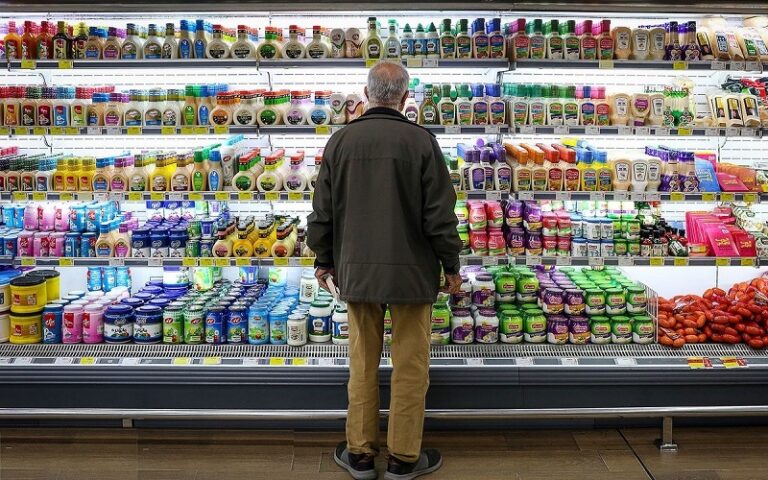
The latest report from the Statistical Center of Iran reveals the high inflation rates for various food items in the country. According to the statistics, the price of lamb meat has seen the highest increase, with a rise of 149.2 percent, while solid vegetable oil has experienced the lowest price growth, with a decrease of 6.2 percent over the past year.

A comparison of food prices between October of last year and October of this year also indicates that the point-to-point inflation rate for fresh food items in October this year was 50.1 percent, while other food items saw a growth of 20.8 percent.

The increase in inflation rates for food items has significantly burdened lower-income households. Reports suggest that these conditions are now affecting middle-class households as well, with relative increases in service-related inflation and relative decreases in food-related inflation.

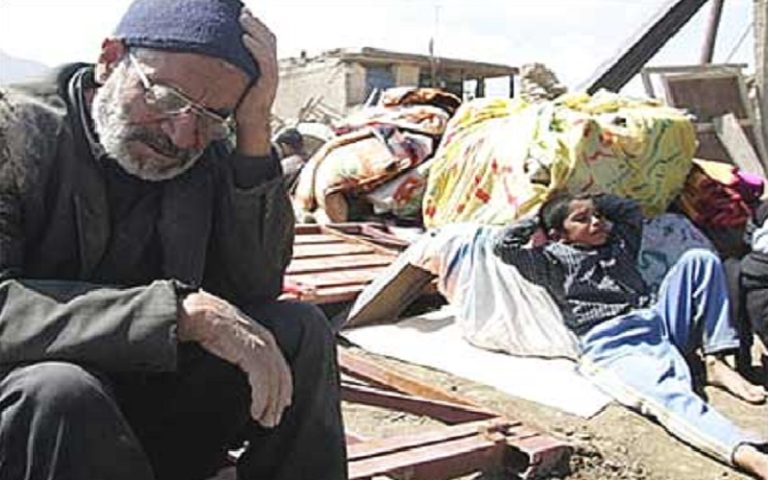
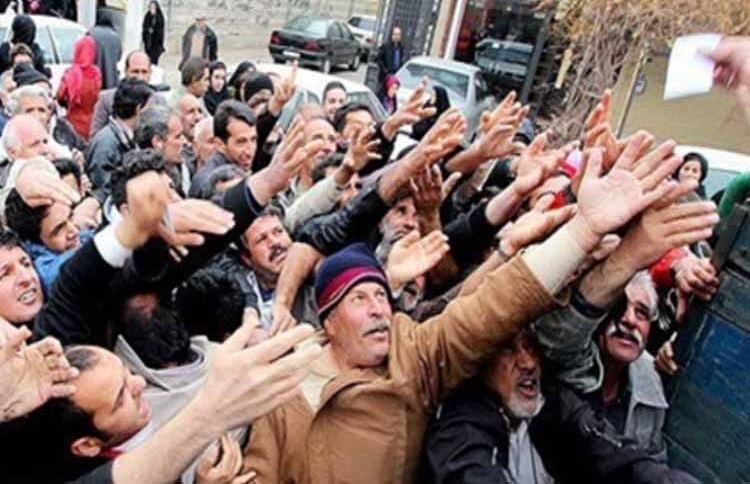
Morteza Afghah, an economics professor at Chamran University, expressed his concern about the severe impact of inflation on different social classes in Iran. He mentioned that the middle class is struggling to afford basic necessities such as food and housing, let alone cultural and recreational activities. He also highlighted that the poorer segments of society are facing even more severe poverty.

The Statistical Center’s report on inflation rates in Iran indicates that the inflation rate remains above 50 percent in nine provinces, including Yazd, Chaharmahal and Bakhtiari, Kurdistan, Lorestan, Isfahan, East Azerbaijan, Kermanshah, North Khorasan, and Hamadan.

The latest international ranking of countries with the highest inflation rates places Iran in the seventh position among countries experiencing high inflation.

An examination of official statistics, including reports from the Statistical Center of Iran, reveals that the “misery index” has shown an upward trend in many provinces of Iran, reaching nearly 70 percent in Lorestan.

The misery index is derived from combining the unemployment rate with the inflation rate, and the Statistical Center’s report indicates that this index has grown by approximately 1.7 percent in the first three months of this year compared to the previous year’s spring.

According to the report, the national level of the misery index in the spring of this year was 60.4 percent, representing an increase of at least 1.2 units compared to winter 2022.

It should be noted that all these statistics are figures provided by government entities and may not reflect the complete reality. The Iranian regime has long avoided providing accurate statistics and attempts to conceal the extent of societal misery.

Jabar Kuchakinezhad, a member of regime’s Majlis (parliament), mentioned to the semi-official ILNA news agency that “the Central Bank is also under government control, and there is a possibility of manipulation in reporting the inflation rate by the Central Bank and other government-affiliated institutions.”

Iran Lost “One-Third” of Oil Revenues While Circumventing Sanctions

According to Ehsan Khandouzi, the Iranian regime’s Minister of Economic Affairs and Finance, Iran had $20 billion in oil, petroleum products, and gas exports in the first eight months of this year (from March 21 to October 23), and the country’s trade balance was net positive $10 billion.

This is the first time in recent years that a regime’s official provides information about the income from oil exports.

On Friday, November 24, Khandouzi, while explaining the foreign trade situation of Iran, said that the country’s non-oil exports were about $32 billion, and imports were $42 billion in the first eight months of the current year. However, considering the total of oil and non-oil exports, the country’s trade balance was positive $10 billion.

Therefore, the net income of Iran’s exports from oil, including crude oil, petroleum products, and gas, during the mentioned period was only $20 billion.

According to the statistics of the Kpler company, which is consistent with the statistics of the energy information company Vortexa, Iran had an average daily export of 1.14 million barrels of crude oil and gas condensates in the first eight months of this year. OPEC statistics show that the price of Iran’s exported oil during this period was about $78.

Thus, Iran should have had $21.5 billion in oil revenues from crude oil and gas condensates alone in the first eight months of this year.

On the other hand, Iran has a daily export of 230,000 barrels of mazut and about 50 million cubic meters of gas, which had a value of about $7.5 billion in the initial eight months of this year.

In total, the value of Iran’s oil exports, including crude oil, gas condensates, petroleum products, and gas, should have been $29 billion during the mentioned period, but according to the statement of the country’s Minister of Economy, it was $20 billion.

This can indicate that about one-third of the country’s oil revenues are lost in the process of circumventing sanctions.

The report of the Majlis (Parliament) Research Center of the regime about the realization of the oil budget for the four months of this year also shows that one-third of Iran’s oil revenues are lost in the process of circumventing sanctions.

The latest report of the Parliamentary Research Center, published on October 23, shows that only 48% of the country’s oil budget (including exports and domestic sales) has been realized in the first four months of this year. This report does not mention the realization of oil export revenues, but it states that domestic sales revenues have been 8% higher than budget expectations.

Thus, the foreign sales revenue of Iran’s crude oil has been realized at best below 45%, while considering the volume of exports and the price of Iran’s oil in the first four months of the year 2023 (starting from March 21), at least 78% of the country’s oil export budget should have been realized.

Earlier, Reuters and Bloomberg news agencies had reported a 12% to 15% discount by Iran to Chinese refineries for purchasing Iranian oil, but the regime also incurs the cost of circumventing sanctions through the transfer of oil shipments in the middle of oceans to other tankers to conceal the origin of the oil, as well as using regional middlemen and Malaysia to change the brand and ownership of oil.

Iran: 1.5 Million Children on Verge of Dropping out of School, 14 Million Without Proper Food

0

According to Hadi Mousavi Nik, an expert at the Majlis (Parliamentary) Research Center, one and a half million children in Iran are on the verge of dropping out of school, and 14 million children are living in households that cannot afford a proper diet.

Based on a video published in the media and social networks, Hadi Mousavi Nik stated that according to the statistics of the Ministry of Education, there are about 450,000 school dropouts, and approximately one and a half million children are at risk of dropping out of school.

According to Mousavi Nik, in terms of educational discrimination, only 12% of the students accepted with the top 3,000 ranks in the university entrance exam were from public schools.

This comes at a time when the trend of students dropping out of school in Iran has been accelerating, and experts are warning of its consequences.

On September 10, the former Minister of Education announced that, based on the statistics of the Majlis Research Center, the number of school dropouts in the country is 930,000, and these individuals constitute the “illiterate future.”

However, the important point is that the reason for children dropping out of school and the risk of an increase of one and a half million in this group is the same as the reason for 14 million children not having proper food, which is the lack of access to a minimum food basket.

Statistics show that 70% of school dropouts are from the first to fifth income deciles, which are under the most severe livelihood pressures.

These groups, mainly consisting of labor-class families and households covered by support organizations, and government employees, have incomes ranging from 30 to 80 million rials (approximately $60 to159). This is while various media have announced the minimum cost required for a proper food basket for a household in Tehran to be more than 300 million rials (approximately $595).

On November 5th, the state-run Tasnim news agency reported that due to the inability to provide housing, workers turn to rental housing, and 70 to 80 percent of their income is spent on housing, leaving them unable to meet other essential needs such as food, healthcare, clothing, and education.

The dropout rate in border areas and less developed regions is much higher than the national average. In August 2022, Hossein Ali Mirabdi, the former director general of education in Sistan and Baluchestan province, told Tasnim, “About 15 percent of the country’s school dropouts are in Sistan and Baluchestan province.”

In terms of livelihood, provinces such as Sistan and Baluchestan have significantly dire conditions. A member of the province’s representative assembly stated in March that “the staple food of the people in the province is bread, and unfortunately, they consume water, tomato paste, and bread as food, which means that living conditions in the province have become extremely difficult.”

Iran: Detained Protester Milad Zohrehvand Executed, According to Human Rights Orgs

Some human rights media outlets have reported the “secret execution” of Milad Zohrehvand, one of the detainees of the nationwide protests in Iran in 2022, who was held in the central prison of Hamedan.

The first announcement came from the human rights organization “Hengaw,” based in Norway, stating that Mr. Zohrehvand, who was arrested in the city of Malayer (west central Iran), was executed on Thursday, November 23, on charges of killing a security force member of the Iranian regime.

Milad Zohrehvand’s relatives have stated, “Today they informed Milad’s family about his execution, but they did not hand over the body. His family had no knowledge of the execution, and they were not informed about the final visit either.”

The AFP news agency also wrote that with the execution of this prisoner, it is the eighth case of the execution of detained protesters in Iran since the death of Mahsa Amini in September last year.

The death sentence of 21-year-old Milad Zohrehvand, a resident of Malayer, was carried out based on a fabricated scenario of killing a security force member named Ali Nazari.

Zohrehvand had not received any prior information about his imminent execution and was also denied a final meeting with his family.

The execution of Mr. Zohrehvand has not been reported by the Iranian media or judicial authorities.

One of Zohrehvand’s family members said that the execution of this prisoner took place “about 10 days after his sentence was confirmed by the Supreme Court.”

Ali Nazari was an intelligence officer of the IRGC in Malayer who was killed during the nationwide protests in October 2022, and judicial authorities attributed his murder to Milad Zohrehvand.

The death sentence for Milad was issued and confirmed in the judicial system of Hamedan, but there is not much information available about his case’s details.

According to published reports, this defendant has been deprived of having a lawyer.

Earlier, the execution of other Iranian protesters led to a wave of domestic and international condemnations.

Amnesty International has stated that the Iranian regime’s goal is to send a message to the world and the people of Iran that it will not refrain from any measures to suppress and punish its opponents.

According to Iranian dissident group NCRI, the Iranian regime brutally suppressed the recent nationwide protests in Iran, and approximately 750 protesters were killed by security forces.

Inspection Bans Limit Capacity to Monitor Iran’s Program, IAEA Warns

Rafael Grossi, the Director-General of the International Atomic Energy Agency, criticized the cancellation of the entry permits for several inspectors of the organization in his press conference on November 22, stating that it is a serious blow to the agency’s work.

During the press conference, which took place after the start of the agency’s Board of Governors’ annual session, Mr. Grossi described Iran’s action of revoking the inspectors’ licenses as a serious blow to the agency’s ability to verify Iran’s nuclear activities. He emphasized that the regime’s authorities have revoked the licenses of one-third of the main group of inspectors.

Mohammad Eslami, the head of the regime’s Atomic Energy Organization (AEOI), stated on October 4 that while the Iranian regime has confirmed the activities of 127 inspectors from the IAEA, it has banned “three or four malicious European inspectors” from continuing their activities at Iranian sites.

He described the banned inspectors, who have been prevented from monitoring Iran’s nuclear activities and entering Iran, as having a history of “aggressive political behaviors.”

On November 22, Rafael Grossi emphasized that these inspectors are among the “most experienced” inspectors of the agency. He expressed hope that Iran’s decision would change.

Earlier, in a joint statement in mid-September, the United Kingdom, France, Germany, and the United States demanded that the Iranian regime “immediately” reconsider its recent decision to cancel the licenses of “some” IAEA inspectors.

However, Mohammad Eslami stated on November 22 that 120 inspectors from the agency have been granted permission to enter Iran.

This is the second time that the Director-General of the agency has strongly emphasized the need to grant licenses to all inspectors to verify Iran’s actions. He previously warned, citing North Korea’s expulsion of UN inspectors before conducting a “nuclear weapon test,” that the international community should be cautious about not repeating the failure experienced with North Korea in the case of Iran.

In the preliminary statement issued by the Director-General of the agency for the Board of Governors’ annual session, which was published on the morning of November 22, it was stated that Iran now possesses enough uranium with a 60% enrichment level to produce three atomic bombs, based on the standards of the IAEA. It also mentioned that Iran has not yet provided answers to the agency’s key questions and concerns regarding its nuclear program.

According to the statement, which Reuters news agency released last week, since the preparation of the agency’s previous report on September 4, the volume of uranium with a 60% enrichment level in Iran has increased by 6.7 kilograms and reached approximately 128 kilograms.

The regime in Iran allocated $2.65 billion to enhancing defense infrastructure

The general provisions of the proposed budget for the year 2024 state that the government intends to allocate 1,340 trillion rials to strengthen the defense infrastructure.

Therefore, according to this proposed bill, it is emphasized that in case this amount is not allocated, the National Iranian Oil Company is obliged to deliver crude oil or gas condensates to legal entities introduced by the General Staff of the Armed Forces, equivalent to the monthly difference.

This defense budget comes at a time when the examination of the budgets of other sectors, including employment generation, facilitating public access to medicine and food, and education, shows a lack of proportionality between the country’s actual needs and the allocated figures and numbers.

Experts believe that the Iranian regime, in its budget for the coming year, will prioritize the strengthening of military and security dimensions, as it has done in recent years.

This approach was also followed in the budget for 2023, and in December 2022, the “Iran Open Data” platform announced, after examining the budget bill for 2023, that the allocated credit line for “defense and security matters” had grown by 38.5 percent.

The “Iran Open Data” platform had calculated that this figure is 1.4 times the credit line allocated to general education and training affairs in the budget bill for 2023.

Last year, this platform had reported in a research report that the budget of the Prisons Organization in Iran had become three and a half times the total credits of the country’s five major universities.

Observers, relying on this approach in recent years and taking into account the political and economic relations inside and outside Iran’s borders, believe that strengthening the defense and security infrastructure is of higher priority for the Iranian regime than development and welfare issues. This is a matter that the Iranian society experiences in various dimensions in daily life, and daily reports of various labor protests are indicative of some of these dilemmas.

In a situation where Iranian citizens have been facing a shortage of powdered milk and infant formula in recent months, the Iran Open Data platform published a report showing that the budget of the Supreme Council of Seminaries (ḥawzah or madrasa for Shi’a) in Iran is five times the budget allocated for the provision of medicine and powdered milk.

The duty of these so-called religious seminaries is to educate clerics and send them to various regions of the country to consolidate the foundations of power for the Iranian regime.

The Iranian regime claims that it provides some of the expenses of families for powdered milk through pharmaceutical subsidies. Some reports also indicate that the government has assigned the provision of powdered milk to a factory in Turkey.

In a situation where the people of Iran are facing difficulties in obtaining medicine and even powdered milk, the regime spends its oil income on producing weapons and exporting them to countries in the region and engaging in its interventions.

Iran’s Children in Dire Conditions, According to Government Report

Amidst widespread criticism of how the Iranian government treats children, Amin Hossein Rahimi, the Minister of Justice, announced that a report on the status of Iranian children has finally been sent to the United Nations after a “several-year delay.”

Rahimi, speaking on a television program on November 20, did not mention the date of the report’s submission, nor did he specify the exact length of the delay in sending the report.

Rahimi also did not provide any details about the content of the report. The news of the several-year delay in preparing and submitting this report comes as the Minister of Justice himself stated in his remarks on Monday that the “most important international duty” of the Ministry of Justice as the “national reference for children’s rights” is to prepare this very report for submission to the United Nations.

This Iranian regime official added that this report should be submitted to the United Nations every five years, but the “latest report has been completed and submitted after a several-year delay.”

Over the past year, due to the suppression of nationwide protests, both domestic and international criticism of the Iranian government’s treatment of children has increased. In December of last year, the United Nations International Children’s Emergency Fund (UNICEF) condemned the violence against children during the crackdown on protests, which resulted in the deaths of dozens of children and adolescents.

At least 70 children under the age of 18 were killed during the protests in Iran in 2022 by the security forces of the Iranian regime.

During the nationwide protests, numerous reports were published about the arrest, interrogation, reprimand, and search of students’ belongings, and in some cases, “security forces’ attacks on schools,” followed by various reports of poisonings in girls’ schools.

Before UNICEF, more than 620 specialist doctors in the field of children’s health had demanded an “immediate halt” to any violent treatment of children in a statement in mid-November of last year.

While the Iranian regime denies these violent actions, Amin Hossein Rahimi, the Minister of Justice of the Islamic Republic, did not address this issue on Monday. The majority of his remarks in this conversation were about the situation of children in Gaza.

Rahimi did not provide an explanation for the delay in reporting on Iranian children, but he announced that his ministry, by inviting UNICEF representatives to Tehran, has sought support for the children of Gaza and has had separate correspondence with the Secretariat of the International Convention on the Rights of the Child and UNICEF regarding this matter.

Facilitating the Temporary Custody of Orphaned and AbandonedChildren

The Minister of Justice also announced on Tuesday the facilitation of the temporary transfer of custody of orphaned and abandoned children to interested families.

Rahimi stated, “Considering the special circumstances and time-consuming process of adoption, based on the proposal of the Ministry of Justice, the regulations of the law on the protection of orphaned and abandoned children were revised, allowing the Welfare Organization to temporarily place children with qualified families after assessing their suitability.”

He had previously stated, “As soon as an orphaned or abandoned child is placed under the custody of the Welfare Organization by the order of the prosecutor, the organization can deliver the child to families willing to provide temporary care.”

However, the Minister of Justice did not provide further details or conditions regarding the temporary guardianship of these children.

Thousands of Iranian Children Will Miss the New School Year

Additionally, the Iranian regime has not publicly presented a report on the status of children under custody.

Around ten years ago, Mostafa Pourmohammadi, the former Minister of Justice, had announced the possibility of marriage between adopted children and their guardians.

Prior to that, the representatives of the regime’s parliament approved a bill on the protection of orphaned and neglected children, which allowed the possibility of marriage between adopted children and their guardians, subject to court approval.

It is worth mentioning that children under the age of 12 make up one-fifth of the country’s population. However, an examination of the “health” and “well-being” of this group indicates that approximately 10% suffer from malnutrition and around 15% are underweight. In the most optimistic scenario, out of the population of 88 million in Iran, according to regime media statistics, there are at least 500,000 child laborers.

Leaked Audio File Reveals Tehran’s Plan to Recruit Foreign Students

0

A dissident group named “Ghiam ta Sarnegouni” (meaning “Uprising Until Regime Overthrow”) has released an audio file of the remarks by the head of the “Leadership Institution in Universities” Hamid Reza Haddadpour, referring to the recruitment of foreign students in Iran to create “intellectual footholds and strongholds” for the Iranian regime in other countries.

Ghiam ta Sarnegouni disabled 830 websites and servers of the Office of the regime’s Supreme Leader’s Representative in Universities. The group also released a ream of documents about the regime’s agents in the education system.

According to the published audio file, Hamid Reza Haddadpour stated, “Many of the students are the children of influential individuals from their own countries, who will naturally take the place of their fathers.”

Haddadpour mentioned that based on the orders of the regime’s supreme leader, Ali Khamenei, and after several meetings in his office, it has been decided to appoint individuals as cultural secretaries for international students.

He stated, “We deliberately avoid using words like ‘missionary’ and ‘mentor’ that carry sensitivities.”

According to Haddadpour, these individuals are selected with the proposal of the International Deputy of the Office of Ali Khamenei and the Office of the Supreme Leader’s Representative in Universities, and they are expected to establish connections with foreign students, especially in dormitories.

He announced that project contracts will be signed with these individuals, and they will be paid an amount ranging from 50 to 90 million rials (approximately $100 to $175).

It is worth noting that the minimum monthly wage of workers is about 80 million rials (approximately $153).

In his concluding remarks, Haddadpour mentioned that Qasem Soleimani, the Head of Iran’s IRGC Quds Force Terror Group, (Soleimani was murdered on 3 January 2020 by a U.S. drone strike near Baghdad International Airport), emphasized the need for serious attention to international students.

He stated that Qasem Soleimani even corresponded with the government regarding some of the difficulties encountered in this regard.

Haddadpour emphasized that by educating foreign students in Iran, “intellectual footholds and strongholds for the Islamic Republic are created in the region and other countries, as we have seen in the past and now witness its effects.”

Previously, reports were published about the presence of foreign students affiliated with regime proxy groups in Iran, as well as the Iranian regime’s use of foreign students in other countries for espionage and other activities.

In July, university officials in Tehran agreed in a meeting with leaders of the Popular Mobilization Forces (a paramilitary group linked to the Iranian regime in Iraq) that their members and other regime proxy forces who are “seeking education” would enter Iranian universities, including the University of Tehran.

Two years ago, Bahram Einollahi, the Minister of Health, emphasized the necessity of “educating foreign students” and stated, “The realization of the Islamic Revolution can be achieved through foreign students, as educated foreign students in Iran have become good missionaries for the Islamic Republic of Iran in their own countries.”

Five years ago, a 31-year-old Pakistani student accused of espionage for the Quds Force of the Islamic Revolutionary Guard Corps was arrested in Germany.

” Al-Mustafa International University,” an institution under the supervision of Ali Khamenei, also provides training to foreign clerics in Iran and uses these clerics for its own activities. It has been sanctioned by the United States and Canada.

In December 2022, The Jewish Chronicle reported that “The Islamic College” in Britain, affiliated with “Al-Mustafa International University,” is a base for the Iranian regime, but the spokesperson of the college denied this claim.

Education in Iran: Teachers Without Contracts, Students Without Shelter

Mohammad Vahidi, a member of the Education and Research Committee of the Iranian regime’s Majlis (Parliament), announced that 18,000 reserve teachers were employed without employment contracts, timely payment of salaries, and insurance. He admitted that the Ministry of Education should determine the fate of these teachers.

On November 17, Mohammad Vahidi, referred to the employment of 18,000 reserve teachers in the new academic year and announced that these individuals are working without contracts, salaries, and insurance, and their situation should be determined by the Ministry of Education.

After two months into the new academic year, Vahidi mentioned that “in October of this year, 23,000 primary school classes had no teachers.”

“The Ministry of Education has been forced to invite some of the reserve teachers, who had ten years of teaching experience and were removed from the system, to teach again,” he stated.

Referring to the fact that “approximately 18,000 reserve teachers were sent to classrooms without teachers, but these individuals still lack contracts, salaries, and insurance,” he added, “At the very least, it is expected that the Ministry of Education determines their situation.”

According to Vahidi, “Teachers who were recently recruited through the employment examination entered classrooms without completing the teacher training course and are simultaneously undergoing their training while teaching, even though these individuals are required to complete a six-month or one-year teacher training course before entering schools.”

Hamidreza Hajibabayi, the head of the Teachers’ Faction in the Majlis, also reported in December of last year that there was a shortage of 300,000 teachers in various fields, including physical education, educational affairs, and laboratories.

The teacher shortage crisis in Iran has heightened in recent months, with protests from teachers about the government’s inability to pay their salaries and delayed paychecks. The government, as usual, has responded with indifference, repression, and the arrest and imprisonment of some protesting teachers.

3 million students studying in dilapidated schools

A few days ago, Vahidi also mentioned that an earthquake can endanger the lives of 3 million students in dilapidated schools.

“In the government bill, the funding for the resilience and reconstruction of schools was contingent upon a 1% increase in value-added tax, while these funds should come from the government’s fixed revenues,” he said.

Referring to the failure to consider the decree related to the reconstruction and resilience of the country’s schools in the Seventh Development Plan, Vahidi stated, ”Unfortunately, the proposed government bill regarding the reconstruction and strengthening of schools was contingent upon the approval of a 9% to 10% increase in value-added tax, which is clear that the Majlis opposes it due to its inflationary nature.”

Hamidreza Khan-Mohammadi, the Deputy Minister of Education of Iran, also reported in June that more than 11% of the country’s schools were dilapidated and in need of reconstruction.

Hamidreza Khan-Mohammadi announced that 13% of the country’s schools, which is about 100,000 classrooms, are dilapidated and need to be strengthened.

However, the problems are not limited to the dilapidation of schools. The lack of water and student dropouts should also not be overlooked. According to the report of the Ministry of Education in 2022, out of a total of 106,491 public schools nationwide, 7,017 schools (11.19%) lack access to drinking water through urban or rural pipelines, and 5,268 schools (8.4%) lack toilets.

Another serious problem in government schools is the high student population in classrooms. Most school classes have 40 students, even though according to the decision of the Supreme Council of Education, elementary school classes should not exceed 26 students under any circumstances.

In the academic year 2022-2023, over 556,000 Iranian adolescents, or according to the Convention on the Rights of the Child, children aged 15 to 17, dropped out of school. Among them, more than 295,000 were boys and more than 261,000 were girls. This is just one of the bitter statistics reported by the Statistical Center of Iran in its report titled “Social and Cultural Situation of Iran, Spring 2023.”

The provinces of Sistan and Baluchestan, Khorasan Razavi, Tehran, Khuzestan, and West Azerbaijan have the highest absolute number of school dropouts.

Minimum Wage Increase Removed From Agenda of Iran’s Supreme Labor Council

According to a report by the regime’s semi-official ILNA news agency, the meeting of the Supreme Labor Council is scheduled to be held on November 20, but “the official agenda of the session does not mention the issue of wage adjustment.”

According to the report, the main topic of the session, as stated in the invitation received by the “labor members” of the council, is “addressing workers’ housing.”

Previously, the meeting of the Supreme Labor Council was held on October 30, responsible for determining the minimum wage for workers covered by the labor law, without making a decision regarding the widespread protests against the low wages compared to the cost of living.

ILNA, quoting Mohsen Bagheri, who was mentioned as a workers’ representative in this council, wrote: “It was decided that the discussion of wage restoration would be examined in sessions with the presence of representatives of the government, employers, and workers as experts, and ultimately, at the end of November, an official session for wage restoration would be held.”

The regime is completely indifferent to the real hardships of the people and does not take steps to alleviate the economic problems.

In this regard, Sowlat Mortazavi, the Minister of Cooperatives, Labor, and Social Welfare, and other officials of this ministry and the Organization for Planning and Budget have repeatedly opposed increasing workers’ wages, a position that has been supported by representatives of employers.

Currently, the minimum wage for workers covered by the labor law, who are married and with children, with benefits, is about 80 million rials (approximately $158) per month.

However, according to reports published in the regime’s official news agencies, hundreds of thousands of workers employed in small and so-called “under staircase” workshops that are not covered by the labor law are deprived of even this amount.

This year, the minimum wage for a worker covered by the labor law is 53.08 million rials. Comparing the dollar value of this figure shows that in March of this year, a worker’s wage was equivalent to about $120, while now, in November, the value of this wage has dropped to less than $100. In simple terms, in a six-month period, one-fifth of a worker’s wage value has plummeted.

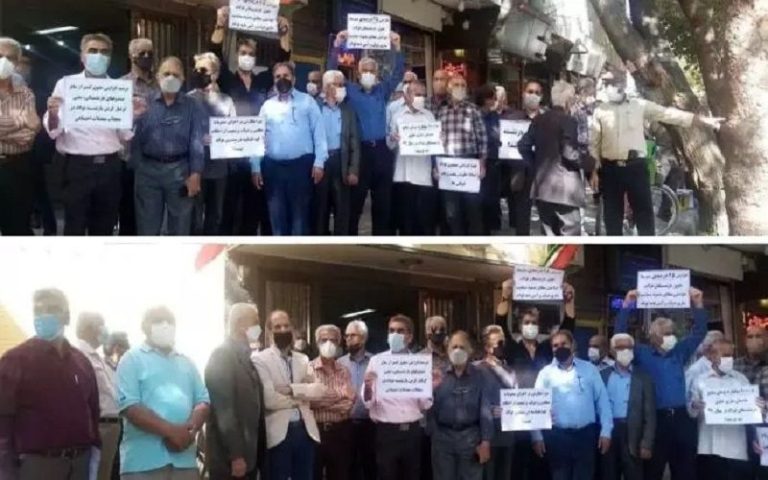
This is happening while hunger, poverty, and misery are rampant in society, and we witness almost daily gatherings and protests by workers, wage earners, and retirees.

According to reports from social networks and trade union media, workers’ and guilds’ protests continue in some parts of Iran. On November 18, a group of farmers held a protest rally in front of the governorate building in Isfahan to reiterate their demands.

This is not the first time that farmers in Isfahan province have protested against the lack of attention to their work problems.

In the past decade, various regions of Iran have witnessed protests by farmers, and last year a newspaper, citing statistics from the Iranian Statistical Center, reported on the unemployment of one-fourth of the country’s farmers over the past seven years.

At the same time, a group of temporary employees of the Ministry of Petroleum gathered in protest in front of the National Iranian South Oil Company in Ahvaz.

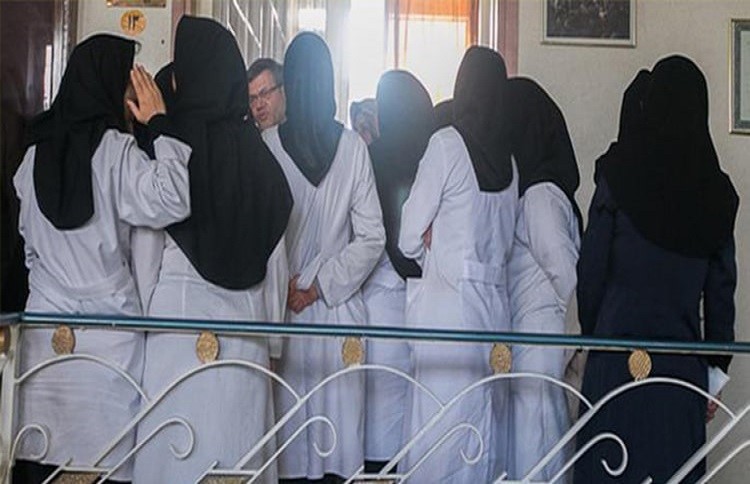
In western Iran, a group of nurses at Imam Khomeini Hospital in Eslamabad-e Gharb held a protest rally at their workplace.

Similarly, in central Iran, a group of nurses gathered in front of the governorate building in Yazd to protest the lack of attention to their demands.

On the eve of Nurses’ Day, nurses are protesting the delay of more than a year in their tariff and benefits and demanding an increase in their benefits and wages.

IRNA, the regime’s official news agency, reported on Saturday, November 18, quoting Shams al-Din Shamsi, a member of the Supreme Nursing System Council, that there is a shortage of more than 30,000 nurses in the country.