Home Blog Page 218

Iranian Opposition Condemns Release of Tehran’s Convicted Diplomat-Terrorist Assadollah Assadi

The recent prisoner exchange between Belgium and Iran, announced by the government of Oman, has sparked strong condemnation from the Iranian opposition coalition, the National Council of Resistance of Iran (NCRI). The release of Assadollah Assadi, a convicted terrorist diplomat from Tehran, has drawn widespread criticism for its disregard of legal procedures and the victims involved. This act is seen as a surrender to terrorism and hostage-taking, which only serves to embolden Iran’s religious dictatorship in perpetrating further crimes both domestically and internationally, through repression and support for terrorism.

Assadi, who had been convicted for orchestrating and commanding a terrorist attack during an NCRI rally near Paris in 2018—a crime that was described as the largest in Europe since World War II—was released without notifying the victims, in clear violation of a court order. The NCRI vehemently condemns Assadi’s release and calls for justice to be served. Furthermore, the recent surge in executions in Iran, with 127 people executed from May 1 to May 25, underscores the regime’s ongoing human rights violations. In light of these developments, the Iranian Resistance vows to pursue justice both within Belgium and on the international stage.

Recently emerged details of the Iran-Belgium prisoner swap deal shed light on undisclosed information. Leaked documents from Iran’s Foreign Ministry reveal Tehran’s direct involvement in the negotiations, with Assadi’s release being a top priority for the regime. Allegedly, the Iranian regime even went as far as to threaten Belgium with severe consequences if Assadi was not set free. This deal raises concerns about the willingness of Western countries to engage in negotiations with regimes that actively support terrorism. Iran has long faced accusations of sponsoring terrorist organizations and conducting terrorist attacks worldwide.

Human rights activists and organizations express deep concern about the potential impact of this prisoner swap deal on the dire human rights situation in Iran. The Iranian regime has a well-documented history of suppressing dissent and violating human rights, including fair trial rights and freedom of expression. Moreover, there is a legitimate fear that the release of Assadi could encourage other nations to use hostages as bargaining chips in negotiations with Iran, which would further undermine international efforts to combat terrorism.

In this critical juncture, it is imperative for Western countries to remain vigilant and hold the Iranian regime accountable for its support of terrorism and human rights violations. It is imperative for the West to bring Iran’s agents of terror and their collaborators before the International Criminal Court to face justice.

The release of Assadi and the continuous human rights abuses by the Iranian regime should not be overlooked or overshadowed in pursuit of improved relations or economic gains. Western countries must unequivocally demonstrate their intolerance towards support for terrorism and human rights abuses, ensuring that those responsible are held accountable for their actions.

The Iranian Resistance will persist in seeking justice within Belgium and on the global stage, and it is the responsibility of Western nations to support these endeavors and hold the Iranian regime accountable for its actions. Only through a firm stance against terrorism and human rights violations can we strive for a more just and secure world.

World leaders call on Biden to adopt new Iran policy

In a joint letter, 109 former world leaders signed a letter calling for accountability in Iran and urging U.S. President Joe Biden to cease all diplomacy with the regime ruling Iran. The letter asks the international community to investigate the 1988 massacre of political prisoners in Iran and hold accountable those responsible for the atrocity.

The letter highlights the fact that the perpetrators of the 1988 massacre have never been held accountable for their crimes, and many of them continue to hold positions of power in Iran today. It also calls attention to the ongoing human rights abuses in Iran, including the use of the death penalty, torture, and arbitrary detention.

The signatories of the letter include former former U.S. iVce President Mike Pench, former UK Prime Minister Liz Truss, former Canadian Prime Minister Stephen Harper, among others. They argue that the Biden administration’s decision to lift sanctions on Iran and reopen nuclear negotiations have only strengthened the regime’s position and provided it with more resources to fund its destabilizing activities in the region.

The letter calls for a new approach that prioritizes holding the Iranian regime accountable for its human rights abuses, support for terrorism, and pursuit of nuclear weapons. The signatories believe that the U.S. should work with its allies to increase pressure on Iran through targeted sanctions and diplomatic isolation.

The letter highlights the ongoing debate over how to handle Iran’s regime. While the former world leaders call for accountability and justice for past atrocities, they urge a tougher stance on Iran’s current behavior. With Iran’s human rights record and regional ambitions continuing to be a source of concern, it remains to be seen which approach will ultimately prove more effective in addressing these challenges.

The letter comes amid a tense political climate between the U.S. and Iran. The two countries have been at odds for decades, with the relationship reaching a new low during the Trump administration, which withdrew from the nuclear deal and imposed harsh sanctions on Iran.

The Biden administration has taken a different approach, seeking to re-engage with Iran to address its nuclear program and other issues. However, the signatories of the letter think that this procedure is misguided, and that the U.S. should instead focus on countering Iran’s malign behavior in the region.

The signatories of the letter argue that the U.S. should not be negotiating with a regime that has a long history of human rights abuses and support for terrorism.

In addition to the joint letter from former world leaders there is also growing support for Maryam Rajavi’s ten-point plan for a free and democratic Iran. Rajavi is the president-elect of the National Council of Resistance of Iran (NCRI).

The ten-point plan calls for a secular, democratic, and non-nuclear republic in Iran, with guarantees for human rights, gender equality, and the separation of religion and state. The plan also calls for the establishment of a market economy and the protection of private property rights.

The NCRI has gained significant support in recent years, with a growing number of lawmakers and officials in the US and Europe endorsing its vision for a free and democratic Iran. The group has also been instrumental in exposing Iran’s nuclear program and its support for terrorism.

The international community has long been concerned about Iran’s human rights record, which includes the use of the death penalty, torture, and arbitrary detention. The 1988 massacre of political prisoners remains a particularly dark chapter in Iran’s history, and the call for accountability for this atrocity has gained momentum in recent years.

Despite the challenges, there is reason for optimism about the future of Iran. The country has a young and educated population that is increasingly disillusioned with the regime and its policies. There are also growing signs of dissent and resistance within Iran, with protests and strikes taking place across the country.

As the debate over how to handle Iran continues, it is important to keep in mind the ultimate goal of a free and democratic Iran that respects human rights and the rule of law. The support for Maryam Rajavi’s ten-point plan and the calls for accountability for past atrocities are important steps in this direction.

It is also important for the international community to continue to put pressure on the Iranian regime. This can be done through targeted sanctions, diplomatic isolation, and support for civil society and human rights activists in Iran.

Ultimately, the fate of Iran rests in the hands of the Iranian people. But with the support of the international community and a clear vision for a better future, there is reason to believe that a free and democratic Iran is possible.

The Unsettling Child Marriage Epidemic Sweeping Iran

The horrific scene of a man holding the severed head of his 17-year-old wife, Mona Heydari, in southwest Iran, shocked the world. Mona, a victim of child marriage, was neither the first nor the last victim of the tragic “child marriage” crisis in Iran.

On May 21, the state-run Etemad newspaper published a report regarding the rise of child marriage in Iran and acknowledged how Iran’s misogynous regime paves the way for what is considered a crime in many countries.

“According to the latest report from the Iranian Statistics Center, between the winter of 2021 and the end of the fall in 2022, a minimum of 27,448 marriages involving girls under the age of 15 were recorded across various regions in Iran. Although this trend had been declining since 2018, it began to rise again in 2019, reverting back to previous heights,” the paper writes.

According to Etemad’s studies on the social and cultural situation in Iran during the fall of 2022, the report indicates that the number of marriages involving girls under the age of 15 increased from 33,421 cases in 2018 to 28,472 cases in 2019.

The crucial aspect to note is that a significant number of girls who are married at a young age also become mothers during their youth. “According to the latest announcement from the Registration Organization in April 2022, in 2021 alone, there were at least 69,103 babies born to mothers between the ages of 10 and 19, with an additional 1,474 babies born to mothers between the ages of 10 and 14,” Etemad writes in this regard.

In its piece, Etemad interviews Jhaleh Shadi-Talab, a sociologist and former director of the Women’s Studies Department at Tehran University, who believes that “many families have become aware of the negative repercussions of child marriage in recent years. However, they are compelled to engage in such practices due to make a living. “Our concerns will only have a meaningful impact when those in positions of authority are held responsible,” she adds.

According to Eteamd, Ansieh Khazali, Vice President for Women and Family Affairs under Ebrahim Raisi’s administration, refused to answer the paper’s questions. After more than two weeks, her office used the filtered Telegram messenger to give a statement.

Khazali had previously announced that “If I were to condemn marriages under the age of 18, I would have to condemn myself, as I married at a young age. However, I no longer believe that I lacked maturity or the ability to manage my life when I got married.”

In November 2021, Hassan Nowrouzi, the vice-chairman of the Judicial and Legal Commission of Parliament, criticized the term “child marriage” for 13- or 14-year-old girls forced into marriage. Nowrouzi argued that the term “child-wife” should strictly apply to marriages involving 9- or 10-year-old children, suggesting that a 13-year-old girl can no longer be considered a child wife.

As the state-run newspaper brazenly claims, “According to the law, the legal age for girls to marry is 13 years old.”

But what causes this phenomenon?

In recent years, an increasing number of young Iranian adults are choosing to postpone marriage due to the overwhelming financial burden it poses for both men and women in the workforce. However, in certain disadvantaged families, there is a tendency to forge alliances with families in better economic circumstances by pressuring their daughters into marrying significantly older men, sometimes with an age gap spanning years or even decades.

“Studies indicate that early marriages are predominantly driven by poverty. In less developed provinces with higher rates of poverty and illiteracy, the age of [conventional] marriage is lower. Additionally, regions such as Sistan and Baluchistan, Hormozgan, Khuzestan, Kurdshin, and border areas experience higher rates of child marriages compared to more central and developed provinces,” Etemad Daily writes in this regard.

Iran, a nation abundant in natural resources, holds immense wealth. However, instead of utilizing this wealth to alleviate the people’s crises, the ruling government recklessly squanders billions of dollars on illicit pursuits, including the proliferation of weapons of mass destruction and a nuclear program. As a result, countless Iranians are plunged deeper into the quagmire of poverty.

The plight of Iranian women is truly deplorable, enduring double pressure inflicted by the misogynistic nature of the regime. Despite these immense hardships, Iranian women have showcased their remarkable potential to challenge the status quo. They have fearlessly led protests and played a pivotal role in nationwide uprisings in recent years, demonstrating their unwavering determination for change.

How Iran’s Housing Crisis Can Trigger More Protests

Renting a home in Iran has become nearly impossible for tenants who not only have buried their dream of owning a home, but also struggle to afford rent despite reducing the size and amenities of their homes every year to continue making ends meet.  This is especially in Iran’s major cities.

As we approach the summer season and the time for tenants to move, the unbridled rise in residential rent costs, coupled with the alarming increase in housing prices, have put them under even more pressure. Some are forced to move to the slums, while others have no choice but moving into substandard houses. Iran’s cities are witness to a new phenomena known as “rooftop living” as people are literally living on the rooftops of various buildings, and “shared housing.” The latter refers to two or more families sharing a small, rented house and living together.

According to statistics published by the Central Bank of Iran, the housing rental price index witnessed a 16.8% increase in the fourth quarter of 2022 compared to the third quarter of the same year. This is while rental rates had already grown by 12.4 percent in the third quarter of 2022 compared to the second quarter.

In other words, from the beginning of summer season to the beginning of winter in 2022, rental rates in Iran grew by 29.2 percent. All the while, the decision to increase the rent ceiling had set the maximum growth rate at 25 percent. In other words, this decision had no effect on the market due to the lack of a reliable enforcement mechanism.

The problem in Iran’s rental market becomes more apparent when the rental growth rate in the fall of 2022 is compared to fall of 2021, indicating a whopping 46 percent increase. Based on the statistics, more than 24 million people in Iran are facing rental increases of 46 percent if they were paying 40 million rials per month (approximately $76.7) for rent in 2021. This year, they will also face the problem of high rental prices, which puts special pressure on their economic and livelihood capabilities.

It is worth noting that the minimum monthly salary of wage earners in Iran is approximately 80 million rials or $155.

Migration mainly due to increase in housing rental prices

Hossein Raghfar, an economist linked to the Iranian government and a member of the faculty at Al-Zahra University, said that the sharp increase in rental prices across Iran is heavily influenced by the rise in housing prices.

Iran is riddled with what is known as “housing mafias”, in which many powerful entities are under pressure and have significant power, causing rental prices to be heavily influenced by housing prices. Therefore, not only do people’s housing prices increase significantly, but commercial property prices also increase to the same extent, leading to a decrease in jobs.

“Many businesses are unable to cover the cost of rent at their workplace. On the other hand, people’s cost of living, which is the commodity they buy, is also increasing,” Raghfar continued. “More than 50 percent of the cost of clothing that people buy from shops is now the cost of rent for that particular store. Therefore, this has very serious consequences, and the severe and unpredictable increase in housing rental prices, particularly in major cities, is one of the main reasons for migration from the country, especially among the younger generation who are not even able to afford rent,” He explained.

“Unfortunately, some unpredictable and very unfortunate phenomena have emerged in this regard, including rooftop living, bus sleeping, and more recently, shared family rentals in one room,” according to a May 21 report by the sem-official Didban Iran website.

Banks at the service of housing mafias

“Banks are serving the mafias. That is why banks are the main financial providers for this category of profitable activities that are carried out by various mafia entities, including automobiles, drugs, housing, etc,” Raghfar added.

“Since the government is the maincustomer in this market, when expenses increase, government expenses also increase. Its revenues, however, which are obtained through taxes or foreign income, do not increase at the same rate. Inevitably, the government raises the exchange rate,” Raghfar explained.

“This is the main engine behind future inflation. In addition, the country’s political economy and the interests of mafias become meaningful with the increase of inflation; the higher the inflation, the more profits the housing builders make. However, the consequences of this are the growth of social anomalies such as migration, suicide, and crime across the country, which unfortunately has grown unprecedentedly,” he continued.

Increase in marginalization renders the “underclass”

“Cities become empty of those who cannot afford to live in them due to the high cost of rent,” Raghfar said in response to a question about what social damages are associated with the emptying of urban centers and the growth of marginalization. “And a significant portion is pushed towards city outskirts. However, the outskirt areas themselves are severely affected by the increase in prices, which leads to the growth of a class known as the ‘underclass,’” he added.

Raghfaar described the characteristics of the “underclass” as: “The main feature is that they are prone to social harms such as addiction and homelessness. They also have no prospects for employment and naturally engage in crime and offenses. Theft, drug addiction, and many other damages have a close tie with the economic anomalies caused by these policies. Solving them is only possible through structural reforms in the country’s economy. However, the reforms pursued by the government and parliament are just hollow measures that will render nothing special.”

”Any incident can lead to protests”

Any incident can lead to protests

Raghfar went on to warn that the increase in housing rents can lead to protests and social tensions. “Anything can happen. The damage is serious, and people are angery over the unprecedented increase in prices. Officials are busy with their personal issues and clinging to their posts, forgetting the great danger lurking in our society. In my opinion, at any moment, the unpredictable, such as protests and unrest, can erupt,” he explained.

“This unpredictability is due to the fact the exact time of its occurrence is not clear. However, it can happen at any moment. In the country’s current circumstances, I think we should be ready for the return of protests and unpredictable unrest in the streets,” Raghfar added.

“Even the recent protests were also due to economic dilemmas. What happened was the spillage of these economic anomalies that were just waiting to emerge. In my opinion, today, any incident can lead to similar unrest,” he concluded.

Iran’s Budget Deficit Has Doubled

In the absence of statistics from Iran’s Central Bank and despite the government’s false claims that the budget for 2022 (1401 in the Persian calendar) has been “fully accommodated”, the deputy of the regime Planning and Budget Organization said recently that last year’s budget deficit was 7,940 trillion rials (around $22.6 billion at the then exchange rate).

According to the regime’s semiofficial ISNA news agency, Rahim Mombeyni detailed the budget deficit on May 20, explaining that the general budget deficit was about 3,040 trillion rials, but with the targeted 1,900 trillion rials for social welfare commitments and 3,000 trillion rials for the government’s commitments to the banks, the actual budget deficit totaled to around 7,940 trillion rials. This figure is more than double the budget deficits of previous years, and such a rise in the budget deficit comes at a time when regime officials had repeatedly assured that the 2022 budget did not have any deficit.

Masoud Mir Kazemi, the former head of the Planning and Budget Organization, had denied reports of a 4,000 trillion rial (around $11.4 billion at the then exchange rate) budget deficit in January 19, adding that those who claimed such a deficit had “wrong information” and even claiming that “we do not have any budget deficit whatsoever.”

One day prior to Mir Kazemi’s false claim, Hamidreza Haji Babaei, head of the Majlis (parliament) Planning, Budget, and Calculations Commission, had also claimed that there was no budget deficit in 2022, according to a joint report by the Commission and the Planning and Budget Organization.

“About 100% of the government’s resources have been realized in the budget of 2022, which is unprecedented and highly valuable in its kind,” Haji Babaei claimed.

However, contrary to the claims of Tehran’s officials, the International Monetary Fund (IMF) recently published a report indicating that Iran needed oil prices to be at $278 per barrel in the global market to prevent a budget deficit in 2022, which is three times the global oil prices from last year.

Cabinet officials of regime President Ebrahim Raisi have also claimed that there will be no budget deficit this year. The IMF, however, says that Iran needs to sell each barrel of oil at $352 to avoid a deficit.

This is while the price of Brent crude, which is even more expensive than Iranian oil, is currently around $75 per barrel. This is only a fifth of what the government’s general budget needs to avoid a budget deficit. Moreover, according to reputable media outlets such as Reuters, Iran provides a $11 discount to Chinese refineries for each barrel of its oil, in addition to the costs of evading sanctions and dealing with oil smugglers.

Furthermore, Mombeni said that the Iranian regime’s total debt to the banking system and organizations stands at around 11,440 trillion rials (approximately $32.68 billion), while the debt of state-owned companies is about 18,940 trillion rials (approximately $54.11). Additionally, the government owes about $74 billion to the National Development Fund.

The IMF also stated in its report on May 4 that Iran’s government debt reached around $100 billion in 2022, equivalent to 34 percent of the country’s gross domestic product (GDP), and it is expected to increase by about $12 billion this year.

Since the fall of 2018, the Central Bank of Iran has stopped publishing official reports on the details of the government’s budget realization.

Mehdi Ghazanfari, CEO of the National Development Fund, said on May 11 that approximately $100 billion of the fund’s $150 billion reserves has been withdrawn by various regime administrations, and around $40 billion has been paid out in loans.

Furthermore, Ghazanfari pointed out the challenge of recovering loans from the National Development Fund and explained that some oil and gas projects, despite reaching the production phase, are refusing their repayments to the Fund, and some power plants are also at a standstill. When a power plant sells energy at a low price, it cannot return the resources.

“While the average annual return rate of countries like Norway and Qatar is about six percent, the average return rate for [Iran’s] National Development Fund is zero, indicating that after ten years the Fund has become smaller. If the resource depletion continues, the Fund will be completely depleted,” Ghazanfari added.

The National Development Fund and the country’s banks are the main sources of government loans or assistance to compensate for budget deficits.

Iran’s government debt has increased by about 900 percent over the past decade. Simultaneously, the printing of unbacked bank notes, known as “hot money,” has also increased, resulting in inflation of over 60 percent in recent months.

Even if the government employs individuals and institutions to sell oil for them, resolving such a budget deficit, especially when the global oil price is lower than predicted, is not an easy task. Therefore, the only remaining solution is the old-fashioned method of borrowing from banks and the Central Bank, a short-term remedy that will render larger inflation figures.

On May 17, the “Eco Iran” website reported, citing an informed source in the Central Bank, said that the inflation rate for the month of Farvardin (March 21 to April 21) has reached 68.7 percent. This is only one step away from 70 percent inflation, the highest in the past 30 years.

Iran’s Central Bank has also stopped publishing inflation statistics since January.  Unlike its previous policy, the regime’s Central Bank only publishes statistics on the rate of rise of prices of goods and services compared to the previous month, without providing any statistics on inflation each month compared to the same month of the previous year.


20 Million People In Iran Deprived Of Basic Living Facilities

At a ceremony held in Isfahan on Thursday, May 17, Ali Agha Mohammadi, a member of the Iranian egime’s Expediency Discernment Council said that nearly 20 million of the country’s 85 million population are deprived of basic living facilities such as housing, employment, education up to the age of 12, health, food, and clothing. He also said that 2,020 neighborhoods across the country are deprived of basic living facilities.

According to Agha Mohammadi, 874,000 people between the ages of 6 and 17 have been forced to drop out of school.

It is worth noting that this number only includes children who have been identified and does not include child laborers or homeless children living in the streets.

According to Article 30 of the regime’s Constitution, “The government is obliged to provide free education and free education facilities for all citizens up to the end of high school, and to extend higher education facilities to the limits of the country’s self-sufficiency, free of charge.”

Agha Mohammadi also said that 1.8 million people in Iran are “unable to empower themselves and these individuals will be covered by support institutions.” These individuals are unable to work due to age, health, or other reasons and must be covered by social insurance.

According to a report by the Research Center of the regime’s Majlis (parliament) published in February, the number of people living below the poverty line in Iran has increased by ten million in a decade. The report shows that the population living below the poverty line was around 16 million in 2011. At the end of 2021, however, this population had increased to over 26 million.

According to statistics from the regime’s Ministry of Cooperatives, Labor, and Social Welfare, which the Research Center report was based on, the majority of this population has been added in the years 2018 and 2019. Based on these statistics, in Iran one out of every three people lives below the poverty line.Iranian workers, among other sectors of the society, have been protesting their poor economic circumstances for years now. The regime’s semi-official ILNA News Agency, in a report published on  May 13, discussed the Ministry of Labor’s policy regarding one of the Iranian workers’ important demands of workers, being an increase in wages. The report compared inflation and the cost of living in three areas: housing, food, and transportation, with the wages of workers.

50 percent of the country's population live in absolute poverty line
50 percent of the country’s population live in absolute poverty line

“While a minimum of 30 percent inflation has been imposed on the lives of families, there is no sign of the fulfillment of economic ministers’ promises during the wage negotiations of the Supreme Labor Council, and more importantly, in such situations, the Minister of Labor explicitly states that the reform of salaries is not currently on the agenda,” the report reads in part.

The report concludes that a minimum of 30 to 40 percent inflation has been imposed on the livelihood basket of working-class families. A 30 percent inflation in food, 100 percent in housing, and at least 40 percent in transportation has been imposed on low-income workers and households. According to the ILNA report, “if a precise survey is conducted in the field of medicine and treatment, we will witness at least a 30 percent inflation in the cost of commonly used medicines.”

“When about 60 percent of employed workers in Iran receive a monthly salary of 80 million rials (approximately $154) at best, and with that amount, they cannot even rent an average 70-square-meter apartment, not only in Tehran but in many other cities, how can workers  make ends meet and lead at least a dignified and decent life?” the ILNA report asks.

Unbridled inflation, no salary raises

ILNA also referred to the statements of Supreme Labor Council who promised a 27 percent increase in wages to “labor representatives” if the inflation is controlled. However, this promise is being ignored while inflation remains uncontrolled.

“The Supreme Labor Council, in alliance with the employers, has given the greatest profit to capitalists by keeping wages low and labor force cheap” and “preventing the founding of independent and national labor unions,” according to Boram Hassani-nejad, a labor activist and former secretary of the Miners’ Union of Chador Malu in the city of Yazd, central Iran.

According to the latest estimates, Iran’s point-to-point inflation in March reached 68.7 percent and is one step away from 70 percent. This is the highest point-to-point inflation recorded in at least the past 32 years. The question is whether, given the current inflation and the 200 million rial (approximately $383.50) poverty line and 80 million rial salaries (approximately $154), is the number of people deprived of necessities the same as the figure announced by a member of the regime Expediency Discernment Council?

In response to a question of how real is the announced figure of 19.7 million  people who are deprived of basic necessities of life such as housing, employment, education up to 12 years, health, food, and clothing, Hossein Raghfar, an economist linked to the government and a member of the faculty at Al-Zahra University said, “The number of people currently living in absolute poverty doesn’t appear to be less than 50 percent of the country’s population. This means that these people do not even have access to the minimum requirements of human life.”

“The government is planning to submit a plan to the parliament under the title of ‘Inflation Control and Production Growth,’” Raghfar added. “However, what has been proposed will only make conditions harder for the people and will not lead to any positive change in the economy. Such vague plans cannot be expected to bring about any change, and the current imbalance will continue with no hope in sight.”

Iran: One Execution Every Six Hours

On Friday, May 19, three protesters were executed in Isfahan by the Iranian regime’s judiciary, following orders from regime Supreme Leader Ali Khamenei. Despite the widespread domestic and international protests, the prisoners, Saleh Mirhashemi, 36, Majid Kazemi, 30, and Saeed Yaghoubi, 37, were subjected to months of physical and mental torture before being falsely accused of “moharebeh” (enmity against God) and executed. The regime has used the deaths of several members of its security forces during the November 2022 protests in Isfahan to justify these executions.

Majid Kazemi, Saleh Mirhashemi, and Saeed Yaghoubi were arrested in November 2022 following their participation in protests in Isfahan amid the nationwide protests triggered by the death in custody of Mahsa (Zhina) Amini.

Furthermore, reports indicate that security forces have abducted the brother of Majid Kazemi.

These latest hangings come amidst a surge of executions in Iran. The regime’s judiciary also executed four others in Isfahan on Friday. In the week from Saturday, May 13 to Friday, May 19, at least 40 prisoners have been executed, and since the beginning of the current Persian month (April 21), 116 prisoners have been executed by the order of Khamenei. This means that the regime executes one person every six hours.

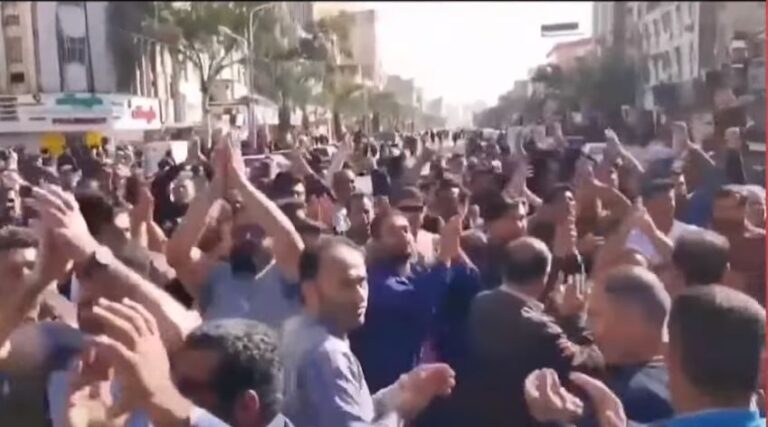
Following these executions, people in several cities, including Isfahan, Tehran, Karaj, Bandar Abbas, Dehgolan, Mashhad, and Mahabad, took to the streets and chanted slogans against Khamenei.

Protesters chanted:

“This year is the year of the overthrow of the regime!”

“We do not want an executioner regime!”

“Death to the dictator!”

“Death to the Khamenei!”

“We swear on the blood of the martyrs we will stand until the end!”

At the same time, seven prisoners were transferred to solitary cells in Ghezel Hesar prison in Karaj (west of Tehran) for execution.

The families of the prisoners who have been sentenced to death, Saeed Garavand, Samad Garavand, and Shahab Mansoori Nasab, gathered in front of Karaj’s Ghezel Hesar prison in protesting the transfer of their loved ones for execution. These families have gathered to save their loved ones, but security forces beat and mistreated them.

security forces beat the families’ prisoners
Security forces beat the prisoners’ families

Iran accounted for 70 percent of the executions carried out in the Middle East and North Africa in 2022, according to Amnesty.

Since the mullahs came to power, they have sought to portray executions as a tool for upholding justice under various legal pretexts. The right to life is an undeniable human right, enshrined in the Universal Declaration of Human Rights as the third article, alongside freedom and security. However, the Iranian regime has always used executions as a political tool to suppress its opponents.

In the current explosive situation in Iranian society, increasing the number of executions serves no purpose other than to promote state-sponsored violence and prevent the people from rising up. There is no doubt that religious fascism has turned to executions to combat the spirit of protesting.

The regime’s judiciary knows that this is the only way to prevent popular uprisings and protests.

Iran’s Regime Plans To Replace Teachers With Mullahs

According to Iran’s state media, last year, at least one million students dropped out of school due to poverty.  Meanwhile, according to official sources, the country’s educational system lacks at least 300,000 teachers. Instead of addressing these problems, Iranian authorities have introduced the “Amin” plan. But what is this plan?

According to Reza Morad Sarahi, the acting Minister of Education, the government of Ebrahim Raisi has no plan to recruit new teachers but instead wants to hire 50,000 clerics or “educational coaches.”

The regime’s Minister of Education was recently booted amid rising protests by Iranian teachers who continued holding rallies, demanding higher salaries, and protesting the state’s refusal to implement the ranking system that was supposed to compensate educational staff according to merit and experience while adjusting to the state’s inflation rate. The recent wave of chemical attacks in schools, particularly the all-girl schools, was another major factor for discontent.

Based on the ranking bill, teachers must undergo a classification process considering five criteria: “general qualification, profession, expertise, experience, and competitiveness.” The levels attained through this process will then determine the corresponding salary for each teacher.

Yet, this plan has never been realized, and the chemical attacks persist by the regime’s operatives against schoolchildren. Instead, authorities want to increase their oppressive methods by sending state-affiliated clerics to schools in the so-called “Amin Plan.”

“Our ministry will zealously try to implement the Amin plan, to have our beloved clerics in the schools again,” Morad Sarahi said on May 13. “The educational activities are our main goal. We are facing a shortage of 50,000 educational coaches. This year, 11,000 people will be employed for this purpose, but it is still not enough,” he added, while blatantly rejecting that the country lacks at least 300,000 teachers.

Following the anti-monarchial revolution in 1979, the clerical establishment conducted a deceptive strategy by dispatching agents and oppressive elements to schools, masquerading as “educational coaches.” Their sinister objective was to identify dissidents, imprison them, and manipulate students through indoctrination, preparing them for deployment to war fronts.

On January 5, 1989, the Ministry of Education of the regime shockingly declared that during the Iran-Iraq war (1980-1988), 440,000 students were deployed to the front lines. These students were tragically exploited as cannon fodder, forced to sweep minefields.

Since September 2022, Iranian students, particularly girls, have demonstrated immense courage and played a pivotal role in the nationwide uprising, boldly confronting the oppressive forces of the regime. As a result, Iranian authorities resorted to chemical attacks and now want to deploy their agents, seeking revenge against these resilient students.

Besides their tasks to control schools, Iranian authorities aim to plunder Iranians further. According to the state-run Tasnim News Agency on May 17, “the tuition of so-called for-profit middle schools is nearly 600 million rials or around one thousand dollars, and the tuition of elementary schools is between 220 and 530 million rials, roughly $900.”

These for-profit schools are predominantly under the control of affiliates of the regime, who profit immensely from them. Ironically, the regime’s constitution states that education should be fair, free, and accessible to all. However, with schools experiencing a shortage of teachers and lacking basic necessities such as boards, and in rural areas, even proper buildings, it becomes nearly impossible for Iranian children to access free education. Furthermore, it is important to highlight that government-run schools, which are supposed to be free, often impose various fees on students’ families under different pretexts.

Despite taking money from students’ parents, officials refuse to pay teachers’ salaries or adjust their payments with the soaring inflation.

These measures not only turn education into an unattainable dream for many Iranians and contribute to a rise in school dropouts but also exacerbate the country’s brain drain.

According to the Stanford Iran 2040 Project, an academic platform focused on studying Iran’s development, a report released in April 2020 revealed significant growth in the population of Iranian-born emigrants. Prior to the 1979 revolution, this population stood at approximately half a million individuals, but by 2019, it had soared to 3.1 million. The United States, Canada, Germany, and the United Kingdom emerged as the most popular destinations for Iranian emigrants.

Iran’s educational system, plagued by corruption, mismanagement, and incompetence under the clerical regime, is a major source of concern. It is no surprise that Iranians from diverse backgrounds united in their protests, consistently calling for regime change.


Iran’s Bakers Face A Sharp Decrease In Flour Rations

The sharp decrease in the allocation of flour to bakers across Iran is making their work increasingly difficult. Reports indicate that these rations are being reduced every ten days, and maintaining the fixed price of bread will lead to a bread crisis throughout the country.

The head of the Sangaki Bakers (a traditional bread in Iran) Union announced that bakers in Tehran are receiving 50 to 60 percent less in flour rations. Mohammad Soleimani said in an interview with the semiofficial ILNA news agency on May 16 that the government intended to end the practice of selling flour at government rates and pay bakers the price difference through the implementation of an “intelligent automation plan for bakers”.

Sangak bread
Sangak bread

The government intended to prevent the sale of flour through this plan, but the result was that the allocation of flour to bakers was reduced every ten days, Soleimani explained, adding that “another concern has been added to the bakers’ worries.”

According to Soleimani, bakers are no longer motivated to continue their line of work following the significant decrease in flour rations and escalating business prices.

Soleimani explained that baking bread for Sangaki bakers is not economically feasible at a price of 30,000 rials (approximately $0.05) for each loaf, adding that the government intends to keep the bread price fixed by decree. Soleimani also reported the disregard for the price analysis of the Union and said that the government does not ask for the opinion of industry experts about the price of bread.

Sangaki bread under 50,000 rials is not economically justifiable, Soleimani continued, adding that bakers who sell Sangaki bread for 30,000 rials are manipulating its weight.

According to Soleimani, there are various reasons for the reduction in the bakers’ flour rations. Even bakers who have not committed any violations in the sale, weight, or price of bread have faced a reduction of 20 bags from their rations.

It is worth noting that the minimum monthly salary of wage earners in Iran is approximately 80 million rials (approx. $155).

Disruptions in smart devices, another problem in Iran’s bakeries

According to reports, one of the problems facing bakers is the frequent disruptions witnessed in their electronic payment devices. Also, the shortage of paper rolls for electronic payment devices has forces bakers to spend a lot of time trying to contact support companies to obtain paper rolls. According to the head of the Sangaki Bakers Union, in one case, instead of purchasing 11 loafs bread, the electronic payment device registered the purchase of 1,111 bread loafs. Returning the mistakenly deposited money was only possible after repeated calls to the Union. This is because the company in charge of the support system for this device had said that refunding money in this system is impossible.

Economy Ministry: No government plan to increase price of bread and bakery flour this year

Meanwhile, the regime’s Ministry of Economy has announced that the government has no plan to increase the price of bread and bakery flour this year but intends to strengthen the economy of bakery units by relying on non-monetary tools. Earlier claims about the stability of bread prices had been made, but these claims do not correspond to the reality of the market and the actual price of bread.

The Ministry of Economy has also claimed that the increase in the price of government-purchased wheat does not necessarily mean an increase in the price of flour delivered to bakers and the price of bread. In previous years, the increase in the price of government-purchased wheat from farmers did not lead to an increase in the price of flour and bread, the Ministry statement added.

These remarks are made at a time when the Tehran Chamber of Commerce warned last December that the failure to eliminate subsidies for flour and bread, and the resulting mandatory pricing stability in this industry could lead to a new crisis. The diversion of subsidized flour from bakeries to livestock farming could lead to a bread crisis.

When visiting different bakeries, people are faced with different prices. You can buy a loaf of Sangaki bread from 50,000 to 400,000 rials (approximately $0.19 to $0.76), although their quality has not changed.

However, Sangaki bread in most bakeries costs around 100,000 rials, making it too expensive for the majority of Iranian families as tens of millions of people are currently living in poverty.

Iran’s Military Collaborations with Russia

For months, Russia has been targeting non-military infrastructure and residential areas in Ukraine using Iranian-made drones on a large scale. The Ukrainian Air Force has also shot down hundreds of Iranian drones. Western countries have confirmed this and have imposed several sanctions against Iran as a result.

The European Union imposed sanctions on February 25 against seven Iranian weapons manufacturers and four individuals in Iran for providing drones to Russia, which were then used to attack both government and civilian targets in Ukraine. The sanctions targeted the Islamic Revolutionary Guard Corps (IRGC) Aerospace Force, six defense companies connected to the Iranian regime government, and high-ranking executives in Iran’s drone industry. Iran exported a significant number of unmanned aerial vehicles (UAV) between August 2022 and February 2023, including Shahed suicide/kamikaze drones and Mohajer reconnaissance and strike drones. The United States imposed more than two dozen sanctions in eight different rounds between September 2022 and April 2023, targeting Iranian drone manufacturers, the IRGC Aerospace Force, and the Wagner Group, a Russian mercenary force closely linked to the Kremlin.

U.S. State Department spokesperson Vedant Patel told reporters on May 15 that Iran “remains Russia’s top military backer, and Iran has already provided Russia with artillery and tank rounds for use in Ukraine.”

Patel said that since August “Iran has provided Russia with more than 400 UAVs, primarily of the Shahed variety, and Russia has expended most of these UAVs using them to target Ukrainian critical infrastructure inside Ukraine.”

“The deepening of this cooperation is a threat and a danger to not just Ukraine, but a threat and a danger to Russia’s neighbors, Iran’s neighbors, and the international community broadly,” Patel told reporters.

The remains of an Iranian drone in Ukraine

On May 15, White House National Security Council spokesman John Kirby told reporters during a briefing that the Russia-Iran ties allow Russia to kill more people in Ukraine while enabling Iran to stockpile military hardware and pose a greater threat to its neighbors.

For a long time, the Iranian regime concealed its shipment of drones to Russia. However, according to the regime’s official IRNA news agency, on November 5, 2022, the Iranian Foreign Minister Hossein Amir-Abdollahian admitted to reporters that the regime had provided Russia with a “limited number of drones.”

Amir-Abdollahian claimed that these drones had been delivered to Russia “months before the start of war in Ukraine.” Apparently, the purchase of the drones from Iran was finalized during Russian President Vladimir Putin’s visit to Tehran in July 2022.

White House National Security Adviser Jake Sullivan said in a statement on July 16, 2022, that the administration has “information that the Iranian government is preparing to provide Russia with several hundred UAVs.” “We assess an official Russian delegation recently received a showcase of Iranian attack-capable UAVs. We are releasing these images captured in June showing Iranian UAVs that the Russian government delegation saw that day,” Sullivan added. “This suggests ongoing Russian interest in acquiring Iranian attack-capable UAVs,” Sullivan explained.

Kyiv has repeatedly reported the use of Iran’s Shahed 136 drones by the Russian military to attack non-nuclear facilities and targets in Ukraine.

The Shahed 136, or Geran-2 in Russian service, also called a suicide or kamikaze drone, is an Iranian loitering munition in the form of an autonomous pusher-prop drone.

Reports suggest that with the depletion of its previous stock of drones purchased from the Iranian regime, Russia intends to buy more drones.

“Iran also continues to provide Russia with one-way attack UAVs (unmanned aerial vehicles). Since August, Iran has provided Russia with more than 400 UAVs primarily of the Shahed variety,” White House National Security Council spokesman John Kirby said on May 15.

“Russia has expended most of these UAVs, using them to target Ukrainian critical infrastructure inside Ukraine. By providing Russia with these UAVs, Iran has been directly enabling Russia’s war of aggression in Ukraine,” Kirby added.

The most recent disclosure is one of many intelligence findings being gradually released by the administration, aimed at revealing what U.S. officials describe as an increasingly close defense alliance between Moscow and Tehran.

According to U.S. officials, Iran has also been supplying Russia with artillery and tank rounds to support its invasion of Ukraine.

“This is a full-scale defense partnership that is harmful to Ukraine, to the region in the Middle East and to the international community,” said Kirby and added that Iran has been “Russia’s top military backer” since the start of the Ukraine invasion.

Iran is attempting to acquire more military hardware from Russia, such as attack helicopters, radars, and YAK-130 combat trainer planes. Additionally, Iran recently announced that it had concluded negotiations to purchase Su-35 fighter jets from Russia.

“In total, Iran is seeking billions of dollars’ worth of military equipment from Russia,” Kirby said.