Home Blog Page 229

Narcotics Iran Regime’s Income Source for Terrorism

0

Besides Iran’s malign activities, such as its regional interference, and missile and nuclear projects, drug trafficking plays a major role in the Iranian regime’s dangerous behavior against other nations. This regime accounts for about 74 percent of the world’s opium smuggling and 25 percent of the world’s heroin and morphine trafficking.

The regime spends millions to keep international drug smuggling alive, including facilitating the construction of many facilities and factories in Syria to produce narcotics. In addition to opium and heroin trafficking, the regime is also involved in the production and trafficking of Amphetamine-Type Stimulants (ATS).

In recent years, the production of these types of drugs has suddenly increased. This trafficking has largely spread to Europe from East and South-East Asia, with maritime routes playing a major role in the regime’s drug trafficking activities. The money gained by drug trafficking is mainly used for the support of its proxy terrorist groups in Lebanon, Syria, Iraq, etc, with the network being managed by the Revolutionary Guards (IRGC) and the terrorist Quds Force.

In a report on September 9, the Syrian Observatory for Human Rights (SOHR) wrote about the regime’s drug activities in Syria, stating, “As Iranian forces and their proxy militias are exerting tenacious efforts to entrench their presence in Syria, they have tried every possible way to increase their resources. Recently, the ‘drug business’ has become the major source of income for Iranian-backed militias in Syria, especially in areas under their control in the Deir Ezzor countryside, namely the west Euphrates region which has been turned into Iran’s “autonomous colony” in Syria.”

Discussing the location of the factories that are producing narcotics, the report added, “Through ongoing monitoring of the manufacture of narcotics in Dier Ezzor, SOHR sources have been able to identify the locations of seven illicit drug-manufacturing laboratories in areas under the control of Iranian-backed militias in Deir Ezzor city and countryside.”

According to the SOHR these sites are as follows:

  • A villa in Al-Qusour neighborhood in Deir Ezzor city.
  • A primitive plant near Bahrat Afrah in the Al-Qusour neighborhood in Deir Ezzor city.
  • A building near the headquarters of the electrical and mechanical engineering institution in “Port Said” street in Al-Ommal neighborhood in Deir Ezzor city.
  • A primitive plant near Al-Mu’alimeen park (the Teachers’ Park) in Deir Ezzor city.
  • A primitive plant in the Al-Khanat area on the outskirts of Al-Mayadeen city, east of Deir Ezzor.
  • A primitive plant in the Al-Hezam area in Al-Bokamal city, east of Deir Ezzor.
  • A primitive plant in Al-Villat street in Al-Bokamal city, east of Deir Ezzor.

Finally, the report named the regime’s proxy groups who are involved in drug production and trafficking, which are:

  • Lebanese Hezbollah.
  • Iraqi Hezbollah.
  • Iranian Revolutionary Guard Corps (IRGC).
  • Asa’ib Ahl Al-Haqq militia which is affiliated with the Iraqi Popular Mobilization Forces.
  • Harakat Al-Abdal militia (Al-Abdal Movement) which is affiliated with the Iraqi Popular Mobilization Forces.
  • National Defence Forces (NDF).
  • The 4th Division.
  • Militias of “Jaysh Al-Ashayer” which comprises tribesmen from Al-Bakarah, Al-Bosaraya, and Al-She’aytat tribes.

The German media recently reported that the country has seized around 700-kilos of heroin that has been smuggled in, which is an unprecedented event in the country’s history. On September 10, the Süddeutsche Zeitung wrote, “This is the largest quantity of this drug [heroin] ever seized in Germany.”

A day earlier, Focus wrote, “According to this, five suspects were arrested against whom investigations are being carried out on suspicion of importing narcotics in large quantities by gangs. They are said to have smuggled heroin from Iran to Germany on a large scale to distribute it from here throughout Europe.”

A 40-year-old Iranian has been considered an accomplice in this crime, in addition to a 35-year-old Iranian, who is said to have helped organize the transport of the narcotics in the Netherlands.

Iran’s Resistance Campaign Against Raisi’s Company in the UNGA77

0

The 77th United Nations General Assembly will convene on September 19, as the coronavirus pandemic has finally been contained in many countries around the world.

World leaders are expected to participate and address the UNGA. In 2020, due to the coronavirus pandemic, the session was held online for the first time in the history of the United Nations.

In 2021, world leaders were free to choose whether to participate directly in the summit or send a video message. Ebrahim Raisi, the Iranian regime’s president decided to send a video message.

By sending a video message to the summit, Raisi and the regime showed that two significant factors had played a role in such a decision.

  1. The first factor was the progress and achievements of the Iranian Resistance in the case of Hamid Noury, who was convicted during that time in Sweden due to his involvement in the 1988 massacre. Raisi was one of the members of the so-called death commissions at the time, who were tasked with sending thousands of political prisoners to the gallows. In fear of judicial consequences because of his involvement, the regime decided not to send his president to the UN.
  2. The extensive activities of the supporters of the Iranian Resistance caused some US senators to ask US president Joe Biden not to grant a visa to Raisi. Using the coronavirus pandemic as an excuse, Raisi did not travel to New York. He later participated in the Shanghai Cooperation Organization summit in Tajikistan and coronavirus did not stop him there.

He is expected to travel to New York this year, even though he is sanctioned by the US and the EU because of his human rights violations. Since he took office, Raisi has not yet traveled to any Western countries, which is understandable given the fact that he is one of the main officials responsible for human rights violations, genocide, and crimes against humanity.

Once again, the Iranian Resistance has decided to take action to prevent his participation in the UNGA77. One of the most important actions is filing a complaint in the US Federal Court against Raisi by a group of political prisoners who witnessed the massacre of 1988, along with the families of the victims. This complaint was filed under the ATS (Alien Tort Statute) and TVPA (Torture Victim Protection Act).

To shed light on the complaints of political prisoners and the families of the massacre, a conference was held on August 25 by the US Representative Office of the National Council of Resistance of Iran. At that conference, Judge Michael Mukasey, former US Attorney General said, “Raisi has not denied his participation [in the 1988 massacre] and in 2018 he was quoted as saying that the murders were committed at the direction of the Death Commissions were ‘one of the proud achievements of the system. Diplomatic immunity does not mean diplomatic impunity. Even diplomatic immunity has its limits.”

Professor Steven Schneebaum, a prominent American jurist and lawyer for the People’s Mojahedin Organization of Iran (PMOI/MEK), also said, “It is beyond doubt that as a deputy state prosecutor for Tehran province, Ebrahim Raisi, was a member of that death commission. Raisi is not a diplomat… and is not eligible for the privileges extended under the Vienna Convention. Nor is he a head of state.”

Due to the regime’s constitution, the actual head of the Iranian regime is Supreme Leader Ali Khamenei.

The next action to prevent Raisi from entering US soil is the letter from 52 US House of Representatives members. A bipartisan group of House members, led by Rep. Young Kim of California, asked Biden not to grant an entry visa for Raisi and his delegation to attend the upcoming 77th United Nations General Assembly in New York, because of their history of supporting terrorism and human rights violations.

The letter said, “We write to strongly urge you to deny entry visas to the United States for Iranian President Ebrahim Raisi and his delegation to attend the United Nations General Assembly’s 77th session in New York this September. The United States cannot overlook Ebrahim Raisi’s direct involvement in gross violations of internationally recognized human rights, including the 1988 organized mass murder of thousands of political prisoners, among whom were women and children, by the Iranian regime.”

Further action includes a letter signed by over 500 Iranian-American Scientists, Academics, and Professionals calling on President Biden to prosecute Ebrahim Raisi and deny him an entry visa. They wrote, “We, the Iranian-American scientists, academics, and professionals, echo the cry of our families and our colleagues in Iran, to ask for your administration’s strong and immediate actions to reflect that Raisi does not represent the people of Iran and therefore must be denied an entry visa to the United States.”

The Drying Up of Lake Urmia Will Destroy Millions of Lives and Hectares of Land

The Iranian regime’s management of political, social, economic, and environmental affairs should be compared to a prison that has captured the Iranian people, through the regime’s incompetence, thievery, embezzlement, looting, and rent-seeking. The avarice of the regime’s officials has destroyed the country and is the main root of all the country’s crises.

Analyzing the various crises, it is impossible to overlook the involvement of the regime’s officials.

This avarice has been interpreted by the regime’s media as, ‘Mismanagement’, ‘instrumental use of the ministry and government’, and ‘scientific and expertise incompetence‘.

There are no signs left of the concept of life, dignity in society, and blooming nature. One of the victims, which has created a dangerous environmental crisis, is the drying up of the historical lake of Urmia, once the world’s biggest salt lake.

While investigating the reason behind why 95 percent of this lake has dried up, we discover the warnings from environmental experts years ago, warnings that were all ignored by the regime. They have routinely warned about the dangers to the lives of millions of people and the destruction of millions of hectares of cultivated land. Salt storms caused by the drying up of Lake Urmia will displace 6 million people.

The state-run news agency ISNA, on July 25 wrote: “If the drying process of Lake Urmia continues, its problems will not be the only problem of Urmia. After drying up, due to the presence of 8 billion tons of salt in the lake, with seasonal winds, all the lands of West Azerbaijan province and 5 neighboring provinces turn into salt marshes.”

Then ISNA, discussed one of the reasons for this environmental crisis, writing, “In the 90s when Iran was busy with construction projects, the main cause of the drying up of the lake was realized. It means building a bridge in the middle of the lake. With the construction of this bridge, the circulation of salt and fresh water between the river was interrupted.”

Other factors reported by many other of the regime’s outlets and state TV are as follows:

  • Countless dam constructions along the rivers flow into Lake Urmia. About 44 dams have been built during the last three decades, which has reduced the amount of water entering the lake.
  • The drilling of about 48,000 unauthorized wells around Lake Urmia has caused a reduction in the underground water level in this area.
  • The unprofessional construction of a road through Lake Urmia has divided it into two parts and disturbed the process of the natural mixing of salt and fresh water in the lake.

Iran: Raisi’s Economic Promises Increased Poverty

0

During the presidential debates last year, the main promise of the Iranian regime’s latest president Ebrahim Raisi was to solve the country’s countless economic crises and the Iranian people’s back-breaking livelihood challenges. Raisi’s administration was later donned the ‘young Hezbollahi’ government by the regime’s supreme leader, Ali Khamenei.

Raisi’s weak and catastrophic performance over the past year has shown that this government is anything but a young and progressive administration.

When he rose to the presidential role, Raisi introduced his inflation reduction program as follows:

  • The reformation of management and governance systems, and the carrying out of important economic plans, without any clear schedule.
  • Plans to create a million jobs annually.
  • The annual construction of one million houses.
  • Not linking the country’s economy to foreign policy

In the review of Raisi’s promises, the Etemad newspaper wrote, “Now that one year of this government has passed, we have unfortunately witnessed an increase in the inflation rate due to various reasons such as untimely and inappropriate price correction, lack of liquidity control, failure to reach the agreement of the JCPOA, weak economic management of the government. And as a result, we are increasing the price of some goods and services.”

According to the official statistics announced by the regime’s Statistics Center, the point-to-point inflation in June 2022 equaled 52.5 percent, and by July it had reached 54 percent.

In July, the annual inflation rate increased to 40 percent in urban areas and 43.2 percent in rural areas, whereas the annual inflation rate at the end of July 2018 and July 2019 was 34.8, 36.4, 40.2, and 40.5 respectively.

Households in Iran have spent an average of 52.9 percent more than in June 2020 to buy a set of goods and services, the inflation rate of June 2022 was also the highest rate among the monthly inflation rates since 1979 and hit a record of 12.2 percent.

There is no doubt that the main source of inflation, which continuously assaults people’s livelihoods, is caused by the regime’s budget deficit and the disproportionate increase in liquidity with the GDP.

Etemad added, “There has been a contradiction in the government’s plans from the beginning. On the one hand, promises of fighting inflation are given, and on the other hand, mega-projects such as million housings, which have been proven by experience, provide them with resources, cause a huge budget deficit and inevitably increase liquidity. The printing of money is inevitably included in the government’s plans.”

According to Etemad, the increase in average wages has always been much lower than inflation, and it goes without saying that the result of this equation has been the catalyst for the increase in poverty, the continuous decrease in purchasing power, and the shrinking of the livelihood basket of the Iranian people, especially among the deprived and middle classes of the country.

According to the investigations of the Tehran Chamber of Commerce, the inflation rate in Iran during April and May 2022 was 16 times the inflation rate of Saudi Arabia, 6.7 times of Iraq, and 2.7 times of Pakistan.

The continuation of the high inflation rate will further affect the weak and less privileged sections of society more than anyone else, and contrary to the regime’s claims and promises, it will lead to the impoverishment of everyone.

As far as the economic performance of the regime is concerned, it can be concluded, that in the past year, not only the promise of single-digit inflation has not been fulfilled, but the middle and poor classes of the society have also become poorer than before, and every day as time passes, this will add to the population of the waste collectors on the streets of Iran’s cities and towns.

Iran regime’s officials: Before it’s too late, make a final decision about completing the JCPOA and lifting the sanctions

Many experts around the world have warned that the Iranian regime could already have enough enriched uranium for a nuclear bomb. This potential event may actually be a reality considering the recent remarks made by the regime officials.

On September 6, Mohammad Eslami, the head of the regime’s Atomic Energy Organization, said that they are seeking to become a hub for designing and building nuclear power plants.

He explained, “We intend to provide various services in the field of nuclear technology, including the development of nuclear power plants and nuclear power generation.”

He further stated that the regime plans to convert 20 percent of its energy portfolio into nuclear power.

These plans are in stark contrast with the regime’s previous claims that they do not intend to increase their uranium enrichment. Adding to this, what could help the regime and provide the financial support for such projects is the weak nuclear deal, known as the Joint Comprehensive Plan of Action (JCPOA).

Here again, experts have warned that the deal will provide the regime with $275 billion in the first year of the deal. Due to the regime’s support of terror and the export of its revolution, this amount of money will likely favor the regime’s dangerous goals.

In an article published by the Washington Post, on September 6, entitled ‘Are al Qaeda and Iran really at odds?’, the newspaper wrote that, “the debate about the Islamic Republic’s collaboration with al Qaeda is far from over.”

They added, “American officials (mostly those advocating for a nuclear deal with Iran) have repeatedly and falsely asserted that the Iranian regime maintained an antagonistic relationship with al Qaeda, placing members of the world’s most dangerous terrorist group under house arrest.”

It should be noted that this is a false claim. Muhammad al Masri, who was one of the heads of al Qaeda, was gunned down on the streets of Tehran in November 2020. Under house arrest, this would never have happened. The regime is giving the members of terror groups free hand in their operations.

The question remains as to why the counterparties of the regime, in the JCPOA, are playing such a weak card. One of the viewpoints is due to the energy source crisis in European countries. The hope is that the Iranian regime can support Europe’s energy shortage, but this scenario does not fit reality.

The regime is using most of its produced gas for domestic consumption, while the rest of the gas has been burned and wasted for over four decades due to the regime’s worn-out oil production facilities. The same applies to oil because the regime lacks the proper infrastructure to export significant amounts of oil to Europe.

The only reason for such behavior in support of the regime, and for reviving the JCPOA at any cost, is the goal of helping an inhumane regime to overcome its demise, even while the regime shows signs of weakness in the negotiations.

In an article entitled ‘The government and the opposition to lifting sanctions’, the state-run Jomhouri Eslami daily warned those who eco against the revival of the JCPOA and wrote, “It is not clear how they will respond to the huge losses that have been caused to the country and the nation due to the delay in lifting the sanctions. The public’s expectation from the statesmen is to put an end to their ifs and buts and make a final decision before it’s too late to complete the JCPOA agreement and lift the sanctions.”

In an article published by the state-run daily Setareh-e Sobh on September 6, Ali Khoram said that the regime must accept the poison chalice of a new agreement with the conditions of the Western countries to overcome the deadly crises.

What he reveals in his remarks though, is one of the regime’s dangerous ambitions, which is its expansion of meddling in the Middle East.

He stated, “With the end of sanctions, Iran will have a more open hand in regional balances and issues, and Iran’s role in the region will not be opposed and attacked as easily as before. From an international point of view, great powers will count on Iran’s role and influence in the Middle East as a strategic country. Therefore, the speed of revitalization of the JCPOA is in favor of Iran and it can synchronize itself with the changes in the region and take a more effective role.”

In conclusion, any new deal with Iran will only endanger future global peace and security.

Education Has Become One of the Main Indicators of Class Inequality in Iran

0

UNESCO advises countries around the world to allocate between 4 and 6 percent of their GDP, and between 15 and 20 percent of their public budget, to education services. On the other hand, the Iranian regime only allocates 1.5 to 2 percent of its GDP and 10 percent of its budget to its education services.

In developed countries, the Ministry of Education usually plays a vital role in a country’s development and destiny, and the government places special emphasis on its education system, implementing both short and long-term programs to ensure that its education system takes advantage of all available technological resources. This is not the case in Iran.

According to Article 28 of the International Convention on the Rights of the Child, which Iran also signed in 1993, all member countries have committed to providing free education to children by creating equal opportunities. Also, according to Article 30 of the Constitution of this regime, the government is obliged to provide free educational facilities equally to all children throughout Iran.

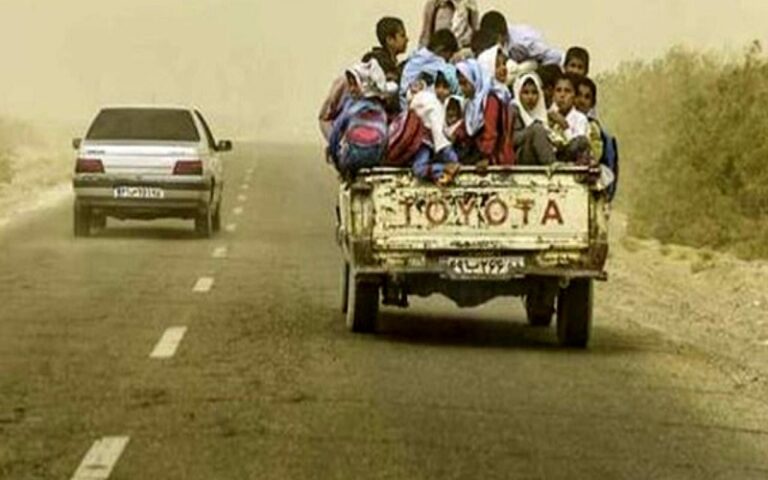
There are almost two weeks left until the beginning of the new academic year in Iran. Each new school year is a combination of excitement, promises, planning, and high hopes for most children and parents around the world, however, the beginning of the school year in Iran has become challenging for most families.

Many parents have tried to pay the back-breaking costs of school fees, uniforms, stationery, books, and school services by reducing everyday expenses in their lives. School costs are now more than the monthly salary of a normal worker in Iran.

The purchase of elementary school books will be between 36 and 53 thousand rial based on the prices for the new academic year. The price of the first high school book is 89 thousand rials, and the price of the second high school book is 105 thousand rials. The total cost of stationery now exceeds one million rials.

According to the state-run website Fararu, the estimated cost of purchasing 17 items, including notebooks, pencils, backpacks, rulers, etc. is 1.2 million rials. According to this report, in 2022, people chose backpacks for their children with a price of less than 150 to 300 thousand rials, whereas a high-quality backpack costs at least 1,500,000 rials.

In short, these expenses show that, contrary to the promises of regime officials, education is not free and is used as another tool to extort families, the majority of whom live below the poverty line.

The regime’s Ministry of Education has approved the fixed tuition fees of non-government schools to increase by 38% in the new academic year. Tuition rates start at 4 million rials in areas such as Kohgiluyeh and Boyer-Ahmad Province and reach around 35 million rials for schools in Tehran.

As mentioned in the education circular, this amount is just a fixed tuition fee. Families are expected to pay different amounts to the school throughout the year. A similar scenario has been implemented for private schools.

Education officials have constantly claimed that it is forbidden and illegal to receive tuition fees from parents who send their children to public schools. However, the story has a different face in practice. Under the pretext of ‘helping the school’, ‘budget deficit’, ‘lack of equipment’, etc., school administrators force parents to pay various amounts at the time of registration.

In many provinces, the parents are forced to pay the amount determined by the school, otherwise, their children will not be registered.

This is something that the schools in Iran have been pulled into it forcibly. In an interview with a state-run TV network, the director of one of the secondary schools pointed to the budget deficit they are facing and said, “When we have problems with water and electricity and education is not taken care of, what other solution do we have but to ask parents for help.”

Despite the exorbitant costs, public school education does not provide a promising future for children. Around 80 percent of the graduates in the national exam are children from private schools, which has created a vast inequality in the field of education.

Iran: Corruption and a Starving Nation

Four years ago, the Iranian regime’s supreme leader Ali Khamenei denied the regime’s corruption in a public meeting, stating, “Systematic corruption? No, that one who sees corruption systematically, he himself is corrupted. They are speaking in such a way as if all are corrupted.”

In a recent interview with the state-run daily Asr Iran on August 31, regime MP Ahamad Reza Bigi spoke about a much broader corruption scheme in the regime’s banking system, compared to the recently revealed corruption in the Mobarakeh Steel company. He said, “When people hear the news of 92 trillion rials of misuse and embezzlement in Mobarakeh Steel, they quickly generalize it to the entire system of the Islamic Republic of Iran.”

In regards to the corruption in the banking system, he added, “If the report of the investigation of the banks, which is currently being carried out in the parliament, reaches the public’s knowledge, it is not known what consequences it will have about the weakening of the people’s trust in the government and the system of the Islamic Republic of Iran.”

Bigi also emphasized, “Our prediction about the corruption and embezzlement of the banks according to the report of the investigation is devastating. The numbers and embezzlement that we are receiving from the (parliament’s) investigation of the banks are much more shocking than those of Mobarakeh Steel.”

In his conclusion, he stated that there is no difference between the regime’s different factions, and both the so-called ‘reformists’ and ‘principlists’ are all involved in this systematic corruption.

Discussing the wider corruption of the regime, which has affected all parts of the country’s economy, the state-run daily Shia News wrote in their August 30 publication that the regime’s housing ‘mafia’ has affected the prices of housing in around 360 neighborhoods of Tehran.

The same day, the state-run daily Eghtesad News confirmed the staggering price increase for housing and wrote, “In small cities, a 70-meter unit has reached one billion rials, the middle and poor classes can no longer afford housing.”

The situation has become so dramatic that state TV has been forced to report it.

On August 28, the state-run daily Sharq rejected Khamenei’s claims about nonsystematic corruption and wrote, “This is not an exception but a rule in private or government companies, and in the structure of the country’s administration. First, this corruption is political rather than economic in nature. That is, it is because of the political construction and distribution of power that such corruption has arisen.”

They added, “Second, the continuation of such a situation will take down all the pillars of power. Third, due to the construction of power in the Islamic Republic, it is only possible to solve this problem with a political will formed by the leaders of the branches. Because others do not have enough power, responsibility, and authority for this great struggle.”

The daily went on to count some of the many reasons for the regime’s self-created corruption, like the government-controlled private sector, multi-currency market, prescriptive pricing, lack of serious supervision, a selective administration that is not based on competence and experience, etc.

The corruption has caused an acute bread shortage and spiraling prices, which has brought people out onto the streets many times. There is no sharper marker of a devastated economy than the price of bread and other basic commodities.

In their August 28 publication, the state-run daily Khabar Online wrote about the devastated economy and gave an example of the situation of the country’s groceries. They stated, “The daily fluctuations in the price of basic commodities have endangered the life of local grocers these days; The grocers who survived until now by credit are about to lose this important income vein.”

Concerning the staggering prices of basic commodities, the daily further added, “This government increased the price of each kilo of rice by 80 thousand rials and increased the price of one liter of liquid oil from 25 thousand rials to 66 thousand rials.”

Iran: State-Controlled Statistics and Corruption

0

In any country, data and statistics play an important role in assessing and monitoring the status of its social, cultural, and economic development. In the era of data-driven decision-making, one of the main duties of any government is to provide easy access to official data and statistics, especially in regard to the government’s economic and financial actions.

This is important to provide a healthy environment for everyone in the fields of education, economics, and health, among others.

Iran, under the rule of the Iranian regime, is one of the ratifying countries of the United Nations (UN) International Covenant on Economic Social and Cultural Rights (ICESCR). Under this covenant, the regime is obliged to recognize the right of the Iranian people to access government data and statistics, and the right to oversee data collections and reports by governmental and non-governmental entities.

At present, the regime is withholding its data and has left its statistical system underdeveloped in order to allow its leaders and officials free rein for corruption and embezzlement. There is no independent data collection channel in Iran, which absolves the possibility in outsiders reporting on the regime’s actions.

The only entity responsible for statistics is the regime’s Statistical Center of Iran (SCI), which of course is controlled by the corrupted people.

The conflicts of interest, and the provided statistics by the regime’s different entities, have created much discomfort and pain and are endangering the lives of the Iranian people. The latest example is the water stress and crises in many different parts of the country.

Deliberate conflicting statistics, besides the regime’s special priorities, have resulted in ineffective policies in water management. As a result, many rivers and lakes have completely vanished from the country’s map. Currently, no one in Iran trusts the regime’s statistics, and this has generated a sense of deep suspicion among the people.

In recent years, many reports about conflicting statistics and their devastating results have been reported by the regime’s media, in fear of the people’s outrage. The latest drama that has been exposed is the unbelievable corruption scandal involving the Mobarakeh Steel company. This company has been found to have embezzled more than $5.25 billion.

The Mobarakeh Steel company’s financial violation is not the first example of the corrupt structure of state-owned companies, and it won’t be the last. It also highlights the vague and non-transparent mechanism of the state economy, which provides the possibility of financial violation and deviation by denying transparency.

One of the most famous cases which have created the ground for such corruption is the issue of the pricing market. The regime has created a multi-currency market, and it is natural that corruption and rent-seeking can easily occur in such an environment, while there are no accurate statistics or supervision of the cash flow in the country.

In 2009, Iran joined the ‘United Nations Convention against Corruption’. Recently, the regime’s Ministry of Economy claimed that the financial statements of state-owned companies had been published on the so-called Kodal website, but despite this, no positive results have been obtained in the field of transparency.

The ranking of the Transparency International Organization, since 2012, shows that the regime has been in the third decile and there has been no noticeable change in the field of the regime’s transparency.

272 Cities in Iran Face Water Stress

Over the past few days, the Iranian cities of Shahr-e Kord and Hamedan have witnessed major protests due to water scarcity. Videos published on social media have revealed the dimensions of the disaster, with hospitals and other major public health services being severely hit by this crisis. As these cities are considered two of the most important water catchment centers of Iran, in theory, they should not be facing any water scarcity.

To understand the water stress crisis, we should explain first the word crisis. Experts say, “A crisis is a situation in which a system or parts of it are disrupted (or threatened to be disrupted) and sudden or destructive changes in one or more basic system variables cause the instability of the entire system.”

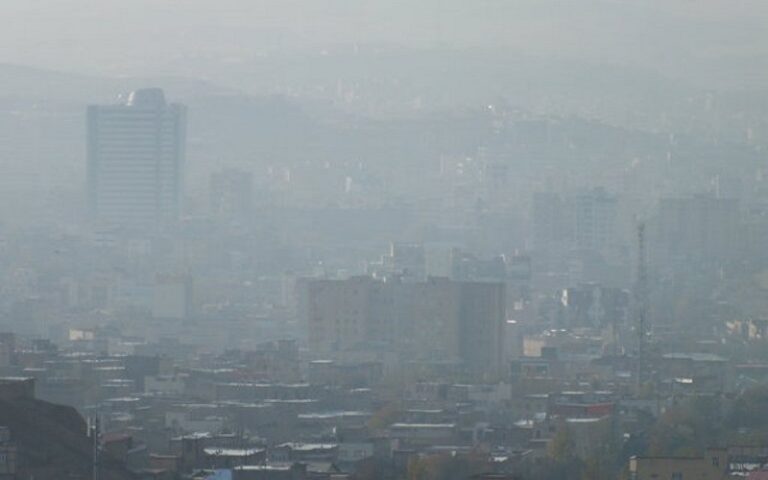
This water stress crisis has now impacted various levels in around 272 cities across Iran, has disrupted the daily life of the people, and is endangering their health.

Depriving people of safe drinking water will cause the transmission of diseases such as cholera, typhoid, polio, hepatitis A and diarrhea. This disaster has occurred due to the Iranian regime’s policies, and a regime who are lacking in providing the people with safe and clean potable water.

The Council of Foreign Relations (CFR) explained water stress as follows, “Water stress or scarcity occurs when demand for safe, usable water in a given area exceeds the supply. On the demand side, the vast majority—roughly 70 percent—of the world’s freshwater is used for agriculture, while the rest is divided between industrial (19 percent) and domestic uses (11 percent), including for drinking. On the supply side, sources include surface waters, such as rivers, lakes, and reservoirs, as well as groundwater, accessed through aquifers.”

Does the question remain as to what is causing this water scarcity? According to experts in this field, water scarcity is often divided into two categories: physical scarcity, when water scarcity exists due to local ecological conditions; and economic scarcity, when there is insufficient water infrastructure. The two often come together to create water stress.

Experts have stated that even when there are some natural causes for a region’s water stress, like global warming, whereby for every 1 C increase in the global average temperature, this causes a 20 percent drop in renewable water resources. However, human factors have clearly played the main role in this problem, by not providing clean water and safe sanitation.

Mark Giordano, an expert on water management at Georgetown University in the U.S., said, “Almost always, the drinking water problem has nothing to do with physical water scarcity. It has to do with the scarcity of financial and political wherewithal to put in the infrastructure to get people clean water.”

The main human factor in Iran is the regime’s priorities, projects that not only do not benefit the people but are also against the people’s interests. These include the nuclear projects or missile and drone programs, the malign activities in the region, the financing of proxy forces, and the spread of terrorism, which all cost a lot of money and wastes the national capital in the process.

Of course, when service provision and the welfare and comfort of the people are not a priority, the result will be a crisis of water stress and scarcity.

Atabak Jafari, the CEO of the regime’s Water and Wastewater Engineering Company, said that 272 cities are facing water stress and that the number of villages that need mobile water supply has increased greatly in summer.

According to him, in May of this year, 4,953 villages in the country were covered by mobile water supply, but this increased to 6,000 to 7,000 villages in the summer months. Anoushirvan Mohseni Bandapi, the head of the Center for Air Quality and Climate Change, has recently said that by 2040, Iran’s water stress will likely exceed 80%.

According to the Hamshahri newspaper, currently, the provinces of Sistan and Baluchistan, Tehran, Khuzestan, Khorasan Razavi, East Azerbaijan, and Alborz respectively have the highest water stress in Iran, while around 53% of the country’s dam capacity is empty.

Iran Regime’s President Ebrahim Raisi’s Attendance at the UNGA77 Is a Violation of Human Rights Principles

On June 19, 2021, Amnesty International in a statement announced that the regime’s current president Ebrahim Raisi should be investigated for crimes against humanity during the 1988 Massacre of political prisoners.

Short after this statement, on August 5, 2021, Amnesty International’s Secretary General Agnès Callamard in her tweet said: “On the inauguration day of #Iran President #Raisi lets remember the 1000s victims of the 1988 repression, disappeared and extrajudicially executed and recall President Raisi role.”

On June 29, 2021, the UN investigator on human rights in Iran Javaid Rehman called for an independent investigation of the state-ordered executions of thousands of political prisoners in 1988 known as the 1988 Massacre, and the role of the regime’s present president famous as the ‘Butcher of Tehran’.

At that time Raisi was Tehran’s deputy prosecutor and a member of the infamous death commissions who ordered the executions of the political prisoners in one-day trials, while most of them has ended up their sentences.

Rehman said that his office has gathered many testimonies and evidence. In fear of the exposure of the regime’s crime, the regime destroyed many times mass graves of the victims while Rehman said that he was concerned about the reports coming from Iran.

On January 27, 2022, prominent former UN judges and investigators called on UN human rights boss Michelle Bachelet to investigate the 1988 massacre, including the role of Ebrahim Raisi. The letter sent to the Bachelet was signed by some 460 people.

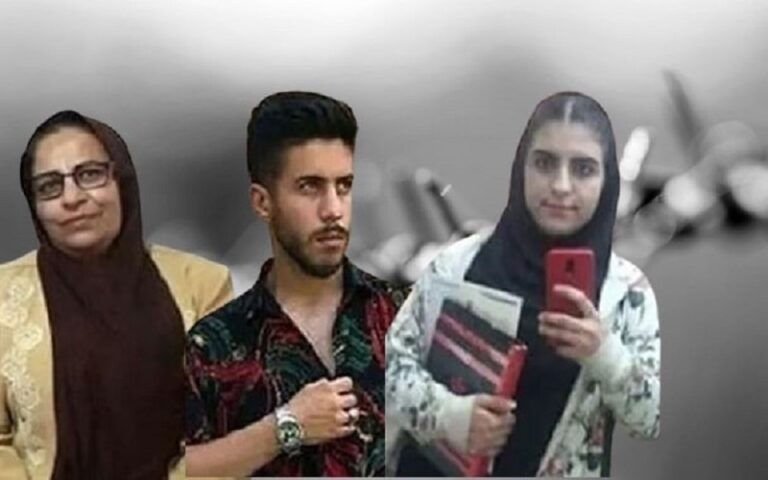
Now, in August 2022, victims of the 1988 massacre file suit in New York City against Raisi. The suit was filed in federal court last week in the names of two people tortured in 1988 and a third person whose brother was executed.

In a press conference on August 25, 2022, the members of the Iranian Resistance, the National Council Resistance of Iran (NCRI) outlined a federal lawsuit branding Raisi ‘a mass murderer who has no place at the United Nations upcoming 77th general assembly.’

Former US Attorney General Michael Mukasey and Mr. Steven M. Schneebaum, Counsel for the plaintiffs, also joined the press conference.

In their professional insight, they shared their opinions on why Raisi could be prevented to step on US soil and attend the UNGA.

Mr. Scheebaum said: “In the summer of 1988, Raisi and his cohorts literally determined who would live and who would die, and as many as 30,000 people were taken out to be executed, to be hanged sometimes in groups as large as 12 after hearings.

“The prisoners were asked basically one question: Do you repudiate your opposition to the regime, which is to say, in 90% of the cases, do you repudiate your membership or your support for the MEK?”

The greatest obstacle the lawsuit faces is the question of immunity, which should be used to prevent Raisi to enter the US. Mr. Schneebaum believes the structure of the regime’s government helps him to question the immunity that should be applied to him as the “heads of state.”

A US State Department document on the subject notes that most privileges and immunities “are not absolute,” and the 1978 Diplomatic Relations Act replaced most of the more outdated laws on the subject.

According to the new provisions, some protections only apply to officials from nations that have ratified the Vienna Convention on Diplomatic Relations or to whom the U.S. president has granted privileges and protections.

And Mr. Schneebaum believes that he can use these aspects to go ahead and prevent Raisi from entering US soil, while according to the regime’s government structure he is not the ‘head of state’ and the “US government has, generally speaking, honored the absolute immunity of and this is the important term heads of state.”

He explained: “Our argument is that Ebrahim is not the head of state of Iran. He may have the title of president, but he is not the leader as Ayatollah Khamenei is the supreme leader and is, therefore, the head of state of Iran and indeed the Iranian constitution.”

At the conference Judge Michael B. Mukasey said: “In 2019, the U.S. Treasury Department’s Office of Foreign Assets Control, known as OFAC, imposed sanctions on Ebrahim Raisi based on his participation in what has become known as the ‘Death Commission’, ordering the execution of thousands of political prisoners. In 2021 the U.S. State Department imposed immigration restrictions on him based on a finding that he was a senior Iranian official involved in the commission of serious human rights abuses.

“It is anticipated that if Raisi comes to the United States, he would be subject to the jurisdiction of United States courts and could be served with the complaint in this case, which presents claims under two federal laws – the Torture Victim Protection Act and the Alien Tort Statute.”

Finally, he added: “Diplomatic immunity does not mean impunity.”

Last year similar complaints were filed in England and Scotland, avoiding him to attend the Cop26 climate conference in Glasgow.