Home Blog Page 231

Iran Regime’s Oil Revenue Supports Terrorism

On August 2, John Kirby, the US National Security Council Coordinator for Strategic Communications at the White House, stated that the US government will not delist the Iranian regime’s Revolutionary Guards (IRGC) while the nuclear agreement, known as the JCPOA, is being revitalized.

In his press conference at the White House press briefing, he said, “The Iranian State is a state supporter of terrorism and they support terrorist networks throughout the region…and when I asked if he (US President) would be willing to lift the FTO designation of the IRGC as a function of negotiations with Iran over the nuclear deal the president said no.”

The truth is that the Iranian regime is pressuring the negotiating parties to remove the IRGC from the US’s FTO, to be able to continue its malign activities. This regime has a long history of aggression, against its own people, against neighbors, and indeed against international peace and security.

From harboring al-Qaida, to backing Hezbollah, Hamas, Houthis, and its militias throughout the region, it has provoked an endless war that has continued for over 40 years.

Therefore, any ease of sanctions and appeasement will be an aid to the regime’s aggressions. The bad part of the story is that since the start of the new rounds of the JCPOA negotiations, the regime has been able to ramp up its illegal oil trade, which is the IRGC’s main financial support.

This year the regime was able to sell more than $25 billion worth of its oil. Compared to the year before its revenue from oil sales has tripled according to the ISNA news agency.

The regime’s tanker fleet includes about 143 ships, capable of carrying more than 102 million barrels of crude oil or fuel and 11.8 million barrels of liquefied natural gas, worth over $7.7 billion per day. This is a significant amount of money pouring out that will greatly increase its foreign currency resources.

Also, this amount of revenue will definitely boost the regime’s malign activities, from its nuclear and missile program to its support of international terrorism.

On August 2, in reference to the regime’s malign nuclear activities, the Director-General of the International Atomic Energy Agency (IAEA) Rafael Mariano Grossi said that ‘goods words’ from the regime are not enough to satisfy international inspectors. He then asked the regime to be transparent about its nuclear program, which was “moving ahead very, very fast.”

A day earlier, the US Department of the Treasury (DOT) announced that its Office of Foreign Assets Control (OFAC) has acted against companies “used by Iran’s Persian Gulf Petrochemical Industry Commercial Co. to facilitate the sale of tens of millions of dollars’ worth of the regime’s petroleum and petrochemical products from the regime to East Asia.”

Under the action, the following companies are being designated: Blue Cactus Heavy Equipment and Machinery Spare Parts Trading L.L.C.; Farwell Canyon HK Limited; Shekufei International Trading Co. Limited; and PZNFR Trading Limited.

DOT also outlined that, in a separate but related action, it was designating two entities “that have engaged in the purchase, acquisition, sale, transport, or marketing of Iranian petroleum and petroleum products, including providing logistical support to the Iranian petroleum trade, pursuant to E.O. 13846”.

These actions alone are not strong enough to prevent the regime from its malign activities, resembling the act of locking the stable door after the horse was stolen. Insisting on negotiating and appeasing the regime’s dangerous nuclear project is not the answer either. The international community and the Western countries must wholly support Iran’s people’s struggle against the regime, which is the only real solution to the issue with Iran and the four decades of crisis in the Middle East.

From Flash Floods to Socioeconomic Crises, Iran’s Regime Leaves Destruction in Its Wake

During the trial of Hamid Noury, one of the Iranian regime’s perpetrators in the 1988 massacre, the victims and witnesses of the massacre all spoke about three equal phenomena that occurred during that fateful period, the death corridor, the death commission, and the death saloon.

During the summer of 1988, more than 30,000 political prisoners, mostly supporters of the People’s Mojahedin Organization of Iran (PMOI/MEK), were brutally executed without any fair legal procedures.

In one of his previous speeches, the regime’s supreme leader Ali Khamenei sent a warning to the Iranian people, proclaiming that the God of the 1980s is the same as the God of the 2020s.

Khamenei’s murderous intentions are becoming ever clear these days, judging by the increase in the number of the regime’s merciless executions. It has also become clear why he chose Ebrahim Raisi, who was a member of the 1988 massacre’s death commission, as his president.

Last Friday, the regime executed two people in Dameghan, raising the number of executed people over the past seven days to 32, which is a new record. On average, considering the past few months, the regime is executing 4 people every day.

In its latest statement, Amnesty International has said that the regime has embarked on a “killing spree”, killing at least 251 people this year between January 1 to June 30. Precise numbers for the number of executions are not available, so the official number may be even higher.

Amnesty International’s deputy regional director for the Middle East and North Africa, Diana Eltahawy, said, “The state machinery is carrying out killings on a mass scale across the country in an abhorrent assault on the right to life. The renewed surge in executions, including in public, shows yet again just how out of step Iran is with the rest of the world.”

If this trend of executions continues, the number of executions is likely to surpass the total number in 2021. While the numbers are outrageous, it is not just executions where the regime’s brutality ends, as they have also been implementing limb amputation penalties. Last week, the regime amputated the fingers of a man named Sayed Barat Hosseini, who had been convicted of theft, using a guillotine machine.

This latest amputation came soon after the regime implemented the same penalty against another victim of the regime’s cruelty. Hosseini’s fingers were removed without even being given an anesthetic.

Diana Eltahawy said, “Amputation is judicially-sanctioned torture and therefore a crime under international law. All those who were involved in ordering or implementing these corporal punishments should be prosecuted in fair trials.”

It has been discovered that at least eight other prisoners are currently at risk of the same brutal punishment. Since the regime’s officials regularly enjoy international impunity and are respected by the Western governments’ appeasement policy, this cruelty will only continue.

While the regime has implemented such punishments and performed public executions less frequently over the past years, in fear of being in the agony of a collapse they have decided to increase the pressure on the people and scare them through such brutal means.

The regime’s maniacal hostility towards women who do not stick to their fabricated law of ‘proper Islamic hijab wearing’ is another factor in the regime’s fear of collapse.

It seems that due to Raisi’s failure in saving the stricken regime, Khamenei has had no choice but to increase the repression, facing an insoluble crisis.

In their July 30 publication, the state-run Shargh daily wrote about the regime’s repression of women, stating, “Since two or three weeks ago, a flood had started in the society against the non-proper hijab. In the end, it was not known from which spring it originated, and who was responsible for issuing it. It created bad moods and led to violence, and articles were written, and speeches were held against it.”

They added, “Those who do not wear the proper hijab got lucky, because the natural flood, saved them from further aggression, but experience shows that such floods will not end soon. After a while crisis makers will start a new game.”

The Sharq daily also warned, “Future floods are more destructive because new generations are not complying with us. The fact that the number of those not wearing the proper hijab has increased and the number of participants in Friday prayer ceremonies has decreased are signs of vulnerability to floods.”

This short comment shows clearly why the regime has increased its aggression toward the people, as after four decades, the regime still lacks any solution to solve Iran’s economic and social crises.

Iran’s Regime Faces a Critical Infiltration Crisis

One of the main challenges faced by the Iranian regime over the past couple of years is the top-level penetration of highly trained security agents, from various intelligence services in other countries, into its high-profile security force, the Islamic Revolutionary Guards Corps (IRGC).

This situation has become more serious following the elimination of some of the regime’s nuclear scientists, including Mohsen Fakhrizadeh, who was regarded as the chief of the regime’s nuclear program.

Bedraggled with corruption, the regime’s IRGC officers have become soft targets and are used as snitches in foreign intelligence services, something that has been admitted by many of the regime’s officials as the main weakness of its security forces.

In July, the regime was forced to dismiss the head of the IRGC’s Intelligence Organization Hossein Taeb, due to the weak response of this organization. It should be noted that Taeb was considered one of the most important intelligence figures, who was close to the regime’s supreme leader Ali Khamenei and his son.

Last year, Ali Younesi, the regime’s minister of intelligence from 1999 to 2005, warned the regime’s officials of the consequences of their security forces being infiltrated, saying, “In the last 10 years, unfortunately, infiltration in different parts of the country is such that all the officials of the Islamic Republic should be worried about their lives.”

In 2020, Hossein Dehghan, the regime’s former Minister of Defence, admitted that ‘infiltration’ and ‘breaches of security’ were what led to the assassination of Fakhrizadeh. At the same time, Hossein Alaei, a former IRGC commander, emphasized that the regime must examine the weakness that is inherent in the regime’s structure and security apparatuses, which enable such assassinations.

In an interview published by outlets close to Khamenei’s faction, IRGC member Hamid Naghachian, who was once the head of the regime’s founder Ruhollah Khomeini’s protection team, claimed that Khomeini was poisoned by drugs. Despite this cranked-out claim, his request to intensify the protection and security of Khamenei seems well founded.

The words of the Naghachian came up recently when the IRGC’s public relations team announced that Hossein Marashifar had succeeded Ebrahim Jabari as the commander of the Waliamar Protection Corps, a special unit of the IRGC, whose duty is to protect Khamenei and his family.

Naghachian also repeatedly mentioned foreign influence in the regime as a threat, stating, “We have been involved with infiltration since the beginning of the revolution.”

It is clear that Khomeini’s ‘poisoning’ incident is no longer his subject, Khamenei is now the main subject. Khamenei has personally spoken and warned many times about the infiltration. so is not unlikely that Naghachian now feels that the threat against Khamenei is real.

During the 25th gathering of Friday Prayers’ Imams on July 25, as published by the ISNA news agency, the regime’s interior minister Ahmad Vahidi pointed to the regime’s security weakness and the threat of infiltration, saying, “Today, the enemies are trying to impose their influence on us with new bridgeheads in this area. The enemy has launched an all-out war against us, which has different dimensions; Its security aspect is based on terror, and destruction, and is taking advantage of the wave of dissatisfaction.”

He added, “The infiltration had two parts; Part of it was to disrupt the decisions of officials and managers, and part of it was in the political field. Sometimes some officials said things that were not consistent with any logic. These words were caused by the damage we suffered in the information war.”

Iran: The Unseen Threats of Reviving the JCPOA

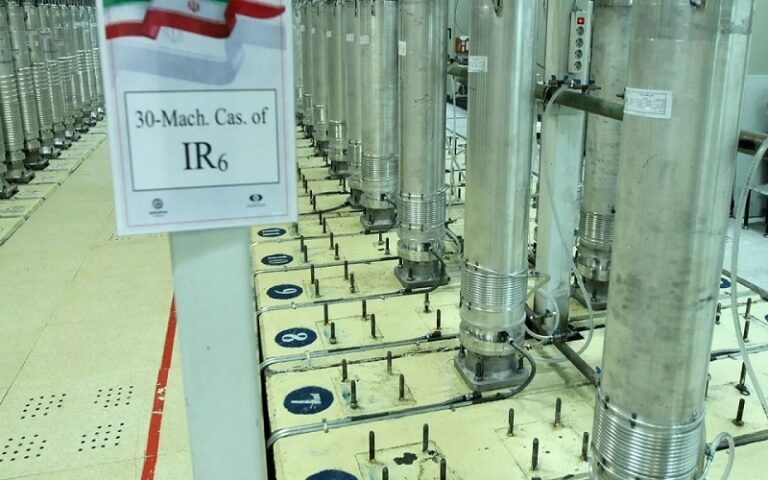
In a recent announcement, the Iranian regime has admitted that is considering building a new ‘research reactor’ at its nuclear site in Isfahan Province, with construction expected to start in the coming weeks.

While quoting the regime’s head of Atomic Energy Organization Mohammad Eslami in their latest publication, the state-new run news agency ISNA wrote, “This is an entirely domestic project that will close the chain of research, evaluation, testing, and production of nuclear energy in Iran.”

This is a clear fact that the regime intends to violate the context of the JCPOA. While the regime has constantly claimed that their nuclear program is only for peaceful purposes, they have been enriching uranium to up to 60 percent purity, which is merely a watershed for purifying it up to 90 percent in a technical short step to weapons-grade uranium.

While expressing its concern about the regime’s nuclear progress, the International Atomic Energy Agency (IAEA) said that most of the regime’s enriched uranium is being transported to Isfahan’s Atomic Center. Therefore, there is a right to be concerned and sound the alarms about the regime’s ambitions to build a new site in Isfahan, even under the pretext of research.

It should be noted that according to the regime’s Fars news agency, as reported on July 26, the regime collected and wrapped cameras that were being monitored by the IAEA, the United Nations atomic watchdog.

The IAEA has warned many times that the regime is inching ever closer to producing a nuclear bomb, but the Western countries, especially the US government, continue to ignore such warnings. The only thing that Western governments have done in regards to controlling the regime’s malign activities is to continue sticking with their weak negotiating progress, which is on the cusp of a devastating failure for both the Middle East’s trembling security situation and global security.

This genuine concern, and the subsequent warnings, are not based on meaningless speculations, but on real facts of the regime’s violations of the JCPOA, which started soon after the initial agreement was made in 2015.

One year into the nuclear deal, Germany’s domestic intelligence agency, the Federal office for the Protection of the Constitution, revealed that the regime has pursued a ‘clandestine’ path to obtaining illicit nuclear technology and equipment from German companies. At the time, Germany’s then-Chancellor Angela Merkel criticized the regime’s actions, showing the fragility of the JCPOA from the offset.

In January 2019, the regime’s then-head of Atomic Energy Organization Ali Akbar Salehi explained how the regime used deceptive measures to mislead the international community, saying, “For three years we have been saying we did not pour cement into the Arak heavy water reactor. If we had the Arak reactor would be destroyed.”

In response to a question from the regime’s TV moderator in regards to the pouring of cement in the nuclear pipes, Salehi added, “not the pipes you see here. We had purchased similar pipes, but I couldn’t announce it at that time. Only one person knows so in Iran, the highest senior official.”

He continued, “No one else knew. When our friends were negotiating, we knew that they would go back on their words one day. [Khamenei] has said be careful, they do not keep their promises. We needed to be smart. In addition, to not destroy the bridges behind us, we needed to also be building bridges, so that if we needed to return, we could return faster.”

On September 4, 2015, the National Council Resistance of Iran (NCRI) announced that “Tehran is working with North Korean experts to deceive the United Nations nuclear inspectors who are visiting suspected Iranian sites. According to the statement, the Iranian regime has been working for some time to find ways to hide the military dimension of its nuclear projects from the International Atomic Energy Agency (IAEA), seeking Pyongyang’s advice. Several North Korean officials have set up workshops in Tehran and have remained there even after the signing of the nuclear deal.”

Two days earlier, the NCRI disclosed that the Iranian regime’s secret committee had deceived the IAEA on PMD Probe. The Iranian Resistance examined an example of the regime’s deceptive plans in response to the IAEA, citing the regime’s scheme to address the so-called EBW detonators, by trying to pretend the explosive detonators were intended for the oil and gas industry.

These are just a few facts about the regime’s acts of cheating after signing the agreement. It is not just the weak agreement and appeasement policies with the regime that have put the international community in danger. Following the inception of the agreement, Lebanon has since become a more comfortable home for the terrorist organization Hezbollah, which is now armed to the teeth by the regime and has been instrumental in preventing the formation of any government in Lebanon in favor of the Iranian regime.

Thanks to the agreement, the regime was able to take the upper hand in Syria’s war, which has since displaced more than 6 million people inside the country and caused more than 5 million to seek refuge abroad.

With help of this war, the regime exported its terror activities to European soil under the pretext of refugees. The Iranian Quds Force is known to have conducted many covert assassination operations in the heart of Europe. The case of the regime’s diplomat-terrorist Assadollah Assadi, who tried to bomb the NCRI’s annual gathering in France in 2018, is at the heart of the regime’s terrorist network in Europe.

The regime has also expanded its support of the Taliban in Afghanistan, preventing the formation of any government and as a result, the country has now been pushed back into its turbulent past. In Iraq, the regime sponsored its militias, the famous Hashd al-Shaabî, and others, to infiltrate and undermine the Iraqi Security Forces to jeopardize Iraq’s sovereignty. Just like Syria, Lebanon, and Afghanistan, Iraq greatly lacks a competent government.

The same case goes for Yemen. The regime’s support for the Houthis has destabilized many countries in the Middle East and the terrorist group continues to starve the Yemeni people and hold them under the threat of terror. The list of the regime’s malign activities is long, and these examples are just a snippet of their misdeeds.

The regime’s assets unfrozen by the JCPOA have provided the ground for such destruction. What we have not mentioned is the ongoing increase in the regime’s repression of Iran’s people, because the JCPOA does not include the regime’s human rights violations. Therefore, any new deal or the reviving of the 2015 deal will only worsen the situation and set up a more hostile regime in the future.

Iran Regime and Its ‘Sweet Cake’ for the People

In a so-called ‘ceremony of honoring’, introducing the commander of the Sarallah Corps of Kerman province, the Iranian regime’s second highest commander of the Revolutionary Guards (IRGC) Ali Fadavi spoke about the contradiction of two current fronts, introducing the regime as being on the right side of this war.

He said, “The fight between the right front of the Islamic revolution and the evil front of the world is never-ending, and these two fronts will never come together.”

He revealed the regime’s year-long malign activities in the Middle East and its support of global terrorism, adding, “In the 80s with fought in our home, but in the 2000s we are fighting 1000 km away from home.”

Fadavi also spoke about the current situation of the country’s youths, which greatly contrasts with the real situation, stating, “The new generation of the revolution, although they had not seen the war and the Imam (regime founder Khomeini), the victory of the Islamic revolution, the story of Kurdistan and the West, when they were to be tested, they were like those who had seen the revolution, the Imam, the war, and the martyrs.”

What we witness on a daily basis is the Iranian youths’ growing hatred against the regime. This was majorly reflected in the past nationwide protests in December 2017 and November 2019.

During his speech, Fadavi absurdly proclaimed that the world should see and taste the sweetness of the Islamic Republic. Therefore, it is not a bad idea to have a look at the composition of this regime’s ‘sweet cake’ which has left nothing for the people of Iran, has destroyed many countries in the Middle East, and taken millions of lives over the past four decades.

The regime’s founder Ruhollah Khomeini considered the Iran-Iraq war in the 1980s a blessing and he intended to continue it for as long as possible, as he saw peace as the burial of Islam. During this 8-year-long war, one million people lost their lives on both sides, and cost about one trillion dollars, as the regime claimed. Official statistics claimed that there were two million people left dead or disabled on the Iranian side, and the war caused the destruction of five provinces and one trillion dollars in damage, before finally ending with no result.

Since the 1980s, there has been an existential massacre of political prisoners, with no official statistics to indicate the true scale of how many have lost their lives at the hands of the regime. In the summer of 1988, according to the documents of the Iranian opposition, around 30,000 prisoners were massacred in less than 3 months.

According to a state-run news agency, from 2001 to 2020, the annual average of the absolute poverty line across the country has increased more than 27 times. The statistics indicate that during this period about 33 percent of the population has fallen below the multidimensional poverty line. At present, nearly 60 percent of the country’s population is severely poor.

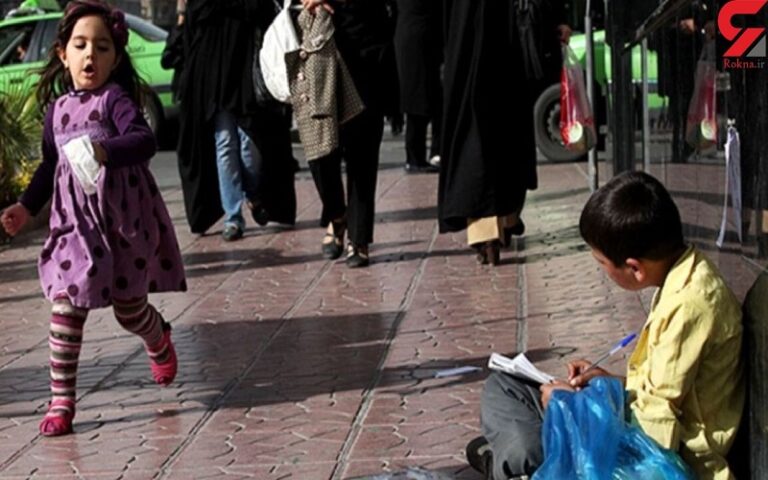
The statistics of cardboard sleepers in Tehran indicate that in the country’s capital alone, more than 24,000 people are homeless. The number of homeless people across the entire country is rampant, and with social networks reporting shocking news on a daily basis about these people, the scale is out of control. The situation is so dire that many people are even forced to live in empty graves and pits.

During the uprising of November 2019, unemployed youths came to the streets to protest the hunger and unemployment crises. In response, the regime attacked them with bullets, killing more than 1,500 people and putting thousands behind bars. The protests of the mothers of the victims are still audible to this day and cannot be silenced.

The best ‘sweet’ for the regime in the past two years was the expansion of the coronavirus pandemic across Iran, which was exacerbated deliberately by the regime to prevent any new protests. Due to their tactics, the regime killed more than 500,000 people. Iran was the only country in the world that prevented imports of globally approved vaccines. The regime even prevented the state-run media from giving accurate statistics about the casualties in order to hide its crime.

Terrorism and meddling in the internal affairs of the countries of the region is another destructive policy of the Islamic regime, which has brought nothing but death and destruction to the people of the region. From the destructive war in Syria to the support of the Yemeni Houthis, Kataib and Hashd al-Shaabi in Iraq, and Hezbollah in Lebanon, the regime has been at the heart of the chaos and shows no signs of stopping any time soon.

Concluding that, this was just a glimpse of the ‘sweetness’ of the Iranian regime delivered to Iran’s people and the entire region.

Iran: Poverty Will Increase Protests Despite Regime’s New Repression Plans

These days, the Iranian regime is faced with rallies and strikes of different unions related to livelihood challenges, from the teachers’ unions to the retirees, on a daily basis. According to the regime’s officials, following the 2019 protests, the regime has lost its credibility among the people, and an indicator of this is the endless protests.

Regime experts have said that due to the increasing inflation, public poverty, and the failure to reach an outcome in the JCPOA negotiations, the regime is likely to face much larger and more dangerous protests in the near future.

Morteza Ofoghe, one of the regime’s experts, said that “if the politicians continue the same trend, they will face new and more challenging political and social issues between the people and the rule.”

Some economic experts have recently warned the regime’s president Ebrahim Raisi and their weak government that there is a huge distance between reality and what this group has claimed about their economic changes. Raisi and his economic ministers have been routinely mocked for continuing to give hollow promises rather than improving the economic situation, which is just worsening the problem.

The truth of the matter is that Mohamad Mokhber, the first vice president, is completely unknowledgeable when it comes to the economy, and the regime’s head of the budget planning organization and the head of the Central Bank have not studied economics at all. None of them have a clue about how to solve the issues that the regime has created.

They thought that they could turn the country’s economy upside down, but, because of the huge corruption in the government, changes have become impossible, despite their claim that the economic problems are in relation to the uncertainty of the JCPOA.

This failure in curbing the economic problems is the reason why the regime has increased the number of executions, intensified its repression of Iranian citizens, raised the issue of compulsory hijab, and launched a major crackdown. Despite the regime’s imagination that these tactics will secure them from major protests and nationwide uprisings, many of its experts and officials have warned about the consequences their decisions will cause.

Abbas Abdi, another one of the regime’s experts, wrote on his Twitter account, “Regarding the behavior of the Ershad (Guidance) patrol with teenage girls, I can say and think that sooner or later one of these encounters will unintentionally lead to an unpleasant situation. I think it is necessary for the police force to get a serious assessment of this issue and the possibilities ahead, maybe these encounters must be reconsidered.”

While warning the regime not to enforce mandatory hijab, Fayaz Zahed, a regime journalist, said that the creators of the hijab plan are committing malicious actions to divert people’s attention because they are unable to solve the main problems within society.

In his interview with the state-run daily Etemad on July 23, he added, “The experience of 2018 (protests) showed how dangerous these artificial crises (such as the hijab plan) could be and become a weapon against the system. Iranian society is angry. Don’t mess with people’s girls.”

The former oil minister of the regime, Mohammad Gharazi, admitted to the increase in repression, which is aimed at curbing the explosive situation in society. He warned the regime of its social consequences in his interview with the state-run daily Mostaghel on July 25, saying, “What has happened in the country is that governments have always misused public rights in favor of a special group. That is, instead of respecting public rights, they have imposed the rights of political power. Some politicians believe that the gap between the government and the people has increased, and this has cost the system a lot.”

He concluded, “What factors do you think caused this gap? Instead of sticking to the government, the political power should consider the rule of the society. For example, inflation is against the administration of the country. Inflation has reached skyrocketing numbers, shrinking the livelihoods of people. What is the solution? Inflation is really heavy.”

Iran: Estehban Flood, Warning of Disaster in Other Provinces

Iran is currently facing many natural disasters due to the Iranian regime’s destruction of the country’s natural environment. One such disaster is major floods. Last Friday, as the seasonal rain soaked the regions around the counties of Estehban and Darab in the Fars province, a terrible flood formed.

That day, many people had traveled to the countryside to enjoy their weekend near the Rudbal river, which later turned into a nightmare. No one expected such a flood would occur while the sky had been clear for most of the day and, as usual, none of the regime’s organizations gave warnings of the dramatic change in weather.

Reports stated that at least 31 people, including three children, lost their lives in the flood. If there hadn’t been sacrifices made by the people living and working in the region, the number of deaths would have likely exceeded those published by the regime’s media.

Despite the regime’s officials evading any responsibility and attributing the cause of the floods to unpredictable events, meteorological data indicates that summer rainfall in southern Iran has the potential to cause monsoon floods.

Flooding of the Sarbaz river and other rivers of Baluchistan during the summer months is not an unfamiliar phenomenon. Due to the changes in the weather, the regime should be prepared to anticipate such a situation and think of necessary measures to put in place to protect Iran’s citizens.

This issue requires the repair and reconstruction of infrastructures or the creation of new infrastructures. Forecasting and warning systems should be improved and increased, and people should be trained for such critical events.

The catastrophic flood of Shiraz in March 2020 showed that the infrastructure of the country had been destroyed in astronomical dimensions due to the regime’s policies. However, the regime did not take any new measures to solve the problems because the budget for renewing the infrastructures was relocated to the regime’s nuclear, missile, and malign regional activities.

Developed countries generally invest 10 to 20 percent of the generated wealth in the field of safety and risk reduction, as well as public health. In Iran, this has never been and is unlikely ever to be the case while the country is under the rule of the tyrannical regime.

For example, 60 years ago, a sea storm occurred off the coast of the Netherlands and spread inland, killing at least 2 thousand people. Following that incident, the Dutch government spent 20% of the country’s gross national product (GNP) on the huge Delta project to protect the country and its citizens from sea storms.

Around the same time, there was a typhoon in Japan that killed 5,500 people, and after that, a series of laws were passed that greatly helped to reduce human casualties in natural disasters. As a result, compared to the last 40 years, the ratio of the number of casualties in Japan to the population has greatly decreased from such disasters.

35 years after the terrible floods of Golab Dareh and Darband in 1987, which led to the death of more than 300 people, the flood forecasting and warning system of these two basins has still not been launched in the most important parts of the capital. In the event of a flood like in 1987, and if water enters the Tajrish metro, a great disaster with a huge number of casualties is likely to occur.

In many cases across the country, the construction budget of Raisi’s government has been basically eliminated or considered to be at a minimum. Along with Fars province, the provinces of Kerman, Hormozgan and Sistan, and Baluchistan are also exposed to potential floods.

Kamran Emami, one of the regime’s experts and the head of the comparative flood management working group in the ICID Commission, spoke about the Estehban flood, saying, “Unfortunately, in Iran, flood management discussions and methods of reducing casualties and damages are not addressed very seriously, and with every flood, several lives are taken, and the public’s attention is attracted for a while, and then everything is forgotten until the next flood. One of the reasons for this neglect is that we have become a short-term society.”

The only thing that Raisi’s government has improved is the number of executions and their guidance patrols to repress the country’s women in the hope they will divert the minds of the people from the country’s environmental and economic crises. Not long after the flood rampaged Estehban, the regime executed Iman Sabzekar, a construction worker, in public, along with a further ten inmates in the Sistan and Baluchestan province.

Meaningless Iran Regime and Russia’s Economic Relations

The Iranian regime has considered Russia’s President’s latest visit as an influencing trip on the regime’s problems, especially in the field of international challenges and its nuclear case. However, the events and remarks following their meeting have shown that the international community has expressed their growing concern about the meeting and the regime’s decision to hand over the killer drone to the Russian government for support in their Ukraine invasion.

After eight rounds of talks on revitalizing the Joint Comprehensive Plan of Action (JCPOA) over the past year, the latest indirect talks between the regime and the US government in Doha, mediated by the European Union, ended without compromise, and now the prospect of an agreement seems dimmer than ever.

Nearly 18 months into Joe Biden’s presidency, despite indicating a desire to revive the 2015 nuclear deal, there have been no signs that a breakthrough is imminent. Instead of canceling the sanctions against the regime, the US government threatened to intensify the sanctions and even imposed some new sanctions.

On a daily basis, Western countries continue to warn the regime that the time to revive the JCPOA is coming to an end and the regime will face severe consequences if no agreement is met. This should be considered a turning point for the regime’s decision to invite Putin as a vanishing point to curb its increasing economic crisis, which is only fueling the fire of the Iranian people’s dissatisfaction.

This type of diplomatic interaction can have a direct effect on the economic interactions of the two countries, but in the case of the regime and Russia, it seems that this was not the correct discussion.

The reality is that in the past few years, there was interest in expanding cooperation between the two countries. Both sides were constantly talking about the need to expand cooperation at the political level, but practically there has been no significant leap in the economic relations between them.

In part, it refers to the capacities and facilities that two countries must supply each other, while the other part refers to the economic structure of the two countries. The current situation is that the Iranian regime is facing a totally collapsed economy, and they are desperate for help.

The capacities and facilities that both sides can provide to each other are very limited. In addition, in the financial field, the financial exchange conditions between the two countries would still face obstacles, due to the regime’s banking sanctions.

The projects and agreements that have been announced will not be fulfilled due to the regime’s political and international conditions, and it is likely that many of the plans for cooperation will be abandoned or forgotten. The latest discussion is about Russia’s investment in the regime’s gas industry, but this too is just an illusion.

The truth about the regime is that its economic plans, and efforts for economic cooperation with other countries, do not originate from the country’s needs and the people’s needs, but instead are subject to political goals, especially in the field of the regime’s support of international terrorism.

Therefore, this meeting should be considered as the regime’s political clamour to present its circumstances as ‘progressive’. With the help of Russia, it will be able to end any deadlock, and that is the reason why the regime’s supreme leader Ali Khamenei has shown strong support for Russia’s invasion of Ukraine.

Trilateral Astana Summit, Multiple Covert Conflicts

In recent weeks, the Iranian state-run media have been boasting about the ‘Trilateral Astana Summit’ that took place on Tuesday, July 19. However, the participants of the conference showed their divisions more than their unities.

Syria and Turkey’s Concerns

Turkish President Recep Tayyip Erdoğan asked Russia and Iran to back Turkey’s incursion into northern Syria during the summit. The Iranian regime’s Supreme Leader Ali Khamenei explicitly declared his objection to the assault, while the Russian President also opposed Erdoğan’s plan.

However, the Turkish army is continuing to scope out Syrian areas in defiance of the Astana Summit, showing that the talks have detached ties between the countries instead of fastening them. Tehran and Moscow, and their allies in the region, all raised their condemnation against Turkey’s attack despite their smiles and inking collaboration accords during the summit.

Tehran-Moscow Military Ties

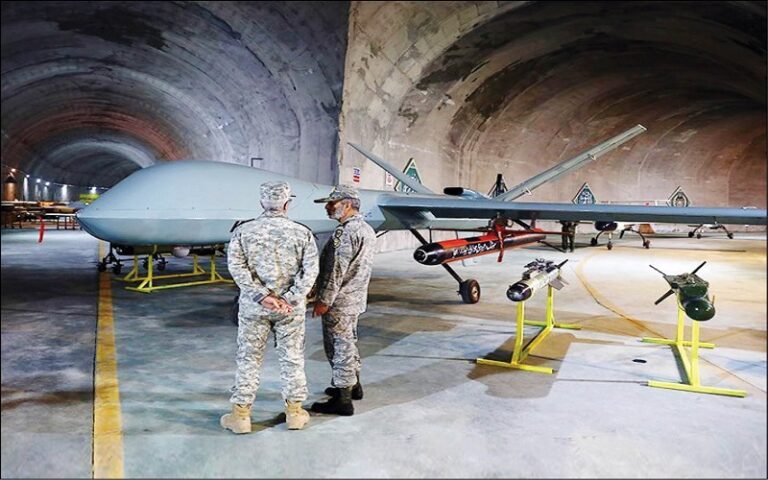
On July 13, US National Security Advisor Jake Sullivan revealed that the Iranian regime plans to send hundreds of UAVs [unmanned aerial vehicles] to Moscow. Iranian Foreign Minister Hossein Amir-Abdollahian has apparently rejected the contract, but the facts speak louder.

The Times reported, “US intelligence believes that Iran will provide President Putin’s army with several hundred drones that were originally intended to help rebels in Yemen to fight the Saudi-backed government there.”

In a White House briefing, Sullivan stated, “Iran is preparing to train Russian forces to use these UAVs.”

On July 16, CNN reported that a Russian delegation had visited an airfield in central Iran at least twice in the last month to examine weapons-capable drones. Their broadcast stated, “Iran began showcasing the Shahed-191 and Shahed-129 drones, also known as UAVs or Unmanned Aerial Vehicles, to Russia at Kashan Airfield south of Tehran in June. Both types of drones are capable of carrying precision-guided missiles.”

Of course, this is not the whole story. Behind the scenes, there are severe clashes between Tehran and Moscow. However, both countries are trying to conceal them to save their view at the international level.

In an interview with the semiofficial Sharq daily on July 18, the Russian Ambassador in Iran Levan Dzhagaryan revealed that Tehran owes over hundreds of billions of euros to Moscow. According to Dzhagaryan, this considerable debt is related to Bushehr nuclear plant. However, he refused to leak further details.

He said, “Iran owed us and had yet to pay for building the Bushehr plant. Foreign Minister Sergey Lavrov has also discussed this issue with the Iranian foreign minister.”

The daily also questioned the ambassador about the Bushehr nuclear plant situation. One reporter asked, “Why is this plant incapable of providing power even for Bushehr?” In response, Dzhagaryan said, “You don’t know many things, and I cannot say details. There are some things I don’t want to expose unveil. However, it is obvious that Iran has a multi-hundred-billion-euro debt to us and refuses to settle it.”

Further Distinctions Between Iran-Russia

The differences are not limited to debts alone. There is also severe competition between Tehran and Moscow in financial and trade aspects.

On July 16, the Wall Street Journal revealed, “Iran and Russia are engaged in a fierce competition for sales of oil, refined crude products and metals in India, China and across Asia, as Moscow sells at prices that are undercutting one of its few supporters during the Ukraine invasion.”

WSJ Benoit Faucon wrote, “‘It’s murderous,’ an Iranian trader said of the $30 a ton discounts that Indian and Chinese buyers wanted to match Russian steel prices. ‘They are destroying the market,’ said Hamid Hosseini, the spokesman for the Iranian Oil, Gas and Petrochemical Products Exporters Union, speaking of Russia.”

In conclusion, not only did the Astana Summit fail to reduce the rifts between the three participants, but it also revealed profound and complicated distinctions.

However, only Tehran has addressed its vulnerability versus the international community and ongoing public protests, which have severely challenged the entire ruling system in recent months.

Meanwhile, US Special Envoy for Iran Rob Malley, who played a crucial role in closing the nuclear deal with the mullahs, has now expressed disappointment over Tehran’s nuclear ambitions. In an interview with CNN on July 20, he said that the “window to revive nuclear deal is rapidly closing.”

He added, “Iran has a choice now. It can opt for a position of relative dependency on Russia—Russia itself has been isolated internationally and have a very narrow economic opportunity with Russia which really can’t go very far, or it can choose to come back into the deal. If it chooses the path of not getting back into the deal, of greater isolation and then having to turn to Russia, having to sell armed drones to Russia, that’s a choice that is not a particularly attractive one.”

On July 19, US State Department Spokesperson Ned Price said, “With each passing day it is– we’re not just treading water, but we’re losing ground. And Iran is sending a signal to us and to the rest of the world that it has no interest in mutually returning to compliance with the JCPOA. If Iran makes clear that it has no intention of doing so and the deal that’s on the table is obviated by Iran’s continuing advancements in its nuclear program, we will pursue another path.”

400 Dangerous Projects Destroy Iran’s Nature

In all civilized nations preserving the environment is a must. Still, when it comes to the Iranian regime, this does not apply, and the regime itself is the source of the destruction of the environment.

The most significant environmental resources that the regime has destructed over the past years are the country’s water resources, lakes, and forests.

The destruction of these resources is not just damaging herbal and animal health; it is causing demographic changes, social crises in the surrounding area of these regions, and decreasing national security.

In a recent article, the state-run Etemad daily referred to the regime’s corruption in macro projects, which are a danger to the environment, writing, “According to statistics, there are more than 400 large infrastructure projects in the country that lack the necessary environmental permits. Naturally, such unlicensed projects should be stopped by the environmental organization. But these projects not only have not been stopped to date but according to wrong procedures, large budget allocations have been made for them so that their owners can continue their destructive activities.”

They added, “This is even though in the end, these projects lead to the destruction of the environment and destroy intergenerational wealth.”

Regarding the environmental organization of the regime, we face unprofessional officials, who are one of the main factors of decades of ecological destruction and have caused severe and irreparable damage to Iran’s environment.

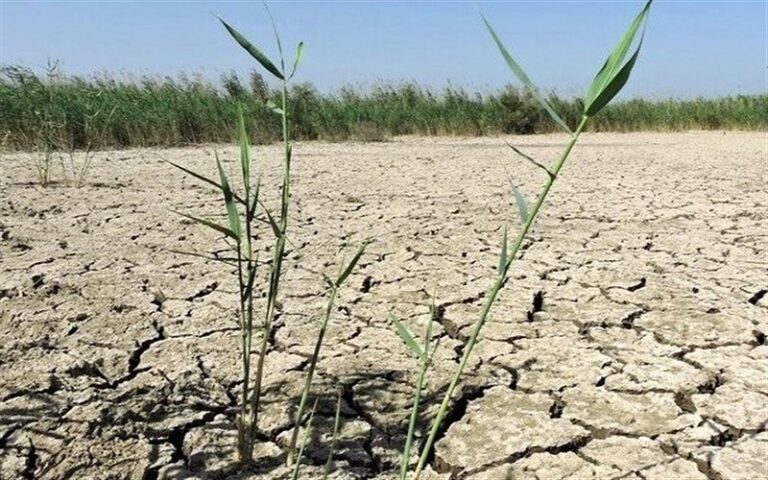
The drying up of Lake Urmia, located in the northwest of the country, is one of the clear examples of environmental destruction in Iran. During the last four decades, this lake has largely been deprived of its natural water resources due to numerous non-scientific and non-expert activities in agriculture. This has created a dangerous, polluting crisis in this region.

With the gradual drying up of Lake Urmia, the following serious damages have been inflicted on the region and will grow over time:

  1. The decrease in population and the changing of the settlement pattern on both sides of the lake
  2. Natural hazards such as the loss of agricultural land, destruction of orchards, reduction of pasture, and salt-carrying winds.
  3. Mass migrations, ethnic tensions, and continuous popular protests
  4. Occurrence of incurable diseases

Discussing the destruction of Lake Urmia, Etemad also wrote, “Let’s be honest with ourselves. Lake Urmia had never been revived, and that is now drying up again. Urmia is on the path of absolute destruction, turning into a desert or salt marsh Urmia, and all Iranian governments were and are the cause of this situation in recent decades. Urmia will never be revived again.”

In recent decades, more than 50 percent of the 18 million hectares of forest land has been reduced. Forty-two percent of the forests in the country’s north are declining; since 1996, about 300 to 350 hectares have been damaged by pests and diseases.

For example, the boxwood species of plant, which is native to Iran and is known as Ruscus Hyrcanus, is currently used for AIDS and anti-cancer drugs, and so far, around 40 million of them have been lost.

Every year, three thousand hectares are reduced from the remaining area of the Caspian Hyrcanian mixed forests in the north of the country, which is on the UNESCO natural heritage list. Forests with 90 species of trees, 211 species of shrubs, and the last reserves of broad-leaved trees with unique characteristics in the world exist naturally in Iran. Currently, the share of two sawmills in the east and west of this area is the annual harvest of 400,000 cubic meters of wood. Every year, 2 million cubic meters of timber are smuggled from Hyrcanian forests, and 400 hectares of forest lands are considered waste disposal sites.

These sites have ended the 50-million-year sustainability of this area due to the leakage of contaminated leachates.

The conditions of Zagros forests are not much better than what is happening in the north and northwest of the country. In the forests of Zagros, environmental destruction continues. In just four years, 2 million hectares of oak forests in this region have dried up.