Home Blog Page 24

The End of an Era: Khamenei’s Death Triggers NCRI Call for a Provisional Government

0

The death of Iran’s Supreme Leader Ali Khamenei marks a definitive turning point in the nation’s political trajectory. Maryam Rajavi, President-elect of the National Council of Resistance of Iran (NCRI), characterized the event as the death of religious tyranny and the end of the Velayat-e Faqih regime. Seizing upon this historic vacuum, the NCRI has moved swiftly to announce the formation of a provisional government, aiming to transition the country toward a democratic republic.

The Death of Khamenei Is the Death of Religious Despotism and the End of the Velayat-e Faqih Regime

The Roadmap for a Provisional Government

The NCRI’s blueprint for the immediate post-Khamenei era relies heavily on its established Ten-Point Plan for transferring sovereignty to the Iranian populace. Rajavi has declared that the provisional government, once established on Iranian territory, is obligated to hold free and fair elections within a six-month window. These elections are designed to form a National Legislative and Constituent Assembly.

The mandate of this newly formed Assembly will be extensive. It is tasked with drafting a new constitution, defining the parameters of the new republican system, and legislating the administration of current affairs. Crucially, the Assembly will designate a new government to assume responsibility after the six-month provisional government resigns. In her address, Rajavi emphasized that the NCRI and the provisional government are not seeking permanent power, but are acting as a conduit to transfer sovereignty back to the Iranian people.

To manage the immediate domestic situation, Rajavi called upon a wide swath of civil society—including students, workers, nurses, teachers, and young entrepreneurs—to work alongside the National Liberation Army to safeguard public health, safety, and security. She issued a direct appeal to the patriotic personnel within the traditional army to stand with the people, while simultaneously demanding that the Islamic Revolutionary Guard Corps (IRGC) and other regime preservation forces lay down their weapons and surrender.

Independence and Coalition Building

The NCRI positions itself as the most enduring democratic and independent coalition in Iran’s history. Mrs. Rajavi firmly rejected any need for foreign intervention in this transitional period, stating that the Iranian people write their own destiny. The coalition further clarified that it seeks neither foreign funds nor the presence of foreign military forces on Iranian soil.

Instead, the leadership is calling for internal solidarity. Pointing to the National Solidarity Front plan introduced 24 years ago, Rajavi urged all political forces committed to overthrowing religious despotism and separating religion from the state to unite. She specifically warned against factions seeking to co-opt the democratic revolution, explicitly rejecting both the dictatorial Shah and the tyrannical mullahs, as well as the remnants of “monarchical fascism”.

US–Israel Carry Out Major Strike Against Iranian Regime

0

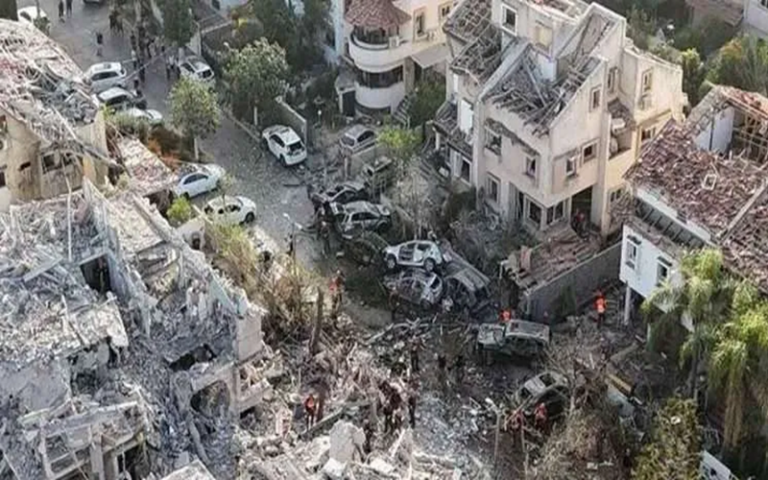
A large-scale military confrontation erupted early Saturday as the United States and Israel launched coordinated strikes against key installations and leadership targets associated with the Iranian regime. The operation, described by Israeli officials as pre-emptive and by Donald Trump as “major combat operations,” quickly expanded into a broader regional confrontation after the regime responded with missile and drone attacks across the Middle East.

Explosions were reported across Iran throughout the day, including in Tehran, Isfahan, Karaj, Tabriz, Kermanshah, and Lorestan. State media acknowledged that more than twenty provinces had been targeted, with additional blasts later reported in the southeastern port of Chabahar and in Hormozgan province. Witnesses described repeated waves of strikes hitting military facilities, missile infrastructure, and locations linked to the regime’s security apparatus.

Interim Government; Democratic Opposition Ready to Move Beyond Iran’s Regime

One of the most consequential targets appears to have been the compound of Ali Khamenei in central Tehran. Satellite imagery cited by state-affiliated outlets reportedly showed the compound completely destroyed following the strikes. Smoke was observed rising from the area while officials declined to confirm the condition or location of the regime’s top leadership.

Israeli officials said the operation had been planned for months and was designed to target sites where senior regime figures were believed to be gathered. Reports indicate that the strikes may also have targeted the residence of Masoud Pezeshkian, though the outcome of that strike remains unclear.

Senior leadership casualties reported

As the scale of the attacks became clearer, reports began to surface indicating significant casualties among senior military figures. Sources cited by Reuters said Iran’s Defense Minister Amir Nasirzadeh and a senior commander of the Islamic Revolutionary Guard Corps ground forces, Mohammad Pakpour, were believed to have been killed in the bombardment.

Iranian officials have offered only limited confirmation. Foreign Minister Abbas Araghchi acknowledged that the regime may have lost “one or two commanders” but insisted that Khamenei was believed to be alive. Iranian authorities also imposed widespread internet restrictions, limiting the flow of information from inside the country as the situation continued to evolve.

Meanwhile, Iranian state media reported that the national Red Crescent had recorded at least 201 deaths and 747 injuries across 24 provinces by Saturday evening. The figures have not been independently verified.

Authorities also claimed that an earlier strike hit a girls’ school in Hormozgan province, killing or injuring more than 150 students. Separate state media reports said a school in Minab had been struck, with around 40 fatalities reported there.

Iranian regime retaliation spreads regionally

Within hours of the initial strikes, Tehran ordered retaliatory operations across the region. The Revolutionary Guard announced that U.S. bases and interests throughout the Persian Gulf would be considered legitimate targets.

Missiles and drones were subsequently launched toward Israel, with Israeli media reporting that at least 125 missiles had been fired during the day. Sirens sounded across multiple Israeli cities as air defenses attempted to intercept the incoming projectiles.

The retaliation quickly expanded beyond Israel. Iranian missiles were reportedly directed toward bases hosting U.S. forces in Qatar, Bahrain, Kuwait, the United Arab Emirates, and Saudi Arabia.

Authorities in Bahrain reported that residential buildings in the capital, Manama, were struck. Kuwaiti officials said hospitals were treating at least a dozen wounded following missile debris falling near military facilities.

In the UAE, officials confirmed that air defense systems intercepted several incoming missiles, though witnesses in Dubai said the explosions shook windows across parts of the city. In Abu Dhabi, one fatality was reported after debris from an intercepted missile landed near the airport area.

Elsewhere, Jordanian forces intercepted two missiles that entered its airspace, while an errant projectile struck a residential building in southern Syria, killing four people.

Economic and security repercussions

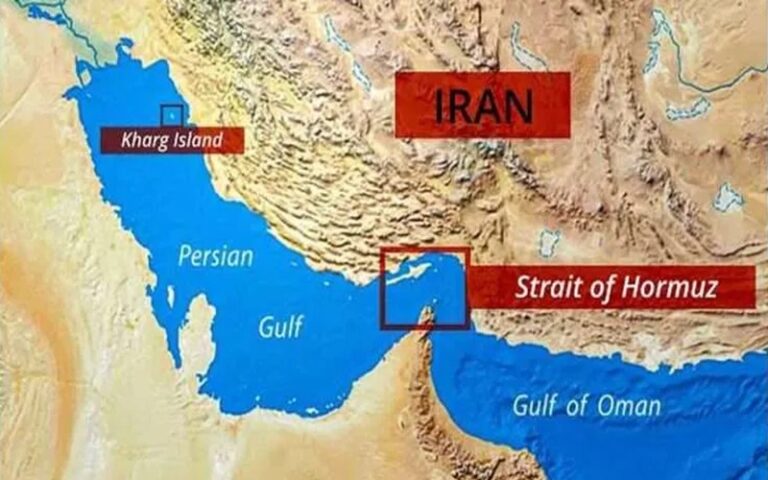
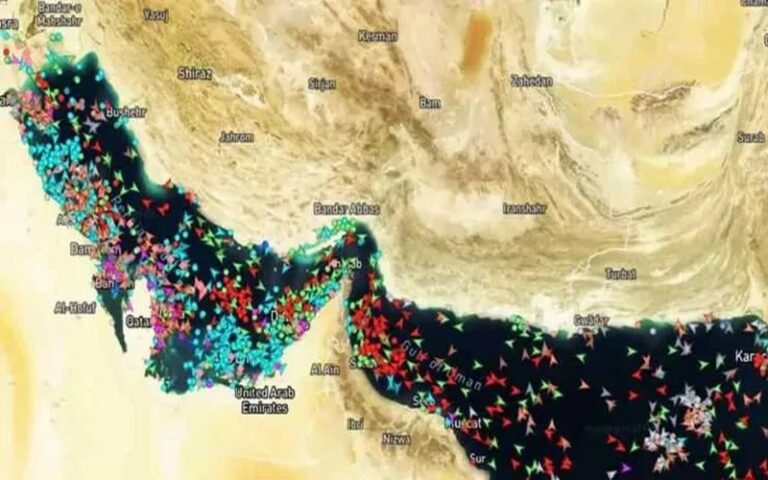
The escalation quickly began affecting global energy markets and regional transport routes. Major oil companies and trading houses reportedly suspended shipments through the Strait of Hormuz, a narrow waterway through which roughly one-fifth of the world’s oil supply normally passes.

Shipping executives told media outlets that tankers had been ordered to remain in place until the security situation became clearer. At the same time, the European Union’s maritime mission in the region warned vessels to remain vigilant amid threats from Iranian-aligned Houthi forces to attack shipping in the Red Sea and Gulf of Aden.

Air travel was also disrupted. Major airlines suspended flights across the region as airspace closures and missile alerts spread throughout the Middle East.

Heightened tensions inside Iran

Inside the country, the regime moved quickly to tighten internal control. Schools and universities were shut nationwide, and severe internet disruptions were reported.

The Supreme National Security Council issued a public warning stating that any Iranian citizen accused of “cooperation with the enemy” would face the harshest punishment. The message was widely interpreted as a signal that authorities fear potential unrest during the crisis.

Meanwhile, President Trump issued a public message directly addressing the Iranian population, urging them to “take over your government” and describing the operation as necessary to eliminate what he called imminent threats from the regime’s nuclear and missile programs.

An uncertain trajectory

By Saturday evening, fresh airstrikes were again reported in Tehran and in Bushehr, where missiles were said to have struck neighborhoods near the country’s main nuclear power plant.

With leadership targets struck, regional bases attacked, and the conflict spreading across multiple countries, the confrontation has already moved beyond a limited military exchange. The coming days will determine whether the escalation stabilizes through diplomatic pressure or evolves into a broader regional war.

Interim Government; Democratic Opposition Ready to Move Beyond Iran’s Regime

Diplomatic sources opposed to Iran’s regime report that the opposition is prepared to announce an “interim government.” The news comes amid rising regional tensions and statements by American officials. Since the morning of Saturday, February 28, extensive attacks have been carried out against bases of the Islamic Revolutionary Guard Corps (IRGC), which were responsible for the January crime.

Announcement of an Interim Government for the Transfer of Sovereignty

The National Council of Resistance of Iran (NCRI), an opposition coalition led by Maryam Rajavi, is on the verge of announcing the formation of an interim government. The stated aim of this move is to transfer sovereignty to the people and establish a democratic republic. The plan is based on the ten-point program presented by Maryam Rajavi.

Announcement of a Provisional Government by the National Council of Resistance of Iran

In a statement dated February 28, 2026, the secretariat of the NCRI described the formation of an interim government as a step toward ending the system of Velayat-e Faqih, or rule by the supreme jurist. The statement emphasized the establishment of a multi-party republic based on the free vote of the people.

Under this plan, the IRGC, its Quds Force, the Basij militia, and the Ministry of Intelligence would be dissolved. It also envisages guaranteeing freedom of speech, political party activity, public gatherings, and the press within the framework of the future republic. The NCRI’s transitional government program also includes a ban on torture and the abolition of the death penalty.

The Interim Government and Principles of the Future Structure

Within the framework of the announced plan for the interim government, the separation of religion and state is explicitly stated. The proposal emphasizes full equality between women and men in political and social rights. Judicial independence and granting self-governance to nationalities within Iran’s territorial integrity are also included. The creation of a non-nuclear Iran free of weapons of mass destruction is another component of the program. The NCRI has said the goal of this policy is to strengthen peace and regional cooperation.

The U.S. Position and Security Warnings

Meanwhile, U.S. President Donald Trump, in a video message, called on Iranians to take control of their own government. A reporter for the American news website Axios stated that the objective is to create conditions for the fall of Iran’s regime. Following the announcement of the start of large-scale military operations, the U.S. State Department also advised American citizens in Iran to remain at their places of residence until further notice.

Recent developments have turned the issue of announcing a transitional government by the NCRI into one of the main focal points of Iran’s political landscape. The declaration of readiness to form an interim government signals the opposition’s effort to move entirely beyond the structure of Iran’s regime. This process is being مطرحed at a time when the divide between the government and society is reported to be deeper than ever. Especially after Iran’s regime massacred Iranian youth during the January 2026 uprising, Iranian society is described as being on the brink of explosion at any moment.

Announcement of a Provisional Government by the National Council of Resistance of Iran

0

 Announcement of a Provisional Government by the National Council of Resistance of Iran

to Transfer Sovereignty to the People of Iran and Establish a Democratic Republic

Based on Mrs. Maryam Rajavi’s Ten-Point Plan

Long Live the Democratic Republic of Iran

Secretariat of the National Council of Resistance of Iran (NCRI)

28 February 2026

https://www.ncr-iran.org/en/ncri-statements/statement-iran-resistance/announcement-of-a-provisional-government-by-the-national-council-of-resistance-of-iran/

Maryam Rajavi’s Ten-point-Plan for the Future of Iran

June 20, 2020

  1. Rejection of velayat-e faqih (absolute clerical rule). Affirmation of the people’s sovereignty in a republic founded on universal suffrage and pluralism;
  2. Freedom of speech, freedom of political parties, freedom of assembly, freedom of the press and the internet; Dissolution and disbanding of the Islamic Revolutionary Guard Corps (IRGC), the terrorist Qods Force, plainclothes groups, the unpopular Bassij, the Ministry of Intelligence, Council of the Cultural Revolution, and all suppressive patrols and institutions in cities, villages, schools, universities, offices, and factories;
  3. Commitment to individual and social freedoms and rights in accordance with the Universal Declaration of Humans Rights. Disbanding all agencies in charge of censorship and inquisition. Seeking justice for massacred political prisoners, prohibition of torture, and the abolishment of the death penalty;
  4. Separation of religion and state, and freedom of religions and faiths;
  5. Complete gender equality in the realms of political, social, cultural, and economic rights, and equal participation of women in political leadership. Abolishment of any form of discrimination; the right to choose one’s own clothing freely; the right to freely marry and divorce, and to obtain education and employment. Prohibition of all forms of exploitation against women under any pretext;
  6. An independent judiciary and legal system consistent with international standards based on the presumption of innocence, the right to defense counsel, right of appeal, and the right to be tried in a public court. Full independence of judges. Abolishment of the mullahs’ Sharia law and dissolution of Islamic Revolutionary Courts;
  7. Autonomy for, and removal of double injustices against, Iranian nationalities and ethnicities consistent with the NCRI’s plan for the autonomy of Iranian Kurdistan;
  8. Justice and equal opportunities in the realms of employment and entrepreneurship for all of the people of Iran in a free market economy. Restoration of the rights of blue-color workers, farmers, nurses, white-color workers, teachers and retirees;
  9. Protection and rehabilitation of the environment, which has been massacred under the rule of the mullahs; and
  10. A non-nuclear Iran that is also devoid of weapons of mass destruction. Peace, co-existence and international and regional cooperation.

Tehran’s Sanctioned Networks used Bianance to Transfer $1 Billion

The Wall Street Journal has reported that internal investigators at this exchange identified the transfer of more than 1 billion dollars in digital assets linked to entities attributed to the Islamic Revolutionary Guard Corps (IRGC), but instead of pursuing the matter, they were dismissed from their jobs.

Binance, the world’s largest digital asset exchange, has consistently been at the center of controversy. Since its establishment in 2017 by Changpeng Zhao in Shanghai, the platform rapidly grew into a giant handling billions of dollars in daily transactions. However, its rapid growth has been accompanied by legal challenges.

Iran’s Youth Are Selling Their Kidneys as the Economy Continues to Plunge

In 2023, Binance admitted to violating sanctions and anti-money laundering laws and agreed to pay more than 4 billion dollars in fines. The settlement included oversight by U.S. authorities, the replacement of the CEO, and strengthening compliance structures. Zhao was sentenced to four months in prison but was pardoned by U.S. President Donald Trump in October 2025.

Following this pardon, Binance sought to strengthen its ties with the Trump administration. However, internal documents and statements from informed sources indicate that Binance has continued to function as a channel for circumventing sanctions, particularly for the Iranian regime, which uses cryptocurrency to finance its activities.

Discovery of suspicious transfers: From China to the Iranian regime

Binance’s financial crimes investigation team, which had been reinforced after the 2023 settlement, included specialists in sanctions and counter-terrorism financing.

In the summer of 2025, following requests from the U.S. Federal Bureau of Investigation (FBI) and Israel’s National Bureau for Counter Terror Financing, the team launched an investigation. They identified accounts registered under the names of Chinese customers that were linked to digital wallets—wallets that the United States and Israel attributed to proxy forces of the Iranian regime.

According to internal reports, about 1.7 billion dollars were moved from these accounts in 2024 and 2025. Part of these funds reached groups backed by the Iranian regime, such as the Houthis in Yemen, who have been involved in attacks on ships in the Red Sea.

More than 1 billion dollars of these transfers were conducted through the account of Blessed Trust, a Hong Kong–based payments company and a close partner of Binance.

Investigators also identified another company named Hexa Whale Trading. This Hong Kong–based company was registered in 2024 and had opened a special account at Binance with incomplete documentation.

Hexa had transferred about 500 million dollars in Tether to “Entity A,” a group consisting of seven wallet addresses linked to the Islamic Revolutionary Guard Corps. The IRGC, which the United States designates as a terrorist organization, uses this network to covertly channel Iranian regime oil revenues to Chinese companies. This shadow banking route is part of the Iranian regime’s strategy to evade sanctions.

Blessed Trust had a close relationship with Jingkai “Rock” He, one of Binance’s co-founders. Telegram messages show that representatives of this company were referred to as “Rock’s friends.” There was even evidence that Binance employees occasionally logged into the company’s account, an action that could indicate internal control.

The investigators presented their findings in October 2025 to senior executives, including Richard Teng, the CEO of Binance, and Noah Perlman, the Chief Compliance Officer. However, in November, these investigators were first suspended and then dismissed.

Documents indicate that the Blessed Trust account had been marked with an internal label and that access to it was restricted, a matter that could have hindered investigations. Binance has stated that the label was an error and that investigations continued.

Access by the Iranian regime and Russia’s shadow fleet

In addition to these transfers, investigators identified more than 2,000 accounts that had accessed Binance from inside Iran using virtual private networks. They proposed requesting additional information from these users, but this proposal was rejected.

These developments occurred as President Donald Trump reinstated the maximum pressure policy against the Iranian regime in February 2025 in order to restrict Tehran’s access to financial resources. The Iranian regime uses cryptocurrency to finance its nuclear program, proxy groups, and cyberattacks.

Binance has denied all allegations. A company spokesperson stated that the investigators were not dismissed because of their reports and that reviews did not show users directly transacting with sanctioned entities; rather, the funds were transferred in multiple stages. Binance has emphasized that it complies with laws and cooperates with law enforcement authorities.

However, reports by The New York Times and Fortune have confirmed similar details. The New York Times reported that 1.7 billion dollars were transferred from two Binance accounts to entities linked to the Iranian regime, and that one of these accounts belonged to a Binance vendor.

Fortune also wrote that investigators were dismissed after discovering more than 1 billion dollars in Tether on the Tron blockchain. These reports indicate that Binance has restricted its cooperation with legal requests and insists that all inquiries be pursued through official channels.

Iran’s Regime Sentences Two Young Protesters to Death

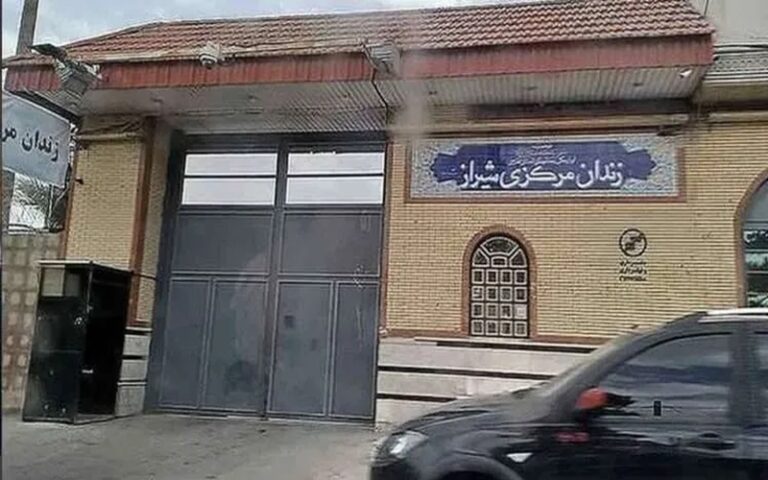
Mohammad Faraji, 23, and Raouf Sheikh-Ma’aroufi, 24, both from the city of Bukan in Iran’s West Azerbaijan Province and among those arrested during the 2022 nationwide uprising, officially received their death sentences on Tuesday, February 24, at Bukan Central Prison.

The two young men, who were convicted on fabricated charges of “enmity against God” and “corruption on earth” — charges frequently used by the Iranian regime to impose harsh punishments on political detainees — had been held for more than three years in a state of legal uncertainty and subjected to severe physical and psychological torture:

Raouf Sheikh-Ma’aroufi was violently arrested on the evening of Monday, December 26, 2022, by agents of the Ministry of Intelligence in Bukan, the Iranian regime’s main intelligence body.

Australian Prime Minister Anthony Albanese Voices Support for Iran Protests

  • Mohammad Faraji was first arrested on Tuesday, February 21, 2024. He was temporarily released on January 13, 2025, but just one week later he was deceived and abducted by agents of the Ministry of Intelligence in Urmia, who posed as “customers at an auto repair shop,” and was re-arrested.

After several months of torture and interrogation at the Ministry of Intelligence detention center in Urmia, both were transferred to Bukan Central Prison on June 10, 2023, where they have remained in complete uncertainty ever since. Court sessions to review their charges were held separately in the fall of 2025, and their death sentences were formally communicated to them on February 24, 2026.

According to reports, during prolonged interrogations at the Ministry of Intelligence detention center in Urmia, the two prisoners endured the most severe forms of physical and psychological torture in order to extract forced confessions — confessions that became the primary basis for issuing their death sentences.

Australian Prime Minister Anthony Albanese Voices Support for Iran Protests

Anthony Albanese, the Prime Minister of Australia, said on Monday, February 23, in an interview with Sky News Australia, that he admires the courage of the Iranian people. He stated that Iranian citizens have shown great bravery in defending human rights and protesting against state violence. These remarks were made during a televised interview and received wide coverage in the media.

In this interview, Albanese referred to the violent crackdowns against protesters. He emphasized that many crimes and atrocities have been committed against individuals who stood up for democratic values and human rights. The Australian Prime Minister described Iran’s regime as authoritarian and repressive. He added that the people of Iran have paid a heavy price in confronting this political structure.

Human Rights Watch Warns About Tsunami Of Arrests And Enforced Disappearances In Iran

International reactions to the suppression of nationwide protests by the Iranian people

This position was expressed within the broader framework of international reactions to the suppression of nationwide protests in Iran. In recent months, various governments have voiced concern over human rights violations in Iran. The Australian government had previously imposed sanctions on certain Iranian officials. The Prime Minister’s latest remarks indicate that Canberra continues to support the protesters’ demands.

Albanese’s statements reflect growing diplomatic pressure on Tehran. Many international legal and civil institutions have published reports about mass arrests and violence against citizens. In conclusion, the Australian Prime Minister said that the people of Iran are not alone in their pursuit of human rights and that the global community hears their voice.

The official stance of the Australian government once again showed that the issue of human rights in Iran has become a global concern. Despite this support, internal repression continues, and the people of Iran have chosen to fight to overthrow Khamenei’s fascist dictatorship.

It is worth recalling that the Australian government had previously placed the Islamic Revolutionary Guard Corps (IRGC), which operates under the command of regime supreme leader Ali Khamenei, on its terrorist list and had also expelled the ambassador of Khamenei’s regime from Australia.

Human Rights Watch Warns About Tsunami Of Arrests And Enforced Disappearances In Iran

In a report published on February 24, Human Rights Watch reported a widespread wave of arbitrary arrests, enforced disappearances, torture, and the threat of secret executions of protesters from Iran’s December demonstrations, describing the current situation as a tsunami of repression.

According to the report, since December 28, 2025, and especially after the nationwide massacres on January 8 and 9, 2026, Iran’s regime security and intelligence agencies have arrested tens of thousands of people, including children. The organization states that those detained face torture, severe mistreatment, highly unfair trials, and the risk of death in detention or immediate and arbitrary executions.

Amnesty International warns of execution risk for 30 protesters in Iran

Enforced disappearances and denial of access to legal counsel

Human Rights Watch stated that many detainees are held completely incommunicado in both official and unofficial facilities, including secret detention centers. Families and lawyers report that authorities systematically refuse to provide information about the fate and location of detainees, an act that the organization considers an enforced disappearance and a serious crime under international law.

Torture, forced confessions, and the threat of execution

The organization has documented multiple cases of torture and mistreatment, including severe beatings, sexual and gender-based violence, food deprivation, threats of execution, and denial of medical services. In addition, 139 videos of forced confessions broadcast by state media up to February 6 were reviewed, which the organization considers a blatant violation of the prohibition of torture and the presumption of innocence.

Call for international action

Human Rights Watch has called on United Nations member states to:

  • demand the immediate release of those arbitrarily detained.
  • clarify the fate and whereabouts of enforced disappearances.
  • halt the carrying out of any planned executions.
  • grant independent international observers, particularly the UN fact-finding mission in Iran, full and unimpeded access to the country and prisons.

The organization also called on judicial authorities in other countries to initiate criminal investigations into potential international crimes based on the principle of universal jurisdiction.

Ongoing arrests and security environment

The report indicates that after the January massacres, a heavy presence of security forces, checkpoints, and inspections of citizens’ mobile phones has been established in many cities, and arrests continue. Protesters, students, pupils, lawyers, doctors, journalists, political and civil activists, athletes, and members of ethnic and religious minorities, including Baha’is, are among those detained.

Human Rights Watch concluded that holding detainees in emptied prison wards and unregistered detention centers, alongside the use of CCTV and drones to identify protesters, indicates the continuation of an organized campaign to instill fear and suppress protests.

Mohammad Hossein Hosseini, 26-Year-Old Footballer from Mashhad, Subjected to Physical Torture

0

Mohammad Hossein Hosseini was arrested on October 8, 2022, and held for 13 days in the custody of the Ministry of Intelligence, the Iranian regime’s main intelligence body. He was then transferred to Vakilabad Prison in Mashhad and released on bail on January 31, 2023. Since that year, he has been repeatedly summoned by intelligence agents and subjected to repeated torture. On April 9, 2025, Intelligence Organization agents of the Islamic Revolutionary Guard Corps (IRGC) raided his home and arrested him again. He was held for one week in intelligence detention before being transferred to Vakilabad Prison, where he remained for 45 days and was this time released on a written pledge. Most recently, on the seventh day marking the death anniversary of Khosrow Alikordi, he was detained for several hours.

Detained Protesters in Iran Facing Serious Security Charges, Risk of Execution

He was also present during the January protests this year in the Vakilabad and Khayyam areas of Mashhad. On January 13, around 12 p.m., seven or eight agents of the Ministry of Intelligence raided his home and arrested him. Three of his mobile phones and his wristbands were confiscated, and their whereabouts remain unknown. He was tortured while in intelligence custody and was allowed to make one phone call that same night. After two days, he was transferred to Vakilabad Prison. Upon arrival at the prison, he contacted his family. On Monday, February 2, he was again transferred from Vakilabad Prison to the IRGC Intelligence Organization for the purpose of extracting forced confessions. On Friday, February 6, he was paraded in the Vakilabad and Khayyam streets of Mashhad, accompanied by several officers, including special police units (NOPO) and the Mashhad prosecutor, and was labeled as the “leader of the Mashhad riots.” Finally, on Thursday, February 12, he returned to Vakilabad Prison in Mashhad.

During his detention, he has repeatedly been subjected to torture. On January 13, he was tortured in a garden in the Tous Boulevard area of Mashhad. On January 15, immediately upon entering prison, he was assaulted by other inmates. Again, when he was transferred to the IRGC Intelligence Organization on February 2, he was subjected to further torture.

No court session has yet been held for him, and his case remains open in Branch 270 of the Revolutionary Court of Mashhad, a court that handles political and security-related charges in Iran.

He faces charges of “enmity against God,” “leading riots,” “sabotage against national security,” and “collusion against the system,” which under the Iranian regime’s laws can carry the death penalty. Mohammad Hossein has been denied access to a lawyer.

New Zealand Sanctioned 40 Officials of the Iranian Regime Over the Suppression of Protesters

In response to the killing of protesters during the Iranian people’s national uprising, New Zealand placed a number of members of the Islamic Revolutionary Guard Corps (IRGC) and government and judicial officials of the Iranian regime on its sanctions list.

On Wednesday, February 25, New Zealand announced that 40 officials of Iran’s regime who were involved in suppressing protesters have been banned from traveling to the country.

Winston Peters, New Zealand’s foreign minister, said in this regard that witnessing the brutal killing of thousands of protesters in Iran was horrifying.

Australia Sanctions 20 Iranian Officials, Three IRGC Entities Over Protests Crackdown

He added that Iranians have the right to protest peacefully, enjoy freedom of expression, and have access to information. These rights have been violated in a brutal manner.

The new sanctions list includes Esmail Khatib, the Iranian regime’s Minister of Intelligence; Eskandar Momeni, the Interior Minister; Mohammad Movahedi Azad, the Prosecutor General; and a number of members of the Islamic Revolutionary Guard Corps (IRGC).

Thus, New Zealand joins the United States, the European Union, Australia, the United Kingdom, and Canada, which have placed punitive measures against the Iranian regime in response to recent developments in Iran on their agenda.

Iran’s destabilizing activities are unacceptable

New Zealand announced that the new sanctions also include three Iranian citizens who have played a role in the Iranian regime’s destructive activities abroad.

New Zealand’s foreign minister further said that Iran’s destabilizing activities are completely outside the framework of acceptable state behavior. Today’s actions send a clear message that those who act with callous disregard for human life have no place here.

Peters added that whenever New Zealand witnesses actions that undermine international law and regional stability, it will continue to act carefully and in coordination with its partners.

Individuals subject to the new sanctions package will not be permitted to enter or transit through New Zealand.

Previously, New Zealand had imposed travel bans in three stages against 55 officials of the Iranian regime over human rights violations in Iran.

A Look into the Background of Mohammad Bagheri, The IRGC Commander Who Was Killed in the Recent Attacks

The country has also sanctioned 29 Iranian citizens and 19 entities of the Iranian regime for supporting Russia’s military campaign against Ukraine.

Human Rights Watch reported on February 24 that following the nationwide killings on January 8 and 9, officials of the Iranian regime launched a wave of arbitrary arrests, torture, enforced disappearances, and the broadcasting of forced confessions, and that thousands face the risk of unfair trials and secret executions.

The organization added that the Iranian regime’s Law Enforcement Command (FARAJA), the Islamic Revolutionary Guard Corps and its intelligence organization, the Ministry of Intelligence, and judicial officials have played a role in the coordinated campaign to suppress the people.