Home Blog Page 24

UK Sanctions 10 Iranian Regime Officials Over Human Rights Abuses

The announcement of Britain’s new sanctions package coincided with the foreign secretary’s call on the international community to hold Iranian regime officials accountable for the suppression of protests.

Britain’s Foreign Office announced on Monday, February 2, the addition of the Iranian regime’s Law Enforcement Command (FARAJA) and 10 other regime officials and figures to its sanctions list.

According to Yvette Cooper, Britain’s foreign secretary, these sanctions target individuals who have been involved in “human rights violations in Iran.”

EU Designates IRGC as Terrorist Organization Amid Escalating Repression in Iran

Earlier, Prime Minister Keir Starmer and Yvette Cooper had announced Britain’s commitment to imposing sanctions aimed at holding Iranian regime officials accountable for the violent crackdown on recent peaceful protests.

On the eve of announcing the new list, Cooper said that in recent weeks the people of Iran, simply for exercising their right to peaceful protest, faced brutal and cruel repression and demonstrated great courage.

Referring to horrific images and reports published about the suppression of protests and recalling London’s commitment to holding Iranian regime officials accountable, she said that a new sanctions package had been announced and that Iran’s regime had been warned about additional measures that may be considered.

The announcement of Britain’s new sanctions package coincided with the foreign secretary’s call on the international community to hold Iranian regime officials accountable for suppressing protests.

Cooper emphasized that the new sanctions package is aligned and coordinated with sanctions announced by the United States and the European Union.

She also noted that these sanctions are consistent with the resolutions and commitments of Group of Seven foreign ministers and senior European Union representatives condemning the deliberate use of violence against protesters.

According to a new statement by Britain’s Foreign Office, the new sanctions package, in addition to the Iranian regime’s Law Enforcement Command (FARAJA), also includes the following individuals:

  •  Eskandar Momeni, the Iranian regime’s interior minister
  •  Mohammad Reza Hashemifar, commander of the Law Enforcement Force in Lorestan Province
  •  Ahmad Amini, commander of the Noor Police unit
  •  Mohammad Ghanbari, head of FARAJA’s Criminal Investigation Police and former commander of the Law Enforcement Force in Sistan and Baluchestan Province
  •  Ahmad Darvish-Goftar, judge of Branch One of the Revolutionary Court in Rasht
  •  Mehdi Rasekhi, judge of the Revolutionary Court in Rasht
  •  Mohammad Zamani, one of the commanders of the Islamic Revolutionary Guard Corps (IRGC) in Golestan Province
  •  Seyed Majid Feyz Jafari, commander of FARAJA’s Public Security Police
  •  Yadollah Bouali, commander of the IRGC’s Fajr Corps in Fars Province
  •  Babak Zanjani, a former economic defendant

The British Foreign Office statement said that under the Iran sanctions package adopted in 2023, the Iranian regime’s Law Enforcement Command is suspected of involvement in “serious human rights violations,” including violations of rights such as freedom of expression and peaceful assembly. It also specifically emphasized the role of this law enforcement body in carrying out or assisting the deadly suppression of protesters during the January 2026 protests.

Eskandar Momeni, as interior minister and deputy to the commander-in-chief within FARAJA, has also been added to the list on charges of serious human rights violations during the suppression of the January 2026 protests and the previous year.

The IRGC Affiliate with A 400 million Euro Empire in Europe

The other military figures added to the list have largely been sanctioned on suspicion of involvement in serious human rights violations, suppressing protesters, violating freedom of expression and peaceful assembly, violently confronting citizens to force compliance with compulsory hijab, and involvement in sexual violence against protesters and detainees.

Mehdi Rasekhi and Ahmad Darvish-Goftar, two judges of the Revolutionary Court in Rasht, have also been added to Britain’s sanctions list on suspicion of abusing their positions as judges and assisting in serious human rights violations in Iran.

Finally, Babak Zanjani is accused of providing or facilitating financial services or supplying monetary and economic resources to those ordering and carrying out widespread human rights violations in Iran, and for this reason has been included on Britain’s sanctions list.

Under Britain’s newly announced sanctions, these 10 individuals, along with FARAJA, are subject to travel bans and asset freezes.

Britain has consistently criticized human rights violations in Iran and recently, alongside its international allies, was among the initiators of a special session of the United Nations Human Rights Council in Geneva, a meeting that was held on January 23, 2026.

Classified Documents Expose Khamenei’s Direct Orders for January Massacre and IRGC’s ‘Shoot to Kill’ Strategy

In a major press briefing held in Washington, D.C., the U.S. Representative Office of the National Council of Resistance of Iran (NCRI-US) unveiled “highly classified” documents and intelligence obtained from inside the Iranian regime’s inner circles via the network of the People’s Mojahedin Organization of Iran (PMOI/MEK).

The revelations confirm that the bloody crackdown on the nationwide uprising in January 2026 was not a spontaneous reaction to unrest, but a pre-meditated “military operation” ordered directly by Supreme Leader Ali Khamenei and executed by the Islamic Revolutionary Guard Corps (IRGC) with war-like tactics intended to crush the popular uprising at any cost.

Anatomy of the “January Massacre”

The briefing began by providing a panoramic view of the explosive situation in Iran. While the world watched the bloodshed in the streets with shock, the NCRI-US presented evidence proving these actions amount to systematic “crimes against humanity.”

Speakers explained that the uprising, sparked in late December by economic collapse, rapidly evolved into a full-scale political revolution demanding the overthrow of the regime. Facing this human tide, the regime adopted a strategic decision for a “maximum security solution,” resulting in the death of over 3,000 protesters and the arrest of more than 50,000 others.

The objective of the press conference was twofold: first, to debunk the regime’s official narrative portraying the events as “riots” that were contained; and second, to present irrefutable evidence of the IRGC’s central role, compelling the international community—particularly the U.S. administration—to take decisive action beyond mere verbal condemnation.

“Top Secret” Directives: “Crush Them Without Mercy”

The most critical segment of the conference involved the disclosure of documents classified by the regime as “Top Secret.” According to the resistance officials, the regime’s Supreme National Security Council, under Khamenei’s direct supervision, issued directives to IRGC commanders and State Security Forces days before the protests reached their peak. These orders contained explicit instructions to exercise “no leniency” and to use “lethal force” to end the uprising.

The intelligence indicated that Khamenei, sensing an existential threat to his regime, gave the green light for the IRGC to use military-grade weaponry, including snipers and armored vehicles, against unarmed civilians. The documents revealed a contingency plan known as “Neighborhood Security,” which effectively placed major cities, particularly Tehran, under a grid system controlled by Basij militias and the IRGC’s Saberin Special Forces, with clear Rules of Engagement (ROE) to “Shoot to Kill” immediately, without warning shots.

This revelation completely dismantles the regime’s claim that casualties were the result of “skirmishes” or “self-defense,” proving instead that the decision to kill was a centralized political order executed in cold blood.

The IRGC’s Pivotal Role: A State Within a State

The briefing dedicated significant attention to dissecting the role of the IRGC, emphasizing that it is no longer just a military force, but the de facto ruler of Iran.

The command structure managing the crackdown was detailed, showing how IRGC commanders in each province were granted absolute authority by Khamenei to run joint operations rooms comprising the army, police, and intelligence services. The NCRI-US highlighted three key aspects:

  1. Specialized Suppression Units: The deployment of elite IRGC units trained in urban warfare, equipped with heavy weaponry and advanced surveillance gear.
  2. Information Blackout: The IRGC Intelligence Organization orchestrated the total internet blackout in uprising hotspots (such as Lordegan and Narmak) to facilitate the massacre away from the eyes of the world. The documents confirmed the internet shutdown was part of the pre-planned strategy.
  3. Secret Detention and Torture: With official prisons overflowing, the IRGC utilized “safe houses,” secret detention centers, and warehouses to interrogate and torture thousands of youth and women.

The briefing also reiterated that the IRGC controls over 50% of Iran’s economy, using these vast resources to fund domestic repression and export terrorism. Therefore, any business with Iran ultimately funds this machinery of suppression.

The Toll of the Crackdown: Facts and Figures

The NCRI-US provided an updated assessment of the casualties, based on its extensive network inside the country:

  • Over 3,000 Martyrs: The identities of hundreds have been verified, while authorities refuse to release the bodies of many victims, using them to blackmail families financially and politically.
  • Targeting Women and Youth: The report highlighted a horrific percentage of victims among women and minors, confirming the indiscriminate and brutal nature of the live fire used.
  • Abduction of the Wounded: The IRGC has been snatching injured protesters from hospital beds, forcing thousands to treat their wounds in hiding to avoid arrest.

The Resistance Units: The Alternative Voice

In the face of this brutality, the press briefing highlighted the role of the MEK’s “Resistance Units.” It was noted that these units did not merely document the crimes but played a leading role in organizing the protests and directing public anger toward the regime’s symbols.

Speakers emphasized that the continuation of the uprising despite such immense repression proves that the Mullahs’ regime has lost control of the streets and that the “wall of fear” has crumbled. The slogans chanted across Iran—such as “Death to Khamenei” and “Death to the Oppressor, be it the Shah or the Leader”—reflect the political maturity of the Iranian people, who reject a return to any form of dictatorship.

The conference also refuted attempts by the regime and certain suspicious actors to promote false alternatives (such as the remnants of the Shah’s regime), reaffirming that the Iranian people aspire to a democratic, secular republic based on the ballot box, as embodied in Mrs. Maryam Rajavi’s Ten-Point Plan.

Call to Action: No Alternative to Firmness

The NCRI-US concluded the briefing with a direct and urgent message to the U.S. administration, the European Union, and the international community. Resistance representatives asserted that the policy of appeasement or betting on “reform” from within the regime has been proven catastrophically wrong by the blood on the streets.

The NCRI-US outlined specific, immediate demands:

  1. Full Terrorist Designation: Commending the European Parliament’s stance and calling for the full implementation of the IRGC’s designation as a Terrorist Organization, including all associated sanctions to paralyze the regime’s financial capabilities.
  2. Right to Self-Defense: Calling on the international community to recognize the right of the Iranian people and the rebellious youth to defend themselves against the IRGC’s violence.
  3. Diplomatic Isolation: Expelling the regime’s ambassadors, closing its embassies (which function as hubs for espionage and terror), and holding regime leaders—Khamenei, Raisi, and IRGC commanders—accountable for crimes against humanity.
  4. Internet Access: Providing technical assistance to the Iranian people to bypass the digital blockade and ensure the free flow of information.

Conclusion: The Regime is Falling

The press briefing concluded that the Mullahs’ regime has entered a point of no return. The January 2026 massacre, while temporarily slowing demonstrations in some areas, has sown seeds of anger that cannot be uprooted. The NCRI-US asserted that the regime is now “weaker than ever before,” sitting atop a volcano, and that the final word belongs to the Iranian people and their organized resistance.

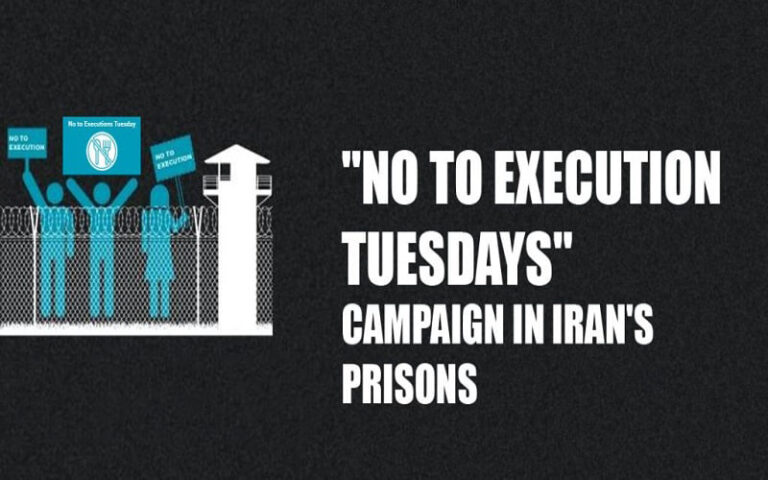
Iran’s “No To Executions Tuesdays” Campaign Marks 106th Week

Prisoners and participating prisons in Iran’s “No To Executions Tuesdays” campaign, in the one hundred and sixth week of their strike, once again emphasized their legal demands by issuing a statement. Referring to the widespread arrests and threats of execution against detainees of the uprising, the prisoners stressed that these actions by the repressive government constitute state murder and enforced disappearance, and that the main person responsible is the Supreme Leader Ali Khamenei.

The full text of the statement by prisoners participating in the “No To Executions Tuesdays” campaign

More than three weeks after the brutal massacre of people in the streets of Iran and the arrest of tens of thousands of defenseless citizens, large segments of Iranian society remain in complete uncertainty about the fate and condition of their loved ones. These actions by the repressive government constitute state killing and enforced disappearance, and the main person responsible is the Supreme Leader, Ali Khamenei.

Many detainees are being secretly tried without the right to a fair trial and face the risk of heavy sentences and execution. Security agencies have threatened many independent lawyers, telling them they are not allowed to represent detainees from the January uprising.

We, the members of the “No To Executions Tuesdays” campaign, call on all families of detainees and those killed to raise their voices and publicize and publish the names of their loved ones. We also call on all honorable people and human rights, labor, civil, and political activists to be, more than ever, the voice of prisoners and recent detainees.

The despotic government is carrying out executions recklessly and hysterically, to the extent that since January 21 it has executed 123 people, and from March 21, 2025, to today it has hung more than 2,350 people.

Protests for the rights of the Iranian people and for the thousands of cut-down flowers—girls, boys, and children whose blood was unjustly shed by bullets and axes of the ruling religious fascist repressors—ultimately led to the main perpetrator of these crimes, the Islamic Revolutionary Guard Corps (IRGC), being placed on the European Union’s terrorist list. This is a major step in the struggles of the Iranian people, a demand that has not only been voiced by members of this campaign and all political prisoners, but for many years has been the demand of all freedom-loving and equality-seeking people of Iran.

Prisoners participating in the “No To Executions Tuesdays” campaign are on hunger strike on Tuesday, February 3, in the one hundred and sixth week of the campaign, across 56 prisons throughout the country.

Prices of Iranian-Made Vehicles Jump by 50% in Less Than One Year

The suspension of Iran Khodro’s trading symbol (a state-affiliated automobile manufacturer in Iran) on the stock exchange, coinciding with an average 50% increase in domestic car prices, has intensified disputes between automakers and the government over price controls and placed a stagnant market on the verge of a new wave of turbulence.

An examination of domestic vehicle price trends from March 2025 to February 2026 shows that the upward trajectory during this period resulted in an approximately 50% increase in the prices of a significant portion of locally produced cars—an increase that, amid market stagnation, has raised serious questions about its economic rationale and social consequences.

The Crippled Economy of Iran and the Irreversible Paths

This trend ultimately led to an order by the Ministry of Industry, Mine, and Trade to halt the implementation of the latest announced prices for Iran Khodro products. Jamshid Imani, deputy CEO of Iran Khodro, warned during a news program on Saturday, January 31, 2026, that if the new prices are not approved, the company’s production will be stopped remarks that clearly indicate a deepening rift between policymakers and producers.

According to some experts, this very tension and policy uncertainty could once again lead to higher prices for domestically produced cars in the open market—a phenomenon that has previously occurred alongside spikes in the dollar exchange rate, pushing the prices of some mid-range Iran Khodro and SAIPA models above 10 billion rials (approximately $6,250).

iA 50% Rise in Domestic Car Prices in a Stagnant Market

This upward trend is not limited to Iran Khodro. SAIPA, another major state-affiliated automaker in Iran, has also raised the prices of its products several times over the past 11 months.

It appears that even an average 50% increase has failed to satisfy the executives of the country’s two largest automakers. Meanwhile, products of Modiran Khodro have also seen significant price hikes, influenced by the conditions facing Iran Khodro and SAIPA.

Compensating Accumulated Losses; Price Hikes or a Policy Deadlock?

Domestic automakers have consistently cited rising production costs—particularly higher prices for imported parts due to currency fluctuations—as the main reason for demanding price increases. Executives at these companies believe that price liberalization and the government’s withdrawal from price controls are the only way to rescue Iran Khodro and SAIPA from financial crisis and accumulated losses.

In contrast, experts stress that the core of the crisis lies not only in production costs but also in the market’s monopolistic structure and the persistence of accumulated losses. In their view, if the government were to decisively liberalize car imports even for a limited period, current price levels—given the quality and after-sales service of domestic products, which critics say fail to meet even minimal consumer satisfaction—would not be sustainable, and unreasonable increases under stagnant conditions would come to a halt.

The Domino Effect of Bankruptcies in Iran’s Banking Network: Only Nine Banks Are Not Bankrupt

Rising prices in the currency and gold markets have also fueled the current stagnation in the auto market. A reduced investment-oriented view of cars compared to previous years, a growing consumer preference for used vehicles, and the خروج of part of the auto market’s liquidity toward currency and gold markets have all intensified automakers’ concerns about mounting losses.

However, repeating the policy of continually raising official prices—rather than attempting to attract customers through price adjustments and quality improvements—appears less a solution than an insistence on a failed model of loss management, one that could ultimately deepen stagnation and further erode public trust in the automotive industry.

Meanwhile, some analysts believe that the government’s decision to liberalize car imports, alongside the removal of preferential exchange rates, has placed automakers on a path toward even greater losses. From this perspective, insistence on engineering prices through repeated official hikes can be seen as a confrontational response to government policies—a response that has already contributed to heightened market volatility.

Price fluctuations amid a sharp decline in demand have further highlighted the role of broker networks and the alignment of parts of the informal market with automaker executives; this situation not only fails to contribute to market stability but also deepens the divide between producers, policymakers, and consumers.

Khamenei’s Son Owns Properties Worth 100 million Pounds in North London

The son of Iran’s regime leader has created a global real estate empire with the help of Ali Ansari. Records from the UK Land Registry show that the properties located on Bishops Avenue were all purchased together in 2013 for 73 million pounds

Reports indicate that Mojtaba Khamenei, the son of Iran’s regime leader Ali Khamenei, owns multiple luxury mansions in the United Kingdom worth more than 100 million pounds.

According to the Daily Mail, Mojtaba Khamenei, 56, who is considered one of the potential successors to the leader of Iran’s regime, owns 11 properties on Bishops Avenue in the Hampstead area of north London, an extremely affluent street known as Billionaires’ Row.

Mojtaba Khamenei holds these properties through a network of shell companies, one of which is registered in the Isle of Man, a well-known offshore financial jurisdiction. The company Birch Ventures Limited does not list Mojtaba Khamenei as a director or owner, but identifies Ali Ansari, the owner of the now-bankrupt Ayandeh Bank, as the ultimate beneficial owner.

Ali Ansari, who is said to have close ties to the Khamenei family, was sanctioned by the UK Treasury in October. He is accused of financing the Islamic Revolutionary Guard Corps (IRGC), an entity that has played a role in the killing of protesters during recent nationwide demonstrations, in which thousands of Iranian citizens were killed.

The UK Treasury’s sanctions statement did not make any direct reference to a connection between Mojtaba Khamenei and Ali Ansari.

Bloomberg News has spoken with sources and reviewed documents linking the London properties to Mojtaba Khamenei, who is said to have built a global real estate empire with the assistance of Ali Ansari. UK Land Registry records show that the properties on Bishops Avenue were all purchased together in 2013 for 73 million pounds and are now estimated to be worth more than 100 million pounds.

Iranian Students Stage Sit-Ins and Protests in Memory of Martyrs of Uprising

On February 1 and 2, a wave of student protests and sit-ins took shape at various universities across Iran. These actions were mainly in response to the widespread killing of young people and protesters during the nationwide January uprising and were held in remembrance of the martyrs of that uprising.

Students, who themselves were among the main victims of this repression, raised their voices for justice by boycotting end-of-term exams, holding protest gatherings, and staging sit-ins. Reports indicate that at more than 30 medical sciences universities and other higher education institutions, students refused to take their exams, describing this action as a protest against the “normalization of crime” and the killing of their classmates.

Students Rose Up in Memory of Their Classmates

At the University of Tehran and Tehran University of Medical Sciences (two major public universities in the capital), hundreds of students gathered in recent days to mourn fellow students such as Aida Heidari, a medical student who was killed by direct gunfire. By lighting candles and reading a statement, students turned a canceled official memorial into a protest sit-in and chanted slogans such as “Freedom, freedom” and “Death to the dictator.”

Shiraz University of Medical Sciences witnessed a large student gathering and sit-in on Sunday, February 1, 2026. Students protested the execution of physicians, the arrest of medical staff, and the suspicious deaths of two medical students from Tehran University of Medical Sciences, declaring that they would not remain silent in the face of the killing of young people, threats and intimidation against healthcare workers, and the suffocating atmosphere. The gathering continued with chants against Iran’s regime but turned violent following intervention by campus security forces.

At Mashhad University of Medical Sciences, students also staged a sit-in in memory of their martyred classmate Parsa Saffar and other victims. Reports also point to a sit-in by nursing and midwifery students at Beheshti University on February 1 and protests at Ferdowsi University of Mashhad, attended by more than one thousand people. Students in Ahvaz (Jundishapur University), Zahedan, and Kermanshah also joined by boycotting exams and holding similar gatherings.

Azad University (a large nationwide private university network) officially announced that 13 of its students were killed during the protests. The group “United Students” also released an initial list of 15 martyred students, including individuals such as Ahmadreza Ghaderi (Noushirvani University of Babol), Ahmad Khosravani (Sharif University of Technology), Robina Aminian, Zahra Bohlouli-Pour (University of Tehran), and others.

These protests reflect the continued anger and demand for justice among the student generation, turning universities into one of the main centers of resistance. With slogans such as “A student may die but will not accept humiliation” and through forthright statements, students emphasized that boycotting exams is not a rejection of learning, but a stand against the humiliation of humanity and the forgetting of crimes.

Nobel Laureates Urge Action Over Iran Crackdown as January Protests Turn Deadly

More than 100 Nobel Prize laureates have issued an open letter condemning what they describe as mass human-rights violations in Iran amid the bloodiest phase of nationwide protests since the 1979 revolution, calling on world leaders to take “practical steps” in support of demonstrators.

In the January 2026 statement, the signatories express alarm at the “gross and shocking violations of rights of citizens” and use of lethal force against crowds by regime forces.

The letter expresses outrage that security forces have shot demonstrators, raided hospitals, and detained wounded protesters, and it argues the unrest reflects deep anger over repression, corruption and rising protesters “use of lethal weapons” has been central to the crackdown.

The protests began in late December 2025 as demonstrations over deteriorating economic conditions broadened into anti-government rallies.

By early January, Iranian authorities imposed major internet restrictions after unrest intensified, a move that has made independent verification of casualties and arrests difficult.

However, it is clear that thousands of protesters have been murdered by the regime. The People’s Mojahedin Organization of Iran (PMOI/MEK) has released the names of around 1,500 civilians killed by the regime, which include many minors.

The letter’s message: support protesters, reject dictatorship

The Nobel laureates’ statement states that the protests are a push for democratic governance, saying demonstrators “reject any dictatorship, whether monarchical or religious” and want a “democratic, pluralistic” republic. It adds that Iranians “deserve the strong and unwavering support of the free world.”

The signatories include a mix of Peace Prize winners and laureates in sciences and literature.

The open letter warns that Iran’s regime carried out more than 2,200 executions in 2025 and cites an exceptionally high December total.

Khamenei on The January Protests: It Was Like a Coup, But the Coup Was Suppressed

Ali Khamenei, the supreme leader of the Iranian regime, in remarks marking the beginning of the regime’s “Fajr” ceremonies, which it uses to mark the anniversary of the 1979 revolution, described the January protest uprising as a “sedition” and a quasi-coup in which trained ringleaders were tasked with carrying out “killing operations.”

Khamenei said: “Therefore, they were attacking military and law enforcement centers, carrying out armed attacks with advanced weapons, advanced personal weapons, in order for reactions to come from the other side as well and for a number of people to be killed.”

He claimed: “They did not even stop at this. They even struck from behind the same foot soldiers whom they themselves had brought into the field through propaganda. I was informed that among the wounded from that incident, some were attacked from behind; meaning they did not even spare their own people. Why? So that the number of the dead would increase.”

Mass Arrests After Protests in Iran, the Naked Repression of Khamenei’s Rule

Human rights organizations have estimated the number of those killed to be at least in the thousands, and the regime’s narrative of “killing operations” has also faced strong backlash from social media users. If the killing of protesters was not carried out by the government, why was the internet shut down to prevent documentation? If someone else fired the bullets, why do families say they were asked to pay for the bullets in order to receive the bodies of their loved ones? Why are doctors and medical staff arrested for treating the wounded, and what kind of country is this where infiltrating agents can do anything they want in the streets? It is, of course, obvious that the Iranian regime resorts to such tactics to evade responsibility for the bloody January killings. This has also happened in past protests, and the Iranian regime has tried to attribute its own crimes to actors beyond its borders.

Khamenei says that the enemy exaggerates the number of those killed: “Well, it is not unlikely for people like these to lie in this way. They present figures ten times, and more than ten times, higher. The enemy’s goal was to disrupt the country’s security.”

Khamenei also claimed that many of the ringleaders had been arrested and had confessed to receiving money for their actions and being trained on how to attack centers and gather and mobilize young people. He continued: “But another group of the rioters were emotional youths, with whom we do not have much of a problem.”

Amnesty International says that since the start of the new wave of protests, thousands of citizens across Iran have been arbitrarily arrested, a figure that, according to the organization and based on reports by independent media, human rights organizations, and human rights defenders, in fact encompasses tens of thousands of people.

Detainees comprise a wide range of social groups, from street protesters and human rights activists to students, journalists, lawyers, healthcare workers, and members of ethnic and religious minorities who have either participated in demonstrations or engaged in activities supporting protesters.

The organization says that in many cases, detainees, without access to a lawyer and under intense physical and psychological pressure, were forced to sign forms they were not allowed to read, or to make forced confessions on camera about security-related crimes and even entirely peaceful acts such as sending images of protests to Persian-language media outlets outside the country.

Khamenei also referred for the first time to protests by bazaar merchants and, while calling the protesters seditionists, claimed that they hid behind the merchants, who had logical and valid demands and had come into the streets, in order not to be identified.

He continued: “Of course, the smart bazaar merchants, upon seeing the actions of the rioters such as attacking police stations instead of moving calmly in the streets, separated themselves from them and left the seditionists alone.”

Explosions Reported Across Iran Amid Rising Tensions

At a time when the country is facing economic collapse and, amid the tangled and confusing nuclear dispute with the West, is being drawn toward the brink of war, Khamenei referred to the United States’ threat of military attack and warned that if a war breaks out, it will be a regional war.

Khamenei attributed the nationwide January uprising to the United States and Israel and also cited the threat by Donald Trump, the president of the United States, who warned the government against killing protesters and addressed the Iranian people by saying that “help is on the way,” as proof of the validity of his claim.

He also said that this uprising “was like a coup, but the coup was suppressed.”

Mass Arrests After Protests in Iran, the Naked Repression of Khamenei’s Rule

A wave of mass arrests has swept cities across Iran. The widespread protests last month were met with an unprecedented security response. Following violent street crackdowns, reports indicate the start of a nationwide arrest campaign, which according to multiple sources is aimed at preventing any resurgence of protests.

The start of protests and the spread of unrest

The protests initially began on a limited scale in Tehran’s Grand Bazaar. Economic pressure and accumulated social grievances created the conditions for their rapid expansion. The movement quickly spread to other areas and became the most serious challenge to clerical rule in nearly five decades. Protesters’ slogans called for clerics to step down from power, a demand that heightened security sensitivity.

Authorities restricted internet access and deployed security forces extensively across the streets. The crackdowns resulted in the killing of thousands. At the same time, a wave of arrests began as the second phase of suppressing the protests.

Latest Developments in the Iran Uprising; Italy Joins Calls for Proscribing IRGC

The mass arrest wave and undisclosed detention centers

Reports from inside Iran indicate extensive activity by plainclothes forces. According to these accounts, security forces arrested thousands of people over several days. Checkpoints increased and streets came under heavy control.

Many detainees have been transferred to secret prisons. There is no information about their whereabouts, and the main objective is to instill public fear. These accounts align with statements from lawyers, doctors, eyewitnesses, and even officials of Iran’s regime. According to these sources, the arrest wave is a tool to prevent any renewal of protests.

Arrest of former activists and family members

Security forces of Iran’s regime have not limited arrests to recent protesters. Individuals detained during protests in previous years have been re-arrested, even if they played no role in the latest unrest. In some cases, family members have also been detained. This approach has expanded the scope of arrests in an unprecedented manner.

International reactions and United Nations concern

The UN Human Rights Office said it is aware of the high number of arrests. The body warned that detainees face the risk of torture and unfair trials. The UN special rapporteur on Iran also said that among the thousands detained are doctors and healthcare workers.

Two officials from Iran’s regime have also unofficially confirmed that thousands are being held in unofficial detention centers, such as warehouses and temporary facilities. However, official authorities have refused to disclose exact figures or detention locations.

Disappearance of youth and social fear

More than 60% of Iran’s 92 million population is under 30 years old. The disappearance of young people has terrified families. Lawyers report that dozens of families have sought information about their detained children; some of them are under 18.

The use of unofficial detention centers and prolonged denial of access to lawyers is a constant feature of arrest waves during periods of unrest.

Explosions Reported Across Iran Amid Rising Tensions

Pressure on medical staff

Doctors told Reuters that security forces removed injured protesters from hospitals. Dozens of physicians have been summoned or arrested, and some have been barred from treating protesters. The World Health Organization has also confirmed damage to medical facilities and injuries to paramedics. This situation reveals new dimensions of the arrest wave.

What is unfolding in Iran today is not merely a series of isolated arrests. The arrest wave has become the ruling system’s main instrument for maintaining powerful —an instrument that keeps society suffocated through fear, enforced disappearances, and threats. The experience of the past four decades shows that widespread repression not only fails to resolve crises but deepens the divide between the people and the ruling authorities and lays the groundwork for future social explosions. It should be recalled that due to organized crimes and the brutal suppression of nationwide uprisings, the European Union placed the Islamic Revolutionary Guard Corps on its list of terrorist organizations.

The IRGC on the European Union’s Terrorism List; Symbolic or a Real Threat?

The harsh and threatening reactions of officials from Iran’s regime show that placing the Islamic Revolutionary Guard Corps (IRGC), a powerful military-security force of the Iranian regime, on the European Union’s list of terrorist organizations has deeply angered the regime.

Gholamhossein Mohseni Ejei, the head of the judiciary of Iran’s regime, described the European Union’s move to designate the IRGC as terrorist as “hostile” and warned that it “will not go unanswered.”

Abbas Araghchi, the foreign minister of Iran’s regime, also wrote in a post on X that “Europe is fanning the flames of tensions.”

EU Designates IRGC as Terrorist Organization Amid Escalating Repression in Iran

Kaja Kallas, the European Union’s High Representative for Foreign Affairs and Security Policy, announced on Thursday, January 29, after a meeting of EU foreign ministers in Brussels, that the IRGC has been officially placed on the European Union’s terrorism list.

Thus, the European Union has placed the IRGC alongside groups such as ISIS, al-Qaeda, and Hamas. The main question now is why this decision was made at the same time as Donald Trump’s threats against Iran’s regime, and whether the coincidence of this move with Trump’s threats against Iran is accidental.

Europe, which previously—especially during Trump’s first term—did not fully align with the White House, is now moving toward cooperation with the United States’ “maximum pressure” approach toward Iran.

Europe’s security concerns, including missile threats and the Iranian regime’s role in the Ukraine war through the delivery of drones to Russia, have been among the main factors behind Brussels’ tougher tone and the designation of the IRGC as a terrorist organization.

If tensions escalate and the IRGC is defined as a terrorist group similar to ISIS or al-Qaeda, the United States will have a freer hand to act against Iran, and Europe’s alignment could even pave the way for the formation of a “joint anti-terrorism coalition” against the IRGC.

Inside Iran, the IRGC is a major economic power, and intensifying external pressure aimed at paralyzing the country’s economy could lead to increased tensions and internal conflicts within the ruling establishment.

The ultimate goal of the pressure is to force Iran’s regime into submission, but Ali Khamenei, the regime’s supreme leader, is neither inclined to retreat nor to surrender, and ultimately prioritizes preserving his own image and personal position over the overall interests of the system.

It has also been proven in the past that Iran’s regime understands nothing but the language of force; however, the solution for Iran is neither a foreign war nor a deal with this regime.

Maryam Rajavi, the president-elect of the National Council of Resistance of Iran, has repeatedly emphasized that the ultimate solution lies with the people and their organized resistance, which can provide the final answer to Iran’s regime.

The National Council of Resistance first called for the IRGC to be designated as a terrorist organization in the 1980s, but at that time such a terrorism list did not exist in this form.

“Identifying the IRGC’s infiltration networks at the international level”

The inclusion of the IRGC on the European Union’s terrorism list is not a symbolic move; rather, it creates a fundamental change in the legal framework for dealing with this entity and its affiliated networks and shows that the IRGC is not only a threat to the people of Iran but also a direct danger to Europe’s security.

Until now, the European Union’s actions were mainly limited to human rights sanctions such as travel bans on certain individuals or asset freezes, but these measures did not allow for criminal prosecution of networks linked to the IRGC.

From now on, any individual, entity, or network that cooperates with the IRGC, and any economic, financial, media, or logistical activity associated with it, can be directly subject to criminal prosecution, just as is the case with groups such as ISIS or Hamas.

“The next step could be closing Iran’s embassies”

The European Parliament has stressed that any diplomat who abuses diplomatic immunity for violence or extremist propaganda must have their immunity revoked and be expelled, and it is expected that scrutiny of suspicious centers and the expulsion of diplomats linked to security institutions will increase.

Designating the IRGC as a terrorist organization is not the end of the process, but rather the beginning of a new legal and political path that could lead to the prosecution of the IRGC’s financial and front networks, the shutdown of affiliated entities, and the prevention of Iran’s regime agents from exploiting European structures.