Home Blog Page 248

Iran: Women Resist Against 28 Oppressive Agencies

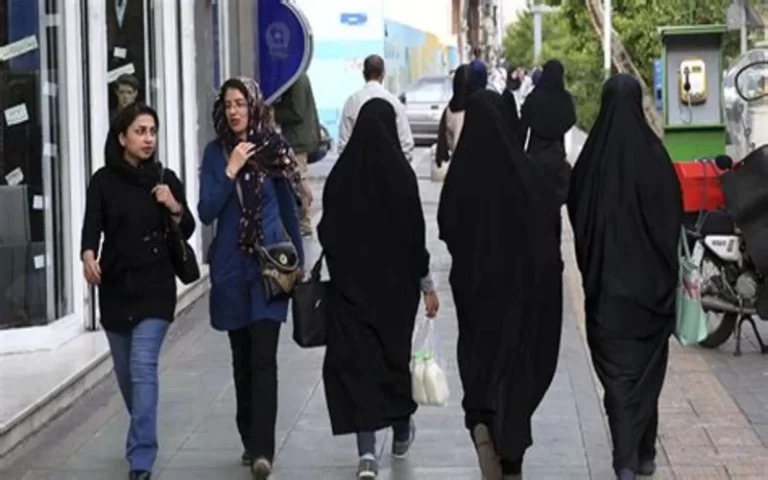
In the past four decades, Iranian women and girls have been at the forefront of resistance against the religious dictatorship and its misogynist laws, constitution, and suppression.

During recent nationwide demonstrations, including the protests over the sudden fuel price hike in November 2019, women’s leadership was highlighted more than ever, forcing officials to admit repeatedly to this fact.

These days, Iranian women’s struggle for personal and social freedoms, and fundamental rights, has severely terrified the authorities. The regime has intensified its systematic suppression and misogynistic measures in response to the women’s repeated attempts to make their voices heard.

Background of Misogyny in Iran

Since the mullahs took power in February 1979, regime founder Ruhollah Khomeini institutionalized misogynism and gender apartheid within the new theocratic tyranny.

Khomeini rushed his thugs, the Hezbollah forces, onto the streets to suppress women who defied the mandatory hijab. “Either scarf or stick on the head,” chanted Khomeini’s loyalists. Since then, the people of Iran named them club-wielders due to their penchant to use clubs against any dissent.

At the time, the opposition group, the People’s Mojahedin Organization of Iran (PMOI/MEK), strongly condemned the regime’s misogynist measures under the banner of Islam and religious beliefs.

The MEK’s condemnation was a significant blow to Khomeini’s dreams of establishing an “Islamic empire,” because the organization was the most prominent Muslim organization against the toppled monarchic dictatorship.

In March 1979, a group of women held a grand march in Tehran, protesting the regime’s misogynist policies, including the compulsory hijab. Khomeini dispatched Hezbollah forces to crack down on women. However, MEK female members wearing scarves held a human chain around the protesting women, which prevented Khomeini’s forces from dispersing the protest. Club-wielder injured many MEK female members.

Ultimately, Khomeini’s thugs failed to stop the march. The MEK proved that Khomeini had exploited religion to maintain his power on power and that his claims about protecting Islam were utterly false.

Nevertheless, Khomeini implemented his misogynistic measures despite women’s objections and unilaterally imposed the compulsory hijab and eventually implemented it by the force of the club.

Iranian women, however, have continued their resistance during the past four decades, completely refusing the submit to the regime’s medieval practices. In a bid to quell the women’s struggle for fundamental rights, the mullahs formed around 28 oppressive agencies, which only further strengthened women’s determination for anti-regime activities.

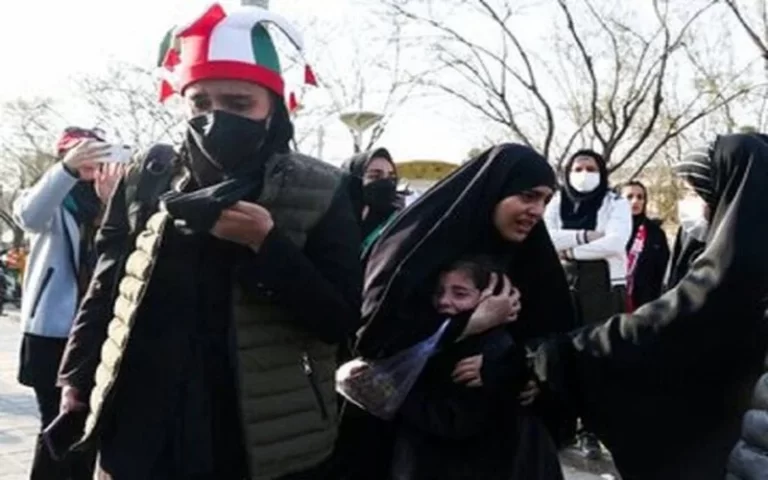
For instance, authorities recently banned women from attending and watching a soccer match between Iran’s national soccer team and Lebanon’s in Mashhad. Security forces fired teargas into the crowd and sprayed pepper on the protesting women to disperse them.

The regime prohibited women from entering the stadium, even though it had sold tickets to a small number of women and had bragged about ceasing its antiquated laws in this context. True to form, the mullahs broke their commitment at the last moment, prompting public fury.

Following this flagrant suppression, the Iranian regime’s president Ebrahim Raisi, infamous for being the ‘butcher of Tehran’ for his involvement in the mass killing of political prisoners in 1988, held a meeting with sociocultural activists in Khorasan Razavi Province.

The Mehr news agency, affiliated with the Ministry of Intelligence and Security (MOIS), quoted Raisi in its April 1 dispatch as saying, “There are nearly 28 agencies responsible for enforcing the hijab.”

Raisi’s remarks are an apparent admission to the regime’s failing misogynist measures against women and arouse severe condemnations inside the country and abroad. Furthermore, he implicitly revealed that the regime can no longer thwart women’s activities and that the suppression has backfired as the recent clampdown in Mashhad ignited a wave of national solidarity with women across Iran.

Indeed, this solidarity was also experienced during nationwide protests in January 2018, November 2019, and March 2020. At the time, security, and intelligence commanders repeatedly highlighted women’s roles in fomenting and leading uprisings in various cities.

Moreover, women continue to organize and lead many civil protests and anti-regime activities across the country, with each event seriously terrifying the mullahs about their regime’s future. Therefore, they are desperate to intensify their misogynist measures to counteract the entire society and delay their ultimate downfall.
Iran’s Regime and Its Humiliating Subsidy

“I will not say what I’ve received.” This is the answer of the Iranian regime’s president Ebrahim Raisi to a reporter who asked him about the country’s economic situation.

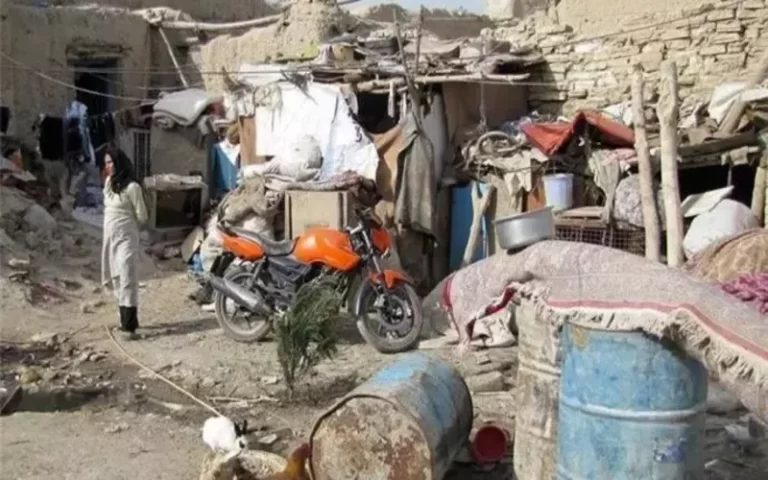
Just a brief look at Iran’s miserable economic situation reveals the true extent of the destruction that has been caused. What Raisi did not dare to say is that he received an economy without an infrastructure when he became president. Poverty is so widespread that except for the regime’s officials, almost everyone in Iran is living on or way below the poverty line.

One of the signs of this critical situation is the real value of the subsidy. In exposing the rate of the subsidy, Raisi stated, “The value of the 450,000 rials of subsidy yesterday, has now reached 70 rials.”

This subsidy has never been able to match the staggering inflation and the huge liquidity that has resulted from the regime’s corrupt economy. And today, worth less than a bucket of yogurt.

On this topic, the state-run daily Tejarat News wrote, “While the first 2022 subsidy is deposited into the account of the head of the household, many recipients have serious objections to the amount of the subsidy. As some audiences say, these subsidy rates do not even cover the purchase of yogurt. Having to grapple with the dramatic spike in the price of many commodities, the public views the current subsidy   as a token and even worthless.”

Further expressing its frustration, this daily added, “We do not want high subsidies. Control the inflation. By God, we are being squeezed below the living costs. With these tokens, which we call a subsidy, even a bucket of yogurt cannot be purchased. You are insulting us all. And every day you make hollow promises. The analysis of Tejarat News shows that the price of a kilo of yogurt is more than 500,000 rials. When a kilo of low-quality rice is over 400,000 rials, what is the use of this amount of subsidy for this nation? Even if three people put their subsidies together they be not able to buy chicken.”

Everyone in Iran cites the devaluation of the national currency, the skyrocketing inflation rate, the monetary-based growth, staggering liquidity, the decline in GDP, and a decade of negative economic growth among the damages caused by the country’s declining economic situation.

The regime’s president, however, is playing innocent. “If the value of the national currency does not rise, whatever salary raise we give will not work in practice,” Raisi admitted.

On April 1, the regime’s media challenged Raisi’s remarks. The Eghtesad Online website wrote, “This statement of the President while examining the inflation of previous years and its application on cash subsidies shows that subsidy has decreased even more and a subsidy of 455,000 rials in 2010 is currently worth about 43,000 rials.”

Iranian Security Use Pepper Spray Against Female Soccer Fans

The Iranian regime’s brutality against women who wanted to attend the national soccer team’s match in Mashhad has become one of the main topics in Iran’s media and has once again revealed its misogynist nature.

Shortly before the start of the match, the regime decided to prevent women from entering the stadium, even though they had valid tickets. The police attacked the women outside the gates with pepper spray, which also hurt some children who were present.

This decision to ban women from attending the game enraged the Iranian people, many of whom asked FIFA to sanction and suspend Iran’s soccer team from international competitions not only because this prohibition is a brazen violation of FIFA’s regulations, but also because it would show that the mullahs cannot discriminate against women with impunity. Such a decision would also encourage women in their struggle for their rights.

The most surprising part of the event was that, unlike in earlier attacks, women wearing chadors were subjected to violence by the regime’s security forces, undermining any excuse of fighting the violation of the regime’s compulsory dress code.

In a modern country with a civilized government, it would be inconceivable to attack a group of peaceful women and their children who simply wanted to watch a match of their national team.

The regime in its entirety opposes women attending matches. However, the backlash over this incident terrified the officials, forcing them to reluctantly react to the incident and shed crocodile tears for the women.

Without naming his father-in-law, Ahmad Alamolhoda, Ebrahim Raisi instructed the interior minister to “investigate the incident.” During the Friday Prayer Congregation before the match, Alamalhoda had brazenly claimed, “If a group of young men and women attend this match, a group of girls and women might get excited, clap, whistle, and jump in the air. This becomes vulgarity and vulgarity is a sign of sin.”

True to form, no official took responsibility for this brutal attack. Indeed, the Soccer Federation was blamed for this incident because it had sold tickets to women.

For its part, the Soccer Federation has since ludicrously claimed, “All tickets were fake and only nine women had bought tickets.” While all tickets were bought online from the Federation’s website, how does one explain the fact that it was only women who bought the fake tickets and not men?

To deal with this fiasco, the officials tried to blame this incident on an arbitrary decision. But a regime security official at the Khorasan Razavi Security Council acknowledged that officials in Tehran had ordered women to be barred from entering the stadium. He said, “We only enforced the decisions that were taken in Tehran. We and the Provincial Security Council abided by and carried out the order that came from Tehran.”

As if nothing serious had happened and that the main dispute was over money, the Soccer Federation announced that “Women who had bought the tickets will be refunded within 48 hours.”

Rejecting the regime’s narrative, Iranians demanded that FIFA suspend the national team from international competitions.”

Only two countries in the entire world routinely prevent women from attending soccer matches. One is Afghanistan, which is led by the Taliban, and the other one is the Iranian regime led by the mullahs.

Will Iran’s Regime Bid a Painful Farewell to Its IRGC?

While many analysts of Iran’s political landscape expected a unified stance within the Iranian regime after Ali Khamenei, the regime’s supreme leader decided to consolidate his government by appointing Ebrahim Raisi as president, the latest facts show that he did not achieve his goal and quite to the contrary, the regime is facing serious political discord among the ruling elite.

Over the past weeks, as the Iran nuclear talks near completion, the Islamic Revolutionary Guard Corps (IRGC)has become the main source of these disputes. The regime has demanded that the US government remove the IRGC from the list of Foreign Terrorist Organizations (FTO).

Since April 15, 2019, when the US government’s decision was first made, it created serious problems for the regime’s financial support, and the regime subsequently faced shortages in boosting its external activities, while most of the country’s economy is controlled by the IRGC. With the regime currently taking part in the continuing nuclear talks, the IRGC has become one of the main topics of the negotiations between the US government and the Iranian regime.

Under pressure to clarify and accept a new JCPOA, the regime’s foreign minister Hossein Amir-Abdollahian quoted some of the senior IRGC commanders in a TV interview on March 26, 2021, as saying that the regime should not give priority to the Revolutionary Guards in the negotiations.

He said, “The high-ranking officials of the IRGC always remind us that the issue of the IRGC should not be an obstacle for you. In fact, high-ranking IRGC officials are showing self-sacrifice at the highest level!”

He added, “The issue of the IRGC is part of our negotiations, as are other issues that are still really going on between us and the Americans.”

This has been done to pave the way to end the negotiations and get the regime out of the deadlock it is facing and its consequences. But the specter of adverse and dangerous consequences of the IRGC remaining on the FTO means that the regime must refrain from its regional interference, which will be a strategic blow to the regime.

Therefore, some of the regime’s officials voiced their concern and frustration about Amir-Abdollahian’s remarks.

The state-run news agency Fars, affiliated with the IRGC, quoted Hossein Shariatmadari, Khamenei’s mouthpiece in the daily Kayhan, as saying, “You have mistakenly called surrender ‘sacrifice.’ The IRGC Command is expected to correct the Foreign Minister’s remarks by announcing a quick and clear opinion.”

Regime MP, Ali Khezrian attacked Amir-Abdollahian in a tweet, saying, “Amir-Abdollahian’s remarks were wrong because they are ultimately against the interests of the state and complement the enemy’s plan to create a gap between the state and the people.”

Still, others argued cautioned against criticizing Amir-Abdollahian’s remarks. Rasoul Montajabnia, referring to the critical situation and the impasse the regime is facing, warned, “Now the state is in such a predicament that requires the lowering of the temperatures. Sometimes the officials need to step back a little, and according to (Imam) Khomeini, drink from the chalice of poison, so that they can solve the problems.”

The question here is whether Khamenei will accept such a decision? The fact is that the regime is caught between a rock and a hard place. Accepting a new JCPOA with the US government’s conditions and demands will have the same consequences.

As Khamenei desperately said on March 10, “This presence in regional issues is our strategic depth. This in and of itself is a tool to strengthen the system. How can we abandon this?”

Iran’s mafia-controlled economy

From 2019 until the present day, the ‘capital depreciation rate’ has overtaken the ‘capital formation rate’ in the Iranian economy and negative capital stock growth has been reported.

According to the Iranian regime’s economic experts, this is set to become even more concerning because the regime’s weak and crisis-ridden economy is at its worst point in the past four decades. This is a clear indication that even positive progress in favor of the regime during the ongoing nuclear talks will be of no help to rescue it from an economic collapse.

Estimates have shown that between 2005 and 2020, around 171 billion dollars’ worth of capital has left the country. In fact, on average, about $11.4 billion per year, equivalent to about 342 trillion tomans, has left the Iranian economy annually.

On the other hand, the negation of the ‘capital formation rate’ (for the third year in a row) is correlated with the ‘capital flight’ from the Iranian economy.

This has created a hopeless situation for the regime. When the very few remaining foreign investors see the current state of the economy, they estimate the future rate of return on capital and conclude that their investments will have no returns. They will eventually withdraw their capital from the country. The result of this will be a drop in the ‘rate of capital formation.’

When the ‘capital formation rate’ becomes negative, less investment is made in the economy. Thus, considering the depreciation of previous investments, less capital would be available the year after to produce goods and services.

The result is clear: Along with the growth of liquidity, the production of goods and the provision of services will not grow and become negative, meaning inflation will peak. If the decline in the ‘rate of capital formation’ continues, the regime’s economy will gradually go downhill. A gradual death that will blow all the regime’s hopes and dreams away.

Another reason for this situation is that even after four decades, the regime’s economy is still in the category of a single commodity economy.

The regime’s economy is still dependent on the export of oil, steel, petrochemicals, and several mineral exports. Simply put, its economy is not yet diversified, and crude and general classification accounts for almost 80 percent of Iran’s exports. For this reason, the regime’s economy can still be considered a single commodity economy.

One of the characteristics of single commodity economies is the government’s control over the trade of a few products. The government and certain state-affiliated institutions control the production and export of these products. On the one hand, it is much easier to impose sanctions on the country while for example, it exports 50 products instead of 500, and on the other hand internally, 50 exporters will inject dollars into the economy instead of 500 exporters, which is creating a quasi-mafia economy.

At the same time, since the regime is run by a few large institutions, these institutions are in control of the exchange rate in the domestic market. When imports are profitable, they keep the exchange rate low to have the highest sales and when exports are profitable, they raise the exchange rate so that these groups get the highest profit.

Real private sector investors and ordinary people are, in fact, out of the trend and have no stake in this big game. As a result, a certain supply chain takes shape. The result of this chain is that, instead of having multiple players in the market, none of which can have an absolute impact, the country’s economy is given to only a few regime-managed institutions and only a few ‘economic blocs’ are formed.

The regime’s institutions are responsible for catastrophes such as ‘hoarding’, ‘smuggling’, and the like. These institutions usually take the capital out of the economy after they have filled their pockets with the people’s money and invest it in a safe place like the banks of Switzerland, or real estate in Europe and Canada.

What is worse is that the regime’s legal system is enabling this corruption. According to its economic and legal experts, the prosecution of owners of the capital taken out of the country is nearly impossible and the regime has so far prosecuted just a few small players, leaving the large actors untouched.

Iran’s Looted Black Gold

Corruption, theft, and waste in Iran are so deep-rooted in the regime that even its supreme leader Ali Khamenei has compared it to a seven-headed dragon.

Despite being the main source of the country’s economic and scientific progression, along with strengthening its infrastructure, oil has become the main source of the regime officials’ corruption. The heads of the regime’s oil industry are all involved in various cases of corruption, money laundering, and embezzlement.

As Mohammad Bagher Ghalibaf, the regime’s speaker of parliament previously claimed, there is no accountability in this field. In a tweet on March 25, Ghalibaf said: “One of the problems of running the country is the multiplicity of revenue accounts and the lack of accurate monitoring of the resources obtained from the sale of petroleum products.”

This was seemingly a clear admission to corruption that is swallowing all the country’s wealth. This situation is the result of the regime’s political turmoil and the rule of nepotism in the oil industry, one of the many examples of the lack of strict control over the revenues from the sale of petroleum products, which has not been included in any of the regime’s budget bill over the past years.

In regards to the budget bill for 2021-2022, the state-run daily Resalat raised a question on December 26, 2021, which strengthened the suspicion of a longstanding and state-run corruption, writing, “What is the share of oil revenue in the total budget of the country after one hundred years of investment in this industry? Only 65 percent ​​of oil and natural gas exports.”

They further added, “The question is what happens to the sale of crude oil and natural gas at home, which is priced twice as much as the general budget of the government, according to Article 1 of the Law on Targeted Subsidies? Why is the forecast of this income not seen in the 2022 general budget of the government?”

This admission of the Resalat daily is conforming to the fact that the regime is stealing the daily income of the sale of more than 2.2 million barrels of oil, as well as the income from the domestic gas consumption, which is about 600 to 700 million cubic meters of gas. Furthermore, this income is not included in the budget bill and the regime’s revenue balance sheets.

This is in a situation in which the regime’s Ministry of Oil receives a budget of more than 100 trillion tomans every year, and of course, when its revenue is uncertain and is not included in the annual general budget, no tax will be paid on the revenue.

Part of the oil that is produced and exported by companies or institutions which hold the awarded contract, its production, and its sales abroad are involved in major violations.

Previously in an interview with the regime’s Radio Farhang on July 14, 2019, Amir Khojasteh said, “Because of the non-compliance with the law, out of 40 oil contracts, 39 were accompanied by violations and collusion.”

But corruption in the regime’s oil industry is not just dedicated to its income and annual budget. There are cases, with accurate testimonies, of the regime’s Revolutionary Guards (IRGC) and its mafia smuggling oil outside the country.

Corruption has pervaded the country’s economy, and this has caused the economy to suffer more than ever. The misery that has caused inflation and rising prices has plunged most people into poverty, while the ruling elites, including the regime’s oil moguls, are enjoying ‘royal life.’

Iran Regime’s Security Concerns and Its Useless Police Force

Among the lies told by the Iranian regime’s President Ebrahim Raisi about an “economic growth up to five percent” in the coming Iranian year, which began on March 21, one of the most important points in his new year’s message was the admission about the regime’s concerns on its security being endangered by the people’s protests.

“The country’s security has the priority,” Raisi emphasized.

While the only supposed threat comes from the people and their resistance, Raisi’s insistence on protecting the country’s security only means more repression and an increase in executions.

Echoing the regime’s officials’ anxiety about the popular protests across Iran, Ghasem Rezaei, the deputy commander of the regime’s police force, spoke out, referring to Iranian youths as saboteurs, threatening the regime’s security, and warned that the regime has “more than 200,000 personnel assigned to security,” and that “more than 70,000 cars, motorcycles, boats, and helicopters are on standby in the streets, alleys, and borders.”

Threatening the youths, Rezaei added that the police is a “slashing sword for the malevolent, the norm-breakers and the security disruptors.”

However, in reality, none of the regime’s security measures and threats has had the outcome the regime expected. Over the past few years, we have seen many protests of varying sizes across the country, some of them were nationwide, and many have threatened the regime’s survival.

Therefore, such threats have only a propaganda purpose, and one of their goals, according to the regime’s media, is to seize the increasing number of weapons from the people, who are preparing themselves for a final showdown with the regime, especially following the November 2019 protests, which turned into a nationwide uprising that almost overthrew the regime.

While calling the youths and angry people thugs, Rezaei said that the police “will continue to collect the people’s illegal weapons so that people who own them feel insecure.”

The repetition of such useless threats by the regime highlights its weakness in confronting the people’s protests and shows that it is terrified of further acts of defiance, especially by the youths. As one of the regime’s senior clerics Gholamreza Mesbahi Moghaddam explained, “Protests and strikes by a segment of the society prompts other sectors to also start their protest movement.”

This is a situation in which the Iranian people have improved and changed their tactics to confront the regime, having learned from their past experiences. As a result, Iran is facing a widening gap between the people and the ruling, something that the regime fears the most.

On November 4, 2021, the state-run Ebtekar daily touched on this issue, writing, “Iran’s society acts independent of the governing political structure and has cut all its ties with it.  As such, there is a disconnect between the population and the political structure. This rupture will inevitably lead to general instability.”

“That is why all of us riding on this ship should be concerned about the current situation, marked by indifference, despair, and the collapse of society amid rupture and instability. Otherwise, there will be no hope in the political body and the politicians,” the daily added.

On March 9, regime expert Amanollah Qaraei Moghaddam warned, “There is no doubt that if this situation continues, if not this year, the army of the hungry will explode in protest next year.”

Iran Regime’s Secret Oil Contracts With Devastating Impact on the Next Generation

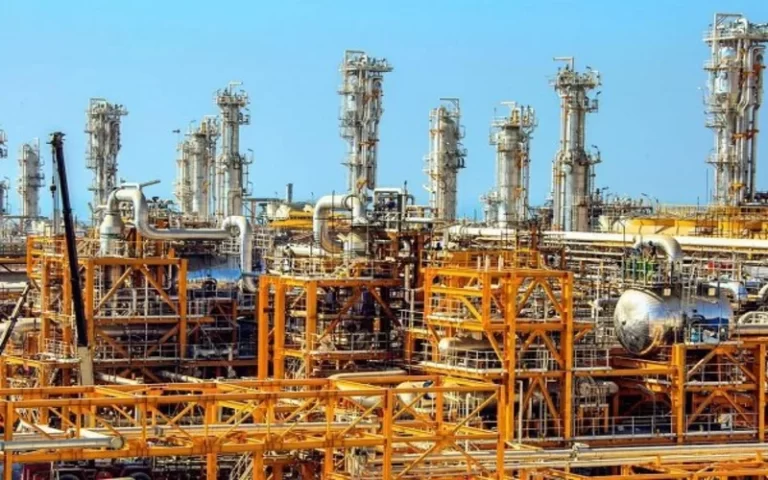
Recently, the Iranian regime’s ministry of oil signed an oil agreement with an unknown party, which has caused great controversy. Reports stated the regime signed a 20-year contract on the South Pars oil field on March 15, 2022, with rumors suggesting that the contract is with a company named Avangard.

The contract was signed by the regime in secrecy, and no details of the contract were made public at the time. Even many of the regime’s experts were surprised about the reports on the deal and expressed their frustration and surprise.

On March 16, the state-run website Tahririeh Studies Institute wrote, “Yesterday, the contract of the South Pars oil layer with the IPC contract model was signed between the National Oil Company and an anonymous company, no details of which were provided. The story of this controversial contract is that an anonymous company called ‘Avangard’ has undertaken the development of this field under a 20-year contract. The deal was signed in the final days of the Iranian year when no one was paying attention.”

The official website of the regime’s Ministry of Oil refrained from publishing any details about the party to the contract and the financial size of the contract. This decision was very strange for the mafia-led regime, with its officials saying that this is the first time that something like this has happened in the oil industry.

The important thing about this contract, according to the regime’s media, is that over the past year many of petroleum and economic experts have warned about the devastating consequences of this contract for the country’s economy. Many of them warned that such a secret contract is auctioning the country’s wealth.

This becomes even more clear considering that the regime’s then-oil minister Bijan Zanganeh refused to agree with the contract, therefore the regime’s economic mafia asked Mohsen Khojasteh Mehr, the current head of the National Oil Company to sign the contract.

As some of the regime’s state-run media like the Tahririeh website said, “an internet search with the keyword Avangard simply shows that the company, which now owns the 20-year-old South Pars oil field, has no external presence.”

Therefore, it seems all the skepticism about auctioning off the people’s national wealth is true and well-founded.  Another reason is that the regime has chosen to sign this contract close to the end of the nuclear talks. Many regime officials had suggested that they should wait until the result of the nuclear talks before signing such a huge contract with an international company.

All of the facts uncovered regarding these oil contracts show that the regime has auctioned around 900 million barrels of the country’s oil for at least the next 20 years.

The state-run website Rooz-e No revealed another strange fact on March 16. It quoted Saeed Sayos, one of the regime’s oil experts, who spoke about the Avangard company, as saying, “Avangard is a consulting firm for FPSU and has previously worked with Iran, but has not yet operated oil pipelines, but has participated in joint ventures and shipping (shipping and marine industries).”

In addition to the South Pars Oil Field, most of Iran’s oil fields are run with the help of foreign companies due to the regime’s other priorities, like its missile and nuclear projects, while investing most of the country’s resources in these fields.

According to official analysis, the volume of reserves in the South Pars oil field exceeds more than one billion barrels. Iran’s domestic companies do not have the capital, power, or even the technology to extract from this field. So, to date, Iran has had almost no extraction from the South Pars oil field.

This is likely to cause great economic damage to the next generations while fossil reserves will not be preserved for them. The reality is that common fields are like a common reservoir. If one country does not extract from it, the partnering country will extract all the reserves, even the other country’s share.

Many of the regime’s experts have been comparing the damages of this contract with the Farzad B oil contract between the regime and India. Like this latest contract, that agreement was signed in secrecy. This project gave India the right to exploit and extract natural gas from the Farzad B field for up to 30 years. In addition, India had the right to share the profits from the sale of the gas.

Although the details of the plan were not officially released, it appeared that India intended to take advantage of the regime’s sanctions, which are the result of the regime’s nuclear and missile projects, its appalling human rights dossier, and its meddling in the Middle East. the same thing seems to be happening in South Pars as well.

At that time, Bijan Zaganeh said, “The offer made by India does not bring any profit to Iran for 30 years and whatever is produced, India will take it as wages and operating expenses.”

Iran’s Regime Fabricates Statistics To Hide Its Economic Weaknesses

In its latest report on the change in the prices of food and non-food items, the Iranian regime’s Statistics Center has announced that the inflation rate reached 40.02 percent at the end of the 1400 Persian calendar year (March 2021 – March 2022), which the center claims had decreased by 1.2 percent when compared to February of this year.

The publication of these statistics that are far removed from the reality of the situation, which is appalling, especially while the lives of Iranian citizens continue to be destroyed by poverty, and their backs are broken under the burden of the extremely high prices which are not commensurate with their incomes.

The most important commodity group for the people is food and beverages, which in the recent report of the Statistics Center of Iran, has remained unchanged compared to last month. They point out that the inflation rate for the major food, beverage, and tobacco groups is reported to be 40 percent.

The Statistics Center collects a basket containing several foodstuffs and announces its average price changes compared to the previous month and year as the inflation rate. This is a deceptive method that is repeated constantly, while the food items most needed by the people include a wide range of items that are not counted in the Statistic Center’s basket.

Experts say most of the inflation that puts pressure on people comes from food groups such as rice, meat, oil, tomato paste, chicken, eggs, dairy, sugar, tea, and sugar. Although the regime allocates the preferred 42,000 rial currency to control the prices of some of these items, these goods reach the people at the free-market exchange rate and foreign exchange resources are practically wasted.

The regime’s Statistics Center, like many of its other institutions, is politically driven and fulfills the objectives set by the regime, which is to project a normal situation despite the precarious state of the Iranian economy. Almost all the regime’s institutions are obliged to convey the regime’s-specific narrative of the facts to the people.

According to independent economic experts, what the Statistics Center publishes as a report on price changes is designed to cover up the regime’s economic failures.

When the mullahs took power in Iran more than four decades ago, they claimed to be the champions of the oppressed and the deprived and pledged to spread justice.  But they have brought Iranians a devastated economy, mismanagement, and endemic corruption.

Even the regime’s supreme leader Ali Khamenei was forced to admit as much, stating, “The result of all government and banking support and the prevention of foreign competition has practically led to higher prices. And in the field of justice, we acknowledge that we are left behind.”

While some pro-government pundits expect to see a revival of the Iranian economy if and when a new nuclear deal is signed with the West, the vast majority of Iranians are convinced that the windfalls from the new deal will have absolutely no effect in improving their livelihood.

The economic equations show that although the nuclear deal and the release of blocked foreign exchange resources will have a positive impact on the Iranian economy in the short term, the country is still in a vicious cycle of inflation due to the weak foundations of production and the weakness of its industry. In other words, because the industrial sector lacks sufficient production capacity, and at the same time banks are trying to print money, the ratio of liquidity to GDP is always above 20 percent.

This vicious cycle of creating unequal liquidity versus insufficient production is like a machine creating inflation that is increasing the army of the poor every year. Therefore, even if the Western countries and the regime make an agreement and the regime’s sanctions are lifted, no one can have real hopes in the reduction of inflation and economic pressures on households.

The economic situation of Iran in the new year is quite bleak. Persistent unemployment, unfulfilled public expectations, and, consequently, the spread of public discontent and protests. The issue of eliminating the preferred 42,000 rial currency will further increase the distance between the people and the regime, something about which the regime experts are warning constantly.

In the documents leaked by the cyber group Edalat Ali, the regime’s security officials warned of the consequences of eliminating the 42,000 rial currency and explicitly acknowledged that this strategic mistake would come with a cost to the regime. Most likely, the regime’s decision to eliminate currencies allocated to medicine and other basic goods is part of a process that will contribute to the regime’s demise.

Iran Begins New Year With Worsening Miseries for the People

The Persian year of 1400 has ended in a miserable situation for the Iranian people, who have suffered along with people from around the world from the coronavirus pandemic. The only difference is that the clerical regime has been deliberately supporting the spread of the virus by denying imports of foreign vaccines and delaying the lockdown to use the virus as a weapon to prevent the Iranian people’s ever-increasing protests. As a result, this has led to more than 500,000 people in Iran losing their lives.

commenting on the matter, the state-run Setareh-e Sobh daily wrote, “According to an official report, more than 50,000 Iranian children lost their parents due to the coronavirus in (the Iranian years) 1399 and 1400. The coronavirus is considered the worst and most tragic event of 1400 due to the material and spiritual damage it has caused to the people.”

In the year that just ended (March 20), the Iranian people endured a vicious crackdown, from arresting political dissidents to killing fuel and cargo porters, which have increased dramatically since Ebrahim Raisi took office last August. He set an execution record of about 300 people in just eight months, a record not unexpected considering his background of serving as a member of the death commissions during the 1988 massacre of political prisoners.

Another aspect of this misery has to do with the state of the Iranian economy, which is even worse and has destabilized Iran’s society and caused many social calamities. Now, as Iran welcomes the Persian year of 1401, the New Year is inheriting all these worsening miseries.

In his New Year message, the regime’s supreme leader Ali Khamenei was forced to acknowledge the scale of the disaster that has befallen the country. “The most severe, important of these bitter moments in my opinion are such things as the problems that exist for the livelihood of the people, the issue of soaring prices, inflation, and the like. These are economic problems, a part of which I hope will be resolved this year,” he said.

He went on to admit the regime’s deadlock in solving these problems. While he heads the state-controlled mafia which devoured all the country’s wealth, he warned, “Not all of them can be resolved at once. They will be resolved little by little. If one is impatient and hasty and says that all the problems must be solved very quickly, this is not realistic.”

The Iranian state media also pointed to a bleak year ahead. In reference to the ever-rising levels of inflation, the Setareh-e Sobh daily wrote, “Unfortunately, the average inflation this year has been more than 40% compared to last year, which is bitter news for the people because this inflation means that people’s purchasing power has decreased by more than 40% compared to last year.”

Another crisis from which the people suffered greatly last year was the scarcity of water in the country, which not only damaged their daily life but destroyed the country’s agriculture and caused a lot of environmental damage.

Acknowledging the people’s protests over the water shortage and the regime’s crackdown on the protesters, the daily wrote, “Inflation,  unemployment, air pollution, dust, etc. have been and are among the issues that not only have not diminished in intensity but have increased to the point that groups of people in the provinces of Khuzestan, Isfahan, Yazd, and Chaharmahal Bakhtiari came to the streets and protested. Unfortunately, in the process, some people were injured, and bitter memories of these events remain.”

During the water shortage protests in Isfahan, the regime’s security forces tried to crush the unrest by injuring the people with bird shots, firing small pellets directly into people’s faces. As a result, many people lost sight in one or both eyes.

To add to the misery endured by the Iranian people in 1400 was the skyrocketing housing prices. According to the regime’s official reports, the average price of each meter of residential infrastructure reached 325 million rials. Accordingly, the increase in housing prices in the last five years has been estimated at around 655 percent. The latest report of the regime’s Statistics Center on the average price of food shows that Iranian rice has become 95.3% more expensive than last year, which is unprecedented in the history of the country.

Several state-run media outlets have written about the dramatic increase in rising food prices such as meat, eggs, potatoes, and other items. At the end of 1400, it was concluded that Iranians will continue to grapple with high prices and inflation.

In a tweet mocking Raisi’s New Year message, Mohammad Mohajeri, an Iranian journalist said, “Dear Mr. Raisi, Happy New Year, I swear, much of what you said in the Nowruz message about the economy is fiction, and the reports they have given to you are not true. Fill the mouths of liars with dirt. If you do not know it is wrong and you say it shame on us and if you know that … shame on us again.”