Home Blog Page 302

Iran’s 2020 Human Rights Violations

Iranians suffered intense violation of their rights over the past year, according to the United Nations Special Rapporteur on Human Rights in Iran Javaid Rehman in his report to the 46th session of the UN Human Rights Council.

Rehman, who was forced to base his report on news and reliable sources because he was not allowed into Iran, expressed concern and urged the HRC to look closely at the abuses in Iran.

One issue of particular concern to him was the high number of executions in Iran during 2020, with 233 reported by Iran’s officials and the fear that many more may have occurred in secret. He also raised the issue of political prisoners, like Navid Afkari, receiving unfair trials that led to their executions.

Rehman further spoke about a violation of the right to information and freedom of expression, as the government maintained its ban on most social networks and disrupted or disconnected the internet amid protests in several areas to stop news from spreading. In addition, with 80% of the county in poverty, many cannot afford internet access.

In addition, bloggers and journalists were arrested, imprisoned, and even executed over the course of the last year on vague charges. Those in prison, like Soheil Arabi, are subjected to severe torture.

Another major issue of concern is the violation of workers’ rights, where peaceful protests over dire living conditions and poverty pay, are met with intense and brutal suppression by the security forces, as happened in the truck drivers’ strikes. On a related note, the security forces keep killing border porters, who are just trying to do their job, carrying heavy loads across the mountains on foot.

Meanwhile, religious minorities are being subjected to discrimination that prevents members of the Bahai faith from studying at university or being employed in the government. Many Bahais are arrested on vague charges.

But the biggest, all encompassing abuse of human rights in Iran is the authorities’ response to the coronavirus pandemic; initially concealing it and then using it as a weapon to discourage protests, which may be why Supreme Leader Ali Khamenei has refused to purchase safe and approved vaccines for the people, instead promising that a domestic vaccine can be rolled out next year.

Given all this, the world should continue to watch Iran closely and refuse to give concessions to mullahs that could ensure their continued hold on power.
Workers’ Empty Food Baskets in Leadup to Nowruz

Nowadays, Iranian citizens are getting ready to celebrate Nowruz, the new year in the Persian calendar. However, given its mismanagement and failures, the government has imposed additional economic pressure on Iranian society. On the other hand, Iranians suffer from other dilemmas like the health crisis and air pollution.

For instance, health professionals frequently express their concerns about a new wave of the coronavirus outbreak and the circulation of mutated strains of the virus. However, state-backed employers deprived low-income classes, particularly workers, of their meager salaries. These impoverished citizens have to participate in contaminated workplaces with the Covid-19 amidst the health crisis.

They struggle hard for meager salaries, which do not cover their essential needs regarding the 100-million-rial [$400] poverty line. Instead, state-backed employers refrain from paying workers low wages. Such behaviors have severely prompted workers’ outrage.

In this context, no day goes by without workers’ protests across the country. On February 18, workers of Shahryar municipality, a suburb of Tehran, held a rally in front of the City Council, protesting officials’ failure to pay their salaries for two months.

“Today, we have gathered here to demand an increase in our salaries. [Officials] did not pay our salaries for two months,” said a worker. “My monthly salary is 24.5 million rials [$98], and my experience bonus is 1.5 million rials [$6], which is 26 million rials [$104] totally. Does the Mayor cover his family’s costs with $104?” he added.

“Our wages are too low. Official forces, who work under the municipality’s supervision, monthly receive more than 80 million rials [$320]. However, the Mayor has made a deal with contract companies to pay 25 million rials [$100] to workers per month. Official workers receive between 70 to 80 million rials [$280-320] each month, but they give 25 million rials to us,” said another protester.

Workers’ conditions are identical across the country. They are unable to make ends meet. In such circumstances, workers see no way to obtain their fundamental rights except flooding onto the streets and voicing their protests publicly. In this respect, workers’ protests have dramatically increased in recent months.

“For a working family of 3.3, the product basket’s cost is 100 million rials [$400] while low-income workers monthly receive 30 million rials [$120] in the best scenario. This is while that the workers’ purchasing power has sharply dwindled, and their food baskets became empty due to rampant inflation,” wrote Kar & Kargar [Labor & Laborer] on February 9.

However, the question is, why does the government not resolve the people’s dilemmas? The government’s refusal to resolve current obstacles highlights the truth. “No one of society’s classes has an actual representative inside the governing structure. In Iran, workers and other impoverished strata do not even have a real syndicate or union. They do not have media, and their voices are not heard anywhere,” Mostaghel daily wrote on February 19.

“Indifference toward demands and hardship of underprivileged and slum-dwellers has created deep crises. [Gas protests] in November 2019 was a specific instance,” the daily added.

Iran’s Fire Festival Continues in Spite of Authorities’ Threats

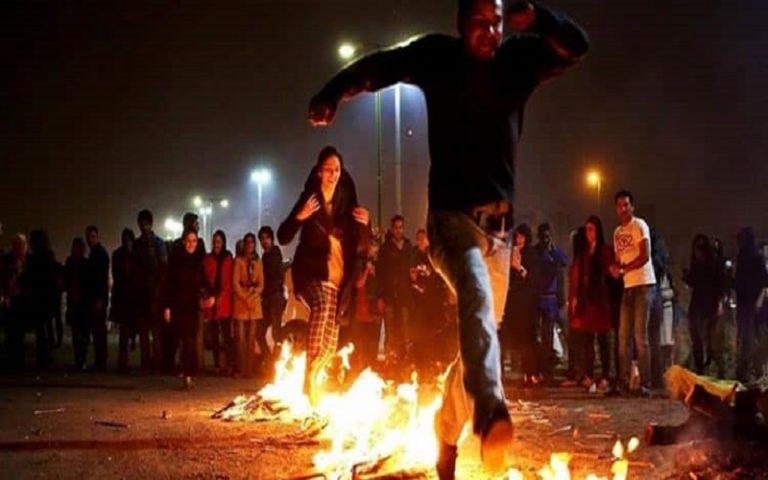
People across Iran celebrated the ancient fire festival (Charshanbe Suri), which is held every year on the last Wednesday of the Iranian calendar year, despite the authorities’ efforts to prevent that exact thing from happening.

The festival simply involves Iranians leaping over fires, but the government fears that any mass gathering of Iranians will result in an anti-government protests so they go to extreme lengths to discourage the people from celebrating. For instance, the mullahs put a lot of security forces in the streets across Iran, including Karaj and Sanandaj where they patrolled to stop congregations.

The people resisted though, lighting firecrackers and fires despite the presence of security forces in Javadieh,  Kermanshah, Urmia, Rasht, Eslamshahr, Baneh, and Tehran. While in Varamin, young people even threw firecrackers at the wall of a security force base in retaliation to the crackdown with one young person shouting that “Varamin’s flag is always up”.

Yazd State Security Forces’ deputy commander Manuchehr Nasiri threatened the people saying that participants would be arrested and held for 15 days and that security forces are on high alert.

The People’s Mojahedin Organization of Iran (MEK / PMOI) urged the people to use the festival to display their hatred of the mullahs and the people wasted no time in doing so. They burnt effigies and placards of Supreme Leader Ali Khamenei, as well as handing out MEK literature across Tehran, Rudsar, Khorramabad, Aligudarz, Ahvaz, Lahijan, Mashhad, Shiraz, Tabriz, Shahriar, Saravan, Isfahan, Karaj, Shahrekord, Kashan, Kermanshah, Hamedan, and Qazvin. They also chanted:

  • “Down with Khamenei, hail to Rajavi, down with the dictator, hail to freedom”
  • “The supreme leader’s end is near”
  • “We will take back Iran”
  • “We will turn Iran into a burning cry for freedom”

The MEK statement read: “By leaving Iranians to the mercy of the Coronavirus that has taken massive lives (due to the regime’s policies), the Supreme Leader thinks he can use the staggering death toll as a barrier to prevent the inevitable people’s uprising … Burning pictures, banners and effigies of Khomeini, Khamenei and Rouhani will bring joy, happiness, and hope to the people of Iran … We welcome the new year in this way during the Fire Festival.”

Hossein Rahimi, the Tehran State Security Forces commander described the situation as “not good in comparison to last year” because so many had taken place in spite of heavy police presence. In Kerman, it was also reported that Fire Festival ceremonies had become more intense.

Iran’s Elections Are Coming, There Is Perspective of Protests

Iran is set to hold its presidential elections in June, which has only increased factional fighting as the politicians try to shift blame for the various crises facing Iran, but the media are predicting a national boycott and protests.

This is not unprecedented. Last February, following the November 2019 uprising and the January 2020 protests over the downing of a passenger jet, the people overwhelmingly refused to vote in the parliamentary elections because they saw that it would not change anything, and they wanted regime change. In fact, there hasn’t been a large election turnout since the 1980s, when opposition candidates ran.

The state-run Arman daily wrote Monday: “[This is] one of the few elections in which everything is vague except the date of holding, which is June 18. The people’s economic and livelihood dissatisfaction, on the one hand, and the view of the government and the Guardian Council on the forthcoming elections, on the other hand, have overshadowed the 13th presidential election.”

Now, of course, voting in Iran is far different than voting in an actual democracy. For one thing, there is little difference between the two factions as the “reformists” are mainly used to trick the West into giving concessions to Iran. All candidates must swear loyalty to the Supreme Leader and be vetted by the Guardian Council. In order to even stand, one must be Muslim, of Iranian origin, and hold a record of religious and political affiliation to the system. That’s why the Iranian people have been chanting “reformists, hardliner, the game is over”.

The authorities do not want a repeat of last year’s boycott, but that is what will happen because the government’s policies have turned the country into a powder keg ready for change and the people know that this will never come from the ballot box.

Arman wrote: “The country’s general conditions are not very suitable for various reasons such as weak management, lack of realization of development plans and 20-year vision, lack of clear strategy in practice after four decades of the victory of the 1979 revolution. Poverty, corruption, discrimination, inefficiencies, unemployment, and recent skyrocketing costs that are re-creating the wartime era, along with the people’s livelihoods, have led to declining satisfaction and a loss of social capital.”

A cleric Fazel Meibodie warned Saturday that people’s anger could only be suppressed so long and that eventually “hungry people” will rise up and mullahs will be unable to control the situation.

Iran’s Economy in Bad Shape Under Mullahs

The Iranian economy is suffering greatly right now, which means that the people of Iran are much worse off, struggling to put food on the table, but still the government is continuing its malign economic policies and attempting to deceive the public with fake statistics.

Central Bank chief Abdolnasser Hemati recently announced that Iran was “out of economic recession” thanks to a 3.9% growth over the third and fourth quarters of 2020, but Iran’s Statistic Centre said that economic growth was less than 1%.

To make matters more confusing, the International Monetary Fund wrote in its latest report that Iran’s economy had decreased by 6.5% in 2018 and 5.4% in 2019 and was expected to drop by 5% in 2020. While the World Bank mainly agrees with these findings.

Someone is wrong here and it doesn’t seem like it’s the IMF or World Bank.

Still, figures only tell a small part of the story. The real dark tale is that the Iranian people have to keep cutting items from their shopping list for being too expensive and parents are selling their organs to keep a roof over their kids’ heads.

So why is poverty increasing? Well, one of the main problems is that the government continues to increase the printing of banknotes to fund the budget, but this just leads to increased inflation.

Parliament Speaker Mohammad Bagher Ghalibaf admitted this on Saturday saying that the budget structure was in need of reform, but sadly this was more likely an instance of factional infighting rather than a reasoned attempt at debate. Especially because, the Iranian Resistance said, minor reforms will not fix a problem caused by institutional corruption.

Besides, the parliament just passed a budget that relies on oil sales that are unlikely to materialise due to international sanctions on Iran, so it will also result in the printing of more money and the increase in inflation.

Even the state-run media outlets are talking about this and the rise in inflation, with Eghtesad-e Saramd daily saying that last year saw a “record in banknote printing” and Arman daily calling inflation “one of the biggest and most fundamental problems that has plagued Iran’s economy for the past 40 years”.

The Resistance wrote: “Since Iran has had negative economic growth in the last few years, the regime tries to fund its illicit activities through unsupported banknote printing, distribution of debt securities, high taxes, and the sale of cheap oil… Iran’s economy is devastated and that sanctions are not the main problem. This is why Iranian people, who are grappling with poverty, chanted during their major uprising and daily protests, ‘Our enemy is right here; they lie when they say it is the US’.”

Iran’s Budget Crisis Is Far From Over

The Iranian government is in crisis after the 2021 budget, which recently passed the parliament following months of resistance, was rejected by the Guardian Council.

Now, central bank head Abdolnasser Hemati is saying that the budget amendments will increase inflation and liquidity, although he did acknowledge on Instagram that this is “ultimately” something that all governments do.

An economist told the Shahr-e Khabar website that the 74% budget increase is destroying all efforts to control inflation, while another told the Tasnim News Agency that the central bank will need to “take steps” to manage the “deficit” that was itself preventing a recession and that these steps would only increase inflation.

The Iranian Chamber of Commerce is warning of the same thing, with the chief saying that last year was the “worst” for  public confidence in the government’s economic policies, especially given that the country has been seeing negative growth since 2017.

One of the major problems with the 2021 budget is that it’s based on projected sales of 2.3 billion barrels of oil per day but over the past year Iran has struggled to sell even 700,000 bpd, even when undercutting the market and smuggling, because of international sanctions on Iran.

Essentially, President Hassan Rouhani and his cabinet estimate that they will earn 2,500 trillion rials (roughly $60 billion based on the official exchange rate) from oil sales this year, which is double the amount earnt in 2020, even though there is no evidence that oil sanctions will be lifted at all. To make matters worse, oil markets suffered huge disruptions because of the coronavirus pandemic, which is still ongoing in every country in the world.

In addition, another 2,500 trillion rials in the bill are supposed to be raised through taxation, but with large numbers of manufacturing enterprises on the verge of bankruptcy and many workers wither unemployed or months behind on pay, how will they be taxed?

The Iranian government previously announced that GDP growth decreased by 5.4% in 2020 and 6.5% in 2019, while the official inflation rate was over 30% in 2017, not to mention the real rate. All in all, there’s a huge budget deficit here; some 2,000 trillion rials according to the Parliamentary Research Centre

The Iranian opposition wrote: “The disastrous economic situation is the result of the regime’s political impasse. The regime tries at any cost to maintain its establishment and make its forces believe it is stable. But the numerous contradictions within the regime on the 2021 budget deficit portray an unsolvable crisis.”

US Congress Mounts Pressure on Khamenei and Rouhani

Recent news suggests that developments in the United States are rapidly turning against Iran’s Supreme Leader Ali Khamenei and President Hassan Rouhani.

Michael McCaul, ranking Member of the US House of Representatives Foreign Affairs Committee and Josh Gottheimer, a Democratic representative of Congress from New Jersey, sent a bipartisan letter to Secretary of State Antony Blinken. They asked the US Administration to use leverage to achieve a better and comprehensive agreement with Iran, including access to all Iranian nuclear sites by the International Atomic Energy Agency (IAEA).

The letter also pointed to some of the clauses of the 2015 Iran nuclear deal known as the JCPOA which from the view of lawmakers must be corrected. Also, Iran’s recent violation of the JCPOA was reminded in this letter.

The bipartisan letter’s signatories included a total of 12 Republicans and 12 Democrats.

The JCPOA did not block Iran’s nuclear program

These lawmakers also wrote: ‘We believe the 2015 Joint Comprehensive Plan of Action (JCPOA) between the P5+1 and Iran did not sufficiently ensure Iran could never obtain a nuclear weapon.

“In return for temporary limits on aspects of Iran’s nuclear program, this agreement allowed Iran access to billions of dollars in sanctions relief which it has continued to use to advance its ballistic missile program and expand its support for terrorism.

“We urge you to work with our allies and consult with Congress in a bipartisan and bicameral fashion to outline a better, comprehensive deal with Iran that would block its path to a nuclear weapon and blunt its global malign activities.”

Iran’s government, the most important terror supporter

They added: “Going forward, the administration should make use of existing leverage to sharpen the choices available to Tehran. The world’s foremost state sponsor of terrorism must be held accountable for its nuclear enrichment and undermining regional peace and stability.”

The Congress members further wrote: “In recent years, Iran directly attacked U.S. troops in Iraq, injuring more than 100 servicemembers. In addition, Iran damaged oil tankers in the Gulf, fired cruise missiles against our allies, and maintained its support of terrorist groups dedicated to the destruction of Israel. Iran has not ceased its destructive behavior since the implementation of the JCPOA. We believe a better deal will improve security in the region.”

Many clauses in the JCPOA should be improved

The letter added: “There are numerous provisions of the JCPOA that should be improved. Most notably, various “sunset clauses” could result in Iran rushing to obtain a nuclear weapon once the deal expires. Absent any changes, the agreement would have less than five years before Iran is able to ramp up its nuclear program to industrial scale. Iran has committed other concerning violations of the JCPOA. Iran has abandoned commitments regarding research and development of centrifuges.

Iran’s ballistic missiles should be included in a new agreement

About the regime’s missile program, the letter added: “Additionally, the JCPOA did not address Iran’s non-nuclear issues including its robust arsenal of ballistic missiles and other malign and destabilizing activities.

Iran’s malign activities are a subject of concern

About the regime’s malign activities in the region as well as its human rights violations inside the country, the letter added: “Iran continues to transfer weapons to terrorist groups and proxies, engage in illicit and deceptive financial practices, and commit gross human rights abuses and violations, including taking of U.S. and other foreign citizen hostages.”

It concludes that, “The world’s foremost state sponsor of terrorism must be held accountable for its nuclear enrichment and undermining regional peace and stability. We appreciate the steps you have already taken to do so by ordering a targeted military strike against a facility used by Iran-backed militia groups in eastern Syria, following escalating attacks on U.S. and coalition personnel in Iraq. We share the goal of preventing a nuclear armed Iran, inhibiting its ballistic missiles capabilities, and ending Iran’s threats to the United States and our regional allies, including Israel.”

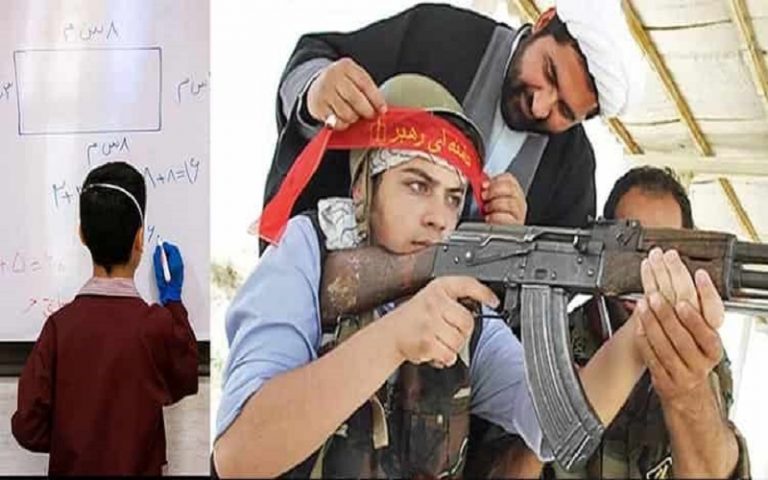
Iran Keeps Students Illiterate and Teaches Them the Culture of Martyrdom

Iran’s state-run news agency Tasnim quoted an education authority as saying “that 30 percent of Iranian students will not be at least literate.

“He said that one third of Iran’s students do not meet the expected results from a student at his/her base. Of course, this is not a strange thing. For example, in the mathematical lesson, they should know the elementary arithmetic, but they do not even that too.”

Promoting death and superstition between students

Tasnim added that the results obtained by Iranian students in an international math contest tests are very weak. The poor results of Iran among participating countries of the Middle East region are because of the false policies in the educational system of the country.

If we want to understand the origin and nature of this false policy, it is best to pay attention to the message of the Minister of Education to March 12, 2021, the day of commemoration of the martyrs. He wrote: “The Ministry of education (MEDU) is to institutionalize the ‘culture of martyrdom’ in the children of our dear Iran.”

Therefore, it should not come as a surprise that one-third of the students of Iran are illiterate. The goal and strategy of Iran’s Ministry of education is not teaching science and the cultivation of human talent in the students. But instead, its strategy which is aligned with the regime’s main strategy, is spreading fundamentalism in the world, to brainwash the Iranian students, pinning its so-called ‘martyrdom’ in the brains of Iran’s students, as it did it with the many other nationalities and use them in its proxy wars in the Middle East.

In Iran under the mullahs’ rule, such ‘martyrdom’ is nothing else than a culture of death worshipping and falling in the black hole of individual sins.

The Minister of Education Mohsen Haji then emphasized that the Ministry of Education “in the direction of his intrinsic mission” is diligently to “culture martyrdom” more than ever in the institutions of the children of Iran, this “peaceful land of oppressed” and institutionalize it.

One third of the students

While this so-called Minister of Education sees his final goal in the spread of ‘martyrdom’, Massoud Kabiri, a faculty member of the Education Research Institute, said: “In the past, they said that a student would at least know the literacy of writing, but now some of the students are even not at this level, and do not reach it.”

He added: “So much that Iran is in this area has trouble, we are not seeing such a situation in other countries. That is, if we consider a country that is weaker in terms of scores than Iran, its situation in this indicator may be better than Iran’s student’s abilities. This is very regrettable.”

It should be remembered that during the Iran-Iraq war, more than 500,000 students were sent to the frontlines. And at least 33,000 students were killed in the war.

Iranian State Media: 20 Million Iranians Have Contracted COVID-19

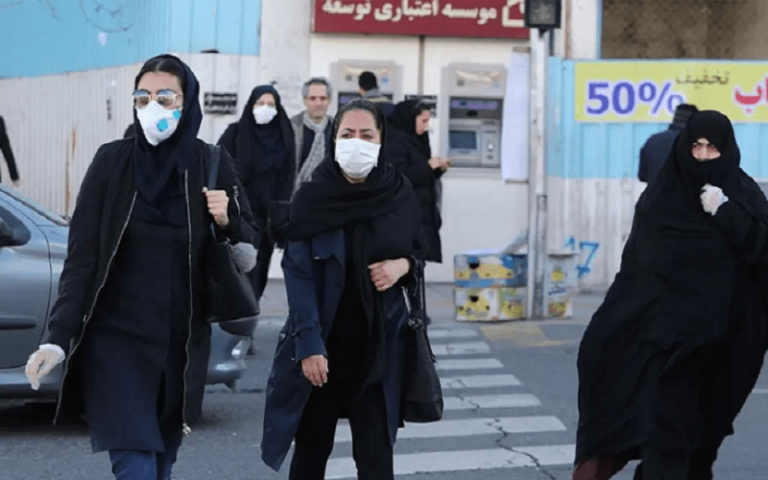
According to a survey carried out by an institute affiliated with Iran’s Ministry of Culture and Islamic Guidance on March 13, around 20 million Iranian citizens have contracted the novel coronavirus in the past year. Furthermore, amidst the fourth wave of Covid-19 in Iran, many citizens are concerned about being infected with the mutated strains of the illness.

“Fifty-two percent of people are seriously concerned about the infection of themselves or their family members with this disease. Eighteen percent have announced that they themselves have contracted the virus. However, this percentage is for people above 18 years old who account for 72 million of Iran’s population,” wrote Etemad daily, affiliated with ‘reformist’ faction, on March 13.

“If we calculate this percentage for the entire population, 15 million people are probably infected with the virus across the country. Of course, the real number is likely higher than these stats, which is consistent with the latest assessments  that have declared around 20 million people to have contracted the coronavirus so far,” the daily added.

Furthermore, the official survey revealed that 1.5 percent of people had lost at least one of their family members due to Covid-19. “It can be said that the real coronavirus death toll is around 150,000 people, that is 2.4 times more than figures announced by the Health Ministry,” Etemad ended.

A day earlier, on March 12, the Iranian opposition Mojahedin-e Khalq (MEK/PMOI) stated that more than 230,000 Iranian citizens had lost their lives to the coronavirus across Iran. “Over 230,100 people have died of the novel coronavirus in 518 cities checkered across all of Iran’s 31 provinces, according to reports tallied by the Iranian opposition People’s Mojahedin Organization of Iran (PMOI/MEK) as of Friday afternoon local time, March 12,” wrote the MEK on its official website.

Previously, on April 28, 2020, Mohammad Reza Mahboub-Far, a member of the National Covid-19 Task Force, had challenged official statistics. “The current stats of the coronavirus illness are 20 times higher than what is being announced by the Health Ministry. This has resulted in the people not taking this lethal illness seriously… To this day, only six percent of the patients infected with COVID-19 have been identified across the country,” Vatan-e Emrouz daily quoted Mahboub-Far as saying on the same day.

Notably, in a mid-July 2020 cabinet session, President Hassan Rouhani announced that around 25 million Iranians had contracted the coronavirus, and 30 to 35 million others are exposed to the virus.

“The Health Ministry’s Research Center is reporting, ‘Until now, 25 million Iranians have been infected with the novel coronavirus and between 30 to 35 million others will be exposed to contract the virus in the upcoming months,’” Rouhani said.

Meanwhile, Massoud Mardani, a member of the National Covid-19 Task Force, announced 28 million people had been infected with the virus in an interview with Fars news agency, affiliated with the Islamic Revolutionary Guard Corps (IRGC) on July 19, 2020.

“Now, 28 million Iranians have contracted the novel coronavirus, 85 percent of whom are without symptoms. Given the health apparatus’ weakness, there will be many deaths if 35 million people become contracted,” he said.

Despite these facts, which have put Iran among the world’s most affected countries based on John Hopkins University’s August 23, 2020 coronavirus update, the Iranian government still refuses to procure reliable Covid-19 vaccines. Regarding the outbreak of the UK strain in all of Iran’s 32 provinces—according to Deputy Health Minister Qassem Janbabaei, the government’s policy toward the health crisis may result in much more fatalities.

In such circumstances, the international community must pressure Iranian authorities to procure Covid-19 vaccines from reliable companies and spare Iranians’ lives. Ignorance about the ayatollahs’ harrowing policies over the coronavirus crisis in Iran may drastically affect global efforts for eradicating the pandemic.

Sale of Inmates, a New Form of Trade by Iran’s Government

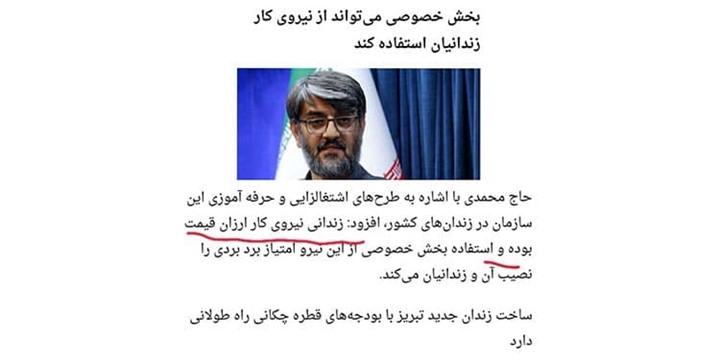
Mohammad Mehdi Haj Mohammadi, chairman of the Iranian state Prisons Organization, in a meeting with the Governor of East Azarbaijan, said something that was later harshly criticized in cyberspace. Referring to the shortage of prisons and problems faced by the construction of a new prison, he addressed the private sector: “The prisoners in Iran are cheap forces, which if used by the private sector, both would gain something.”

The meaning of this approach and this suggestion is nothing but the sale of prisoners at a low price to the looters of the private sector which are the Revolutionary Guards (IRGC) officers. This private sector is nothing else than the IRGC or the foundations under the command of Iran’s supreme leader Ali Khamenei.

This official said in another interview that “prisons should reach self-sufficiency and not be reliant on the budget of the government.”

According to official statistics, more than 200,000 official prisoners are held in Khamenei’s prisons. Although the real number is thought to be far higher. These statistics do not include detainees with an unclear situation. According to the head of the Prisons Organization, more than 50 percent of prisoners have been used in prisons. That is, a population of 100,000 people are working, and the prison economy spins with the suffering of these prisoners.

The benefit from the slave work of the prisoners is entirely in the pocket of the state Prisons Organization. As an example, we read a report on Isfahan Prison:

“The prisoners working in Isfahan’s prisons are treated like slaves. In different factories with high profitability, they are exploited. The profit derived from the prisoners work in the is going to pockets of the prison organization and their agents in the relevant factories.”

Prisoners in the Ghale Shur camp and other places are subject to mistreatment and threat of return to prison. They treat the prisoners based on slavery laws. The prisoners are taken for forced labor. They are forced to tolerate insults and humiliation daily.

These prisoners receive 17,000 Tomans per day for at least 8 hours of work, and even that petty sum is not paid for months.

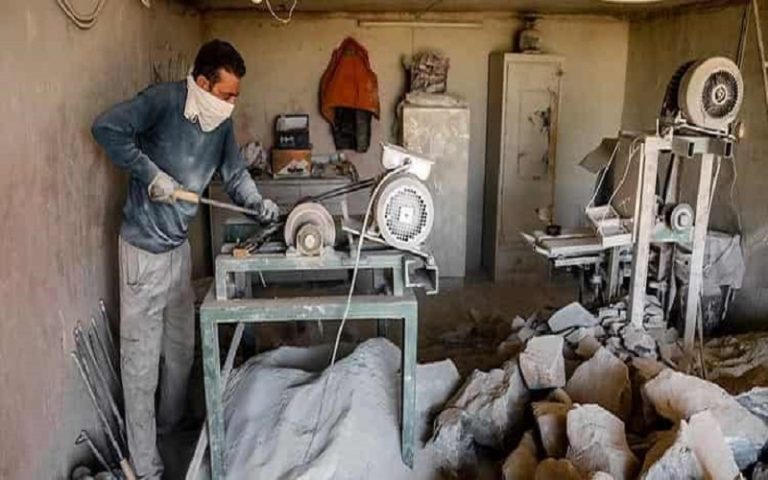
The owners of the work, which are usually stone factories in Isfahan, pay 80,000 Tomans for the prisoners’ daily work. But from this amount, for each prisoner, 63,000 Tomans is deducted by the Prisons Organization and a small amount of 17,000 Tomans is given to the prisoners.

Another example from Karaj’s central prison: At 5 km of Karaj’s Atashagah road to the Chalous road, which is under construction, the government uses 300 to 350 prisoners to build this highway. Without any payment. All money is poured into prison account. These prisoners are given furlough for just 2-3 nights.

Astonishingly, the number of judicial cases in Iran has reached 14 million annually. That is, one sixth of all Iranians are dealing with jail and court and the judiciary yearly. Is this not the result of anything other than poverty and unemployment?

When government officials use the public tribune and say something that many of the audiences of the virtual network describe as slavery and forced labor, it is clear that what is behind this thought is much worse.