Home Blog Page 53

US Sanctions 17 Entities, Individuals Linked To Iranian Regime Oil Network

The U.S. State Department announced new sanctions against seventeen entities, individuals, and vessels involved in exporting Iranian oil. The move coincides with new Treasury Department sanctions and aims to limit Tehran’s oil revenue used for its nuclear program and regional activities.

On Thursday, November 20, the U.S. State Department announced sanctions on seventeen entities, individuals, and vessels that play a key role in facilitating the sale and transfer of the Iranian regime’s crude oil and petroleum products.

The action aligns with efforts to restrict financial streams that Washington says “the Iranian regime uses to advance its nuclear program, support proxy groups, and destabilize the region.”

Unprecedented Volume of Iranian Oil Lingering in Ships Due To Sanctions

Scott Bessent, the U.S. Treasury Secretary, said:
“Disrupting the Iranian regime’s revenue is critical to helping curb its nuclear ambitions.”

The State Department’s statement says the Iranian regime relies on a vast network of maritime service companies, the so-called “shadow fleet,” and oil brokers across various countries to transfer its oil to buyers using deceptive and clandestine methods.

The United States says this network, by moving millions of barrels of Iranian crude and operating in busy maritime regions, threatens shipping security and freedom of navigation.

These sanctions were imposed under Executive Order 13846, which mandates the blocking of all property and interests of designated persons and entities in the United States or under the control of U.S. persons.

Sanctions on Singapore maritime-services companies

As part of the sanctions, the Singapore-based company STRASSELINK and its managers were designated for providing thirteen pilotage services to tankers of the National Iranian Tanker Company (NITC) from January to August 2025.

U.S. officials say this company enabled the transfer of more than 20 million barrels of Iranian crude by guiding these tankers.

Sanctions on five companies managing Iran’s “shadow fleet”

Five additional companies in Singapore, the UAE, Vietnam, the Marshall Islands, and Seychelles were sanctioned for managing tankers involved in transporting millions of barrels of Iranian oil. These vessels often conceal the origin of cargo through tactics like disabling tracking systems and conducting ship-to-ship (STS) transfers.

The shipping companies ANBO SHIPPING PTE, ARKADIA MARITIME, ERST GROUP LTD, and several others were sanctioned. According to the United States, these companies participated in loading Iranian oil from sanctioned vessels.

Targeting traders of Iranian petroleum products

Additionally, three trading companies in India and the UAE were sanctioned for purchasing, selling, or transferring petroleum products of Iranian origin, including bitumen and other refined products. The State Department says revenue from these products also constitutes a significant portion of the regime’s income.

Update to the U.S. Treasury sanctions list

The U.S. Treasury Department, in its latest update, added a set of individuals, companies, vessels, and aircraft to the Specially Designated Nationals (SDN) list—entities that Washington says play roles in evading oil sanctions, facilitating financial-transfer networks, and providing logistical support for the Iranian regime’s regional activities.

These individuals hold citizenship from Iran, Singapore, Malaysia, India, and Bulgaria, and some are connected to sanctioned companies and airlines.

According to the Treasury Department, several of these individuals—including two Singaporean citizens—directly participated in maritime transfers of Iranian oil. Several other Iranians were designated for involvement in “financial and logistical support” networks tied to the IRGC and sanctioned oil companies.

Asset blocking and transaction bans

Under the sanction’s regulations, all property belonging to designated individuals or entities within the United States or under the control of U.S. persons will be blocked, and any transactions with them are prohibited without a special license.

The U.S. government emphasizes that the goal of these sanctions is “behavioral change,” not punishment, and says it is prepared to consider delisting individuals if circumstances change.

Since returning to the White House, Donald Trump has reinstated the maximum-pressure policy against the Iranian regime and has implemented various rounds of sanctions.
Tehran Dismisses IAEA Resolution As ‘Illegal’ And Further Limits Cooperation

The regime’s Foreign Ministry, in reaction to the new resolution of the International Atomic Energy Agency (IAEA) Board of Governors, called the measure “illegal and unfounded” and announced that Tehran has terminated the September 9 understanding with the Agency due to what it described as the “irresponsible conduct of the West.”

In a statement issued early Friday, November 21, the regime’s Foreign Ministry described the IAEA Board’s new resolution on Iran’s nuclear program as “illegal, unfounded, and the result of pressure from the United States, Germany, France, and the United Kingdom.”

The statement claims the resolution was passed “through the West’s misuse of its numerical advantage,” adding that nearly half of the members—including two permanent members of the UN Security Council—did not support it.

IAEA Director: Iran Must Improve Cooperation to Prevent Tensions with West

In its recent closed-door meeting, the IAEA Board of Governors adopted a resolution requiring the Iranian regime to “immediately” report on the status of its enriched uranium stockpiles and the nuclear sites damaged during the twelve-day war.

Of the Board’s thirty-five members, nineteen voted in favor of the resolution proposed by the United States and the European troika, three opposed it, and twelve abstained. Russia, China, and Niger were the only members who voted against it.

Reuters reported on Thursday, November 20, citing diplomatic sources, that the resolution aims to extend and recalibrate the Agency’s mission to monitor and report on aspects of the Iranian regime’s nuclear program.

The resolution calls on Tehran to provide the necessary answers and required access to IAEA inspectors “without delay.”

Tehran claims this resolution “violates the foundations of the Non-Proliferation Treaty” and repeats what it calls the “illegal demands” of previous UN Security Council resolutions on suspending enrichment.

The Iranian regime further asserts that the Board of Governors has “no authority” to revive “expired UN Security Council resolutions” and interprets the actions of the three European nations and the United States as proof of their “ill intent.”

Accusations against the U.S. and three European countries

The regime’s statement labels the United States as the “main culprit of the nuclear crisis” and claims that the suspension of certain IAEA verification activities in Iran is the “direct result of U.S. and Israeli military attacks” on nuclear facilities.

The regime’s Foreign Ministry also accuses Germany, France, and the United Kingdom of “continuous violations of the JCPOA” and of having “participated in the attack on Iran’s nuclear facilities in June 2025,” claiming they are responsible for the current situation.

Termination of the September 9 understanding with the Agency

The statement goes on to say that Iran—because of the actions of the Europeans and the United States—has been compelled to terminate the “September 9 understanding” with the Agency, an arrangement that, according to Tehran, had facilitated the resumption of inspections at certain nuclear facilities.

Nevertheless, Tehran insists it remains committed to its “principled position of rejecting weapons of mass destruction.”

Verbal attack on Israel

The regime’s Foreign Ministry statement describes Israel as “the greatest threat to global peace and security” and “the only possessor of weapons of mass destruction in the region,” accusing the United States and the three European countries of “complicity in Israel’s crimes” in Palestine and Lebanon.

State-run media in Iran reported on November 20 that the Iranian regime—together with Russia, Belarus, China, Cuba, Nicaragua, Venezuela, and Zimbabwe—issued a joint statement during the Board meeting condemning the U.S. and Israeli attacks on the regime’s nuclear sites during the twelve-day war.

Western diplomats believe that although the attacks on the Iranian regime’s nuclear facilities caused serious damage, they did not destroy the nuclear infrastructure—leaving ongoing speculation about Tehran’s enriched uranium stockpiles.

U.S. State Dept: Iran’s Water Crisis Is Result of Decades of Regime Mismanagement

0

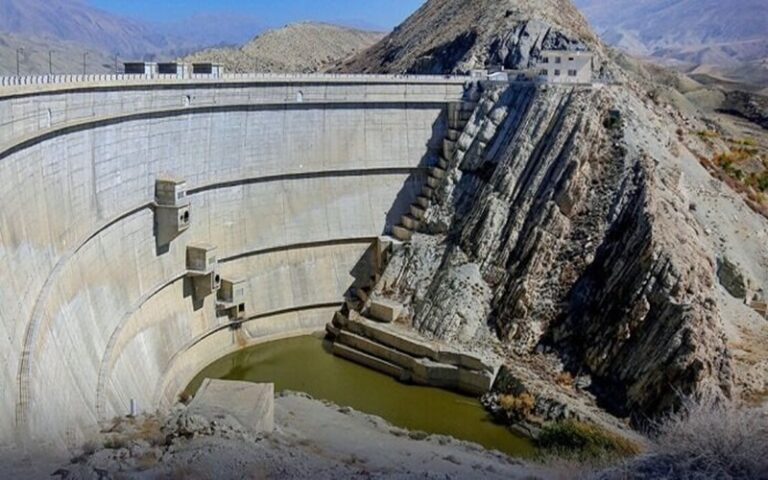
The Persian-language page of the U.S. Department of State on the social platform X criticized the Iranian regime’s water-management policies, stating that the current water crisis in Iran is not merely the result of drought but of decades of mismanagement and failed policies. At the same time, Masoud Pezeshkian, the current president of Iran’s regime, said that future conflicts will be over water.

In the post published on Thursday, November 20, the Persian-language page of the U.S. Department of State stated that officials of Iran’s regime ignored experts’ warnings for years and delayed the “urgent reforms needed to ensure sustainability,” and are now disrupting the lives of millions of people through policies such as “water rationing.”

Number of Water Wells in Iran 2.5 Times Greater Than All Middle Eastern Countries Combined

The U.S. Department of State stressed that this crisis “was not inevitable” and is the direct result of a regime that sacrificed Iran’s natural resources and ecosystems for its own political interests, and now the people of Iran are paying the price.

At the same time, Masoud Pezeshkian, president of Iran’s regime, said during a trip to Qazvin Province: “Today, the conflict is over water. When we said we should move the capital, we did not have enough budget; if we had it, maybe it would have happened, but even then they said such things are not feasible. But the reality is that we no longer have a choice; it is a necessity.”

Pezeshkian, referring to the thirty-centimeter land subsidence and describing it as a “disaster,” warned about neglecting environmental protection and the mismanagement of water resources.

He added: “We can expand Tehran, but we cannot solve its water problem.”

Pezeshkian continued: “Water can be brought from the Persian Gulf, but each cubic meter of water costs about 5 million rials. Is it logical to pay such an amount for one cubic meter of water? What logic approves this?”

He also warned on November 6 during a trip to Kurdistan Province that if it does not rain in December, water in Tehran will be rationed, and if it still does not rain, Tehran would have to be evacuated.

In response to these statements, Reza Haji Karim, head of Iran’s Water Industry Federation, emphasized that the water situation in the capital is “more concerning” than Pezeshkian’s remarks and “more horrifying” than official statistics.

Meanwhile, as the water crisis intensifies across the country, the Tehran Province Water and Wastewater Company announced on November 20 that due to severe water shortages and recent droughts, water for high-consumption customers will be cut for between 12 and 24 hours.

At the same time, Behnam Bakhshi, public relations director of the Tehran Water and Wastewater Company, said that six consecutive years of drought have moved the province from a “water-sensitive” condition into a “red water alert” stage.

He considered saving Tehran from its current water shortage to require “smart, fair, and future-oriented consumption by citizens,” calling for a 10% reduction in water use and the installation of consumption-reducing devices.

In recent months, as the water crisis has intensified and the regime has failed to manage resources, officials of Iran’s regime have repeatedly blamed the public, warning about declining dam reserves and urging citizens to “save water.”

Western Powers Submit Resolution to Clarify IAEA Reporting on Iran’s Nuclear Program

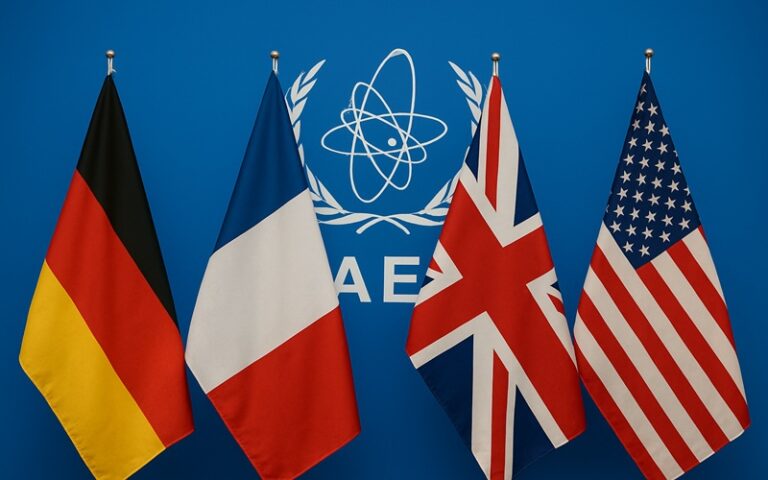
France, Germany, the United Kingdom, and the United States announced during a meeting of the International Atomic Energy Agency (IAEA) Board of Governors that they have submitted a resolution aimed at clarifying the IAEA’s reporting mandate concerning the Iranian regime. These countries called on Tehran to immediately provide a report on its nuclear materials and to grant the Agency full access.

France, Germany, the United Kingdom, and the United States stated at the IAEA Board of Governors meeting that they have submitted a resolution to clarify the Agency’s reporting mandate regarding the Iranian regime. They urged Tehran to immediately submit an accounting of its nuclear materials and to provide the Agency with full access.

Iranian Regime Deputy FM: Our Nuclear Program Is ‘Untouched’ And We Protect It

The four countries stressed that the resolution does not introduce any new demands on the Iranian regime and only emphasizes the implementation of obligations Tehran is already bound to—such as providing unrestricted access for inspectors, delivering accurate information regarding nuclear material accounting, and restoring essential monitoring arrangements.

The statement of these countries, reads in parts:

“Our message is clear: Iran must resolve its safeguards issues without delay. It must provide practical cooperation through access, answers, restoration of monitoring, to enable the Agency to do its job and help rebuild confidence.”

According to the four countries, the submitted resolution better defines the Agency’s reporting mandate so that regular reports can be issued on the Iranian regime’s compliance with the nuclear components of the reinstated UN Security Council resolutions.

They added that the resolution creates no new obligations but instead restores transparency and returns the reporting mechanism to its pre-JCPOA format, under a single agenda item—something they described as “essential” for the effective implementation of the Agency’s mandate.

The statement also refers to Iran’s continued non-compliance with its legal obligations under its NPT Safeguards Agreement and stresses that this agreement is “binding under all circumstances,” requiring the Iranian regime to provide full access to all safeguarded facilities. (For a non-Iranian audience: the NPT is the Nuclear Non-Proliferation Treaty.)

The four Western countries called on the Iranian regime to immediately provide its special report on nuclear materials and to grant the Agency full access to nuclear materials and facilities.

Hours before the resolution was submitted, Rafael Grossi said in a press conference held on Wednesday that the IAEA had not asked the Board of Governors to draft a resolution against Iran.

He noted that the Agency is still not present at locations where it needs to be and has not been granted access to nuclear sites that were attacked.

Grossi emphasized that the Iranian regime’s continued membership in the NPT means it must comply with its rules.

The Director General added that the only thing the Agency can do is continue discussions with Tehran in order to obtain access to the desired sites. Grossi said that Iran’s stockpile of enriched uranium remains in place.

Earlier, Kazem Gharibabadi, the Iranian regime’s deputy foreign minister, had warned on Tuesday, November 18, that the agreement Tehran signed with the IAEA in Cairo in September would be jeopardized by the resolution introduced by the United States and the three European countries at the Board of Governors.

The Cairo agreement allowed the IAEA to resume inspections of all declared nuclear facilities in Iran, including those damaged during the twelve-day conflict and subsequent attacks by Israel and the United States.

But after the three European powers reinstated UN sanctions on the Iranian regime in late September through the “snapback” mechanism, regime officials said that the reimposition of sanctions would “certainly” halt this agreement.

Iran’s Regime Builds Structure Resembling Nuclear Explosives Chamber

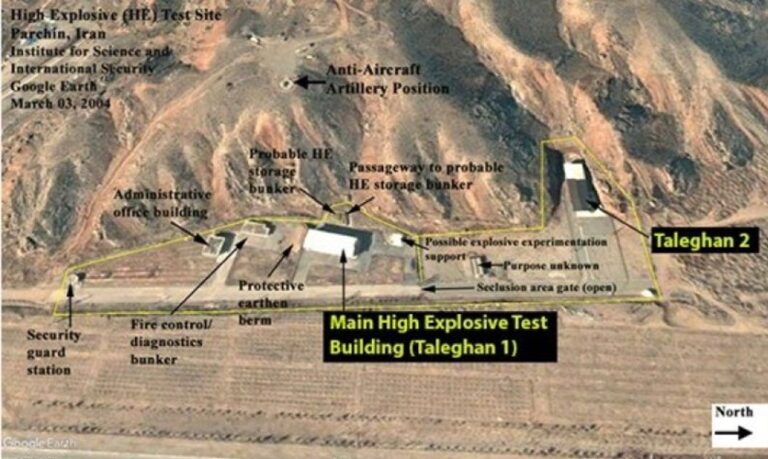
Satellite images show that the Iranian regime has installed a cylindrical structure resembling an explosives testing chamber at the “Taleqan 2” complex, which was one of the former nuclear weapons-development sites under the “Amad Plan.” The size of this structure and the site’s history have raised new questions about its possible purpose.

The Institute for Science and International Security, a Washington-based organization that monitors nuclear proliferation, reported that based on satellite imagery taken between October and November 2025 of the “Taleqan 2” site, this structure is approximately 36 meters long and 12 meters in diameter and is housed inside a metal building roughly 40 meters long and 17 meters wide.

Iran’s Regime Builds Structure Resembling Nuclear Explosives Chamber
Source: Institute for Science and international security

The institute emphasizes that there is no definitive evidence that this structure is being used for “nuclear weaponization,” but the location and the site’s history are cause for concern.

“Taleqan 2” was a key center for explosives testing in the Amad Plan, and before its bombing by Israel, it housed equipment for producing highly pure PETN — a powerful, stable, and moldable explosive. These materials were used inside the “explosive wave generators” of the Amad Plan.

According to the institute, during the Amad Plan’s operation, a smaller explosive testing chamber was located at the same site, equipped with a reinforced foundation and concrete structure that enabled “X-ray” imaging of explosive tests.

Iranian Regime Nuclear Chief: They Tell Us If You Touch Anything, We Will Attack Again

This site is located less than 200 meters from “Taleqan 1,” a location where a larger explosives chamber had previously been used for nuclear-weapon development.

The new construction began months before the “12-day war,” and current images show the project’s progress.

The large cylindrical structure sits at the center of a reinforced metal building and is positioned between three natural rock walls created by a mountain cut.

Two arch-shaped metal openings can be seen on either side of the structure, which, according to the report, may serve as “blast traps.”

The November 14 images also show three rectangular openings on the roof of the main metal structure that are likely used for ventilation or aerial access to the chamber.

A pile of soil is visible above the structure, which could be used to bury the building — a measure that increases the structure’s resistance to internal explosions or airstrikes.

Newly built concrete foundations around the main building also indicate structural reinforcement of the complex.

According to the institute, the Iranian regime has attempted to conceal the possible chamber from satellite observation.

Earlier images show that a large dark rectangular structure had been placed over the building for some time and was visible until August 24.

This cover was later removed, revealing the metal structure and cylindrical chamber in the images.

The report concludes that the architectural design and reinforcement of the site indicate its high importance to Iran’s regime.

Although the facility’s final purpose cannot be determined with certainty from satellite imagery, the structure’s dimensions, the past history of Taleqan 2, and its proximity to other Amad Plan centers raise “important questions” about the possible role of this site in Iran’s sensitive activities.

Third Self-Immolation in Iran Within Twelve Days

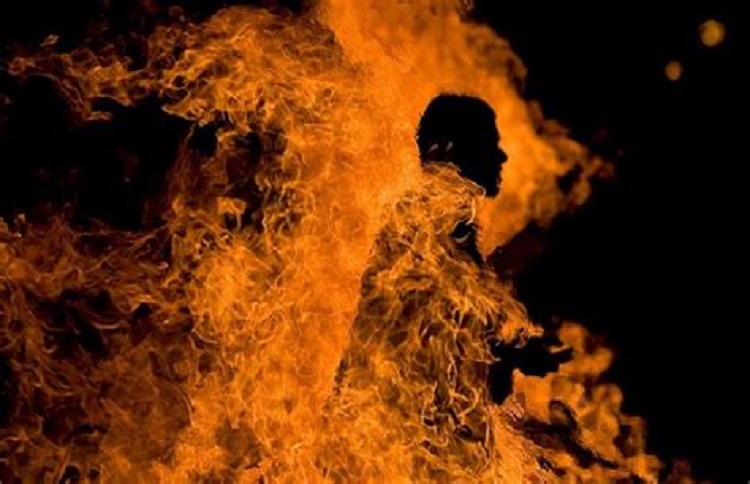
Fereydoun Rostami, an employee of the Marivan municipality, set himself on fire in front of his workplace in protest against pressure, threats, and humiliating treatment by the municipality’s security office. This is the third reported self-immolation in the past two weeks and the seventh media-reported suicide since October 23.

According to the Hengaw human rights organization, Rostami’s coworkers saved him using a fire extinguisher, but “security forces stationed at the Kanidinar municipality” in the Marivan region surrounded him and prevented witnesses from learning about his condition after the fire was put out.

Iranian Student Ahmad Baledi Dies from Self-Immolation in Protest of His Stall’s Demolition by Regime Authorities

The report states that Rostami, who had six years of experience in the administrative department of the Kanidinar municipality, was fired six months ago under pressure exerted by a security office employee identified as “Shima Mohammadi, daughter of Karim Mohammadi, a member of Marivan’s Intelligence Department.”

After being rehired, he was transferred to another division. In recent days, he was reassigned to municipal sanitation work and, according to Hengaw, forced to sweep streets and collect garbage.

Three protest self-immolations from November 5 to 17

Rostami’s self-immolation is the third since November 5. On November 5, Ahmad Baledi set himself on fire in protest after Ahvaz municipality agents destroyed his family’s food stand; he died in hospital on November 11.

Baledi, who worked at the family’s food stand while attending university, set himself on fire after municipality workers destroyed their stand.

On November 12, the head of Sanandaj Fire Department announced that a firefighter named Shaho Saffari set himself on fire inside the department’s headquarters in protest over unpaid and overdue wages; his condition was reported as critical.

The suicides that reached the media

According to media reports, since late October at least two young female medical workers, a journalist and political analyst, and one political prisoner have died by suicide.

In late October, news emerged that a gynecology resident at Tehran University of Medical Sciences, Yasaman Shirani, had died by suicide.

On November 2, similar news surfaced about a 36-year-old general practitioner named Nadia Motaghi in Shiraz. In the following days, the suicides of political analyst and journalist Fouad Shams, a young man in Aligudarz, and a political prisoner named Mehrdad Ahmadi-Nejad were also reported.

In response to these reports, Mohammad-Reza Aref, the first vice president under Iran’s regime president Massoud Pezeshkian, described the events as a “signal” to the authorities that points to a “social crisis.”

Iran: In Five Months, Raw Milk Prices Have Risen By What Would Normally Take Fifty Years

0

Ali Ehsan Zafari, head of the Dairy Products Union, announced a 70% increase in the price of raw milk compared to June and stated that this level of increase is equivalent to fifty years of past price jumps.

Speaking to the state-run ILNA news agency on Monday, November 17, Zafari said that dairy prices change daily due to rising raw milk prices.

According to him, “The price of raw milk had reached 230,000 rials per kilogram over sixty years, but within five months it increased to 390,000 rials per kilogram. This means it has risen by nearly 60%, which is equal to fifty years of price increases.”

It is worth noting that the union official’s claims do not seem accurate, as the five-month increase is not 60% but 70%. Therefore, assuming a consistent upward trend in raw milk prices over the past sixty years, this five-month rise is roughly equivalent to forty-two years of price growth.

Sharp Rise in Food Prices in Iran; Meat and Rice Lead the Surge

Zafari added in his ILNA interview that the prices of all dairy products have changed because raw milk is the base input for all of them, and this trend will continue.

The head of the Dairy Products Union warned that as dairy prices rise, consumer demand has fallen, which will eventually lead to the shutdown of factories one after another.

In May 2025, milk prices had also risen by 27.7%, increasing from 180,000 rials to 230,000 rials per kilogram.

Media outlets report that the root of this crisis lies in drought-driven pressure on livestock farmers and sharply rising production costs in the livestock and poultry sectors.

A predicted 49% increase in dairy prices

The state-run Hamshahri Online newspaper reported on November 16 that over the past two weeks, widely consumed dairy products have been distributed at new prices daily, with an overall upward trend across the market.

Dairy producers, responding to criticism, claim that to compensate for rising input costs, they must raise product prices by an average of 0.7% for every one-percent increase in raw milk prices.

However, price increases for dairy products in the market have consistently exceeded this ratio.

With raw milk prices rising 70%, the average price of dairy products is expected to rise by about 49%.

Hamshahri reported that over the past week, various dairy companies increased the price of low-fat and full-fat bottled milk by more than 50% on average.

Dairy products in June had also faced a 42% price increase due to the rise in raw milk prices.

In recent years, staple household food items have been among the products experiencing the highest price surges.

Iran’s Statistical Center reported annual inflation for September at 37.5%, point-to-point inflation at 45.3%, and month-to-month inflation at 3.8%.

Experts believe these figures are usually more favorable than real market conditions due to political bias in the calculations.

Rising Abuse of Psychiatric Medications in Iran

0

The state-run Shargh newspaper reported an increase in the misuse of psychiatric medications in Iran, noting that such drugs can be obtained in Naser Khosrow—Tehran’s black-market drug hub—“in less than ten minutes.”

The November 17 report stated: “A walk through Naser Khosrow shows that in less than ten minutes, one can access various psychiatric drugs: Vyvanse, Ritalin, Diazepam, Zolpidem, Midazolam, and dozens more, sold at unbelievable prices—ranging from 2 to 5 million rials per blister pack.”

Iranians Are Giving Up Visiting Doctors Due To High Cost of Treatment and Medicine

The report was based on interviews with drug users, psychiatrists, nurses in major Tehran hospital toxicology wards, and pharmacy owners.

A nurse told Shargh: “Almost no shift ends without at least one patient coming in due to psychiatric drug misuse.”

An unnamed psychiatrist said there is no updated data on drug misuse and addiction in Iran.

He told Shargh: “Drugs used for psychological disorders—like Vyvanse, which falls under amphetamines—are prone to misuse.”

Getting high on medication

One user, not yet in his twenties, said in an interview that he has seen the many consequences of misuse among his friends and has “lived through it.”

He explained that “every once in a while, the drugs people use become more varied,” noting that some medications intended for cancer patients are used by certain youth because they cause “a pleasant kind of high.”

He also pointed to the rising use of sedatives among teenagers and young adults, adding that the main problem is that the drugs initially make the user feel better, but as the body adapts, their effect fades, the person’s mental state worsens, and they “make sudden dangerous decisions.”

He emphasized that doctors “prescribe these drugs easily.”

In recent years, multiple reports have highlighted the rising prevalence of mental health disorders in Iran.

Official data shows that about 25% to 30% of the population suffers from some form of mental disorder, while chronic economic and social pressures have pushed the country’s collective mental health into a warning state.

Experts cite factors such as social restrictions and pressures, crippling economic sanctions, political instability, and even war as contributors to this situation.

In addition, suicide attempts in Iran have risen significantly in recent years.

Tehran Retirees Association: Retiree Salaries Do Not Cover Living Expenses

The head of the Retirees Association of Tehran Province, referring to the livelihood problems faced by millions of retirees in Iran, said that their salaries do not match “high inflation and recent price increases.” For non-Iranian readers: this association represents retirees covered by Iran’s Social Security Organization, the country’s largest pension fund.

Ali Dehghan-Kia, speaking with the state-run radio on Tuesday, November 18, emphasized that retirees face “serious livelihood problems” and added: “The mismatch between the salaries received and the cost of living has caused many of them to be unable to meet their basic needs.”

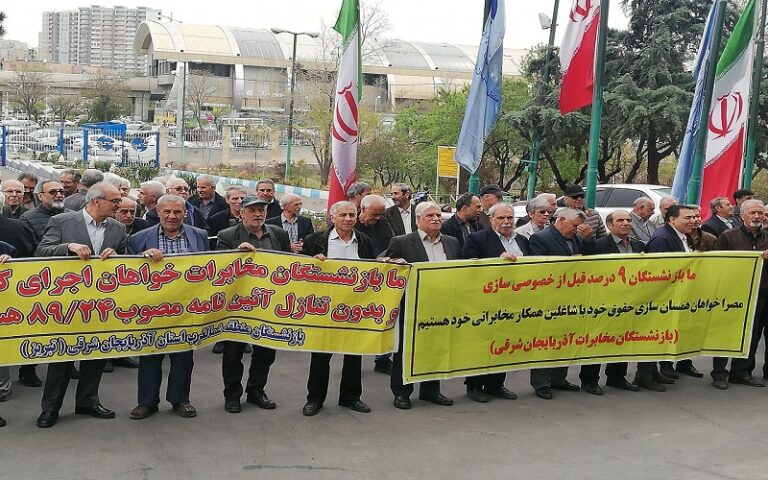
Nurses, Workers, Army Retirees, And Poultry Farmers Hold Protests In Cities Across Iran

He noted that the current salary of minimum-wage retirees is between 100 million and 110 million rials (approximately $ 97). He added: “Even when including a dependent spouse or children, this amount reaches 140 million to 145 million rials (approximately $ 123 to 130), which is not sufficient for living in the current conditions.”

Dehghan-Kia stressed that “with inflation above one-hundred percent in food items, household living costs have come under severe pressure,” and added: “Any increase in our salaries depends on the decision of the Supreme Labor Council. We have repeatedly asked the government to hold a session to raise wages for the second half of the year, but no action has been taken yet.”
For non-Iranian readers: the Supreme Labor Council is the main state-controlled body that sets annual wages in Iran.

He emphasized the need for proper implementation of laws concerning retirees and added that if the law had been respected over the past forty years, the minimum retirement salary should not have been less than 320 million to 350 million rials.

Dehghan-Kia also referred to healthcare difficulties faced by retirees, saying: “With aging, the need for medical care increases, but healthcare costs are unaffordable for many of them.”

According to the latest data from spring 2024, more than eight-and-a-half million primary and dependent retirees receive pensions from the Social Security Organization.

Dependent pensioners are individuals supported by a primary pension recipient.

The Supreme Labor Council meeting was held without discussing wages

The 337th meeting of the Supreme Labor Council was held on Monday, November 17, but according to media reports, the agenda did not include worker wages.

In contrast, according to the state-run Tasnim News Agency, the main focus of the meeting was “amending the regulations for selecting members of labor dispute resolution bodies.” The session also approved a resolution allowing the Islamic Labor Councils—state-controlled worker representation bodies—to continue nominating retired members to sit on dispute resolution committees.

Tasnim commented on the resolution, stating: “The continued presence of retirees in positions needed by young people seems strange.”

The neglect of worker wages by the Supreme Labor Council comes at a time when even pro-government labor organizations have repeatedly demanded wage adjustments. These requests have been opposed by Ahmad Meydari, Iran’s regime minister of cooperatives, labor, and social welfare.

Currently, the base wage for workers covered by the Labor Law is close to 110 million rials per month. With benefits included, this amount reaches around 150 million rials (approximately $ 133). In contrast, some pro-government labor groups say that the monthly cost of living has reached 580 million rials (approximately $ 513).

According to the two clauses of Article 41 of the Labor Law, the minimum wage must be set based on the inflation rate and the cost of living for a worker’s household. However, the second clause has not been applied in the Supreme Labor Council’s wage calculations for decades.

This practice by successive governments of Iran’s regime is described by labor activists and unions as “wage suppression.”

Wage suppression by the government continues even though, according to the state-run ILNA News Agency citing official data, the cost-of-living basket for worker households has increased by “more than 60%” since the beginning of the year. In addition, some essential items needed by workers have increased by “100% or even more.”

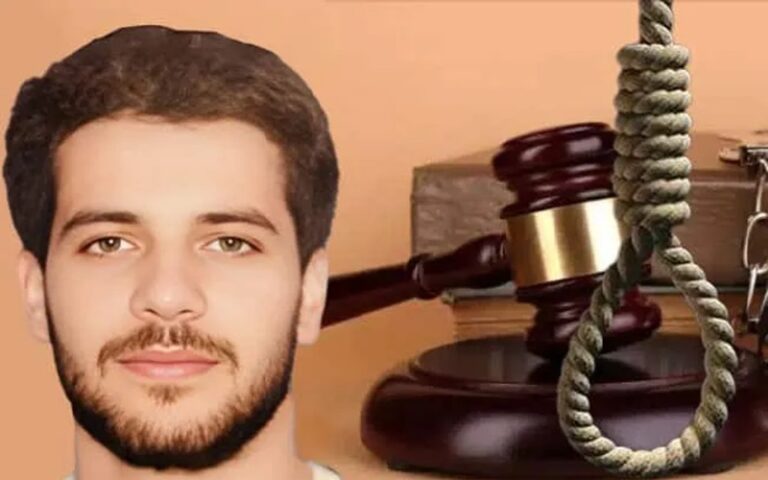
Iranian Political Prisoner Sentenced to Death as Regime Authorities Force His Family Into Silence

The death sentence for Mohammad-Mehdi Soleimani, one of those arrested during the nationwide protests of 2022, has been issued amid extensive ambiguities in his case, heavy security pressure on his family, and an absence of judicial transparency. These protests erupted across Iran after the killing of Mahsa Amini in morality-police custody.

This young man, born in the 2000s, is now facing a finalized death sentence—issued through the same repeated pattern used against protesters: fabricating cases, extracting confessions under pressure, and threatening families.

Iran’s Regime Continue Execution Spree With 13 Hangings in Four Days

The incident dates back to September 21, 2022, when during protests in the Abkuh neighborhood of Mashhad, a security officer named Rasoul Doust-Mohammadi was killed. Only forty-eight hours later, the governor of Mashhad announced that “the assailant has been arrested,” but no name, photo, or details of the detained person were released.

This media silence continued for nearly two years until November 17, 2024, when the state-run Khorasan newspaper suddenly headlined: “The killer of Rasoul Doust-Mohammadi has been sentenced to death.” For the first time, the initials “M.H. Soleimani” appeared in the report—later confirmed to be Mohammad-Mehdi Soleimani. Khorasan is a major state-run daily based in Mashhad and aligned with Iran’s regime.

According to that same report, Branch Five of the Criminal Court One of Razavi Khorasan Province, presided over by Judge Mohammad Shoja‘pour-Fadaki, sentenced him to qesas (retribution in kind, meaning execution). In addition, he was sentenced to two and a half years in prison and seventy-four lashes on the charge of “possessing incendiary materials.”

Lack of legal representation, lack of family access, and ambiguities in the judicial process

Available information shows that it is still unknown whether Mohammad-Mehdi Soleimani had access to an independent lawyer during interrogation and trial. No official details have been released about the judicial process, how the accusations were proven, or what evidence the court used.

His family has also been placed under intense security pressure and barred from giving statements, publishing photos, or even revealing his exact age. Local sources say the family was warned that “if the case is publicized, the situation will get worse”—a threat that has become a consistent tactic in protest-related cases in recent years.

Accounts from cellmates: a claim of finding a knife, not committing a murder

One former cellmate has said that Mohammad-Mehdi Soleimani claimed at the time of his arrest that he had “found a bloody knife on the street,” which led to his detention. No official explanation has been given regarding this claim, any forensic matching of the knife to the scene, or any medical examiner’s reports.

These accounts, combined with the lack of transparency, further reinforce the likelihood of coerced confessions obtained under pressure, torture, or threats.

According to numerous reports from prisons under Iran’s dictatorial system, many confessions attributed to protesters are not obtained under fair conditions but through physical and psychological torture, threats, long solitary confinement, and pressure on families. In similar cases in recent years, prisoners have explained after their release that interrogators forced them to accept accusations with statements such as “If you don’t cooperate, we will arrest your family” or “If you don’t confirm what we say, you will be sentenced to death.”

Threatening families and the cycle of covert executions

One of the most alarming aspects of such cases is the intimidation of families into silence. Many families of protest-related detainees have said:
“They told us that if you publicize the case, it will get worse for your child.”

These pressures allow cases to proceed secretly, without public oversight and without adequate defense. This secrecy paves the way for nighttime executions carried out without prior public notice—as seen in multiple previous cases such as Mohammad-Mehdi Karami, Majidreza Rahnavard, and Mohsen Shekari, all young protesters executed following the 2022 uprising.

This case is yet another example of the dozens of similar sentences issued within Iran’s closed judicial and security apparatus—without the possibility of full defense and without independent oversight. It is a case that could at any moment turn into another covert execution unless public opinion and human-rights organizations intervene to expose the truth and halt the implementation of the sentence.