Home Blog Page 78

Ecological Collapse of Lake Urmia and the Caspian Sea in Iran

0

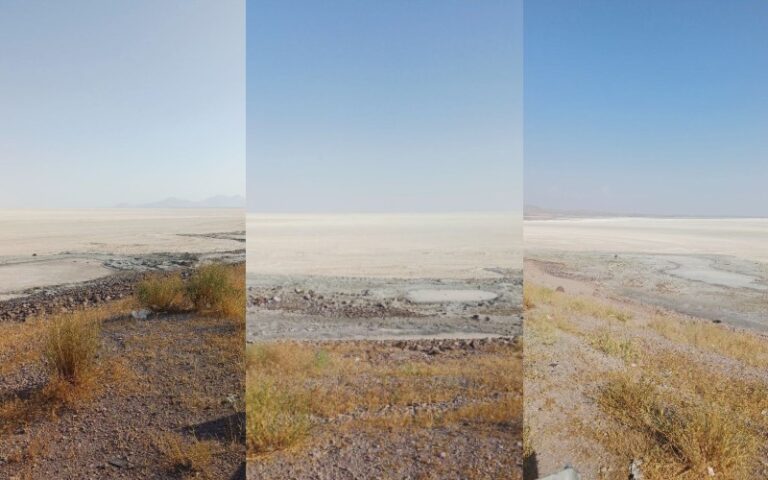
Wetlands and lakes in Iran have long faced the threat of drying up. The Caspian Sea (the world’s largest lake) is under water shortage stress, while Lake Urmia, once the world’s largest saltwater lake, is now on the verge of total desiccation.

According to the state-run Khabar Online website, Iran is simultaneously facing two major water crises: Lake Urmia, which experts say is “practically dead” and only a few days away from complete evaporation, and the Caspian Sea, where the alarming decline in water levels poses a serious warning for Iran’s northern coastline.

The report notes that Lake Urmia, once one of the world’s largest salt lakes, now contains only about 100 million cubic meters of saline water spread across roughly 200 square kilometers, with a depth of less than half a meter. Isa Kalantari, former head of Iran’s regime Environmental Protection Organization, described the situation as “catastrophic” and warned that the lake would completely evaporate within 20 days.

Complete Drying of Lake Urmia by the End of Summer Is Certain

Kalantari pointed to excessive dam construction, unsustainable agricultural expansion, and failure to allocate environmental water rights as the main causes of the lake’s destruction. He warned that with the complete drying of Urmia, its 13-billion-ton salt bed would turn into a source of toxic dust, threatening the health of the people of Azerbaijan in terms of respiratory, sanitary, and genetic risks.

Meanwhile, in northern Iran, the Caspian Sea is also in a concerning state. Sergei Shipulin, an official from Russia’s Fisheries and Oceanography Research Institute, announced that the Caspian’s water level has been steadily declining since 2015, and this year it will reach its lowest recorded point in decades. He predicted that by the end of this year, the Caspian water level will drop by 20 to 30 centimeters, and if the trend continues, a one-meter decline by 2030 is likely.

The Russian official also warned that the Caspian littoral states, including Iran, must take measures to adapt to declining water levels, as the southern shores and shallow northern areas are at the greatest risk.

According to experts, the two water bodies that once symbolized life and national pride in Iran now stand on the brink of ecological collapse — the result of decades of neglecting sustainable development, destruction of natural resources, and disregard for environmental priorities.

Continuing warnings about the consequences of Iran’s water crisis, Ghorbanali Mohammadpour, Director-General of the Environmental Protection Department in Alborz Province, announced the unprecedented drying of the Salehiyeh wetland, saying it has now become an active source of dust storms affecting Karaj and even Tehran. He also reported land subsidence in the wetland area and in Mehrshahr, Karaj, stressing that Alborz can no longer sustain water-intensive industries or flood irrigation agriculture. He called for an immediate change in consumption patterns and the implementation of water recycling programs. According to this environmental official, continued neglect of these warnings could intensify environmental, health, and even social crises in one of the most densely populated provinces of the country.

The water crisis in Iran and its impact on people’s lives

The water crisis in Iran has long gone beyond being an environmental issue, becoming a widespread crisis with economic, social, health, and security dimensions. According to official statistics, more than 70% of Iran’s renewable water resources have been consumed or lost, and most of the country’s watersheds face resource deficits. In recent years, this problem has been exacerbated by persistent droughts, rising average annual temperatures, reduced rainfall, and excessive extraction from groundwater resources.

One of the most significant consequences of this crisis is environmental migration. Many families, due to dried wells, farmland loss, and the collapse of their livelihoods, have been forced to abandon villages and small towns. This forced migration has not only placed pressure on urban infrastructure but has also triggered social tensions and increased unemployment rates in the host areas.

Furthermore, the decline in groundwater levels and land subsidence has now become a chronic problem in many plains across Iran, particularly in provinces such as Tehran, Isfahan, Kerman, and Hamedan. This phenomenon poses a serious threat not only to vital infrastructure (such as metro lines, roads, and buildings) but also to food security, since Iranian agriculture is heavily dependent on groundwater resources.

Alongside these issues, the crisis of lakes and wetlands has further deepened the problem. The drying up of lakes such as Hamun, Bakhtegan, Gavkhuni, Maharloo, and now Urmia has not only destroyed biodiversity and local ecosystems but also severely disrupted the lives of millions of people living around these water bodies.

Experts have repeatedly warned in recent years that these crises are so deeply interconnected that they require a fundamental overhaul of Iran’s water policies, sustainable development strategies, and environmental approaches. Otherwise, the country’s future may be tied to dryness, poverty, migration, and social and political instability.
Rising Dollar Rate and Stock Market Decline in Iran

The US dollar exchange rate in Iran’s free market surpassed 960,000 rials. By the close of trading on Monday, August 25, the main stock index dropped by 33,000 points, and 6.56 trillion rials (about 68 million USD) flowed out of the stock market.

On Monday, August 25, the foreign exchange market experienced about a 1% increase in the dollar rate compared to the previous day.

On July 31, coinciding with the implementation of new US sanctions and growing speculation that Europe might trigger the snapback mechanism, the dollar rate in Iran’s free market rose again after several weeks, reaching 906,500 rials.

United Kingdom Sanctions Companies Affiliated With Iran’s Regime

The stock exchange also saw its fourth consecutive day of decline, with the main index falling by 1.33%.

The stock index dropped by about 33,000 points, returning to 2,438,000 units.

Economic media in Iran reported that this was the lowest level of the stock index so far this year.

According to these reports, 6.57 trillion rials (about 68 million USD) in retail money was withdrawn from trading in stocks, preemptive rights, and equity funds.

The value of retail trades reached 30.83 trillion rials (about 321 million USD).

On Monday, August 25, 88% of stock market symbols closed in negative territory, while only 12% remained in positive territory.

With the Tehran Stock Exchange’s retreat that day, the market’s return since the beginning of the year reached -10%. Over the past three months, the value of Iran’s stock market has dropped by about 35%.

Some economic experts believe that the stock market collapse, alongside the rising value of the dollar and gold, is not only due to sanctions but also stems from “public concerns about the country’s political outlook and reduced currency supply in the market.”

Iran Ranks 95th In Global Internet Quality; Higher Costs, Lower Speeds

The state-run Shargh daily wrote: “By ranking 95th, Iran has the worst internet quality among the top 100 GDP countries,” placing it lower than countries such as Sudan, Congo, and Ethiopia.

According to Shargh: “By ranking 95th, Iran has the worst internet quality among the top 100 GDP countries, meaning the world’s largest economies.”
The report states that Iran’s internet experience is only better than in countries such as Cuba, Turkmenistan, Sudan, and Ethiopia, a situation that places Iran alongside war-torn and underdeveloped nations.
This decline in quality is a direct result of entrenched corruption and regime policies that sacrifice citizens’ free access in favor of control and censorship.

Approval of Accelerated Implementation of Class-Based Internet in Iran

In the winter of 2023, the Ministry of Communications raised internet tariffs by 30% with promises of improved quality, but Shargh emphasized that the quality “not only did not improve but actually got worse.”

Shargh reminded that in the winter of 2023, the Ministry of Communications raised tariffs by 30% with a commitment to improve quality. However, “in practice, quality did not change noticeably and even got worse,” leaving the gap between “higher prices” and “lower quality” intact.
This trend shows that the cost increases only served to fill the pockets of telecom operators and networks tied to the regime’s power structure, not for infrastructure development. The judiciary, through silence and inaction, has paved the way for the continuation of this cycle of corruption and profiteering.

Experts say the roots of the internet crisis lie not in tariffs but in filtering and restrictive regime policies— a clear example of structural corruption and lack of accountability from the judiciary and government.

Experts interviewed by Shargh stressed that the internet crisis stems more from restrictive policies and filtering than tariffs: “What seriously affects both internet quality and operators’ revenue is the imposition of restrictions and filtering on the network.”
Restrictions imposed by security and regime institutions have not only disrupted people’s lives and businesses but have also driven the telecommunications industry to the brink of collapse.
This clear picture of structural corruption once again shows how national interests and people’s well-being have been sacrificed to a network of profiteering, censorship, and a corrupt judiciary.

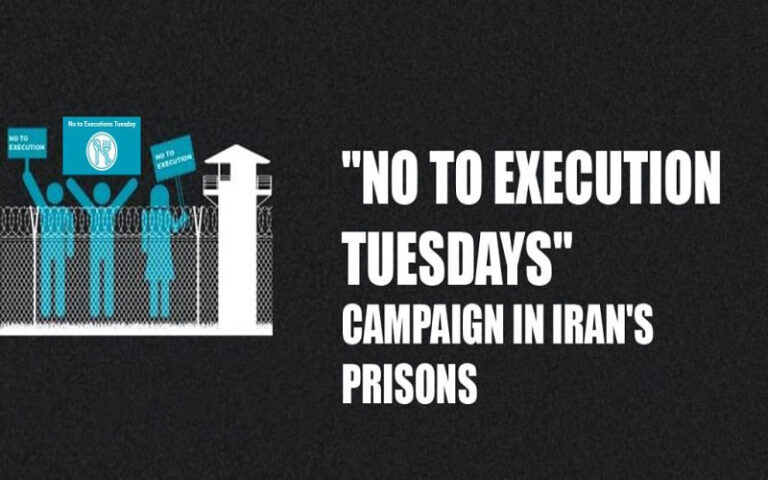
Iran’s “No To Execution Tuesdays” Campaign Marks 83rd Week in 50 Prisons

On Tuesday, August 26, prisoners in 50 prisons across the country went on hunger strike as part of the “No To Execution Tuesdays” campaign, protesting against the widespread executions in Iran.

This week, with the prisoners of Dehdasht joining the “No To Execution Tuesdays” campaign, the number of participating prisons increased to 50.

Political prisoners participating in this campaign called on all international institutions and human rights activists to echo the Iranian people’s protest against executions.

The full statement of the prisoners participating this week is as follows:

In Iran under the rule of the Supreme Leader, the execution machine continues to ruthlessly claim victims. Between July 23 and August 22 alone, 166 people were hanged; and in the past week, 31 of our compatriots, including one woman, were executed. Two of the victims were publicly hanged in Kordkuy and Beyrom in Larestan. The execution-driven government seeks to humiliate and normalize violence, plunging society into fear.

Rise In Executions in Iran; Ten Prisoners Hanged in One Day

According to reports, a group of prisoners in Dehdasht prison joined the “No To Execution Tuesdays” campaign in its 83rd week. The addition of Dehdasht prison to the campaign list is a bitter reminder that no corner of Iran is safe from the shadow of execution.

At the same time, we are confronted with another shocking piece of news: the transformation of Section 41 of Behesht Zahra Cemetery (a section that reminds us of the thousands of political prisoners of the 1980s and the unforgettable crimes of those years) into a parking lot. This action is not only a disgraceful attempt to erase collective memory and the traces of regime crimes but also an overt insult to the victims and their families, an act condemned by Amnesty International as well.

The “No To Execution Tuesdays” campaign once again cries out:

Execution is not a solution.

Execution is a blatant violation of the right to life.

Execution is a tool for creating terror and consolidating political repression.

This campaign calls on all international institutions, human rights activists, and all awakened consciences to stand against this cycle of death and to reflect the Iranian people’s protest against executions.

On its 83rd week, the “No To Execution Tuesdays” campaign continues on Tuesday, August 26, with prisoners in 50 prisons across the country on hunger strike.

Geneva to Host Iranian Regime-European Troika Nuclear Talks Tuesday

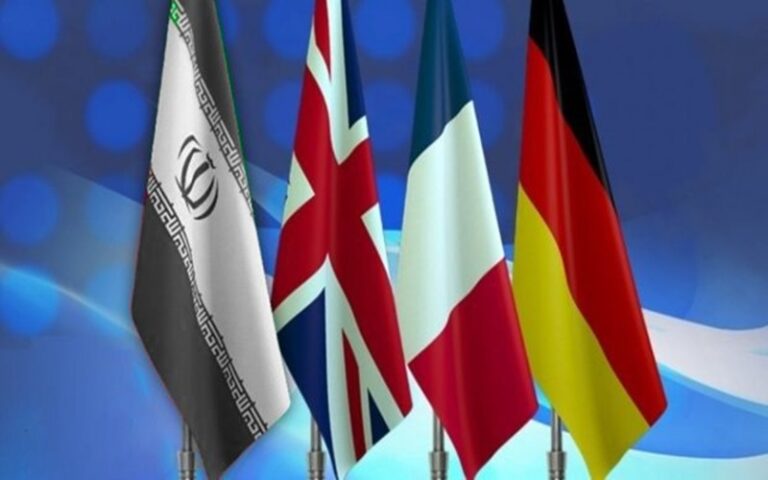
Tasnim News Agency, affiliated with the Islamic Revolutionary Guard Corps (IRGC), reported that a new round of negotiations between the Iranian regime and three European countries over Tehran’s nuclear program will take place on Tuesday, August 26, in Geneva, Switzerland.

On Monday, August 25, Tasnim quoted an informed source saying that Majid Takht-Ravanchi, the deputy foreign minister for political affairs, will head the Iranian regime’s delegation in this round of talks, while “the deputy foreign ministers of Germany, France, and the United Kingdom will also attend.”

The source added: “The agenda of these negotiations is nuclear issues and the lifting of sanctions.”

The Iranian Regime’s Supreme Leader Rejected Direct Negotiations with the United States

Earlier, on August 22, Iranian regime foreign minister Abbas Araghchi held a phone call with his counterparts in the three European countries as well as the European Union’s foreign policy chief to discuss the snapback mechanism.

In this call, it was agreed that negotiations on the Iranian regime’s nuclear program would continue.

In recent days, speculation has intensified over the fate of Tehran’s nuclear program, the European Troika’s decision to activate the snapback mechanism, and the Iranian regime’s possible reaction to it.

This comes as the legal deadline of the United Nations Security Council Resolution 2231 approaches and the likelihood of the snapback mechanism being triggered increases. Tehran and its allies have intensified their consultations to counter this mechanism.

On August 23, Araghchi and Russian foreign minister Sergey Lavrov discussed in a phone call the developments related to Iran’s nuclear file, recent moves by European countries, and Iran’s cooperation with the International Atomic Energy Agency (IAEA).

Iran’s Regime and Russia Intensify Consultations to ‘Contain Snapback’

Ali Larijani, secretary of the Iranian regime’s Supreme National Security Council, on August 22 referred to the possibility of Germany, France, and the United Kingdom activating the snapback mechanism and said, “Important countries” have disagreements about “how to use” this mechanism.

He also addressed the possibility of the Iranian regime withdrawing from the Nuclear Non-Proliferation Treaty (NPT) and added: “This assumption has always existed. The reality is that the NPT has never benefited us.”

Before the twelve-day war, five rounds of nuclear negotiations were held between Tehran and Washington, but the talks reached a deadlock due to the Iranian regime’s insistence on continuing uranium enrichment on Iranian soil.

On August 24, Iranian regime supreme leader Ali Khamenei accused the United States of trying “to bring the Iranian nation to its knees and make it obedient,” and said that “the essence of the issue is America’s enmity,” which makes matters such as direct negotiations “unsolvable.”

Meanwhile, the British newspaper The Telegraph reported that a faction within the Iranian regime, led by Ali Larijani, is ready to significantly reduce its uranium enrichment level in order to prevent Britain and other Western countries from reimposing United Nations sanctions.

On Sunday, August 24, the British outlet quoted regime officials as saying that Tehran is willing to back down from its hardline stance to prevent further attacks from Israel and the United States as well as the activation of the snapback mechanism.

According to the report, Ali Larijani is leading the efforts to persuade the leadership to reduce the uranium enrichment level from 60% to 20%.

Before the snapback mechanism is activated, the Iranian regime is making great efforts to escape comprehensive sanctions by any means. The regime has a 22-year history of fruitless nuclear negotiations with the West, and this weakness of Western countries along with their policy of appeasement has made Tehran believe it is immune from any danger.

The Iranian Regime’s Supreme Leader Rejected Direct Negotiations with the United States

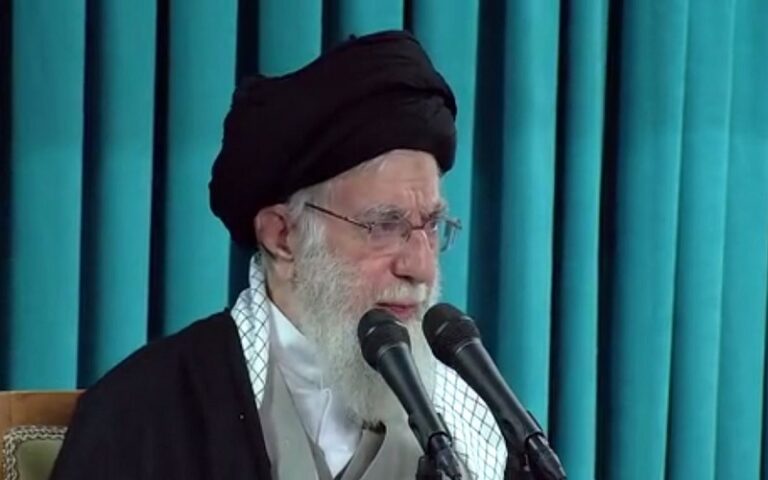
Ali Khamenei, the supreme leader of Iran’s regime, accused supporters of direct talks with the United States and insisted that “the essence of the matter is America’s hostility,” which, he said, is “unsolvable” through measures like direct negotiations.

On Sunday, August 24, in a meeting with a group of regime supporters, Khamenei described those who believe “the reason for America’s anger and hostility” lies in “the slogans of the Iranian people,” including advocates of direct negotiations, as “superficial.” He stressed: “The essence of the matter is not this, and in light of America’s real objective in its hostility toward Iran, these issues are unsolvable.”

Iranian Regime Close to Building Nuclear Bomb

Khamenei accused the United States of acting “to bring the Iranian nation to its knees and make it obedient,” calling it “an insult to Iranians.” He added: “The nation is deeply offended by such an ugly expectation and will stand firmly against it.”

On August 6, Abbas Araghchi, the foreign minister of Iran’s regime, said regarding the possibility of resuming talks with the United States that there was no final agreement yet, but messages had been exchanged, and the continuation of talks depends on the regime’s interests.

On August 20, in a video interview with IRNA, the state-run news agency, he also said: “We have not yet reached the point of maturity in negotiations to the extent of effective talks with America.”

Before the 12-day war, five rounds of nuclear negotiations were held between Tehran and Washington, but the talks reached a deadlock as Iranian regime officials insisted on continuing uranium enrichment inside Iran.

At the beginning of Donald Trump’s second presidential term, Khamenei described negotiations with the United States as “dishonorable and unwise,” and earlier, during Trump’s first term, he had pledged a policy of “no war, no negotiations.”

However, Hassan Rouhani, the former president of Iran’s regime, said in mid-March 2025 during a meeting with his former cabinet members that while describing the situation in the country as “critical,” Khamenei is not fundamentally opposed to negotiations. Instead, he said, Khamenei’s stance depends on timing, meaning he may oppose negotiations today but in a few months under different conditions might agree to talks with the United States.

Iran Ranks Third Globally in Extent of Land Subsidence

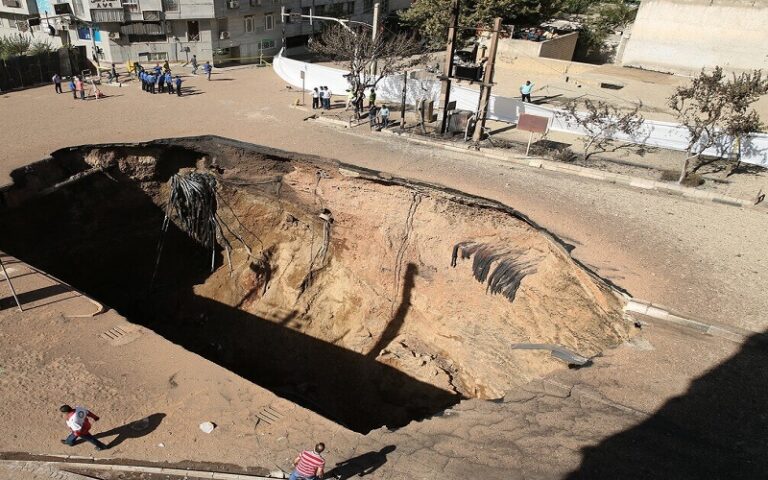
Amid ongoing warnings about land subsidence crisis in Iran, an official from the Ministry of Roads and Urban Development announced that Iran ranks third globally in terms of land subsidence, revealing that the largest subsidence zones in the country have been identified in Golestan Province.

Ali Beitollahi, head of the Earthquake Engineering and Risk Department at the Road, Housing, and Urban Development Research Center, warned on Saturday, August 23, that due to the severe depletion of groundwater resources, Iran is now among the top three countries in the world in terms of the “number of land subsidence zones.”

He explained that the main cause of land subsidence in Iran is the lowering of groundwater levels, saying: “Around Tehran, we used to have groundwater at depths of 20 to 30 meters. Now, even at 120 meters, when we dig wells, there is no water. The water has been extracted and not replenished. This is called a negative water balance.”

Land Subsidence Warnings in Tehran and the Critical Situation of 70% of Iran’s Plains

Beitollahi elaborated that when the soil loses its water, the underground layers compress and the surface sinks.

According to him, this process prevents surface water from infiltrating the ground, causes aquifers to lose their reserves, and results in runoff flowing on the surface.

The head of Earthquake Engineering and Risk warned that many of Iran’s historical sites are located in subsidence zones, saying: “Today, Naqsh-e Jahan Square in Isfahan (a major historical site) has cracked, as well as Seyyed Mosque in Isfahan, Naqsh-e Rostam, Persepolis, and other monuments. Unfortunately, out of about 67 cultural heritage sites, 27 are located in subsidence zones.”

On August 12, Isa Bozorgzadeh, spokesperson for Iran’s water industry, warned about the unprecedented severity of the water crisis, stating that 70% of Iran’s plains are in “restricted” or “critically restricted” conditions, and more than 300 plains, including Tehran, face serious land subsidence risks.

Transportation infrastructure at risk

Beitollahi also stated that transportation infrastructure, including railways and roads, has not been spared, mentioning the Tehran-Mashhad railway, the Isfahan-Tehran railway, and the railway along Lake Urmia’s coast. He added: “In Golestan Province, we have the largest subsidence zone. In Mazandaran, too, we have found subsidence in places we never expected. The spread of subsidence across the country is very extensive.”

This Ministry of Roads and Urban Development official stressed that the largest subsidence zones in Iran are located in densely populated areas and settlements, not in deserts or mountains.

He identified Mashhad, southwestern Tehran, southeastern Shiraz, and northern Isfahan as among the most significant subsidence centers in Iran.

According to Beitollahi, the depletion of groundwater resources began in the mid-1970s with population growth and agricultural expansion, but the intensity of subsidence increased in the 1990s.

Referring to the amount of groundwater lost, he added: “If we imagine a canal from the Caspian Sea coast to the Sea of Oman, 100 meters deep and 1 kilometer wide, the volume of water Iran has lost would be enough to fill such a canal. This negative water balance manifests as subsidence, and if not managed, nature will certainly give a harsh response.”

Somayeh Rafiei, head of the Environmental Caucus in the regime’s parliament, warned last month that excessive groundwater extraction has caused land subsidence in 30 provinces and turned 66% of the country’s wetlands into dust storm sources.

Unprecedented Energy Crisis and Government’s Inability Force Shutdowns in 27 Provinces in Iran

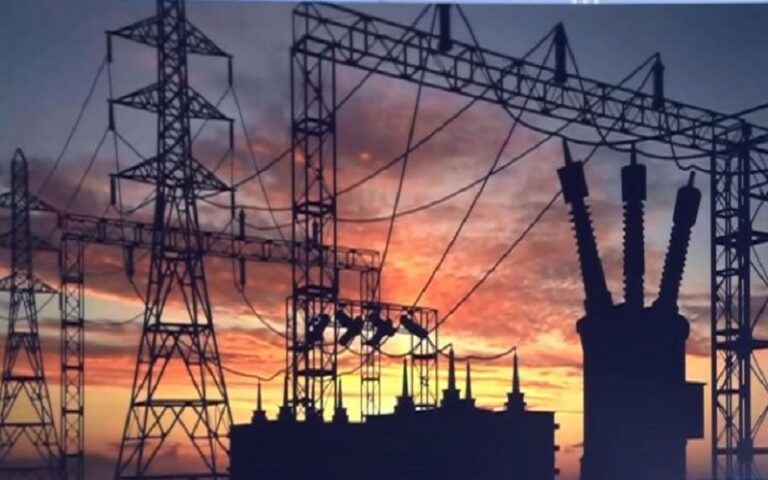
With the continuation of an unprecedented heatwave and a sharp decline in water and electricity resources, Iran’s regime has once again resorted to widespread shutdowns of government offices and institutions in more than 27 provinces across the country.

Regime officials justified the decision as a measure to “manage energy consumption” and “help stabilize the electricity and water grid.” However, experts view it as a temporary band-aid and a clear sign of structural weaknesses and chronic mismanagement.

Power Outages and Extreme Heat in Iran Are Claiming Lives

The shutdowns began in late July, starting with the capital, Tehran. Later, most provinces declared four days of closure in August, and ultimately, on Saturday, August 23, at least 27 provinces—including Tehran, Isfahan, Khuzestan, the three Khorasan provinces, the two Azerbaijans, and Kerman—were placed under shutdown. The Banks Coordination Council also announced that all banks in Tehran and these provinces would be closed on that day.

Provincial governors stressed that all institutions are required to switch off cooling systems and reduce energy consumption. Nonetheless, reports indicate widespread blackouts across various cities. According to the managing director of Tavanir (the state-owned Power Generation and Distribution Company), the severe depletion of dam reservoirs has wiped out a significant portion of hydroelectric power capacity, leaving the country facing serious electricity shortages.

In recent weeks, citizens across the country have reported daily outages of water and electricity lasting eight to ten hours. This year’s planned blackouts began earlier than in past years, disrupting daily life since May.

Alongside this crisis, reports indicate a serious decline in Tehran’s dam reservoirs. The manager of Karaj Dam said water storage has dropped to its lowest level in 64 years, with only one-third of its capacity remaining. This contradicts claims circulating on social media about full reservoirs, which on-the-ground observations have proven false.

Economic experts have warned that each nationwide shutdown costs Iran’s economy about 100 million dollars in losses. Reduced output in key industries such as steel and petrochemicals, a decline in non-oil exports, and factories turning to polluting fuels like mazut are among the direct consequences of the energy crisis. Reports indicate that in just the past month, steel production at Mobarakeh Steel Company and Esfahan Steel Company has dropped by 25%.

Socially, this situation has severely impacted the livelihoods of millions of workers and those employed in the informal sector, with day laborers’ incomes dropping by up to 40%. Small and medium-sized businesses, which account for more than 80% of national employment, have also seen a 25% decline in activity.

According to analysts, the repetition of these shutdowns and the government’s inability to provide structural solutions have further eroded public trust. Many citizens, in messages to media outlets, stressed that the current crisis is not the result of public consumption but rather of the Iranian regime’s flawed policies and chronic mismanagement in the energy and water sectors.

The widespread shutdown of offices, alongside power and water cuts and the pollution crisis caused by burning mazut, paints a clear picture of the regime’s decaying infrastructure and managerial failures—a crisis whose consequences have severely affected everything from the economy to public health and the environment.

Amnesty International Warns About the Destruction of Graves of Thousands of Dissidents

Following the admission by Tehran’s deputy mayor regarding plans to build a parking lot in Section 41 of Behesht-e Zahra cemetery, Amnesty International condemned the move and called for an end to the harassment of the families of victims of the 1980s mass executions.

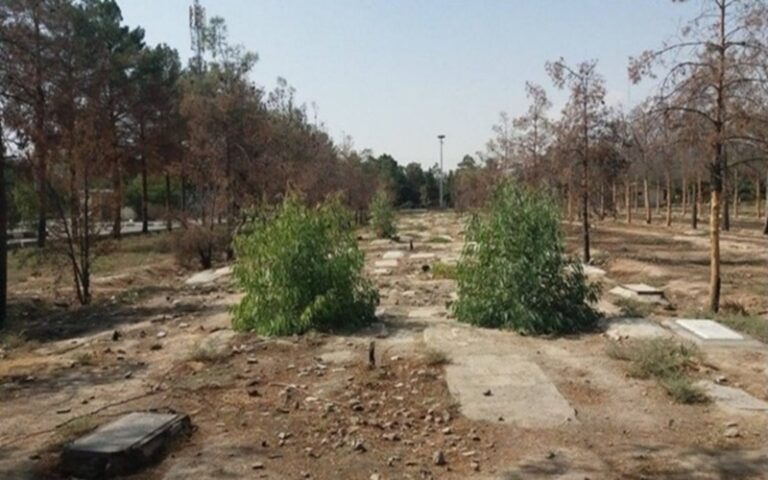
On August 11, the Iranian Resistance announced that Section 41 of Behesht-e Zahra cemetery—where thousands of members of the People’s Mojahedin Organization of Iran (PMOI/MEK) executed by Iran’s regime in 1981 are buried—has been destroyed and leveled. The organization emphasized that erasing the evidence of genocide and crimes against humanity amounts to participation in these heinous crimes.

In a post on its X (formerly Twitter) account on August 22, Amnesty International expressed concern over the official statements by Tehran authorities, stressing that these graves are crime scenes and no one has the right to destroy them.

Amnesty International wrote: Iran’s authorities are destroying vital evidence of the mass executions of dissidents in early 1980s by building a parking lot over their graves in Tehran’s Behesht Zahra cemetery. This is another grim reminder of systemic impunity for the crimes against humanity of that era.

Tehran’s Deputy Mayor Davoud Goudarzi shockingly admitted that the graves in slot 41 of the cemetery were being destroyed with official permission from authorities. This move follows decades of cruel restrictions on families planting flowers or fixing desecrated gravestones.

Individual & mass graves from the 1980s mass executions are crime scenes requiring forensic expertise for exhumation and evidence preservation. By destroying them, authorities are concealing evidence of their crimes and hampering the rights to truth, justice & reparations.

Amnesty International previously documented how Iranian authorities have destroyed the graves of victims of 1980s killings through bulldozing, constructing buildings and roads, mass rubbish dumping or building new burial plots over them.

Iranian authorities have also destroyed or desecrated gravestones of victims of more recent human rights violations including members of the persecuted Baha’i minority & those unlawfully killed during the 2022 uprising.

Amnesty International added at the end: Amnesty International renews its calls on the Iranian authorities to stop the destruction & desecration of individual & mass graves of victims of 1980s mass executions. Authorities must stop deepening the pain of families & respect their right to bury their loved ones in dignity.

Iran’s Regime and Russia Intensify Consultations to ‘Contain Snapback’

As the legal deadline for the expiration of United Nations Security Council Resolution 2231 approaches, and with the growing possibility that the three European countries might trigger the “Snapback” mechanism, Tehran and Moscow have stepped up their legal consultations to counter this scenario.

On the morning of Saturday, August 23, Abbas Araghchi, the Iranian regime’s foreign minister, and his Russian counterpart, Sergey Lavrov, held a joint phone conversation to review developments related to the nuclear file, recent moves by European countries, as well as the regime’s cooperation with the International Atomic Energy Agency (IAEA).

Iranian Regime FM: Snapback Sanctions Will Cost Heavily

In this conversation, both sides emphasized that the three European countries—France, Germany, and the United Kingdom—due to their repeated violations of the nuclear deal (JCPOA) commitments and their alignment with the United States in attacks on Iran’s nuclear facilities, lack both legal and moral standing to use the JCPOA dispute resolution mechanism. According to Araghchi, the idea of extending Resolution 2231 is a decision that must only be made by the Security Council with the agreement of all its members. He stressed that the Iranian regime does not recognize any right for the three European countries in this matter.

Previously, Mikhail Ulyanov, Russia’s permanent representative to international organizations in Vienna, had warned that the United Kingdom, France, and Germany intend to activate Snapback against Iran before the end of August. This mechanism, included in Resolution 2231, allows for the reimposition of all previous UN Security Council sanctions against the Iranian regime without the need for a new vote.

Ulyanov stated on X (formerly Twitter) that the three European countries themselves have violated Resolution 2231 and JCPOA commitments, and therefore, under international law, lack the authority to activate Snapback. He referred to the principle of “good faith” in international law and to the advisory opinion of the International Court of Justice in 1970 regarding South Africa and Namibia, stressing that one cannot benefit from rights under an agreement while simultaneously violating its obligations.

Meanwhile, Araghchi also told the state-run IRNA news agency that the activation of Snapback would bring significant economic damage to Iran, but he did not consider it “the end of everything.” He said: “For several years, we have been in talks with China and Russia about preventive solutions, although their success is not guaranteed.”

At the same time, China has also lodged a note at the Security Council strongly opposing the activation of this mechanism. Beijing declared that the current deadlock stems from the obstruction of the United States and the three European countries in implementing the JCPOA, not from Tehran’s behavior. The Chinese government warned that the return of sanctions would be an illegal move, violating the spirit of diplomacy, and could bring “catastrophic and unpredictable consequences.”

What is the snapback mechanism?

Snapback is a mechanism outlined in United Nations Security Council Resolution 2231, which allows participants of the nuclear deal (JCPOA) to restore previous UN sanctions against Iran if the country is found in “significant non-compliance” with its commitments. This can be done without requiring a new vote—only through the submission of a formal notification.

According to paragraph 11 of Annex B of Resolution 2231, once such a notification is submitted, sanctions automatically return after a 30-day period unless the Security Council adopts a new resolution to extend the suspension. In practice, due to the veto power of the permanent members, passing such a resolution is extremely difficult and nearly impossible.

Which sanctions would return?

If Snapback is activated, Iran’s nuclear file would once again fall under Chapter VII of the UN Charter. This chapter authorizes the Security Council to impose both military and non-military measures against states in order to maintain global peace and security.

The first consequence of triggering this mechanism would be the full reinstatement of the arms embargo. Iran would be banned from exporting or importing all types of weapons, military equipment, missile systems, ammunition, and even related technologies. This ban would cover both formal and informal military cooperation.

In the missile field, all activities related to ballistic missiles—including production, testing, research and development, or the provision of components—would be strictly prohibited. Any cooperation with other countries or international bodies in this area would also be subject to penalties.

In the financial and banking sectors, sanctions would freeze the assets of key Iranian institutions such as the Central Bank, state-owned banks, the National Development Fund, and other affiliated entities worldwide. These sanctions would almost completely sever Iran’s ties with the global financial system.

A Decade After the Signing of the JCPOA, Will the Snapback Mechanism Be Triggered?

In the energy sector, Iran’s exports of crude oil, natural gas, petrochemical products, and other energy resources would once again be sanctioned. Foreign investment in Iran’s energy industry would stop, and international companies would be prohibited from participating in oil and gas projects in the country.

Additionally, the UN sanctions list targeting Iranian individuals and entities would be reinstated. This includes senior officials of the Islamic Revolutionary Guard Corps (IRGC), the Ministry of Defense, the Atomic Energy Organization of Iran, companies tied to Ali Khamenei (the regime’s supreme leader), and other key institutions that had previously been removed under the JCPOA framework.