Home Blog Page 81

Three Civilians Shot and Killed by Iranian Security Forces in Khomein

The state-run IRIB news agency published a vague report stating that following a shooting near a “military center,” three “compatriots were martyred.” The dimensions of the incident remain unclear. About two weeks earlier, two young nature tourists were also killed by security forces in the city of Hamedan.

According to the report, on the evening of Thursday, July 17, individuals described by IRIB as “security guards of a military center” in Khomein, located in Iran’s Markazi province, became suspicious of two passing vehicles and opened fire, resulting in the “martyrdom of three compatriots.”

The same report quoted the Khomein county prosecutor as confirming the incident, stating: “A judicial case has been opened, and the details of the incident are under investigation.”

IRIB emphasized that “those responsible for this incident” are currently in custody. In the terminology of Iran’s regime-controlled media, the phrase “martyrdom of compatriots” typically refers to civilian casualties. Given that this incident involved gunfire from “military center guards” toward passing vehicles, it is likely that the victims were ordinary citizens. In contrast, regime media openly refer to military casualties using terms such as “security martyrs.”

The Iranian regime has a long history of its agents shooting ordinary citizens. In August 2024, Arezou Badri, a 31-year-old woman, was shot and severely injured by police for not observing mandatory hijab laws while in her personal vehicle. In May 2022, Maria Arefi and Reza Moradkhani were shot by the regime’s so-called “morality patrol” officers.

Since the 12-day war, the Iranian regime’s military forces have altered the nature of their attacks on civilian populations. On July 2, the Fars News Agency, affiliated with the Islamic Revolutionary Guard Corps (IRGC), confirmed reports of the killing of two young men in Hamedan by the regime’s security forces, stating the incident was the result of fire from “security operations forces” targeting a vehicle carrying three passengers.

The Shooting of Arezoo Badri: A Tragic Case of Violence and Repression in Iran

The two young men were Mehdi Abaei and Alireza Karbasi, who had gone to the outskirts of Hamedan for a nature trip. At their funeral, mourners chanted the slogan: “I will kill, I will kill / the one who killed my brother.”

Although regime officials repeatedly claim they will “deal with those responsible” for such incidents, in previous cases, no reports have been released to the public regarding any actual disciplinary actions, investigation processes, or punishments for the offending regime agents.

Europe Threatens to Reinstate UN Sanctions Against Iran’s Regime

Germany, France, and the United Kingdom warned Iran’s regime that it must immediately resume diplomatic talks regarding its nuclear program and declared that if no concrete steps are taken within the next six weeks, they will reinstate United Nations sanctions against Tehran.

Abbas Araghchi, the foreign minister of Iran’s regime, stated on Friday, July 18, referring to his joint discussion with the foreign ministers of the three European countries and the EU foreign policy chief on Thursday evening, that the start of negotiations is conditional upon the United States’ readiness for a deal that is “fair, balanced, and beneficial for both parties.”

Iran’s Regime Dismisses IAEA Report About its Nuclear Program as “Biased and Baseless.”

Araghchi said that during the discussion, he emphasized that Europe must act “responsibly” to play a positive role and abandon “outdated policies of threats and pressure, including the snapback mechanism.”

According to Reuters, the foreign ministers of these three European countries, known as the E3 (European Troika), along with the EU foreign policy chief, held a phone call with Iran’s foreign minister for the first time since the mid-June U.S. and Israeli airstrikes on Iranian nuclear facilities.

A French diplomatic source told Reuters that during the call, Iran’s regime was urged to immediately resume diplomatic efforts toward a “verifiable and sustainable” nuclear agreement.

These three countries, along with China and Russia, are the remaining signatories to the 2015 nuclear agreement with Iran (JCPOA), a deal that lifted sanctions against the country in exchange for restrictions on its nuclear program.

The UN Security Council resolution recognizes the agreement is set to expire on October 18, but under its provisions, sanctions can be reinstated even before that date. The implementation of this process takes approximately 30 days.

European countries have repeatedly warned that if a new agreement is not reached, they will trigger the “snapback” mechanism, a process through which all previous UN sanctions against Iran would be reimposed.

Since the U.S. and Israeli airstrikes on Iran during the 12-day war, inspectors from the International Atomic Energy Agency (IAEA) have left the country.

Although officials of Iran’s regime have indicated a willingness to return to diplomacy, there are no signs of an imminent resumption of the sixth round of nuclear negotiations between Tehran and Washington.

U.S. President Donald Trump has said that Iran’s regime is very eager to negotiate, but he is in no hurry to talk with Tehran.

Diplomats say that even if talks resume, reaching a comprehensive agreement before the end of August — the final deadline set by the Europeans — does not seem realistic, especially given the absence of inspectors who can assess the remaining state of Iran’s nuclear program.

Two European diplomats have stated that they hope to reach a joint strategy with the United States in the coming days, in order to enable negotiations with Iran’s regime in the near future.

Approval of Accelerated Implementation of Class-Based Internet in Iran

The Supreme Council of Cyberspace, attended by the heads of the three branches of power and senior military and security commanders of the Iranian regime, held a meeting and passed a resolution that paves the way for further internet restrictions on citizens. At the same time, Mohammad Reza Aref, the regime’s first vice president, called for the rapid launch of a national internet and the strengthening of domestic messaging platforms.

On the evening of Tuesday, July 15, the Supreme Council of Cyberspace approved the executive regulations of the Committee for Facilitating Digital Businesses.

Internet Censorship in Iran Has Turned Into a Billion-Dollar Business For State Actors

This committee was established in February 2025 under the administration of Masoud Pezeshkian, president of the Iranian regime, and now its regulations have been formally approved. Amir Sayyah, acting head of the Economic and Regulatory Affairs Department at the National Cyberspace Center, announced that the committee intends to unblock IP access for “certain businesses”—a move seen as a step toward implementing class-based internet.

The term “class-based internet” refers to the regime granting specific groups privileged access to the internet, while the general public is denied that level of connectivity.

This practice began during the presidency of Hassan Rouhani when Mohammad Javad Azari Jahromi, a former Minister of Communications, granted unfiltered internet access to some journalists aligned with the government.

During the November 2019 protests, while internet access was cut off for the general public, some journalists and political figures remained online from within Iran, using social media—especially Twitter/X—to amplify the regime’s narrative of the unrest. These included labeling the protesters as “store looters” or calling the demonstrations a “hunger revolt.” A similar pattern emerged during the IRGC’s downing of a Ukrainian airliner in January 2020.

In this context, Fatemeh Mohajerani, spokesperson for the Pezeshkian administration, announced that the government intends to allocate “freer internet” to journalists. However, even before this, some journalists within the regime were already granted such access upon request and with government approval.

According to the tech website Digiato, “It appears that under the fourteenth government, the class-based internet plan… is being implemented on a broader scale.”

On the other hand, Aref called for the swift launch of the national internet and emphasized the need to strengthen domestic messaging apps. He said: “We must reassure domestic users that the National Information Network meets their needs in a secure environment.”

Mohajerani also stated: “The reason for the multi-day internet outage during the war with Israel was the launch of the national internet.” Referring to the 12-day war with Israel, Aref said: “This was a war of technologies and soft power, and we must seriously assess our performance in this area.”

The “national intranet” project has long been a key goal of the Iranian regime, with Ali Khamenei, the regime’s supreme leader, emphasizing its implementation since the presidency of Mahmoud Ahmadinejad and the first term of Hassan Rouhani.

Its serious implementation began under Azari Jahromi’s tenure as communications minister and advanced considerably during Rouhani’s second term. Now, following the end of the 12-day war, the Pezeshkian administration is pushing forward with a project that was aggressively initiated under Rouhani.

Class Stratification Crisis in Iran’s Education System

Iran’s education system is rapidly moving toward class stratification. Built on profiteering and political interests, this system sees neither the regime nor the government fulfilling their responsibilities in this sector. In practice, underprivileged families cannot afford their children’s education. This situation endangers the future of upcoming generations.

Most families with school-age children face the challenge of finding a suitable school. The number of public schools is generally low. Due to overcrowding and lack of resources, the quality of education in public schools has declined.

As a result, families are forced to enroll their children in private schools. One or two decades ago, getting into these schools was relatively easy. Now, these schools only accept students who meet their standards.

Educational Disaster in Iran: 70% of Students Suffering from Learning Poverty

Most private schools only enroll students who pass their own entrance exams. In a city like Tabriz, tuition for lower secondary school ranges from 500 million to 1.2 billion rials. Meanwhile, the minimum monthly wage for a worker with two children barely reaches 150 million rials (approximately $170).

Problems in Iran’s Education System

Developed countries place special emphasis on education. Today, when we speak of a successful nation, we refer to a standardized education system that has successfully nurtured competent economic, political, cultural, and social actors.

Today, Iran’s education is plagued by unchecked missteps in teaching and upbringing. This sector suffers from a lack of accountability and abdication of decision-making. Relevant officials show no willingness to undertake foundational and demanding reforms.

Privatization has resulted in a significant portion of the education system operating independently of the government. These private entities fund themselves. Iran’s education sector has been completely abandoned. With this growing divide, the regime’s education ministry no longer takes responsibility for proper oversight.

The autonomy of the private education sector in Iran poses yet another major issue. This problem is separate from the challenges of educational paradigms, curriculum content, and ethical concerns within these institutions.

Some of these schools are essentially preying on the wealth of the affluent class. They place less value on actual education and are instead designed to train “white-collar” elites for the regime.

Every private school and educational institution target a specific social class and demographic. They generally do not admit students from other backgrounds. These institutions are primarily governed by political economy and profit-making. Educational and developmental concerns are subordinated to this shadow economy.

Another issue is the unhealthy competition that prevails among students at these institutions. In some cases, all human, ethical, and educational principles are disregarded. The only goal is to secure top ranks in the university entrance exams.

Education: The Starting Point of Society’s Class Division

The current model of education will leave no future for Iran. Many children are forced to drop out of school because their families cannot afford the high costs of education.

Many others do not attend university at all. Conversely, some families send their children to universities abroad—most of whom do not return. This dynamic place the country at risk of social and cultural collapse.

This kind of pre-destruction of a nation’s future is unprecedented in the world. Iran’s regime stands out in this regard, taking the country down a path to nowhere.

In this area, the policy failures and negative outcomes are so glaring that they cannot even be compared to the worst-performing countries.

The reason is that the regime has abandoned this sector altogether. It continues to make only short-term, stopgap decisions and merely drifts along day by day.

This is only a part of what is happening in Iran’s education sector. The core issue is the abandonment of education by the Iranian regime. Although a decade has passed since the consequences of this neglect began to show, the regime and government still refuse to take responsibility. This indifference will have irreversible consequences for the country’s future and will deepen social divides.

Families of Political Prisoners Subjected to Humiliating Searches at Greater Tehran Prison

As human rights organizations warn of escalating repression in Iran, reports indicate that families of political prisoners at Greater Tehran Prison were subjected to degrading treatment and unusual body searches during visitations. Some prisoners protested against this conduct.

On Thursday, July 17, prison agents in some cases forced family members of political prisoners visiting their loved ones at Greater Tehran Prison to strip completely naked.

Informed sources stated that the visitation process involved aggressive treatment and extensive body searches, which provoked strong protests from the families.

“A Crime is in Progress”: A Letter from Political Prisoner Saeed Masouri Exposing the Iranian Regime’s Plans

A family member who visited their imprisoned relative at Greater Tehran Prison said that this visitation was granted three weeks after prisoners were transferred from Evin Prison. They added that prison guards at the security checkpoints forced families to strip completely.

The source emphasized that officers conducted these searches manually without using scanning devices and added that political prisoners and their families strongly objected to the nature of these inspections during in-person visits.

Political prisoners in various wards of Greater Tehran Prison voiced their protest by chanting slogans such as “No more threats, abuse, or humiliation—they no longer work,” “Political prisoners must be freed,” and “Death to the dictator.”

This is the first time prison agents in Iran have subjected families of political prisoners to such treatment under the pretext of security inspection.

In October 2024, 22 female political prisoners from Evin Prison wrote a letter demanding an end to and investigation into the “sexual abuse” of several inmates during body searches.

In June 2024, female officers at Ghezel Hesar Prison in Karaj, under the pretext of “inspection,” subjected the wife of a political prisoner to unprecedented sexual assault, abuse, and humiliation.

In June 2023, several female civil and political activists recounted their time in detention or prison, describing how regime forces forced them to strip completely naked in front of guards or surveillance cameras.

At the time, Mizan News Agency—affiliated with the regime’s judiciary—responded to the revelations about “naked body inspections” and the filming of such procedures by confirming the practice but claiming that “no images are recorded or saved.”

Family of Lennart Monterlos Demands Clarity on His Whereabouts and Reasons for Detention in Iran

The family and friends of Lennart Monterlos, a 19-year-old German-French dual national who has been detained in Iran, issued a statement demanding information about his whereabouts and the reasons for his arrest.

In the statement released on Thursday, July 17, the family and friends of Lennart Monterlos stated that, despite one month having passed since his arrest, they have not received any official information regarding the reasons for his detention or where he is being held.

The Monterlos family emphasized that they are relying on French diplomacy to secure the swift release of their very young son, whom they insist is completely innocent.

They also stated that they are in ongoing contact with the German Foreign Ministry and have called on Iranian regime authorities to recognize their son’s legal rights, including access to an independent Iranian lawyer and consular visitation rights.

Abbas Araghchi, the Iranian regime’s foreign minister, said in a July 12 interview with the French newspaper Le Monde that the individual was arrested for “committing a crime” but did not specify what the alleged crime was.

That same day, Araghchi stated that the French chargé d’affaires in Tehran had met with Monterlos and that legal proceedings would continue “in accordance with the law” in Iran.

The governments of France and Germany have expressed concern that their citizens are being detained by the Iranian regime for politically motivated reasons.

On June 16, Monterlos disappeared in Iran during a cycling trip around the world and has had no contact with his family since.

Earlier, on July 6, posts were circulated on social media in an effort to locate him.

A French diplomatic source, speaking anonymously that same day in an interview with Agence France-Presse, called Monterlos’s disappearance “alarming” and said they are in contact with his family regarding the matter.

Iranian Authorities Transfer Detained French Couple to Undisclosed Location

News of this tourist’s disappearance came amid growing concerns in recent days over the situation of Cécile Kohler and Jacques Paris, two other French citizens imprisoned in Iran.

The regime regularly engages in “hostage diplomacy,” where it held foreign nationals in prison to extract political concessions, including the lifting of sanctions or influencing nuclear negotiations.

“A Crime is in Progress”: A Letter from Political Prisoner Saeed Masouri Exposing the Iranian Regime’s Plans

One day after the heroic resistance of political prisoners in Qezelhesar Prison successfully thwarted an attempt by Iran’s Ministry of Intelligence agents to abduct the nation’s longest-serving political prisoner, Saeed Masouri, and forcibly transfer him to an unknown location, Masouri managed to smuggle out a powerful letter. July 17, 2025, the letter not only details the pressure exerted on him but also places it in a grave historical context, warning that the regime may be repeating the atrocities of the past. He affirms his and his fellow inmates’ resolve to resist, even at the cost of their lives, to prevent another “massacre in silence.”

The Letter of Political Prisoner Saeed Masouri:

A Crime is in Progress

Since this morning, they have tried to transfer me with a thousand and one tricks, using threats, enticements, and solemn oaths. What is certain is that this method—kidnapping in prison under the guise of a “transfer”—was not and is not aimed at me alone. It is fundamentally a method for controlling, isolating, and silencing prisoners.

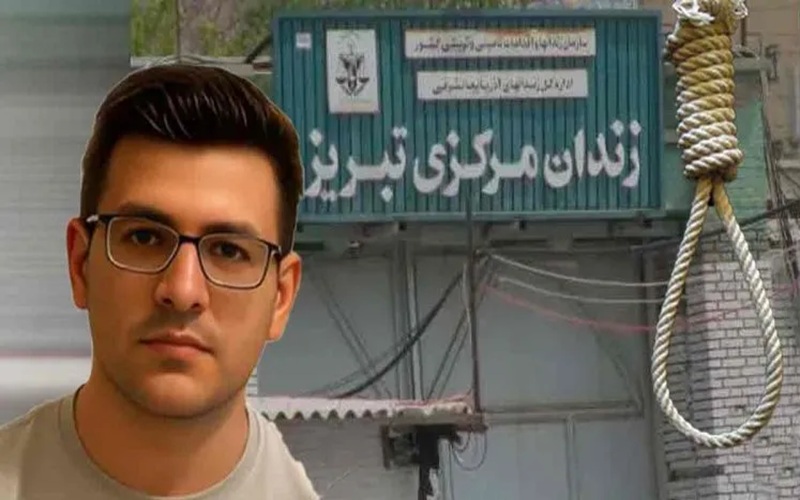
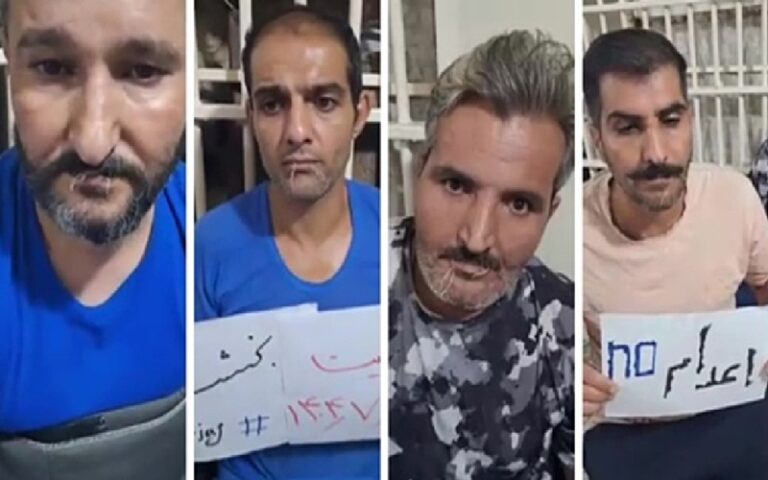
PMOI Supporters Given Double Death Sentences by Iran’s Regime

The issue of the transfer itself is absolutely not the subject of this conflict. Rather, the goal is suppression, suppression, and yet more suppression, and an insistence on more killing and executions! It is exactly as it was during the 1988 massacre, and today there is a fear that the same path will be repeated, albeit with a different language and method. At that time, its name was the “Death Committee”; today, it is “Fire at will”. But this widespread suppression and intensification of executions is not a sign of authority, but an admission of the regime’s helplessness in the face of truth and the will of the people. In the same vein, the “Fire at will” order is nothing but a desperate attempt to cover up the depth of its infiltration, decay, and structural collapse! They want to compensate for it by taking revenge on the people of Iran and their prisoners.

My refusal to accept a “transfer” from Ghezel Hesar exile to another is not out of fear of being moved, nor is it from the illusion that a few of us prisoners can stop these illegal acts. It is solely and only so that a massacre does not take place in silence and obscurity, as it did in 1988, and so that it all happens before the eyes of history and awakened consciences! Yes, let the world hear this time that “a crime is in progress” and that there is, of course, a resistance against it! Even if this only results in a warning and an alarm for the people of Iran and the world that “a crime is in progress!” Patience, O noble people!

Iranian Political Prisoner Saeed Massouri Suddenly Transferred to Unknown Location

As for me personally, as a political prisoner and a supporter of the People’s Mojahedin Organization of Iran (PMOI/MEK), especially during the month of Muharram and in the presence of the immortal message of Imam Hussein, I want to affirm that the blood of his child, which was thrown to the sky, continues to drip down upon us Iranians, Shiites, and his followers. And far be it from us to take a single step back on the path of freedom and liberation because of this prison, this exile, and these executions.

Even if the slaughter of us all is merely news that reports on the day of the event and does not allow a crime to be carried out in silence!

What honor and fortune it would be if we have only given a state of readiness to our homeland and our people, a mere warning, even at the cost of our lives! For Iran and Iranians have learned nothing from their legends like Siavash and Ariobarzanes, and from the epics of Ferdowsi, but perseverance and steadfastness. And what an unparalleled honor it is that we have been inspired and have learned from them, and also from liberating Islam, the Prophet of Mercy, and his legendary companions, of whom it is said: “Mountains may move, but you shall not.”

“Praise be to Allah, who has guided us to this; and we would never have been guided if Allah had not guided us.” (Quran 7:43)

Saeed Masouri

July 2025

Prisoners’ Resistance Foils Forcible Transfer of Iran’s Longest-Serving Political Prisoner, Saeed Masouri

In a dangerous escalation seen as the Iranian regime’s attempt to exact revenge on its domestic opponents following its war with Israel, political prisoners at Qezelhesar Prison in Karaj have thwarted a violent effort by Ministry of Intelligence agents to transfer Iran’s longest-serving political prisoner, Saeed Masouri, to an unknown location. The event has led to a tense standoff and a severe lockdown within the prison.

The Failed Transfer Attempt

On the morning of Wednesday, July 16, 2025, forces from the Ministry of Intelligence and prison guards raided the ward for political prisoners with the intent of abducting Saeed Masouri. According to reports, the agents used a deceptive tactic, summoning him out of the ward under the pretext that the “Protection and Intelligence Office” needed to see him. Once he stepped through the barred gate, it was locked behind him to prevent his return.

Iranian Political Prisoner Saeed Massouri Suddenly Transferred to Unknown Location

Realizing from past experience that the goal was a forcible transfer, Masouri refused to cooperate. Meanwhile, another political prisoner who had been with him quickly alerted their fellow inmates. The prisoners immediately gathered at the barred gate, managed to pull Masouri back inside through force of will and numbers amidst chanting and slogans, and then barricaded the ward door from the inside.

In retaliation, the director of Qezelhesar Prison, Allah-karam Azizi, ordered the ward’s telephone lines to be cut for several hours. After protests, communications were restored, but the prisoners were given an ultimatum: the transfer has been postponed until Saturday, July 19, but it “will be carried out by any means necessary.”

Reactions in Prison & The Prisoners’ Statement

The political prisoners of Qezelhesar issued an urgent statement detailing the incident, declaring that a security atmosphere now pervades the ward, with the constant threat of a raid by prison guards. Their statement read:

“Today, our morning began with more news of the government’s maximum pressure… This time, it was the turn of Saeed Masouri, Iran’s longest-serving political prisoner, to taste the revenge of the oppressive Islamic Republic’s system for the thousandth time.”

The prisoners stressed that “the abduction and exile of political prisoners to unknown locations is one of the most flagrant violations of human rights that the regime uses as a tool of suppression.” They also warned that this pressure may be a prelude to carrying out the illegal death sentences against their cellmates, specifically Behrouz Ehsani and Mehdi Hasani, whose requests for a retrial were recently rejected for the fourth time.

Who is Saeed Masouri?

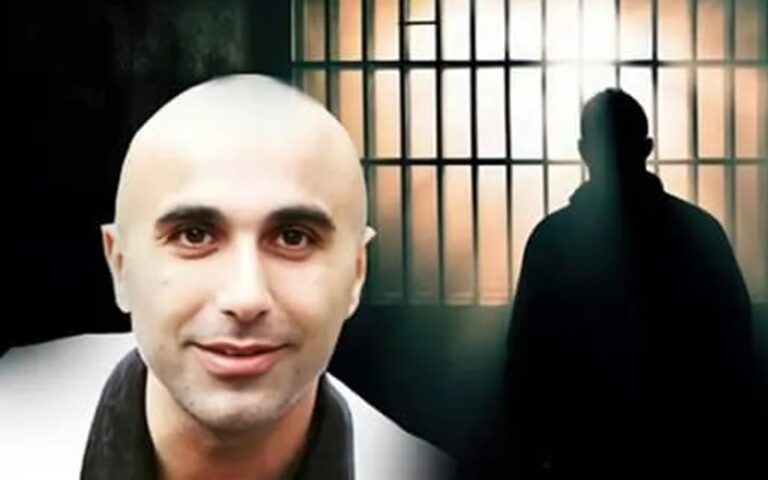
Saeed Masouri, 60, is a symbol of resilience in Iran’s prisons and is the country’s longest-serving political prisoner.

* Arrest Date: He has been imprisoned since January 2001.

* Sentence Duration: He has spent nearly 25 years in prison without a single day of furlough.

* Charge: “Cooperation with the Mojahedin-e Khalq (MEK) of Iran.”

* Background: He was a medical student in Germany and Norway before his arrest upon returning to Iran in the city of Dezful.

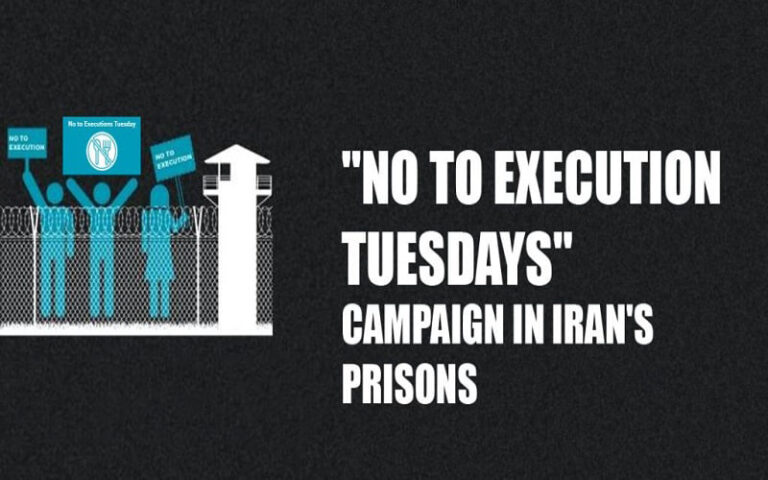
* Activism in Prison: Masouri is known for his prominent role in the “Tuesdays Against Executions” campaign, organized by prisoners to protest death sentences. In the last month, he has been explicitly threatened by intelligence agents over his letters exposing the rise in executions.

The Regime’s Post-War Revenge as a Pretext for Repression

Political prisoners and human rights activists are linking this incident to the atmosphere following the recent war with Israel. As stated in the prisoners’ declaration: “In these circumstances, the war has provided another pretext for the government to tighten the noose on the people, especially political prisoners.”

The statement adds that the regime considers its “real war to be with the people, not with foreign governments,” and that pressure on the populace has increased under various pretexts since the conflict. They view the targeting of Saeed Masouri today as an act of “blind revenge against the unarmed people.”

This move is widely seen as a message of intimidation to all dissidents, signaling that the regime will use an iron fist internally to compensate for any blow it receives externally, with political prisoners being the easiest target for this retribution.

Iranian Regime Figure Tied to 1988 Crimes Against Humanity Reemerges in Academic Circles

Mohammad Jafar Mahallati, former Iranian regime ambassador to the United Nations, who became embroiled in scandal over serious accusations of helping justify the 1988 massacre of political prisoners in Iran and charges of sexual abuse and assault during his teaching career in the United States, is now engaging with students in Iran.

His biography on the website of the Majd Research Center describes him as a “full professor of religious and peace studies at Oberlin College, USA.”

He also co-organized a conference from May 26 to 28 at the University of Tehran titled “The Sixth Annual Conference on Peace and Conflict Resolution.”

Following Mahallati’s dismissal from Oberlin College in November 2023, the university administration removed all traces of his presence from its website.

Oberlin College in Ohio removed him from his position as professor of religious studies after revelations of his potential role in covering up crimes against humanity during the 1988 mass executions ordered by Ruhollah Khomeini, in which 30,000 political prisoners—mostly members and supporters of the People’s Mojahedin Organization of Iran (PMOI/MEK)—were executed. His past also includes allegations of sexual exploitation and abuse of a Columbia University student in the 1990s.

In September 2023, the U.S. Department of Education launched an investigation into Oberlin College and Mahallati to determine whether they had allowed antisemitism to spread on campus and whether Mahallati had promoted Hamas in his classes.

During his teaching years, the Oberlin academic community referred to him as the “professor of peace” until Amnesty International exposed his role in covering up the 1988 political prisoner massacre. Mahallati went from being called “professor of peace” to the “Butcher of Oberlin.”

According to the University of Tehran conference program, he chaired one session and delivered a speech titled “The Complex Nature of Human Conflicts and the Necessity of Multifaceted Discourses for Their Management and Prevention from the Perspective of the Quran.”

Other speakers at the conference included Ali Akbar Mousavi, previously introduced as a senior advisor and postdoctoral fellow at the Center for World Religions, Diplomacy, and Conflict Resolution at George Mason University in Virginia.

Mahallati appears to be attempting to restore his lost credibility. A website for his works was launched in 2024, though it contains no contact information.

The site still claims he is a “full professor of Islamic studies at Oberlin College.”

Oberlin refused to meet with Iranian-American members of the coalition investigating Mahallati.

Although the Tehran University conference was ostensibly about peace, Hossein Simaii-Sarraf, the Iranian regime’s Minister of Science, used the platform to call for the destruction of Israel. He stated: “It is hoped that to eradicate injustice, human catastrophes, and the savagery of the Zionist regime, all Muslim nations and free people of the world will unite more than ever.”

For years, Iran’s regime has attempted to infiltrate Western countries by sending intelligence agents under the guise of journalists, human rights activists, or academics.

Iranian Political Prisoner Saeed Massouri Suddenly Transferred to Unknown Location

According to received reports, political prisoner Saeed Massouri was removed from Ghezel Hesar Prison in Karaj by agents of Iran’s terrorist intelligence apparatus on Wednesday, July 16, and transferred to an unknown location.

This abduction was carried out without informing his family or lawyers, causing serious concern.

In response, a number of political prisoners held in various wards of Ghezel Hesar have staged a sit-in protest. Reports indicate that these prisoners, by chanting slogans against repression and increased security pressure, are demanding Massouri’s immediate return and an end to the regime’s unlawful treatment of political prisoners.

Political Prisoner and PMOI Supporter Maryam Akbari Monfared Transferred to New Prison

Saeed Massouri has spent over 24 years in Iranian regime prisons and is regarded as one of the symbolic figures of resistance behind bars.

Human rights activists have warned that such actions constitute a flagrant violation of basic prisoner rights and amount to “enforced disappearance”—a tactic the Iranian regime has a long history of carrying out.