Home Blog Page 82

FBI Releases Images of Iranian Officials Connected To Abduction of US Citizen

On Tuesday, the United States Federal Bureau of Investigation (FBI) released images of three senior Iranian regime intelligence officers who, according to U.S. officials, were involved in the abduction of retired FBI agent Robert Levinson.

The images were published as “Seeking Information” posters and pertain to Reza Amiri Moghaddam, Taghi Daneshvar, and Gholamhossein Mohammadnia.

According to the FBI, Reza Amiri Moghaddam, who currently serves as the Iranian regime’s ambassador to Pakistan, previously led the operations unit of Iran’s Ministry of Intelligence in Tehran—a unit whose several members have been accused of orchestrating Levinson’s 2007 abduction from Kish Island.

The FBI has emphasized that a reward of up to $5 million remains available for information leading to the discovery, return, and location of Levinson. Additionally, the U.S. State Department’s Rewards for Justice program has offered a separate reward of up to $20 million for information related to this case.

Previously, the U.S. Department of the Treasury sanctioned these three Iranian regime intelligence officials for their roles in the abduction, detention, and possible death of former FBI agent Robert Levinson.

On Tuesday, March 25, 2025, the U.S. Treasury Department issued an official statement announcing that Reza Amiri Moghaddam, Gholamhossein Mohammadnia, and Taghi Daneshvar have been added to the sanctions list in coordination with the Federal Bureau of Investigation (FBI).

Robert Levinson, a former agent with the FBI’s Drug Enforcement Division, disappeared on March 9, 2007, after flying from Dubai to Kish Island in southern Iran. His family announced in 2020 that he had died.

According to the U.S. Treasury Department, the three sanctioned individuals played a role in Levinson’s abduction and possible death, as well as in efforts by Iran’s regime to conceal or distort its responsibility in the case.

In early March, the U.S. State Department’s Rewards for Justice program announced it was offering up to $20 million for information regarding two Iranian regime agents involved in the abduction of Robert Levinson.

On Wednesday, March 5, the Rewards for Justice program published photos of Ahmad Khazai and Mohammad Baseri—agents of Iran’s Ministry of Intelligence—on X, stating that they are suspected of involvement in the abduction, detention, and possible death of Mr. Levinson.

The FBI had also announced in a February 4 statement that it was offering a $25 million reward for information regarding Khazai and Baseri.

On March 26, 2020, Levinson’s family announced his death on their Facebook page.

In their March 2020 statement, the Levinson family said that the cause of his death remains unknown, but that it occurred before the COVID-19 outbreak. They stated that if not for the Iranian regime’s cruel actions, Robert would be with his family today.

In the same statement, the Levinson family said the Iranian regime had abducted a foreign citizen and deprived him of his most basic human rights. “His blood is on their hands.”

Senator Ted Cruz Calls for Expulsion of Iranian Regime Agent from the U.S.

They emphasized in their March statement that they would dedicate the rest of their lives to seeking justice for Robert Levinson’s death and would do everything possible to bring Iranian regime officials to justice.

Iran’s Regime Negotiates with Four Countries to Import Water as Crisis Deepens

Amid growing warnings about water shortages and the Iranian regime’s failure to manage the drought crisis, Abbas Aliabadi, Iran’s Minister of Energy, stated that importing water from neighboring countries is on the agenda and that negotiations have already taken place with Turkmenistan, Afghanistan, Tajikistan, and Uzbekistan.

On Tuesday, July 15, Aliabadi noted that Iran has been suffering from drought for more than five years and said, “Our rainfall is down 31% compared to last year and 44% below the long-term average.”

In response to a question about the water crisis, the Minister of Energy said, “There is no water now. We have to consume slowly to make it last longer.”

Warning About the Possibility of Water Rationing in Iran

He urged people to manage their water use and make the best of limited resources during these difficult conditions.

Aliabadi further emphasized that the drought has left the country’s dams in poor condition, noting that the problem is not limited to Tehran, and provinces such as Khorasan, Tehran, Markazi, Hormozgan, and Sistan and Baluchestan are also facing dire situations.

The Energy Minister warned, “We may lose Mamloo Dam within the next month; the condition of the Latyan and Karaj dams is also far from ideal. Currently, we are facing a 30% to 40% reduction in rainfall and dam reserves.”

He added, “We need different methods to control consumption. Efficient users should be rewarded, and wasteful users should be severely punished because they are creating hardship for the public.”

As Iran’s water crisis intensifies, reports indicate that citizens are receiving exorbitant water bills.

Meanwhile, Mohsen Ardakani, CEO of Tehran’s Water and Wastewater Company, pointed to the critical state of the country’s water resources and called on residents to install water pumps and storage tanks.

According to him, there is a risk of water supply problems in the coming days.

Regarding reduced water pressure, Ardakani said, “Due to limited resources, we are forced to manage consumption, and we will reduce water pressure as much as possible, so that water will only be available on the first and second floors.”

Behzad Parsa, CEO of Tehran Regional Water Company, also said on July 15, “This is the fifth consecutive year of low rainfall in Tehran province. This year’s rainfall is unprecedented over the past 60 years.”

Parsa continued, “Since the beginning of the water year, we have recorded 153 mm of rainfall, which shows a 44% decrease compared to the long-term average and a 33% decrease compared to last year.”

He stated that only 14% of Tehran’s dam reservoirs are currently filled and added, “Our major dams contain 170 million cubic meters less water than last year, and there is a 400 million cubic meter shortfall compared to the long-term average.”

In recent months, warnings have intensified regarding water shortages, depleted dam capacities, and the worsening drought crisis.

In one such case, in March, regime MP Abolfazl Aboutorabi warned of the potential for a “water war” between provinces and stated, “Tehran is facing an extremely acute and dangerous situation, and provinces like Fars, Sistan and Baluchestan, and other semi-eastern regions of the country are also facing similar problems.”

Official statistics show that around 80% of Iran’s groundwater resources have been consumed and dam reserves are in a critical state.

Experts have previously warned that Iran’s millennia-old groundwater reserves have been depleted over the past three decades.

PMOI Supporters Given Double Death Sentences by Iran’s Regime

As part of the ongoing wave of repression and political executions, the judiciary of Iran’s regime issued harsh sentences against five political prisoners on Saturday, July 12. Three of them—Farshad Etemadifar, Masoud Jamei, and Alireza Mardasi (Hamidavi)—were each sentenced to two executions and one year in prison. The other two, Saman and Davood Hormatnejad, were sentenced to 12 and 15 years of discretionary imprisonment, respectively.

These sentences were issued by Branch One of the Revolutionary Court in Ahvaz, presided over by Judge Adibi-Mehr. The official charges include “waging war against God (moharebeh),” “assembly and collusion against national security,” “membership in the People’s Mojahedin Organization of Iran (PMOI/MEK),” and “propaganda against the regime”—charges frequently used against political prisoners to justify harsh sentences.

Saeed Masouri: 170 Executions In The Past Month In Iranian Prisons, Minute-Long Trials, And Death Sentences

Issuance of Execution Sentences for Three Political Prisoners

Farshad Etemadifar, 30, a resident of Basht in Kohgiluyeh and Boyer-Ahmad province, was arrested in June 2023 in the village of Pichab, Basht, along with Saman and Davood Hormatnejad. He had previously been arrested in 2018 for political activities and spent 20 months in prison. Masoud Jamai, a 47-year-old teacher, and Alireza Mardasi, a 52-year-old Arab teacher, were arrested in Ahvaz in August 2023. It is reported that Jamai suffers from serious health issues, including stomach cancer, liver problems, and internal infections, and is in urgent need of medical care.

Earlier, Mehdi Hassani and Behrouz Ehsani, two prisoners who support the People’s Mojahedin Organization of Iran (PMOI/MEK), had been sentenced to death.

These sentences come amid a rise in executions, threats of execution, and pressure on political prisoners in recent months. Many international observers have interpreted this as a sign of the deepening political and social deadlock within the regime.

Ali Khamenei, the supreme leader of Iran’s regime, in an effort to prevent a repeat of popular uprisings and explosions of social anger, has once again resorted to the familiar tools of repression, execution, and instilling public fear. However, experience has shown that such actions not only fail to prevent uprisings but, on the contrary, strengthen the motivation and determination of the younger generation to bring about regime change.

In this context, the National Council of Resistance of Iran (NCRI) has called for immediate action by the international community. The NCRI has urged the United Nations Security Council, the UN High Commissioner and Human Rights Council, the UN Special Rapporteur on Iran, the European Union, and all democratic governments to use all available legal and diplomatic means to prevent the implementation of these sentences and the gradual massacre of political prisoners.

Nine Iranian individuals and entities added to the European Union’s new sanctions list

Jean-Noël Barrot, France’s foreign minister, announced that the EU Foreign Affairs Council has approved sanctions against individuals and entities that threaten Europe’s interests. Among those sanctioned are nine Iranian individuals and entities.

These individuals and entities are accused of spreading terrorism on European soil.

Barrot said on Tuesday that Europeans have frozen the assets of nine Iranian individuals and entities responsible for terrorism in Europe and have banned them from entering EU territory.

He added that this was the result of efforts he personally led and that he welcomes the outcome.

U.S. Sanctions 22 Entities Tied to Iranian Regime’s Shadow Banking Network

The French foreign minister also called for the “immediate and unconditional release” of French citizens detained in Iran and emphasized the need for International Atomic Energy Agency (IAEA) inspectors to return and for the launch of a new diplomatic process to curb Tehran’s destabilizing behavior.

Barrot also expressed hope that sanctions against Russia would be approved in the near future.

Who are the sanctioned individuals?

The sanctioned individuals are accused of directly designing and executing assassinations and security operations against opponents of Iran’s regime in European countries.

According to the published statement, the list includes Mohammadreza Ansari, commander of Unit 840 of the Quds Force of the Islamic Revolutionary Guard Corps (IRGC).

Also named are Naji Ibrahim Zindashti; Abdolwahab Kochak, Zindashti’s operative and the assassin of Masoud Molavi; Ali Esfanjani, an Intelligence Ministry agent and accomplice in Molavi’s killing; Ali Kocak, Zindashti’s associate and a suspect in the murder of Saeed Karimian; Ekrem Abdulkarim Oztunc, Zindashti’s niece and member of his network; Nihat Abdolghadir Asan, another member of the Zein-Dashti network; and Reza Hamidi Ravari, a Ministry of Intelligence official who oversaw Zindashti’s operations, including the assassination of Iranian regime opponents.

The network affiliated with Naji Zindashtihas also been designated as a sanctioned entity.

This move by the European Union comes after repeated warnings from European officials in recent months about increased intelligence and terrorist activities by Iran’s regime on European soil.

The sanctions were announced shortly after the French foreign minister warned that if nuclear talks with Iran’s regime do not result in a “verifiable agreement,” the snapback mechanism against Iran will be activated on August 31.

A Decade After the Signing of the JCPOA, Will the Snapback Mechanism Be Triggered?

Ten years after the signing of the Joint Comprehensive Plan of Action (JCPOA) between Iran’s regime and the P5+1 countries—which had initially raised hopes for resolving Tehran’s nuclear dispute—those hopes for economic recovery and renewed political relations with the West have been replaced by growing concern over the potential activation of the snapback mechanism.

Esmail Baqaei, spokesperson for Iran’s regime Foreign Ministry, said on Monday, July 14, during a weekly press conference, referring to European countries’ threat to activate the snapback mechanism: “The use of the snapback mechanism is a political move and aimed at confronting Iran.”

He added: “Iran still considers itself a member of the JCPOA and has scaled back its commitments in response to the gross violations of the agreement by the United States and other parties.”

Tightening Global Pressure On Iran’s Regime Nuclear Program

Baqaei warned: “The threat of a snapback will be met with an appropriate response from Iran.”

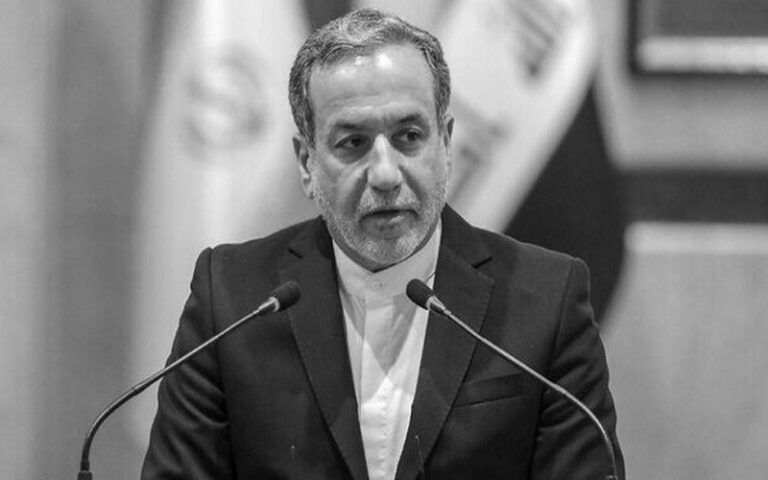
Abbas Araghchi, Iran’s regime foreign minister, also said on July 10 in a meeting with heads of foreign missions in Tehran that in recent months—and especially lately—European countries have hinted at the possibility of using the snapback mechanism to automatically reinstate sanctions on Iran, but this would be “the biggest mistake they could make.”

What is the JCPOA nuclear deal?

Ever since the National Council of Resistance of Iran (NCRI) revealed Iran’s covert nuclear program in August 2003, many countries have been suspicious of the regime’s ambitions to acquire nuclear weapons and viewed its secrecy as part of that objective.

NCRI-US Reveals Iran’s Secret Nuclear Weapon Program – The Kavir Plan

On July 14, 2015, Iran’s regime signed an agreement in Vienna with the United Kingdom, Germany, France, the United States, Russia, and China—known as the JCPOA. The deal lifted United Nations, U.S., and European Union sanctions on Iran in exchange for limitations on its nuclear program.

The United Nations Security Council adopted the agreement in a resolution in July 2015.

What is the snapback mechanism or “automatic reimposition of sanctions”?

The JCPOA includes a provision known as the snapback mechanism, under which UN sanctions on Iran can be reimposed without requiring a new vote in the Security Council.

Under the terms of this mechanism, if during the ten-year implementation period of the JCPOA the five member countries cannot reach consensus on Iran’s “serious non-compliance,” any one of them can activate the mechanism within the 15-member UN Security Council.

Once triggered and the review process begins, the Security Council must vote within 30 days on whether to continue lifting sanctions on Iran.

To adopt a resolution to maintain sanctions relief, nine affirmative votes are required, and none of the five permanent members—United States, Russia, China, the United Kingdom, and France—can exercise a veto.

If the resolution is not adopted, all previous UN sanctions on Iran automatically return, unless the Security Council takes another course of action.

What is the likelihood of the snapback mechanism being triggered?

Despite the U.S. withdrawal from the JCPOA, arguing that the United States was still listed as a party to the agreement in the 2015 UN resolution.

However, all the remaining parties to the agreement—Iran, Germany, France, the United Kingdom, Russia, and China—told the Security Council that they did not recognize the U.S. move.

Almost all of the then-non-permanent members of the Security Council also opposed it, and the snapback mechanism was not officially triggered at that time.

Currently, the United Kingdom, France, and Germany are seriously considering triggering the snapback mechanism.

What is happening now?

With the expiration of the UN Security Council resolution on October 18, 2025, the window of opportunity to activate the snapback mechanism will close.

Donald Trump has instructed the U.S. ambassador to the United Nations to work with allied countries to reimpose sanctions on Iran.

The United Kingdom, France, and Germany have informed the Security Council that they are prepared to pursue the activation of the snapback mechanism.

These three countries had previously warned Iran’s regime that if no new agreement was reached by June 30, they would trigger the snapback mechanism.

London’s warning to Tehran regarding the snapback mechanism

On July 7, British Foreign Secretary David Lammy warned that if Iran’s regime does not back down from its nuclear ambitions, the UK, along with France and Germany, may initiate the return of United Nations sanctions against Tehran by activating the snapback mechanism.

The reinstatement of UN sanctions would not only target Iran’s oil exports again but also subject trade and financial interactions with any country doing business with Iran to potential penalties.

What UN sanctions would be reinstated?

If the snapback mechanism is triggered, the sanctions previously imposed by six UN Security Council resolutions between 2006 and 2010 would be reinstated. These sanctions include:

• Arms embargo

  •  Ban on uranium enrichment and reprocessing
  •  Ban on launching and engaging in activities related to ballistic missiles capable of carrying nuclear warheads, along with bans on transferring technology and providing technical assistance in this field
  •  Asset freezes and travel bans for a number of Iranian individuals and entities•
  • Authorization for UN member states to inspect cargo shipments by Iran Air and the Iranian shipping lines to prevent the transfer of prohibited goods.

Seventy-Seventh Week of the “No to Executions Tuesdays” Campaign In 48 Prisons Across Iran

Today, Tuesday, July 15, in the seventy-seventh week of the “No to Executions Tuesdays” campaign, Yazd Prison also joined the ranks of protesting prisons.

This campaign, which has become a symbol of resistance against the increasing and systematic executions carried out by Iran’s regime, continues through hunger strikes and protests by political and ideological prisoners.

In its weekly statement, the campaign announced that Branch 1 of the “Ahvaz Revolutionary Court” — referred to here as a “sham court” — has issued two death sentences each for three political prisoners: Farshad Etemadifar, Masoud Jamei, and Alireza Mardasi. In addition, three Arab prisoners from Ahvaz — Ali Mojadam, Moein Khenafri, and Mohammadreza Moghaddam — have been transferred to solitary confinement, raising the possibility that their executions may be imminent. The complete lack of information about their status has heightened concerns and increased the likelihood of their “enforced disappearance.”

Meanwhile, Mai Sato, the UN Special Rapporteur on human rights in Iran, has issued a warning about the condition of these prisoners and called for an end to the current wave of repression.

At the same time, the retrial requests of Mehdi Hasani and Behrouz Ehsani, two political prisoners sentenced to death, have been rejected for the fourth time. This comes despite the fact that their cases involve serious legal ambiguities, and authorities had previously denied their lawyer access to case details under the pretext that the files were “classified” — a practice that is illegal.

Iranian Prisoners Sound Alarm as Regime Escalates Executions

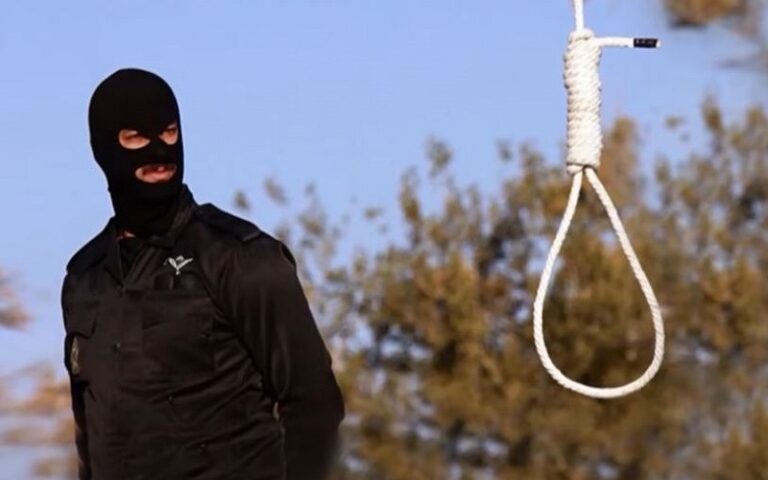
In recent weeks, Iran’s regime has once again accelerated its execution machinery. Between June 22 and July 15 alone, at least 44 people were executed, including two who were publicly hanged in the cities of Miandoab and Bukan. These executions are not only clear violations of human rights, but also part of the regime’s broader policy of intimidation and social control amid internal crises.

Members and families involved in the “No to Executions Tuesdays” campaign have stood firm against security pressures and are demanding the immediate halt of executions, fair judicial proceedings, and widespread public solidarity to break the regime’s cycle of death.

The “No to Executions Tuesdays” campaign has become a symbol of resistance from within Iran’s prisons and the outcry of survivors against a slow death. Public support for this campaign can amplify the voices of prisoners and justice-seekers and expose the true face of repression in Iran to the world.

Iranian Regime Blamed as Main Culprit Behind Environmental Pollution

These days, Tehran and many other cities across Iran—from east to west—are engulfed by dust storms. According to experts, this phenomenon signals a much deeper environmental crisis.

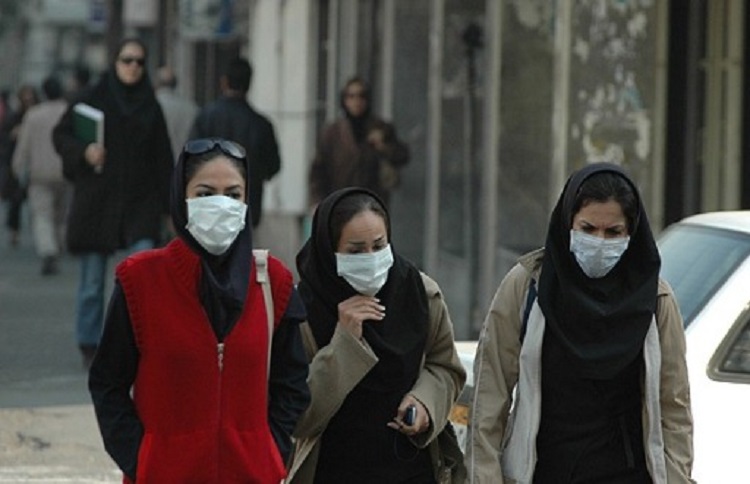
In recent days, not only major cities such as Tehran but also most western and southwestern provinces of Iran have once again been affected by intense waves of dust and particulate pollution. At times, the air quality index has reached 500, triggering serious health warnings for the public.

Severe Air Pollution in Various Cities of Iran

The head of Tehran’s Environmental Protection Organization has stated that the dust storms will persist in the capital and most provinces until the end of summer.

Just a few days ago, Somayeh Rafiei, head of the regime’s Majlis (parliament) environmental faction, admitted that the National Headquarters for Combating Dust Storms has failed to prevent the expansion of domestic dust storm sources. She stated that not only has the problem not been solved, but the situation has become “worse and more severe.”

Whatever the specifics of the dust crisis in Iran may be, experts agree that dust storms are a symptom and indicator of a far larger environmental catastrophe in the country.

Only a portion—estimated at around 30%—of the dust storms originate within Iran. The rest largely come from the west and south, including Iraq, Syria, Saudi Arabia, and the African Sahara. Territorial degradation in these areas, combined with intensified climate change, has significantly increased the inflow of dust into Iran.

The domestically-generated dust stems from “territorial degradation within Iran.” Desertification, soil erosion, drying wetlands and plains, and land subsidence are among the factors contributing to this degradation.

Water Tensions In 25 Provinces And 53 Cities Of Iran

Iran’s regime has yet to submit any report to the United Nations Climate Change Conference, known as the COP conference. This event is held annually, where countries present their environmental performance and progress to the international community.

Dust Storms: A Constant Affliction and Chronic Disease

According to experts, dust storms are a constant affliction and a chronic illness that severely reduce people’s quality of life. When combined with other factors such as water shortages, power outages, poverty, and insecurity, their destructive effects are amplified.

Certainly, citizens in countries like Qatar, Kuwait, and the United Arab Emirates—who also face dust storms—have far more resilience compared to people in provinces like Baluchestan or Khuzestan in Iran. This highlights the fact that Iran’s regime has failed to provide even the minimal conditions for public resilience, while constantly repeating the claim that solving the dust crisis is impossible without regional cooperation.

Officials of Iran’s regime should ask themselves: who exactly is supposed to cooperate with them? Iraq or Syria—both of which are embroiled in their own domestic crises? Currently, the Iranian regime does not even have sovereignty over its own airspace. So how can it engage in any meaningful regional collaboration with these or other countries to manage the dust storm crisis?

Forty-seven years ago, the Iranian regime launched its so-called path to “self-sufficiency” under the slogan “Neither East nor West.” In the years following the Iran-Iraq war, it prioritized agricultural expansion under the direction of “Jahad-e Sazandegi” (a regime institution ostensibly tasked with rural development).

But this policy proved costly, and it was nature that paid the price—through unrestrained dam construction, failure to allocate water rights to wetlands, land-use changes, and the destruction of forests and pastures. Dust storms are one of the consequences of this misguided policy.

Uncontrolled dam-building and large-scale extraction from water sources have dried up wetlands like Hamoun and Hoor al-Azim. Meanwhile, unsustainable farming, deep plowing, and the conversion of rangelands into croplands have loosened and destabilized the soil. Overgrazing has destroyed plant cover, and the movement of industrial vehicles—as well as remnants of the eight-year war with Iraq in some areas—have further prepared the soil for erosion. The lack of pebbles and vegetation has cleared the path for winds to carry away the soil.

Dust storms are not made up of just soil—they often originate from wetlands contaminated by industrial and domestic wastewater. As a result, the dust particles that spread through different Iranian cities vary and may carry differing levels of toxicity. These dust particles contain heavy and toxic metals.

Iran’s regime must allow at least half of the country’s renewable water resources to follow their natural course into plains and wetlands. This would require diverting 50 billion cubic meters of water annually from the agricultural sector back to nature—effectively shutting down half of Iran’s agricultural activities, while modernizing the remaining half to align with the country’s new climate realities. But the regime will not do this. The IRGC and regime-affiliated institutions derive the most profit from the destruction of Iran’s environment and pay little attention to the country’s future.

Araghchi Reacts to Netanyahu’s Comments on Conditions for an Agreement With Iran

Abbas Araghchi, the foreign minister of Iran’s regime, strongly criticized Israeli Prime Minister Benjamin Netanyahu in a post published on X on Sunday evening, July 13, 2025, responding to Netanyahu’s stated conditions for a potential agreement with Iran.

Araghchi wrote in his post:

The foreign minister of Iran’s regime also wrote in his message that Netanyahu had failed to “erase 40+ years of peaceful nuclear achievements” and claimed that each of the dozens of Iranian scientists killed by Israel “had trained 100+ capable disciples. They will show Netanyahu what they are capable of.”

In an interview aired Sunday on Fox News, the Israeli Prime Minister laid out three conditions for supporting any agreement with Iran’s regime: halting uranium enrichment, banning ballistic missiles with a range over 300 miles (482 kilometers), and abandoning the regime’s proxy forces involved in terrorism.

In this exclusive interview, Netanyahu emphasized that if Iran were to provide guarantees on these three issues, “then we are dealing with a different regime.” Otherwise, he said, Iran should remain isolated and be left to face whatever internal conditions develop.

Netanyahu also stressed that had Israel and the United States not attacked the Iranian regime’s nuclear sites last month, Iran would have been capable of obtaining a nuclear weapon within a year.

The Iranian regime’s foreign minister’s critical post in response to Netanyahu’s remarks drew reactions from Israeli officials.

Gharibabadi: No IAEA inspectors are currently in Iran
Amid escalating rhetoric between Iranian regime and Israeli officials, Kazem Gharibabadi, deputy for legal and international affairs at Iran’s Foreign Ministry, stated that “no inspectors from the International Atomic Energy Agency are currently present in Iran.”

According to the state-run ISNA news agency, Gharibabadi confirmed this during a televised program on Sunday evening, July 13, 2025, adding that “if the Agency has any request or demand, the decision-making authority for that will be the Supreme National Security Council.”

One day after the ceasefire between Israel and Iran, the Iranian regime’s Majlis (parliament) passed an urgent resolution to suspend cooperation with the International Atomic Energy Agency. It declared that any resumption of cooperation would be conditional on receiving security guarantees for Iran.

In his Sunday interview, Gharibabadi referred to this decision, saying, “The parliamentary resolution is clear, and based on it, our cooperation with the Agency is suspended.”

He added: “If certain conditions are met, then based on the parliamentary resolution, the final decision for any kind of cooperation with the Agency lies with the Supreme National Security Council. We have informed the Agency of this, and any request it makes will be considered by that body.”

Tightening Global Pressure On Iran’s Regime Nuclear Program

As the Iranian regime’s nuclear program has come under heightened global scrutiny following the 12-day war with Israel, international sources report mounting overt and covert pressure on Tehran to halt uranium enrichment. Simultaneously, Tehran’s contradictory stances have added complexity and tension to the issue.

The news website Axios reported that Russian President Vladimir Putin has recently, in communications with Iranian regime officials as well as with Donald Trump and Emmanuel Macron, supported a plan under which Iran would have no right to enrich uranium. According to the outlet, Moscow has asked Tehran in secret negotiations to agree to this proposal.

Grossi Warns of Consequences of Attacks on Iran’s Nuclear Facilities

Three European officials and one Israeli official confirmed that Putin has directly proposed to Iranian regime officials that they abandon full-scale uranium enrichment. Other sources told Axios that Russia is prepared, if a deal is reached, to remove Iran’s enriched uranium from the country and return only low-enriched uranium for medical and nuclear power purposes. However, a spokesperson for the Russian Foreign Ministry denied the Axios report.

Araghchi: There will be no agreement without enrichment

In response to reports of a possible “zero enrichment” deal, Abbas Araghchi, Iran’s regime foreign minister, firmly stated:
“We will not accept any agreement that excludes enrichment.”

He also warned that the use of the “snapback mechanism” by the three European countries to reinstate sanctions would mark the end of Europe’s role in the nuclear file. Araghchi stressed that inspections by the International Atomic Energy Agency (IAEA) would continue conditionally, and Tehran would assess its security and technical concerns before resuming full cooperation.

Trump: If Iran resumes pursuit of a bomb, strikes will resume

The Wall Street Journal revealed that Donald Trump, in a meeting with Israeli Prime Minister Benjamin Netanyahu, stated that he would not oppose another military strike if Tehran resumed its pursuit of nuclear weapons.

Iranian Regime Close to Building Nuclear Bomb

According to the report, Israel has clearly informed the United States that it is prepared for renewed military action if Tehran revives its weaponization activities. A senior Israeli official also stated that portions of Iran’s uranium stockpile in Isfahan remained intact after recent attacks and could potentially be recovered.

The 12-day war: official casualty figures and silence on military personnel

Meanwhile, Asghar Jahangir, spokesperson for Iran’s regime judiciary, announced that the 12-day war between Iran and Israel resulted in 943 deaths, with eight more individuals still missing. He also confirmed that in the attack on Evin Prison, five inmates with financial crimes were killed and several others escaped.

These figures come as other officials, including the head of the Martyrs Foundation, have estimated the death toll at up to 1,060 and warned it could rise to 1,100. Despite this, none of the regime’s institutions have provided a breakdown between military and civilian casualties, raising many questions among the public.

Recent developments indicate that the Iranian regime’s nuclear program has entered a new phase—one in which not only the United States and European countries, but even Russia, are cautiously distancing themselves from Tehran. The “zero enrichment” plan, now jointly pursued by Moscow and Washington, effectively seeks the complete nuclear disarmament of the Iranian regime. However, Tehran’s public opposition and threats to withdraw from cooperation have further darkened the outlook for negotiations.

Recession And Collapse in Iran’s Financial Markets Continue

The 12-day war and its fragile ceasefire have deepened the structural crises of Iran’s economy. The already ailing economy, previously suffering from severe imbalances in energy, banking, currency, and pension systems, is now trapped in deeper instability, a severe recession, and growing challenges.

Currency market and uncertainty about price increases

Following the Iran-Israel conflict, financial markets entered a recession. The insecure environment and the unstable ceasefire have brought trading to a halt, inflicting serious damage on the economy. With the outbreak of the war, exchange rates surged, and the price of the US dollar even surpassed 950,000 rials. Despite currency interventions and a security clampdown, rates have not returned to pre-war levels.

Billions for War, Nothing for the People: The Cost of Repression and Corruption in Iran

Stock market: heavy decline and loss of trust

Iran’s stock market has experienced a sharp decline over the past two weeks, with capital steadily flowing out. Supportive policies such as market closures, stock insurance, and capital injections have failed to stop the crash. The sell-off continues even after the ceasefire, and the Central Bank’s announcement of a 6 trillion rial injection has not restored investor confidence.

Gold and cryptocurrency markets in forced stagnation

Investors have turned to gold, cryptocurrencies, and fixed-income funds, but to prevent capital flight, the Central Bank has restricted the gold and crypto markets. With restrictions on rial payments and online platform operations, gold trading has effectively halted, and assets have been frozen.

Recession in the housing market

The uncertain environment has pushed the housing market into recession as well. A drop in buyers, an increase in sellers, and capital flight have led to an 8% decrease in asking prices in Tehran. However, despite the price drop, transactions are not occurring, and listings are remaining unsold for extended periods.

Damage to businesses and cost of living

War-related insecurity has led to widespread closures or stagnation of businesses, especially small enterprises. Fear of attacks has even prevented workers from showing up at bakeries. The war has disrupted land and sea transportation to regional countries and rising international insurance premiums for ships have raised import costs. According to an official report, food prices in June rose by more than 10% compared to the previous month.

Rising job insecurity and wave of layoffs

Fear over the end of the ceasefire has led people to cut spending, resulting in widespread stagnation across most businesses. Only essential shops remain open. Declining sales, rising production costs, and falling revenues have pushed companies toward layoffs. The firing of 150 journalists from major media outlets and partial payment of salaries are further signs of the employment crisis.

Damage to infrastructure, banks, and exchanges

The country’s infrastructure has been damaged during the war, and its reconstruction will require significant resources. Cyberattacks on Sepah and Pasargad banks have caused serious disruptions, while the attack on the “Nobitex” exchange led to a theft of $100 million. Currency reserves have also been diverted to military and cyber-security sectors, putting additional pressure on the public budget. Internet shutdowns imposed by the regime have cost the economy $400 million. These factors will widen the budget deficit and intensify future inflation.