Home Blog Page 82

Iran Regime Expediency Council Warns of Imminent Tehran Water Shortage

After the spokesperson of the Expediency Discernment Council announced that some areas of Tehran could reach “Day Zero” for water supply in the coming days, Isa Bozorgzadeh, the spokesperson for Iran’s water industry, denied the claim, stating that if water consumption savings continue, the crisis will be “managed acceptably.”

On Tuesday, August 12, Iranian media quoted Bozorgzadeh as denying the “Day Zero” for Tehran report, stating that water consumption management in Tehran improved by 13% in July and by over 14% so far in August.

According to Bozorgzadeh, if there is an additional 12% reduction in water consumption in Tehran, the water crisis will be acceptably managed.

Water Crisis in Iran: An Uncertain Future

Prior to Bozorgzadeh’s remarks, Mohsen Dehnavi, spokesperson of the Expediency Discernment Council, wrote in several posts on X that the water crisis in Tehran has surpassed the warning stage and entered a critical phase.

He emphasized: “If this trend continues, some parts of the capital could reach Day Zero in the coming weeks—a day when drinking water will be cut off in many neighborhoods, disrupting the daily lives of millions of citizens and causing major social and economic consequences.”

At the same time as Dehnavi’s warning, with the continuation of the heatwave and ongoing water and electricity cuts in Iran, regime officials once again decided to impose widespread shutdowns and reduce working hours in government offices across various provinces.

According to statements issued by the governors’ offices of several provinces on Monday, August 11, these reduced working hours and closures will take place on Tuesday and Wednesday, August 12 and 13, due to the “rising temperatures” and with the aim of “controlling energy consumption.”

The governors’ offices of provinces including Semnan and Kurdistan announced shorter working hours for government offices and banks on August 12. According to the announcements, in some provinces government offices will operate remotely.

Water crisis, lack of management

The spokesperson of the Expediency Discernment Council continued in his post on X: “Five consecutive years of drought, excessive extraction from underground resources, the rapid growth of urban consumption, and structural weaknesses in management have brought the reserves of the main dams to a dangerous level.”

Dehnavi, himself a senior regime official, stressed that this crisis is the result of years of “negligence, disregard for sustainable infrastructure, and blatant mismanagement of vital resources, the country’s future, and future generations.”

These issues have been raised for years by critics of the regime’s governance from various platforms, but the authorities have usually responded harshly, subjecting critics to security and judicial crackdowns.

Meanwhile, amid the water and energy crisis in Iran, the Water Resources Management Company reported that a total of 58% of the country’s dam reservoirs are empty.

According to this report, in 26 large dams across the country, over 75% of reservoir capacity is empty.

Masoud Pezeshkian, president of the Iranian regime, also warned: “We have no water. There is no water under our feet, nor behind the dams.”

Dehnavi described the way out of this situation as “strict conservation policies, renovation of aging networks, industrial consumption control, and smart resource management,” stressing: “Real participation of the people, the scientific community, and the private sector in practical projects, along with the use of new technologies, is essential to saving Tehran from this historic and environmental crisis.”
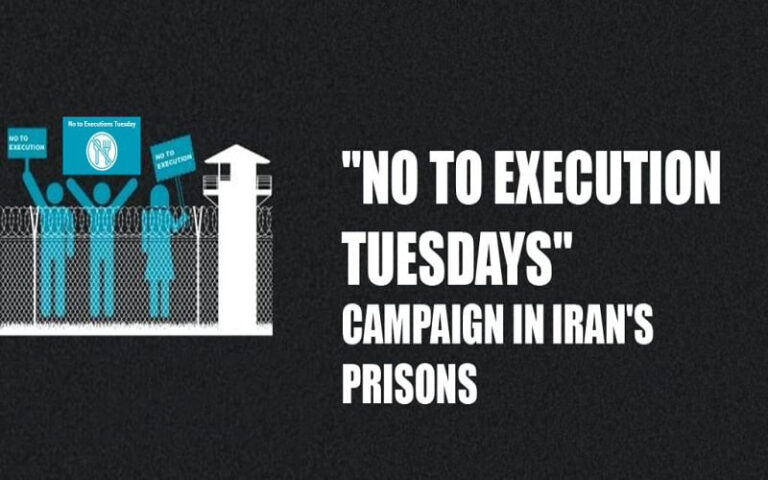
81st Week of “No To Execution Tuesdays” Campaign in 49 Prisons

The 81st week of the “No to Execution Tuesdays” campaign was held on Tuesday, August 12, 2025, in 49 prisons across the country. Prisoners in 49 prisons are on a hunger strike as part of this 81st campaign.

In the statement of the 81st week of the “No to Execution Tuesdays” campaign, highlighting the rise in executions, the families of death-row prisoners were urged to publicize their loved ones’ death sentences and to hold protest gatherings against these executions.

The text of the statement by prisoners participating in the 81st “No to Execution Tuesdays” campaign is as follows:

Hunger strike of the “No To Execution Tuesdays” campaign in its 81st week across 49 different prisons

While executions and repression in Iran have escalated, and following the transfer of political prisoners from Greater Tehran Prison to Evin Prison, five political prisoners previously sentenced to death—Vahid Bani Amerian, Pouya Ghobadi, Babak Alipour, Akbar (Shahrokh) Daneshvarkar, and Mohammad Taghavi—were suddenly abducted and moved to Ghezel Hesar Prison. Amnesty International has strongly condemned this.

Additionally, two security-related prisoners, Babak Shahbazi and Omid Tabari Moghadam, were also transferred to Ghezel Hesar Prison after being beaten. This repressive move is part of an intensified crackdown on political prisoners and the unprecedented increase in executions in the country.

According to reports, a Baluch political prisoner named Amer Porki Baloughzehi has been transferred to solitary confinement in Zahedan Prison for the implementation of his death sentence, and his life is in danger. On August 6 alone, 20 people were executed. Even more shocking, since the start of August, over 110 people have been executed in Iran.

But in the face of this wave of executions, the resistance of prisoners and the public continues. Shopkeepers and the brave people of the city of Semirom shut down the market and their shops in protest against the death sentences of two brothers, Fazel and Mehran Bahramian, making their opposition heard by all.

Transfer of 5 Political Prisoners Sentenced to Death to Ghezel Hesar Prison

We call on all families of death-row prisoners:

  1. Do not conceal the issuance of death sentences against your children and relatives; publicize them widely.

2. Gather in public places to raise your voice against these inhumane sentences.

The “No To Execution Tuesdays” campaign calls on people across Iran and the world to stand with these families and, using every means and tool available, rise up against the execution machinery in Iran. Only through uprising, steadfastness, courage, and a loud collective voice can this death cycle be ended.

In the 81st week of the “No To Execution Tuesdays” campaign, members of this campaign will be on a hunger strike on Tuesday, August 12, 2025, in 49 prisons.

Complete Drying of Lake Urmia by the End of Summer Is Certain

0

Ahmadreza Lahijanzadeh, deputy for marine and wetland affairs at the Department of Environment of Iran’s regime, warned that with the current trend, the complete drying of Lake Urmia by the end of summer is “certain,” citing the low water level in the lake.

On Sunday, August 10, Lahijanzadeh said: “The water level of the lake on August 2 reached 1,269.74 meters, its area has shrunk to 581 square kilometers, and the water volume has been reduced to about half a billion cubic meters; a figure that shows a significant and unprecedented decline compared to last year.”

The Drying Up of Lake Urmia Will Destroy Millions of Lives and Hectares of Land

He warned that if the current trend continues, the complete drying of the lake will occur by the end of summer, and due to the “lack of water inflow,” this situation will not change in autumn.

Lahijanzadeh added that although the restoration of Lake Urmia is possible, it will not mean a return to the “ideal conditions” of 1995, when the lake contained 32 billion cubic meters of water.

Earlier, on August 8, Banafcheh Zahraei, director of the Water Institute at the University of Tehran, said that Lake Urmia may have reached a “point of no return” and may never again be maintained as a lake.

Zahraei identified the main cause of this crisis as the expansion of cultivated land beyond the capacity of the watershed.

In recent years, experts have repeatedly warned of the serious consequences of the water crisis, stressing that if the trend continues, Iran could reach a point where not only living in many areas becomes difficult, but social and economic security is also jeopardized.

The drying up of water bodies—from Lake Urmia to the Zayandeh Rud River, the Hour al-Azim wetland, and Anzali Lagoon—is an example of the environmental threats posed by the water crisis and the lack of scientific management under Iran’s regime.

Previously, Lahijanzadeh, referring to the current crisis of Lake Urmia alongside the drinking water supply problems in some cities, said that the drought of the 2024–2025 water year is one of the key factors contributing to this situation.

On August 7, eight civil activists imprisoned in Greater Tehran Penitentiary announced that they would go on hunger strike to protest the “deliberate drying of Lake Urmia by Iran’s regime over recent years.”

On July 24, Mohammad Darvish, researcher and environmental activist, criticized the performance of responsible agencies regarding Lake Urmia’s drying, saying: “When we have 14% more rainfall but Lake Urmia is still dry, it means that whether it rains or not, they are not allowing a single drop of water to enter it.”

Frequent Power Outages Have Reduced Iranian Farmers’ Access to Water By 25%

0

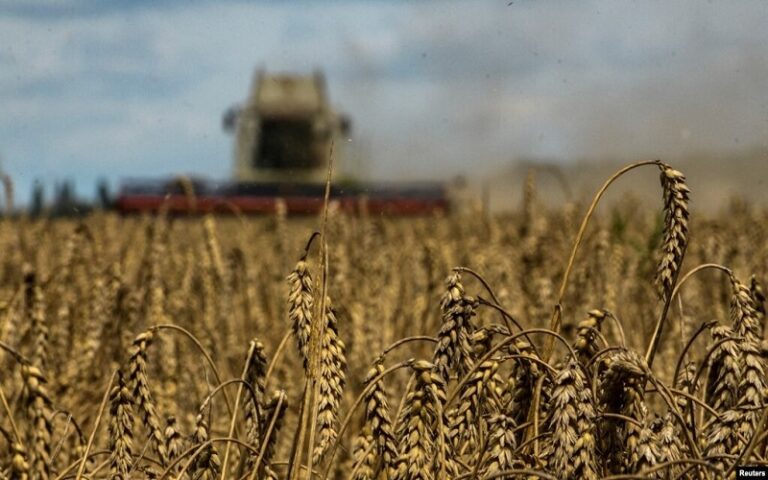
Ataollah Hashemi, head of the National Wheat Farmers Foundation, announced that due to frequent power outages, farmers’ access to water has decreased by one-quarter.

In a video interview with the state-run news outlet Khaneh Eghtesad, Hashemi reported a decline in wheat production due to the effects of drought and factors such as prolonged power outages.

He said: “Six hours of daily power cuts have eliminated 25% of farmers’ access to water. In my opinion, the damage to farmers is even greater than this.”

Large-Scale Farmers’ Protests in Iran Against the Policy of Drying Up the Zayandeh Rud River

Hashemi added: “This year, we will reach 7.5 million tons of wheat production. Under these circumstances, the country needs to import 5 million tons of wheat, which is a terrifying figure.”

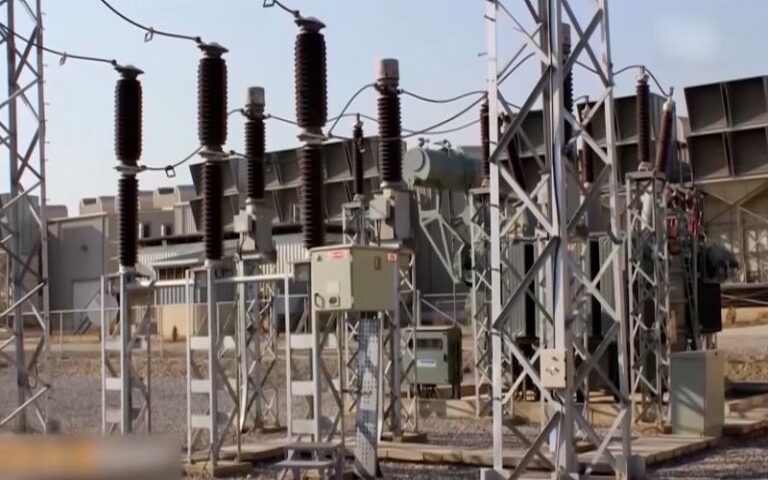
In recent days, frequent water and power cuts have caused widespread problems for citizens, affecting daily life, the industrial sector, and economic activities.

Officials of Iran’s regime call on people to save and adjust consumption patterns, while they have been unable to resolve the structural and managerial crises in the water and electricity sectors, and are now resorting to shutting down entire provinces as a temporary measure to prevent further deterioration of the situation.

Other countries refrain from selling grade-one wheat to Iran

The head of the National Wheat Farmers Foundation, continuing his interview, reported that 12.5 million tons of wheat were purchased under guaranteed procurement last year, but said that other countries mostly do not sell grade-one wheat to Iran.

According to Hashemi, much of the imported wheat is of grade two or three quality, and sometimes it is not even suitable “for human consumption.”

He pointed to the challenges facing wheat imports, including the issue of securing foreign currency, and added: “Other problems are where to buy it from, how to buy it, how it will be transported, and whether they will even sell us wheat at all.”

Hashemi had also reported in late May that farmers’ water pumps, each worth 3 billion rials, were burning out due to constant power outages.

In early May, Aliqoli Imani, CEO of the National Wheat Farmers Foundation, warned that production of essential crops would decrease by 30% if the electricity supply to agricultural wells were cut off.

In recent weeks, as Iran’s water and electricity crisis has intensified, public protests and expert criticisms have escalated.

On August 5, industrial activists warned that with the widespread power outages imposed since May, steel production this year is expected to decline by 33%.

Earlier, Vahid Yaghoubi, a member of the Iranian Steel Producers Association, had said that since late April, almost all steel production units have been shut down.

Protests Continue Over Frequent Power Outages in Iran with A Gathering in Babolsar

A group of Babolsar residents gathered early on Sunday, August 10, to protest long power outages in the city. This protest in Babolsar is the latest example of such demonstrations.

Videos and reports circulated on social media show protesters in Babolsar gathering in front of the local electricity office in Mazandaran province. Earlier, residents of Fereydunkenar, a neighboring city to Babolsar, had also held a similar protest.

In addition to Mazandaran, gatherings have also taken place in Gilan province—in Rasht, Khomam, and Khoshkebijar—to protest the power outages.

The Ongoing Electricity Crisis in Iran

Protest gatherings in Iran began in late July in Sabzevar, the second-largest city in Razavi Khorasan province, and have since spread to other cities and counties.

Parliament’s stance on protests over water and electricity outages

Following the protests in Babolsar and Fereydunkenar, the state-run IRNA news agency wrote about the frequent electricity cuts in Mazandaran province: “The people of Mazandaran, like other compatriots, have adapted themselves to the scheduled outages announced by the provincial electricity distribution company, enduring two- and even four-hour daily blackouts.”

Meanwhile, on Saturday, August 9, Esmaeil Hosseini, spokesperson for the Energy Commission of Iran’s regime parliament, referred to citizens’ protests over water and electricity shortages, saying: “The most important issue the enemy focuses on is dissatisfaction, and one of the ways it seeks to create dissatisfaction is through the energy sector.”

Despite this warning from the Energy Commission member, Vahid Ahmadi, a member of the regime parliament’s National Security Commission, told the state-run Didban Iran website that while various crises such as water shortages or lack of energy may exist, “if proper management is applied, there is not much to worry about.” He added, “Despite the problems with water and electricity, we are still prepared to enter another war.”

Water And Electricity Supply Crisis; Efforts for the Rapid Transfer of Water to Tehran

However, on Sunday, Massoud Pezeshkian, president of Iran’s regime, warned of a 40% decrease in rainfall across the country, saying Iran is facing a “serious and unimaginable” water resources crisis.

In a meeting with managers and media representatives, he emphasized that unplanned development has led to “having no water under our feet and none behind the dams.” Pezeshkian said: “Today we are in a state of compulsion and have no choice; we cannot avoid cutting water supplies.”

Power outage program for embassies

Meanwhile, the state-run Fars News Agency, affiliated with the Islamic Revolutionary Guard Corps (IRGC), reported on Sunday, August 10, that power had been cut to three embassies in Tehran.

The issue of embassy electricity consumption has been raised by the regime’s official media since last year. In July 2024, reports emerged of high electricity consumption by certain embassies in Tehran.

At that time, Fars reported that the highest electricity consumption among diplomatic premises was linked to a garden house belonging to one of the embassies—a claim later attributed by the state-run Qods newspaper to the British Embassy Garden.

In winter 2024, some media outlets named embassies of countries such as the Netherlands and Italy in Tehran, accusing their diplomatic premises of cryptocurrency mining.

Finally, in June 2025, electricity tariffs for embassies were increased. Embassy electricity consumption in Tehran does not appear to have a significant impact on the country’s total electricity usage. However, whenever public dissatisfaction over frequent power outages rises, the issue of embassy electricity consumption is raised by the regime’s official media.

Iran’s Regime Extends Prison Sentence of Two Elite Students Under New Made-Up Charges

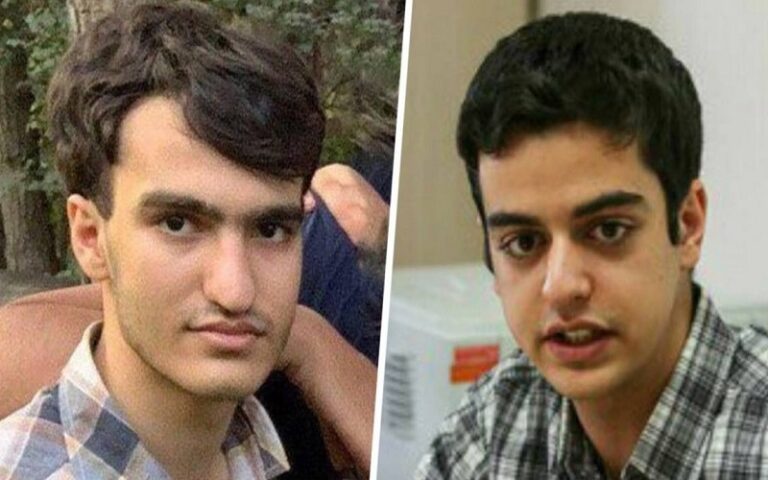
Mostafa Nili, a lawyer, announced that new prison sentences have been issued for Amirhossein Moradi and Ali Younesi, two imprisoned elite students, on charges of “propaganda against the state” and “supporting Israel.”

On Saturday, August 9, Nili wrote on the social media platform X that Branch 29 of the Revolutionary Court sentenced Moradi and Younesi to 15 months in prison on the charge of “propaganda activities against the state.”

According to the lawyer, in another case against Younesi, the Iranian regime’s judiciary sentenced him to five years in Kerman Prison on the charge of “endorsing and supporting” Israel.

Amirhossein Moradi And Ali Younesi on Mahsa’s Anniversary: A Spark Can Ignite The “Uprising Until Khamenei’s Overthrow”

Nili added: “As an additional punishment, Mr. Ali Younesi is banned from using any virtual platforms or making phone calls outside the prison, except in urgent cases under the direct supervision of the prison warden, during his prison term.”

Ali Younesi’s brother says the reason for his brother’s sentence was a “false” report by Hedayatollah Farzadi, the warden of Evin Prison, claiming that after the killing of Hezbollah leader Hassan Nasrallah by Israel, Younesi distributed sweets.

According to Reza Younesi, the sit-in and protest by prisoners following the execution of Mojahed Korkor was another incident cited in the Evin warden’s report as the basis for the new ruling against Ali Younesi.

Mojahed Korkor was a protester from Izeh whom the Iranian regime executed at dawn on Wednesday, June 11. Following this, political prisoners in Ward 4 of Evin Prison, including Ali Younesi and Amirhossein Moradi, staged a sit-in in protest.

This is not the first time the Iranian regime has accused citizens of “supporting Israel.” Following the 12-day war and ceasefire between the Iranian regime and Israel, hundreds of citizens in Iran have faced fabricated cases by security and judicial bodies, putting them at risk of harsh sentences such as execution and imprisonment.

On August 9, the Iranian regime’s judiciary spokesperson identified 20 citizens arrested after the recent war as “espionage agents and supporters of Mossad” and said their cases are under review.

The new prison sentences for Younesi and Moradi come as they have already been imprisoned for more than five years.

These two elite students, arrested in 2020, were only 19 years old at the time of their detention.

Younesi, born on March 4, 2001, is a computer science student at Sharif University of Technology and the winner of a gold medal in the 2018 International Olympiad on Astronomy and Astrophysics in Beijing, China. Together with the Iranian team, he won first place globally by earning five gold medals in the 12th edition of the competition.

Moradi, born on February 19, 2001, is another student at Sharif University and the holder of a silver medal in Iran’s National Astronomy Olympiad in 2017.

PMOI Supporters Given Double Death Sentences by Iran’s Regime

In May 2020, then-judiciary spokesperson Gholamhossein Esmaili accused the two students of having ties with “anti-regime groups,” including the People’s Mojahedin Organization of Iran (PMOI/MEK).

He also claimed that “explosives were found” in their homes — an allegation strongly denied by Younesi, Moradi, their families, and people close to them.

After nearly two years of interrogation and pressure to obtain televised confessions, in May 2022, the Revolutionary Court sentenced Younesi and Moradi to 16 years in prison on “national security-related charges.”

Hossein Mousavian, A Former Iranian Regime Diplomat, Has Been Dismissed from Princeton University After Fifteen Years

Princeton University in the United States announced that Hossein Mousavian, a former Iranian regime diplomat, has “retired” from the university. Mousavian is accused of being involved in the assassinations of several prominent opponents of the Iranian regime in Europe.

In an official statement, Princeton University described Mousavian’s departure as “retirement.”

Mousavian served as a “Middle East security and nuclear policy expert” in Princeton University’s Program on Science and Global Security.

He is accused of involvement in the assassination of at least 24 Iranian regime opponents in Europe during the 1980s and 1990s, including Shapour Bakhtiar, Fereydoun Farrokhzad, Abdolrahman Ghassemlou, and Kazem Rajavi.

The Mykonos restaurant assassinations and the historic verdict of the Berlin court, which held the Iranian regime responsible for the killing of four Iranian dissidents in 1992, can and should serve as the basis for prosecuting Mousavian.

In recent years, Iranian dissidents, political and civil activists, families seeking justice, and several international organizations and associations have demanded that Princeton sever ties with Mousavian and remove him from the university.

In November 2023, Fox News reported that the U.S. Congress’s Education Committee had launched an investigation into Princeton University’s connection with Mousavian.

The hiring of Mousavian at Princeton and the employment of Mohammad Jafar Mahallati, the former Iranian regime ambassador to the United Nations, at Oberlin College, indicate a troubling and unique pattern concerning the Iranian regime, as former ambassadors of no other oppressive government have ever held such prestigious positions at U.S. universities.

This trend gives a platform and legitimacy to individuals directly involved in assassinations, terrorist acts, and crimes against humanity.

Recent revelations by Mohsen Rafighdoost, the first minister of the Iranian regime’s Islamic Revolutionary Guard Corps (IRGC), provide new grounds for reopening cases in which Mousavian is accused of involvement.

In March 2024, Rafighdoost admitted in an interview that the IRGC maintained a secret account at the Bank Saderat branch in Frankfurt to finance the assassination of regime opponents abroad through money laundering.

Rafighdoost’s statements, along with court documents — including German intelligence reports showing links between the Iranian regime’s embassy in Bonn and the perpetrators of the Mykonos assassinations through encrypted telephone communications — provide a solid legal basis for prosecuting Mousavian.

Kazem Rajavi: Iran human rights advocate remembered

Dr. Kazem Rajavi, the brother of Massoud Rajavi, leader of the Iranian opposition, was assassinated in Switzerland by Iranian regime agents on April 24, 1990.

More Than 125 Political Prisoners Are Being Held in Inhumane and Unbearable Conditions in Sheiban Prison in Ahvaz

Ward 5 of Sheiban Prison in Ahvaz, which has an official capacity of 100 people, is currently holding more than 125 political prisoners. These inmates face numerous problems, including overcrowding and a severe health crisis, and have announced that if their problems are not addressed immediately, they will go on hunger strike.

The Karun Human Rights Organization reported on Saturday, August 9, that following mass arrests after the 12-day war, at least 80 of those detained were transferred to Ward 5 of Sheiban Prison in Ahvaz.

After enduring physical and psychological torture and forced confessions, these individuals were sentenced to long prison terms, severely increasing the population of this ward.

Overcrowding and unsuitable living space

Although Ward 5 of Sheiban Prison was designed to hold a maximum of 100 people, overcrowding has severely impacted sanitary and human living conditions.

The 80th Week of the “No To Executions Tuesdays” Campaign Took Place Across 48 Different Prisons

Rooms in this ward, each with an area of less than 20 square meters, were intended for 12 to 15 people, but due to overcrowding, some rooms now hold more than 20 prisoners.

The yard of this ward measures only 60 square meters, and due to a broken sewage system, contaminated water and sewage have accumulated there, filling the prison with a foul stench.

The prison’s high walls, 12 meters tall and six meters thick, block the flow of fresh air and natural ventilation in the yard. Prisoners cannot walk, move around, or exercise there and are only transferred to another ward once every two weeks for exercise.

Rising illnesses and a severe health crisis

According to the Karun Human Rights Organization, the sanitary conditions in Ward 5 of Sheiban Prison are “extremely critical,” and various diseases have spread among the prisoners.

In addition to specific illnesses, the spread of skin diseases such as scabies, as well as influenza, has increased sharply.

The Exile of Political Prisoner Saeed Masouri to Zahedan Prison in Southeastern Iran

Another concern is that cooking is carried out in the ward’s yard, next to contaminated water and sewage, further endangering prisoners’ health.

This ward has only two toilets, forcing prisoners to endure long queues to use them.

There are also only two showers available for prisoners in this ward, and due to overcrowding, the waiting time to use them can reach two to three hours.

The available air coolers are ineffective, and the hot climate of Ahvaz makes conditions even more unbearable for prisoners.

Threat of hunger strike

In response to these critical and inhumane conditions, political prisoners in this ward have threatened to launch a “collective hunger strike” if their problems are not addressed immediately.

They stated that this action would be carried out in protest against the “inhumane conditions in the prison.”

Many prisoners in Iran are forced to use hunger strikes as a last resort to achieve their demands, putting their lives at risk.

They often go on strike in protest against unmet demands, including delays in processing their cases and the failure to respect their rights as prisoners.

Death row inmates and long-term prisoners

Ward 5 of Sheiban Prison in Ahvaz is one of the most overcrowded wards for political prisoners in Iran and houses a number of inmates sentenced to death or long prison terms.

Seyed Salem Mousavi, Habib Deris, Mohammad Davarshenas, Mehdi Sharifi, Mohammad Amin Abiat, Morteza Mehnapur, Masoud Jamei, Alireza Mardasi, and Farshad Etemadifar are among the death row inmates held in this ward.

Several political prisoners serving life sentences or long-term imprisonment — including Gholamhossein Kalbi, Abdol Emam Zaeri, Abdol Zahra Helichi, Yahya Naseri, Nazem Bureihi, Mohammad Ali Amourinejad, Seyed Yaber Albushouka, Seyed Mokhtar Albushouka, Ali Halfy, Ayoub Porkar, Fares Ramahi (Amouri), Saman Hormatnejad, and Davoud Hormatnejad — are also held in this ward.

In its report, the Karun Human Rights Organization wrote that human rights activists, expressing deep concern about the prisoners’ situation, have urged international bodies and human rights organizations to act swiftly to improve conditions and protect the lives and health of political prisoners in Ahvaz prisons.

These groups have called on international organizations to exercise closer monitoring of prisoners’ situations and prison conditions to prevent any human rights violations.

Transfer of 5 Political Prisoners Sentenced to Death to Ghezel Hesar Prison

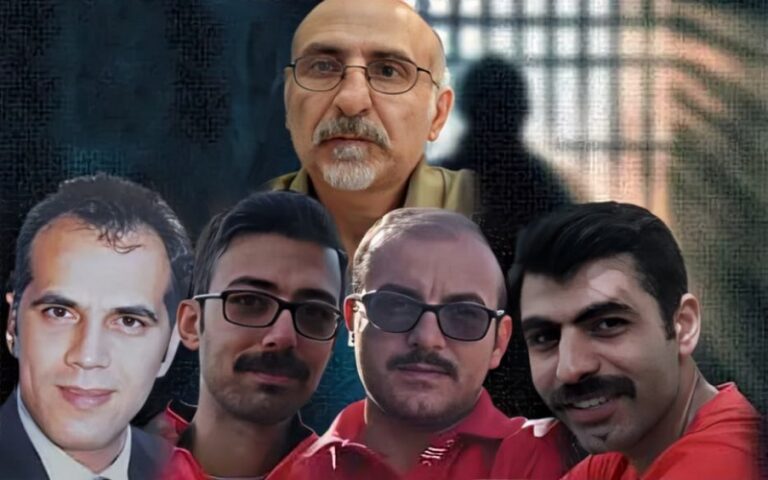
During a prisoner transfer from Fashafouyeh Prison to Evin Prison on the morning of Friday, August 8, 2025, five political prisoners sentenced to death—Mohammad Taghavi, Shahrokh Daneshvarkar, Vahid Bani-Amrian, Pouya Ghobadi, and Babak Alipour—were transferred to Ghezel Hesar Prison.

According to informed sources, this occurred as part of a mass transfer of prisoners from Fashafouyeh to Evin Prison. Reports indicate that these prisoners were separated from others with violence and beatings by prison guards and transferred to an undisclosed location without the ability to contact their families. These political prisoners protested their transfer but were brutally beaten.

Iran’s Regime Executes Political Prisoners Mehdi Hassani and Behrouz Ehsani

Over the past two days, more than 600 political, security, and financial prisoners have been transferred from Fashafouyeh Prison to Evin Prison without prior notice to their families. This transfer comes while many damaged sections of Evin Prison—especially those affected during the “12-Day War” missile attack—are still under reconstruction.

According to reports, in the early hours of Thursday, August 7, a group of financial prisoners, and in the early hours of Friday, August 8, a large number of political and security prisoners were transferred from Fashafouyeh to wards 7 and 8 of Evin Prison. These transfers occurred rapidly and under an atmosphere of uncertainty, with prisoners given no chance to collect their personal belongings.

The cases of six political prisoners—Vahid Bani-Amrian, Seyed Mohammad Taghavi, Babak Alipour, Pouya Ghobadi, Shahrokh Daneshvarkar, and Abolhassan Montazer—were jointly tried in Branch 26 of the Tehran Revolutionary Court, presided over by Judge Iman Afshari, on October 6, 2024.

On Saturday, November 30, 2024, the six political prisoners were sentenced to death and prison on charges of “armed rebellion, assembly and collusion against national security, and membership in the Mojahedin (PMOI/MEK).”

In a statement, the National Council of Resistance of Iran (NCRI) called on “the UN High Commissioner, the Human Rights Council, the Special Rapporteur on the situation of Human Rights in Iran, and international human rights organizations to take immediate action to inquire about the status of these five prisoners and to save their lives, as they are at risk of execution.”

In an urgent call, Amnesty International called on the regime to “halt any plans to execute” the five prisoners and warned, “Global action is needed NOW urging Iranian authorities to halt any plans to execute them!”

Extreme Heat Puts Lives of Iran’s Oil Industry Workers at Risk

0

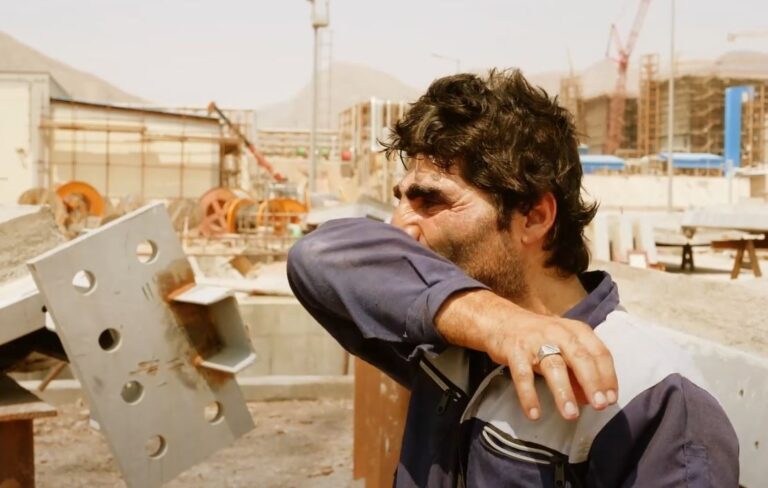
Several labor-focused media outlets have criticized the extremely harsh conditions faced by workers in Iran’s oil industry amid soaring temperatures and have warned that their lives are at risk.

Oil industry workers are operating in extreme heat of 60°C (140°F) under critical water and electricity shortages and without any facilities or support, while contractors are failing to pay their wages and benefits.

A recent video showing a heat-stricken worker at the Kangan Petrochemical Complex has sparked strong criticism of the dangerous working conditions in the South Pars sites and other operational oil zones.

Water Reserves in 19 Major Iranian Dams Fall Below 20%

In the video, a worker says, “This hell is the story of our lives,” describing the dire and hazardous working conditions under extreme heat and warning that workers’ lives are in danger.

He added: “According to the law, work must stop when temperatures exceed 50°C, but we are forced to continue working in this scorching heat without any cooling facilities or proper sanitary and living accommodations.”

One worker addressed the authorities of Iran’s regime, saying the heat is threatening workers’ lives, yet no official cares about them.

Workers are demanding a halt to work under these critical conditions with full pay, the provision of standard facilities for dormitories, the dismissal of negligent contractors, and attention to their livelihood and welfare rights.

Widespread heatwave enters Iran

Sadegh Ziaian, head of the National Center for Forecasting and Crisis Management at the Meteorological Organization of Iran, stated on Thursday, August 7, in an interview with the state-run Mehr News Agency, that with a widespread heatwave entering Iran in the coming days, temperatures in some southern cities will rise to 50°C (122°F).

According to Ziaian, over the next three days, the provinces of Sistan and Baluchestan, Kerman, and parts of Hormozgan will experience rising temperatures along with wind and dust storms.

The report states that the weather across most parts of the country will be hot, with an upward trend in temperatures.

Meanwhile, Mohsen Farhadi, head of the Occupational Health Center at the Ministry of Health, warned about the dangers of direct sunlight exposure, stating that ultraviolet rays cause serious harm, especially to children.

Skin cancers and eye diseases are among the common consequences of exposure to ultraviolet rays from the sun.

Warning over heatstroke among corporate workers in Asaluyeh

Previously, on July 29, labor activist Maziar Gilani-Nejad, who closely follows the conditions of oil and gas project workers, told the state-run ILNA news agency that heatstroke and food poisoning are the two main causes of illness among project workers in Asaluyeh and other hot regions during the summer.

Gilani-Nejad stated, “In recent days, as the heat in Asaluyeh has reached over 50 or even 60°C (122–140°F), many workers have suffered from heatstroke.” He added, “Although we do not have exact figures, dozens of workers are being sent daily to the clinics in Kangan and Asaluyeh due to heat-related illnesses.”

He further said: “Fainting from heatstroke during work is a daily occurrence in various projects. Humidity and temperatures sometimes reaching 60°C or more are putting all project workers—whether permanent, contract-based, or third-party employees—at risk of numerous diseases and hazards.”

According to this labor activist, during the days when workers in Asaluyeh and Khuzestan protest against working in extreme heat, many contractors, indifferent to the horrific weather conditions, force workers to continue without any shade, proper ventilation, or even rehydration drinks—and they take pride in this mistreatment.