Home Blog Page 83

Iran’s Regime Expels Over Half a Million Afghans in 16 Days

The United Nations has announced that in just 16 days following the end of military clashes between Iran’s regime and Israel, more than 500,000 Afghan nationals were expelled from Iran. Observers have called this one of the largest forced displacements of population in the past decade.

According to CNN, the International Organization for Migration (IOM) reported that from June 24 to July 9, at least 508,426 Afghans exited Iran through its border crossings with Afghanistan. The organization warned that nearly 65,000 people were returned to Afghanistan on just Tuesday and Wednesday of the past week, and that this pace accelerated after Iran imposed a deadline for undocumented foreigners to leave.

Officials of Iran’s regime had previously announced in March the launch of a plan to deport undocumented Afghan migrants. However, the sudden acceleration of this plan came after the 12-day war between the Iranian regime and Israel—a conflict that began with Israeli airstrikes targeting IRGC positions and nuclear facilities, followed by Iran launching missile attacks on Israeli territory.

In recent weeks, some state-run Iranian media have accused Afghan nationals of collaborating with Israeli intelligence, without providing any evidence. Observers say this narrative may be an attempt by the Iranian regime to deflect public attention from internal crises and justify the crackdown on a vulnerable migrant community.

Surge in Forced Returns and Dire Conditions at Border

According to Myhyang Park, head of the IOM office in Iran, half of all returns in the current year occurred after June 1 alone.

She added that in just one week in July, 250,000 Afghans were returned from Iran, including around 400 unaccompanied or separated children.

Images from the Islam Qala crossing—one of Afghanistan’s busiest border points with Iran—show tens of thousands of migrants waiting under harsh conditions and 40-degree heat to either cross or have their documents processed. Many of them had lived in Iran for years, working in difficult and low-paying jobs.

Testimonies of Abuse and Extortion in Detention Centers

Some of the returnees have shared accounts of their experiences with Iranian security forces and detention. Bashir, a young Afghan man interviewed at Islam Qala, said he was arrested in Tehran and was forced to pay 120 million rials (equivalent to 12 million tomans) as extortion before being transferred to a detention center in the south of the city.

He claimed that in the detention center, detainees were not provided with food or drinking water and were repeatedly beaten and insulted.

Ongoing Arrests, Broadcast of Televised Confessions, and International Reactions

Recently, state-run Iranian media have aired “televised confessions” in which an Afghan individual allegedly admits to providing information about certain locations to a person residing in Germany in exchange for $2,000. No identity or evidence was presented to substantiate the claims.

In another video, police officers are seen detaining a group of migrants, who the reporter claims are Afghans. They are taken away to an undisclosed location without any explanation.

These actions have drawn international criticism.

Nevertheless, Fatemeh Mohajerani, the government spokesperson, told Reuters that “we have always tried to be good hosts, but national security is a priority, and naturally, undocumented foreigners must be returned.”

Iranian-American Arrested at L.A. Airport for Alleged Iran Sanctions Violation

U.S. judicial authorities announced that an Iranian citizen with U.S. permanent residency was arrested upon arrival at Los Angeles International Airport for allegedly sending advanced electronic equipment to Iran in violation of U.S. sanctions.

According to the U.S. Attorney’s Office in Los Angeles, Bahram Mohammad Estavari, 66, a resident of both Tehran and Santa Monica, was the founder and CEO of an engineering firm based in Tehran. Since 2018, he allegedly engaged in the illegal export of electronic equipment and components to Iran.

He was arrested on Thursday, July 10, upon entering the United States at LAX and appeared in federal court in Los Angeles later that same day.

Estavari has been charged with one count of “conspiracy to violate the International Emergency Economic Powers Act” (IEEPA) and three counts of directly violating the law. Prosecutors say he exported components subject to strict export controls to Iran without the legally required authorization from the U.S. government.

U.S. Sanctions 22 Entities Tied to Iranian Regime’s Shadow Banking Network

According to the indictment, Estavari used two front companies based in the United Arab Emirates to carry out the transactions, concealing the final destination of the goods from American and foreign vendors.

He allegedly claimed that the UAE-based firms were the end-users, while in reality, the items were destined for his engineering company in Tehran.

The court documents state that the exported items included advanced computer processors, signal systems for railway infrastructure, and other complex electronic components—all of which fall under strict U.S. export controls and cannot be sold or shipped to Iran without special authorization. Prosecutors emphasized that Estavari was fully aware of the sanctions and deliberately violated them.

Estavari, who obtained lawful permanent residency in the U.S. in May 2020, pleaded not guilty during his federal court appearance in downtown Los Angeles and was released on a $1.3 million bond. His trial is scheduled to begin on September 2.

If found guilty by a jury on any of the charges, Estavari could face up to 20 years in federal prison for each count—a sentence that would mark one of the harshest penalties for sanctions violations in recent years.

Estavari’s case emerges amid repeated warnings by the U.S. government in recent years about the Iranian regime’s ongoing efforts to acquire advanced technologies despite sanctions. Numerous Iranian nationals or individuals of Iranian descent have been arrested and prosecuted for circumventing these sanctions.

In recent months, as tensions between Tehran and Washington have intensified over Iran’s nuclear program, the strict enforcement of sanctions has once again become a central pillar of U.S. policy toward Iran. Cases like the one now opened against Bahram Estavari are seen in this context.

German Authorities Say Aid Worker Has Not Left Iran, Contact Lost

The Stuttgart-based German aid organization STELP announced that Serkan Eren, its founder and a Turkish national who had traveled to Iran on a humanitarian mission, was scheduled to leave the country on June 28. However, he did not exit Iran, and all contact with him has been lost.

In a statement issued on July 10, STELP urged the public to refrain from speculation and unauthorized actions in order to protect Serkan’s safety and ensure peace of mind for his family and loved ones.

In June, Eren had traveled from Stuttgart to Tehran to deliver financial aid.

In an interview with the German media outlet SWR, he said that to avoid being mistaken for an “agent or saboteur,” he had left his bulletproof vest, helmet, and satellite phone in Germany and traveled to Iran with only a backpack and no protective equipment.

SWR had previously reported on his trip to Iran, describing the conditions Serkan Eren experienced after arriving and how he helped local people.

Since the outbreak of the war with Israel, Iran’s regime has launched a widespread wave of arrests targeting citizens, including foreign nationals, on charges such as “collaboration with Israel.”

In one such case, Abbas Araghchi, the foreign minister of Iran’s regime, confirmed in a July 10 interview with the French newspaper Le Monde that Lennart Monterlos, an 18-year-old French-German tourist, had been arrested in Iran.

Iranian Regime Confirms Arrest of French-German Tourist Lennart Monterlos

Regarding the young French citizen who has had no contact with his family since June 16, Araghchi said: “This cyclist was arrested for committing a crime, and a notice regarding this matter has been sent to the French embassy.”

Over the past decades, Iran’s regime’s security and judicial apparatus have repeatedly detained and imprisoned foreign nationals and dual citizens arbitrarily.

France and other European Union member states have described these arrests as politically motivated and part of the Iranian regime’s “hostage diplomacy.”

Human rights activists also consider the arrest of Western nationals by the Iranian regime to be a form of state-sponsored hostage-taking, saying that Tehran uses this tactic to pressure the West and extract concessions.

Iran’s Statistical Center Reports Rise in School Dropout Rates

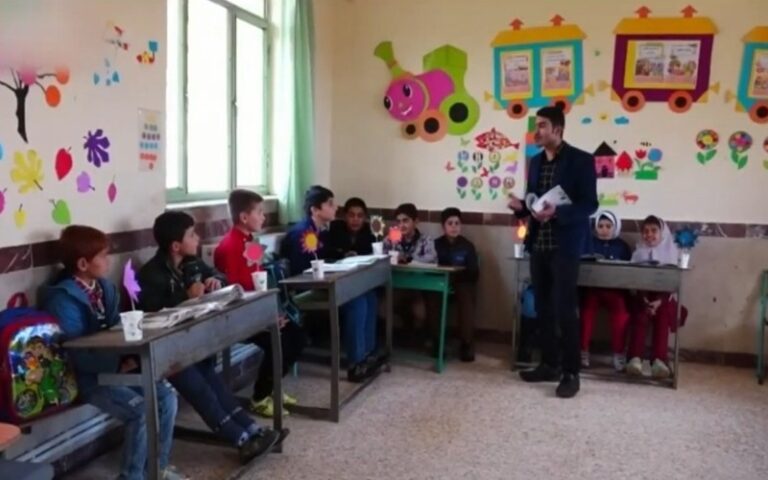
As warnings persist about the wave of school dropouts among children and adolescents in Iran, data from the Statistical Center of Iran shows that the dropout rate among students in elementary and lower secondary education during the 2023–2024 academic year increased compared to the previous year.

According to the Statistical Center, the overall dropout rate at the elementary level was 1.45%, which marks a 0.25% increase compared to the previous academic year.

Data from the center indicates that the dropout rate among boys in this level reached 1.53%, a 0.32% increase from the previous academic year.

Iranian Officials Downplay the Number of Dropout Students

Among girls, the dropout rate was reported at 1.36%, which is 0.17% higher than the previous year.

On the other hand, the overall dropout rate at the lower secondary level (middle school) was 6.41%, reflecting a 0.94% increase compared to the previous year.

According to published data, the dropout rate for boys in lower secondary education increased by approximately 1.2%, while for girls it rose by 0.65% compared to the previous year.

At the upper secondary level (high school), the dropout rate decreased from 4.04% to 2.69%, marking a 1.35% reduction compared to the previous year.

Over the past years, repeated warnings have been issued about the rising dropout rates among Iranian children and teenagers, often attributed to various issues, including family economic hardship.

In December 2024, Alireza Kazemi, the education minister of Iran’s regime, cited familial, economic, and social factors as the main reasons why students are dropping out of school.

Earlier in November 2024, Gholam-Ali Afrouz, a professor at the University of Tehran, stated that only 70% of Iranian students who enter elementary school eventually graduate from high school.

He emphasized that 30% of students in the country fail to obtain a high school diploma and leave the education system before graduating, entering the job market instead.

In October 2024, Farshad Ebrahimpour, a member of the Iranian regime’s parliamentary education committee, revealed concerning hidden statistics, saying that around 2 million students did not register for the 2024–2025 school year. He cited economic difficulties as the reason many parents and students were unable to complete the enrollment process.

Political Prisoners Held in Inhumane Conditions in Iranian Rgime Prisons

Eighteen days after the Israeli strike on Evin Prison, which resulted in the transfer of male and female political prisoners to Greater Tehran Prison and Qarchak Varamin Prison, reports continue to describe the unbearable and inhumane conditions in these facilities. Despite prisoners’ protests, their dire circumstances remain unaddressed.

The political prisoners transferred to Greater Tehran and Qarchak prisons are being held in severely harsh and degrading conditions.

They report severe overcrowding in their cell blocks, undrinkable salty water, unbearable heat, a lack of basic supplies and medication, and poor sanitary and ventilation conditions.

Following Israel’s strike on Evin Prison in Tehran on June 23, male and female political prisoners were forcibly transferred to Greater Tehran and Qarchak prisons.

Previously, Evin political prisoners had called on officials of Iran’s regime—including prison authorities, judiciary officials, and the Prisons Organization—to issue furloughs or release orders during wartime, as permitted by law. According to state-run media reports, at least 80 people were killed in the Israeli strike on Evin Prison.

Greater Tehran: Absolute Hell

Some inmates have likened Ward 2 of Greater Tehran Prison to a “dog cage” and “absolute hell,” describing overcrowded rooms with 36 to 40 people and no ventilation, leaving them overwhelmed by the extreme heat.

They say the drinking water is salty and undrinkable, the showers are unhygienic, and despite repeated protests, no improvements have been made.

Ali Younesi, a student prisoner, is being held in a newly established security ward at Greater Tehran Prison run by the Ministry of Intelligence. He is among the political prisoners affiliated with the People’s Mojahedin Organization of Iran (PMOI/MEK).

Iranian Political Prisoner Ali Younesi Transferred from Evin Prison to an Unknown Location

Reports indicate that Ahmadreza Djalali, the Iranian-Swedish researcher and death-row political prisoner, is also being held in a Ministry of Intelligence-controlled security ward, isolated from other inmates. He has been denied phone contact with his family by order of this intelligence body.

Imprisoned Women Deprived of Basic Necessities in Qarchak Prison

Reports from Qarchak Women’s Prison in Varamin describe unbearable heat, broken sewage systems, lack of proper ventilation, and no washing machines. The unsafe, substandard kitchen gas system has become a major concern for inmates.

Female prisoners complain of severe restrictions on access to the prison’s store, gym, and other communal spaces. They say they are forced to wash their clothes in pots, and that only one cooling unit has been installed in the quarantine ward.

For more than two weeks, prison authorities have kept them in quarantine to prevent contact with other inmates, depriving them of basic facilities.

Over 1,200 women are held in Qarchak Prison on various charges, including 70 political prisoners. Some of these women are incarcerated along with their children, enduring widespread deprivation, restrictions, and hardship.

State-Run Ham-Mihan Daily Reports on Prisoners’ Dire Conditions

The state-run daily Ham-Mihan reported on Thursday, July 10, that the condition of inmates transferred to Greater Tehran and Qarchak prisons after the June 23 Israeli strike on Evin Prison is poor.

The report notes that families of political and financial prisoners transferred to Greater Tehran Prison have expressed concern over the new conditions, especially sleeping on floors, lack of proper hygiene, and disruptions in phone communication.

The article, highlighting families’ ongoing anxiety as they visit the prison to see their loved ones, quotes the mother of one inmate saying the conditions for prisoners moved from Evin to Greater Tehran remain unchanged.

The mother said, “My son is unhappy with the prison conditions. He still hears the sound of bombs in his ears, hasn’t seen a psychologist in person, and finds the air in the rooms unbearable.”

Mostafa Nili, a defense attorney, stated that these prisons lack access to adequate water and that humane living is not possible under such conditions. He added: “The situation in Greater Tehran and Qarchak prisons isn’t easily solvable, and it would be costly and likely ineffective.”

A knowledgeable source told Ham-Mihan that “the situation is so dire that a pregnant inmate has to sleep on the top bunk of a three-tiered bed. Now, 59 women from the Evin women’s ward are living in quarantine at Qarchak.”

According to inmates, the ward has six small rooms with no proper ventilation, insufficient space, and no kitchen. In some instances, sewage has leaked into the inmates’ rooms.

Ham-Mihan also cited other problems faced by the women, such as broken cooling systems, extreme heat, poor-quality food, and lack of proper access to medication. Quoting one prisoner, referred to as “N,” the paper wrote: “This is a slow death. We would have rather pitched tents in Evin than be transferred here.”

Iranian Regime Confirms Arrest of French-German Tourist Lennart Monterlos

Abbas Araghchi, the foreign minister of Iran’s regime, confirmed in an interview with Le Monde that Lennart Monterlos, an 18-year-old French-German tourist, has been arrested in Iran. This young French citizen has had no contact with his family since June 15.

On Thursday, July 10, Araghchi told Le Monde that the cyclist had been arrested for committing a crime, and that a notice had been sent to the French Embassy. He did not provide further details.

The French Foreign Ministry also stated that it is in contact with Iranian regime officials and Monterlos’s family.

The ministry, stressing that his life may be in danger, declined to make any further comment.

On July 7, the French Foreign Ministry also announced that Monterlos, who had traveled to Iran, had not been in contact with his family since June 16.

On July 6, a French diplomatic source described the disappearance of the 18-year-old as “a matter of concern,” adding that they are in contact with his family.

The unnamed source also emphasized that French citizens are advised not to travel to Iran, citing Iran’s regime’s deliberate policy of taking Western citizens hostage.

After receiving his high school diploma, the French-German tourist embarked on an adventurous trip from France to Japan. He had shared various photos from his journey, including his arrival and travels in Iran, on his Instagram page.

Iranian Authorities Transfer Detained French Couple to Undisclosed Location

News of this tourist’s disappearance emerges amid growing concerns over the fate of Cécile Kohler and Jacques Paris, two other French nationals imprisoned in Iran.

They face charges including “espionage for Mossad,” “plotting to overthrow Iran’s regime,” and “corruption on earth”—accusations that could potentially lead to the death penalty.

Over the past decades, Iran’s regime’s security and judicial institutions have repeatedly and arbitrarily arrested and detained foreign nationals and dual citizens.

France and other European Union member states have described these arrests as politically motivated and part of the Iranian regime’s “hostage diplomacy” strategy.

IRGC-Linked News Agency Calls for Repeat of 1988 Mass Executions in Crackdown on Opposition

Fars News Agency, affiliated with the Islamic Revolutionary Guard Corps (IRGC), published an article in response to the 12-day conflict between Israel and Iran, describing the mass executions of 1988 as a “successful experience” and calling for their repetition in dealing with today’s opposition to Iran’s regime.

Referring to recent security conditions in Iran, Fars described regime opponents as involved in “transferring information to Israel and smuggling weapons,” claiming their execution is a “legitimate public demand.”

The article states: “Under current circumstances, where some mercenary elements have provided information to the enemy with the support of Israel and Western intelligence agencies, they deserve execution in the manner of 1988.”

Pursuing Justice for Iran’s 1988 Massacre: A Significant Step Forward

In the summer of 1988, Iran’s regime launched a massive wave of political executions targeting thousands of prisoners. This atrocity, known as the “1988 massacre,” claimed the lives of many individuals who had already been tried and were serving their sentences. Within weeks, so-called “Death Committees” used brief ideological questions to decide the fate of prisoners, sending hundreds to execution squads. Human rights organizations have described the executions as crimes against humanity. Families of the victims are still denied the right to know the burial locations of their loved ones. The majority of the estimated 30,000 executed prisoners were members and supporters of the People’s Mojahedin Organization of Iran (PMOI/MEK).

Fars defended the 1980s executions and the position of Ruhollah Khomeini, the former leader of Iran’s regime, stating: “This judicial action was necessary to maintain national security, administer justice, and put an end to the ongoing terrorist threat within the country.”

The IRGC-affiliated outlet continued: “Contrary to the propaganda of hostile networks that portrayed the 1988 executions as anti-human rights and tried to label figures like [former regime president Ebrahim] Raisi as the ‘Ayatollah of Executions,’ public opinion values the necessity of such rightful action.”

Following the recent war between Iran’s regime and Israel, the regime has intensified repression of its citizens, launching a wave of summonses, arrests, and the issuance and execution of death sentences.

The judicial and intelligence agencies of Iran’s regime have accused several detainees of “espionage” and “collaboration” with Israel.

On June 25, Amnesty International warned that Iran’s regime is using executions to repress dissent and instill fear in society.

Bill to Intensify Punishments for Opponents

On June 23, members of Iran’s regime parliament approved the general and detailed provisions of a 9-article bill intensifying punishments for “espionage” and “collaboration” with Israel, the U.S., and “hostile states against national security and interests.”

Under the bill, any “intelligence, espionage, or operational activity” for Israel, the U.S., or “other hostile regimes and groups or any of their agents against national security or interests” is categorized as “corruption on earth” and subject to the death penalty.

U.S. Sanctions 22 Entities Tied to Iranian Regime’s Shadow Banking Network

The U.S. Treasury Department announced sanctions against 22 companies and entities based in Hong Kong, the United Arab Emirates, and Turkey, accusing them of helping to circumvent sanctions and finance oil sales for the benefit of the Quds Force, the overseas arm of Iran’s Islamic Revolutionary Guard Corps (IRGC).

On Wednesday, July 9, the U.S. Treasury stated that these entities are part of a so-called “shadow banking” network that uses front companies and offshore accounts to funnel hundreds of millions of dollars in Iranian oil revenues to Quds Force operations, including support for militant proxy groups in the region.

U.S. Treasury Secretary Scott Bessent, emphasizing the Trump administration’s maximum pressure policy against Iran’s regime, said: “The Iranian regime relies heavily on its shadow banking system to fund its destabilizing nuclear and ballistic missile weapons programs, rather than for the benefit of the Iranian people. Treasury remains focused on disrupting this shadowy infrastructure that allows Iran to threaten the United States and our allies in the region.”

U.S. Sanctions Iran’s Construction Sector and 10 Military-Applicable Industrial Materials

This latest action falls under Executive Order 13224 and is part of a second round of sanctions implemented under the directive of the U.S. President as part of the maximum pressure campaign against Iran’s regime.

Earlier in June, the U.S. sanctioned more than 30 individuals and entities linked to two Iranian brothers who had transferred billions of dollars through Iranian exchange offices and foreign shell companies.

According to the report, the Turkey-based company “Pulcular Enerji” purchased several oil shipments in 2024 from sources tied to the Quds Force. These transactions were coordinated with the Lebanese oil broker “Concepto Screen SAL Off-Shore” and Quds Force officials, with payments mostly routed through front companies in Hong Kong and transferred in cash.

Companies such as “Amito Trading,” “Peakway Globa,” “JTU Energy,” “Shelf Trading,” and “Cetto International,” all based in Hong Kong, were used as fronts for these financial transactions.

Quds Force officials also utilized multiple shell companies—including “Radix Trade,” “Ventus Trade,” “Marmerth,” “Moon Imp & Exp,” “Mist Trading,” and “GAH Petrochemical Trading”—to generate hundreds of millions of dollars from the sale of Iranian oil and petrochemical products, which were then transferred to the account of the National Iranian Oil Company.

The report also names companies such as “Enka Trading,” “Finesse Global Trading,” “Lavida Corporation,” and “Bright Spot Goods Wholesalers,” which have transferred hundreds of millions of dollars to the Quds Force.

The Turkish firm “Golden Globe Demir Celik Petrol” has also been identified as a front for the IRGC’s oil operations, conducting hundreds of millions of dollars in annual oil transactions.

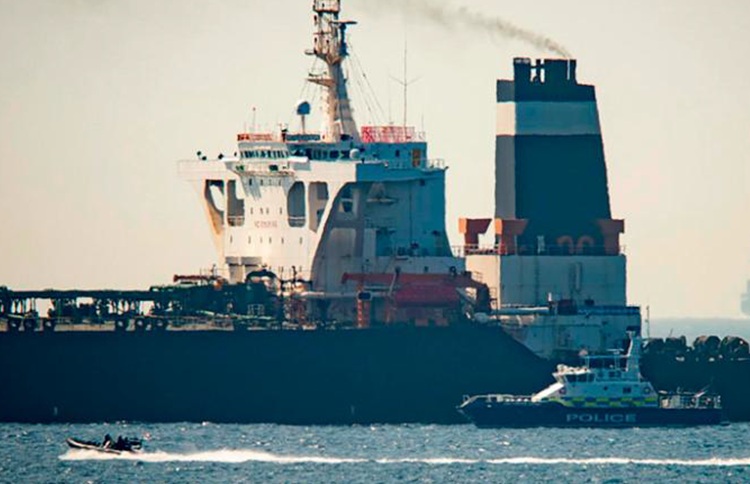
This company’s oil deals have involved tankers named “URI” (formerly “BOREAS”), “LUNA PRIME,” “ETERNAL PEACE,” and “TITAN” (formerly “KASPER”).

Under the announced sanctions, all assets and interests of these entities in the U.S. or in the possession of U.S. persons will be frozen.

In addition, any financial dealings or cooperation with these entities by U.S. persons or transactions passing through the U.S. financial system are prohibited.

The Treasury Department has warned that foreign financial institutions cooperating with the sanctioned individuals or entities could face secondary sanctions, including the freezing of correspondent accounts in U.S. banks.

The statement concluded by stressing that the purpose of the sanctions is not punishment but to induce a change in the behavior of Iran’s regime. Sanctioned individuals and entities may be removed from the list through a legal process if circumstances change.

Spanish Court Tries Eight Over Failed 2023 Assassination Attempt on EU Politician

The Spanish National Court is prosecuting eight individuals over the attempted assassination of Professor Alejo Vidal-Quadras in November 2023.

A judge in Spain’s Supreme Court has charged eight individuals with attempting to assassinate Alejo Vidal-Quadras, former Vice President of the European Parliament, in 2023 due to his ties with opponents of Iran’s regime. The attempt ultimately failed.

Investigations reveal that the attackers targeted the politician as a warning to prevent Spain and the European Union from supporting the National Council of Resistance of Iran (NCRI), the main opposition to Iran’s regime.

Dutch Intelligence: Iran’s Regime Likely Ordered the Assassination of Alejo Vidal-Quadras

The judge firmly concludes: they were commissioned to carry out the attack in retaliation for Dr. Vidal-Quadras’s political activities in support of the NCRI and also as a warning to the Spanish government and the EU not to shelter opposition affiliates whom Iran’s regime labels as terrorists.

Judge Santiago Pedraz confirms the theory that the assassination attempt was directly linked to Vidal-Quadras being a prominent European figure opposing Iran’s regime.

Iran’s regime has been involved in a series of covert operations aimed at tracking, intimidating, and even assassinating dissidents, critics, and dissenting voices beyond its borders.

The investigating judge provides detailed explanations of how those involved set up the infrastructure for the assassination attempt.

Naraya Gómez was also involved in renting vehicles and purchasing equipment used for surveillance in the attempted assassination of Vidal-Quadras.

Part of the funding was provided by Shahinaz Kadid, who traveled to Spain in October to join the tracking operation of the former Vice President of the European Parliament.

The investigating judge stated that the attack was ordered by unknown individuals seeking revenge for Vidal-Quadras’s support of the resistance against Iran’s religious dictatorship.

Concerns Over British Couple Detained in Iran

As tensions between Iran’s regime and Western countries have peaked following Israeli airstrikes on Tehran, the family of a British couple imprisoned in Iran since January 2025 on espionage charges has reported one month of complete uncertainty regarding their whereabouts or even whether they are still alive.

According to The Guardian, Lindsay Foreman and Craig Foreman, both 52 years old, were arrested on January 3 while traveling overland from Armenia to Pakistan, in route to immigrating to Australia. They were detained in the southern Iranian city of Kerman.

Officials of Iran’s regime claim the couple “entered the country under the guise of tourists and collected information in several provinces.”

However, Joe Bennett, 31-year-old son of Lindsay, said his family did not know where his parents were being held for over a month. In the past two weeks, they feared the couple may have been killed in the Israeli airstrike on Evin Prison on June 23, which left more than 70 dead.

IRGC Spy’s Secret Trip to Iran After Spying on Jewish Targets in Germany Exposed

British officials eventually informed the Foreman family on Tuesday that the parents are still being held in Kerman and have not been transferred to Tehran.

In an interview with The Guardian, Bennett emphasized: “Every day not knowing brought a deeper kind of dread. Every night, the same questions with no answers. You go to sleep, afraid. You wake up still afraid. And the silence – the not knowing – is just unbearable. So many of our fears remain. How are they doing? Are they being looked after? How are they coping psychologically?

He added that the family believes the best way to protect their lives is for their names to remain visible and present in the media.

According to The Guardian, British diplomats have visited the couple in prison three times so far. During the first visit, Craig had lost a significant amount of weight, though Lindsay was reportedly in relatively good spirits. The second visit lasted only nine minutes and was described as highly chaotic. In the third visit, they were allowed to be together and had access to the prison shop. However, their cell was only three meters by three meters, and they were allowed outside into the yard for just 15 minutes per day.

Bennett said his parents had been granted access to legal representation, but their lawyer does not speak English, which has made communication difficult.

Iran’s regime has a long history of hostage-taking and extortion of the West. Unfortunately, the West’s policy of appeasement has allowed the regime to achieve its goals through such means. Recently, Hamid Nouri, a former prison guard of the regime, and Assadollah Assadi, a regime diplomat who had been imprisoned for a 2018 bombing plot targeting a National Council of Resistance of Iran (NCRI) gathering, were released as a result of the regime’s hostage diplomacy. The West must end its policy of giving concessions to Iran’s regime.