Home Blog Page 101

Alma Research Institute: Quds Force and Hezbollah’s Unit 3900 Expandoperations in Jordan

The Alma Research Institute in Israel has released a report analyzing the Iranian regime’s activities in Jordan through the Quds Force of the Islamic Revolutionary Guard Corps (IRGC) and Lebanon’s Hezbollah. The report examines the objectives and regional implications of these operations.

According to the report, Jordan has for years served as a primary operational arena for the Iranian regime and Hezbollah. This situation has had a direct impact on developments in the West Bank and East Jerusalem.

The Alma Institute notes that the Iranian regime and Hezbollah have been continuously active in Jordan for over twenty-five years. Their efforts intensified in May 2000, coinciding with the withdrawal of the Israeli military from southern Lebanon.

Objective: Destabilize Jordan and launch attacks on Israel

The Alma report states that these operations pursue two main objectives: first, to destabilize Jordan’s sovereignty through terrorist operations within the country as a means to create a foothold for the Shiite axis; and second, to conduct direct terrorist operations against Israel from Jordanian territory, as well as support terrorist activity in the West Bank. In this scenario, Jordan serves as a transit country, including for weapons smuggling into the West Bank, with the ultimate goal of severely damaging the relationship between Amman and Tel Aviv.

Iran’s 2025 Budget: Massive Oil Revenues for Military, State Assets Transferred to IRGC

According to the report, the Iranian regime and Hezbollah conduct these activities by establishing direct connections with various groups in Jordan, including the Muslim Brotherhood and Palestinians living in refugee camps. These ties are also cultivated indirectly through Palestinian organizations based in Lebanon, as well as Shia individuals traveling to Jordan for commercial purposes or pilgrimages to Shia holy sites.

The Alma Institute writes that Unit 3900 is a joint force composed of Hezbollah operatives and the Palestinian branch of the Quds Force of the IRGC. It is commanded by Mohammad Saeed Izadi, also known as “Haj Ramadan.” The unit’s primary mission is to collaborate with Palestinian terrorist groups in conducting operations against Israeli targets and interests worldwide. This cooperation includes financial support, transfer of technical expertise, and provision of equipment.

The report adds that on April 1 of this year, a nine-story building in the Dahiyeh area of Beirut was targeted in an airstrike. The target of the attack was Hassan Bdeir, known as “Haj Rabih,” a senior figure in Unit 3900. He was one of the main operatives coordinating Hamas elements and was reportedly attempting to orchestrate a large-scale attack on Israeli civilians in the near future.

According to the report, On April 15, it was reported that Jordanian intelligence succeeded in thwarting and exposing a significant terrorist infrastructure whose activity began in 2021 and was about to carry out some of its plans. 16 operatives involved were arrested. The infrastructure operatives, who appear to belong to the Muslim Brotherhood movement in Jordan, underwent training in Lebanon and received financial support and professional knowledge from Lebanon from Hamas-Lebanon operatives.

The institute has also emphasized that no direct link has been established between the assassination of Hassan Bdeir—” who directed Hamas operatives and aided them in an attempt to advance a serious attack in the immediate short term against Israeli civilians.” —and the terror infrastructure uncovered in Jordan. The Palestinian branch of the Quds Force and Unit 3900 operate on multiple fronts simultaneously, and it is possible that Bdeir was targeted due to other activities.

The Alma Institute concludes its report by stating that Jordan has always held a special place in the Iranian regime’s broader strategic plans and has now reemerged as a prominent alternative theater in light of recent developments. The collapse of Bashar al-Assad’s grip on power in Syria and the aftermath of the recent war in Lebanon have diminished Iran’s direct access to the Syrian front against Israel. In Lebanon, Tehran has shifted its focus toward rebuilding and strengthening Hezbollah’s military capabilities, though this effort faces numerous challenges due to the ongoing conflict. Under these circumstances, Jordan’s geographic and political characteristics have made it a viable alternative in the Iranian regime’s regional strategy.


Families of Political Prisoners Sentenced to Death Gather in Front of Evin Prison

A group of families of political prisoners sentenced to death held a protest in front of Evin Prison during the sixty-fifth week of the “No to Executions Tuesdays” campaign. They protested the cutoff of phone calls and the increased pressure on five death-row political prisoners who are being coerced into transferring to Ghezel Hesar Prison in Karaj, west of Tehran.

Videos posted on social media show a group of family members of political prisoners sentenced to death gathering outside Evin Prison in Tehran on Tuesday, April 22.

Those present at the protest held up pictures of political prisoners sentenced to death and placards with slogans such as “No to execution,” “Abolish the death penalty,” and “No to unjust execution sentences.”

“No to Execution Tuesdays” Campaign Marks 65th Week Amid Escalating State Violence

The families of some of these political prisoners sentenced to death warned that the inmates are being subjected to various forms of pressure to force their transfer to Ghezel Hesar Prison. They cited the cutoff of phone access and the blocking of their prison bank account cards as examples.

Ghezel Hesar Prison in Karaj is one of the most notorious prisons in Iran, where many execution sentences for prisoners with various charges are carried out.

Denial of phone call rights for five political prisoners sentenced to death

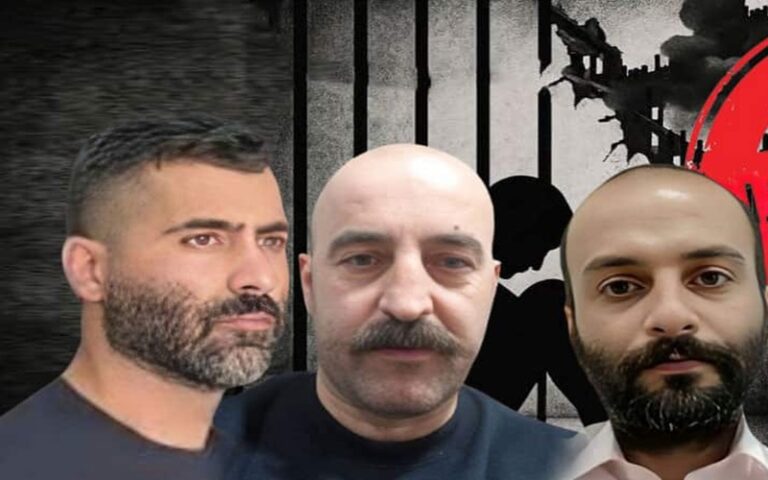
On April 21, human rights media reported that Akbar Daneshvarkar, Mohammad Taghavi, Babak Alipour, Pouya Ghobadi, and Vahid Bani-Amerian, five political prisoners sentenced to death, have been denied phone call privileges with their families by prison authorities.

Earlier, on April 16, Evin Prison officials attempted to transfer these prisoners to Ghezel Hesar, but the prisoners resisted and refused the move.

Javaid Rehman, the UN Special Rapporteur on the situation of human rights in Iran, expressed deep concern on April 17 over reports of attempts to forcibly transfer these five political prisoners from Ward 4 of Evin Prison to Ghezel Hesar.

The accused have been imprisoned since the fall and winter of 2023, and in addition to the death penalty, have been sentenced to imprisonment and exile on charges such as “gathering and colluding to disrupt national security, property destruction, forming unlawful groups, and illegal border crossing.” These prisoners are accused of membership in the People’s Mojahedin Organization of Iran (PMOI/MEK), the main opposition to the Iranian regime.

In recent months, numerous reports have emerged about both male and female political prisoners in Iran being deprived of the right to phone calls and visits with their families and lawyers.

In recent months, the rising number of executions and the issuance and confirmation of death sentences for political prisoners in Iran have triggered a wave of protests both inside and outside the country.

According to human rights sources, around sixty individuals across Iran’s prisons are currently under death sentences for political or national security-related charges.


Iran: Brutal Surge in Executions Amid Worsening Political Crisis

Executions in Iran between March 21 and April 20 were four times higher than the same period last year, and executions between February 19 and March 20 increased sixfold compared to the previous year.

Between March 21 and April 20, Iran’s regime executed at least 83 prisoners, including six political prisoners and five women. At least two of the victims were under 18 years old at the time of the alleged offense.

On Tuesday, April 15, Iranian regime’s judiciary hanged five prisoners: Gholamali Masha’allahi in Arak; Sohrab Heidari, Cheraghali Ghasemi, and Feyzollah Karami in Qom; and Marziyeh Esmaeili in Qazvin. On Thursday, April 17, Ahmad Yavari was executed in Gorgan. On Sunday, April 20, Javad Goodarzi was hanged in Doroud, and 29-year-old Sa’dollah Gorgij, a Baluch citizen, was executed in Zahedan.

Iran: Secret Execution of Kurdish Kolbar 

Since July 22, 2024, when Masoud Pezeshkian became the president of Iran’s regime, at least 1,051 prisoners have been executed.

In previous years, the number of executions in March and April was reduced due to Nowruz holidays and the overlap with Ramadan. However, this year, executions from March 21 to April 20 reached 83—four times higher than the same period in 2024 (23 executions) and 21 times more than in 2023 (four executions). Between February 19 and March 20, executions reached 124, nearly six times more than the same period last year (21 executions).

This level of brutality and violence reflects the deadly impasse in which the religious fascism ruling Iran is trapped. Ali Khamenei, the regime’s supreme leader, is desperately trying to use executions and killings to prevent a popular uprising and the overthrow of the regime.


Iran: Secret Execution of Kurdish Kolbar 

Around 10:30 p.m. on Monday, April 21, the deputy prosecutor of West Azerbaijan province informed the family of Hamid Hosseinnezhad Heydaranlou, a Kurdish political prisoner sentenced to death, that he had been transferred to Tehran and executed earlier that same Saturday.

The family of this Kurdish citizen, whose execution has been confirmed by judiciary officials but who have not yet received his body or been informed of his burial location, has been threatened with “serious consequences” if they inform the public about it.

Osman Mozayyen, the lawyer of Mr. Hosseinnezhad, stated: “No official has yet informed the defense counsel about how or on what day Hamid Hosseinnezhad was executed.” He referred to the case of Heydar Abdollahpour, another Kurdish political prisoner who was executed by firing squad in 2020, and whose death certificate was shown to his family 44 days later. He added, “This same court branch previously carried out Abdollahpour’s execution and never handed over the body to the family.”

Fars News Agency, affiliated with the Islamic Revolutionary Guard Corps (IRGC), also confirmed on Monday night that the family of this Kurdish citizen and father of three had been informed of his execution.

On the afternoon of Saturday, April 18, following efforts by Osman Mozayyen and a family protest outside the prison, Hamid was allowed a brief phone call in which he said he was “safe” and asked his brother to look after their other brother, Esmaeil, who had recently attempted suicide due to the stress over Hamid’s death sentence. This was the last time the family heard from him before his covert execution.

Hamid Hosseinnezhad Heydaranlou, a Kurdish citizen and father of three, worked as a kolbar (a cross-border porter) before his arrest. He was detained on April 13, 2023, while allegedly “crossing the border illegally.” Initially charged with smuggling, he was granted bail, but instead, he spent 11 months and 12 days in detention at the Ministry of Intelligence facility, where he was held to extract confessions against himself.

He was accused of involvement in the killing of eight Iranian border guards. However, Hamid Hosseinnezhad was illiterate and had difficulty speaking Persian. As a result, all of his interrogation documents and the confessions used as primary evidence by the so-called Revolutionary Court to sentence him to death were written by his interrogators. He merely affixed his fingerprint to them.

Even in a video published by Iran’s state broadcaster and the IRGC-affiliated Fars News Agency, which they claim shows his “confession” to the killing of border guards, he struggles to speak Persian. His words are broken, difficult to understand, and at times incomprehensible.

Interrogators told Mr. Hosseinnezhad that his brother had died in a car accident and that his mother had suffered a stroke. They told him that if he wanted to attend his brother’s funeral, he must sign whatever they told him to.

One of the interrogators also promised him that if he accepted the charges, they would ensure that he would receive no more than a three-year sentence.

This is not the first time Iran’s judiciary has secretly executed citizens while deceiving their families and the public. Previously, especially during the protests following the killing of Mahsa (Jina) Amini, the judiciary executed young protesters sentenced to death—including Majid Kazemi, Saleh Mirhashimi, and Saeed Yaghoubi—on May 19, 2023, despite the usual practice of not carrying out executions on Fridays and amid efforts to mislead public opinion.


“No to Execution Tuesdays” Campaign Marks 65th Week Amid Escalating State Violence

The “No to Execution Tuesdays” campaign has entered its 65th week. In a statement, prisoners protesting death sentences in Iran condemned the criminal execution of political prisoner Hamid Hosseinnezhad Heydaranlou.

Political prisoners also described the issuance of death sentences for fellow political prisoner Pejman Soltani and others as a reflection of the regime’s fear of widespread protests and popular uprisings.

The full statement from the political prisoners is as follows:

Whenever the execution-driven and tyrannical regime ruling Iran finds itself in a deadlock, it intensifies repression against the people, with the sharpest edge of this brutality aimed at defenseless and shackled prisoners, whose lives it takes through inhumane death sentences.

The Expansion of The “No to Executions Tuesdays” Campaign To 40 Prisons Across Iran

The criminal execution of 40-year-old political prisoner Hamid Hosseinnezhad Heydaranlou, father of three, who was arrested in April 2023 and severely tortured, is part of the regime’s anti-human acts against the people of Iran.

This political prisoner, under savage torture, was forced to confess against himself and sign documents that had been prepared in advance by his interrogators.

Since the beginning of the current year, at least 88 people—including 5 women, 7 political prisoners, and 2 juvenile offenders—have been executed. This figure is several times higher than last year, and it reflects the explosive state of society.

In recent days, a political prisoner from Bukan named Pejman Soltani, who was arrested during the 2022 protests, was sentenced to death.

This scale of prisoner executions and the issuance and enforcement of death sentences in Iran reflects the regime’s deep fear of uprisings and social protests. It is a serious warning to the international community and human rights organizations not to remain silent in the face of this murderous regime, and to take concrete action against these inhumane executions.

The “No to Execution Tuesdays” campaign informs fellow citizens that a group of inmates in Behbahan Prison have joined the campaign this week in protest against death sentences and will go on hunger strike every Tuesday from now on as part of this initiative.

On Tuesday, April 22, 2025, prisoners in 40 prisons across the country will go on hunger strike for the 65th consecutive week as part of the “No to Execution Tuesdays” campaign.


Phone Access Cut Off for 5 Iranian Political Prisoners on Death Row 

Iranian regime authorities have cut off phone access for five political prisoners sentenced to death; pressure is increasing to forcibly transfer them to Ghezel Hesar prison

Five political prisoners sentenced to death in Evin Prison—Akbar Daneshvarkar, Seyed Mohammad Taghavi Sang-dehi, Babak Alipour, Pouya Ghobadi Bistonī, and Vahid Bani-Amerian—have been denied the right to phone communication with their families since Sunday, April 20, 2025.

Forced Transfer of Five Political Prisoners Sentenced to Death in Iran

A source close to the families told HRANA (Human Rights Activists News Agency) that prison authorities have blocked these inmates’ phone and bank cards. According to the source, this is part of a broader pressure campaign to forcefully transfer them to Ghezel Hesar prison in Karaj.

Earlier, on April 16, an attempt to transfer these prisoners was thwarted due to their resistance and that of other inmates.

These five prisoners, along with Abolhassan Montazer, were sentenced to death in November 2024 by Branch 26 of Tehran’s Revolutionary Court on the charge of “baghi” (armed rebellion) through membership in opposition groups. Additional charges including “collusion and assembly,” “property destruction,” “founding an illegal group,” and “illegal border crossing” have resulted in prison and exile sentences. Their main charge is membership in the People’s Mojahedin Organization of Iran (PMOI/MEK), the largest Iranian opposition group.

These prisoners, some of whom have prior arrests and convictions from the 2000s and recent years, were arrested by intelligence agents between fall 2023 and spring 2024 in Tehran and Chaldoran and transferred to Evin Prison.


Iran’s Regime Expands Police Presence in Schools to Enforce Hijab and Suppress Student Dissent

The commander of Iran’s regime police force and the regime’s minister of education have signed an agreement that officially allows police forces to enter schools. Under this agreement, military personnel are granted authority in educational matters and can take action to enforce compulsory hijab on students in schools.  

On Sunday, April 20, Iranian media reported that with a joint memorandum of understanding signed between Ahmadreza Radan, the commander-in-chief of the regime’s state security forces (SSF), and Alireza Kazemi, the regime’s education minister, police have been officially authorized to be present in the country’s schools.  

At the signing ceremony, Kazemi described himself “proudly” as a soldier of Radan and said that with this agreement with the police force, it is now possible to focus more than before on the “cultural affairs” of schools.  

Amnesty International Condemns Iran’s Mandatory Hijab Law as a Violation of Women’s Rights

Kazemi referred to “hijab and modesty” as one of the current cultural problems in the country that requires cultural work, stating: “In all matters, including hijab, we must carry out cultural and foundational work to raise awareness.”  

He added: “The root of all economic and social issues in the country is cultural. Therefore, we must institutionalize the culture of economy and security from childhood, implementing this practically in elementary and secondary school levels.”  

Radan also stated during the signing ceremony that the Police Command is set to be actively involved in producing educational, social, and cultural content for schools and will establish direct communication with teachers and students’ parents.  

The commander of SSF stated, “The enemy has realized better than we have that the most influential group in Iranian society is students,” adding, “The enemy is influencing our students and is trying to hijack their minds through cyberspace. The biggest thieves who are not being pursued are the mafia of those who steal students’ minds. This is an issue that must not be taken lightly.”

Radan, who is under sanctions by the European Union, the United States, and Canada for his major role in human rights violations in Iran, stated: “This excellent interaction between the two bodies, the police and the Ministry of Education, is not enough. If we consider it sufficient, we will fall into the third negligence, and once again, we will be caught off guard in that third negligence.”

Increased repression of students

The signing of this agreement between the Ministry of Education and the police chief clearly shows that Iran’s regime plans new programs to further control and repress students.

Given the SSF’s history of repression and violent confrontations with protesting citizens, this development is a warning sign of an increase in student rights violations in Iranian schools.

The regime’s efforts to militarize schools and suppress protesting students, teachers, and union activists have a long-standing history over the past two decades.

In one of the most recent examples, on March 24, Tasnim News Agency, affiliated with the Islamic Revolutionary Guard Corps (IRGC), published a report advocating for the installation of surveillance cameras in classrooms, stating that this issue has become a contentious matter among officials at the Ministry of Education.

These pressures have intensified since the nationwide protests that began after the death of Mahsa Amini in the custody of the regime’s morality police in 2022, particularly targeting teachers and students who oppose the regime’s policies.


Iran’s Regime “Killing Its People” by Removing Subsidized Currency for Medicine

Amid growing concerns over a new wave of rising healthcare costs in Iran, Salman Es’haghi, spokesman for the Health Committee of Iran’s regime Majlis (parliament), said that by removing the state-subsidized exchange rate for medicine in the new year, the government is effectively killing its own people.

In an interview with ILNA, a state-affiliated news agency, on Sunday, April 20, Es’haghi said: “The government must refrain from killing its people. I am saying this seriously—if the state-subsidized exchange rate is removed from medicine, equipment, and medical supplies, the government will be killing its own people.”

Es’haghi added: “We will witness people’s desperation and helplessness in the healthcare sector. Since treatment costs will increase by 20 to 30 times, people will certainly avoid seeking medical care, and we will face a situation similar to the COVID pandemic, which led to the death of many people.”

Pharmacists and Doctors Concerned Over the Impact of Rising Drug Prices and Shortages in Iran

He continued: “Today, 80% of healthcare expenses are paid out of the patient’s pocket, and only 20% is covered by insurance, and even that is paid with delays.”

Ali Akbar Eyvazi, secretary of the Tehran Social Security Pensioners Association, stated on April 17: “Medicine and treatment have become a serious issue, and drug prices are so high that even the insurance companies cannot cover them.”

Eyvazi pointed out that hospitals violently eject patients who cannot afford hospitalization costs, throwing them out onto the streets, and said that the situation regarding medicine and healthcare is becoming even more critical.

On another front, Akbar Abdollahi-Asl, acting head of the General Department of Medicine and Controlled Substances, announced that the Central Bank is refusing to provide the necessary foreign currency for medicine imports, predicting that the medicine shortage will quadruple in the next two months.

Earlier, on April 13, Mehdi Pirsalehi, head of Iran’s Food and Drug Administration, announced that the 42,000 rial per USD exchange rate used for importing medical equipment has been removed, and replaced by a rate of 285,000 rials per USD—an increase of sevenfold.

Mohammad Jamalian, another member of the Health Committee of the regime’s Majlis, also stated on April 12 that the price of some medications in the country has doubled or tripled, and there is a “severe shortage” of about 150 items.

On April 5, Mohammad Jamalian, a regime’s Majlis member also remarked that due to economic problems, healthcare has turned into a national security issue in Iran. He said: “A person who is searching for medicine and cannot find it may take dangerous actions.”

He added: “When a father or mother is searching for medicine for their child, or a child is looking for medicine for their parents and cannot find it or afford it, we must accept that such a person may resort to any dangerous act.”


Protesting Retirees in Cities Across Iran Chant Slogans Against Regime Officials

As the economic crisis deepens and Iran’s regime fails to address the demands of various segments of society, retirees once again held protest gatherings across multiple cities. During these demonstrations, they chanted slogans against the officials of the regime in protest of the neglect of their economic and professional demands.

Protests by retirees from the Social Security Organization, as well as from the steel and mining sectors, took place on Sunday, April 20, in various cities including Isfahan, Ahvaz, Tehran, Rasht, Sari, Shahroud, Shush, Qaemshahr, Kerman, and Kermanshah.

Nationwide Protests by Retirees Highlight Deepening Economic Crisis in Iran

Videos circulating on social media show retirees chanting slogans such as “From Khuzestan to Gilan / Death to the officials,” “Ghalibaf, have some shame / Leave the parliament,” and “Hey lying government / Where are the results of your promises?”

Other slogans chanted by the protesters included: “Only in the streets / can we win our rights,” “No to humiliation, no to disgrace / Death to this justice,” “No handouts, no charity / Give us our rights with dignity,” “Unity, unity / against poverty and corruption,” and “We won’t live under oppression / We sacrifice our lives for freedom / Shame on this life, shame on this life.”

Protests by Oil, Gas Workers and Metro Employees

A group of Tehran Metro employees held a protest on Sunday, April 20, in front of the municipality and city council buildings.

These protesters voiced objections to the management’s performance and the non-payment of their wages.

According to the regime-aligned ILNA news agency, the workers’ demands included “No to changing the bylaws, independence of the Operating Company, full implementation of the Supreme Labor Council’s wage resolution, and no to unregulated hiring.”

At the same time, contract workers of the Gachsaran Oil and Gas Company held a protest, demanding the removal of intermediary contracting companies and the establishment of direct employment contracts.

In their protest, they declared: “We expect the employment reform bill to be passed immediately and the contractor system for workforce management to be dismantled.”

Contract workers at the 12th refinery of South Pars in Bushehr also stopped working for the third consecutive day on April 20, protesting the non-payment of their overtime wages.

These workers told ILNA: “So far, no official has responded to these protests. This behavior shows not only disregard for our rights but also disrespect toward the workers.”

In recent years, retirees and workers have repeatedly held protests and marches across various Iranian cities over the regime’s failure to meet their demands.

The worsening living conditions of workers, retirees, and pensioners has led to a sharp rise in the number of their protests in recent years.

The human rights website HRANA reported on March 19 that in the year 2024, at least 3,702 protests and strikes took place across various sectors throughout the country.


Iran’s Water Crisis Turns into a Catastrophe

0

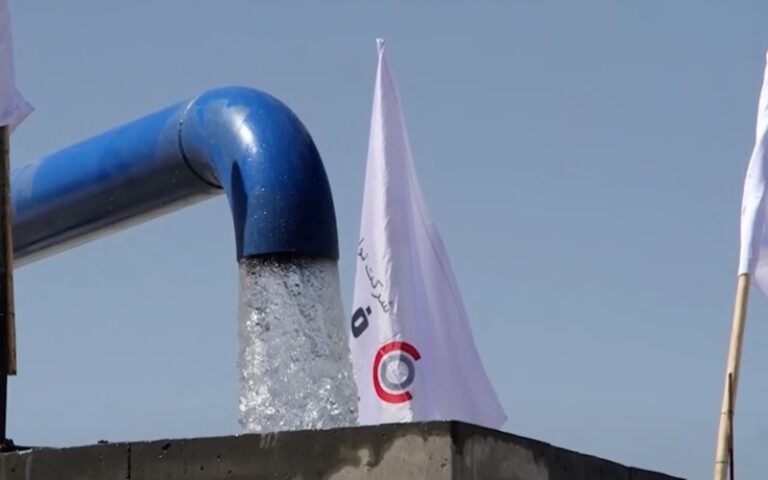
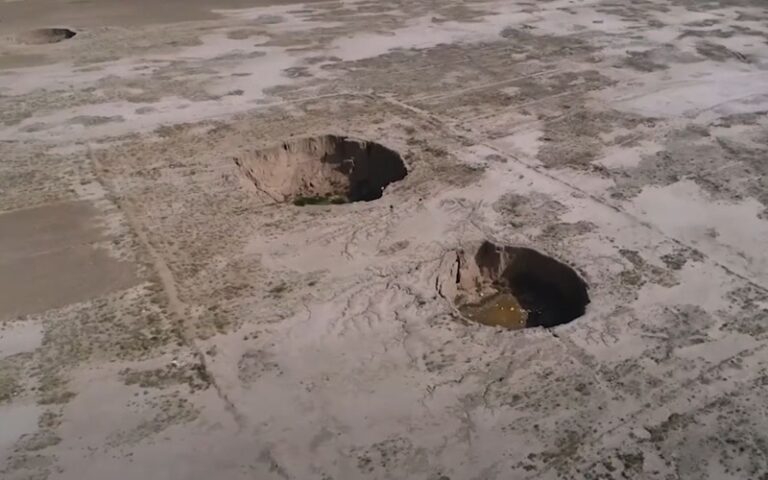
Amid continued warnings about water shortages and the drought crisis in Iran, Ahad Vazifeh, head of the National Center for Climate and Drought Crisis Management at Iran’s Meteorological Organization, said the country has turned into a “sieve” due to numerous illegal wells and excessive extraction from legal wells.

Speaking to ISNA, a regime-affiliated news agency, on Saturday, April 19, Vazifeh said: “We have turned the country into a sieve by digging numerous unauthorized wells and over-extracting from legal ones.”

The official added: “Over 80 percent of the over-extraction is from legal wells. This situation cannot continue in the long term because the volume of groundwater reservoirs is finite. The lower the water table drops, the saltier it becomes, and its quality declines.”

Warnings About Iran’s Drought Crisis Coinciding with World Water Day

He noted that water shortages have worsened in major cities like Tehran, saying: “In the capital, even with normal rainfall, the city teeters on the brink of a water crisis—let alone if the rainfall is below average.”

In recent weeks and months, warnings have increased about water shortages, depleted dam capacities, and the Iranian regime’s inability to manage the drought crisis.

On April 14, Mehdi Pirhadi, head of Tehran City Council’s Health Commission, said the capital is experiencing “extreme thirst” due to reduced rainfall, and the decline in water quality has pushed people toward using bottled water.

On April 7, the state-run Ham-Mihan newspaper warned that the country is on the verge of a “full-scale water catastrophe” and, ultimately, severe drought, cautioning that the lack of water will threaten both people’s livelihoods and the nation’s very survival.

In another part of his interview with ISNA, Vazifeh said: “One of Tehran’s main challenges is that most of its drinking water comes from underground. The city consumes about 40 cubic meters of water per second, and 24 cubic meters of that comes from groundwater sources.”

He cited “lack of water flow toward plains, reduced rainfall, and excessive extraction through well digging” as causes for land subsidence in southern Tehran, saying: “Gradually, the subsidence is creeping into the city, just as it has spread from southern Isfahan into the city center.”

On April 6, MP Abolfazl Aboutorabi warned of a potential “water war” between provinces, stating: “Tehran is facing an extremely critical and dangerous situation, and provinces like Fars, Baluchestan, and other eastern regions are also dealing with similar problems.”

On March 15, Interior Minister Eskandar Momeni also described Iran’s water shortage as a serious issue and urged people to “prioritize water consumption management.”

Official statistics show that around 80 percent of Iran’s groundwater resources have been used up, and dam reservoirs are in a critical state.

Experts had previously warned that Iran’s thousand-year-old groundwater reserves have been depleted within just the past three decades.