Home Blog Page 122

Iranian Regime Officials Purchase Commercial and Residential Properties in Dubai and Spain with Stolen Money

While the Iranian people are grappling with severe economic hardships, soaring inflation, and livelihood challenges, cases such as the “Debsh Tea” scandal once again expose the widespread and systemic corruption within the Iranian regime.

Between 2019 and 2022, Debsh Agro-Industrial Group received a total of $3.37 billion in foreign currency for the import of tea and machinery, of which $1.472 billion was allocated as government-subsidized foreign exchange.

Iran: $3.37 Billion Stolen in Latest Government-Linked Embezzlement Case

On Sunday, March 9, the Iranian regime’s judiciary news agency reviewed the details of this case, whose final verdict was issued on March 3. According to this report, the court ruling on the Debsh Tea case reveals that the foreign currency obtained in this case was used to purchase commercial and residential properties in Dubai and Spain.

One of the main charges against the primary defendant in this case is widespread disruption of the national economy due to failure to fulfill foreign exchange commitments and illegal currency sales without adhering to the prescribed regulations.

In recent years, the Debsh company used its extensive connections within Iran’s banking system to receive rial-denominated loans. The company placed multiple import orders for tea, declaring exorbitant prices for low-quality goods, and after receiving these loans, it acquired foreign currency through international exchange offices.

According to the report, a significant portion of the obtained foreign currency was invested in the UAE, including the purchase of a commercial tower and the establishment of a currency exchange. Additionally, the company purchased properties in Spain and, through these transactions, secured a visa for that country.

According to the investigative authority’s report, one of the defendant’s methods for delaying payment obligations was altering and manipulating the registration dates of import orders and customs declarations.

According to Mizan news agency, from the outset of the investigation into this case, affiliated companies linked to the Debsh Group also came under scrutiny. Some reports indicate that this group had over 47 domestic subsidiaries and more than 10 foreign companies.

Iran: Former Minister of Agriculture Involved in $18.7 Million Fraud

A noteworthy point is that despite being aware of the company’s violations and the existence of a judicial case against it for failing to pay the foreign exchange differential, the Ministry of Agriculture again allocated foreign currency to this company.

On Monday, March 3, the Iranian regime’s judiciary announced the issuance of sentences in the case known as the Debsh Tea scandal. It stated that Reza Fatemi Amin, the former Minister of Industry and Mining, and Javad Sadati Nejad, the Minister of Agriculture in Ebrahim Raisi’s cabinet, had been sentenced to one and two years in prison, respectively, for “complicity in disrupting the national economy.” However, in images released yesterday of Ali Khamenei’s meeting with Iranian regime officials, Sadati Nejad was seen among the attendees.

Many examples of such “staged anti-corruption efforts” have been observed in recent years, where most key defendants have either fled the country or been released after a short period, while the economic situation of the people continues to deteriorate day by day.
 

Khamenei Rejects Negotiation with U.S.; Maximum Pressure Will Continue

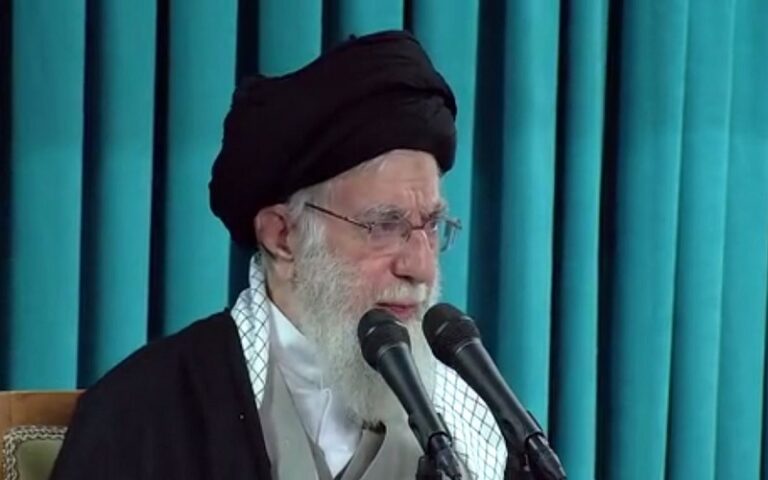
Ali Khamenei, the leader of the Iranian regime, addressed the possibility of negotiations with the United States during a meeting with regime officials on Saturday, March 8. He stated that the goal of such talks would be to “raise new demands” and asserted that these expectations “will certainly not be met by Iran.”

Khamenei stated that negotiations are not intended to “resolve issues” but rather to “impose dominance.” He claimed that the scope of discussions would not be limited to the “nuclear issue” but would also extend to matters such as “defense capabilities,” the country’s “international influence,” and restrictions on “missile range.”

Since his return to the White House, Donald Trump has reinstated the “maximum pressure” policy and has called for a comprehensive agreement with the Iranian regime. However, Khamenei has strictly prohibited any negotiations with the U.S. Meanwhile, Iran’s economic situation continues to deteriorate due to the regime’s ongoing tensions with the world and the West.

U.S.: Under ‘Maximum Pressure,’ Iran’s Oil Exports Will Again Be Reduced to 100,000 Barrels Per Day

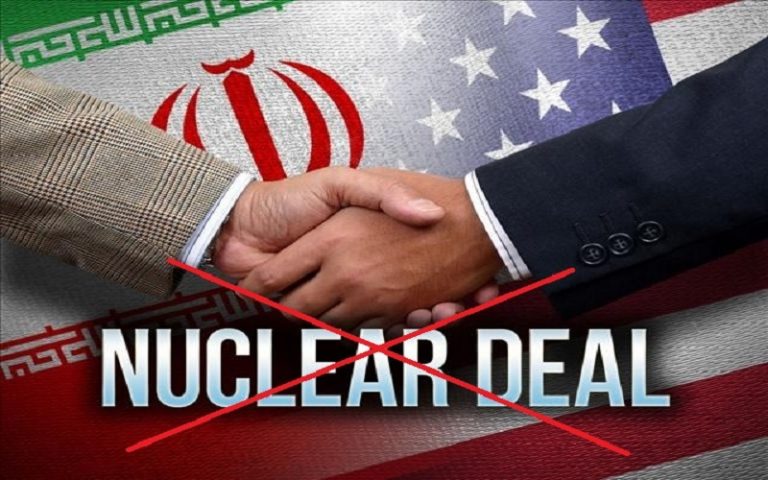
With nuclear deal revival talks at a standstill, reports from the International Atomic Energy Agency (IAEA) indicate growing concerns over the future of Iran’s nuclear program.

A few days ago, Trump stated that he had sent a letter to Iranian regime leaders, expressing hope for negotiations. His remarks quickly became headline news.

The U.S. president also warned that the only options for dealing with the Iranian regime are “reaching an agreement” or “military action.”

On Friday, March 7, Trump stated at the White House that a significant event regarding Iran would happen soon. He described the moment as a turning point in U.S.-Iran relations and predicted “interesting days ahead.” He emphasized that he hopes for a peaceful outcome but added that “the other way” would also resolve the issue.

In his meeting with Iranian officials today, Ali Khamenei also addressed the European parties, responding to their claims that Iran has not fulfilled its commitments under the Joint Comprehensive Plan of Action (JCPOA). He stated, “They did not fulfill their commitments from day one. After the U.S. withdrawal, they promised to compensate for it, but they broke their promise twice.”

Khamenei’s claims come as Rafael Grossi, Director-General of the International Atomic Energy Agency (IAEA), reported to the IAEA Board of Governors on March 3 that the Iranian regime has increased its stockpile of 60% enriched uranium to 275 kilograms.

European Union: The Iranian Regime Must Not Attain Nuclear Weapons

The IAEA chief described Iran’s regime as the only non-nuclear-armed country to have enriched uranium to such a high level and called it a matter of “serious concern.”

The European Union’s representative at the IAEA also stated that the Iranian government has halted the implementation of its nuclear commitments under the JCPOA. It further noted that for the past four years, the IAEA has been unable to carry out verification and monitoring activities related to the nuclear agreement.

During his meeting with officials, Khamenei also expressed hope that regime president Masoud Pezeshkian would soon be able to announce the implementation of “major aspirations” to the people.

Previously, Pezeshkian had stated during the impeachment session of the Minister of Economy and Finance that he supported negotiations with the U.S., but the Supreme Leader of the regime opposed them.


Debate Over Minimum Wage for Workers in Iran

Several labor unions and women’s rights activists have issued a joint statement regarding next year’s wages, declaring that the minimum wage set for workers and wage earners “should not be less than 600 million rials (approximately 666 USD).”

They criticized the fact that wages lower than the real cost of living constitute a “crime” and warned that “this year, the situation is more critical than ever.” They wrote: “The ruthless monster of inflation has turned our lives into a nightmare.”

Low Wages Fail to Attract Workers; Labor Shortage Crisis in Iran

In one part of the statement, they emphasized: “Given the soaring costs in dollars and the tsunami of price hikes, the continuous devaluation of wages, the prevention of wage increases in line with inflation throughout the year, and postponing it to a single adjustment at year-end, any percentage increase is rendered ineffective and meaningless.”

Hossein Habibi, a member of the Supreme Council of Islamic Labor Councils of Iran’s regime, previously stated: “The total cost of living, considering rent and basic necessities, is 700 million rials (approximately 777 USD).”

Currently, the minimum wage for workers covered by labor law, including benefits for married workers with children, is 110 million rials (approximately 122 USD).

The authors of the statement pointed out the various expenses that workers and wage earners face, stating that in addition to the costs of food, clothing, housing, and education, they also “struggle with a crisis in medicine and healthcare, clean air, electricity, gas, and even the most basic human needs.”

The unions that signed the statement stressed that their insistence on determining and raising real wages is an effort for welfare, equality, and a better life, both for today and for the future, in defense of their children. They added: “Every day, we witness the growing number of child laborers, the rising statistics of prostitution and suicides, all for a piece of bread.”

On Friday, March 7, Keyvan Mehtadi, a teacher, trade union activist, and former political prisoner, released a video on social media discussing the process of setting the minimum wage. He said: “Most wage earners have no knowledge of how wages are determined. Given the multiple pressures we face, wage determination is a matter of life and death for a segment of society’s workers. It is directly tied to widespread malnutrition or children dropping out of school. This issue can even be a national concern, similar to environmental problems—just as urgent and important for society.”

They continued their statement by comparing the budgets allocated to security, military, and governmental institutions with that of wage earners, writing: “The budget allocated to the Islamic Republic of Iran Broadcasting (IRIB) for the year 2025 exceeds the budget of 10 ministries and is set at around 350 trillion rials (approximately 389 million USD). It is against this oppressive system that we cry out: ‘When it’s our turn, suddenly the treasury is empty!'”


Sharp Price Increases Ahead of Nowruz; Iran’s Economic Crisis Worsens

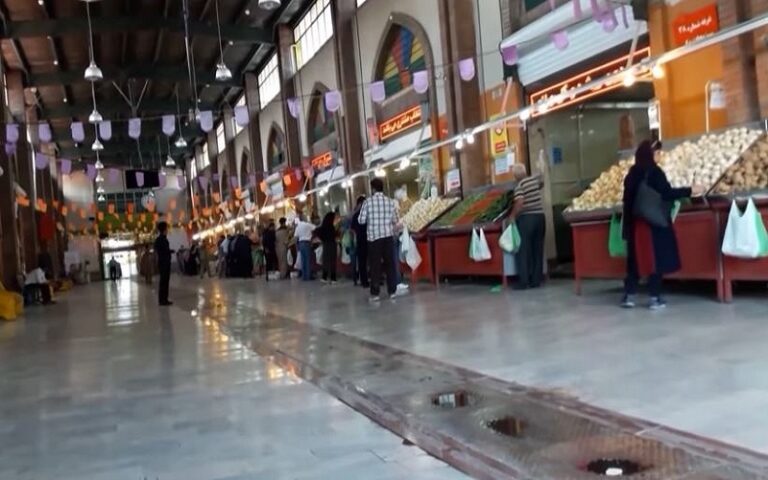
With the approach of the final days of the Iranian year (March 21), a new wave of price hikes has emerged in the food and essential goods market, while the Iranian regime has prioritized “punitive actions against businesses” instead of addressing the root causes of inflation.

Some experts believe that the regime’s security-driven and punitive approach to market regulation stems from its inability to control inflation.

In this regard, the website Eghtesaad24 wrote that it is unclear whether the government’s plans for market regulation ahead of Nowruz only involve “stronger enforcement of price control measures and fines for shopkeepers” or if they also include broader plans such as increasing the supply of quality goods in all sectors to bring down prices.

Severe Inflation and Economic Instability Overshadow Iran’s Nowruz Market

Analysts argue that, unlike previous years when increased demand led to price hikes, this year, demand for most goods has declined, yet prices continue to rise.

The regime-affiliated ISNA news agency also claimed: Ahead of Nowruz, the Ministry of Agriculture has announced the sufficient supply of essential goods and is implementing new policies, including price regulation for imported rice, changing the source of meat imports, and planning to control potato exports to maintain market stability.

According to officials of the Iranian regime, the country’s reserves of essential goods exceed its needs, and people can do their Nowruz shopping without concern.

However, official reports indicate a sharp rise in prices. According to data from the Statistical Center of Iran, in the past six months, the point-to-point inflation rates have been: 58% for split peas, 45% for chickpeas, 33% for lentils, 32% for red beans, 15% for almond kernels, 13% for walnut kernels, and 7% for pistachio kernels.

Meanwhile, reports show that the prices of some goods have surged with the start of Ramadan. Contrary to officials’ claims about market regulation during Ramadan and Nowruz, prices continue to rise due to turbulence in the foreign exchange market.

The instability in the currency market and rising food prices have become one of Iran’s economic crises. Many experts believe that if this trend continues, a large portion of society will be forced below the poverty line.

In this regard, Moslem Salehi, a member of the Social Commission of the Iranian regime’s Majlis (parliament) has stated that the government must take serious control and management of the essential goods market in the final days of the year.

Salehi emphasized that the latest inflation data shows that inflation remains high and that the government has not succeeded in curbing it.


Low Wages Fail to Attract Workers; Labor Shortage Crisis in Iran

As the gap between income and the cost of living widens in Iran, experts point to the lack of appeal in job offers for job seekers and workers. They report that many companies are currently in need of labor, but workers are unwilling to accept jobs with current wages.

According to the state-run ILNA news agency, Hamidreza Ghaznavi, Secretary-General of the Iranian Entrepreneurs Association, stated on Thursday, March 6: “Today, we face a labor shortage in our industry. At one time, we ranked second or third globally in terms of labor cost competitiveness, but we have completely lost this advantage.”

Iran: Government Managers Enjoy Stellar Salaries While Workers’ Wages Still Undecided

According to him, it is not economically viable for workers to accept these jobs at such low wages.

From the perspective of the Secretary-General of the Iranian Entrepreneurs Association, economic progress and development require a system where workers share in company profits, leading to increased productivity.

When wages fail to meet basic living needs, workers prefer not to work. Many workers are seeking to migrate to neighboring countries, especially skilled workers who are in high demand.

Statistics show that job seekers are not interested in employment at current wages because it is not economically viable. Additionally, “blank signature contracts” have undermined both the financial and legal rights of workers.

With such low wages, workers seek alternative sources of income to cover their daily expenses.

Farmers, Workers, and Truck Drivers Hold Protest Rallies in Iran

Meanwhile, economic hardships and low wages have made migration increasingly attractive for workers. Mohsen Bagheri, a member of the Iranian regime’s Supreme Labor Council, has stated that “even unskilled workers in the country are now migrating.”

Bagheri emphasized that it is unclear why the government should have four representatives in the Supreme Labor Council, stating that a single representative from the Ministry of Labor should suffice.

He attributed declining wages to reduced productivity in the workplace and stated that even neighboring countries now offer wages high enough to attract unskilled Iranian workers to migrate.

According to reports, the gap between wages and the cost of living has widened in recent years, prompting workers to demand wage increases to match the minimum cost of living. Some have called for raises as high as 70%.

The state-run IRNA news agency reported that surveys indicate several key reasons why individuals are reluctant to work in industrial and service sectors. These include heavy and exhausting labor, physical and psychological harm from demanding jobs, lack of job security, insufficient skills and expertise among workers, preference for informal but lucrative jobs, failure to receive legally mandated wages and benefits, rising inflation, declining purchasing power, and the imbalance between job difficulty and wages.

Previously, the state-run Quds newspaper had reported that “jobs exist, but workers do not.”

According to the newspaper, while manufacturing units in industrial towns complain about an unsuitable business environment due to frequent power outages, water shortages, and numerous other obstacles to production, some producers are also struggling with labor shortages. The situation has become so dire that many of these units have turned to employment agencies for help.

The report stressed: “The situation has reached a point where even legally mandated wages, holiday bonuses, severance pay, productivity incentives, paid leave, transportation services, job classification benefits, and even a minimal meal allowance are no longer enough to attract job seekers to work in factories. As a result, job advertisements for industrial positions now flood social media platforms, channels, and websites related to manufacturing units daily.”

The state-run Nournews, linked to the Iranian regime’s Supreme National Security Council, described the current labor market situation, stating that rising living costs and the low wages set by the Supreme Labor Council have led both educated and uneducated young people to avoid productive and manufacturing jobs, according to labor activists.

According to Nournews, one of the main concerns for young job seekers is low wages, as salaries set by the Ministry of Labor fail to cover living expenses, forcing many to turn to informal or unregulated jobs to make ends meet.


Tehran to Become a “Semi-Arid Region” in the Next Decade

0

Mehdi Zare, a professor at the International Institute of Seismology and Earthquake Engineering, warned that Tehran is on the “brink of drought.” He stated that the drilling of more than 32,000 illegal wells in Tehran province is a major factor contributing to this situation, and that Tehran will become a “semi-arid region” within the next decade.

In an interview with the state-run Khabar Online news agency, published on Friday, March 7, Zare emphasized: “The Alborz region and Tehran are currently experiencing the depletion of surface and groundwater resources, turning the water crisis into a socio-economic challenge in some areas, with signs of hydrological and socio-economic drought.”

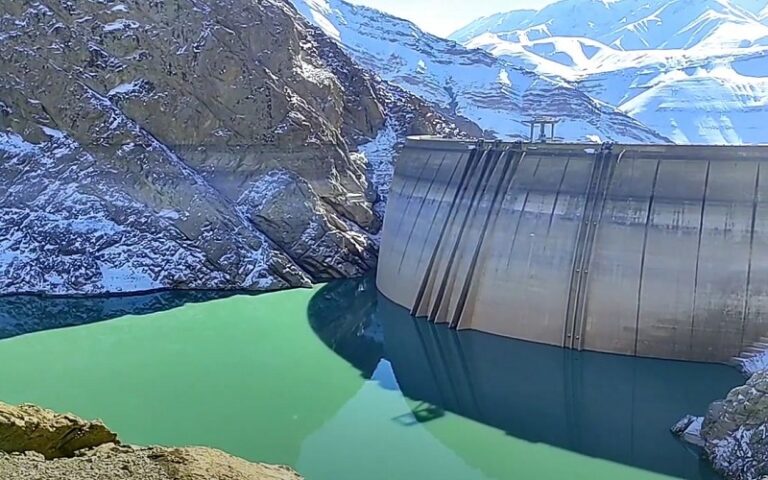
Zare pointed out that water levels in Tehran’s dams have fallen below 40% of their capacity. He added, “30% of the city’s water is lost due to leaks in the deteriorating pipeline network.”

Serious Water Pressure Drops and Outages in Tehran

According to the professor, the critical drought in the Alborz Mountain range is a complex issue driven by long-term climate trends and water management challenges.

He warned that if the current trend continues, southern Alborz and the surrounding areas of Tehran could turn into a “semi-arid region” within the next decade, and reversing this process would require decades of effort and investment.

In this regard, Iranian media have reported that as Tehran experiences its fifth consecutive year of drought, a 45% decrease in rainfall has sounded the alarm for water shortages in the capital.

The CEO of Tehran’s Water and Wastewater Company stated that there are no plans for water rationing. However, he urged citizens to reduce their consumption by 20% “to avoid a difficult summer ahead.”

The state-run Jomhouri-e Eslami newspaper criticized the country’s energy resource management, writing: “With complete mismanagement and under the pretext of balancing electricity supply and avoiding power outages in residential areas, water from dams was released in an unplanned manner solely for electricity production. They claimed the release was entirely calculated and that no issues would arise for the next water year.”

The newspaper added: “They were hoping for sufficient autumn and winter rainfall to replenish reservoirs, but that did not happen. Climate forecasts turned out to be accurate, and now we are left with empty dams and officials who, after forgetting their summer promises, have quietly resumed water consumption control while blaming the situation on nature.”


The United States Reviews All Sanctions Waivers on Iran

The Trump administration is reviewing all existing sanctions waivers that provide any level of economic relief to the Iranian regime.

Tammy Bruce, spokesperson for the U.S. State Department, stated that the United States is reviewing all current sanctions waivers that provide any degree of economic opportunity to the Iranian regime.

On Thursday, March 6, during a press conference in Washington, Bruce made this announcement and urged the Iraqi government to end its dependence on Iranian energy sources as soon as possible.

She made this statement in response to a question about whether the United States would extend the sanctions waiver that allows Iraq to pay for imported electricity from Iran.

“We have nothing to announce with regard to the current electricity waiver that expires on the (March) eighth…We are reviewing all existing sanctions waivers that provide Iran any degree of economic or financial relief,” she said.

U.S. Sanctions International Network Facilitating Iran’s Oil Shipments to China

“We are urging the Iraqi government to eliminate its dependence on Iranian sources of energy as soon as possible and welcome the Iraqi Prime Minister’s commitment to achieve energy independence.”

According to Reuters, citing two informed sources, the United States, while reviewing these waivers that permit the Iraqi government to import electricity from Iran, also intends to increase pressure on Baghdad to allow the export of crude oil from Iraq’s Kurdistan region through Turkey.

Washington seeks to increase Iraq’s oil production to strengthen global oil supply and control prices. This move would give the U.S. more leverage in its efforts to cut off Iran’s oil exports.

The United States aims to curb Iran’s oil exports as part of its efforts to restrain the regime’s nuclear program. Ali Khamenei, the leader of the Iranian regime, has previously stated that he will not negotiate with the U.S.

Negotiations between the Iraqi federal government and the Kurdistan Regional Government (KRG) over resuming oil exports have so far been challenging.

The U.S. government has stated that it intends to isolate the Iranian regime from the global economy and eliminate its oil revenues to slow down the development of nuclear weapons.

One of Donald Trump’s first actions after returning to the White House in late January was to reinstate the “maximum pressure” campaign against the Iranian regime.

The United States has imposed a series of sanctions on the Iranian regime due to its nuclear program and support for militant groups, effectively barring countries that trade with Iran from doing business with the U.S.


Surge in Iranian regime’s oil exports in February

Data from tanker tracking companies indicate that Iran’s oil exports, after a sharp decline in January, rebounded by “50 percent” last month.

The company “TankerTrackers” reported on Wednesday, March 5, that Iran’s oil exports grew by 50 percent last month compared to January.

The report did not specify the volume of Iran’s oil exports, but data from the commodity intelligence company Kpler, which also provides tanker tracking services, indicates that Iran loaded and exported 1.74 million barrels per day of oil to Chinese markets last month.

At the same time, Reuters reported that Iran’s oil production increased by 80,000 barrels per day last month.

Negative Record in Iran’s Oil Exports; Consequences of Sanctions

While the increase in Iran’s oil shipments to China is notable, especially considering the revival of the Trump administration’s maximum pressure policy, what is more important is the volume of oil that is ultimately discharged in China.

According to Kpler data, the volume of Iranian oil discharged in China was 692,000 barrels in January, which increased to 771,000 barrels last month.

Before the new round of tanker sanctions imposed by Joe Biden’s administration last October—continuing the measures implemented under Donald Trump—Iran used to discharge 1.5 million barrels of oil per day at Chinese ports.

Thus, despite the recovery in loading volumes, Iran’s oil discharge in China has sharply declined, leading to a massive accumulation of unsold Iranian oil reserves.

Kpler data shows that the volume of unsold Iranian oil floating at sea has increased nearly sevenfold in recent months, surpassing 35 million barrels.

Logistics crisis

Since October last year, when Iran carried out its second missile attack on Israel, the United States has sanctioned more than 60 tankers carrying Iranian oil. At the same time, China has banned sanctioned tankers from entering Shandong port—Iran’s largest oil-receiving terminal—since January.

In total, more than 500 tankers, with a combined capacity of 450 million barrels, are engaged in covert transportation of Iranian oil—commonly referred to as the “ghost fleet.”

So far, approximately 45 percent of this fleet’s capacity has been sanctioned. However, many tankers, including 47 large vessels in the Iranian regime’s ghost fleet, have yet to be targeted by U.S. sanctions.

TankerTrackers has also noted this issue, stating that the U.S. has sanctioned 234 out of 522 ghost fleet tankers, equivalent to 45 percent of the vessels involved in smuggling Iranian oil.

The sanctioning of more than 60 tankers in recent months—one-third of which are ultra-large crude carriers (ULCCs) with a capacity of 2 million barrels each—has disrupted the Iranian regime’s oil discharge operations in Chinese ports.

Some tankers from the so-called “ghost fleet” have also abandoned the Iranian regime’s market due to increasing U.S. pressure and the rising freight rates for transporting Russian oil, shifting their operations toward Russian crude shipments.


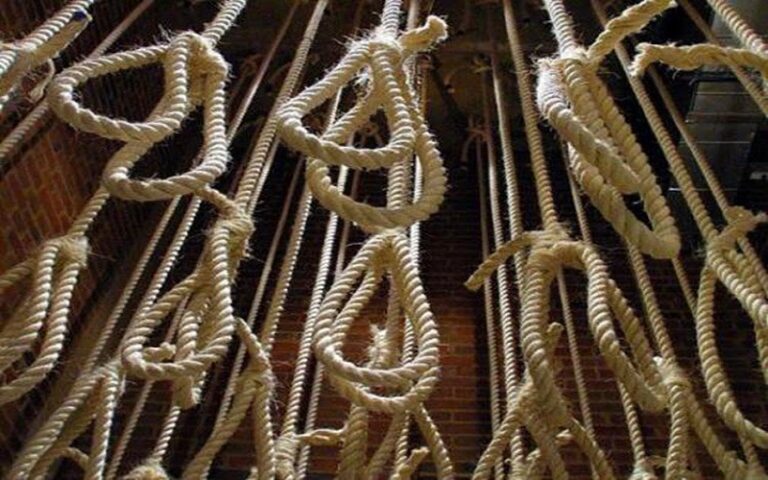
Seventy-four people were executed in Iran in one month

The Iranian Human Rights Organization reported on Wednesday, March 5, that at least 74 people, including several Afghan, Kurdish, and Baluch citizens, were executed in Iran between February 1 and February 28. This figure represents more than an eightfold increase compared to the same period last year.

According to the report, among those executed, 33 were convicted of murder, 32 were charged with drug-related offenses, six were accused of rape, and three were executed for “moharebeh” (waging war against God) through armed robbery.

Only 8% of these executions were officially announced in state media.

Since February 10 of Last Year, 1,021 Executions by Hanging in Iran

The Iranian Human Rights Organization noted that among those executed, seven were Kurdish citizens, six were Baluch citizens, and four were Afghan nationals. Additionally, one woman was executed during this period.

The organization highlighted the significant increase in executions this February compared to last year, stating: “In February 2024, nine people were executed, but this year, the number has risen to 74.”

According to the report, “One of the reasons for the temporary decrease in executions in February last year was its coincidence with the first round of parliamentary elections on March 1, 2024.”

The Iranian Human Rights Organization linked the execution rate to political developments in Iran, stating that based on past experiences, executions tend to increase during periods when nationwide protests are likely or immediately after they occur. Conversely, the number of executions decreases before elections when the government seeks higher voter participation.

The Iranian Regime Has Placed The “Noose of Execution” Around the People’s Necks

Another section of the report examined public executions, noting that recently, on February 28, a person was executed at “Behesht Bridge” in Esfarayen.

An analysis of public executions in Iran from 2008 to 2024 shows significant fluctuations in this method of execution, closely tied to political and social developments in the country.

Public executions, which were recorded at 22 cases in 2008, declined in 2009 but began to rise again in 2010. The peak was reached in 2012, with 65 reported cases.

This trend continued until 2015, with high figures such as 60, 59, and 57 cases recorded. From 2016 onwards, the number of such executions declined, reaching 33 cases in 2018 and 31 in 2019.

In 2020, with the onset of the COVID-19 pandemic, the number of public executions dropped to 10. This sudden decline was likely due to health restrictions and increased scrutiny from international organizations.

However, since 2022, public executions have resumed. Initially, only two cases were recorded, but in 2023, this number rose to seven. In 2024, four public executions were reported, indicating the Iranian regime’s gradual return to this repressive method to instill fear in society.

The Iranian Human Rights Organization, expressing deep concern over the increase in executions, has called on the international community and Iranian citizens inside and outside the country to voice their opposition to the Iranian regime by all possible means and to work towards stopping this trend.

The rising issuance and execution of death sentences by the Iranian regime have drawn widespread international criticism, including from the United States.


Market Recession Ahead of the Iranian New Year

Amid reports of market stagnation and widespread poverty in Iran, senior officials of the Iranian regime have described poverty as a “divine test” and are now considering “paving the way for weaker individuals to leave.”

Masoud Pezeshkian, the president of the Iranian regime, stated that the path for weaker individuals should be made easier for them to leave, while Yousef Tabatabai-Nejad, a member of the regime’s Assembly of Experts, referred to poverty as a “divine test.”

These remarks by senior officials of the Iranian regime, which normalize poverty in Iran, come at a time when protests and strikes over economic hardships continue in response to soaring prices, inflation, and the government’s failure to provide welfare and livelihoods for citizens. Some officials have even warned of an impending famine.

Severe Inflation and Economic Instability Overshadow Iran’s Nowruz Market

Under these circumstances, the Iranian regime’s Majlis (parliament) has passed a resolution declaring Thursdays as a holiday, requiring executive bodies across the country to adjust their working hours to a five-day workweek.

The stated objectives of this plan are to “increase productivity, reduce energy consumption, and improve the quality of services” in government institutions. However, some observers believe it will exacerbate the crisis, as it would render international trade and banking transactions with most countries impossible for four days a week, given that many nations observe weekends on Saturdays and Sundays.

At the same time, Siamak Qasemi, an Iranian economic expert, recalled a statement made by the then-governor of the Central Bank in 2003, who had declared, “We will not let the dollar reach 9,000 rials,” whereas today, it has surpassed 900,000 rials. He advised citizens: “Make your economic and business decisions based on economic realities, not on the words and promises of officials—because the power of economics is greater than any authority.”

Previously, some analysts have considered the economy to be the “Achilles’ heel” of the Iranian regime, while others have emphasized that the Iranian government has already undergone an “economic collapse.”

The continuous decline of the national currency against foreign currencies, escalating economic crises, and the worsening financial strain on the people have plunged markets into deep recession ahead of Nowruz (Iranian New Year) and Ramadan—two occasions traditionally associated with increased economic activity in Iran.

According to public reports, the market is in complete stagnation, and people can no longer afford to buy goods.

A citizen’s account, titled “A Soulless Market, A Joyless New Year’s Eve; Business in Deep Sleep,” describes the situation: “These days, the handbag market and shopping malls, which were always bustling with excitement before the New Year, have become eerily empty. In previous years, cars would line up, and there would be no way to get through. But today, there is no sign of buying or selling. Shopkeepers say in despair: ‘There is no money left, no excitement for the New Year. There are no customers, and no reason to be happy.'”

He adds: “We are all waiting, hoping that this economic nightmare will finally come to an end.”

Nevertheless, Iranian regime officials have no plans to ease tensions. Instead, they continue to confront the international community and persist in their regional terrorist interventions.

Meanwhile, popular protests are surging in various cities across the country. In the past, such demonstrations have quickly escalated into nationwide uprisings demanding the overthrow of the ruling regime in Iran.