Home Blog Page 138

Schools Closed in Several Cities Across Iran

0

Schools in several cities across Iran were closed and shifted to online classes due to severe air pollution. Simultaneously, reports have emerged regarding the reasons and circumstances of the resumption of mazut (fuel oil) burning at three power plants.

Local authorities in various provinces of Iran announced that schools in dozens of cities would hold online classes on Tuesday, December 10.

In Khuzestan Province, schools in 17 cities were declared closed. In recent days, air quality in some cities of this province has been in the “red status,” and on Monday, schools in 19 cities of Khuzestan were also closed.

In Isfahan Province, schools in 12 cities were announced to be online for Tuesday and Wednesday.

In East Azerbaijan Province, schools in Tabriz and urban areas of four other cities were declared closed for Tuesday.

In other provinces, cities such as Qazvin, Arak, Urmia, Abyek, and Alborz also announced closures for all or some school levels.

Air quality in Tehran was in “red status” on Monday. Despite families waiting until the evening, no announcement was made about whether schools would be online or in-person the following day.

Finally, on Monday night, state television reported, citing Tehran’s governorate, that the air pollution emergency committee had not convened, and therefore, schools in the capital would hold in-person classes on Tuesday.

In recent days, some citizens have criticized the late announcements regarding school closures or continuations.

On Monday evening, Tehran’s Air Quality Control Company reported an air quality index of 158 for the capital, indicating “red status and unhealthy for all age groups.”

Tehran’s governorate stated that the air pollution emergency committee would decide on Tuesday whether schools would be closed or open on Wednesday and Thursday.

Uncertainty about mazut burning in power plants

The intensification of air pollution in various Iranian cities comes amidst controversy over the resumption of mazut burning in some power plants.

Last month, the government of Iranian regime’s President Masoud Pezeshkian announced that mazut burning would be halted at three power plants in Arak (Shazand), Karaj, and Isfahan to “protect public health.”

However, a few days ago, Sedigheh Torabi, an official from Iran’s Environmental Protection Organization, confirmed reports about the resumption of mazut burning at these three power plants and said the organization intends to file complaints against the “violating ministries.”

Nevertheless, according to environmental journalist Zeynab Rahimi, the resumption of mazut burning by the Oil and Energy Ministries was authorized by the Supreme National Security Council.

In recent years, the reason cited for resorting to mazut burning for power plant fuel was a “gas shortage.” However, according to a recent report by the Parliamentary Research Center, there is currently a shortage not only of gas and diesel but also of mazut itself.


Bashar al-Assad’s Actions Cost Iran’s Regime Dearly

0

The Financial Times, citing a source within the Iranian government, reported that Tehran had lost its trust in Bashar al-Assad long ago.

The source told the Financial Times, “Bashar al-Assad‘s inaction cost us dearly. He aligned himself with regional actors who promised him a future that never materialized.”

According to the report, Tehran had been “disappointed” with Bashar al-Assad for over a year. Some considered him an obstacle and a burden, while others labeled him a traitor.

The newspaper quoted its source saying that in a recent meeting with Abbas Araghchi, Bashar al-Assad had stated that his forces’ withdrawal from Aleppo was “tactical.” However, Iran’s foreign minister responded that Iran was no longer in a position to send additional forces to support him.

Meanwhile, Abbas Araghchi stated during a televised interview on Sunday night that Bashar al-Assad had not requested military assistance from Tehran.

In the past 24 hours, following the fall of Bashar al-Assad’s government, harsher criticisms of him have emerged in Iranian media.

For instance, on Sunday night, the state-run Iranian TV news channel aired a program in which an expert named Asghar Zarei harshly criticized Bashar al-Assad, mentioning “the troubles he caused” in his dealings with Iran.

In an interview with state TV, Zarei stated, “Rebuilding Iran’s position will be very challenging,” and added, “We must ensure that this does not happen in Iraq or Yemen.”

The Financial Times also described Assad’s fall, after his family’s over five-decade rule over Syria, as a devastating blow to Iran’s foreign policy.

Tehran has, for decades, based its strategy on the “Axis of Resistance” against the U.S. and Israel, utilizing a network of proxy forces across the region.

Syria was a key link in this chain, serving as a gateway for financing and arming Hezbollah in Lebanon, Shia militias in Iraq, and the Houthis in Yemen. This link has now been severed with Damascus falling into the hands of Assad’s opposition.

However, a senior Israeli official told the Financial Times that Tel Aviv does not expect Iran’s influence in its backyard to disappear easily.


U.S. Secretary of State: Assad’s Reliance on Iran’s Regime and Russia Led to His Downfall

U.S. Secretary of State Antony Blinken stated on Sunday night that after 14 years of war, the Syrian people finally have a reason to hope.

Blinken emphasized that the collapse of Syrian President Bashar al-Assad’s government was due to its unwillingness to participate in a credible political process and its reliance on military support from Russia and the Iranian regime.

The U.S. Secretary of State also announced that the United States supports a peaceful transfer of power to a responsible Syrian government through a Syrian-led political process.

Blinken said, “The Syrian people have the right during this transitional period to demand the preservation of state institutions, the resumption of essential services, and the protection of vulnerable groups and communities.”

He also stated that the United States would closely monitor future developments and, alongside its regional partners, work to hold Assad’s government and its supporters accountable for crimes and human rights violations, including the use of chemical weapons and illegal detentions, such as the detention of American journalist Austin Tice.

In his statement, the U.S. Secretary of State referred to recent comments by Assad’s opposition leaders and emphasized that the U.S. would evaluate not only their words but also their actions.

Antony Blinken called on all parties to respect human rights, take necessary measures to protect civilians, and adhere to international humanitarian laws.


Iran: Students Protest Dormitory Poisoning with a Sit-In

0

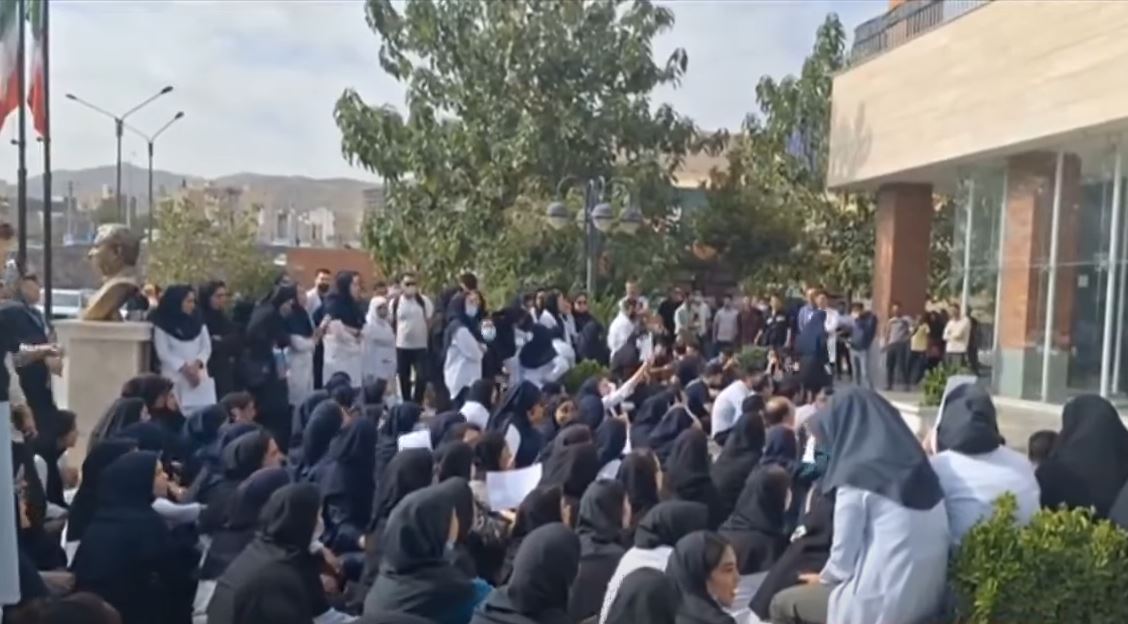
A group of Beheshti University students staged a sit-in and protest on Sunday, December 8, in the university courtyard to object to the poisoning of female students caused by a gas leak in their dormitory.

These students criticized university officials for neglecting the poor living conditions in the dormitory and demanded the resignation of the university president.

Videos shared online show the protesting students chanting slogans such as, “Student, raise your voice / Shout out for your rights,” “Students demand welfare and dormitories,” and “Incompetent president, resign, resign.”

On December 6, coinciding with Student Day in Iran, 44 students from Beheshti University’s women’s dormitory in Velenjak were poisoned by carbon monoxide and hospitalized.

Subsequently, Tehran’s fire department announced that the incident was caused by a technical failure in the dormitory’s boiler room.

On December 7, Beheshti University students declared that they would hold a protest in the university courtyard on December 8 in response to the disregard for students’ safety.

Hours later, the Amir Kabir Students Newsletter reported, quoting students, that the second block of the women’s dormitory at Beheshti University had experienced another gas leak, and the heating system and radiators were shut off.

The Ensaf News website also reported that students felt endangered and, after leaving their rooms, were forced to disperse in the courtyard or relocate to other floors in the same block or other dormitory blocks.

Meanwhile, Babak Yektaparest, the spokesperson for the National Emergency Organization, reported that 85 people had died in the country from carbon monoxide inhalation over the past 77 days, with the highest fatalities occurring in Tehran (12), Isfahan (12), and Razavi Khorasan (7).

According to Yektaparest, between September 22 and December 7, 1,497 people in the country suffered carbon monoxide poisoning.

In recent weeks, protesting students at various universities in Iran have staged sit-ins and protests for various reasons.


The Food Safety Crisis in Iran: Contaminated Rice Imports

The sharp criticism by Majlis (parliament) members of the Iranian regime regarding the importation of rice contaminated with arsenic and zoonotic diseases has once again brought the issue of food security in Iran to the forefront.

During a public session of the Majlis on Sunday, December 8, MP Ali Asghar Bagherzadeh criticized the allocation of foreign currency for importing contaminated rice. Citing official statistics, he stated, “11.5% of the imported rice is contaminated with arsenic, and another 4.5% is tainted with rodent-related pollutants and zoonotic diseases.”

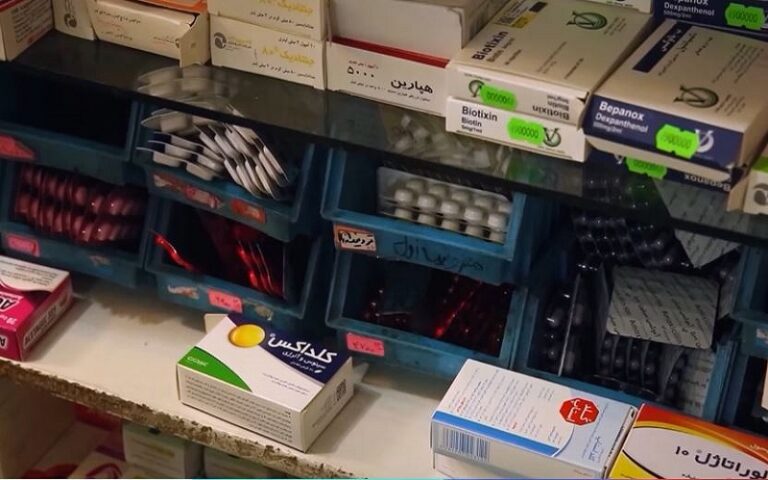
Bagherzadeh emphasized that allocating foreign currency to such products, especially when the country faces shortages of essential goods and medicine, poses a serious threat to domestic agriculture and national food security.

The Long History of Contaminated Rice Imports

The issue of contaminated rice imports in Iran is not new. In the early 2010s, news of contamination in some imported rice reached the media.

In 2013, following revelations about imported rice contaminated with arsenic, Masoumeh Ebtekar, then head of the Environmental Committee of the Tehran City Council, warned: “Reports of contaminated rice imports have been received, and the harmful effects of arsenic have been confirmed. We urge people to pay special attention to their children’s health.”

The main issue lies in the conflicting statements from responsible organizations. In 2013, the Food and Drug Administration announced that 12 samples of imported rice were contaminated, while the Standards Organization identified only 11 contaminated samples.

Since then, multiple cases of imported rice contaminated with lead and arsenic have been reported.

Ambiguity in the Import Process and Potential Corruption

One of the most pressing unanswered questions is how this contaminated rice enters Iranian markets. According to current laws, imported goods are only allowed into the country after receiving approvals from the Food and Drug Administration.

However, experts question how contaminated rice has passed through the oversight processes and been made available in the market.

Experts believe this points to a serious flaw in regulatory mechanisms. Some also suspect corruption in the import process, particularly as the importation of contaminated goods has repeatedly occurred without any clear accountability from officials.

In December 2022, the head of the Health Committee in the Majlis, during a special session for World Food Day, addressed one of the most controversial topics in the country’s food industry.

He revealed that the then-director-general of Tehran’s Standards Office was forced into retirement after exposing the contamination of imported rice. At least 13 types of imported rice were officially declared contaminated, but under pressure, some officials were forced to claim the rice was safe.

Monopolies in Food Imports

The case of currency fraud and Debsh Tea exposed the monopolistic power of certain familial groups in the country’s food industry.

These groups, controlling the import of items such as rice, oil, and tea, have managed to manipulate state currency allocations to their advantage.

Reports indicate that these groups also use their influence to bypass food safety and standards regulations.

In March 2023, the secretary of the Rice Importers and Suppliers Commission announced the resumption of rice imports from India, claiming, “All imported rice undergoes rigorous testing, and any contaminated cases are not allowed into the country.”

Experts argue that insisting on rice imports amidst a shortage of foreign currency resources is only justifiable if domestic rice production cannot meet market demands.

This point was challenged in September by the head of the Program and Budget Committee of the Majlis, who revealed that 500,000 tons of rice were imported at a cost of $560 million, despite the need being only 100,000 tons.

No information has yet been released about identifying or prosecuting those responsible for this misconduct.

Syria’s “30 Billion Dollar” Debt to Iran

Two former members of the Iranian parliament have highlighted the uncertainty surrounding the settlement of Syria’s “30 billion dollar” debt to Iran right before Bashar al-Assad’s regime fell to opposition forces.

Bahram Parsaei, a former member of parliament, wrote in a post on X (formerly Twitter) on December 7: “When I was in parliament, Syria and Bashar al-Assad‘s debt to Iran was 30 billion dollars, which, contrary to Article 80 of the Constitution, had not been approved by the parliament.”

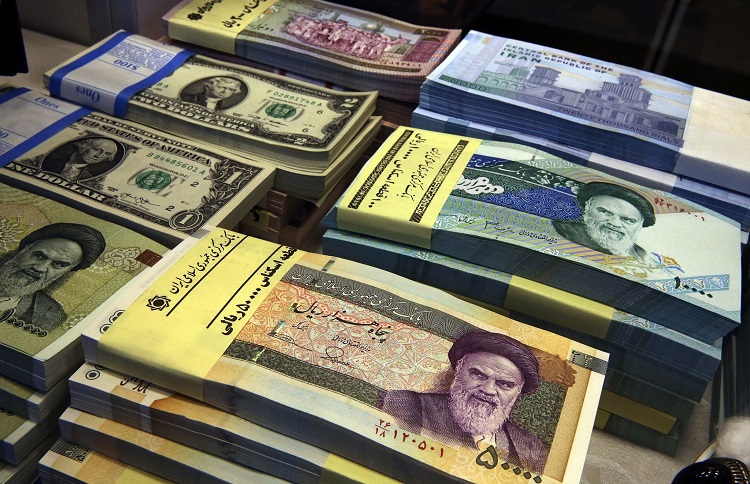
Parsaei further emphasized that this debt, “at an exchange rate of 700,000 rials per dollar, equals twenty quadrillion rials. What is the fate of this huge amount?”

Simultaneously, Heshmatollah Falahatpisheh, the former head of the parliament’s National Security Commission, wrote: “In response to the profiteering entities of war and sanctions who say, ‘Stop negotiations because of unrest in Damascus!’ the Syrian war is not Iran’s war. The government has yet to clarify the billions of dollars spent on the previous war and should not put the lives and assets of Iranians at new risk.”

In May 2024, he also stated that Bashar al-Assad’s regime owed Iran “30 billion dollars.”

Part of this debt is due to oil shipments provided by Iran’s Islamic Revolutionary Guard Corps (IRGC) to Syria.

Data from the commodity intelligence firm Kpler indicates that in recent years, the Iranian regime has delivered an average of 70,000 to 80,000 barrels of oil daily to Syria. The annual value of this oil is estimated at around 2 to 2.5 billion dollars.

Amid the rapid advance of Bashar al-Assad’s opponents, reports suggest the beginning of the withdrawal of IRGC forces from Syria.

Kpler’s data indicates that Iran was still delivering oil to Syria as of the end of last month.

The “30 billion dollar” debt to Iran is equivalent to three times Syria’s total gross domestic product (GDP).

The risk of losing such a significant amount of debt from Syria comes at a time when the Iranian regime has spent substantial sums funding proxy forces in Iraq, Yemen, and Lebanon. Recently, the Secretary-General of Hezbollah in Lebanon announced that, with financial assistance mostly provided by Iran, each household whose home was completely destroyed in Beirut by Israeli attacks would receive a total of “14,000 dollars.”

Meanwhile, Iranian citizens face poverty, rampant inflation, and a housing crisis, and Iran’s President Masoud Pezeshkian recently disclosed severe monetary imbalances and a massive budget deficit.

Tehran’s Air Quality On The Verge Of Becoming Extremely Unhealthy

The air pollution in the metropolitan areas of Tehran and Karaj has once again reached levels deemed “unhealthy for all groups,” and an official from the Ministry of Health has warned about the potential transition to an “extremely unhealthy” condition.

According to a Ministry of Health official, the air in Tehran is nearing “extremely unhealthy” levels, with air quality indices exceeding 150 at more than 90% of monitoring stations in the city.

By official definition, an “extremely unhealthy” status poses serious health risks to individuals of all ages and physical conditions.

Abbas Shahsavani, the head of the Air Health and Climate Change Group at the Ministry of Health, issued a warning about Tehran’s air pollution on Saturday, December 7, describing the situation as “critical.”

This health official also called for the establishment of an emergency task force, citing forecasts of stagnant weather until Monday and rising pollutant concentrations. He noted that monitoring stations in districts 19 and 20 are approaching “extremely unhealthy” conditions.

Experts link the spread of certain diseases and a significant portion of mortality rates in major cities to air pollution.

On November 23, the head of the Air Pollution Research Center at Tehran University of Medical Sciences reported approximately 50,000 annual deaths related to air pollution, stating that about 12% of all deaths in Iran are linked to pollution-related illnesses.

The use of mazut (a heavy fuel oil) in power plants, the low quality of domestic vehicles, and extensive shortcomings in the public transportation network are cited as major contributors to the country’s air pollution crisis, which intensifies annually with the onset of colder weather.

Following the worsening air pollution in major cities, elementary schools in Tehran and Alborz provinces switched to remote learning on December 7 and 8. Additionally, kindergartens, preschools, and special education schools were closed.

According to the Air Pollution Emergency Task Force, truck traffic in the capital was also banned for 48 hours.

Strategic Retreat in Syria: Khamenei’s Policies and Their Regional Impact

0

Iran’s regime once considered Syria as its”thirty-fifth province,” as described by Mehdi Taeb, a commander at the Ammar Base. But it has now become a field indicating Iran’s strategic defeat. Taeb’s statement on February 15, 2013, underscores Tehran’s significance on Syria: “If the enemy attacks us and decides to take Ahvaz or Syria, our priority is to keep Syria because if we keep Syria, we can recover Ahvaz. But if we lose Syria, we can’t even keep Tehran” (Asr Iran newspaper). These statements affirm Syria’s role not just as land, but as a cornerstone in Iran’s regional strategy.

Syria plays a vital role in the strategic depth of Iran’s regime. However, this depth is now more threatened than ever due to political shifts and domestic and international pressures against Bashar al-Assad’s regime, representing a significant strategic blow to Khamenei’s regime.

Costly Terrorist Interventions

Iran’s interventionist policies in Syria, based on the doctrine of religious fascism, have consistently supported Bashar al-Assad. Over the years, reports have indicated that at least $50 billion of Iran’s national resources, managed by the former Quds Force commander Qasem Soleimani, known as the butcher of the Syrian people, were spent to bolster the Assad regime.

Heshmatollah Falahatpisheh inadvertently acknowledged part of these expenditures on May 21, 2020, saying: “When I went to Syria, some said that I spent a lot! But I repeat, perhaps we gave $20 to $30 billion to Syria, and we must retrieve it. Our people’s money was spent there” (source: Asr Iran). These enormous sums were pumped into Syria at a time when Iranians were suffering from severe economic difficulties and poverty, sparking widespread protests with chants like “Leave Syria, think of us.”

UN Resolution 2254 and Khamenei’s Obstruction

Nine years ago, UN Resolution 2254 was adopted by the Security Council as a solution to end the Syrian crisis. The resolution aims for political transition and a cessation of hostilities. However, the Iranian regime, led by Khamenei and its proxy forces, has obstructed its implementation. By labeling their involvement as “defending the Zeinabiyya,” they have bolstered Assad, affecting the political transition process in Syria and rendering international efforts to end the conflict ineffective.

The End of a Delusional Project

As mentioned, the loss of strategic depth in Syria significantly weakens the regime’s regional influence network. For years, Khamenei considered Syria the “tent pole of the resistance,” sparing no effort to maintain it. However, today, his dreams turn into a nightmare.

Khamenei’s previous statements about the link between Syria and maintaining the regime of theocracy illustrate the importance of this link: “If these battles were not fought, the enemy would come inside the country, and we would have to fight them here in Kermanshah, Hamedan, and other provinces” (Khamenei’s website, February 5, 2015).

The collapse of the Syrian regime, in addition to being a strategic defeat, also reflects the failure of the Iranian regime’s regional policies and its clear collapse.

The Strategic Defeat in Syria and Its Consequences

The developments on the ground in Syria serve as evidence of the collapse of “strategic depth” and the ambitious expansion policies of religious fascism. Reflecting on Taeb’s acknowledgment, it becomes clear that with the loss of Syria, the religious regime will not be able to maintain Tehran or Iran, rightfully belonging to the Iranian people who, through organized resistance and a democratic revolution, will reclaim it from the clutches of the clerics.


Iran Regime’s Aid to Hezbollah Amid Domestic Poverty and Economic Hardships

The Iranian regime provides an amount equivalent to 10 years’ earnings of a minimum-wage worker to each Lebanese affiliated with Hezbollah.

On the evening of Thursday, December 5, Naim Qassem, the Deputy Secretary-General of Hezbollah, stated in a televised speech that with financial assistance, most of which comes from Iran, each Lebanese family in Beirut whose home was destroyed will receive between $12,000 and $14,000.

Qassem thanked Ali Khamenei, the Supreme Leader of the Iranian regime, and the Islamic Revolutionary Guard Corps (IRGC) for their “generous support” and noted that Hezbollah has so far distributed $57 million to over 170,000 war-affected families. He added that $8,000 would be provided for rebuilding each destroyed home, along with $6,000 for one year’s rent to the residents of Beirut.

Meanwhile, the minimum wage in Iran ranges between 80 and 100 million rials (approximately $114 to $143), with the annual total reaching at best 1.2 billion rials (about $1,714). However, the rial equivalent of the aid given to each Lebanese family equals 10 years’ earnings of a minimum-wage worker in Iran.

The situation is similar for other social groups. According to a bill passed by the regime’s Majlis (parliament), the minimum pension for retirees in 2025 will not exceed 120 million rials. Meanwhile, the average rent in major Iranian cities is 150 million rials (approximately $214), and minimum-wage earners receive no significant assistance for housing expenses.

This condition is not limited to workers and retirees. On Thursday, December 5, Hossein Simayi, Iran’s Minister of Science, Research, and Technology, admitted that university professors in Iran, even with 40 years of experience, earn less than $1,000 per month. In other words, the aid received by Hezbollah-affiliated Lebanese surpasses the annual salary of a full professor in Iran.

Recently, Alireza Raisi, Deputy Minister of Health in Iran, stated that the per capita consumption of meat, milk, and dairy products in Iran has fallen to less than half the recommended and natural human requirements. Before him, Ahmad Shad, Secretary of the Association of Raw Animal Product Importers, had said that the annual per capita meat consumption of Iranians does not even reach one kilogram.

Similarly, the per capita consumption of chicken, dairy products, fruits, and rice in Iran has significantly declined. The rising prices of food items and the decreasing purchasing power of the population have jeopardized the food security of many Iranians.

According to official reports from the Iranian Parliament’s Research Center, about 26 million Iranians are unable to meet their basic needs. Social and economic activists assert that the actual poverty rate and the number of impoverished people exceed the official figures. Even these statistics reveal the increasing poverty and misery within Iranian society.

Massoud Pezeshkian, the President of Iran’s regime, has focused on the issue of “imbalances” since the early days of his tenure, claiming that resolving problems is impossible without “correcting these imbalances.” He increased household water, electricity, and gas tariffs and is now seeking to raise gasoline prices. Over the past four months, the prices of most food items, from tomatoes and onions to eggs and butter, have continued to rise.

In such circumstances, the leader of Hezbollah openly reveals the substantial financial support provided by Iran’s regime.

These statements by a senior Hamas member received widespread attention at the time, and many Iranians reacted to them. It has now become clear to everyone that Iran’s financial assistance to proxy groups is far greater than what is disclosed in the news.

While the Iranian people have consistently expressed their opposition to such actions by chanting slogans like “Neither Gaza, nor Lebanon, my life for Iran,” the Iranian regime continues its interventionist policies in the region.


Iran Allocating $12,000 to $14,000 Per Displaced Lebanese Family

0

Naim Qassem, the Secretary-General of Hezbollah in Lebanon, announced that the Iranian regime has allocated $12,000 to $14,000 for each displaced Lebanese family. He also described the movements of opposition forces against Bashar al-Assad as part of Israel’s New Middle East plan, emphasizing that Hezbollah would stand by Assad.

Qassem, who was appointed as the Secretary-General of Hezbollah on November 29 following Hassan Nasrallah, addressed the group’s stance on developments in Syria, ceasefire issues with Israel, and aid to displaced Lebanese people in a speech.

Iranian regime-affiliated media, including the official IRNA news agency and Tasnim (linked to the Islamic Revolutionary Guard Corps), did not cover the segment about Iran’s financial aid to Lebanese refugees.

Each refugee receives $14,000 from the Iranian regime

The Hezbollah leader referred to displaced Lebanese people as the “resistance capital,” stating their numbers exceed 1.1 million.

Qassem thanked the Iranian regime, Ali Khamenei, the government, and the Islamic Revolutionary Guard Corps for their generous support, noting that Lebanese families whose homes were completely destroyed would receive $14,000 for purchasing furniture and a year’s rent if they lived in Beirut and its southern suburbs. Families outside Beirut would receive $12,000. He clarified that the funds were provided by the Iranian regime.

The amount of $14,000, at the current free market exchange rate, equals approximately 10 billion rials. Meanwhile, the minimum salary in Iran for a person with two children is roughly $157 monthly.

Qassem further revealed that $50 million has already been paid to part of the 233,500 registered displaced families. If the aid is extended to the entire population, it will amount to $77 million. He stated that payments ranged from $300 to $400 per individual.

Speaking about Iran’s economy, Masoud Pezeshkian, the Iranian regime president, recently stated in a televised interview: “We are short on everything and even face difficulties paying subsidies.”

Providing such substantial aid for housing and furniture to displaced Lebanese families comes as the Iranian regime justifies fuel subsidy reductions and pursues higher gasoline prices, risking nationwide protests. Previously, the regime had raised the prices of bread and other staple foods.

The Hezbollah leader addressed Syrian developments in another part of his remarks, emphasizing that his group would stand by Bashar al-Assad’s government.

Qassem described the armed activities of Tahrir al-Sham against the Syrian government as “aggressions against Syria under U.S. and Israeli supervision,” suggesting these operations were launched after their failures in Gaza and setbacks in attempts to neutralize Syria.

The Secretary-General of Hezbollah further stated: “We are confronting Israel’s dangerous expansionist plan, and I call on you to support the resistance in standing against Israel.”

The ceasefire with Israel is not new

The Hezbollah leader also discussed the ceasefire with Israel, noting that Hezbollah’s withdrawal to positions behind the Litani River is not a new agreement but rather an implementation of the provisions of UN Security Council Resolution 1701.

Resolution 1701, adopted in 2006, serves as the basis for the current ceasefire. It stipulated the replacement of Hezbollah forces in border areas with UN forces, a measure that was never fully implemented.