Home Blog Page 14

U.S. Naval Blockade of Iran Begins on Monday

0

U.S. Central Command (CENTCOM) announced that starting Monday, April 13, it will begin enforcing a broad naval blockade against Iran’s ports, a move that comes after the collapse of recent negotiations between the United States and Iran’s regime and rising tensions in the region. According to the statement by the U.S. Central Command (CENTCOM), this blockade will include all ships traveling to Iranian ports or departing from them.

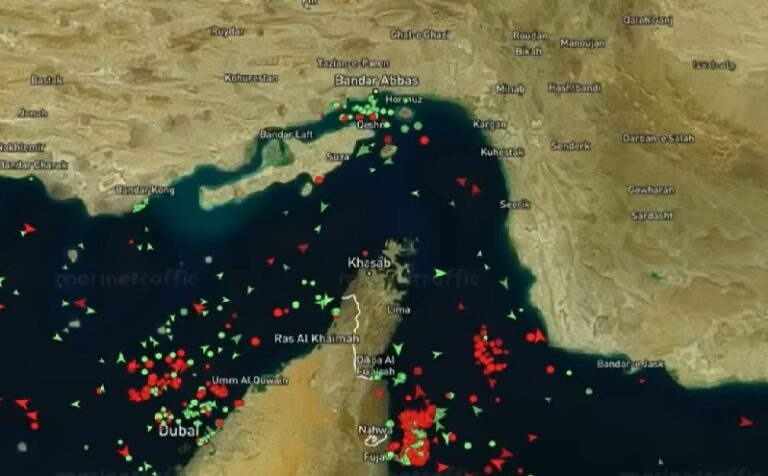
CENTCOM stated that this operation will begin at 10 a.m. U.S. Eastern Time and will cover all maritime traffic to Iranian ports in the Persian Gulf and the Gulf of Oman. The statement emphasized that the blockade will be enforced without discrimination regarding the flag or nationality of the ships, while at the same time the passage of vessels whose destination is not Iranian ports through the Strait of Hormuz will not be restricted.

The Importance of the Strait of Hormuz as a Vital Artery of the Global Economy

As the time for implementing this decision approaches, signs of disruption in maritime traffic in the region are becoming visible. Reports indicate that some oil tankers have changed course or refrained from approaching the Strait of Hormuz. Shipping data shows that a few vessels have anchored in the Gulf of Oman or remained waiting for the new conditions.

In response to this move, officials of Iran’s regime have taken a harsh stance. The commander of the navy described the U.S. threats as baseless and claimed that all movements of American forces in the region are under surveillance. The spokesperson for the regime’s Defense Ministry also stressed that control of the Strait of Hormuz will remain in Iran’s hands and that any military action will be met with a response.

The Islamic Revolutionary Guard Corps (IRGC) also issued a statement warning that military presence in the Strait of Hormuz area could be considered a violation of the ceasefire and would face a severe reaction. At the same time, some political officials accused the United States of testing Iran’s resolve and emphasized confronting any threat.

The announcement of this blockade has increased concerns about energy security and regional stability. Analysts warn that continuation of this trend could lead to an escalation of the crisis in the Persian Gulf, disruption in oil exports, and rising international tensions—a situation that would affect not only the region, but also the global economy.

Iran’s Economy Beneath the Rubble of War and Structural Collapse

The recent war between the United States, Israel, and Iran’s regime was not merely a military confrontation; rather, it acted as a structural blow to an already exhausted economy. This war made the deep fractures within the economy under the regime’s control more visible and accelerated the process of collapse. Severe economic contraction, rising poverty, and setbacks in human development are only part of the consequences of this situation.

The burden of war on the economy

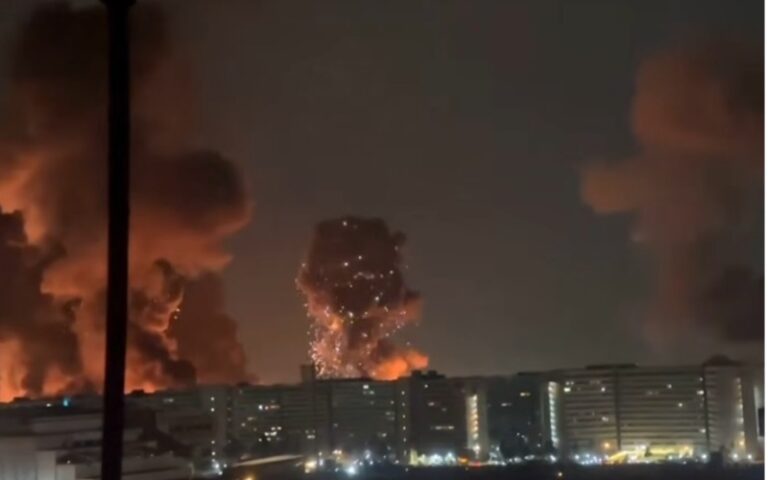
The war directly targeted the economy’s vital infrastructure. The destruction of power plants, disruption of trade routes, and stoppage of industrial production were the three main channels through which the crisis was transmitted into the economy. As a result, gross domestic product faced an unprecedented decline, one that according to estimates could exceed a 10 percentage-point drop.

Mass Worker Layoffs in Iran’s Industries Under the Shadow of War

This decline is not merely a number; it means a collapse in the living standards of millions of people. In conditions where chronic inflation and the devaluation of the national currency had already weakened the economy before the war, the wartime shock further intensified this trend. The inflation rate, which had remained above 40% for years, has now reached levels close to 55%.

On the other hand, the devaluation of the rial (Iran’s national currency) caused a sharp increase in import costs. This placed additional pressure on households, especially regarding essential goods. The result of this trend has been a severe decline in purchasing power and a shrinking of people’s ability to afford basic necessities.

At the macro level, the dependent and inefficient economic structure of Iran’s regime lacked the capacity to absorb this shock. An economy already under pressure from sanctions and mismanagement is now facing deeper disruption.

The expansion of poverty and social collapse

The war, more than anything else, struck the lower income deciles. Historical experience shows that in military crises, these groups suffer the most. In Iran as well, this pattern is clearly visible.

Estimates show that before the war, about 36% of the population lived below the poverty line. Now this figure has approached more than 40%. This increase involving several million people is not merely a statistical shift; it indicates the widespread fall of the middle class below the poverty line.

At the same time, population displacement and housing destruction have worsened living conditions. Thousands have been forced to leave their homes, and access to essential services such as education and healthcare has been disrupted. This situation reinforces a cycle of poverty and inequality that will be extremely difficult to escape.

Food inflation has also played a decisive role as one of the most important pressure factors. Rising food prices, which have a regressive effect, have inflicted the greatest damage on low-income households. Under such conditions, food security has become a serious challenge.

Setbacks in human development

The war has pushed back not only the economy but also human development indicators. The decline in per capita income, disruption in education, and pressure on the healthcare system are the three main dimensions of this regression.

The destruction of schools and closure of educational centers have disrupted the learning process. This disruption will have long-term consequences for human capital. A decline in educational quality means lower workforce productivity in the future.

In the health sector as well, pressures have sharply increased. Rising casualties and damage to medical infrastructure have placed the healthcare system in a critical condition. As a result, access to treatment services has become limited for a large part of society.

On the other hand, the destruction of the environment and productive infrastructure threatens livelihood security in the long term. Together, these factors have reduced the human development index and erased years of progress.

A war-stricken economy and structural deadlock

The war showed that the economy under the control of Iran’s regime is not only fragile against external shocks, but itself becomes a factor intensifying the crisis. Heavy dependence on energy revenues, structural weakness in production, and lack of transparency have made this economy highly vulnerable.

Attacks on the petrochemical industry, which is one of the main sources of foreign currency earnings, are one example of this vulnerability. Disruption in this sector has not only reduced exports but also created a chain of production stoppages in dependent industries.

At the same time, the destruction of industrial infrastructure and widespread business closures have created a wave of unemployment. This unemployment, in turn, has reduced domestic demand and intensified the economic recession.

The tourism industry, as one of the vulnerable sectors, has also suffered heavy losses. Reduced travel and the destruction of facilities have pushed this industry to the brink of shutdown.

Overall, in the aftermath of this war, Iran’s economy has entered a phase of structural collapse—a phase in which even a return to the previous condition is met with serious doubt.

Mass Worker Layoffs in Iran’s Industries Under the Shadow of War

As tensions escalate and the heavy shadow of foreign war falls over Iran’s economy, signs of collapse in the country’s key industries have become more visible. Reports of mass layoffs at one of the country’s largest automotive holding companies reveal new dimensions of the consequences of foreign war. This is happening while workers, as the most vulnerable social group, are bearing the greatest pressure from the consequences of the foreign war.

According to Farshad Esmaeili, a legal expert and labor law adviser, one of the country’s major automotive mega-holdings began large-scale layoffs of its workforce in mid-March. This move has taken place in the heart of the crisis caused by the foreign war, and according to him, about 70% of the company’s employees have been dismissed. These layoffs span a wide range of staff, from production-line workers to specialists and even middle managers.

Iran’s Youth Are Selling Their Kidneys as the Economy Continues to Plunge

The report states that the number of dismissed individuals has reached about 7,000. Such a figure shows the depth of the crisis in an industry that had already been struggling with numerous problems. Now, with the intensifying effects of the foreign war, this industry has become one of the first victims. Many of these laid-off workers now face conditions with no financial support or job security.

Foreign war, the collapse of the production chain, and workers as victims

The state-run daily Donya-e-Eqtesad also pointed out a report to the direct consequences of the foreign war on the automotive industry. The report emphasizes that over the past month, shortages of raw materials, especially steel, have sharply increased. Disruptions in parts imports, disorder in transportation, and customs clearance problems have disrupted the production chain.

These disruptions are occurring while the automotive industry had already been facing structural crises. State-imposed pricing, liquidity shortages, and severe dependence on imports had already made this industry fragile. Now, the foreign war has pushed these problems to an unprecedented level. Many production lines have effectively stopped, and factories no longer have the capacity to continue operating.

The continuation of this trend could lead to the complete shutdown of some production units. This situation affects not only workers but the entire economy dependent on this industry.

Workers; the first victims of foreign war

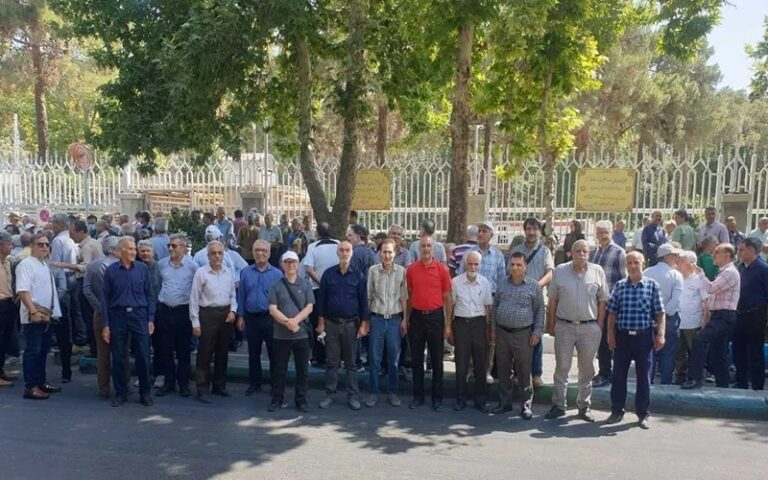
Among all social groups, workers are suffering the greatest damage from the consequences of the foreign war. Mass layoffs without payment of overdue wages or benefits have created a critical situation for this group. Many laid-off workers do not even have access to unemployment insurance.

This situation comes as living costs have risen in an unprecedented way. Inflation, the devaluation of the national currency, and shortages of essential goods have placed additional pressure on working-class families.

What is happening today under the shadow of foreign war is not merely an economic crisis, but a sign of structural collapse built over years on corruption and inefficiency.

Iran’s regime, through four decades of warmongering and destructive policies, has placed the Iranian people in the harshest living and social conditions. Now, in what is portrayed as the final phase, as people demand peace and freedom, the streets are playing the main role in the overthrow of this corrupt government.

Tunnel Entrances at Isfahan Nuclear Site Blocked, According to The Telegraph

The Telegraph reported in a new article, citing satellite imagery, that the Iranian regime has moved to block three tunnel entrances at the Isfahan nuclear complex. According to the report, these entrances have been sealed using a combination of compacted earth berms, protective barriers, and piles of debris—an action that appears aimed at increasing the security level and reducing the vulnerability of the facility.

The “Institute for Science and International Security” also reviewed the same images and confirmed that construction of these barriers likely began on March 18 or shortly thereafter. The institute, which specializes in monitoring developments related to nuclear programs, emphasized that the speed of these measures indicates growing security concerns surrounding the site.

21-Hour Negotiations Between United States and Iranian Regime End with No Results

According to military analysts, such measures are usually assessed within the framework of passive defense strategies. Blocking tunnel entrances can make direct penetration into underground sections more difficult and increase the time required for any offensive operation. These barriers can also place attacking forces in a more vulnerable position, especially when defensive and missile systems are active.

Another part of the Telegraph report states that the Isfahan site is likely one of the key centers for storing highly enriched nuclear material. Estimates indicate that at least half of Iran’s approximately 400-kilogram stockpile of highly enriched uranium is kept at this complex—materials that, if enriched to higher levels, could play a role in the nuclear weapons production cycle.

These developments come as Iran’s nuclear program remains at the center of attention for international bodies and global powers, and any change in its infrastructure is being followed with high sensitivity.

21-Hour Negotiations Between United States and Iranian Regime End with No Results

0

According to Reuters, after 21 hours of intensive talks between representatives of the United States and the Iranian regime in Pakistan, the negotiations ended without reaching an agreement, and the American delegation left the country. U.S. Vice President J.D. Vance said in a brief press conference Sunday morning Islamabad time that the talks had been detailed and substantive but ultimately failed to produce a result.

He emphasized that this lack of agreement would have more negative consequences for Iran than for the United States. Referring to Washington’s position, Vance said that “our red lines were completely clear; we made clear where we have flexibility and where we do not.” According to Vance, the Iranian regime refused to accept the terms proposed by the United States, while the American side had entered the negotiations in good faith. He also added that the best and final U.S. offer remains on the table, and it now depends on Iran’s decision whether to accept it.

Iran in A Bottleneck Over Restoring Infrastructure After Ceasefire

Raising the key question of whether Iran is committed in the long term to not developing nuclear weapons, Vance said that “we have not yet seen such a commitment, but we hope to witness it in the future.”

On the other side, Esmail Baghaei, spokesperson for the foreign ministry of the Iranian regime, announced that the two sides had reached understandings on some issues, but disagreements over two or three major issues prevented a final agreement.

He added that contacts and consultations would continue through Pakistan. Oil movements coinciding with the negotiations: at the same time as the start of these talks, data from tanker-tracking companies reported the passage of three large oil tankers through the Strait of Hormuz, the first such case since the ceasefire between the two sides was established.

According to these reports, each of these tankers was carrying about 2 million barrels of oil from Iraq, Saudi Arabia, and the UAE, and flying Liberian and Chinese flags, they entered the waters of the Gulf of Oman after passing the Hormuz transit anchorage route and circling Larak Island. The destination of these shipments was reported to be Malaysia.

Meanwhile, Bloomberg reported that two empty tankers that had intended to enter the Persian Gulf changed course after news of the failed negotiations and returned to the Gulf of Oman.

A Fresh Wave of Arrests and Judicial Repression in Iran

As the widespread repression of citizens continues across different parts of Iran, the intelligence and law enforcement bodies of Iran’s regime have announced the arrest of dozens more citizens; allegations once again raised with accusations such as ties to enemies and espionage.

The IRGC Intelligence Organization announced that 123 people have been arrested in the provinces of Hamedan, Semnan, and Gilan on charges of links to anti-government networks, Israel, and foreign-based media outlets.

According to this claim, 18 people were arrested in Hamedan as part of several networks that were allegedly involved in collecting and transmitting information from sensitive sites and planning sabotage operations, and weapons and ammunition were also reportedly discovered from them.

Repression and Human Rights Violations in Iran – February 2026

In Semnan, two people were also arrested on charges of links to Israel’s intelligence service, and according to this institution’s claim, they had been in contact with intelligence officers and transmitting information during the 12-day war.

In Gilan, 102 people were also arrested, whom the IRGC claims intended to create insecurity and carry out sabotage acts, and IRGC Intelligence says it detained them before any action took place. It is also claimed that four of these individuals, in addition to sending information, were providing online instruction on violent acts.

The report also claims that about 100 other newly recruited individuals linked to opposition groups have been subjected to what are described as “guidance measures.”

At the same time, the Law Enforcement Command of Iran’s regime also announced the identification of another network and the arrest of 50 people; individuals who, according to police claims, were facilitating targeting and attacks by sending the locations of sensitive sites including infrastructure facilities, inspection checkpoints, and troop deployment positions.

Police also stated that communication equipment, satellite devices, weapons, and ammunition were discovered and confiscated during these operations.

The Office of the Prosecutor General in East Azerbaijan province has also reported the filing of 10 cases on charges of espionage for the benefit of the United States and Israel during the recent events.

As this security atmosphere continues, the Social Affairs and Crime Prevention Department of Tehran Province’s Judiciary also warned that any direct or indirect cooperation with countries described by this body as hostile could be met with severe punishments.

Details of the Execution of six PMOI Members

Following the execution of six prisoners affiliated with the People’s Mojahedin Organization of Iran (PMOI/MEK) by Iranian regime security agents at Ghezel Hesar Prison, new information has emerged about the circumstances and method of the executions.

At around 9:30 p.m. on Sunday night, March 29, more than 20 guards from Ghezel Hesar Prison stormed the political prisoners’ hall in Unit 4 to transfer and execute six members of the PMOI. The agents were led by a man named Hassan Ghobadi.

At that hour, all prisoners were in their cells, and at first no one realized the agents had arrived because this is not normally the time when prison guards enter the units and halls.

Two agents stood beside each cell and moments later entered and told the prisoners, “Come out of your rooms without touching anything. It’s an inspection.”

The purpose of this was to deceive the prisoners so they would leave their cells and then the hall without resistance.

To reassure the prisoners, Hassan Ghobadi twice shouted loudly that there was no problem and it was only an inspection. The prisoners came out of their cells and gathered in the corridor.

The agents began asking the prisoners’ names, and it became clear that they intended to take six prisoners for execution.

When they tried to handcuff Vahid Bani Amerian’s hands behind his back, he resisted. As a result, several agents attacked him and repeatedly struck his head and face, leaving him bloodied.

Long-standing political prisoner Saeed Masouri, who had not yet come into the corridor, shouted: “Kill all of us—death to Khamenei.”

Qasem Sahraei (the prison duty officer) asked Ali Younesi, “What’s your name?” Ali said, “Ali.” Sahraei then asked for his surname, and when Ali gave it, he punched him hard in the face, causing it to swell immediately.

After that, 21 prisoners were handcuffed and taken to Ward 8, from where they were to be transferred to solitary confinement.

There, the six condemned prisoners were separated from the rest.

One by one, the handcuffed prisoners kissed these six men, said goodbye, and emphasized continuing their path.

Even the agents were astonished by the morale of these six, because as they were being taken to execution, there was no sign of fear or terror in any of them.

One of the prisoners could not contain himself and, overwhelmed with emotion, began to cry and kissed the faces of all six.

When Vahid Bani Amerian, Mohammad Taghavi, and Akbar Daneshvar saw him crying, they rebuked him, telling him not to cry and not to let the enemy see his tears.

With his usual smile, Vahid said, “Why are you crying? We are going to Behrouz (Ehsani) and Mehdi (Hassani).” (These two were PMOI members who had been executed in the same prison last August.)

Iran: Behrouz Ehsani Said; I Have Never Bargained Over My Life with Anyone

Mohammad Taghavi stood calmly and with dignity. When they were moved, Pouya Ghobadi, while his hands were handcuffed, raised them in a gesture of farewell.

After taking away those six, the rest of the prisoners were also transferred to solitary confinement on the accusation that they had caused too much commotion and noise.

PMOI members Behrouz Ehsani and Mehdi Hassani, like many others, were also sent to the gallows by these same executioners. Allah-Karam has repeatedly been present at and participated in execution scenes.

International Conference Condemns Rise in Iran Executions, Voices Support for NCRI

0

An international conference was held near Paris on April 10 to protest the recent rise in executions in Iran. The event brought together European political and legal figures, former political prisoners, and members of the Iranian diaspora.

Titled “A Call for Immediate Action to Halt the Executions of PMOI and Dissident Political Prisoners,” the gathering focused on the execution of six members of the People’s Mojahedin Organization of Iran (PMOI/MEK) and seven young protesters. Speakers presented the cases as part of a broader pattern of repression against political dissent.

Maryam Rajavi, the NCRI’s President-elect, opened the conference by describing the executions as evidence that the Iranian authorities continue to regard organized domestic opposition as their principal adversary. She pointed to the spread of “Resistance Units” across provinces, from Tehran to Zahedan, as a sign of growing opposition networks inside the country.

Rajavi said Iran’s future depends on internal organization rather than foreign military action or diplomatic bargaining. She also called for the issue of executions to be included in any future international engagement with Tehran.

The legal focus of the conference was reinforced by Prof. Dr. Herta Däubler-Gmelin, former German Minister of Justice. She said the executions require an international legal and moral response and described political prisoners and street protesters as the “voice of a society that refuses to be silenced.”

She warned that silence from the international community risks becoming complicity. Däubler-Gmelin also referred to the NCRI’s Ten-Point Plan as a framework for democratic governance based on the rule of law.

Several speakers contrasted the NCRI’s platform with both the current political system and monarchist alternatives. Former UK House of Commons Speaker John Bercow said “the idea of freedom cannot be executed,” arguing that the persistence of opposition activists would outlast the machinery of repression.

Bercow also dismissed the political relevance of Reza Pahlavi, presenting monarchist narratives as disconnected from developments inside Iran. Former German Federal Minister Franz Josef Jung similarly endorsed the NCRI’s Ten-Point Plan, highlighting its emphasis on free elections, press freedom, and political pluralism.

French participants widened the discussion to international policy. Jean-François Legaret, former mayor of Paris’s 1st district, cautioned against assumptions that diplomatic shifts or foreign strikes alone could bring change in Iran. He argued instead that domestic uprising remains central.

Jean-Pierre Béquet, former mayor of Auvers-sur-Oise, made a similar point. He said the Iranian people are often overlooked in geopolitical calculations and stressed that democratic change must come through their continued struggle rather than external force.

Former prisoners gave the conference some of its most personal testimony. Nasrollah Marandi, a survivor of the 1988 prison “death corridors,” linked the recently executed PMOI members to earlier generations of prisoners who resisted under both the Shah and the Islamic Republic.

Reza Shemirani, who said he spent more than 4,000 days in prison, described Evin and Gohardasht as symbols of continuity in Iran’s repressive institutions. Both speakers portrayed today’s Resistance Units as heirs to that earlier legacy of prison resistance.

Representatives of the Iranian diaspora added an external perspective. Minoosh Mashhadi, speaking from the Netherlands, described the state’s confrontation with its own people as a four-decade conflict and called for the closure of Iranian embassies in Europe, alleging they are used to monitor exiles.

Mohsen Kasechi focused on the participation of younger generations, saying the involvement of Gen Z and millennials in Resistance Units shows the movement’s message continues to resonate despite the risks.

Overall, the conference delivered a consistent message: condemnation of the recent executions, emphasis on organized internal resistance, and repeated endorsement of the NCRI’s Ten-Point Plan as a democratic alternative. Through legal arguments, political speeches, and firsthand testimony, the gathering sought to place Iran’s executions at the center of international attention.

Amnesty International: Internet Access Is a Fundamental Human Right and Must Be Restored Immediately

0

As Iran continues to experience one of its longest internet disruptions, Amnesty International on Friday, April 10, pointed to the regime’s repeated history of restricting internet access in the country and called for an immediate end to the situation.


In a statement, the organization said that as the internet shutdown approaches nearly 1,000 hours, officials of Iran’s regime must “immediately restore internet access.” The message emphasized that Iranian citizens have been living in digital darkness during this period and reminded that internet access is a fundamental human right and critically important in times of crisis.

With the Launch of “Pro” SIM Card Sales, Tiered Internet Access Becomes Official in Iran

According to data published by NetBlocks, the internet disruption in Iran has entered its 42nd day and has exceeded 984 hours; a figure that places this event among the longest internet shutdowns in the world and once again highlights Iran’s position among countries with severe internet restrictions.


Widespread internet shutdowns in Iran have repeatedly occurred in the past and are recognized as one of the regime’s control tools in dealing with crises and protests. The previous record for such restrictions dates back to January 2026, during which access to the free internet was completely blocked for 21 days.

Amnesty International also warned that cutting people off from the outside world, in addition to blocking the free flow of information, can expose citizens’ safety and lives to serious threats.

The continuation of this situation comes as reports indicate widespread damage to online businesses and the digital economy. At the same time, many citizens have been forced to use circumvention tools to access the internet—an action that, in addition to economic costs, also carries significant security risks.

French Lawmakers in “La Tribune”: Change is in the Hands of the Iranian People, and the Resistance’s Plan is the Alternative to the “Velayat-e-Faqih” Regime

0

In a comprehensive and analytical op-ed published by the French newspaper La Tribune Dimanche, French parliamentarians Philippe Gosselin, Christine Arrighi, and André Chassaigne outlined a strategic vision for the future of Iran on behalf of nine current and former lawmakers from the Parliamentary Committee for a Democratic Iran (CPID). The authors asserted that ending the dictatorship of the “Velayat-e-Faqih” will not be achieved through foreign wars or interventions, but by supporting the organized democratic opposition. They issued a stark warning against attempts to impose artificial coalitions from abroad, strongly criticizing the exclusionary stances of the pro-Shah faction, which they argued threaten to tear Iran’s social fabric apart.

The Failure of Appeasement and Foreign Wars

The French parliamentarians noted that the Iranian people—led by courageous citizens facing down a theocracy, resilient women challenging institutionalized misogyny, and resistance fighters enduring domestic repression and foreign bombs—have been defying one of the most obscurantist regimes of our time for nearly five decades.

The lawmakers stressed that neither the policy of “appeasement” succeeded in changing the sectarian nature of the ruling clerics, nor have recent wars and bombings brought about radical transformation. Even in its weakened state, the regime continues its reckless flight forward. Therefore, the authors concluded that the solution rests entirely in the hands of the Iranian people in all their diversity. They emphasized that dialogue must be held with the true representatives of the people, not with the dictatorial regime.

The Ten-Point Plan: National Consensus vs. Pro-Shah Exclusion

The op-ed delved into the political dynamics of the opposition, affirming that the “Ten-Point Plan” proposed by the National Council of Resistance of Iran (NCRI) is increasingly uniting Iran’s pluralistic political forces. A crucial element of this plan is its recognition of autonomy for Iranian Kurdistan, as well as for other components of Iran such as the Baluchis and Arabs, serving as a powerful catalyst for “national reconciliation.”

In sharp contrast, the lawmakers explicitly criticized the pro-Shah faction, pointing out that by labeling ethnic components aspiring to political and cultural autonomy as “separatists,” this faction is paving a direct path to future civil conflicts.

The parliamentarians also praised other core tenets of the NCRI’s program, which include the separation of religion and state, gender equality, and the abolition of the death penalty. They highlighted that the transitional period envisioned by the NCRI is limited to no more than six months, further reinforcing the democratic credibility of the plan.

The Price of Blood and Systematic Executions

The article pointed out that the “Velayat-e-Faqih” regime fully grasps the danger posed by this democratic coalition, which is why it constantly subjects it to demonization and defamation campaigns—some of which occasionally echo in France. Alongside media smears, the regime continues its physical elimination tactics; over the past four decades, it has executed tens of thousands of members and sympathizers of the People’s Mojahedin Organization of Iran (PMOI/MEK).

The lawmakers drew attention to the most recent atrocities, citing the executions of four PMOI activists—Babak Alipour, Pouya Ghobadi, Mohammad Taghavi, and Akbar Daneshvarkar—who were hanged in Tehran in the final days of March 2026. They added that, by the Iranian judiciary’s own admission, many other PMOI activists are currently on death row.

A Call for an Inclusive Democratic Front

Concluding their op-ed, and against the backdrop of the dramatic tragedies the Iranian people are enduring—marked by thousands of deaths, tens of thousands of arrests, and an overwhelming war—the nine signatory parliamentarians called for the unity of all democratic components of the Iranian opposition. They urged the formation of an inclusive framework dedicated to establishing a secular, democratic republic in Iran. They firmly rejected any positions that serve the interests of an authoritarian regime, declaring that the Iranian people alone aspire to freedom, democracy, and sovereignty, and no one has the right to falsely claim to speak on their behalf.