Home Blog Page 141

Majlis Speaker: Iran Doesn’t Have Oil to Deny Enemies

0

Mohammad Bagher Ghalibaf, the Speaker of the Iranian regime’s Majlis (Parliament) indirectly referred to past threats by Iranian officials to cut oil exports to the West. Highlighting the current energy imbalance crisis in the country, he stated that Iran now lacks the oil and market leverage to threaten the world.

On November 26, Ghalibaf said during a public parliamentary session: “There was a time when, in response to enemy threats, we used to say we’d shut off the oil supply to you—it was our leverage of threat. But today, with this situation, what oil can we shut off, and what market do we have?”

He further noted that, according to Iran’s oil minister, even if production exists, the country faces a “transportation problem” for transferring oil.

Ghalibaf added: “Our issues are more complex than simply discussing now whether mazut (a type of heavy fuel oil) should be burned in power plants or not.”

Officials from Mahmoud Ahmadinejad’s administration in 2012 had threatened the West that if Iran was sanctioned, it would “halt” oil exports to drive oil prices up to “$300” per barrel and create a “crisis” in the global economy.

In this context, Rostam Ghasemi, Iran’s oil minister at the time, stated in November 2012: “If you continue to increase sanctions, we will also cut off our oil exports to the world.”

He claimed: “We have prepared a contingency plan to run the country without any oil revenue.”

His threat has not been carried out in over a decade. Instead, Iran has resorted to relying on China to sell its oil, offering significant discounts in the process.

Additionally, Iran’s plan to run the country without oil revenues comes as, since November 2012, the government’s debt to the Central Bank—due to borrowing to cover budget deficits—has increased 38-fold to approximately 50 trillion rials (about $7.142 billion). Government debt to other banks is more than double this amount.

During this period, the government has also borrowed $100 billion from the National Development Fund. Overall, according to the International Monetary Fund (IMF), public debt has risen to one-third of Iran’s entire economy.

The Iranian regime’s past threats to disrupt the global economy by cutting off oil exports contrast sharply with its current situation. In the early 2010s, Iran exported 2.5 million barrels of oil per day, 18 billion cubic meters of gas, and 12 terawatt-hours of electricity annually. Now, it smuggles 1.6 million barrels of oil, faced a 64 billion cubic meter gas deficit last year, and has zero net electricity trade. This past summer, it also struggled with a massive electricity shortage.

Ghalibaf stated that this summer’s electricity deficit was 15,000 megawatts, and last winter’s gas shortage reached 250 million cubic meters, equivalent to 20% of the country’s total electricity and gas demand.

He added: “When consumption grows by 5.5% and production grows by only a fraction of a percent, the result is nothing but imbalance.”

The Iranian regime’s insistence on uranium enrichment to provide fuel for nuclear power plants comes while the Bushehr power plant—the country’s sole nuclear power plant—accounts for only 1% of the country’s electricity production. Over the past decade, it has produced a total of 70 terawatt-hours of electricity, worth less than $5 billion in regional markets.

Ignoring the hundreds of billions of dollars in direct costs from sanctions, the mentioned figure is even less than the construction cost of the Bushehr plant. In other words, over the past decade, the value of electricity produced by the Bushehr plant has not even equaled its construction cost.

The West accuses the Iranian regime of attempting to build a nuclear bomb—a claim the regime denies. However, it has refused to answer the International Atomic Energy Agency’s questions regarding clandestine activities and the origins of uranium particles found at undeclared sites.

People From Various Walks of Life Hold Protests Across Iran

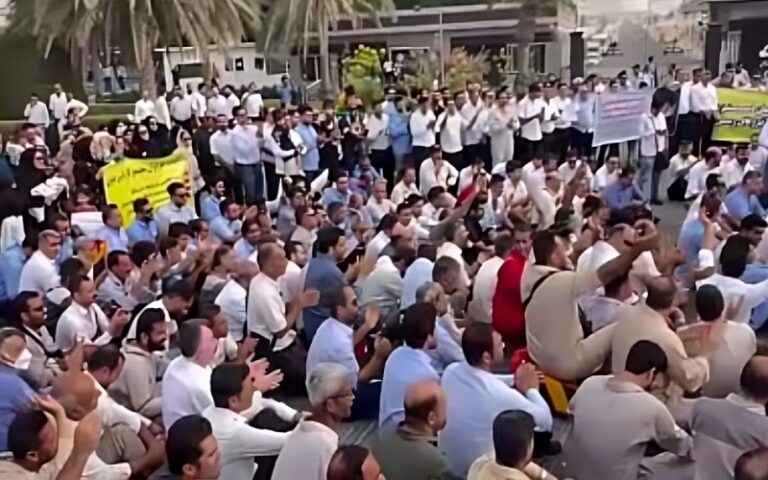
Protests involving various groups, including workers, retirees, and defrauded investors, were held on Tuesday, November 26, against the Iranian regime.

For a long time, Iranians have taken to the streets in demonstrations to demand their rights.

Protest by Contract Workers in the Oil and Gas Sector in Bushehr

Thousands of contract workers in the South Pars oil and gas sector, along with employees from twelve refineries, gathered in front of the South Pars Gas Complex headquarters to protest the neglect of their labor demands.

These workers, after 16 weeks of protests, demanded the implementation of a fair system for wage payments and chanted: “From slogans to action, empty promises—fair wages are our unalienable right.”

2023 Retired Educators Protest in Tehran

Educators who retired in 2023, after 15 months of non-payment of 60% of their retirement bonuses, gathered in front of the regime’s Presidential Office. They chanted slogans such as: “Stop postponing, give us our rights” and “Where is justice? Where is justice?” to demand their legal entitlements.

2023 Retired Educators Protest in Yazd

In Yazd, retired educators also protested in front of the provincial Program and Budget Organization. The protest was in response to the incomplete implementation of the salary equalization law. Their slogan was: “Half pay is what you get if you stay silent—we won’t rest until we get our rights.”

Protest by Retirees of Khorasan Petrochemical

A group of retirees from Khorasan Petrochemical, whose welfare benefits were cut 15 months ago due to collusion between the retirement fund and the employer, held a protest.

Protest by Employees of Tehran Metro Operating Company

Employees of Tehran Metro Operating Company protested against mismanagement and delayed wage payments. They also voiced opposition to the complete transfer of the metro company’s shares to Tehran Municipality. Some of their slogans included: “Zakani, have some shame, leave the municipality” and “The transfer of the company is forbidden, forbidden.”

Protest by Defrauded Investors of Rigan Vehicle and Shahr Khodro Companies in Tehran

Defrauded investors of Rigan Vehicle Company and Shahr Khodro held a protest in front of the Judiciary Headquarters. They criticized corruption in the judicial system and alleged collusion between some judges and fraudsters, demanding faster enforcement of court rulings.

The widespread protests by various groups—from workers and retirees to employees and defrauded investors—reflect deep dissatisfaction with the economic situation.

These protests, held across different parts of the country, signify a deep divide between the people and the Iranian regime.

Iran’s “No to Executions Tuesdays” Campaign: The Authoritarian Regime Seeks to Spread Fear

In its 44th consecutive week of protests, on Tuesday, November 26, the “No to Executions Tuesdays” campaign, held in 25 different prisons across Iran, described the issuance of “mass execution sentences” as “the strategy of Iran’s authoritarian regime to instill fear and terror.”

The statement reads: “While Iranian society is grappling with severe and complex livelihood problems, and the regime has reached a deadlock in resolving them, it considers increasing executions as the only solution to prevent the recurrence of widespread popular protests.”

In this regard, the “No to Executions Tuesdays” campaign highlighted the “daily executions” in various Iranian prisons, adding that “at least 25 individuals have been executed in just the past week.”

According to the statement, last month alone, “the regime executed over 140 people, leaving hundreds of families in mourning. These sentences serve no deterrent purpose and are not aimed at punishing individuals but are political in nature, intended solely to spread fear and repression in society.”

In this context, the human rights news agency HRANA reported on Thursday, November 21, that between October 22 and November 21 alone, at least 133 executions were carried out, including one public execution, 24 sentencing decisions, and seven death penalty confirmations.

The “No to Executions Tuesdays” campaign, referencing the issuance of “mass death sentences,” including for six defendants in the Ekbatan case, wrote that these actions should be seen as part of “the regime’s strategy to assess and prevent the start or spread of protests by the fed-up Iranian people.”

The campaign added: “In a repressive move, the authoritarian regime ruling the country has recently issued inhumane death sentences for two Kurdish political prisoners in Urmia Central Prison: Mehran Hassan-Zadeh, who was arrested during the 2022 protests, and Hamid Abdollahzadeh.”

The campaign’s statement emphasizes that the issuance of these sentences coincides with the 71st condemnation of the Iranian regime by the United Nations General Assembly’s Third Committee for gross human rights violations.

The statement also noted the transfer of four Arab political prisoners sentenced to death from Sheiban Prison in Ahvaz to solitary confinement, adding that it has been nearly 40 days with no information about the status of Adnan Ghobeishavi, Ali Mojadam, Moein Khanfari, and Mohammadreza Moghaddam, warning that their lives are “in serious danger.”

The “No to Executions Tuesdays” campaign, while condemning all executions, the unjust judicial processes, and the blatant human rights violations in Iran, issued a serious warning about the escalation of executions. It called on all organizations and individuals worldwide, including political, human rights, civil, and labor activists, to make greater efforts to save the lives of prisoners on death row in Iran.

The statement emphasized: “We continue to stress collective solidarity and united action to stop the machinery of killing.”

The statement also noted that members of the “No to Executions Tuesdays” campaign have been holding hunger strikes on Tuesdays for 44 consecutive weeks in protest against execution sentences in Iran.

Report: A Call for Action Against Executions in Iran

In a remarkable show of solidarity, 580 mayors in France have issued a collective call to end executions in Iran. Their statement supports the initiative led by Maryam Rajavi, the president-elect of the National Council of Resistance of Iran (NCRI), who has consistently championed the abolition of capital punishment, as outlined in her “10-point plan for the future of Iran.” This movement underscores the growing international concern over the alarming increase in executions under the current Iranian administration.

The French mayors expressed profound concern about the sharp rise in executions, which far exceeds the rates of previous years. Among those executed are political dissidents, including Reza Rassaei, who was arrested during the November 2022 uprisings in Shahriar, Tehran Province. Observers note that such executions serve as a tool for the Iranian regime to pursue political objectives, primarily by instilling fear and suppressing potential uprisings. As the mayors aptly stated, “Every execution carried out under this regime is inherently political.”

The international community’s lack of decisive response to Iran’s suppression and mass executions has emboldened the regime. Silence from global actors has inadvertently encouraged the continuation of these repressive practices. The regime has systematically weaponized executions to silence dissent and maintain its grip on power. Many analysts argue that the absence of meaningful international condemnation has contributed to this troubling trend.

A UN Fact-Finding Mission, in a recent report, labeled acts such as killings, imprisonment, torture, and sexual violence by the Iranian regime as crimes against humanity. These findings have further highlighted the urgent need for global action. In an alarming revelation, the report cited cases of torture and inhumane treatment directed toward political prisoners and opposition members.

As of early 2024, political prisoners in 20 prisons across Iran have launched a weekly hunger strike campaign titled “No to Executions Tuesdays.” This movement, held every Tuesday, reflects the prisoners’ determination to challenge the regime’s draconian policies and amplify calls for justice. Their courage has drawn attention to the plight of those who are often forgotten or silenced behind prison walls.

The July 2024 report by UN Special Rapporteur Professor Javaid Rehman further cemented these concerns. According to his findings, the Iranian regime’s actions, including mass executions, torture, and other inhumane acts, have been systematically aimed at members of the People’s Mojahedin Organization of Iran (PMOI/MEK). These acts, carried out with genocidal intent, represent a grim chapter in Iran’s modern history.

The French mayors’ call aligns with Maryam Rajavi’s steadfast advocacy for justice and human rights in Iran. Her 10-point plan envisions a future where the death penalty is abolished, and fundamental freedoms are guaranteed. The mayors emphasized their support for Rajavi’s vision, stating, “We endorse Maryam Rajavi’s call to end executions in Iran and her firm commitment to abolishing the death penalty as enshrined in her 10-point plan.”

The regime’s strategic use of executions has become a hallmark of its oppressive rule. By fostering fear and eliminating dissent, the authorities aim to stifle any momentum toward popular uprisings. However, the growing chorus of international voices, including the French mayors, reflects a shifting tide. It signifies a rejection of the status quo and a demand for accountability.

In conclusion, the call by 580 French mayors to end executions in Iran represents a significant step in rallying international support against the Iranian regime’s human rights abuses. The courage of political prisoners, coupled with the steadfast advocacy of Maryam Rajavi and the findings of UN reports, underscores the urgent need for decisive global action. This collective effort could pave the way toward justice, accountability, and a future where the dignity and rights of all Iranians are respected.

25% of Iran’s University Professors Have Migrated

0

Hossein Simaei Saraf, the Minister of Science, Research, and Technology of the Iranian regime, has reported the migration of “25 percent of the country’s university professors in recent years,” describing this statistic as “concerning.”

This is not the first time warnings have been issued in Iran about the migration of academics, including professors and students, particularly elite professors and students.

Two months ago, Simaei Saraf also stated at a meeting of university presidents that the trend of academic migration from Iran is “on the rise.”

The Minister of Science did not specify the exact time period during which this number of professors migrated from Iran and merely referred to the “recent years.” It is also unclear whether this statistic pertains only to public universities or includes non-governmental higher education institutions as well.

Amid a lack of transparency regarding the state of professor migration in Iran, state-run media have outright denied the occurrence of such a phenomenon.

Jam-e Jam newspaper, affiliated with the Islamic Republic of Iran Broadcasting (IRIB), published an article in September of last year, coinciding with the reopening of universities after the nationwide protests of 2022, titled “The Lie of Professor Migration.” The article claimed that the state of university professors migrating abroad had not reached a crisis level.

Although Iran’s Minister of Science has cited multiple reasons for professors’ migration, both he and Iranian media have primarily emphasized economic factors as the main cause.

The Ideological Approach in Universities

From its inception, the Islamic Republic has been highly sensitive about universities and promptly launched a wave of purges under the banner of the “Cultural Revolution” in universities.

Among these, the regime’s sensitivity regarding humanities disciplines is particularly pronounced, with Ali Khamenei, the regime’s leader, emphasizing these fields and calling for the “Islamization” of universities.

The outcome of such conditions has been nothing but the decline of Iranian universities’ academic rankings and the failure to cultivate competent and skilled individuals to manage the country’s affairs.


Iran: 10 Prisoners Executed, Including A Woman

Human rights sources reported on Monday, November 25, that at least 10 prisoners, including a woman, were executed in various cities across Iran by the Iranian regime’s judiciary.

Executions by the Iranian regime’s judiciary continue unabated. According to the Human Rights Activists in Iran (HRAI), three prisoners named Ashkan Moradi, Jalal Haj-Babaei, and Davood Heidari, who had previously been sentenced to death on drug-related charges, were executed on Monday morning at Karaj Central Prison.

Additionally, human rights sources reported on Monday, November 25, that two prisoners were executed in Jiroft, one in Kermanshah, three in Karaj, one in Khorramabad, and three in Hamedan.

According to a report by the Iran Human Rights Organization on Monday, two prisoners named Nader Ghanizadeh, accused of “premeditated murder,” and Naser Soleimani, 62, convicted of drug-related charges, were executed at Jiroft Prison.

The Baluch Activists Campaign has also reported that 58 prisoners at this prison in Kerman Province are currently at risk of execution for these two charges.

According to the Iran Human Rights Organization, three prisoners, two of whom were identified as Meysam Noori, 42, and Arsalan Habibi, were executed on drug-related charges at Hamedan Central Prison.

The execution of these three prisoners took place on Thursday, and their cases were handled separately.

This human rights organization also reported the execution of a prisoner named Mostafa Souri, a resident of Kangavar, at Kermanshah Central Prison on charges of “premeditated murder” in recent days.

Additionally, the Human Rights Activists in Iran (HRAI) reported that on Sunday, November 24, Iranian regime officials executed a female prisoner accused of “murder” at Parsilon Prison in Khorramabad.

According to HRANA, the identity of the executed prisoner was announced as Fariba Maleki.

According to a previous report by the Human Rights Activists in Iran, between October 22 and November 25 alone, at least 133 executions were carried out, including one public execution, 24 death sentences, and seven confirmations of death sentences.

Iranian Workers’ Wages Do Not Even Cover Half of Their Expenses

The state-run Tasnim News Agency, which is affiliated with Iran’s security apparatus, published a report emphasizing that the “recent wave of price hikes” has further reduced the purchasing power of the working class.

This state media outlet wrote that “data and field reports on living costs over the past four to five months indicate that the minimum livelihood basket for workers, based on food expenses, has increased by approximately 40%.”

According to Tasnim News Agency, workers’ wages “do not even cover half of their monthly expenses, as a significant portion of workers’ income is spent on rent.”

The gap between income and expenses for various segments of Iranian society, particularly workers, grows wider every day, which is why labor and professional protests are becoming a daily occurrence.

Meanwhile, the 2025 budget is being drafted in the regime’s Majlis (parliament), and a former MP states that even if wages in Iran were to increase fivefold, the standard of living would “only approach the global poverty line.”

Esmail Grami Moghaddam, a former member of Majlis, stated in an op-ed published on Sunday, November 24, in the state-run Etemad newspaper that “stagflation” is a barrier to achieving prosperity and that overcoming it is “extremely difficult.”

He stressed that “60% of Iran’s economy is tied to institutions whose revenues and expenditures are not reflected in the government’s budget,” and “to analyze the situation, we must focus on the visible 40% of Iran’s economy.”

Meanwhile, Iran’s Statistical Center announced on November 21 that the annual inflation rate has reached 33.1%, and Ahmad Meidari, the Minister of Cooperatives, Labor, and Social Welfare, claimed that pension funds are responsible for inflation in Iran.

The expansion of protests by various groups, including retirees, workers in different industries, teachers, defrauded investors, nurses, and healthcare workers, reflects the growing livelihood problems in Iran and the disregard of Iranian regime officials.


Iran’s Government Owes $400 Billion to The Banking System

0

The government’s heavy debts are one of the major challenges facing the current economy of Iran’s regime.

The Central Bank of Iran recently released statistics on the state of monetary and credit variables.

These statistics illustrate the government’s debt to the Central Bank and other banks.

An analysis of these figures shows that Ebrahim Raisi’s administration significantly increased borrowing from banks in its final months.

By the end of July 2024, the government’s debt to the banking network reached 16,000 trillion rials (approximately $22.857 billion).

Additionally, the government’s debt to the Central Bank rose to around 4,900 trillion rials (approximately $7 billion).

This is in contrast to the beginning of the 13th administration (Ebrahim Raisi’s government), when debts to the banking network and the Central Bank were 6,440 trillion rials (approximately $9.2 billion) and 2,010 trillion rials (approximately $2.871 billion), respectively.

These figures have seen significant jumps in less than three years, with debt to the banking network increasing by 148% and debt to the Central Bank rising by 128%.

According to the latest statistics, public sector debt to the banking network reached 16,540 trillion rials (approximately $23.628 billion) by the end of August 2024.

This figure represents a 38.6% increase compared to the same period last year.

The growth rate of public sector debt to the banking network under Raisi’s government reached 14.2% from March to August 2024.

In comparison, the growth rate of public debt in the same period last year was only 6.3%.

According to this report, about 2,600 trillion rials (approximately $3.714 billion) of public sector debt to the banking network belongs to state-owned enterprises.

The direct debt of the government to banks has also reached 13,940 trillion rials (approximately $19.914 billion).

Debt to the Central Bank

Studies indicate that public sector debt to the Central Bank reached 4,920 trillion rials (approximately $7.028 billion) by the end of August 2024.

Of this amount, the government’s debt is 3,320 trillion rials (approximately $4.742 billion), while state-owned enterprises owe around 1,600 trillion rials (approximately $2.285 billion).

The analysis reveals that the year-on-year growth rate of government debt increased from 25.2% in August 2023 to 69.4% in August 2024.

Gholamreza Salami, a government-affiliated economist, stated that “the official figures for government debt are around 7,750 trillion rials (approximately $10.785 billion), but these statistics are misleading.”

According to him, when all debts are accounted for, the government’s total debt surpasses the country’s gross domestic product (GDP).

Salami explained that “the total government debt amounts to $400 billion.”

At the free-market exchange rate of 700,000 rials per dollar, this figure translates to 280 quadrillion rials.

This figure is equivalent to 231 times the entire 2024 budget, which was set at approximately 64,790 trillion rials (about $96.842 billion).

Salami also stated that “the government owes 11,000 trillion rials (approximately $15.714 billion) to banks, half of which was accumulated during Raisi’s three-year tenure.”

He added that the government’s debt to the Social Security Organization amounts to 7,000 trillion rials (approximately $10 billion), while other government debts, including three-year maturity bonds, reach about 8,500 trillion rials (approximately $12.142 billion).

The government also carries substantial debt due to accumulated losses of banks and state-owned enterprises. State-owned companies like Bank Melli and Bank Sepah have recorded significant historical losses.

Pension Fund Deficits

The national and military pension funds have also become a serious challenge for Iran’s economy.

According to calculations, the deficit for these funds in 2024 exceeds 4,000 trillion rials (approximately $57.142 billion).

The increase in government debt to banks during Raisi’s administration has not only failed to decrease but has grown further. This trend has placed heavy financial pressures on Iran’s economy.


Price of Residential Electricity Increased by 38-83%

0

A review of the new tariffs shows that electricity costs for Iranian households have increased by approximately 38 percent up to the consumption threshold and by up to 83 percent beyond it.

The state-run Mehr News Agency reported on Saturday, November 23, that a comparison of the new tariffs with the previous ones (prior to September) for non-peak months indicates that the rate hikes, with two exceptions, are around 38 percent. However, for mid-range consumption between 200 to 300 kilowatt-hours (for rates under 200 kilowatt-hours), there is an 83 percent increase, and for mid-range consumption between 300 to 450 kilowatt-hours, there is a 78 percent increase.

The state-run Tasnim News Agency also published the new electricity tariffs, showing that, for example, after September, the price of each kilowatt-hour of electricity up to the consumption threshold increases incrementally depending on the region.

Abdolamir Yaghoubi, Director General of Energy and Customer Affairs at Tavanir (Iran’s national electricity company), stated that 75 percent of electricity consumers use below the threshold, with their bills amounting to approximately 180,000 rials (around $0.26). However, for those consuming above the threshold and up to 800 kilowatt-hours, the cost increases incrementally and can reach around 18 million rials (around $26).

The government, citing the continuous depreciation of the rial, argues that energy prices need to rise. This, however, is controversial due to the increasing poverty among the population and the inflationary effects it could cause.

In fact, under the new tariffs, electricity prices for extremely high-consuming Iranian households have reached one-quarter of the prices in the European Union.

For instance, statistics from the European Union indicate that the annual electricity cost for a household is €400 (more than the average monthly salary of an employee in Iran), but this amount is only slightly over one percent of the average annual salary of an employee in European countries.

It is also important to note that the average household electricity consumption in the European Union is 33 percent higher than that of Iranian households.

Mostafa Rajabi Mashhadi, CEO of Tavanir, also clarified on Saturday that, given the rising costs of electricity production, consumers who use up to 1.5 times the threshold will be charged 1.5 times the electricity supply cost, while those consuming more than 2.5 times the threshold will be charged five times the electricity supply cost.

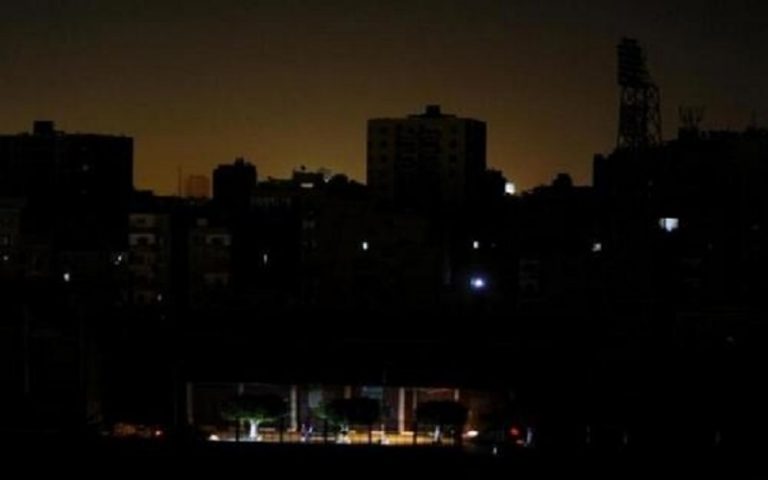
This price increase comes as the Iranian government, about two weeks ago, began cutting off residential and commercial electricity across the country due to a shortage of natural gas and liquid fuel for power plants.


Low-Income Households Affected The Most By Rising Inflation in Iran

The latest report from the Iranian Statistical Center shows that with the continued rise in point-to-point and monthly inflation rates in November, the lowest-income group in society has borne the greatest burden of monthly inflation.

According to the Iranian regime’s Statistical Center, the point-to-point inflation rate in November reached 32.5 percent, while the monthly inflation rate rose to 2.8 percent.

This comes as the lowest-income group in society, categorized as the “first decile” in the inflation expenditure deciles for November, experienced a monthly inflation rate of 3.77 percent, marking an increase compared to October for this segment of society.

On the other hand, the monthly inflation rate for the wealthiest group, categorized as the “tenth decile,” was 2.53 percent, reflecting a 0.5 percent decrease compared to October.

According to the regime’s Tejarat News website, the disparity in inflation rates among different deciles is due to the types of goods consumed. Studies by the Iranian Statistical Center indicate that lower-income deciles allocate a larger portion of their income to purchasing food, beverages, and tobacco.

In this context, a field report in Iran on poverty and rising prices shows that people’s lives have increasingly become “credit-based,” and the installment purchase of essential goods has even “impacted the middle class.”

According to a report published on November 17 by the state-run Ham-Mihan newspaper, “Iranians’ interest in joining credit and installment purchase platforms is growing daily,” and the issuance of microloans has “increased by 200 percent.”

The report mentions “50 million rials (approximately $71.5) in credit for food purchases,” with repayment in four installments “without the need for a guarantor or collateral.”

According to the Majlis Research Center’s statement on October 24, the poverty rate increased by 0.4 percent last year, encompassing over 30 percent of Iran’s population. It is projected that this figure will remain at a similar level this year.

Currently, the minimum monthly wage for married workers with children covered under labor laws is approximately 110 million rials (around $157). Meanwhile, estimates from labor activists, some of whom previously held positions in government-affiliated institutions, suggest that the cost of living basket has reached approximately 370 million rials (around $528.5) per month.

Farshad Momeni, an economist, has emphasized that government budget policies for the upcoming year have made the situation increasingly dangerous and worrisome.

According to the Statistical Center, in November, Sistan and Baluchestan Province recorded the lowest inflation rate, while the three provinces of Isfahan, West Azerbaijan, and Ardabil recorded the highest rates.