Home Blog Page 147

In the 2025 Budget, Iranians Will Become Poorer

Faramarz Tofighi, a labor activist, criticized Iran’s 2025 budget proposal and the “continuous liberalization measures by Pezeshkian’s administration and its adjustment policies,” stating that “foundational support measures are being eliminated” in this proposal.

In an interview with the state-run ILNA news agency, Tofighi objected to the fact that “the budget for certain special institutions has increased” while noting that there is no allocation in the budget for building power plants or ensuring electricity for the public; he claimed the aim is merely to raise prices.

Tofighi also commented on the currency policies in the budget proposal, stating that “systemic corruption in currency management is entrenched in the economy,” and instead of addressing this issue, preferential foreign exchange is being removed. “This way,” he argued, “the government earns revenue, but people become poorer.”

ILNA reports signs of “price liberalization” and “elimination of government subsidies,” stating that next year, due to a $3 billion reduction in the import budget, an increase in the preferential exchange rate in line with inflation, and the liberalization of energy prices, including electricity, expenses will rise significantly.

ILNA also cited statements from the Ministry of Energy announcing that “electricity prices will increase according to the law, and henceforth, citizens, especially high-consumption users, must source their electricity from the open market and renewable sources.”

The news agency pointed to another sign of “price liberalization” from statements by Mojgan Khanlou, spokesperson for the Budget Office, who announced that Pezeshkian’s administration has planned a gradual increase in the preferential exchange rate for next year, “aimed at controlling inflation.”

According to the report, next year’s budget includes a gradual increase in the preferential exchange rate for importing essential goods and medicines, which will be adjusted in line with annual inflation.

The report claimed that if inflation in 2024 reaches 30%, the preferential exchange rate for the euro will be set at 403,000 rials and for the dollar at 370,000 rials. These figures refer to the preferential rates that the government uses to purchase essential goods. Currently, the market rate for the dollar in Iran is 700,000 rials, and for the euro, it is 752,000 rials.

The ILNA report claims that, in the event of 40% inflation, the dollar will be set at 400,000 rials. These changes will drive up the prices of essential goods, such as chicken meat, which depends on preferential exchange rates and livestock feed imports.

According to ILNA, which is affiliated with the regime-aligned Workers’ House organization, the budget for importing essential goods and medicines has been reduced by 20% in the upcoming budget, dropping from $15 billion to $12 billion.

Tofighi added that higher energy prices will drive up the costs of all goods and services, imposing severe inflation on the economy.

He reiterated his belief that systemic corruption in currency management has taken root in the economy, and rather than solving this issue, preferential exchange rates are being eliminated. “This way,” he emphasized, “the government earns revenue, but people become poorer.”

The labor activist asked, “Should we expect chicken to cost 2 million rials per kilogram (about $2.85) and eggs to cost 150,000 rials each (around $0.21)?”

Iran: The “No to Executions Tuesdays” Campaign Warns of Possible Death Sentences for “Ekbatan” Case Defendants

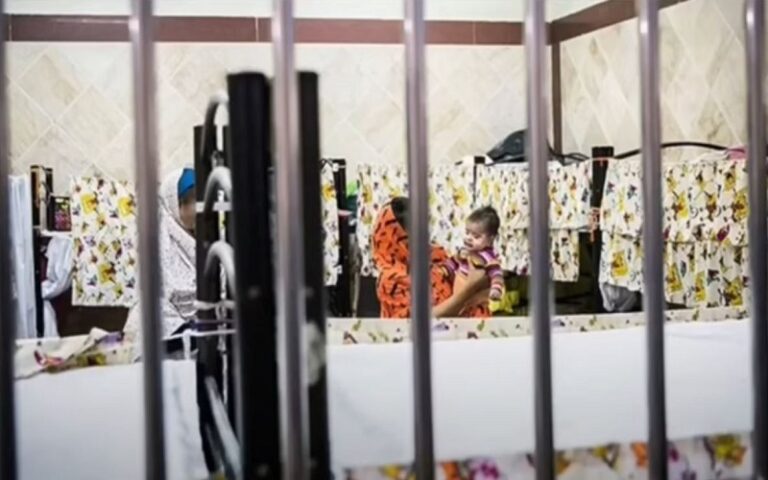
The “No to Executions Tuesdays” campaign released a statement on Tuesday, November 5, marking its 41st week, announcing that nearly 56 people have been executed since the beginning of the Iranian month of Aban (starting on October 21). It was reported that at least 23 of these executions took place just in the past week.

More than 270 people were executed in Iran in October alone, a number unprecedented in the past 20 years.

The statement condemned the execution of Jewish prisoner Arvin Ghahramani in Kermanshah’s Dizelabad Prison, describing the judicial proceedings in his case as “unfair and opaque.”

In another section of the statement, campaign members warned about the fate of eight young people detained during the 2022 protests, involved in the “Ekbatan” case (a housing complex in Tehran). These defendants were tried behind closed doors, and the statement expressed concern that “given the serious charges, there is a possibility they could receive death sentences.”

The statement added that the Supreme Court has upheld the death sentences of four Baluch citizens—Eidou Shahbakhsh, Abdolghani Shahbakhsh, Abdolrahim Qanbarzehi, and Soleiman Shahbakhsh, all campaign members. Their cases have been forwarded for implementation, and their executions could occur at any moment.

In its 41st week, the “No to Executions Tuesdays” campaign has spread to 24 prisons across Iran, gaining significant domestic and international support, reflecting the resolve of the Iranian people to abolish the death penalty.

Imprisoned writers of this statement emphasized that, with the acceleration of executions, activists from various fields must raise their voices more forcefully to oppose the death penalty in Iran, expose those responsible for these executions, and hold them accountable. They noted that achieving this goal would only be possible through the collective resistance and action of the people and all activists.

At the end of the statement, it was announced that the “No to Executions Tuesdays” campaign would go on strike across 24 prisons in Iran during its 41st week.

These prisons include Evin (Women’s Ward, Wards 4 and 8), Ghezel Hesar (Units 3 and 4), Karaj Central Prison, Greater Tehran, Arak, Khorramabad, Isfahan’s Asadabad Prison, Sheiban Prison in Ahvaz, Nezam Prison in Shiraz, Bam, Kahnooj, Mashhad, Qaemshahr, Rasht (Men’s and Women’s Wards), Ardabil, Tabriz, Urmia, Salmas, Khoy, Naqadeh, Saqqez, Baneh, Marivan, and Kamyaran.

Record-Breaking Executions in Iran in the Past 20 Years

Amid the intensifying regional conflict and escalating tensions in October, Iran witnessed a brutal violation of human rights and a new wave of repression and executions by the Iranian regime. The harsh increase in death sentences and the arrest of human rights activists and claimants was part of the ongoing pattern of human rights abuses in Iran.

Those detained have attempted to provide daily coverage of prison news and human rights violations, and now, at the end of October, they have issued a general summary of developments.

The State of Repression and Human Rights Violations in Iran in October 2024

Executions:

According to published reports, at least 170 people were executed in various prisons this month. Among those executed were 14 Baluch, 14 Kurds, 12 Afghan nationals, and one Iranian-German citizen. Thus, the number of executions rose from 74 in September to 170 in October, marking a 120% increase.

Detailed Execution Statistics:

Men in prison: 164

Women in prison: 4

Male juvenile offenders in prison: 2

Names of Executed Women:

Akhtar Ghorbanlou: She was executed for murder on October 1, 2024, in Ahar Prison. She had been a child bride.

Leila Ghaemi: She was executed for murder on October 2, 2024, in Ghezel Hesar Prison.

Zahra Faizi: Aged 41, she was executed for murder on October 2, 2024, in Tabriz Central Prison.

An unidentified woman: She was executed in Hamedan Central Prison on October 16, 2024, on drug charges.

Executed Juvenile Offenders:

Mehdi Barahoui: Aged 21 (under 18 at the time of arrest), a Baluch citizen executed in Zahedan Central Prison on October 9, 2024, for murder.

Ali Shirvani: Aged 28 (under 18 at the time of arrest), executed in Shiraz Central Prison on October 12, 2024, for murder.

Torture:

This month, at least two prisoners faced physical torture, two cases of limb amputation, and one case of flogging were reported in various prisons.

Two brothers, Mehrdad and Shahab Teimouri, had four fingers on their right hands amputated by guillotine in Urmia Central Prison.

Flogging sentence: Political prisoner Mohammad Abolhasani was flogged in Qazvin Central Prison.

This month, 39 citizens and fuel couriers were killed by the regime.

Fuel porters: 5

Border porters (kulbars): 4

Other citizens: 30

According to this report, approximately 400 people have been executed since the beginning of the presidency of Massoud Pezeshkian on July 30.

Workers In Iran Commit Suicide Due to Poverty and Unemployment

Ali Fathollahi, Vice President of the Chovar County Council in Ilam Province in western Iran, highlighted issues such as unemployment, economic poverty, and lack of healthcare infrastructure in this county. He mentioned that in recent years, many cases of suicide have occurred due to livelihood problems, and in just one factory, six workers attempted suicide.

On November 4, the state-affiliated ILNA news agency reported in an article titled “Suicides in Ilam’s Most Industrialized City Due to Unemployment” that the poor in this city also lack access to safe drinking water.

In an interview with ILNA, the Vice President of the Chovar County Council discussed the county’s infrastructure problems, stating, “As an industrial city located near a petrochemical company, Chovar has the highest rates of poverty and unemployment and lacks even a park for public recreation.”

In recent years, there have been numerous reports of self-immolation and suicide among laid-off workers from the Chovar petrochemical company.

On October 7, a group of workers from Arghavan Gostar Petrochemical Company in Ilam held a protest in front of the Chovar County Justice Department in support of their detained colleagues.

During this protest, two people attempted self-immolation, one of whom was the father of one of the detained workers.

Fathollahi added that recently, dismissed workers staged a protest outside the petrochemical plant, but the Chovar prosecutor ordered the arrest of eight of them.

The growth of injustice, poverty, corruption, repression, and failure in Iran has put the mental health of society at serious risk.

Workers, in particular, have repeatedly staged protests over various issues, including unpaid wages, low pay, and layoffs.

Despite these protests, the government has not responded adequately and has often detained labor activists.

Contaminated Water

A member of Chovar’s city council, in another part of the interview, highlighted the poor water quality in Chovar, stating that residents use water from surrounding springs for drinking or travel to Ivan County, located 10 minutes away, to obtain clean water.

According to Fathollahi, those who lack transportation or are poor are forced to use this contaminated water for drinking, which causes digestive illnesses.

Fathollahi, noting that residents have repeatedly protested the water issue, stated that the Environmental Protection Agency, leveraging these public complaints, collects a fine from the Chovar petrochemical company. However, this does not resolve the problem: “The unpleasant odor of the water, especially in winter when petrochemical waste mixes with rainwater, becomes extremely disturbing.”

In June, the Statistical Center of Iran released a summary of the labor force survey, reporting that the unemployment rate in 2023 was 8.1%.

According to this report, the working-age population (15 years and older) in 2023 was approximately 64.55 million, of which 26.638 million were employed.

Economic Protests of Telecom Retirees and Nurses in Several Iranian Cities

A group of retirees from Iran’s Telecommunication Company continued their economic protests on Monday, November 4, organizing gatherings across several provinces, including East Azerbaijan, Gilan, Khuzestan, Kermanshah, and Isfahan. Simultaneously, protests by nurses resumed.  

These protests took place at least in the cities of Tabriz, Rasht, Ahvaz, Kermanshah, and Isfahan on Monday.  

During the weekly gathering of telecommunications retirees in Tabriz, protesters held signs demanding their claims be addressed, chanting: “Lying officials, what happened to your promises?”  

Retired protesters in Rasht also chanted, “We don’t want an indifferent minister.”  

Retirees in Ahvaz protested with slogans like “Shareholder, have some shame, give up the company” and “Lying shareholder, where are your promises?”  

In Kermanshah, protesters chanted, “Neither cold nor heat can stop us,” and “Half pay, that’s what we’ll get if we remain silent.”  

Telecom retirees in Isfahan also shouted, “Neither Parliament nor the government cares about the people.”  

The weekly protests of telecommunications retirees have been ongoing for months. Reasons include the lack of updates to welfare benefits in 2022 and 2023, management’s disregard for a 2010 legislation, issues with supplementary insurance, and unpaid claims from previous years not adjusted to current rates.  

Alongside the weekly protests of telecom retirees, economic protests by nurses also resumed, with healthcare staff gathering in areas such as Zanjan and Yazd.  

Protesting nurses in Zanjan called for solidarity among their colleagues, chanting, “Nurses, shout for your rights.”  

In Yazd, protesters chanted, “If we don’t get our rights, we won’t work our shift.”  

Worsening issues for nurses in July of this year led to a sustained national strike, during which hundreds of nurses and healthcare staff in state hospitals began protests and strikes across at least 16 provinces in Iran, continuing until September, emphasizing their professional and economic demands.  

The continuation of the nurses’ strikes led to security crackdowns and the arrest of several nurses. In response, on August 29, the U.S. Department of State and the International Council of Nurses (ICN) expressed concern over the “unjust detention and sentencing” of protesting nurses in Iran.  

The expansion of sectoral protests across various groups, including retirees, workers in multiple industries, teachers, individuals who lost savings, and healthcare workers, reflects rising economic hardships in Iran and the perceived inattention of regime officials to these issues.

70 Dialysis Patients Dead In Iran Due To Contamination

The Health Commission of Iran Regime’s Majlis (Parliament) confirmed that 70 dialysis patients have died in Iran due to medication contaminated with aluminum. According to Salman Es’haghi, the commission’s spokesperson, not only has no serious legal action been taken against the producer of this solution in the past three months, but the company has also been given another order to produce the medication.

Es’haghi did not name the manufacturing company, but independent reports indicate that Samen Pharmaceutical Company, affiliated with financial institutions of the Iranian regime, is the producer of these toxic solutions.

The Majlis member explained that initial reports cited the deaths of 10 to 12 dialysis patients in the cities of Mashhad and Isfahan, which later rose to 50. It is now confirmed that 70 people have lost their lives.

According to Es’haghi, the initial discussion of dialysis patient deaths centered on the use of “substandard medication.” Later, it was suggested that the medication might have been contaminated with aluminum, and investigations revealed that the company had been “negligent” in this regard.

He mentioned that the commission’s investigation has been ongoing for over three months, and the judiciary should have taken serious actions. However, the same company has again been asked to continue producing the medication.

Following this Majlis member’s statements, the public relations office of the Food and Drug Administration released a statement saying, “Currently, only one domestic company is responsible for producing this critical medication, but this does not mean that quality or standards are being overlooked.”

Earlier, on June 12, the Food and Drug Administration announced it had received “initial reports indicating some issues and complications following the use of peritoneal dialysis solutions produced by Samen Pharmaceutical Company.”

According to Ham-Mihan newspaper, the main shareholders of this company, in order of their stake, include Astan Quds Razavi with around 70 percent, the Pension Fund with approximately 26 percent, and Hakim Pharmaceutical Company with four percent. Astan Quds Razavi is one of the entities under the supervision of Ali Khamenei, the Supreme Leader of Iran’s regime, and has faced recent reports of corruption in other sectors as well.

The contaminated batch of peritoneal dialysis solutions was distributed from January 2024 and claimed dozens of lives by May.

According to Salman Es’haghi, 800,000 patients in Iran rely on peritoneal dialysis for treatment.

Dialysis patients who used this aluminum-contaminated solution died after experiencing neurological, infectious, seizure-related, and coma symptoms.

Unauthorized Oil Drilling in Hawizeh Marshes in Iran Threatens Ecosystem

New drilling operations and road widening in the Yaran oil field within the Hawizeh Marshes, launched without authorization from Iran’s Environmental Protection Organization and with only approval from the Khuzestan Province Security Council, have been identified as a serious threat to the marsh’s ecosystem and migratory species.

According to Payam-e-Ma newspaper, new oil well drilling in the Yaran field has commenced without approval from the Environmental Protection Organization.

The report states that in a session of the Khuzestan Provincial Security Council on September 7, during the final days of the former governor’s tenure, these drilling permits were issued without environmental assessments. The projects were implemented in collaboration with an oil contractor and the Khuzestan Governor’s Office.

The transboundary Hawizeh Marshes, the last remnant of Mesopotamian marshlands, span over 300,000 hectares, with one-third located in Iran and two-thirds in Iraq. This marshland holds significant ecological value, particularly as a habitat for thousands of migratory birds, including flamingos.

According to Ahmadreza Lahijanzadeh, Deputy for Marine and Wetland Environmental Protection in Khuzestan, in 2008, more than 7,000 hectares of the Hawizeh wetlands were allocated to the Oil Ministry for the first time. With approval from the Supreme National Security Council, large sections of the wetland were drained to facilitate cheaper oil extraction by Chinese firms.

He cited the blocking of the Shatt Al-Ali bridge and the draining of pools 3, 4, and 5 in 2010 as major damages to the Hawizeh Marshes, stating, “These actions turned the marshland bed into a dust source in Khuzestan.”

The Yaran Oil Field  

The Yaran oil field (North and South), covering around 110 square kilometers west of the Azadegan oil field within the Hawizeh Marshes, is under the jurisdiction of the Azadegan field. Its first exploratory well was drilled in 2009.

The northern part of the Yaran oil field contains 22 wells, while the southern part has 18 wells. Infrastructure projects, including pipelines and transport facilities, have also been implemented.

To date, the Azadegan field, authorized for only 75 oil wells, has drilled over 300 wells in the Hawizeh Marshes. Reports indicate that oil executives plan to add another 420 wells in this area.

Evading Environmental Assessment  

Lahijanzadeh stressed that the Oil Ministry must present a comprehensive plan for marshland conservation and conduct Environmental Management Plans (EMP) before any new development in the Yaran field. However, drilling has commenced without these assessments, and oil companies have recently communicated with the Environmental Protection Organization to exclude environmental assessments for these wells.

The Hawizeh Marshes, with their rich diversity of plant and animal species, remain a top environmental concern for activists in Iran.

Preservation and monitoring of this marshland are considered public rights, and any encroachment not only violates environmental rights but also contravenes the principles of public rights in Iran.

Four Dead Due to “Multiple Ground Subsidence” in Tehran

0

Ali Beitollahi, the head of the Earthquake Department at the Center for Roads, Housing, and Urban Development Research, announced that “multiple ground subsidence incidents in Tehran” have resulted in four fatalities. Among them, two people died in the ground collapse at “Meydan-e Qiyam” and two others lost their lives in a similar incident in the Shahran area.

According to the state-run newspaper Etemad on Sunday, November 3, Beitollahi reported that “a firefighter and a worker” were buried under a pile of soil in the ground subsidence incident at Tehran’s Meydan-e Qiyam, while two others died in a similar accident in Shahran.

According to UNESCO’s definition, “ground subsidence” refers to the “collapse or settlement of the ground’s surface,” which occurs on a large scale for various reasons.

The official noted that despite the heightened risk of ground subsidence in recent years, “no budget has been allocated for assessing this risk or for preventive and control measures.”

He attributed the primary causes of ground subsidence in the capital to the “numerous abandoned qanats (underground aqueducts) beneath Tehran” and “erosion caused by high-pressure leakage from drinking water pipes.” He stated that according to existing maps, “approximately 600 kilometers of abandoned qanats have been identified,” and that “an equivalent length of unidentified qanats also exists in Tehran, posing a latent threat.”

He further pointed out that “the recent subsidence at Vanak Square, the collapse on the north side of Enqelab Square, and the subsidence on Molavi Street opposite Akbarabadi Hospital were caused by high-pressure water leakage from drinking water pipes.” He explained: “This leakage causes subsurface erosion and creates cavities underground, which can collapse under traffic and environmental vibrations, potentially forming hazardous sinkholes in the ground and on roads.”

Beitollahi warned that “human casualties would be very high if a subsidence occurred during peak traffic hours in District One.”

Previously, Beitollahi had warned of the intensifying phenomenon of ground subsidence, stating that all provinces in Iran are facing this danger and that “we have only five to ten years left to save our cities and villages.”

Beitollahi highlighted Tehran Province’s top ranking in subsidence rates, stating, “The subsidence mass in Tehran Province stretches over 60 kilometers in length and 35 kilometers in width, with close to 3 million people residing in this subsidence zone.”

In June, Masoumeh Amigh-Pei, head of the Precise Leveling and Radar Interferometry Department at Iran’s Mapping Organization, stated that a comprehensive ground subsidence database had been developed, revealing that the extent of ground subsidence has reached 16 of Iran’s major cities, with 800 cities falling within the subsidence zone.

According to several critical experts, misguided policies, lack of adequate planning, and mismanagement of water resources by the Iranian regime are major contributors to ground subsidence and the environmental crisis in Iran.

The National Council of Resistance of Iran Reported the Arrest of Supporters of MEK And Their Families

In a statement, the National Council of Resistance of Iran (NCRI) accused the Iranian regime’s Ministry of Intelligence of “intensifying the arrests of MEK supporters and their families” in an effort to “prevent” social protests and uprisings against the government.

The statement noted that in mid-September, death sentences were issued for three MEK supporters, the largest opposition group to the Iranian regime. Additionally, on October 6, seven other detainees went on trial on charges of “rebellion and membership in the MEK.” It added that many supporters of this political group “have mostly been arrested and interrogated since [Masoud] Pezeshkian took office.”

In the laws of the Iranian regime, “rebellion” refers to those who oppose the government and engage in armed struggle against it, for which the punishment is death.

According to this statement, the names of some of the detainees include: “Hojjat Alizadeh, 57, in Yazd prison; Kosar Dehbanzadeh, 33, in the women’s ward of Shiraz prison; Mohammad Ali Tandaro, 31, in Evin prison; Rasoul Sadati, 63, Taghi Mahmoudi, 62, and Sasan Nouri, 37, in Qaemshahr prison; Amin Farahani Kasmaei, 45, in Lakan prison in Rasht; Nira Behnoodi, 53, in the women’s ward of Evin prison; Hossein Sheibani, 37, in Isfahan; Karim Khoshesteh, 61, in Lakan prison in Rasht; Sajjad Pakoush, 36, from Yasuj; and Parisa Kamali, 40, in Isfahan prison.”

The NCRI stated that the names and details of the detainees have been submitted to international bodies.

Earlier, the Iranian regime had issued death sentences for three political prisoners affiliated with the MEK: Behrouz Ehsani Islam-Lo, Mehdi Hassani, and Mohammad Javad Vafa’i Thani. Behrouz Ehsani, 70, who suffers from multiple illnesses, asserted that after 22 months of uncertainty, the Iranian regime’s judiciary “issued a death sentence for him without any evidence.”

It is worth noting that in the summer of 1988, the Iranian regime executed around 30,000 members and supporters of the MEK within a short period.

Each Year, 1,500 Nurses Leave Their Jobs, 500 Emigrate from Iran

Ahmad Nejatian, head of Iran’s Nursing Organization, noted that 1,500 nurses left their jobs over the past year and 500 emigrated. Meanwhile, nurses’ protests continue in Iran, and as Nurse’s Day approaches, a group of nurses has launched a campaign called “Black Ribbon.”

As part of ongoing street protests by healthcare staff, nurses in the cities of Fasa, Mashhad, and Yazd held a protest rally on Saturday, November 2.

Emergency personnel from Mashhad participating in the protests highlighted that staff burnout has led to an increase in patient deaths.

In an interview with regime’s Tasnim News Agency, affiliated with the IRGC, Nejatian noted that while Iran has 240,000 nurses, there should be at least 1.8 nurses per hospital bed. However, the national average is 0.9, meaning there is less than one nurse per hospital bed in Iran.

Referring to the emigration of 500 nurses over the past year, Nejatian discussed the factors contributing to job abandonment and emigration among nurses. He stated, “With staff shortages, we impose mandatory overtime on nurses. Additionally, due to staffing issues, nurses are unable to retire after 25 years of service under the law governing hard and hazardous occupations. Together, these factors create a chain of consequences that lead to nurses’ dissatisfaction and resignations.”

The Black Ribbon Campaign

Images posted on social media show a group of nurses participating in the “Black Ribbon” campaign, wearing black armbands and wristbands to demand that their professional and economic demands be addressed.

The Black Ribbon Campaign

The website of the Free Union of Iranian Workers reported that the nurses’ protest, marked by wearing black ribbons during shifts, continues. It wrote, “Nurses have been threatened to remove these black ribbons or their shifts will not be counted.”

Elsewhere, Nejatian stated that nurses’ overtime pay should be at least 1 million rials (approximately $1.42) per hour.

He stressed that overtime pay below this level would not meet the needs of the healthcare system or the nurses.

Previously, on October 27, the Coordinating Council of Nurses’ Protests warned Iranian regime officials that if nurses’ demands were not addressed, they would respond decisively and in unison.

The union attributed the consequences of this issue to the authorities, stating that reducing nurses’ demands to small payments would only fuel the flames of protest.

Nurses and other healthcare workers in Iran have repeatedly held rallies, sit-ins, and strikes over the past years in protest of the lack of response to their demands.

In one of the most recent instances, beginning on August 5, nurses in various cities across Iran went on strike and held protests for over a month in approximately 50 cities and 70 hospitals.

In a September 2 interview, Nejatian stated that the average annual emigration rate of nurses has doubled from 2021 to 2023, noting that this trend is increasing.