Home Blog Page 151

Sheiban Prison in Ahvaz Joins the “No to Executions Tuesday Campaign”

The “No to Executions Tuesday Campaign,” comprised of hunger-striking prisoners from over 20 prisons across Iran, announced in its 39th week on October 22 that a group of political prisoners from Sheiban Prison in Ahvaz has joined the campaign.

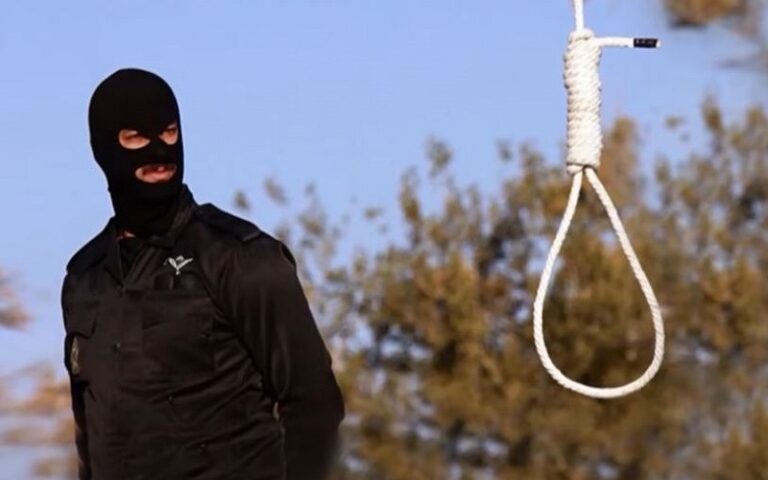
The statement mentioned that “in the wake of the anniversary of the 2022 protests, the anniversary of the victims of this movement, and the growing internal and external crises of the regime, we have witnessed an alarming and widespread acceleration of executions, with over 140 individuals hanged between September 22 and October 22 this year.”

The campaign added that among those executed, five were women. It also noted that according to reports, nearly 35 people have been executed in the past week alone, with 17 executed on October 16.

The “No to Executions Tuesdays” Campaign further stated, “In another repressive measure, four Arab political prisoners on death row in Sheiban Prison in Ahvaz have been transferred to solitary confinement for the implementation of their death sentences, and their lives are in grave danger.”

According to the campaign’s statement, “Following these inhumane sentences, a group of political prisoners from Sheiban Prison in Ahvaz declared in a statement their joining of the campaign.”

The “No to Executions Tuesdays” Campaign condemned the “systematic executions” carried out by the Iranian regime and called on “all political, civil, labor, and human rights activists and all conscious individuals, both inside Iran and internationally, to stand against these repressions. Standing against the issuance and execution of death sentences must become a social demand today.”

The authors of the statement believe this goal “will only be achieved through resistance, solidarity, and collective will,” and through this, “we can stop this killing machine and overthrow the foundation of such inhumane sentences in our country.”

According to the statement, a hunger strike was held on Tuesday, October 22, as a form of protest by members of the campaign in the following prisons: Evin Prison (Women’s Ward, Ward 4 and 8), Ghezel Hesar Prison (Units 3 and 4), Karaj Central Prison, Greater Tehran Prison, Khorramabad Prison, Arak Prison, Asadabad Prison in Isfahan, Nezam Prison in Shiraz, Bam Prison, Mashhad Prison, Lakan Prison in Rasht (Women’s and Men’s Wards), Qaemshahr Prison, Ardabil Prison, Tabriz Prison, Urmia Prison, Salmas Prison, Khoy Prison, Naqadeh Prison, Saqqez Prison, Baneh Prison, Marivan Prison, Kamyaran Prison, and Sheiban Prison in Ahvaz.

Protests By Official Oil Employees and Contract Workers at South Pars Gas Refineries

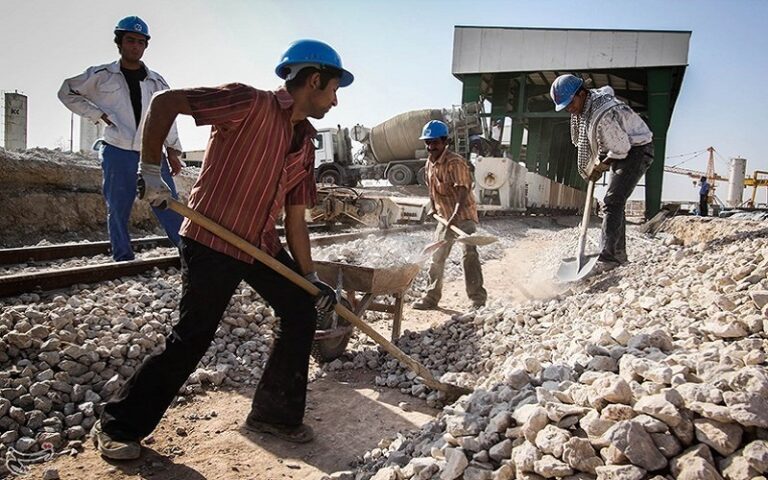
Reports from Iran’s oil and gas regions indicate that official oil employees and contract workers at South Pars Gas Refineries held protests on Tuesday, October 22, while security forces confronted the official workers in the Asaluyeh Special Economic Zone.

It is reported that several protesters were arrested by security forces. However, following protests from other workers, they were forced to release the detained workers.

The official oil employees are protesting the oil minister’s failure to implement a parliamentary resolution that exempts employees in operational zones from the unfair salary cap law.

They are also demanding the removal of unfair deductions, full payment of legal benefits that have caused widespread demotivation among employees, the elimination of retirement caps, full payment of end-of-service benefits, refunds of taxes collected unlawfully, and the non-merger of the oil retirement fund with other bankrupt funds.

Contract workers at the South Pars Gas Refineries held their twelfth week of strikes and protests on Tuesday.

These protests, known as “Protest Tuesdays,” are held weekly in response to the government’s failure to meet workers’ demands.

In recent years, protests in Iran’s oil and gas regions have been on the rise. This trend, along with growing protests from workers, retirees, teachers, nurses, and other wage earners, has led to increased security and judicial crackdowns by the Iranian regime.

Despite these crackdowns, the protests have continued to grow, especially as the living conditions for workers and other wage earners have become increasingly difficult.

Currently, the minimum monthly wage for workers covered by the Labor Law, who are married and have children, is around 110 million rials (approximately 168 USD). Meanwhile, according to estimates from labor activists who previously held government positions, the monthly cost of living has risen to about 370 to 400 million rials (approximately 565 to 611 USD).

Over Past Six Years, at least 863 City Council Members and Mayors in Iran Have Been Arrested

The government-run newspaper Farhikhtegan reported an increase in administrative corruption in Iran, stating that over the past six years, at least 863 city council members and mayors have been arrested. According to the report, since 2021, 430 city council members and mayors across the country have been arrested.

On October 20, Farhikhtegan reported the arrest of at least 20 city council members and mayors in various urban areas across the country in the past two weeks.

These incidents include the arrest of the mayor of Pataveh and several city council members, the arrest of seven city council members and the mayor of Abali, the arrest of four people in Pakdasht, and the dismissal of three members of the Talesh city council by the county governor.

In its report, Farhikhtegan stated that between 2021 and the first seven months of the Persian calendar year 1403 (March 21, 2024, to October 21, 2024), 430 city council members and mayors across the country were arrested for widespread corruption and financial misconduct. “When combined with the 433 arrests between 2018 and 2020, the total number of arrests reaches 863.”

Corruption in the municipal system, including the arrest of mayors, city council members, and middle managers, has frequently made headlines in recent years.

In one such case, Iranian journalist Hadi Kasaeezadeh released a video in which an individual claimed that Saeed Sadrzadeh, an assistant to Tehran Mayor Alireza Zakani, demanded 400 gold coins and $450,000 in exchange for appointing him as the deputy for urban planning and architecture in Tehran’s District 1.

The rising trend in arrests

According to statistics published by Farhikhtegan, around 145 city council members and mayors were arrested nationwide in 2021, mostly for financial misconduct.

In 2022, the number dropped to 68 across the country, but in 2023, it surged by about 98%, reaching 135 arrests.

In the first seven months of this year (March 21 to October 21), at least 82 municipal officials and city council members were arrested for urban-related offenses.

Farhikhtegan emphasized that this report only covers those arrests that have been publicly reported in the media, suggesting that the actual number may be higher.

The report compares the statistics, noting that from 2018 to 2020, a total of 433 arrests were made across city councils, village councils, mayors, and municipal employees. In the last three and a half years alone, without including village council members or municipal employees, 430 arrests have been made.

Reasons for the increase in administrative corruption

Farhikhtegan cited factors such as widespread conflicts of interest, extensive monopolies, “golden signatures” (approvals from influential individuals), a rent-seeking structure, low-quality legislation, complex and multilayered bureaucracy, and lack of transparency as reasons placing Iran among countries with high levels of administrative corruption.

The report added that this situation has led to administrative violations, bribery, embezzlement, theft, fraud, and abuse of job positions at a low cost and risk, which has further facilitated the increase in administrative corruption in Iran.

Farhikhtegan noted that before anything else, the relationship between corruption and its key points should be understood, explaining why there is significant corruption in urban management.

According to a report by the Parliamentary Research Center, construction violations stem from various factors, including economic, social, structural, managerial, and regulatory issues.

Economic corruption within various pillars of the Iranian regime has frequently made headlines.

In recent years, numerous reports have surfaced about the arrest of officials at different levels across the country on economic charges.

Among them, some individuals who had been arrested on corruption charges in previous years have returned to their positions.

The state-run Etemad Online newspaper published an infographic on December 9, 2023, stating that embezzlers are competing with each other to

U.S. Sanctions Six Chinese Companies for Assisting Iran’s Military Programs

The United States has sanctioned six Chinese companies for allegedly assisting in the development of Iran’s “weapons of mass destruction” and drone programs, as well as aiding the modernization of the People’s Liberation Army of China.  

Two companies based in Hong Kong and Shenzhen were added to the list for attempting to avoid providing information about the end users of their products and components.  

The U.S. Department of Commerce stated in its announcement that these two companies were engaged in transactions with an Iranian procurement company.  

This Hong Kong-registered company was previously on the list of “unverified” entities, which includes companies that U.S. export control officials cannot inspect or verify.  

Three other companies were added to the sanctions list for allegedly attempting or succeeding in providing U.S. components for Iran’s drone and weapons of mass destruction development programs.  

The list announced by the U.S. Department of Commerce on Monday, October 21, contained 26 companies, including 16 Pakistani companies, three companies registered in the United Arab Emirates, and one Egyptian company.  

Four companies from the UAE and Egypt were added to the list for allegedly cooperating with Russia in the Ukraine war.  

The U.S. Department of Commerce said that these 26 companies have violated U.S. export regulations, participated in the weapon programs of banned countries, or circumvented U.S. sanctions against Iran and Russia.  

The inclusion of these companies on the sanctions list will block their access to U.S. technologies and products unless they receive a special license from the U.S. government—a license that is extremely difficult and unlikely to obtain.  

Under Secretary of Commerce for Industry and Security Alan F. Estevez: “Our actions today send a message to malicious actors that if they violate our controls, they will pay a price.”  

The Iranian Regime’s Debt to Banks Has Increased By “Two and A Half Times” In Past Three Years

New statistics from Iran’s Central Bank show that under Ebrahim Raisi’s administration, the government’s debt to the banking system surged by 148%. Additionally, liquidity surpassed 90 quadrillion rials (approximately $139.86 billion), more than double the amount when Raisi’s government took office in 2021.

The latest Central Bank report indicates that by August of this year, the government’s debt to the banking system had risen to 16.54 quadrillion rials (approximately $25.7 billion), which is two and a half times the level when Raisi’s administration began.

Government debt to the country’s banking system in August of this year saw an increase of nearly 39% compared to August 2023.

Of the total public sector debt to banks, about 15% is attributed to state-owned companies, while 85% is directly the government’s responsibility.

Approximately 30% of the total government debt to the banking system is related to borrowing from the Central Bank.

This massive surge in government debt comes despite Ebrahim Raisi’s promise at the start of his presidency to reduce inflation by halting borrowing and controlling liquidity.

However, Central Bank statistics show that liquidity surpassed 90 quadrillion rials by the end of the 13th government. At the start of Raisi’s term, liquidity stood at 40 quadrillion rials (approximately $62.16 billion).

In recent years, the government has engaged in uncontrolled borrowing from financial institutions, including the banking system, to address a massive budget deficit, forcing the Central Bank to print unsupported money.

As a result, the monetary base and liquidity in the country have skyrocketed, the value of the rial has sharply declined, and inflation has averaged over 41.5% annually over the past three years, placing Iran among the few countries with higher inflation rates.

The International Monetary Fund (IMF) has predicted that inflation in Iran will be 37.5% this year, placing the country among the top eight nations with the highest inflation rates globally.

The IMF has also forecast that inflation in Iran will be 32.5% next year, ranking it as the sixth-highest in terms of price increases worldwide.

Some Schools in Iran Force Parents to Clean the School for Not Paying Tuition

The state-run Etemad newspaper reported that some schools are forcing parents to clean the schools due to their inability to pay tuition fees. In Taybad, a girls’ school, Bahonar, threatened to expel a student if her father didn’t pay the tuition. In Tehran, a school compiled a list of underprivileged families and contacted them to clean the school.  

*Etemad* on October 18, citing a report of a mother being forced to clean her child’s classroom, stated that this practice has also occurred in other schools.  

According to the newspaper, the practice of having parents clean schools is not new. Some schools compel the parents of underprivileged students to clean the school during the registration process. If the families refuse, they are threatened with their child’s expulsion.  

The report’s author noted that this situation has occurred in a school in Tehran and the Bahonar school in Taybad, Razavi Khorasan province. The investigation revealed that some students had been harassed and seriously harmed, to the point where some have dropped out.  

In a state-run school in Qods City, Tehran, a student’s mother was forced to clean all the classrooms in order to register her child in school.  

School Cleaning by Parents  

A school principal in Tehran used the parents of underprivileged students to clean the school and told families that those unable to pay for registration should come to the school.  

According to the report, when parents came to the school, they were told to either clean the school or, if they had skills like construction or welding, to do those jobs for the school.  

Physical Punishment 

The principal and the executive assistant did not treat the students well, and some time ago, the executive assistant slapped an elementary school student.  

The report states that when the student’s family found out about the incident, instead of apologizing, the principal and assistant escalated the situation, leading to further tension and conflict.  

The physical punishment of students in Iranian schools has a long history, with many reports about it published in recent years.  

I Only Had 100,000 Tomans During Registration  

According to Etemad, a school in Tehran charges the parents of “migrant students” 1 to 2 million tomans (around 15.3 to 3.7 dollars) in cash for their children’s registration.  

The minimum wage of workers with two children is about 169 dollars.

A mother said her daughter had dropped out for nearly two years due to financial struggles. This year, during registration, the school asked for 700,000 tomans (around 11 dollars), but she said: “I only had 1,000,000 rials (around 1.5 dollars), and I had to clean the classrooms for my daughter.”  

She explained her family’s poor financial condition and her husband’s illness, adding: “Last week, they called us and said, ‘Come, we will give you a gift card, we want to help you.’ I told them we live far away and can’t come. They insisted, saying they would cover our costs, but they gave us nothing.”  

The mother added, “We haven’t eaten chicken for a long time; we’ve forgotten its taste. My kids ask me, ‘Mom, buy chicken, buy fruit.’ But I don’t have any [money]… where should I get it from?”  

On October 3, the Statistical Center of Iran reported an increase in the number of students dropping out, stating that at least 929,798 students missed out on education in the 2022-2023 school year.

Nearly All of Iran Affected by Land Subsidence

0

Ali Beitollahi, member of the scientific council of the Road, Housing, and Urban Development Research Center of Iran, warned that, with the exception of Gilan Province, land subsidence has occurred in all provinces of the country. He noted that the rate of subsidence is expanding daily, yet policymakers, despite clear evidence, have not fully grasped the scale of the disaster.  

Beitollahi highlighted cities with the highest levels of subsidence in Iran, adding: “In areas with high population density, the rate of subsidence is very high, including Mashhad, Tehran, Isfahan, Shiraz, Kerman, and other major cities.”  

He emphasized that subsidence is particularly evident in historical sites and cultural heritage, warning that this phenomenon has been observed in historic cities such as Yazd and Isfahan.  

This academic noted that the size of subsidence zones is increasing daily, adding: “For example, in the south and southwest of Tehran, there is a zone 60 kilometers long and 30 kilometers wide, and in southern Alborz province, the annual rate of subsidence is 37 centimeters.”  

He added that the entire city of Isfahan is situated within a subsidence zone, and this phenomenon is expanding every day.  

Subsidence in Historical Sites  

Beitollahi pointed to subsidence in Isfahan’s Naqsh-e Jahan Square, the city’s old mosques, Persepolis, and the Naqsh-e Rostam site, stating: “The images of subsidence at Naqsh-e Rostam are not accurate, but our inspections show that subsidence cracks exist in this location.”  

He expressed regret that no organization is taking responsibility for the subsidence, adding that historical landmarks and important buildings in major cities and subsidence zones require special repairs. However, the seventh development plan of the country does not include preventive measures to mitigate the risks of this phenomenon.  

This geologist stressed that enforceable regulations are necessary to combat land subsidence, but such laws have not yet been issued.  

According to Beitollahi, due to the lack of serious attention to the issue of subsidence, it only garners attention when the damage to historical sites becomes visible and is reported in the media.  

In Iran, Persepolis and other ancient structures around it, such as Naqsh-e Rostam, have faced land subsidence for years.  

Maryam Dehghani, a faculty member at Shiraz University, stated on October 18 that subsidence is occurring 300 to 500 meters from Persepolis and 10 meters from Naqsh-e Rostam, and the large cracks caused by the subsidence in these areas are fully visible.  

Land Subsidence in Iran  

Iran has one of the highest rates of land subsidence in the world, and in some areas where underground water reservoirs have fully collapsed, the damage may be irreversible.  

One of the main reasons for Iran’s high rate of subsidence is the excessive extraction of groundwater. Experts say that Iran’s thousand-year-old groundwater reserves have been depleted in the last three decades.  

Land subsidence also affects infrastructure such as airports, roads, and railways.  

According to researchers, the unsustainable extraction of groundwater will push nearly 90 million people in the country into a water crisis.  

In late September, The Guardian reported that Iran had reached a critical point due to groundwater depletion, citing satellite images that show large cracks and sinkholes forming, with widespread areas sinking at a rate of more than 10 centimeters per year.  

A subsidence rate higher than four millimeters per year signifies a critical point, but in Iran, the subsidence rate is now being reported in centimeters instead of millimeters.  

Only $1.5 Million Paid Out of $70 Million in Taxes Owed by Luxury Homeowners in Iran

According to the Iranian regime’s Tax Authority, 135,509 luxury residential units and garden villas have been subjected to taxes amounting to 44.63 trillion rials (approximately $69.8 million), of which only 940 billion rials (approximately $1.471 million) have been collected.  

According to the organization, the threshold for luxury home tax in 2024, based on the budget law, is set at 350 billion rials (approximately $547,730). All residential units and garden villas valued above this amount must pay taxes on the excess.  

Failure to pay taxes by luxury homeowners comes at a time when reports show that tax evasion by the wealthy has become commonplace. According to the Tax Authority, in the spring of 2024, government revenues from income and salary taxes grew by 15%, revenues from goods and services taxes grew by 36.5%, while wealth tax revenues dropped by 28.5%.  

Government performance indicates that in recent years, due to the decline in foreign exchange revenues, the regime has focused its efforts on collecting taxes to cover some of its ongoing expenses.  

On September 24, the head of Iran’s Tax Authority stated that the organization’s revenue collection in the first half of this year had increased by 49% compared to the same period last year, saying: “We collected a total of 511.389 trillion rials (approximately $8 billion), which is about 1.67 quadrillion rials (around $2.6 billion) more than the same period last year.”  

In May 2024, *Mehr News Agency* reported that government tax revenues had risen from 1.09 quadrillion rials (about $1.7 billion) in 2018 to about 8.06 quadrillion rials (around $12.6 billion), marking a 740% increase over six years.  

While tax revenues have increased, many experts believe that the government does not provide services commensurate with the amount of taxes collected. Moreover, there is no transparency or report on how tax revenues are being spent.  

This comes at a time when a significant portion of the economy, estimated by experts to account for over 50% of Iran’s total economy, is under the control of Supreme Leader Ali Khamenei and exempt from taxes. In fact, the largest share of tax evasion relates to the assets of the regime’s leaders.

Iran: Amnesty International Raises Concern Over Potential Execution of Four Political Prisoners in Ahvaz

In a statement, Amnesty International Germany announced that the transfer of four political prisoners to solitary confinement in Ahvaz prison indicates the possibility of their execution in the coming days.  

According to this human rights organization, Ali Mojadam, Moein Khenfari, Mohammadreza Moghaddam, and Adnan Ghabishavi are at risk of execution. 

In Amnesty International Germany’s statement, it was noted that the status of two other prisoners involved in the same case as these four political prisoners is unclear. It is unknown whether Salem Mousavi and Habib Deris have also been transferred to solitary cells.

In recent days, civil rights activists and human rights organizations have continued to respond to the news of the possible execution of the four political prisoners in Ahvaz.  

According to reports, on February 14, 2023, Branch 4 of the Iranian regime’s Revolutionary Court in Ahvaz sentenced “Ali Mojdam, Habib Deris, Salem Mousavi, Mohammadreza Moghaddam, Adnan Mousavi, and Moein Khenfari” to death on charges of moharebeh (waging war against God). On March 6, 2023, Mizan News Agency, affiliated with Iran’s judiciary, officially announced the issuance of death sentences for these political prisoners, accusing them of killing two Basij members, a police officer, and a soldier.  

The charge against these four prisoners and their two co-defendants is the “murder of four security officers” in Khorramshahr and Sarbandar. However, Amnesty Internationa emphasized that these “six Arab political prisoners were tortured to make forced confessions and sentenced to death for the charge of baghi (armed rebellion).”  

This is the second time these individuals have been transferred to solitary confinement. In May 2023, the Iran Human Rights Organization also announced that “six Ahvazi Arab political prisoners, sentenced to death on security-related charges, were moved to solitary confinement in Sheyban prison in Ahvaz for the execution of their sentences.” The organization identified these six political prisoners as Ali Mojdam, Mohammadreza Moghaddam, Adnan Mousavi, Salem Mousavi Alboshoukeh, Moein Khenfari, and Habib Deris.

Amnesty International Condemns Iran’s Death Sentence for Juvenile Offender in Shiraz

Amnesty International, on Friday, October 18, issued a statement urging Iran’s regime to not execute Mohammad Reza Azizi, a 21-year-old who was only 17 at the time of the crime he was charged with.

Amnesty International stated that Iranian authorities plan to carry out Azizi’s execution on Monday, October 21, in Shiraz.

The international human rights organization condemned Azizi’s death sentence as a violation of international laws that prohibit executing individuals who were under 18 at the time of the alleged crime, a commitment to which Iran’s regime is also a signatory.

Mohammad Reza Azizi, a juvenile offender incarcerated in Shiraz Central Prison, was arrested and sentenced to qisas (retribution) for “premeditated murder.”

Azizi, born on August 24, 2003, was arrested on September 19, 2020, when he was just 17 years and 27 days old.

In response, Sara Hashash, Amnesty International’s Deputy Regional Director for the Middle East and North Africa, said:  

“The planned execution of Mohammed Reza Azizi puts on full display the Iranian authorities’ cruelty. Their repeated flagrant disregard for the right to life is an abhorrent assault on children’s rights. Using the death penalty against someone who was a child at the time of the crime is prohibited under international human rights and customary law and violates Iran’s international obligations.”

Amnesty International has called for the immediate cancellation of Azizi’s death sentence and urged the regime to give him a retrial, fully adhering to international standards, without resorting to the death penalty.

Amnesty International claims to have reviewed the legal documents of the case and found that the Iranian Legal Medicine Organization, under the supervision of the judiciary, concluded—without explaining the circumstances of the crime—that Azizi had reached mental maturity at the time of the offense.

The “No to Executions on Tuesdays” campaign, made up of prisoners on hunger strike in over 22 Iranian prisons, issued a statement on October 15, announcing that more than 36 people had been executed the previous week. Among them were two juveniles, Mehdi Barahoui and Ali Shirvani, aged 17 and 15 at the time of their arrest, who were executed in violation of the “Convention on the Rights of the Child.”

The Iranian regime has repeatedly sentenced juvenile offenders to death, and Iran has the highest number of executions of minors in the world.

Despite the fact that the Convention on the Rights of the Child and the International Covenant on Civil and Political Rights prohibit the sentencing and execution of individuals under 18, the Iranian regime continues to enforce such sentences, justifying it as being in accordance with Sharia law and domestic regulations.