Home Blog Page 150

Following Israel’s Attack, Iran’s Regime Entities Have Halted Currency Exchanges

Following Israel’s attack, Iran’s security agencies halted currency exchanges in the market through various measures to prevent a sharp rise in exchange rates. Security officials have summoned and threatened the owners of major exchange offices.

Reports indicate that in another move, the operation of all currency pricing information websites has also been halted, and security agencies have generated news in government media to create a narrative of declining exchange rates.

According to currency traders in Tehran, they have been barred from any activity or transactions. Many traders have received phone threats from security agencies about detention and license revocation, resulting in a complete halt of currency transactions in the market.

Reports indicate that in recent days, the price of the U.S. dollar had surpassed 690,000 rials due to concerns over an Israeli attack, but after the attacks, security agencies acted to control the market by suspending transactions.

In the early hours of Saturday, October 26, Israel launched extensive attacks on military targets in Iran. According to the Israeli military, these attacks were a response to the Iranian regime’s missile strikes on Israel on October 1. They were carried out in multiple waves involving more than 100 fighter jets.

Meanwhile, state-run media attempted to downplay these attacks, emphasizing that oil and petrochemical facilities were not targeted.

The free-market dollar rate, which until last year had been stabilized through government supply pressure, has fluctuated in recent months due to war-related news. Consequently, any current exchange rate may be temporary under these volatile conditions.

The Tehran Stock Exchange has also seen consistent declines in recent weeks amid concerns about possible military strikes on Iran’s oil facilities. Although the main index saw a slight increase today, Iran’s capital market has not surpassed the two-million-point threshold and continues to be impacted by Iran’s structural economic issues. Notably, Iran’s inclusion in the FATF blacklist, along with North Korea and Myanmar, has recently been extended.

Half of Iran’s Oil Revenue Goes to Brokers and Middlemen

Before the imposition of strict U.S. sanctions in May 2011, Iran exported approximately three million barrels of oil daily. With the onset of the Obama administration’s sanctions, this figure dropped below one million barrels by February 2012. Following the implementation of the nuclear agreement in 2015, Iran’s oil exports rose to around three million barrels per day, but after Trump withdrew from the JCPOA, exports plummeted sharply, reaching only 190,000 barrels in winter 2019.

When Biden took office in 2020, Iran’s oil exports increased again, surpassing two million barrels per day by summer 2023. Concurrently, Biden’s policies to reduce sanction pressures helped Iran.

Floating Storage and Oil Maintenance Costs  

The Iranian regime needs to extract oil continuously without having suitable technology. Iran’s competitors, like Saudi Arabia, can shut down oil wells without issue, but due to deteriorating wells and lack of investment, Iran is forced to keep extracting. When produced oil remains unsold, the regime uses oil tankers as storage. The cost for these floating storage facilities reaches $15,000 to $20,000 daily.

Extensive Discounts on Oil Sales  

During the presidency of Ebrahim Raisi, which coincided with the Biden administration in the U.S., oil exports increased but were accompanied by significant discounts. Majid Ansari announced that Iran offers discounts of $15 to $30 per barrel. These discounts are given to intermediary companies trusted by the Iranian regime, averaging $20 per barrel.

Iran’s Five-Step Oil Sales Process  

  1. $20 to $30 Discount: Brokers, primarily securing buyers for Iran in China, offer a $20 to $30 discount to them.
  2. Illegal Oil Transfer: At sea, far from ports, oil is transferred from one tanker to another, using software techniques to obscure its origin. The transfer and documentation cost is $5 to $7 per barrel.
  3. Shipping to Ports in East Asia and Suez: The oil network sends shipments to ports such as Malaysia or the Suez Canal, costing $10 per barrel.
  4. At this point, about $35 to $45 has been deducted from an $80-per-barrel price. For Iran to use these funds, the regime must produce documentation and launder the money by converting it into other currencies. To achieve this, Tehran relies on a network of exchange offices linked to a vast network of dual-national Iranians across the globe. According to an Economist report, at least 200 dual-national Iranians work for this network in Europe. These exchange offices charge high conversion rates. According to Iran International sources, of the remaining $30 to $40, around $10 to $15 is deducted by brokers and the money-laundering network. What reaches the Iranian regime is less than half of the oil’s actual value, with more than half divided among buyers as discounts, brokers as handling fees, and currency conversion rates.
  5. Barter with Goods: In some cases, oil is not directly converted into currency; instead, goods from China are imported into Iran in exchange for oil.

In June 2023, former Iranian Foreign Minister Mohammad Javad Zarif said, “Biden’s policy was to ease up on oil sales.” Zarif’s statement confirms that Iran’s oil exports dropped to under 200,000 barrels during the Trump administration and increased roughly tenfold under Biden. These companies also overstate the value of goods imported into Iran in exchange for oil through inflated invoices. The Iranian regime, to access oil sale funds, is forced to accept these transactions.

One Barrel Out of Every Three Belongs to the Armed Forces  

According to Iran’s 2024 budget law, the country’s armed forces own one-third of the nation’s oil production. In the 2024 budget, 6.215 billion euros were allocated to the armed forces, compared to three billion euros in 2023. Thus, 33% of the country’s total oil revenue for 2024 will be allocated to the armed forces.

Leaked Documents on Oil Discounts  

Leaked documents from “Thunder Desert,” a company affiliated with Iran’s Ministry of Defense, reveal oil transaction discounts of up to $25 per barrel. These discounts were offered to front companies in the UAE. For example, in a $114 million deal, approximately $2.7 million in discounts were provided. In a letter dated March 7, 2023, larger oil purchases received further incremental discounts in five stages, averaging $16 per barrel.

Sanction Evasion Costs and Brokers’ Share  

According to statistics, the cost of circumventing sanctions and providing discounts averages around $40 per barrel. The Iranian regime’s parliament estimated that in 2024, Iran will sell 1.055 million barrels of oil per day at an average price of $70 per barrel. This means that in 2024, roughly half of the oil revenue, approximately $13.5 billion, will go to brokers and companies affiliated with the Iranian regime.

Iranian Regime’s Interference in U.S. Elections

Reuters reported that a hacker group affiliated with the Iranian regime, accused of hacking into Donald Trump’s campaign emails, has ultimately managed to facilitate the release of these stolen materials.

In recent weeks, hackers began widely distributing Trump campaign emails to a Democratic political activist, who published a collection of them on their committee’s website and forwarded them to independent journalists.

These emails include internal communications from Trump’s campaign with advisors and foreign allies, addressing various issues related to the 2024 election.

According to Reuters, by tracking this hacker group’s activities, the media has obtained a new view of the Iranian regime’s meddling efforts in U.S. elections.

This report indicates that despite allegations raised by the U.S. Department of Justice in September regarding its involvement in this intrusion, the Iranian regime continues to interfere in American elections.

According to these allegations, a hacker group affiliated with the Iranian regime, known as Mint Sandstorm, successfully stole the passwords of Trump campaign staff in May and June.

On Wednesday, October 23, Microsoft reported increased activity by another hacker group affiliated with the IRGC, known as Cotton Sandstorm, which has a history of meddling in U.S. elections.

Trump Campaign’s Reaction  

Earlier this month, Trump’s campaign responded to the hack, stating that this operation was carried out to disrupt the 2024 presidential election and to create chaos in the democratic process.

The Trump campaign emphasized that any journalist who republishes these stolen documents serves America’s enemies.

Iran’s Objective in These Exposures  

Senior U.S. intelligence and security officials believe that the Iranian regime’s efforts in this election cycle aim to weaken Trump, who, as president in 2020, ordered the killing of Qassem Soleimani, commander of the IRGC’s Quds Force.

So far, the published revelations have had no significant impact on the overall trajectory of Trump’s campaign.

Increasing Imbalance Between Gas Production and Consumption in Iran

Reza Sepah Vand, a member of the Iranian regime’s Majlis (parliament) Energy Commission, highlighted various issues resulting from mismanagement, warning that the imbalance between natural gas production and consumption in Iran “is continuously increasing.”

On Thursday, October 24, in an interview with ILNA news agency, Sepah Vand announced that “the pressure in the South Pars gas field has decreased, making gas extraction more difficult, and some resources have encountered problems.”

Meanwhile, experts have been warning for over a decade about this issue and the need to increase the pressure in the wells of this field.

This Majlis member added that gas waste and leakage in the national gas network is “very high” and that “on the other hand, excessive consumption has increased, and therefore, the imbalance is constantly rising.”

In recent days, the regime’s official news agency, IRNA, also reported that a National Development Fund report reflects the sharp increase in the gas imbalance along with declining production.

This report states that with the current production and consumption trend, gas supply will begin to decline next year.

According to reports, 75% of the gas for residential areas and the commercial and industrial sectors in Iran is currently supplied by the South Pars gas field. Modernization and upgrading of this main supplier’s equipment have been overdue for years, resulting in pressure drops.

IRNA, citing government reports, writes that “alarming forecasts indicate that if this production and demand trend continues, by 2041, the pressure drop in South Pars reservoirs and increased consumption will create an imbalance of approximately 1,000 million cubic meters per day.”

These new warnings from the Energy Commission member about the consequences of declining reservoir pressure in the South Pars field come after the Iranian Oil Ministry, under President Ebrahim Raisi’s administration, signed a $20 billion contract in early 2024 with domestic companies to build compression platforms in this field.

The signing of this contract to construct, install, and commission 14 compression platforms was carried out despite the fact that the need for such platforms had been identified over a decade ago, with negotiations between the Oil Ministry and various companies lasting at least eight years.

Alongside the signing of the $20 billion contract, then-Iranian Oil Minister Javad Owji stated that at least $80 billion in investment would be required to increase production by 50%.

The Majlis Research Center had previously estimated in a report that by 2041, Iran’s total natural gas supply would be less than 898 million cubic meters per day. In the same report, daily consumption in 2041 was projected to be around 1,411 million cubic meters. Based on this, the country would face a daily shortage of 512 million cubic meters of natural gas.

On Thursday, Sepah Vand also warned about “excessive” gasoline consumption, which has forced the country to import the product from abroad and called for better management and optimization of gasoline usage.

This regime’s Majlis’ member considered measures like combating fuel smuggling, requiring car manufacturers to produce fuel-efficient vehicles, and making the automobile market competitive through licenses for the private sector as necessary steps before any gasoline price increase. This essentially points to extensive mismanagement in various aspects of energy production, distribution, and consumption in Iran.

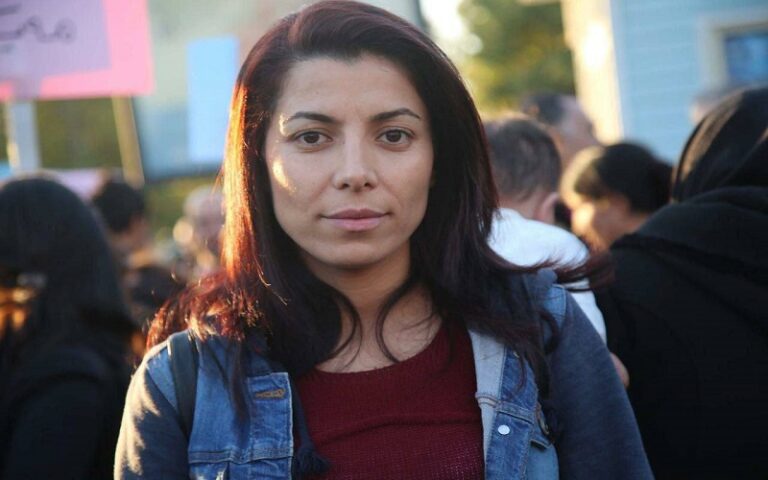
Iranian Political Prisoner Varisheh Moradi in Critical Conditions on 16 Day of Hunger Strike

The health of Varisheh Moradi, a member of the Free Women’s Society of Eastern Kurdistan, worsened on the 16th day of her hunger strike.

In the past 16 days, Ms. Moradi has experienced severe weight loss, low blood pressure, migraines, and joint and back pain, putting her in a critical state.

Accordingly, it has been reported that Evin Prison medical staff have described her continuing hunger strike as dangerous and have urged her to end it.

News and human rights sources reported on Thursday, October 11, that the political prisoner stated her hunger strike was in protest against the increase in executions in Iran, as well as in response to the uncertainties and deprivations imposed on her, calling it an “indefinite hunger strike.”

Varisheh Moradi, a political prisoner, is being held on charges of baghi (a term under Iranian regime laws that refers to someone who opposes the Islamic ruler and stands against him) due to her association with one of the regime’s opposition parties.

Her first court session was held on June 17 in Branch 15 of the Islamic Revolutionary Court, presided over by Judge Abolqasem Salavati, with her defense attorneys present. The second session took place on October 6.

Ms. Moradi was arrested by Iranian regime intelligence agents on August 1, 2023, in the suburbs of Sanandaj, western Iran, and subsequently transferred to Tehran.

In January 2024, after completing her interrogation period, she was moved from Ward 209 of the notorious Evin Prison to the women’s ward.

Ms. Moradi spent five out of her six months in detention in solitary confinement in the intelligence detention centers of Sanandaj and Ward 209 of Evin Prison in Tehran.

IMF: Iran’s Economic Growth Will Decline

Last year, Iran experienced 5% economic growth due to a significant increase in oil exports and government spending. However, according to the IMF’s projections, published on Tuesday, October 22, Iran’s economic growth will drop to 3.7% this year and only 3.1% in 2025. The decline will continue, reaching just 2% by 2029.

As a result, the anticipated 8% economic growth target set in Iran’s Seventh Five-Year Development Plan (2024-2028) is unlikely to be achieved.

Previously, Iranian regime President Massoud Pezeshkian emphasized that to achieve 8% economic growth, $200 to $250 billion in investment is required. Pezeshkian noted, “We have no more than $100 billion available in the country, meaning if we gather all the money we have, we would reach $100 billion and could invest it. Therefore, we need $100 billion in foreign investment to achieve 8% economic growth.”

However, IMF data shows that the ratio of total investments made in the country to its GDP will not change by 2029. In fact, it will decline from 40% in 2023 to below 37% in 2029.

United Nations statistics indicate that annual foreign direct investment in Iran has dropped to $1.5 billion in recent years. On the other hand, figures from Iran’s Central Bank reveal a significant increase in capital flight, with more than $20 billion leaving the country in the first nine months of last year, marking a historic record.

The surge in government debt

IMF data shows that the total net government debt last year was 40 quadrillion rials (approximately $59.7 billion). This figure is expected to rapidly rise to 230 quadrillion rials (approximately $343.283 billion) by 2029.

The government has not yet released a report on its total debt, but the head of the National Development Fund has stated that the government owes the fund $100 billion. Additionally, figures from the Central Bank indicate that the government’s debt to Iran’s banking system has exceeded 16.5 quadrillion rials (approximately $24.626 billion).

The surge in government debt from the banking system has led to an increase in liquidity to over 90 quadrillion rials (approximately $134.328 billion) and has contributed to runaway inflation in the country.

In its latest forecast, the IMF has predicted that inflation in Iran will reach 31.7% this year and 29.5% next year.

200 IRGC Members and Iran’s Proxy Militias Killed in Syria This Year

The Syrian Observatory for Human Rights (SOHR) reported on Tuesday, October 22, that since the beginning of 2024, it has documented 121 Israeli attacks on Syria, resulting in the deaths of over 200 members of the Islamic Revolutionary Guard Corps (IRGC) and Iranian-backed proxy militias.

SOHR reported that out of the 121 attacks this year, 98 were airstrikes, while the remainder were missile attacks by Israeli ground forces. These attacks targeted various locations in Syria, destroying more than 200 sites, including buildings, weapons and ammunition depots, command centers, and vehicles.

According to SOHR, 295 individuals were killed in these attacks, with 181 others wounded.

The SOHR list of casualties includes 50 members of Hezbollah, 28 Iraqi nationals, 75 Syrian militiamen supported by the Iranian regime, 24 non-Syrian militiamen backed by Tehran, 56 Syrian army soldiers, and one unidentified person near “Al-Muallim Square” in Quneitra on the Golan Heights.

On Monday, October 21, SOHR quoted its sources in Deir ez-Zor province, stating that for security reasons, Iranian-backed militias are reducing their public presence in the city of Al-Bukamal in the eastern countryside of the province and in areas near the Syria-Iraq border.

Many headquarters in secure areas have been evacuated of foreign forces, with their security now being handled by local forces in Deir ez-Zor.

According to the report, the city of Al-Bukamal has also witnessed a significant reduction in the presence of foreign forces, patrol activities, and checkpoints, which were previously overseen by members of the IRGC and the Fatemiyoun Division, formed by Iran’s regime.

According to these sources, forces stationed at certain checkpoints, especially at the entrance and exit of Al-Suwiya city, have been replaced by local forces. Meanwhile, foreign militias, fearing airstrikes on new shipments, have distributed large amounts of weapons to depots across various parts of Deir ez-Zor province.

SOHR sources also confirmed that foreign commanders have left the area and moved to Iraq to manage operations remotely.

The report also indicates that despite efforts to recruit locals, many military training courses have been canceled due to local leaders’ refusal to participate, stemming from fears of airstrikes.

Concerns Over Rising Gasoline Prices in Iran

Following remarks by Iranian regime president Massoud Pezeshkian in Parliament about the necessity of what he called the “reform of energy subsidies, including gasoline,” concerns about a possible increase in gasoline prices next year and a reduction in gasoline quotas have intensified.

These statements were made as Massoud Pezeshkian, in his speech while submitting the budget bill to Parliament, mentioned that the total cost of gasoline, excluding oil prices but including refinery, transportation, and station costs, amounts to approximately 80,000 rials (around $0.117).

He emphasized that this year approximately 900 trillion rials (around $1.323 billion) were spent on gasoline imports, and if the current situation continues, 1,300 trillion rials (around $1.911 billion) will be needed next year. Each liter of imported gasoline costs between 300,000 and 400,000 rials (around $0.44 to $0.58).

Pezeshkian, citing these figures, stated the “necessity of reforming energy subsidies” and said that the current situation cannot continue.

The Iranian Retirees Council, stating that “everything is ready for an attack on public life,” wrote: “The misuse of the current situation and political excuses directly target the people’s livelihood. However, the people are closely monitoring all the actions of the government. Think about the days ahead.”

Meanwhile, concerns and reactions to Massoud Pezeshkian’s statements led Fatemeh Mohajerani, his government’s spokesperson, to tell reporters on Wednesday, October 23, that “the people will not be surprised by an increase in gasoline prices.”

However, this government official confirmed in her remarks that gasoline prices would rise and added: “All efforts are being made to ensure that, despite the pressures on the government, the least possible burden is placed on the people.”

On the other hand, Ali Nikzad, Deputy Speaker of Parliament, regarding the 80,000-rial gasoline production cost mentioned by the President in Parliament, said: “I have no information about a potential increase in energy carrier prices, particularly gasoline, next year. However, if the government intends to raise energy prices, it must certainly coordinate with Parliament.”

The discussion of increasing gasoline and other energy prices comes as Farshad Momeni, an economist and university professor, said on October 19: “Hasn’t testing this policy a hundred times over the past 35 years been enough? Do we need to test it again?” He added: “It is shameful that the dollar-based purchasing power of wages has fallen by about 85% in just the past 15 years.”

The sudden rise in gasoline prices on November 15, 2019, led to protests in at least 54 cities in Iran. Eventually, the Iranian regime responded by cutting off internet access nationwide and violently suppressing protesters in various cities.

During the crackdown on the November 2019 protests, at least 1,500 protesters were killed.

Political Prisoner and PMOI Supporter Maryam Akbari Monfared Transferred to New Prison

Maryam Akbari Monfared, a political prisoner and supporter of the People’s Mojahedin Organization of Iran (PMOI), was transferred from Semnan prison (located 230 kilometers from Tehran) to the infamous Qarchak Varamin prison, south of Tehran, to serve an additional two years of imprisonment after enduring 15 years of incarceration without furlough.

Maryam Akbari Monfared is one of the longest-serving female political prisoners in Iran’s history.

Previously, Maryam Akbari Monfared’s lawyer had stated that Iranian authorities opened a new case against her just months before her original sentence was due to end. During her imprisonment, she was not granted a single day of furlough.

In October, Akbari Monfared’s initial 15-year prison term will end. Despite this, she was never granted furlough. In addition, she has been sentenced to another two years in prison on a separate charge, and recently, yet another case was opened against her, despite the fact that she has been in prison during the entire time.

The new case includes allegations against Akbari Monfared’s family and relatives, and Article 49 of the Iranian regime’s Constitution has been invoked to seize and confiscate their assets in favor of the “Execution of Imam Khomeini’s Order Headquarters.” This case has been referred to Branch 6 of the regime’s Revolutionary Court.

According to the regime’s current laws, punishment should be limited to the individual and not extend to their relatives. However, the Iranian regime often shows no leniency in political cases, particularly those related to the PMOI, Iran’s largest opposition group.

There is a precedent of Iranian authorities routinely opening new cases against political prisoners nearing the end of their sentences, aiming to prolong their incarceration.

In September 2023, it was reported that the Semnan Criminal Court sentenced Maryam Akbari Monfared to two years of “ta’zir” imprisonment (punitive sentence) and a fine of 150 million rials (15 million tomans) on the charge of “spreading lies on social media.”

Maryam Akbari Monfared, born in 1975, is married and has three children. She was arrested on December 31, 2009, following the protests in Iran that year, and was sentenced to 15 years in prison by Judge Abolqasem Salavati in Branch 15 of the Islamic Revolutionary Court in Tehran.

The court charged her with “supporting the People’s Mojahedin Organization of Iran.” Three of Maryam Akbari Monfared’s brothers and one sister were executed during the 1988 massacre. In the summer of 1988, the Iranian regime executed more than 30,000 political prisoners, most of whom were members of the PMOI. Among the victims were children as young as 13, pregnant women, and elderly men and women.

Fourfold Increase in Share of Iran’s Armed Forces from Oil and Gas Export Revenues

The share of Iran’s armed forces from the revenues of “oil and gas exports in the government’s general budget” will be 51%, according to the details of the 2025 budget bill.  

According to the budget bill submitted to parliament by Iranian regime President Massoud Pezeshkian on Tuesday, October 22, the government’s share of total oil and gas exports next year will be 37.5%, equivalent to 12 quadrillion rials (approximately $17.977 billion).

Out of this amount, 5.61 quadrillion rials (approximately $8.4 billion), equivalent to 51%, will go to the armed forces “to strengthen the country’s defense capabilities.” This figure is more than four times higher than the current year’s budget allocation of 1.34 quadrillion tomans (approximately $2.007 billion).

Due to significant changes in the structure of next year’s budget, including shifts in budgetary and off-budget items, it remains unclear exactly how the armed forces’ share of the total state budget will change compared to this year. It is also uncertain whether the increase in their share from oil revenues will affect other budget lines related to the military.

Calculations suggest that the value of the Iranian armed forces’ budget in 2024 is at least $17 billion.

The oil export figures in next year’s general budget are calculated in euros, with a notable shift in the exchange rate from 310,000 rials per euro this year to over 500,000 rials per euro next year. Currently, the market rate for one euro is around 720,000 rials.

If calculated in euros, the government is expected to provide 4.5 billion euros in oil for the armed forces to export this year, with this figure rising to over 9 billion euros next year—a 100% increase compared to this year and a 144% increase compared to last year.

Total oil and gas exports of the country

The government has not specified an exact figure for oil exports in next year’s budget, but overall projections suggest that the total value of the country’s oil and gas exports will be around 30 quadrillion rials (approximately $45 billion), equivalent to 60 billion euros at the set exchange rate. However, as mentioned, the euro’s market value is higher than the budget rate.

Of this amount, approximately 5 billion euros will come from gas exports and 55 billion euros from oil and petroleum products.

The government’s share of oil and gas export revenues will be around 37.5%, in addition to the full revenue from the export of petroleum products.

Last year, Iran exported approximately $37 billion (€35 billion) worth of oil, and in the first half of this year, this figure reached $24 billion.

It is not exactly clear how the government expects to raise this figure to 55 billion euros next year. The oil price in next year’s budget bill is set at €57.5 per barrel, which is not significantly different from this year’s budget law.

Nevertheless, while the budget does not mention oil export volumes, the country’s crude oil production is projected to reach 3.75 million barrels per day, which is 350,000 barrels more than the current level.

The real share of different sectors from oil revenues

As mentioned, 37.5% of the total oil and gas export revenues will go to the government. Around 14.5% will go to the National Iranian Oil Company, and 48% will be allocated to the National Development Fund.

However, a clause in the 2025 budget bill stipulates that 28% of the National Development Fund’s share of oil export revenues will be lent to the government. This means that effectively, the government’s share of oil revenues—both direct and through borrowing from the National Development Fund—will reach 65.5%, while 14.5% will go to the National Iranian Oil Company, and the remaining 20% will go to the National Development Fund.

The total oil budget revenues of the government, including both exports and domestic markets, are projected to reach 21 quadrillion rials (approximately $31.46 billion) next year, which is 32% higher than last year.

Thus, 57% of the government’s oil budget will rely on foreign markets, while 43% will depend on domestic markets.