Home Blog Page 187

Questionable Motives behind Iran’s Death Sentence for Police Officer who Killed Protester

International media including Agence France Presse reported on Wednesday that an Iranian police officer, Jafar Javanmardi, had been sentenced to death over the killing of a protester during the country’s nationwide uprising in late 2022. The victim, Mehran Samak, expressed support for the anti-government protest movement on November 30 of that year by honking his vehicle’s horn to celebrate Iran’s national soccer team losing to the US at the World Cup. In direct response to that gesture, Javanmardi reportedly fired at least one blast of pellets from a shotgun, killing Samak.

Reports of Javanmardi’s sentencing did not make it clear whether or not he was the only officer involved in the incident. Neither did they specify what evidence the court used to ascertain that he alone was responsible for the killing. This is arguably noteworthy because since the end of 2022, a number of protesters have been held responsible for the deaths of security officials, only for questions to arise from defense attorneys and human rights advocates about the fairness of their trials and the veracity of the evidence used in securing convictions.

In many cases, that evidence included confessions that were alleged to have been elicited through torture, while courts have also been accused of suppressing evidence which pointed to the innocence of certain defendants. These practices have even been used to secure convictions for multiple individuals in connection with singular deaths. Dozens of individuals have reportedly been sentenced to death, with at least nine having been carried out so far, although the charges underlying those executions are not technically murder but rather “enmity against God” and “spreading corruption on Earth.”

Javanmardi, on the other hand, was sentenced to death “in accordance with the Islamic law of retribution, known as the ‘qisas’ law, on the charge of premeditated murder,” according to a lawyer for Samak’s family. This indicates that unlawful killings by security forces and protest actions leading to injury or death are considered categorically different by Iran’s judiciary, even if the outcome is the same in certain cases.

Of course, the outcome rarely is the same, and Javanmardi’s death sentence appears to be unique. No other such sentence has been reported for police or other authorities in the 19 months since the uprising began. In fact, Javanmardi is one of very few officers to face any legal repercussions whatsoever for actions taken during the uprising, despite the fact that hundreds of protesters were killed in the streets and in detention facilities between September 2022 and the end of that year.

According to the leading pro-democracy opposition group, the People’s Mojahedin Organization of Iran, the number of fatalities quickly reached 750, while another 30,000 protesters were arrested. In its recent report, a fact-finding mission on the regime’s crackdown reported to the United Nations Human Rights Council that there were certainly over 550 protester deaths, and that authorities had deliberately aimed to cause permanent injury with practices such as firing pellets directly at people’s eyes.

Tehran has effectively confirmed the PMOI’s arrest estimate, but continues to deny the casualty figures from both it and the UNHRC. 

The announcement of Javanmardi’s conviction and sentencing is likely a consequence of the concerns created among Iranian authorities by international attention to the fact-finding mission’s initial report. A death sentence for one abusive police officer may give the superficial impression of balance and impartiality in the regime’s response to the 2022 uprising. But of course that impression evaporates when Javanmardi’s case is put in context with all of the prosecutions of non-violent protesters and all of the abuse allegations which have been explicitly rejected by regime authorities.

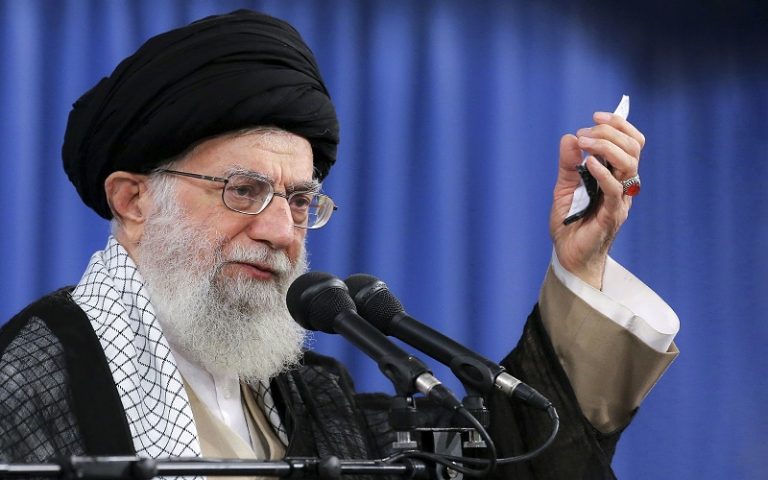
This is not the first instance of those authorities seemingly asking the public to give them credit for protecting the rights of protesters. Soon after the nationwide protests began to calm down in early 2023, Supreme Leader Ali Khamenei announced a broad offer of amnesty to persons who had been arrested during the uprising and had either already received prison sentences or were facing prosecution that could lead to multi-year terms. Iranian state media explicitly cited this as evidence of compassion and patience on the part of Iranian law enforcement, but activist groups were quick to raise doubts about the veracity Khamenei’s offer and the terms of detainees’ possible release.

These doubts were later validated by reports of amnesty recipients being made to sign letters of apology which effectively doubled as confessions to crimes in absence of prosecution. The letters also conveyed a promise to avoid similar activities in the future, thus providing a ready pretense for re-arrest in the event that former arrestees are found to still be advocating for political or social change. In recent months, as the regime’s crackdown on dissent has carried on, there have been a number of reports of amnesty recipients being detained and handed sentences that are clearly still related to the 2022 uprising.

Javanmardi’s death sentence may be intended to distract attention from this phenomenon and from the findings of the UNHRC’s fact-finding mission. But in absence of genuine transparency about his case and others like it, it is more likely that the condemned police officer will simply become a new focus of discussion about the regime’s penchant for politically-motivated sentencing, forced confessions, and scapegoating. This is especially likely in view of the fact that Javanmardi is not the only regime official or well-connected person to be conspicuously held accountable for broader malfeasance at times of political sensitivity for the regime.


Average Housing Price in Tehran at 830 million Rials

According to the latest report by the Central Bank of Iran, the average housing price in Tehran has reached over 830 million rials (approximately $1,353). The regime’s 90 Eghtesadi website reported a 60% decline in transactions in this sector in 2023.

Iranian media reports indicate that the housing price in Tehran, based on the latest official data released on March 18 by the Statistical Center of Iran, has reached 833.12 million rials per square meter.

Reports suggest that the average price of houses in Tehran has increased to 833.12 million rials after almost a year, precisely an increase of 168.72 million rials (approximately $275) per square meter.

This decline in transactions, according to some experts, indicates the continuation of the upward trend in prices in the market, which could lead to further declines in real estate transactions.

According to reports, based on the Central Bank of Iran’s data, the 11-month transactions (from April 2023 to March 2024) have been the lowest since 2016 and even before that.

Furthermore, a comparison of the statistics of 2023 with the real estate transactions in 2017 shows a 75% reduction in this area.

From the perspective of stakeholders in this field, this decline in transactions is likely to continue. Kianoush Goodarzi, the head of the Tehran Real Estate Consultants Union, stated that the real estate sector is influenced by various factors such as government fiscal policies, inflation, exchange rates, and more. He emphasized that what happens in the new year largely depends on the behaviors and policies of the government.

Goodarzi told “Hamshahri” newspaper that with the increase in the price of each dollar from 500,000 rials to 600,000 rials (the current price is around 61,350), sellers who were looking for buyers and offering discounts withdrew from selling and raised their offered prices by 20% to see what would happen in 2024.

Hossein Rostami, the head of the Mashhad Real Estate Consultants Union, also stated on March 27, “The government and the private sector must reduce the gap between supply and demand so that a change may occur in the housing market, and recession does not dominate the housing market this year.”

Reviewing the developments in the Iranian real estate market indicates that the reduction in people’s purchasing power is the most important factor in the inability of applicants to obtain housing.

Last summer, the Research Center of the Majlis (Parliament) wrote in a report that the lower to middle-income groups, particularly those in deciles one to three, are “absolutely” unable to provide the housing they need for residence.

During the election campaign and after taking office as president, Ebrahim Raisi promised to build one million housing units per year. But more than two years into his government’s term, he has yet to achieve any progress in this area.

Iranian Woman Sara Tabrizi Suspiciously Dies After Arrest by Ministry of Intelligence

0

A few days after the news of the “suspicious” death of a young woman named Sara Tabrizi was published, the Iranian regime’s judiciary confirmed her detention in recent months.

On March 23, reports of the “suspicious” death of Ms. Tabrizi went viral on social media

Some news sources claimed that this 20-year-old girl had died after being summoned again by the Ministry of Intelligence in mid March.

The regime’s Judiciary Media Center confirmed on March 29 that Sara Tabrizi’s father had announced on March 24 “through contact with the local police station in their residence in Shahriar County, Tehran Province, that his daughter did not wake up from sleep and apparently had passed away.”

The judiciary claimed that no summons had been issued by security or judicial authorities for Ms. Tabrizi in mid-March.

However, the judiciary confirmed the detention of Sara Tabrizi in January and claimed that on January 7, she “was detained on charges of using fake documents and passports to leave the country, and after going through the stages of the investigation, she was released on bail from prison on January 14.”

The judiciary announced in its recent report that Sara Tabrizi returned to prison after temporary release on January 14 until the time of her death, and only a “suspended imprisonment” sentence had been issued for her.

The reason for the death of this young woman has not been published yet, but the judiciary report stated that Ms. Tabrizi’s father had announced that “his daughter had been transferred to the hospital the night before her death due to feeling unwell and had been under treatment.”

This is not the first time that news of the death of a prisoner has been published after their release.

During the nationwide protests in 2022 and thereafter, numerous reports about the “suspicious” deaths of some detained protesters after their release were published, including the deaths of Maryam Arvin and Yalda Agha-Fazli, a protester residing in Tehran.

Furthermore, some protesters ended their lives due to physical and psychological pressures resulting from interrogation and torture.

Some of Sara Tabrizi’s fellow inmates say her death “regardless of how it occurred, is the responsibility of the government.”

In this letter, signed by several well-known political prisoners in the women’s ward of notorious Evin Prison, it is stated that during the week Sara Tabrizi was in the women’s ward, she was seen terrified and nervous.

Based on this, Ms. Tabrizi described her loneliness in solitary confinement and “her fear of the realization of interrogation threats,” and according to her, after three nights of detention in solitary confinement in Section 209 of the Ministry of Intelligence in Evin prison, she was transferred to the infirmary due to severe palpitations and nervous attacks but was still under pressure during interrogation that if she did not “cooperate,” she would be returned to solitary confinement.

IAEA Director Warns About Lack of Transparency in Iran’s Nuclear Program

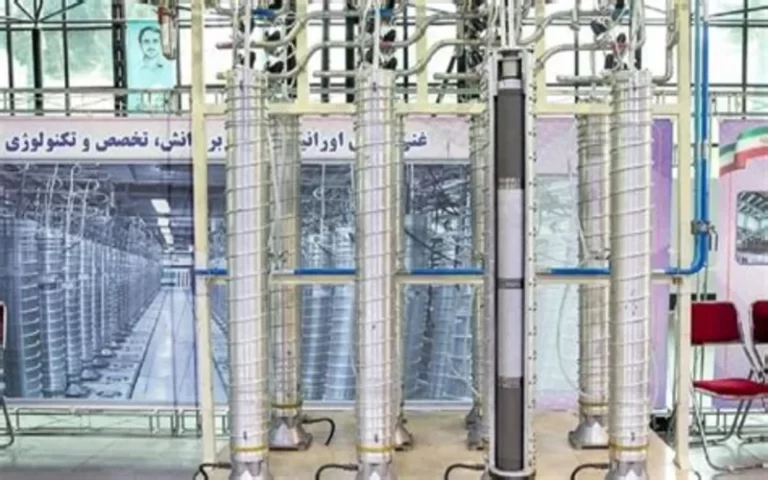
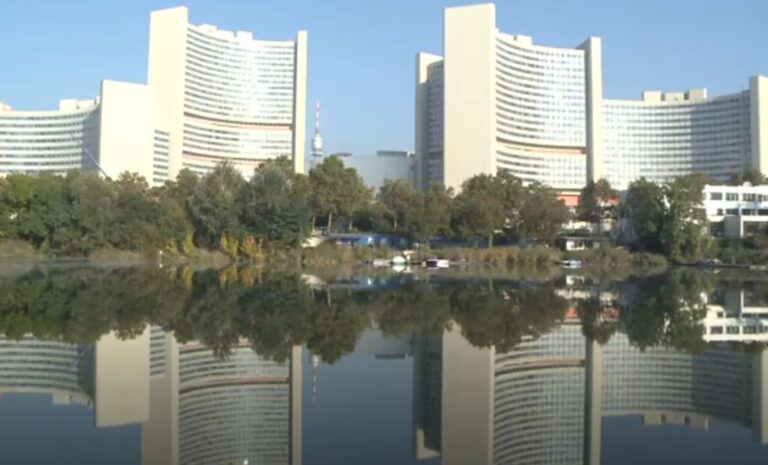
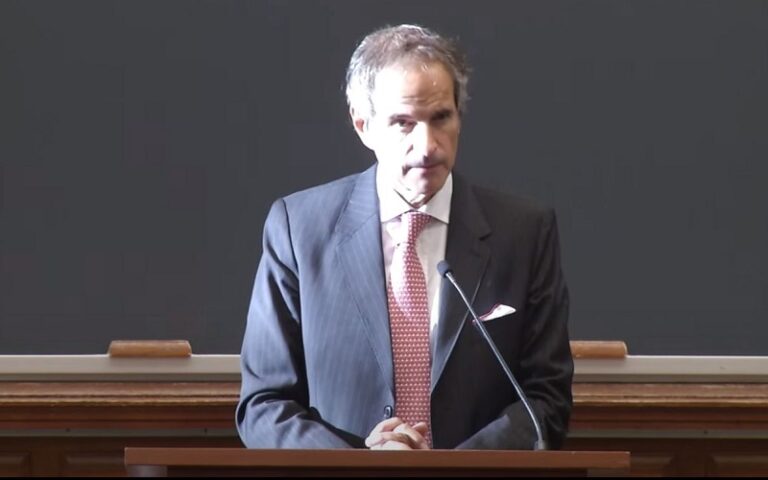
The Director-General of the International Atomic Energy Agency has once again criticized the Iranian regime’s further restriction of IAEA inspectors’ access to its nuclear activities, saying that the nuclear deal known as the JCPOA has practically been abandoned and Iran’s nuclear capabilities are no longer the same as they were ten years ago.

On March 30, Rafael Grossi told PBS that despite a recent report by the agency indicating a reduction in Iran’s stockpile of highly enriched uranium, the overall trend is an increase in nuclear materials with very high enrichment levels.

In February, Reuters reported that the IAEA had informed its members that Iran’s storage of 60% enriched uranium continues to grow, but its pace has slowed in recent months.

Rafael Grossi reiterated his criticism of the agency’s limited access to Iran’s nuclear activities in his new interview with the PBS, emphasizing the complexity of the Iranian issue.

He said that the agency has inspections in Iran, but not at the levels and depths necessary, which is the crux of the problem.

The Director-General of the IAEA continued by stating that the JCPOA has essentially been abandoned and is just an empty shell, adding that the 2015 agreement was based on certain numbers and specific types of technologies, capacities, and capabilities, but that was ten years ago. Iran now has centrifuges that are much faster, more efficient, and more active, he warned.

He added that while parties talk about returning to the JCPOA, the reality is that in 2024, Iran is very different from 2015.

The Joint Comprehensive Plan of Action was signed in 2015 between Iran and six world powers.

Less than three years later, in May 2018, Donald Trump, the then-President of the United States, announced the US withdrawal from the agreement, after which Iran gradually abandoned its commitments under the JCPOA.

Iran’s move last year to not renew the visas of some agency inspectors, whom Mr. Grossi had called the “most experienced” inspectors, was seen as part of the rift between Tehran and Western countries.

Rafael Grossi told the BBC that the agency does not want to repeat the sad experience of Iraq. Grossi doesn’t think it’s in anyone’s interest. Therefore, shutting down inspections and expelling inspectors is never a good idea.

The restriction of inspections and the discovery of traces of enriched uranium in undisclosed locations have been among the disputes between the agency and the Iranian regime.

However, Rafael Grossi announced last February his decision to travel to Tehran again and pursue previous negotiations.

Immediately after that, Mohammad Eslami, the head of the Atomic Energy Organization of Iran, said that this trip would take place in May, referring to the “congestion of the schedule in February.”

 Statistics show that New Year accidents’ deaths in Iran reached 585

0

Ahmad Shirani, the head of the Information and Traffic Control Center of the Iranian regime’s police, announced that the number of fatalities in accidents during the new Persian year, which began on March 21, has reached 585. At the same time, the head of the Traffic Police announced an increase in fines.

On March 28, Shirani told the regime’s semi-official ISNA news agency that this number of deaths is related to 484 accidents.

This number of fatalities in accidents comes as, according to this police official, the volume of traffic on Iran’s roads from March 14 to 28 decreased by three percent compared to the same period last year.

Shirani further stated that the number of injury accidents was 12,472 and the number of injured was 15,574.

He added that there have also been 65,083 accidents which resulted in material damage.

In recent days, the regime’s State Security officials have repeatedly identified drivers as the main culprits of fatal accidents.

Siyavash Mahboubi, deputy head of the Traffic Police, said on March 28, “Excessive speed, illegal overtaking, left turns, and opposite direction movements have been the most common violations that drivers have committed and led to the impounding of their vehicles.”

In past years, Iranian regime officials have always cited failure to yield, inability to control vehicles, and excessive and unauthorized speeding as major causes of accidents.

Last year, they said that 82 percent of these road accidents occurred due to inattention, fatigue, and drowsiness of drivers, especially on long routes.

At the same time, numerous reports have been published about the poor quality of vehicles, especially Iranian-made vehicles, and this issue has been cited as one of the main factors contributing to accidents.

Fivefold increase in fines

Attributing drivers as responsible for the high number of accidents in Iran has led to an increase in fines.

Teymoor Hosseini, head of the Traffic Police of the Iranian regime, said on March 28 to the regime’s official, IRNA, “With the recent decision of the Cabinet to increase the amount of fines, the rate of fines has increased fivefold on average.”

According to Hosseini, the highest increase in fines is related to drunk driving, which has increased sevenfold with the recent government decision.

The increase in the rate of fines for drivers comes at a time when the government has not announced any measures to improve the quality of vehicle production.

In addition to the poor quality of domestically produced vehicles in Iran, the aging of cars has also made roads more unsafe.

According to official sources, about 90 percent of motorcycles and 40 percent of passenger cars are in the aging category, and part of the public transportation fleet is also affected by aging.

According to experts, technical problems on Iran’s roads are another contributing factor to fatal accidents.

Last year, the head of the Traffic Police tacitly confirmed this issue and said, “We have 5,200 accident-prone spots on the country’s roads.”

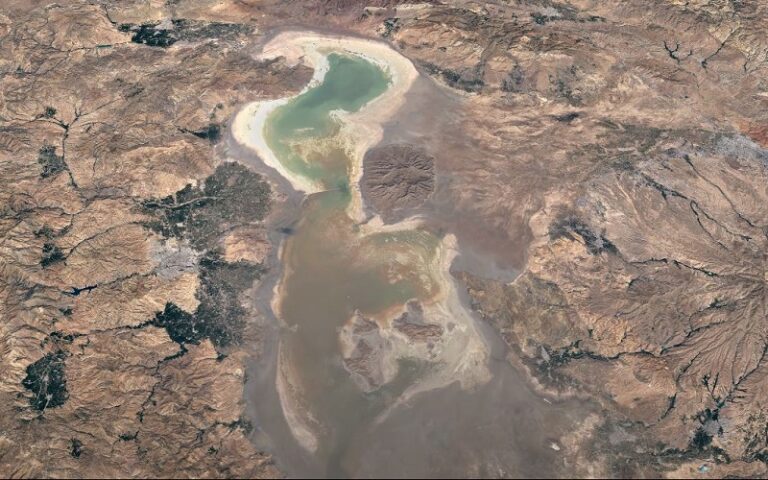
Land Subsidence in Critical Conditions in Isfahan

0

Mehdi Toghyani, a member of the Iranian regime’s Majlis (parliament), pointed to the occurrence of land subsidence in various parts of Isfahan and the danger of the city’s history and civilization, said the danger was so serious that “if there is no thought about it in the next few years, we should all leave Isfahan.”

Toghyani told the state-run Khabar Online website on March 28, “The lack of revival of Zayandehrud has emptied the aquifers of Isfahan plain and has caused socio-economic and environmental problems for Isfahan.”

According to this MP, the problem of Zayandehrud is not only the problem of East Isfahan and the farmers, but the whole plain of Isfahan is in danger of subsidence due to the drought of the Central Plateau River of Iran.

A number of experts believe that the subsidence in Isfahan has passed the warning stage and special measures should be taken for it.

In this regard, images of the creation of a sinkhole caused by subsidence on February 28 show that the deepest landfall in Isfahan has been recorded in the neighborhood of Kojan at six meters.

The regime’s official IRNA news agency in response to the subsidence in Isfahan province and the increasing warnings about this phenomenon, has devoted a section to subsidence news and wrote that subsidence has severely affected many plains of Isfahan province and in this situation, subsidence has exceeded the crisis.

According to IRNA, Isfahan Plain as one of the most important plains of this province on average 15 centimeters per year sinks and the population of two and a half million, urban infrastructure and monuments of this “central plateau” are in serious danger.

In July 2023, the Director General of Disaster Management of Isfahan Governorate had announced that surveying and the Center for Road and Housing and Urban Development Research had been evaluated, and the rate calculated in the plains by Geological Survey has been set between 5 and 18 cm per year in different regions.

An official for Iran’s National Cartographic Center also reported the expansion of land subsidence into cities in January 2024, saying that the phenomenon was advancing in Isfahan and in a city like Arak, central Iran.

The Director General of geodesy and National Cartographic Center had announced that the subsidence in Iran is five times the global average, and currently many provinces, including Markazi and Hamedan provinces, as well as 300 plains of Iran, are suffering from a land depletion crisis.

The regime’s Ham-Mihan newspaper also  reported on the crisis of subsidence in Isfahan on January 1, and wrote that there are neighborhoods in Isfahan where all buildings are cracked, and hands pass through them; buildings that are not very old and only 10 or 20 years have passed since they were built.

The newspaper emphasized that the evidence shows that “the subsidence not only affects historical monuments such as Sayed Mosque, Naqsh-e Jahan Square, historical bridges, etc. It has also involved residential, hospitals, schools and urban infrastructure.”

Excessive water harvesting from underground aquifers as well as neglecting the necessity of protecting environmental resources has caused subsidence in most parts of Iran, with Fars news agency reporting in July 2023 that “The dreaded record of land subsidence in some parts of our country has reached 100 times higher than international standards, and conditions in many provinces, including Yazd, are declared critical to the extent that in some regions, the sinkholes have reached within a few hundred meters of people’s homes.”

Iran’s Actual Inflation Rate Higher Than Official Stats

The state-run Donya-e-eqtesad newspaper, in a report analyzing the “general sentiment” regarding inflation in 2023, has stated that households experienced much higher inflation in areas such as clothing, housing, food, and other sectors compared to the government’s official figures.

According to Donya-e-eqtesad, although the average inflation rate over the past year was 40.7% compared to the previous year, the prices of red meat, chicken, and fish have surged by 86%.

Donya-e-eqtesad further reports that food and beverage inflation was 52% last year, indicating a more severe increase in food costs compared to the general inflation rate in comparison to 2022.

The report continued that people even experienced higher inflation rates in fruit purchases compared to the government’s announced figures, with fruit prices increasing by 48% in 2023 compared to the previous year.

The report also mentions a 47% inflation rate in clothing, emphasizing that under such circumstances, people’s perception of inflation compared to the official inflation rate has widened.

In this report, the situation of low-income groups is described as much more fragile and challenging compared to higher income deciles, with the declared weight of food expenses for low-income individuals being 1.5 times that of high-income deciles.

Donya-e-eqtesad also states that rents consume over 70% of “tenants’ monthly living costs,” forcing many tenants to cut back on other expenses, including food, to meet housing rental expenses.

These conditions persist while regime officials rely on statistics extracted by governmental bodies, claiming a reduction in inflation and an improvement in economic conditions in the country.

In this regard, Mohammad Reza Farzin, the Governor of the regime’s Central Bank, announced on March 15, 2024, during a meeting with the country’s bank managers, the Central Bank’s inflation targeting for March 2025 as achieving point-to-point inflation of 20%.

However, Farzin’s statements were met with criticism from experts and analysts, who assessed 2024 as a very difficult year due to the regime’s tension-generating policies outside Iran’s borders and the persistence of economic challenges and obstacles.

Predictions made for 2024 suggest the movement of the dollar towards 700,000 rials and, in the most optimistic scenario, inflation remaining above 40%. Currently the USD exchange rate is around 61,400 rials per dollar.

The minimum cost of living is in Iran estimated at $500, yet workers’ wages stand at merely $136.


Iranian Workers’ Monthly $136 Wages Can’t Cover $500 Expenses

The lives of a significant portion of the Iranian population are marked by uncertainty, largely because the Iranian economy is severely impacted by the dollar. The minimum cost of living is estimated at $500, yet workers’ wages stand at merely $136. (considering the exchange rate as 614,000 rial per USD)

A report from the state-run Tejarat News website has highlighted that since 2017, the minimum wage for an Iranian worker has seen an unprecedented decline in comparison to the dollar, currently set at $136.

If the dollar price remains around 610,000 rials in 2024, the wage will only be $6 higher than it was last year.

However, experts predict that under the current economic conditions in Iran, and barring any political or economic shocks, the average dollar price could reach 700,000 rials this year.

A regional salary survey reveals that Iran, with its minimum wage of $136, ranks the lowest among ten other countries in the region.

It falls behind Azerbaijan and Armenia, which have minimum wages of $200 and $210, respectively. At the higher end, Oman offers a minimum wage of $839, followed by Saudi Arabia at $800, and Bahrain at $790. Turkey has set its minimum wage at $600, Qatar at $493, the UAE at $408, Kuwait at $327, and Iraq at $260.

Notably, these countries maintain inflation stability and ensure that their minimum wages fully cover the costs of a standard living. In Turkey, facing unprecedented inflation, the minimum wage was doubled at the beginning of the new year compared to January 2023 to preserve workers’ purchasing power.

This adjustment by the Turkish government contrasts sharply with Iran’s refusal to increase wages in a manner that reflects the country’s economic conditions, citing inflation concerns.

Alireza Mahjoob, the Secretary General of the House of Workers, a government entity, believes that such government policies will ultimately damage workers’ livelihoods and hinder economic growth.

In a March 25 interview with the regime’s ILNA news agency, Mahjoob stated that economic officials should recognize the long-term anti-inflationary effects of raising workers’ wages, which could also prevent recession.

Mahjoob added that the current wage does not satisfy the needs of the working class, indicating that the government’s approach could exacerbate economic challenges in production and services, complicating the lives of the working class.

In response, labor activist Rasoul Gorgij highlighted that with inflation exceeding 40 percent, the current salaries suffice for less than ten days of living expenses. According to ILNA news agency on March 25, he argued that a 50 percent wage increase is far from adequate under the circumstances.

On March 23, Ayat Asadi, a member of the regime’s Supreme Labor Council, announced a new tax of 10 percent on wages above 10 million tomans, resulting in an under-30 percent increase in workers’ wages.

Asadi furthermore added that although a bill from the labor minister proposes revising the computation of wages above 100 million rials (approximately $164) for the 10 percent tax bracket, no further updates have been announced.

According to the Wage Act of the Supreme Labor Council—approved only by government representatives and employers—the minimum wage for workers subject to labor law increased by 35.3 percent this year.

Other wage levels saw a 22 percent increase plus a fixed monthly sum of 6.9 million rials (approximately $11.4). For workers entitled to labor law, married and with two children, the minimum wage next year will be 111.07 million rials (approximately $182).

This decision has faced significant backlash from labor organizations.

Recent “official calculations” estimate this year’s income basket at over 220 million rials (approximately $360), with other figures suggesting as much as 250 million rials (approximately $410).

The IRGC-linked Tasnim news agency reported on March 13 that the poverty line for a family of four is approximately 250 million rials.

At the same time, some activists and labor associations estimate the poverty line to be more than 300 million rials (approximately $492).

Despite these discussions, the government has announced only a minor adjustment in entitlements.

Iranian Nurses Earn Twice Their Wages in Ride-Hailing Services

0

Reza Aryanpour, a member of the regime’s Majlis (parliament) Health and Treatment Commission, highlighted the growing trend of nurses migrating. He stated that nurses working for online ride-hailing services earn around 400 million rials (approximately $652), while those in their regular nursing positions receive between 150 and 200 million rials (approximately $245-326).

In an interview with the regime’s Young Journalists Club (YJC), affiliated with the state TV broadcasting (IRIB), Reza Aryanpour emphasized that nurses “do not migrate out of happiness, however economic issues being the primary factor.”

According to this member of Majlis (parliament), all hospitals in the country are currently experiencing a shortage of doctors and nurses. The Ministry of Health and Social Security is prepared to attract 100,000 nurses to address this shortage.

Heavy workloads, low wages, delayed payments, inflation, and work environment issues are among the problems faced by medical staff, as highlighted by Aryanpour.

Previously, a member of the Iranian Nursing Organization stated that nurses’ incomes “do not sustain their livelihoods, forcing them to take on multiple jobs.”

According to the regime’s Mehr News Agency, Azam Fakhri Mahmoodi announced on February 14, that nurses’ overtime pay was 150,000 rials (approximately $0.24) per hour. She emphasized that educated nurses receive significantly lower overtime compensation in comparison to those with only primary education.

During a meeting on March 3, 2024, between members of the Nursing Organization and Bahram Eynollahi, the regime’s Minister of Health and Medical Education, issues regarding the treatment and education of nurses under the government of Ebrahim Raisi were discussed, but no positive outcome was reached.

Current events and livelihood problems have exacerbated the migration of nurses. The second vice-president of the Nursing Organization suggested in January 2024 that improving nurses’ livelihoods is crucial for retaining medical staff.

In this regard on March 12, Abolghasem Aboutalebi, a member of the Nursing Organization of Iran, described the situation of nurse migration from the country as being “on the verge of crisis.” He called for a solution to address this issue.

According to Aboutalebi, while approximately 10,000 nursing staff are trained annually in the country, nearly 3,000 nurses migrated in 2022.

The state-run IRNA news agency reported on December 11, 2023, under the title “Nurses Migrate, Officials Observe,” quoting Nurse House Secretary General Mohammad Sharifi Moghaddam, who highlighted the consequences of the nurse shortage in the country resulting in the death of patients.

Mohammad Sharifi Moghaddam, secretary general of the Nursing House, also expressed the dissatisfaction of over 90% of nurses in Iran, citing livelihood problems, income disparities, discrimination among medical staff, inadequate implementation of tariff legislation, lack of employment opportunities, compulsory overtime with minimal compensation, and burnout.

Sharifi Moghaddam explained the income gap among medical staff, stating that the average salary of a newly hired nurse is 9 million tomans, which is insufficient to cover living expenses, while a specialist doctor in the public sector earns over 1.4 billion rials (approximately $2,284) per month.

Nurses are among the groups that have recently expressed dissatisfaction with their jobs and livelihoods to the regime’s authorities through mass protests, demanding the addressing of their grievances.

Reports indicate that these protests have been met with punitive measures by regime officials, such as imposing six-month suspensions from service for nurses who take part in protests.

While the wave of emigration from Iran is not limited to nurses and includes various groups such as students, workers, doctors, and specialists, experts have warned about the consequences of the country’s labor force leaving.

Iran: Unprecedented Record of 152 Million Liters of Gasoline Consumption Per Day

On March 19, Iran set a new historical record in gasoline consumption with 152 million liters consumed in one day.

This record-breaking consumption comes at a time when, according to Iranian regime’s media reports, the production of gasoline in Iran’s 10 refineries under optimal conditions is at a maximum of 117 million liters per day.

However, this figure also includes gasoline from petrochemical sources, which, according to some experts, is technically unauthorized and carcinogenic.

Nournews website, linked to the regime’s Supreme National Security Council, has described the increase in gasoline consumption in the country as a “major challenge” and announced that the Ministry of Oil has resorted to strategic gasoline reserves to meet the country’s fuel needs.

On the first day of the Persian new year (beginning on March 21), Ja’far Salari-Nasab, CEO of the Oil Products Distribution Company, announced that daily gasoline consumption has increased by 25 million liters compared to the same time last year.

Nournews website has analyzed gasoline consumption statistics in recent years from a security perspective and noted that the daily gasoline consumption increase from 88 to 122 million liters in just two years is a matter that cannot be overlooked easily, as annually $80 billion, which is twice the country’s oil revenues, is spent on fuel subsidies.

The concerns arising from gasoline consumption and its costs have compelled the government to consider increasing prices and reducing quotas, an event that could have social repercussions; a recent example being the November 2019 protests and the subsequent massacre of protestors against the gasoline price hike during then-regime president Hassan Rouhani’s administration.

However, the government, ignoring these repercussions, is preparing public opinion for this action, and in this regard, the economic minister’s advisor, on March 8, deemed the increase in gasoline prices in Iran inevitable and stated that the government must first engage with the people through authorities, scholars, and experts before raising gasoline prices.

These statements came after Kazem Azizi, deputy of industries and energy at the Transportation and Fuel Management Headquarters, in an interview with the Hammihan newspaper on March 5, had announced the government’s plans for gasoline, including eliminating the subsidized gasoline quota and increasing its price to 30,000 rials (approximately $0.04) in the final step.

Azizi emphasized that if the government aims to control consumption, this action will only take place with a price increase from 15,000 to 150,000 rials (approximately $0.24).

The state-run Hammihan newspaper also referred to sanction issues and currency problems and quoted Azizi as saying, “It’s a crisis.”

Alongside these statements, media outlets and government-linked experts continuously discuss gasoline shortages and the budget required for imports to prepare public opinion for gasoline changes.

In this regard, Hashem Oraee, the head of the Union of Energy Scientific Associations, announced on February 25th the import of $4 billion worth of gasoline and diesel and stated that the regime’s Supreme Leader, Ali Khamenei, expressed dissatisfaction, asking, “Why should we import gasoline?”

The semi-official ILNA news agency also reported in February, based on its own reporters’ information in the corridors of the parliament, that the government plans to move towards a three-tiered gasoline system by reducing the quota for free gasoline or the 30,000-rials gasoline, starting from next spring.

Ahmad Vahidi, the Minister of Interior, stated on December 6th, “One liter of our gasoline is cheaper than one liter of water.”

The increase in gasoline prices during President Hassan Rouhani’s presidency in November 2019 led to widespread protests in Iran. In response to these extensive protests, the Iranian regime took action to suppress the protesters.

These protests resulted in the deaths of at least 1,500 people. Khamenei had ordered governmental and security officials to do “whatever it takes” to stop the protests during this unrest.