Home Blog Page 46

Iran’s Regime Builds Structure Resembling Nuclear Explosives Chamber

Satellite images show that the Iranian regime has installed a cylindrical structure resembling an explosives testing chamber at the “Taleqan 2” complex, which was one of the former nuclear weapons-development sites under the “Amad Plan.” The size of this structure and the site’s history have raised new questions about its possible purpose.

The Institute for Science and International Security, a Washington-based organization that monitors nuclear proliferation, reported that based on satellite imagery taken between October and November 2025 of the “Taleqan 2” site, this structure is approximately 36 meters long and 12 meters in diameter and is housed inside a metal building roughly 40 meters long and 17 meters wide.

Iran’s Regime Builds Structure Resembling Nuclear Explosives Chamber
Source: Institute for Science and international security

The institute emphasizes that there is no definitive evidence that this structure is being used for “nuclear weaponization,” but the location and the site’s history are cause for concern.

“Taleqan 2” was a key center for explosives testing in the Amad Plan, and before its bombing by Israel, it housed equipment for producing highly pure PETN — a powerful, stable, and moldable explosive. These materials were used inside the “explosive wave generators” of the Amad Plan.

According to the institute, during the Amad Plan’s operation, a smaller explosive testing chamber was located at the same site, equipped with a reinforced foundation and concrete structure that enabled “X-ray” imaging of explosive tests.

Iranian Regime Nuclear Chief: They Tell Us If You Touch Anything, We Will Attack Again

This site is located less than 200 meters from “Taleqan 1,” a location where a larger explosives chamber had previously been used for nuclear-weapon development.

The new construction began months before the “12-day war,” and current images show the project’s progress.

The large cylindrical structure sits at the center of a reinforced metal building and is positioned between three natural rock walls created by a mountain cut.

Two arch-shaped metal openings can be seen on either side of the structure, which, according to the report, may serve as “blast traps.”

The November 14 images also show three rectangular openings on the roof of the main metal structure that are likely used for ventilation or aerial access to the chamber.

A pile of soil is visible above the structure, which could be used to bury the building — a measure that increases the structure’s resistance to internal explosions or airstrikes.

Newly built concrete foundations around the main building also indicate structural reinforcement of the complex.

According to the institute, the Iranian regime has attempted to conceal the possible chamber from satellite observation.

Earlier images show that a large dark rectangular structure had been placed over the building for some time and was visible until August 24.

This cover was later removed, revealing the metal structure and cylindrical chamber in the images.

The report concludes that the architectural design and reinforcement of the site indicate its high importance to Iran’s regime.

Although the facility’s final purpose cannot be determined with certainty from satellite imagery, the structure’s dimensions, the past history of Taleqan 2, and its proximity to other Amad Plan centers raise “important questions” about the possible role of this site in Iran’s sensitive activities.

Third Self-Immolation in Iran Within Twelve Days

Fereydoun Rostami, an employee of the Marivan municipality, set himself on fire in front of his workplace in protest against pressure, threats, and humiliating treatment by the municipality’s security office. This is the third reported self-immolation in the past two weeks and the seventh media-reported suicide since October 23.

According to the Hengaw human rights organization, Rostami’s coworkers saved him using a fire extinguisher, but “security forces stationed at the Kanidinar municipality” in the Marivan region surrounded him and prevented witnesses from learning about his condition after the fire was put out.

Iranian Student Ahmad Baledi Dies from Self-Immolation in Protest of His Stall’s Demolition by Regime Authorities

The report states that Rostami, who had six years of experience in the administrative department of the Kanidinar municipality, was fired six months ago under pressure exerted by a security office employee identified as “Shima Mohammadi, daughter of Karim Mohammadi, a member of Marivan’s Intelligence Department.”

After being rehired, he was transferred to another division. In recent days, he was reassigned to municipal sanitation work and, according to Hengaw, forced to sweep streets and collect garbage.

Three protest self-immolations from November 5 to 17

Rostami’s self-immolation is the third since November 5. On November 5, Ahmad Baledi set himself on fire in protest after Ahvaz municipality agents destroyed his family’s food stand; he died in hospital on November 11.

Baledi, who worked at the family’s food stand while attending university, set himself on fire after municipality workers destroyed their stand.

On November 12, the head of Sanandaj Fire Department announced that a firefighter named Shaho Saffari set himself on fire inside the department’s headquarters in protest over unpaid and overdue wages; his condition was reported as critical.

The suicides that reached the media

According to media reports, since late October at least two young female medical workers, a journalist and political analyst, and one political prisoner have died by suicide.

In late October, news emerged that a gynecology resident at Tehran University of Medical Sciences, Yasaman Shirani, had died by suicide.

On November 2, similar news surfaced about a 36-year-old general practitioner named Nadia Motaghi in Shiraz. In the following days, the suicides of political analyst and journalist Fouad Shams, a young man in Aligudarz, and a political prisoner named Mehrdad Ahmadi-Nejad were also reported.

In response to these reports, Mohammad-Reza Aref, the first vice president under Iran’s regime president Massoud Pezeshkian, described the events as a “signal” to the authorities that points to a “social crisis.”

Iran: In Five Months, Raw Milk Prices Have Risen By What Would Normally Take Fifty Years

0

Ali Ehsan Zafari, head of the Dairy Products Union, announced a 70% increase in the price of raw milk compared to June and stated that this level of increase is equivalent to fifty years of past price jumps.

Speaking to the state-run ILNA news agency on Monday, November 17, Zafari said that dairy prices change daily due to rising raw milk prices.

According to him, “The price of raw milk had reached 230,000 rials per kilogram over sixty years, but within five months it increased to 390,000 rials per kilogram. This means it has risen by nearly 60%, which is equal to fifty years of price increases.”

It is worth noting that the union official’s claims do not seem accurate, as the five-month increase is not 60% but 70%. Therefore, assuming a consistent upward trend in raw milk prices over the past sixty years, this five-month rise is roughly equivalent to forty-two years of price growth.

Sharp Rise in Food Prices in Iran; Meat and Rice Lead the Surge

Zafari added in his ILNA interview that the prices of all dairy products have changed because raw milk is the base input for all of them, and this trend will continue.

The head of the Dairy Products Union warned that as dairy prices rise, consumer demand has fallen, which will eventually lead to the shutdown of factories one after another.

In May 2025, milk prices had also risen by 27.7%, increasing from 180,000 rials to 230,000 rials per kilogram.

Media outlets report that the root of this crisis lies in drought-driven pressure on livestock farmers and sharply rising production costs in the livestock and poultry sectors.

A predicted 49% increase in dairy prices

The state-run Hamshahri Online newspaper reported on November 16 that over the past two weeks, widely consumed dairy products have been distributed at new prices daily, with an overall upward trend across the market.

Dairy producers, responding to criticism, claim that to compensate for rising input costs, they must raise product prices by an average of 0.7% for every one-percent increase in raw milk prices.

However, price increases for dairy products in the market have consistently exceeded this ratio.

With raw milk prices rising 70%, the average price of dairy products is expected to rise by about 49%.

Hamshahri reported that over the past week, various dairy companies increased the price of low-fat and full-fat bottled milk by more than 50% on average.

Dairy products in June had also faced a 42% price increase due to the rise in raw milk prices.

In recent years, staple household food items have been among the products experiencing the highest price surges.

Iran’s Statistical Center reported annual inflation for September at 37.5%, point-to-point inflation at 45.3%, and month-to-month inflation at 3.8%.

Experts believe these figures are usually more favorable than real market conditions due to political bias in the calculations.

Rising Abuse of Psychiatric Medications in Iran

0

The state-run Shargh newspaper reported an increase in the misuse of psychiatric medications in Iran, noting that such drugs can be obtained in Naser Khosrow—Tehran’s black-market drug hub—“in less than ten minutes.”

The November 17 report stated: “A walk through Naser Khosrow shows that in less than ten minutes, one can access various psychiatric drugs: Vyvanse, Ritalin, Diazepam, Zolpidem, Midazolam, and dozens more, sold at unbelievable prices—ranging from 2 to 5 million rials per blister pack.”

Iranians Are Giving Up Visiting Doctors Due To High Cost of Treatment and Medicine

The report was based on interviews with drug users, psychiatrists, nurses in major Tehran hospital toxicology wards, and pharmacy owners.

A nurse told Shargh: “Almost no shift ends without at least one patient coming in due to psychiatric drug misuse.”

An unnamed psychiatrist said there is no updated data on drug misuse and addiction in Iran.

He told Shargh: “Drugs used for psychological disorders—like Vyvanse, which falls under amphetamines—are prone to misuse.”

Getting high on medication

One user, not yet in his twenties, said in an interview that he has seen the many consequences of misuse among his friends and has “lived through it.”

He explained that “every once in a while, the drugs people use become more varied,” noting that some medications intended for cancer patients are used by certain youth because they cause “a pleasant kind of high.”

He also pointed to the rising use of sedatives among teenagers and young adults, adding that the main problem is that the drugs initially make the user feel better, but as the body adapts, their effect fades, the person’s mental state worsens, and they “make sudden dangerous decisions.”

He emphasized that doctors “prescribe these drugs easily.”

In recent years, multiple reports have highlighted the rising prevalence of mental health disorders in Iran.

Official data shows that about 25% to 30% of the population suffers from some form of mental disorder, while chronic economic and social pressures have pushed the country’s collective mental health into a warning state.

Experts cite factors such as social restrictions and pressures, crippling economic sanctions, political instability, and even war as contributors to this situation.

In addition, suicide attempts in Iran have risen significantly in recent years.

Tehran Retirees Association: Retiree Salaries Do Not Cover Living Expenses

The head of the Retirees Association of Tehran Province, referring to the livelihood problems faced by millions of retirees in Iran, said that their salaries do not match “high inflation and recent price increases.” For non-Iranian readers: this association represents retirees covered by Iran’s Social Security Organization, the country’s largest pension fund.

Ali Dehghan-Kia, speaking with the state-run radio on Tuesday, November 18, emphasized that retirees face “serious livelihood problems” and added: “The mismatch between the salaries received and the cost of living has caused many of them to be unable to meet their basic needs.”

Nurses, Workers, Army Retirees, And Poultry Farmers Hold Protests In Cities Across Iran

He noted that the current salary of minimum-wage retirees is between 100 million and 110 million rials (approximately $ 97). He added: “Even when including a dependent spouse or children, this amount reaches 140 million to 145 million rials (approximately $ 123 to 130), which is not sufficient for living in the current conditions.”

Dehghan-Kia stressed that “with inflation above one-hundred percent in food items, household living costs have come under severe pressure,” and added: “Any increase in our salaries depends on the decision of the Supreme Labor Council. We have repeatedly asked the government to hold a session to raise wages for the second half of the year, but no action has been taken yet.”
For non-Iranian readers: the Supreme Labor Council is the main state-controlled body that sets annual wages in Iran.

He emphasized the need for proper implementation of laws concerning retirees and added that if the law had been respected over the past forty years, the minimum retirement salary should not have been less than 320 million to 350 million rials.

Dehghan-Kia also referred to healthcare difficulties faced by retirees, saying: “With aging, the need for medical care increases, but healthcare costs are unaffordable for many of them.”

According to the latest data from spring 2024, more than eight-and-a-half million primary and dependent retirees receive pensions from the Social Security Organization.

Dependent pensioners are individuals supported by a primary pension recipient.

The Supreme Labor Council meeting was held without discussing wages

The 337th meeting of the Supreme Labor Council was held on Monday, November 17, but according to media reports, the agenda did not include worker wages.

In contrast, according to the state-run Tasnim News Agency, the main focus of the meeting was “amending the regulations for selecting members of labor dispute resolution bodies.” The session also approved a resolution allowing the Islamic Labor Councils—state-controlled worker representation bodies—to continue nominating retired members to sit on dispute resolution committees.

Tasnim commented on the resolution, stating: “The continued presence of retirees in positions needed by young people seems strange.”

The neglect of worker wages by the Supreme Labor Council comes at a time when even pro-government labor organizations have repeatedly demanded wage adjustments. These requests have been opposed by Ahmad Meydari, Iran’s regime minister of cooperatives, labor, and social welfare.

Currently, the base wage for workers covered by the Labor Law is close to 110 million rials per month. With benefits included, this amount reaches around 150 million rials (approximately $ 133). In contrast, some pro-government labor groups say that the monthly cost of living has reached 580 million rials (approximately $ 513).

According to the two clauses of Article 41 of the Labor Law, the minimum wage must be set based on the inflation rate and the cost of living for a worker’s household. However, the second clause has not been applied in the Supreme Labor Council’s wage calculations for decades.

This practice by successive governments of Iran’s regime is described by labor activists and unions as “wage suppression.”

Wage suppression by the government continues even though, according to the state-run ILNA News Agency citing official data, the cost-of-living basket for worker households has increased by “more than 60%” since the beginning of the year. In addition, some essential items needed by workers have increased by “100% or even more.”

Iranian Political Prisoner Sentenced to Death as Regime Authorities Force His Family Into Silence

The death sentence for Mohammad-Mehdi Soleimani, one of those arrested during the nationwide protests of 2022, has been issued amid extensive ambiguities in his case, heavy security pressure on his family, and an absence of judicial transparency. These protests erupted across Iran after the killing of Mahsa Amini in morality-police custody.

This young man, born in the 2000s, is now facing a finalized death sentence—issued through the same repeated pattern used against protesters: fabricating cases, extracting confessions under pressure, and threatening families.

Iran’s Regime Continue Execution Spree With 13 Hangings in Four Days

The incident dates back to September 21, 2022, when during protests in the Abkuh neighborhood of Mashhad, a security officer named Rasoul Doust-Mohammadi was killed. Only forty-eight hours later, the governor of Mashhad announced that “the assailant has been arrested,” but no name, photo, or details of the detained person were released.

This media silence continued for nearly two years until November 17, 2024, when the state-run Khorasan newspaper suddenly headlined: “The killer of Rasoul Doust-Mohammadi has been sentenced to death.” For the first time, the initials “M.H. Soleimani” appeared in the report—later confirmed to be Mohammad-Mehdi Soleimani. Khorasan is a major state-run daily based in Mashhad and aligned with Iran’s regime.

According to that same report, Branch Five of the Criminal Court One of Razavi Khorasan Province, presided over by Judge Mohammad Shoja‘pour-Fadaki, sentenced him to qesas (retribution in kind, meaning execution). In addition, he was sentenced to two and a half years in prison and seventy-four lashes on the charge of “possessing incendiary materials.”

Lack of legal representation, lack of family access, and ambiguities in the judicial process

Available information shows that it is still unknown whether Mohammad-Mehdi Soleimani had access to an independent lawyer during interrogation and trial. No official details have been released about the judicial process, how the accusations were proven, or what evidence the court used.

His family has also been placed under intense security pressure and barred from giving statements, publishing photos, or even revealing his exact age. Local sources say the family was warned that “if the case is publicized, the situation will get worse”—a threat that has become a consistent tactic in protest-related cases in recent years.

Accounts from cellmates: a claim of finding a knife, not committing a murder

One former cellmate has said that Mohammad-Mehdi Soleimani claimed at the time of his arrest that he had “found a bloody knife on the street,” which led to his detention. No official explanation has been given regarding this claim, any forensic matching of the knife to the scene, or any medical examiner’s reports.

These accounts, combined with the lack of transparency, further reinforce the likelihood of coerced confessions obtained under pressure, torture, or threats.

According to numerous reports from prisons under Iran’s dictatorial system, many confessions attributed to protesters are not obtained under fair conditions but through physical and psychological torture, threats, long solitary confinement, and pressure on families. In similar cases in recent years, prisoners have explained after their release that interrogators forced them to accept accusations with statements such as “If you don’t cooperate, we will arrest your family” or “If you don’t confirm what we say, you will be sentenced to death.”

Threatening families and the cycle of covert executions

One of the most alarming aspects of such cases is the intimidation of families into silence. Many families of protest-related detainees have said:
“They told us that if you publicize the case, it will get worse for your child.”

These pressures allow cases to proceed secretly, without public oversight and without adequate defense. This secrecy paves the way for nighttime executions carried out without prior public notice—as seen in multiple previous cases such as Mohammad-Mehdi Karami, Majidreza Rahnavard, and Mohsen Shekari, all young protesters executed following the 2022 uprising.

This case is yet another example of the dozens of similar sentences issued within Iran’s closed judicial and security apparatus—without the possibility of full defense and without independent oversight. It is a case that could at any moment turn into another covert execution unless public opinion and human-rights organizations intervene to expose the truth and halt the implementation of the sentence.

Tehran-Backed Groups Have Won 58 Seats In Iraq’s Parliament

In the sixth round of Iraq’s parliamentary elections, armed groups affiliated with Iran’s regime won 58 parliamentary seats.

The results of the sixth parliamentary elections show that four armed groups, through their political branches, received more than 1.8 million votes.

The growing influence of these armed groups in Iraq’s parliament comes despite previous warnings from the United States urging the Iraqi government to disband them.

At the same time, news sources in Iraq confirmed internal disputes among Shia factions over a second term for Prime Minister Mohammed Shia’ al-Sudani.

IRGC Seizes Oil Tanker in Persian Gulf Waters

Iraq’s Election Commission had earlier told the Saudi-owned Al Arabiya network on November 16 that the parliamentary election results would be announced on Monday, November 17.

According to the commission, the results have been finalized, and appeals will be accepted for three days starting the day after the announcement.

Voting began on the morning of November 11. According to the Independent High Electoral Commission, 7,768 candidates were approved to compete for 329 parliamentary seats, including 2,248 women and 5,520 men.

The total number of eligible voters was announced as 21,404,291, divided among general voting, voting by military and security personnel, and voting by displaced persons.

The elections were held under the shadow of Iraq’s deep internal legitimacy crisis, the pervasive influence of Iran’s regime, and the uncertain future of Tehran’s proxy groups in the country.

According to the election commission, about 40% of registered candidates were under forty. Reuters wrote that this reflects “the new generation’s effort to challenge the political dominance of old power networks.”

Initial results indicated that al-Sudani’s coalition had won, and if Shia parties reached consensus, he could be selected for a second term as prime minister.

Al-Sudani, chosen in 2022 as a compromise candidate to end the political deadlock after the previous elections, centered his campaign on improving public services, fighting corruption, and strengthening state authority.

Since the fall of Iraq’s former regime, Iran’s regime has used its extensive influence to prevent the establishment of a democratic government. This political and military interference has contributed to the deaths of thousands of innocent people in the years following the war in Iraq.

Iran’s Regime Continue Execution Spree With 13 Hangings in Four Days

0

Thirteen prisoners were executed in the Sepidar Prison of Ahvaz, Vakilabad Prison of Mashhad, Sabzevar Prison, Zanjan Prison, Gorgan Prison, Taybad Prison, Bandar Abbas Prison, and Sari Prison. The executions took place between Thursday, November 13, and Monday, November 17.

Execution of four prisoners in Vakilabad Prison of Mashhad.

On the morning of Monday, November 17, four prisoners were executed in Vakilabad Prison of Mashhad. Their charges were described as drug-related. One of the prisoners was named Alimardan Barani. Another was an Afghan national named Shamsuddin. The identities of the two others are under review.

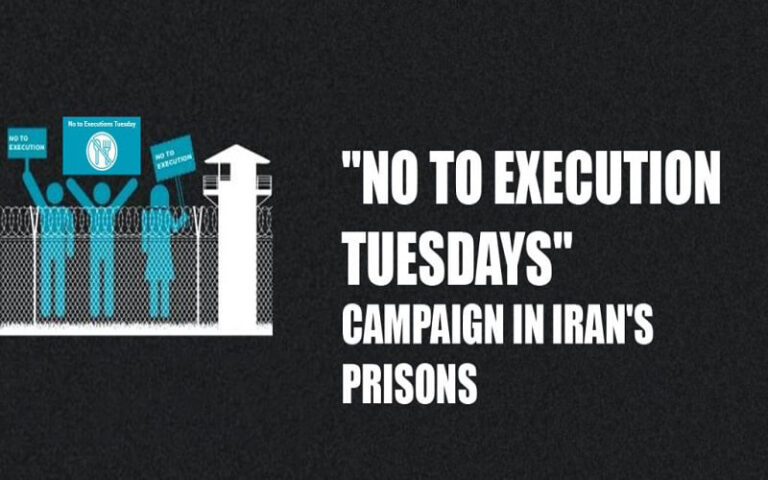
Iran’s ‘No To Execution Tuesdays’ Campaign Marks Ninety-Fifth Week

Execution of Reza Kamali in Sepidar Prison of Ahvaz.

At dawn on Monday, November 17, Reza Kamali was executed in Sepidar Prison of Ahvaz. His charge was listed as murder.

Execution of Alireza Keshavarz in Sabzevar Prison.

At dawn on Monday, November 17, Alireza Keshavarz was executed in Sabzevar Prison. He had previously been arrested on murder charges and sentenced to death.

Execution of Amir Farrokhnejad in Zanjan Prison.

On the morning of Monday, November 17, Amir Farrokhnejad was executed in Zanjan Prison. He had earlier been arrested on drug-related charges and sentenced to death.

Execution of Behzad Hosseini in Gorgan Prison.

At dawn on Monday, November 17, Behzad Hosseini was executed in Gorgan Prison. His charge was stated as murder.

Execution of two prisoners in Taybad Prison.

At dawn on Monday, November 17, two prisoners were executed in Taybad Prison. Their charges were described as drug-related. One of the prisoners was named Jafar Sattari. The identity of the second prisoner is under review.

Execution of Mosib Khalavand in Bandar Abbas Prison.

On the morning of Sunday, November 16, Mosib Khalavand was executed in Bandar Abbas Prison. His charge was described as drug-related.

Execution of two prisoners, including a woman, in Sari Prison.

At dawn on Thursday, November 13, two prisoners were executed in Sari Prison. Their names were Iraj Aghaei and Qomri Abbaszadeh.

Iraj Aghaei, aged thirty, was from Rasht and living in Sari. He was a language instructor and owner of a language institute. His charge was described as drug-related. He denied the accusation until the last moment and insisted he was innocent.

Qomri Abbaszadeh, aged twenty-nine, had been arrested six years earlier on murder charges and sentenced to death.

Iran’s ‘No To Execution Tuesdays’ Campaign Marks Ninety-Fifth Week

0

As part of the ongoing protests and hunger strikes by prisoners against the Iranian regime’s brutal executions, the “No to Execution Tuesdays” campaign has continued this week, entering its ninety-fifth week and taking place across 54 prisons in the country.

Participants in this week’s campaign released a statement honoring the 1,500 people killed during the November 2019 uprising and wrote: “By remembering the martyrs of the November uprising—more than 1,500 women, men, and teenagers who sacrificed their lives for freedom, the oppressed who refused humiliation and rose up against tyranny and despotism—we insist on continuing their path until the complete abolition of executions and the achievement of freedom and equality. As long as oppression and injustice exist, Aban (November) continues.”
(Aban is the Iranian month during which the November 2019 uprising took place.)

UN Rapporteur Warns About Execution of Six Iranian Political Prisoners

Full text of the “No to Execution Tuesdays” campaign statement

Continuation of the “No to Execution Tuesdays” campaign in its ninety-fifth week across 54 different prisons

In this week of the “No to Execution Tuesdays” campaign, we once again reaffirm our commitment to standing against the machinery of repression and state-sanctioned killing. By remembering the martyrs of the November uprising—more than 1,500 women, men, and teenagers who gave their lives for freedom, the oppressed who refused humiliation and rose up against tyranny—we insist on continuing their path until executions are entirely abolished and freedom and equality are achieved. As long as oppression and injustice continue, Aban (November) lives on.

We enter the ninety-fifth week of this campaign as news emerges of the renewed confirmation of death sentences for three political prisoners in Ahvaz’s Sheiban Prison—Alireza Mardasi, Farshad E‘temadi-far, and Masoud Jame‘i. This once again reveals the depth of cruelty and the normalization of judicial-security violence against protesters and ordinary citizens.

In the past week, a prisoner was executed in public in a medieval manner, and since October 23 (beginning of the Persian month Aban) the number of executions has exceeded 250—an alarming figure that reflects the catastrophic scale of repression and state violence in Iran.

The “No to Execution Tuesdays” campaign, which has so far amplified the voices of families, activists, and death-row prisoners across 54 prisons in Iran, once again emphasizes:

We, the people, are the only supporters and shield protecting prisoners from the gallows.

We call on all freedom-seeking people of Iran—in every city, every neighborhood, and with any means at their disposal—not to remain silent in the face of this horrifying wave of executions and to raise their voice of protest in every possible form and at every level against the implementation of death sentences.

We must support the families who, every week, stand with courage, grief, and hope outside prisons and judicial institutions to protest the impending execution of their loved ones. And once again, we emphasize that only through solidarity and collective protest can this machinery of killing be stopped.

Political prisoners participating in the “No to Execution Tuesdays” campaign are on hunger strike on Tuesday, November 18, in the ninety-fifth week of the campaign across 54 prisons in the country.

Iranian Regime Deputy FM: Our Nuclear Program Is ‘Untouched’ And We Protect It

Saeed Khatibzadeh, the deputy foreign minister of Iran’s regime, stated that although U.S. and Israeli attacks have inflicted heavy damage on nuclear facilities in Iran, the regime’s nuclear program remains “untouched.” (Khatibzadeh is a senior diplomat and spokesperson of Iran’s regime; his comments were made to a foreign audience via CNN.)

On Sunday, November 16, in an interview with CNN, Khatibzadeh said that Iran’s so-called peaceful nuclear program “at this moment as I speak to you, is untouched, and we will protect it.”

Iranian Regime Nuclear Chief: They Tell Us If You Touch Anything, We Will Attack Again

He added that Israeli and U.S. strikes have destroyed many infrastructures, buildings, and equipment tied to nuclear activities, but the regime’s nuclear program is “completely based on indigenous knowledge” and dispersed “across our vast country.”

He said this is not a country you can bomb and think everything will be eliminated.

U.S. President Donald Trump has repeatedly claimed that following U.S. strikes on the Natanz, Fordow, and Isfahan sites during the twelve-day war, the Iranian regime’s nuclear program has been destroyed. (Natanz and Fordow are major enrichment sites; Isfahan hosts nuclear conversion facilities.)

However, speculation continues about the fate of the regime’s nuclear program, particularly its stockpile of enriched uranium.

CNN reported on November 16 that, according to preliminary assessments by U.S. intelligence agencies, three of the regime’s nuclear sites have been severely damaged, but Tehran’s nuclear program has likely been set back only by about two years.

Iranian regime’s insistence on continuing enrichment

Khatibzadeh, repeating the regime’s previous positions, told CNN that the regime’s nuclear program has a “completely peaceful nature” and is pursued “only for energy production.”

According to him, any potential negotiations between Tehran and Washington will only make sense if “Iran’s right to continue enrichment” is recognized.

The deputy foreign minister of the regime added that the illusion of zero enrichment in Iran, or attempts to deprive Iran of its basic rights, will not be an acceptable option for Iran.

He declined to answer whether Tehran is currently enriching uranium.

Before the twelve-day war, five rounds of nuclear talks were held between Tehran and Washington, but the negotiations reached a deadlock due to the regime’s insistence on continuing enrichment on Iranian soil.

Bloomberg reported on November 15 that after the war, the regime’s “nuclear ambiguity” has increased because Tehran has for months denied inspectors access to its facilities.

The International Atomic Energy Agency (IAEA) stated in a confidential report on November 12 that since the Iran–Israel war, it has lost the ability to verify the regime’s stockpile of uranium enriched close to weapons-grade levels.

Praise for Iran’s “very close relations” with Russia and China

In another part of the CNN interview, Khatibzadeh stressed that Iran’s regime has “legitimate military programs” to “defend its national interests and security.”

Answering a question about the fate of the regime’s missile program, he said the program is in a phase of “repair and recovery” after the twelve-day war.

The deputy foreign minister added that Tehran has “very close relations” with Moscow and Beijing, relations that formed “long before recent developments.” (Russia and China have long been political and military partners of the Iranian regime.)

On October 29, CNN reported that despite the return of UN sanctions banning the sale of weapons and missile equipment to Iran, Tehran is rebuilding its missile program with Beijing’s assistance.

According to this report, a total of 2,000 tons of sodium perchlorate—the main component used to produce solid fuel for medium-range missiles—was shipped from China to Bandar Abbas after the twelve-day war.