Home Blog Page 5

Iranian Regime Transfers Thousands of Centrifuges to Underground Mount Kolang Tunnel Complex

The Iranian regime has transferred thousands of uranium enrichment centrifuges to tunnels beneath “Mount Kolang,” also known as “Pickaxe Mountain.”

The Wall Street Journal, citing Israeli and U.S. officials, reported that Israeli intelligence assessments indicate the Iranian regime transferred thousands of uranium enrichment centrifuges to deep tunnels beneath “Mount Kolang” last autumn after its main nuclear facilities were damaged in U.S. and Israeli strikes. The underground complex is also known as “Pickaxe Mountain.”

Trump: The Final Phase of Destroying the Iranian Regime’s Missile and Nuclear Capabilities Has Begun

According to the report, Israel has shared its intelligence with Washington and has urged the U.S. government to intensify military operations against the Iranian regime’s nuclear infrastructure. U.S. President Donald Trump had previously identified the underground complex as one of the potential targets for U.S. strikes.

The Wall Street Journal also wrote that Israeli Prime Minister Benjamin Netanyahu is seeking to persuade Trump to resume broader attacks against the Iranian regime, with the aim of further weakening the nuclear program and the reconstruction of damaged facilities.

The report is based on intelligence assessments and statements by U.S. and Israeli officials and has not yet been independently confirmed by the International Atomic Energy Agency (IAEA) or officials of the Iranian regime.

The Final Farewell of Two Political Prisoners Sentenced to Death in Iran

Abolfazl Sepahi and Alireza Sepahi, two prisoners sentenced to death in the case known as the “Alikhani Square” case in Isfahan, are on the verge of execution. According to published reports, the two prisoners have had their final meeting with their family members, a meeting that has drawn widespread attention among human rights activists because of the family’s exceptional circumstances.

Abolfazl Sepahi and Alireza Sepahi are cousins. Their family relationship means that the possible implementation of the death sentences would cause one family to lose two of its members at the same time.

Iranian Regime Executes Two Defendants in Isfahan Protests

The Final Meeting with a Mother Who Is Also Imprisoned

According to published information, the prisoners’ final meeting took place in the presence of the family’s mother, who is herself serving a five-year prison sentence. She was transferred from prison to the visitation site with the coordination of prison authorities for the meeting.

According to informed sources, the meeting was one of the most heartbreaking moments documented in the case, as the mother was forced to say goodbye simultaneously to her son and her son-in-law.

The Alikhani Square Case and Growing Concerns

Abolfazl and Alireza Sepahi are among the defendants in the case known as the “Alikhani Square” case in Isfahan, a case related to the events of January 8 and the nationwide protests in the city.

After four members of the Basij paramilitary force were killed during those events, Iranian regime security forces arrested at least 59 people, and judicial proceedings in the case began.

Ultimately, 12 of those arrested were sentenced to death. Two of them were executed last week, while another 23 defendants reportedly received prison sentences ranging from five to 10 years.

Concerns over the fate of those sentenced in this case intensified after two of the condemned prisoners, Erfan Esfandiari and Gol Mohammad Mohammadi, were executed in the early hours of Sunday, July 19, 2026.

Erfan Esfandiari was 18 years old at the time of his arrest. Gol Mohammad Mohammadi, a 23-year-old Afghan citizen, was another defendant in the case who was executed last week.

According to published information, 24-year-old Alireza Sepahi has been given four death sentences, while 23-year-old Abolfazl Sepahi has received three death sentences.

Other individuals sentenced in this case include Ghaem Hosseini, Shervin Bagherian, Amirhossein Safari, Amirhossein Maleki, Ali Dashti, Abolfazl Ebrahimi, Alireza Raeisi, and Amirhossein Ebrahimi Analoucheh.

Some of those sentenced were under the age of 20 at the time of their arrest, and several have received multiple death sentences, an issue that has prompted reactions from human rights organizations.

Iran’s ‘No to Executions Tuesdays’ Campaign Marks130th Week

On Tuesday, July 21, the “No to Executions Tuesdays” campaign expanded to 59 prisons across Iran with the addition of Neyshabur Prison in its 130th week. At the same time, the strike by prisoners in Unit 2 of Ghezel Hesar Prison, which houses more than 1,500 inmates under death sentences, marked a new phase in prisoners’ protests.

To mark the occasion, the “No to Executions Tuesdays” campaign issued a statement. The statement reads:

The “No to Executions Tuesdays” campaign, while condemning the escalating executions in Iran, honors the memory of all executed prisoners, especially those who sacrificed their lives for freedom and in the struggle against authoritarian dictatorship.

Collective Hunger Strike at Ghezel Hesar Prison Calls for Halt to Executions

Over the past week, Iran’s authoritarian regime once again took the lives of four political prisoners through the medieval practice of execution: Aref Khoshkar at Ghezel Hesar Prison, and Mohammad Amini Dehaghani, Erfan Esfandiari, and Gol Mohammad Mohammadi at Isfahan Prison.

Like many other political prisoners sentenced to death, these four oppressed prisoners were tried in unfair proceedings and executed. May they rest in peace, and may their memory be honored.

According to reliable statistics, at least 280 prisoners have been executed since March 22, 2026, the first day of the Iranian calendar year.

In opposition to and protest against these inhumane executions, more than 1,500 prisoners in Unit 2 of Ghezel Hesar Prison have been on strike and protesting for more than a week, demanding the abolition of the death penalty.

All prisoners in this ward have been sentenced to death, most of them on drug-related charges. It is clear to everyone that the principal importers and producers of narcotics in Iran are the leaders of the Iranian regime and commanders of the Islamic Revolutionary Guard Corps (IRGC). To cover up this blatant wrongdoing, the regime sends to the gallows, on a daily basis, people who have become entangled in drug-related offenses because of poverty and deprivation.

The prisoners of Ghezel Hesar and the “No to Executions Tuesdays” campaign have now stood firm in opposition to the death penalty in Iran for 130 consecutive weeks.

In this regard, a group of prisoners at Neyshabur Prison also announced in a statement that they are joining the campaign. Accordingly, on Tuesday, July 21, during the campaign’s 130th week, participants in 59 prisons across Iran are observing a hunger strike as part of the “No to Executions Tuesdays” campaign.

Eighth Day of Hunger Strike by 1,500 Prisoners in Ghezel Hesar Prison

The hunger strike and sit-in by about 1,500 prisoners sentenced to death in Unit 2 of Ghezel Hesar Prison in Karaj entered its eighth day on Monday, July 20. The prisoners, protesting the continued implementation of death sentences, have called for an end to what they describe as the Iranian regime’s “execution machine.”

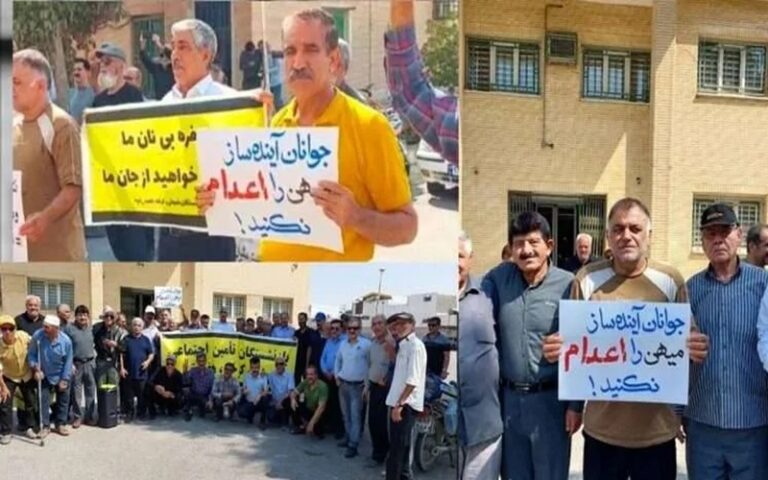
According to published reports, over the past week the striking prisoners have staged a sit-in while holding placards bearing slogans including “Prison and execution are not the rights of Iran’s youth.” They declared their support for the “No to Execution Tuesdays Campaign” and stressed that they will continue their protest until their demands are met.

Collective Hunger Strike at Ghezel Hesar Prison Calls for Halt to Executions

The strike continues as reports indicate that prisoners have been deprived of some basic facilities and that the physical condition of a number of the hunger strikers has deteriorated. It is also reported that prison authorities have attempted to prevent news of the protest from spreading by restricting prisoners’ communication with the outside world.

As the sit-in entered its eighth day, hundreds of family members of prisoners sentenced to death gathered outside Ghezel Hesar Prison the previous day, calling for a halt to executions and the saving of the prisoners’ lives. Chanting slogans against executions, the demonstrators urged international bodies and human rights organizations to take action to prevent the implementation of these death sentences.

According to reports, security forces and prison guards were deployed to disperse the protesters and attempted to prevent the gathering from continuing, but the families persisted with their protest despite the security pressure.

At the same time, the National Council of Resistance of Iran (NCRI), in a statement, called on the United Nations, the UN Special Rapporteurs on human rights, and other international bodies to support the striking prisoners and take action to stop the implementation of death sentences and dispatch an international fact-finding mission to prisons in Iran.

Trump: The Final Phase of Destroying the Iranian Regime’s Missile and Nuclear Capabilities Has Begun

0

U.S. President Donald Trump announced that the United States’ military operation against the Iranian regime has entered a broader phase, with the objective now being to eliminate all of the regime’s missile and nuclear capabilities.

Speaking to reporters on Monday, July 20, following the 2026 FIFA World Cup final, Trump claimed that the Iranian regime has lost most of its military capabilities and now retains only a limited number of missiles, drones, and military production capacity.

How Iran’s Regime Uses the War to Preserve Its Rule

Referring to the recent U.S. strikes, he said that what is now underway is far larger than the initial phase of the operation. According to Trump, the United States initially sought only to prevent the regime from acquiring a specific capability but is now moving to eliminate it entirely.

The U.S. president added that America’s objective is to eliminate any possibility of the Iranian regime acquiring a nuclear missile.

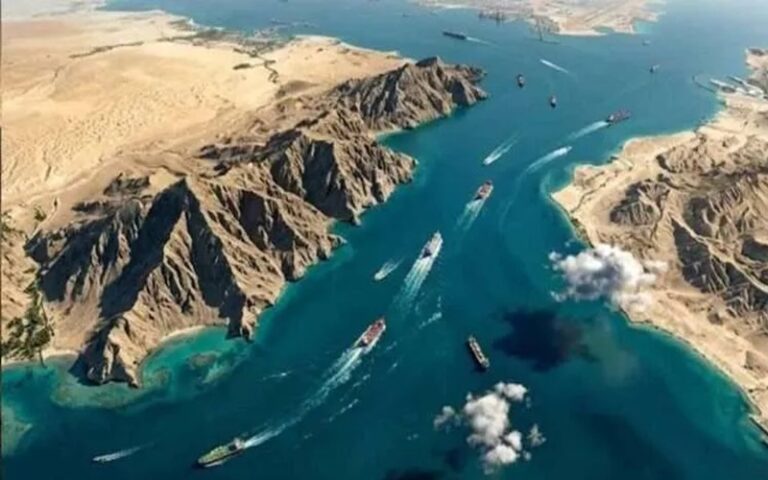
Trump also claimed that the United States has control of the Strait of Hormuz and that the Iranian regime has no control over the strategic waterway. He announced that new strikes against Iranian military targets were carried out on Sunday evening and said they inflicted very heavy blows on the regime.

CENTCOM: Ninth Wave of Strikes Successfully Completed

At the same time, the U.S. Central Command (CENTCOM), the unified combatant command responsible for U.S. military operations in the Middle East, announced that its forces had successfully completed the ninth consecutive wave of strikes against military targets in Iran.

According to the CENTCOM statement, the strikes targeted military command centers, air defense systems, coastal surveillance facilities, naval capabilities, missile and drone launch sites, as well as the Iranian regime’s communications networks.

According to CENTCOM, the objective of the operation is to reduce the Iranian regime’s ability to threaten commercial vessels and civilian mariners in the Strait of Hormuz and to safeguard international maritime security.

The command also emphasized that U.S. forces remain on full alert under the orders of the commander in chief and that military operations against Iranian regime targets will continue if necessary.

IRGC Claims Retaliatory Strikes

In response, the Islamic Revolutionary Guard Corps (IRGC) claimed that it had targeted U.S. military bases in Kuwait, Bahrain, Jordan, and the U.S. military headquarters in Syria in retaliation for the American attacks. The IRGC also claimed it had attacked what it described as “violating oil tankers” in the Persian Gulf, a claim that has not been independently verified.

Trump also said that the recent U.S. strikes were carried out in response to the killing of three American service members and stressed that the operation will continue until the Iranian regime’s ability to acquire missile and nuclear capabilities has been completely eliminated.

12 Death Row Prisoners Transferred to Solitary Confinement at Dastgerd Prison in Isfahan

Following the transfer of 14 prisoners to solitary confinement at Dastgerd Prison in Isfahan, concerns have intensified over the imminent execution of at least 12 of them. Informed sources have warned that the executions could be carried out within the next 48 hours.

According to published reports, on Saturday, July 18, 14 prisoners were transferred from the general wards of Dastgerd Prison to solitary confinement. Of these, 12 are death row prisoners in the case known as the “Alikhani Square Isfahan” case. Their death sentences, after being upheld by Iran’s Supreme Court, have been forwarded to the Enforcement Office of the Isfahan Revolutionary Court for implementation.

Knowledgeable sources say that transferring these prisoners to solitary confinement, which is typically one of the final stages before executions are carried out in Iranian prisons, has significantly increased the likelihood that the sentences will be implemented in the coming days.

Names of the Death Row Prisoners

The names of the 12 prisoners transferred to solitary confinement are:

  • Alireza Sepahi, 24
  • Abolfazl Sepahi, 23
  • Ghaem Hosseini, 20
  • Gol Mohammad Mohammadi, 23
  • Shervin Bagherian, 18
  • Erfan Esfandiari, 18
  • Amirhossein Safari, 27
  • Amirhossein Maleki, 19
  • Ali Dashti, 19
  • Abolfazl Ebrahimi, 18
  • Alireza Raeisi, 21
  • Amirhossein Ebrahimi Analoucheh, 19

The identities of the two other prisoners who were transferred to solitary confinement at the same time have not yet been disclosed.

Political Prisoners Begin Hunger Strike

At the same time, reports indicate that political prisoners held in the Salamat 2 ward of Dastgerd Prison in Isfahan have begun a hunger strike in protest against the possible execution of these prisoners.

The “Alikhani Square Isfahan” Case

The “Alikhani Square Isfahan” case stems from the January 8 protests. In this case, 12 people have been sentenced to death, while dozens of other defendants have received lengthy prison sentences.

The handling of this case has drawn criticism from human rights organizations and defense lawyers. Reports indicate that the defendants were denied meaningful access to independent legal counsel, their right to mount a defense was restricted, court hearings were brief, they were subjected to security-related pressure, and there have also been allegations of torture and the extraction of forced confessions.

Following the transfer of the condemned prisoners to solitary confinement, human rights activists have expressed concern over the risk that the executions may be carried out in the coming days and have called for increased monitoring and legal and international efforts to prevent the implementation of these death sentences.

Iranian Regime Executes Two Defendants in Isfahan Protests

The Iranian regime’s judiciary announced the execution of Erfan Esfandiari and Gol-Mohammad Mohammadi, two defendants who had been tried in connection with the events of January 8 at Alikhani Square in Isfahan.

Mizan, the state-run news website affiliated with the Iranian regime’s judiciary, without presenting independent or verifiable evidence, attributed numerous charges to the two men, including the killing of police officers, setting bodies on fire, and extensive destruction. The outlet claimed the sentences were issued after the defendants’ confessions and a review of surveillance camera footage.

Political Prisoner Massoud Jamei Transferred to Solitary Confinement for Torture

However, in a system where televised confessions, security pressure, denial of access to a lawyer of one’s choice, and closed-door trials have become standard practice, the government’s reliance on “confessions” and “legal standards” carries no credibility as proof of a fair trial.

The Iranian regime once again combined the roles of defendant, interrogator, judge, and executioner within a single system, then presented its own narrative as the final truth.

These executions are not a sign of strength but of a government gripped by fear that, instead of answering to society, sends young people to the gallows in an effort to silence protests.

U.S. Central Command (CENTCOM) Reports Eighth Consecutive Night of Attacks Against IRGC

0

U.S. Central Command (CENTCOM) announced early Sunday, July 19, that the eighth consecutive night of U.S. strikes against targets in Iran had concluded. According to CENTCOM, the operation was carried out in response to an attack on Friday night that killed two U.S. service members in Jordan.


CENTCOM said that in this latest round of strikes, units of the Islamic Revolutionary Guard Corps (IRGC) that, according to the command, were involved in directing the missile and drone attack against U.S. forces in Jordan were targeted. The command also stated that, in addition to the two service members killed, one U.S. soldier remains missing.

According to the CENTCOM statement, the purpose of the strikes was to degrade the Iranian regime’s ability to threaten commercial shipping in the Strait of Hormuz and to respond to the recent attack against U.S. forces.

Agence France-Presse (AFP) also reported that with the deaths of the two U.S. service members in the latest attack, the number of U.S. military personnel killed in the ongoing conflict with the Iranian regime since February 29 has reached 16.

Attack on a U.S. base in Jordan

A U.S. official told CBS that the missile and drone attack attributed to the Iranian regime targeted Muwaffaq Al Salti Air Base in Jordan’s Azraq region. According to CENTCOM, two U.S. service members were killed while defending the base against the missile and drone attack, and four others were wounded and later discharged from the hospital after receiving treatment.

U.S. President Donald Trump described the deaths of the service members as deeply tragic. U.S. Secretary of Defense Pete Hegseth also paid tribute to those killed and said the attack had strengthened Washington’s resolve to respond to those responsible.

In contrast, the Islamic Revolutionary Guard Corps (IRGC) claimed that it had destroyed two U.S. fighter jets and three other U.S. aircraft during the attack on the Azraq base, a claim that has not been independently verified.

Reports of U.S. strikes near the Strait of Hormuz

At the same time, Iranian media, citing the Hormozgan provincial governor’s office, reported that early Sunday an area near Sirik County, close to the Strait of Hormuz, was targeted in a U.S. military strike. CENTCOM had also stated that part of the new operation was intended to reduce the Iranian regime’s military capabilities in the region.

Continued exchange of attacks

Meanwhile, the public relations office of Iran’s regime’s military announced the start of a new phase of drone attacks against U.S. positions in the region, claiming that U.S. ammunition depots and military facilities at Camp Al-Adiri and Ali Al Salem Air Base in Kuwait had been targeted. This claim has not been confirmed by independent sources or U.S. officials.

Separately, Kuwait’s Ministry of Foreign Affairs announced that the foreign ministers of Kuwait and Saudi Arabia, in a telephone conversation, condemned the attacks attributed to the Iranian regime against Kuwait and reaffirmed Kuwait’s right to defend its sovereignty and security. The two sides also discussed diplomatic measures to contain regional tensions.

Collective Hunger Strike at Ghezel Hesar Prison Calls for Halt to Executions

Reports from Iran indicate that the hunger strike by death row prisoners at Ghezel Hesar Prison, launched in protest over the possible execution of six prisoners, is continuing.

According to reports by human rights organizations, the hunger strike, which began on July 13 and continued at least through July 16, calls for halting the execution of six prisoners convicted of drug-related offenses who, according to the organization, have been transferred to solitary confinement ahead of their executions.

Prison authorities have reportedly refused to transfer several of the hunger strikers to the prison infirmary despite the deterioration of their health.

Execution of a Political Prisoner at Qezel Hesar Prison

Images published on social media show prisoners holding placards reading “No to Execution.”

Ward 2 of Ghezel Hesar Prison holds about 1,500 prisoners sentenced to death on drug-related charges.

This is not the first such large-scale collective hunger strike. In October 2025, more than 1,500 prisoners in this ward staged a six-day hunger strike to protest executions and sewed their lips shut to demand an end to the executions.

Following that hunger strike, and at the same time as protests by prisoners’ families outside the Iranian regime’s Majlis (parliament), prison authorities and the judiciary promised the hunger strikers that executions for drug-related offenses at this prison would be suspended until the law was amended.

Iranian regime officials and the authorities of Ghezel Hesar Prison have not yet issued any response regarding the reported hunger strike.

Amnesty International announced in May 2026 that Iran’s regime executed a record 2,159 people in 2025, a record figure in recent decades.

Political Prisoner Massoud Jamei Transferred to Solitary Confinement for Torture

Reports received from Sheiban Prison in Ahvaz indicate that political prisoner Massoud Jamei, who has been sentenced to death twice, was transferred to solitary confinement after chanting protest slogans inside the prison and is being held under harsh conditions.

According to the Human Rights Society of Iran, the political prisoner is being held in a cell without an air conditioning system despite the extreme heat in Ahvaz. Informed sources have also reported that his head was shaved and that he has been subjected to physical and psychological abuse intended to humiliate him and break his spirit.

PMOI Supporters Given Double Death Sentences by Iran’s Regime

According to the report, Massoud Jamei was transferred to solitary confinement on the orders of prison officials following his protest slogans. Informed sources say that as temperatures have risen in Khuzestan Province, holding him in a cell without air conditioning has heightened concerns about his physical condition.

Sources close to the case also stated that after transferring the political prisoner to solitary confinement, prison agents shaved his head and subjected him to severe physical and psychological pressure. Officials at Sheiban Prison and Iran’s judiciary have not commented on the matter.

According to published reports, he suffers from malignant stomach cancer, liver and kidney failure, high blood pressure, an internal infection, and fatty liver disease. Poor prison conditions and the denial of medical treatment have worsened his illnesses.

Despite repeated warnings about the political prisoner’s health, reports indicate that authorities have so far refused to approve his transfer to medical facilities outside the prison, with the Ahvaz prosecutor and Iran’s security agencies preventing his hospitalization.

Massoud Jamei, an oil well security guard, is married and has four children. He was arrested by Iran’s security forces on August 1, 2023, and after lengthy interrogations was transferred to Sheiban Prison in Ahvaz. During the winter of 2024–2025, his wife and three of his children were also tried in the Revolutionary Court of Bavi County on charges including “contact with groups opposed to the regime” and “membership in the People’s Mojahedin Organization of Iran (PMOI/MEK).”

According to a ruling issued by Branch One of the Ahvaz Revolutionary Court, presided over by Judge Adibi-Mehr, which was formally served on him on July 11, 2025, Massoud Jamei was sentenced to death twice and one year of discretionary imprisonment. The latest reports about his transfer to solitary confinement, torture, and deprivation of basic necessities have further intensified concerns among human rights activists about the condition of the political prisoner.