Home Blog Page 52

The Iranian Regime’s Mafia, Khamenei’s Wealth, and the IRGC’s Smuggling Operations

Jonathan W. Hackett, a former U.S. Marine Corps intelligence officer, said that the Islamic Revolutionary Guard Corps (IRGC) controls the entire black market—from iPhone and car smuggling to luxury imports—making it its primary source of income. This shadow economy has not only boosted the financial empire of regime supreme leader Ali Khamenei and the IRGC but has also placed additional pressure on the Iranian people.

Hackett, who has worked with the National Security Agency (NSA), Defense Intelligence Agency (DIA), and U.S. Special Operations Command, said in a podcast by the Baykam Institute that the U.S. withdrawal from the 2015 nuclear deal (JCPOA) and the reimposition of sanctions concentrated financial resources in the IRGC’s hands. He noted that Ali Khamenei, the supreme leader of Iran’s regime, is now among the wealthiest individuals in the world.

A look into the background of Ali Shademani, commander of the IRGC Central Headquarters

According to Hackett, the sanctions, contrary to their intended purpose, strengthened the mafia-like structure of the IRGC and the supreme leader’s office. The Iranian people are the main victims of this corrupt and sanctions-ridden system.

Hackett added that the IRGC plays a central role not only in military affairs but also in macroeconomics, foreign trade, infrastructure, and even national financial policymaking.

He stated that Iran’s regime has designed its economic system to exploit the sanctions, maximizing profits while transferring the financial burden to the population.

He added that the IRGC benefits from sanctions rather than suffering from them, calling the system deeply corrupt and driven by favoritism.

Hackett said that officials such as Qassem Soleimani and Esmail Qaani held two and three black diplomatic passports, respectively, allowing them to travel freely across countries. Many other IRGC commanders also use fake identities but official documents to conduct intelligence and financial operations under diplomatic cover.

Hackett added that high-ranking officials, including the governor of Iran’s Central Bank, travel to Western countries such as the United States using diplomatic passports to maintain their financial networks under the guise of diplomacy.

He said that in visa-free countries such as Indonesia, Singapore, Thailand, and Ecuador, Iranian intelligence operatives easily meet with their operational units to maintain informal connections.

According to this former intelligence officer, a number of Iranian agents operate in European countries including Sweden, Denmark, the United Kingdom, and others. He claimed that until a few years ago, France and Germany had secret agreements with Tehran allowing it to carry out operations on their soil, provided that such actions did not target French or German citizens.

Hackett stated that the IRGC, through its intelligence operatives, has established a network of front companies across the United Arab Emirates, Turkey, South America, and Africa.

He added that these companies serve as tools for money laundering, capital transfer, smuggling, and tax evasion, operating under a legal façade while serving the IRGC’s intelligence and economic activities.

The former intelligence officer emphasized that the patronage-based structure dominating Iran’s economy has effectively destroyed many independent private companies.

World Bank: Iran’s Economy Continues to Shrink

According to Hackett, companies operating under the IRGC’s umbrella neither pay taxes nor undergo audits, yet they control billion-rial contracts, import monopolies, and major infrastructure projects. Khatam al-Anbiya Headquarters is only one of the IRGC’s economic arms, active in the oil, construction, infrastructure, and petrochemical sectors.

In another part of his interview with the Baykam Institute, Hackett pointed out that many Iranian “diplomats” sent abroad are actually trained intelligence operatives tasked with conducting covert missions, coordinating with proxy militias, and transferring weapons and cash. These agents exploit diplomatic immunity to freely carry out their illicit operations.

He stated that since the killing of Qassem Soleimani, the Quds Force has increasingly focused on cyber and espionage operations targeting regime opponents in Europe and the United States. “There is evidence that some abduction or assassination plots against dissidents in Western countries have been coordinated through embassies and using these diplomatic passports.”

Hackett further discussed the profit cycle of the black market, saying that much of Iran’s illegal imports—from iPhones to Audi and Mercedes vehicles—are conducted through underground networks linked to the IRGC. Car parts are imported separately and assembled inside Iran to bypass import restrictions.

Hackett said that sanctions alone are insufficient to confront this complex system. The supply chains and financial networks must be identified and exposed, front companies revealed, and regional links severed. Effective pressure will only occur when both the IRGC’s internal structure and its external networks are simultaneously weakened.

He concluded by emphasizing that Iran’s regime is no longer merely a government, but a multilayered structure built on military, intelligence, and economic institutions, led by the IRGC and the office of the supreme leader.

Amnesty International Calls for Immediate Cancellation of Death Sentence for Iranian Political Prisoner

Amnesty International calls for the immediate cancellation of the death sentence of Zahra Shahbaz Tabari, a 67-year-old political prisoner.

Amnesty International issued a statement calling for the immediate annulment of the death sentence of Zahra Shahbaz Tabari, a 67-year-old political prisoner held in Lakan Prison in Rasht, northern Iran. The organization emphasized that she was sentenced to death following a “grossly unfair trial” that lasted only ten minutes at the Revolutionary Court of Rasht.

In its statement, Amnesty International said that during the first month of her detention, security agents interrogated and threatened Shahbaz Tabari to extract a “forced confession” on charges such as “taking up arms” and “membership in an opposition group,” but she rejected all accusations.

According to the human rights organization, Shahbaz Tabari’s trial was conducted via video call from inside Lakan Prison, and she met her court-appointed lawyer for the first time during that single hearing.

The organization stressed that Iranian regime authorities continue to use the death penalty as a tool to suppress dissent and must immediately halt all executions.

Iranian Political Prisoner Sentenced to Death

According to the Iran Human Rights Society website, Ahmad Darvish-Goftar, the head of Branch 1 of the Revolutionary Court of Rasht, sentenced Shahbaz Tabari to death on the charge of “collaboration with opposition groups,” specifically the People’s Mojahedin Organization of Iran (PMOI/MEK).

The case file reportedly contains only “a piece of fabric bearing the slogan ‘Woman, Resistance, and Freedom'” and “an unpublished voice message,” with no evidence of organizational ties or armed activity.

Zahra Shahbaz Tabari’s son: The regime fears women like my mother

Soroush Samak, the son of the political prisoner who lives in Sweden, told the British newspaper The Sun that his mother has only ten days to appeal her death sentence, and the family is urgently seeking a lawyer willing to take on her case.

He added: “As long as our mother remains in the custody of this regime, we have no peace of mind. Each day is spent hoping for her release and fearing her loss. She is an intelligent individual with wide-ranging knowledge and professional experience — a bold, informed, and conscious woman whose bravery is unmatched. That is why they want to break her, because the clerical regime fears women like her.”

Addressing Western governments, including the UK and Sweden, Samak said that all trade and diplomatic relations with the Iranian regime should be conditioned on halting executions and the immediate release of political prisoners. He stressed that only international pressure can compel the regime to stop committing crimes.

Shahbaz Tabari is a graduate of Isfahan University of Technology, an electrical engineer, and a member of Iran’s Engineering Organization. She earned her master’s degree in “Sustainable Energy” from the University of Borås in Sweden.

On April 17, Iranian security forces raided Shahbaz Tabari’s home, searched the premises, arrested her, and transferred her to Lakan Prison in Rasht.

Mai Sato, the United Nations Special Rapporteur on human rights in Iran, stated during the UN General Assembly’s Third Committee session in New York on October 30 that the Iranian regime, through its widespread executions, is on a path toward “crimes against humanity.”

Sara Hossain, chair of the UN Fact-Finding Mission on Iran, also told the session that the Iranian regime continues to repress and execute its citizens while severely restricting civil space.

UN Rapporteur: Iranian Regime’s Executions and Cross-Border Repression Amount to Crimes Against Humanity

The United Nations Special Rapporteur warned of the “unprecedented deterioration of the human rights situation” in Iran, stating that following Israel’s military strikes in June, the Iranian regime has embarked on a path of “crimes against humanity” through widespread executions, extraterritorial repression, and the severe restriction of civil society.

Mai Sato, the UN Special Rapporteur on human rights in Iran, told the UN General Assembly’s Third Committee session in New York on October 30 that the Iranian people are victims on two fronts — foreign military attacks and intensified domestic repression by their own government.

UN Rapporteur Expresses Concern Over Possible Enforced Disappearance Of Evin Prison Detainees

She strongly criticized the large-scale executions, the adoption of a “new espionage law,” and the “surge in mass arrests” across Iran.

In her remarks presented at the UN on Wednesday evening, Sato described the human rights situation in Iran as “worse than ever before.”

Human suffering and repression after the war

Sato noted that while the war between Iran’s regime and Israel has ended, the suffering of the Iranian people continues. Millions have fled their homes, pregnant women lack access to healthcare, and sexual and gender minorities face heightened risks and discrimination.

She added that instead of protecting its people, the Iranian regime responded to the war by launching mass arrests. According to her, more than 21,000 people — including journalists, activists, social media users, and minorities — have been detained in recent months.

The New Espionage Law and a New Wave of Executions

The Special Rapporteur criticized the new espionage law, saying it broadens the range of activities punishable by death, even including contact with foreign media or sharing information online.

She added that in the first ten months of 2025, more than 1,200 people were executed in Iran — an average of four per day — indicating that the regime is carrying out executions on a massive scale.

Sato noted that only 8% of executions are officially reported, and the actual number is likely much higher. She stressed that since 2015, there has been no evidence that the death penalty has any deterrent effect, and it is merely a tool for “control and instilling fear.”

The UN human rights rapporteur also warned that families of victims of the downed Ukrainian flight continue to face harassment and intimidation.

Torture, Amputations, And Deaths in Prisons

Sato’s report also highlights the continued use of torture and corporal punishment in Iran. Flogging, amputation of fingers by guillotine, and coerced confessions under torture still occur in prisons. Moreover, suspicious deaths in detention centers — particularly due to denial of medical treatment — remain deeply concerning.

She said families are often forced into silence or compelled to accept “false causes of death” out of fear of retaliation in order to retrieve their loved ones’ bodies.

The situation of women and the withdrawal of the domestic violence prevention bill

In part of her remarks, Sato noted the official withdrawal of the domestic violence prevention bill in June 2025, calling it a step backward in protecting women.

She also emphasized that although enforcement of compulsory hijab has decreased in some areas, the law remains in place, and under Article 638 of the regime’s so-called Islamic Penal Code, women without hijab still face imprisonment or fines.

Sara Hossain: The attack on Evin Prison and post-war repression may constitute crimes against humanity

At the same session, Sara Hossain, chair of the UN Independent Fact-Finding Mission on Iran, referred to Israel’s June 23 strike on Evin Prison, which killed at least 80 people. She criticized the failure to protect prisoners’ lives and acknowledged that preliminary investigations show that civilian sections of the prison were directly targeted and that the attack may have been deliberate.

She added that after the attack, Iranian regime authorities kept prisoners’ families in the dark for weeks, some detainees were beaten, and at least one woman died after being transferred to Qarchak Prison due to lack of medical care.

Hossain called on Iranian authorities to conduct an independent and transparent investigation into the Evin Prison incident and to ensure that those responsible for violations committed before, during, and after the attacks are held accountable.

Iranian Oil Discounts to China Reach Highest Level in Over a Year

Reuters reported that Iran’s oil discounts to China have reached their highest level in more than a year. As the United States, the United Kingdom, and the European Union tighten sanctions against Russia and Iran, independent Chinese buyers facing a shortage of crude import quotas have reduced their purchases.

In recent weeks, the United States, the United Kingdom, and the European Union have imposed a new series of trade restrictions on major Russian oil producers and other industry players to pressure Russian President Vladimir Putin to end the war in Ukraine.

These sanctions have caused some Chinese and Indian buyers—two of Russia’s main oil customers—to halt purchases, leading to a sharp decline in Russian oil prices and an accumulation of unsold Russian shipments in a market already saturated with Iranian oil.

Iranian Regime Puts Iran’s Oil on Sale in China with Bigger Discounts

Reuters had previously reported on September 17, citing six trade sources, that the Iranian regime was offering larger discounts to small Chinese refineries.

According to that report, Iranian oil inventories in China have reached a record high. At the same time, import quota restrictions toward the end of the year have tightened, prompting the Iranian regime to auction its oil at even deeper discounts.

Disruptions in Shipping and Growing Concerns

The new measures build upon previous U.S. sanctions against companies accused of participating in Iran’s oil trade. Four Chinese refineries and several related ports and vessels are among those targeted.

According to traders, the combined effect of these sanctions has disrupted the shipping process and heightened buyers’ fears of breaching sanctions.

A China-based trader told Reuters that “supply is excessive, and the market lacks any clear direction.”

According to market data, Iranian light crude for December delivery is now being offered at more than $8 per barrel below the international Brent benchmark—compared with about $6 in September and $3 in March. Meanwhile, bids have fallen to roughly $10 below Brent, as buyers demand lower prices to offset sanction-related risks and potential unloading problems at Chinese ports.

Data from the analytics firm Kpler shows that Iran’s oil exports—which account for about 14% of China’s total crude imports—fell to 1.2 million barrels per day in September, the lowest since May and below this year’s average of 1.38 million barrels per day.

China’s government strictly regulates crude oil imports by independent refineries through a quota system. According to market sources, most refineries had nearly exhausted their 2025 quotas by the end of September and are now waiting for Beijing to allocate new quotas next month—a process that, in past years, typically occurred in November.

During his recent trip to China, Iranian regime president Masoud Pezeshkian claimed that “good agreements” were reached with the Chinese side.

Iran’s Regime Imported 2,000 Tons of Missile Fuel Material from China

CNN reported that despite the reimposition of United Nations sanctions banning arms sales and missile-related activities with Iran, the Iranian regime is rebuilding its missile program with the help of China. European sources have reported several shipments of sodium perchlorate from China to the southern Iranian port city of Bandar Abbas.

According to CNN, European intelligence sources said that several shipments of sodium perchlorate, the key ingredient in producing solid fuel for Iran’s medium-range missiles, have been sent from China to Bandar Abbas. These shipments began on September 29, coinciding with the activation of the UN “snapback” mechanism, and in total, they include two thousand tons of sodium perchlorate purchased by Iran from Chinese suppliers following the twelve-day war with Israel in June 2024.

Iran’s Regime Begins Rebuilding Destroyed Missile Production Facilities

Intelligence sources emphasized that these purchases are part of the Iranian regime’s effort to rebuild its depleted missile stockpiles. Several Chinese ships and companies involved in this process have previously been sanctioned by the United States.

On April 26, a powerful explosion occurred at Rajaee Port. Initial evidence and footage of the blast revealed similarities to the Beirut port explosion. These similarities led experts to conclude that the likely cause was the ignition of a shipment of chemicals used in missile production. However, regime officials immediately denied any connection between the explosion and missile fuel. Three months later, it was revealed that the shipment which caused the explosion belonged to a military institution.

Using maritime tracking data and social media accounts of ship crews, CNN traced the routes of several vessels transporting these materials from Chinese ports to Iran. These included ships traveling from Zhuhai, Gaolan, and Changjiangkou ports to Bandar Abbas. In some instances, the ships’ tracking systems were deliberately turned off to conceal their movements.

In response to CNN’s inquiry about these shipments, China’s Foreign Ministry spokesperson said they were not aware of the details but added that Beijing enforces export controls on dual-use items in accordance with its international commitments and domestic regulations.

On September 24, satellite images analyzed by the Associated Press showed that the Iranian regime had begun rebuilding its missile production sites that were targeted during the twelve-day war with Israel.

Bandar Abbas Explosion Exposes Regime’s Deadly Cover-Up

However, experts interviewed by the Associated Press emphasized that rebuilding would not be possible without large industrial mixers used for producing solid missile fuel.

The so-called “planetary mixers” have blades that rotate around a central axis and are essential for uniformly blending solid fuel. In the past, Iran has purchased some components and materials related to missile fuel from China, and experts believe that the regime may once again resort to the same suppliers.

On June 22, shortly before the ceasefire announcement, Israel targeted a key Islamic Revolutionary Guard Corps (IRGC) site located in the desert south of Shahroud in Semnan Province. This was the same facility used by the IRGC to produce solid missile fuel and where planetary mixers were installed. The site had also been targeted earlier by Israel in November 2024.

Iran’s Regime Raises Pressure on Families of Political Prisoners

On the morning of Saturday, January 18, 2025, two notorious senior judges of Iran’s regime, Ali Razini and Mohammad Moghiseh, were killed in the Supreme Court. State media announced that the killer was Farshid Asadi, a 31-year-old janitor at the Supreme Court.

Only one day after the killing of Razini and Moghiseh, early the next morning, agents of the Ministry of Intelligence raided the home of the Akbari-Monfared family and arrested Amir Hassan, the family’s 23-year-old son.

He was subjected to severe torture for 24 days, particularly during the first four days, until the Ministry of Intelligence arrested his father, Mohammad Ali Akbari-Monfared, on January 21. Mr. Akbari-Monfared, who contracted polio in childhood, is disabled in both legs. Despite also suffering from severe heart disease and four strokes—including one stroke that, even after several years, has left the right side of his body paralyzed—he has been unable to leave his home in recent years. Nevertheless, the Ministry of Intelligence accused him and his son of supplying a weapon to his cousin once removed, Farshid Asadi (the Supreme Court janitor), or of carrying out “terrorist operations” on behalf of the People’s Mojahedin Organization of Iran (PMOI/MEK).

The People’s Mojahedin Organization of Iran (PMOI/MEK) is the largest Iranian opposition group. Over the past decades, Iran’s regime has executed 120,000 of its members and supporters.

He is currently hospitalized in Shahr-e Rey, where doctors have considered amputating his leg due to an infection caused by the harsh and unsanitary conditions in the Greater Tehran Prison.

Although nine months later Amir Hassan, his father Mohammad Ali, and their two co-defendants—Arghavan Fallahi and Bijan Kazemi—were acquitted of charges of involvement in the killing of judges Raezani and Moghiseh, Amir Hassan was subjected to severe physical and psychological torture to force a confession. He spent six months in solitary confinement.

Four days later, the interrogators brought his father to see him. They tried to force Amir Hassan to confess, but when he refused, they removed his blindfold. Mr. Akbari-Monfared was sitting in a wheelchair, and the torturers pointed a gun at his head, threatening, “If you don’t confess, we will kill your father.” Amir Hassan refused to give in to the threats. In front of his father, they beat him, tied his legs, and hung him upside down for two hours, repeatedly kicking him in the stomach.

Mr. Akbari-Monfared previously served eight months in prison during the 2000s. He is distantly related to Farshid Asadi, the man said to have shot the two notorious Supreme Court judges, as well as to two other political prisoners, Maryam Akbari-Monfared and Reza Akbari-Monfared, who are his cousins. Both Maryam and Reza were sentenced to 17 and 10 years in prison respectively for seeking justice for their family members executed by the regime. Maryam Akbari-Monfared has spent 17 years in prison without a single day of leave.

Maryam Akbari Monfared Faces Paralysis as Iranian Regime Blocks Treatment

In recent years, the main approach of Iran’s regime security forces in dealing with the People’s Mojahedin Organization of Iran (PMOI/MEK) has been to arrest and fabricate cases against individuals who were either previously, during the 2000s, accused of supporting or belonging to this organization, or those related by family ties to its members. Ali Younesi, the son of Mir Youssef Younesi—a political prisoner of the 2000s—was arrested in March 2020 and, after months of uncertainty, sentenced to 16 years in prison. Ali was only 19 years old at the time of his arrest. He was a gifted student at Sharif University of Technology and a gold medalist in the 2017 International Astronomy and Astrophysics Olympiad. Similarly, 25-year-old Arghavan Fallahi was arrested during the nationwide protests of 2022, along with her father, a former political prisoner, and her brother.

Eleven Days of Silence on Political Prisoners Abducted From Iran’s Evin Prison

The Entire Family Was Arrested; Nothing Is Left for Them

The arrests at the Akbari-Monfared household did not end with Amir Hassan and his father. Sometime later, agents came to arrest the family’s daughter, and two weeks after that, they returned to detain the eldest son.

Fifty-eight-year-old Mohammad Ali Akbari-Monfared is currently in a hospital, handcuffed and shackled, under the watch of two armed guards.

To pressure Amir Hassan, the regime is keeping him among drug traffickers, thieves, and criminal inmates. The Iranian regime intends to break him through unbearable torture and force him to confess to what they demand. He once went on a hunger strike, but the head of the Greater Tehran Prison came and threatened him, saying, “We’ll beat you so badly that you won’t be able to stand up for a week.”

The father and son have no lawyer, as the judiciary refuses to allow any attorney access to their case. Despite the lack of any evidence against them, they remain unlawfully detained in prison.

Families of political prisoners have repeatedly been warned that if a human rights lawyer or an independent attorney takes their case, it will “cause trouble” for them.

Nine months of preliminary investigation for this case is excessively long. Through such prolonged and fabricated cases against families of political prisoners, Iran’s regime seeks to intimidate society. Surrounded by severe social crises and international isolation, the regime sees the suppression of the opposition as its only means of survival.

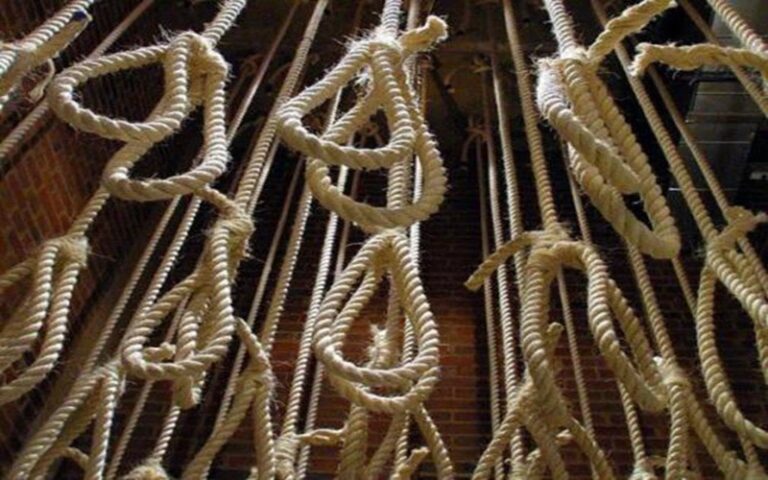
Unprecedented Execution Record in the Past 30 Years in Iran

The total number of executions carried out between September 23, and October 22 has reached an unprecedented figure of at least 283 people — the highest in the past four decades. Independent and human rights sources emphasize that this number represents only the officially reported portion of reality, as many executions are conducted secretly without any public announcement.

Comparing these figures with previous years reveals a shocking trend:

  • September 23 to October 22, 2022 = 36 executions
  • September 23 to October 22, 2023 = 81 executions
  • September 23 to October 22, 2024 = 152 executions
  • September 23 to October 22, 2025 = 283 executions

The rapid surge in these figures illustrates the regime’s policy of intensified repression and internal pressure in the face of growing political and social crises.

Iran’s Regime Executes 18 Prisoners, Including One Woman

Statistical Composition of Executions: The Real Face of Structural Violence

Analysis of the statistics during this period shows that the structure of executions spans across women, minors, ethnic minorities, and foreign nationals:

  • Women executed: 7
  • Juvenile offenders (under 18 at the time of crime): 2
  • Drug-related charges: 134
  • Murder charges: 134
  • Baluch prisoners: 10
  • Afghan nationals: 11
  • Espionage charges: 2

Execution in Iran is not merely a judicial reaction but a core element of the ruling system — a mechanism for elimination, not reform.

A look at statistics from the past seven months shows that at least 1,138 prisoners have been executed across the country. The details themselves reflect the depth of the tragedy:

  • Women executed: 36
  • Juvenile offenders executed: 6
  • Political prisoners: 22
  • Drug-related charges: 555
  • Murder charges: 489
  • Baluch prisoners: 116
  • Kurdish prisoners: 44
  • Afghan nationals: 59
  • Espionage charges: 12

The widespread use of executions reflects the Iranian regime’s reliance on them as a tool to project false authority and instill fear throughout society.

Why Have Executions Accelerated?

The key question is why the dictatorship ruling Iran, while facing multiple domestic and international crises, has resorted to accelerating executions.

Iranian Worker at Risk of Execution

On one hand, economic pressures caused by sanctions, deadlocks in regional policy, and global isolation have eroded the regime’s political legitimacy. On the other, the Iranian people, following the mass protests of 2022, have demonstrated their capability and determination for change.

In this situation, “execution” serves as a psychological weapon for the regime — a means to threaten society, intimidate dissidents, and maintain control in the face of growing dissent. However, evidence from the ground indicates that this repressive policy has lost its deterrent effect.

Protests Inside Prisons: A Sign of the Collapse of Fear

The strike of 1,500 prisoners in Ward 2 of Ghezel Hesar Prison and the gathering of their families protesting the implementation of death sentences present a clear image of resistance against this deadly policy.

Support for the “Tuesdays for No to Execution” campaign, both inside prisons and within society, demonstrates that the regime has failed to enforce total silence even behind prison walls.

“Execution,” once intended as a tool of fear, has now turned into a spark for protest and solidarity.

The Responsibility of the International Community and Human Conscience

In such a catastrophic situation, the responsibility of the international community, human rights organizations, and the United Nations is heavier than ever.

The UN Special Rapporteur on Human Rights in Iran and other international bodies must continuously and publicly pressure the regime’s leaders to halt executions.

Silence or inaction in the face of these crimes amounts to complicity in the cycle of death.

Iran’s Regime Debt to Social Security Disrupts Healthcare for Workers and Retirees

Three weeks after the approval by Iran’s top three branches of power to pay 700 trillion rials (approximately 608.7 million dollars) of the government’s debt to the Social Security Organization, the securities have still not been delivered to Refah Bank, creating the risk of further disruption in healthcare services for workers and retirees.

The state-run ILNA news agency reported on Tuesday, October 28, that according to the decision made on October 6 by Iran’s three branches of power, the government was supposed to settle part of its debt to the healthcare sector of the Social Security Organization by issuing 700 trillion rials in securities, and transfer the remaining 1.2 quadrillion rials (approximately 1.043 billion dollars) to the organization by the end of the year through state-owned shares and assets.

Iranian Workers Cannot Afford Even One Gram of Gold with Their Monthly Minimum Wage

However, three weeks after the October 6 approval, the relevant bonds have still not been signed by the Planning and Budget Organization or delivered to Refah Bank.

Although the head of the Planning and Budget Organization promised on October 11 that “part of the government’s debt will be paid soon,” bureaucratic delays in the organization have once again halted the payment of healthcare dues—a problem that has also plagued other issues such as retirees’ back pay, salary adjustments, and teacher ranking plans.

Earlier, on August 27, Reza Jabbari, a member of the presidium of Iran’s parliament (Majlis), warned about an “imbalance crisis” in the country’s healthcare system, emphasizing that given the current conditions, the government will no longer be able to cover healthcare costs in the future.

In a meeting with Mohammadreza Zafarghandi, the Iranian regime’s minister of health, treatment, and medical education, he warned: “If no plan is made for the country’s healthcare system, given the aging population and dietary patterns, the same imbalance crisis we are currently facing in the energy sector will emerge in healthcare.”

Experts’ Warnings

Nima Amirshokari, an economist and faculty member at the Monetary and Banking Research Institute, told the state-run ILNA news agency that converting debt securities into cash in banks usually takes less than two weeks, but: “When this process takes too long, the problem lies within the decision-making body—the Planning and Budget Organization—which has a more complex bureaucratic mechanism.”

He emphasized that banks assume only limited risks in such processes, bearing the financial costs and delays in liquidity, but not responsibility for the delay in bond issuance.

Alireza Heydari, a social security expert, also told ILNA that these are actually “one-year Islamic treasury bonds” through which the government defers its payment obligations to the future.

Iranian Workers’ Wages Have Fallen By 261% In Less Than Ten Years

According to him, this method is a form of debt shifting and does not increase the government’s budget deficit, but its liquidity depends on the prompt action of the Planning and Budget Organization and the cooperation of the designated bank.

He also stressed that the approval of this resolution at the highest level of the three branches reflects an understanding of the “emergency situation” in social security, and it is expected that the government will exert more pressure on executive bodies for its swift implementation.

Shahram Kalantari, head of the Iranian Pharmacists Association, stated on August 26 that “the government is a massive debtor in the pharmaceutical supply chain,” adding: “Since March 21, 2025, except for the Health Insurance Organization—which only paid its April debt—we have received nothing from insurers.”

He further said: “The Health Insurance Organization owes us 100 trillion rials (approximately 87 million dollars), the Social Security Organization owes 150 trillion rials (approximately 130.4 million dollars), and the Daroyar drug subsidy plan owes 90 trillion rials (approximately 78.2 million dollars) since July.”

Risk of Contract Cancellations and Healthcare Disruptions

Delays in implementing the resolution have pushed the insured healthcare network into crisis.

According to Heydari, the Social Security Organization currently faces a six-month delay in paying its debts to Atieh Sazan supplementary insurance, private hospitals, pharmacies, and university medical centers.

He warned that if this situation continues, insurance companies and medical centers may unilaterally terminate their contracts, as the private sector has no obligation to continue providing services without payment.

This concern has become more serious as the renewal period for new contracts between supplementary insurers and medical centers approaches, with experts warning that continuation of this trend could disrupt the healthcare cycle for workers and retirees.

IAEA: Iran Has Enough Material for 10 Nuclear Bombs

Rafael Grossi, Director General of the International Atomic Energy Agency (IAEA), has for years warned about Iran’s widespread uranium enrichment at concentrations approaching the level needed to build a nuclear weapon.

Grossi told the Swiss newspaper Le Temps on Wednesday, October 22, that Iran’s regime still possesses enriched uranium, including about 400 kilograms enriched to 60%, a concentration slightly below weapons-grade. Grossi added that if the trend continues, Iran would have enough material for roughly 10 nuclear bombs.

Reaction from Araqchi to Grossi’s remarks

Abbas Araqchi, foreign minister of Iran’s regime, immediately responded to Grossi’s remarks, saying, “I do not know whether he said this out of concern or as a threat, but those who make such threats should know that repeating a failed experience will yield nothing but another failure for them.”

Iran’s Nuclear Power Dream: From Fantasy to Reality

In his interview Grossi also said that if diplomacy fails, force would be used again. His words were not left unanswered by Iran’s regime officials. Ebrahim Azizi, chair of the National Security Commission, responded, “If Grossi had observed professional and technical principles, a war would not have taken shape.”

Azizi called Grossi an “agent” of the twelve-day war between Iran and Israel and said, “He is now worried about diplomacy.”

Grossi’s statements about Iran’s enriched uranium came after Iran halted cooperation with IAEA inspectors. Ali Larijani, Secretary of the Supreme National Security Council, said that if the IAEA wants to conduct inspections, it must submit a formal request so it can be reviewed.

Following these developments, the Washington-based Institute for Science and International Security (ISIS) released new satellite imagery saying that reconstruction activity has begun at the former site of the “Taleqan-2” facility, which had been destroyed in an Israeli strike.

All of this data suggests that Iran’s nuclear developments have reached a sensitive and dangerous stage.

Iranian regime’s Near-Weapons-Grade Uranium Stockpile Grew Before Strike

If Iran’s regime pursues the bomb path and can raise the enrichment level to 90%, the production of a nuclear weapon would become possible.

So far, the IAEA does not know whether the 400 kilograms of enriched uranium were buried underground after the bombing or moved elsewhere. Iran’s regime fears that this information could be passed to the United States and Israel so that in the next round of strikes those exact locations would be targeted.

Iran’s regime currently faces a crossroads of “surrender or resistance” and is trying to resist as much as possible in hopes of finding a way out of this crisis without the fall of the regime.

It is worth noting that the world was not aware of the regime’s nuclear program. In 2003 the National Council of Resistance of Iran (NCRI), the largest Iranian opposition group, provided this information to international organizations to prevent the regime from building an atomic bomb.

If Iran’s regime is given enough time, it can reactivate its previously destroyed or dormant nuclear program.

According to experts, to convert these 400 kilograms into 90% enriched uranium, Iran’s regime would need to possess several thousand centrifuges secretly — and it has demonstrated that it has that capability.

Rebuilding nuclear sites and restoring the production capacity of several thousand centrifuges is possible but time-consuming, because many centrifuges have been destroyed or rendered unusable and must be rebuilt and reinstalled.

There is no precise information on the fate of the 400 kilograms of enriched uranium. Iran’s regime may be seeking to continue on the path to building an atomic bomb, in which case the lives of the Iranian people would be put at risk. Domestic experts say the regime’s nuclear project has so far cost roughly 2 trillion dollars directly or indirectly (under international sanctions), but Iran’s regime, which sees its survival tied to having a nuclear weapon, will not abandon this project.

92nd Week Of ‘No To Execution Tuesdays’ Campaign In 54 Prisons Across Iran

The 92nd week of the “No to Execution Tuesdays” campaign continues in 54 prisons across Iran. With the prisons of Ilam and Borujerd joining the campaign last week, the number of prisons participating in the hunger strike of the “No to Execution Tuesdays” movement has reached 54.

In this week’s statement of the “No to Execution Tuesdays” campaign, referring to the confirmation of death sentences for Manouchehr Fallah and Ehsan Faridi and the issuance of death sentences for Kavous Abdollahzadeh and Zahra Tabari, it states:

“These cruel sentences are a clear attempt to instill fear in society and silence the voices of freedom-loving people of Iran.”

The political prisoners emphasized in this statement that the people are standing firm against this machinery of death and intimidation.

The full text of the 92nd weekly statement of the “No to Execution Tuesdays” campaign is as follows:

Expansion of “No to Execution Tuesdays” to 54 prisons in the 92nd week with the joining of the Borujerd Brick Factory Prison and Ilam Prison

As we pass the 92nd week of the “No to Execution Tuesdays” campaign, the repressive and execution-driven regime recorded 283 executions in the month of Mehr 1404 (September–October 2025) — making it the bloodiest month in decades. In this month alone, seven political prisoners, seven women, and two child offenders were executed.

Since last Tuesday, 59 executions, including two women, have been recorded. This wave of executions has coincided with the issuance and confirmation of new death sentences against political prisoners, including Kurdish political prisoner Kavous Abdollahzadeh and Zahra Tabari in Lakan Prison in Rasht, as well as the reconfirmation of death sentences for Manouchehr Fallah and Ehsan Faridi by the Supreme Court.

Last week, Evin Prison officials and security forces attempted to transfer Ehsan Afrashteh from Evin Prison for execution, but the move was met with resistance from fellow inmates. There remains a constant threat of his imminent transfer for the implementation of the death sentence.

Iranian Political Prisoner Sentenced to Death

“These cruel sentences are a clear attempt to instill fear in society and silence the voices of freedom-loving people of Iran. This tyrannical regime, for more than 46 years, through corruption and the plundering of the oppressed people’s wealth — which continues to this day — has dragged the nation into death and destruction and now clings to execution as a tool for its survival.”

But the people have stood firm against this machinery of death and intimidation. The prisons of Borujerd and Ilam have now joined those that, in the heart of darkness, keep the flame of protest alive. By joining the “No to Execution Tuesdays” campaign, they send the voice of resistance from behind prison walls to the world. This week, the brave and bereaved families of those sentenced to death gathered in front of the parliament, chanting “No to Execution,” showing that no power can extinguish the flame of love for freedom and the right to life in this land.

We, the members of this campaign, once again declare:

Execution is a criminal tool for the survival of tyrannical regimes.

No religious or political justification can legitimize the deprivation of human life. Every execution is a new wound on the body of society and a sign of the failure of law, human dignity, and justice.

We demand the immediate halt of all executions, the annulment of all death sentences, and unconditional access for international human rights organizations to prisons and prisoners in Iran.

On Tuesday, October 28, political prisoners in fifty-four prisons across the country are on hunger strike.