Home Blog Page 67

Inflation in Iran Surpassed 42% In August, According to Regime Statistics Center

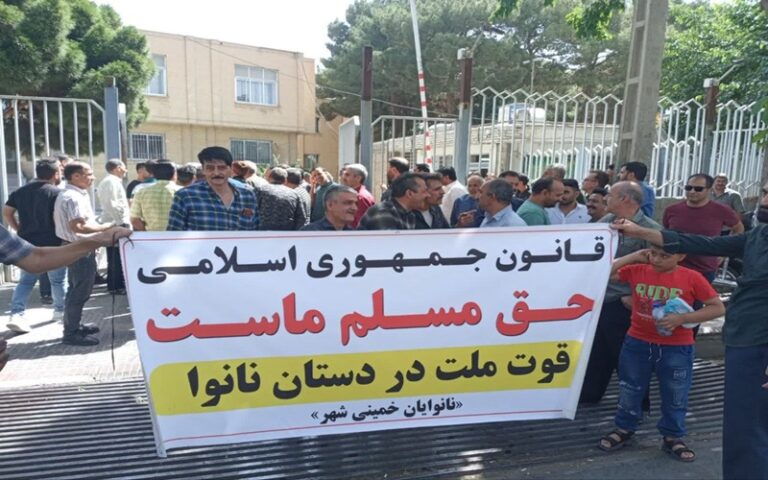
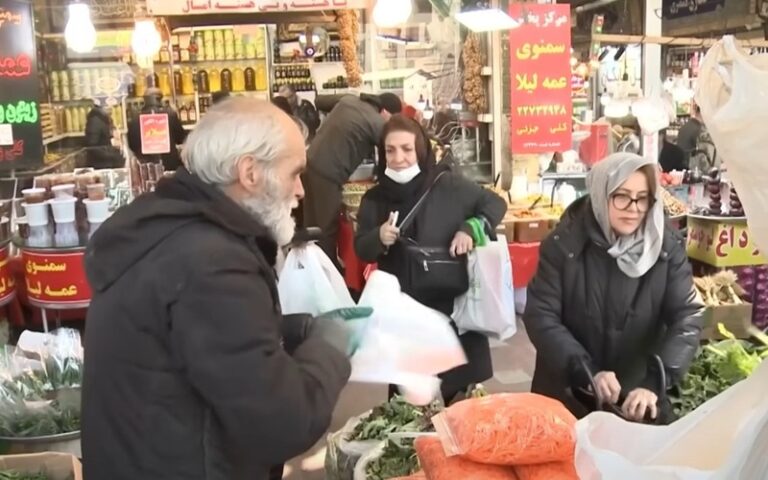
As prices of food and essential goods continued to rise, Iran’s regime-run Statistics Center reported in its latest statement that point-to-point inflation for households in August surpassed 42%.

The report, published on Thursday, August 28, shows that point-to-point inflation, which had fluctuated in the 30% range for 18 months and had reached 39.4% in June, climbed to 41.2% in July and continued its upward trend to 42.4% in August.

The Iranian Regime’s New Tax Law: Collecting Taxes from Citizens on Inflation

This means Iranian households in August this year spent on average 42.4% more than in August last year for the same basket of goods and services—an increase 1.2 percentage points higher than in July.

On the same day, Thursday, August 28, as these figures were released and the European Troika (France, Germany, and the UK) triggered the “snapback mechanism,” the price of gold coins and the US dollar surged sharply in Iran’s open market, with the dollar reaching 1,020,000 rials.

This comes while Iranian workers earn roughly $150 per month.

Earlier, Iran’s Chamber of Commerce had warned that with the activation of the snapback mechanism, the dollar could rise to between 1.35 million and 1.65 million rials. It predicted inflation between 75% and 90% and continued negative economic growth down to -3%.

Following reactions from regime officials and state-run media, the Chamber of Commerce Research Center denied publishing the report titled “The Economic Effects of the Return of UN Security Council Sanctions on Iran’s Economy.”

Uncontrolled inflation continues in Iran; sugar prices rise by 40%

Meanwhile, according to the Statistics Center, the Consumer Price Index (CPI) in August reached 370.5. This was a 2.9% increase compared to the previous month and a 42.4% increase compared to August last year.

Annual inflation in the 12 months ending in August 2025 reached 36.3%, one percentage point higher than the previous month.

The Statistics Center report shows that monthly inflation for households in August was 2.9%.

Among product groups, “food, beverages, and tobacco” saw the largest increase with 3.9% growth, while “non-food goods and services” registered 2.3%.

Based on the report, annual inflation for households in August stood at 36.3%, up one percentage point compared to the previous month.

As Iran’s inflation rate hits its highest level in recent months, the three European countries have also announced the activation of the snapback mechanism, beginning the process of reinstating UN Security Council sanctions on Iran’s regime.

If these sanctions take effect after the 30-day period, the economic pressure on Iran’s regime will intensify, and the outlook for inflation and the livelihoods of Iranian households will look even bleaker.

Is The Iranian Regime Ready to Reduce Uranium Enrichment Levels To 3.67%?

The spokesperson of the Iranian regime’s Foreign Ministry announced that Tehran is prepared to reduce its uranium enrichment level to 3.67%, which is the limit set by the 2015 nuclear agreement (JCPOA), on the condition that a broader deal is reached guaranteeing Iran’s right to enrich uranium inside the country.

In an interview with The Guardian, published on Monday, September 1, Esmail Baghaei, spokesperson of the Iranian regime’s Foreign Ministry, referred to the history of the International Atomic Energy Agency (IAEA) inspectors’ presence in Iran and added:

Iranian Regime Close to Building Nuclear Bomb

“There is an extreme trust deficit between the UN weapons inspectors from IAEA and Iran. There is a real concern that the information gathered at the sites by the IAEA would end up being passed on to Israel.”

Following the recent war between the Iranian regime and Israel, Tehran officials have escalated their criticism of the International Atomic Energy Agency.

The spokesperson of the Iranian regime’s Foreign Ministry added: “The Iranian government was not constitutionally able to block Iran’s withdrawal from the nuclear non-proliferation treaty (NPT) if the Iranian parliament went ahead and passed a law withdrawing from it in response to the European reimposition of UN sanctions.”

He also criticized European countries, saying: “The Europeans are doing what Trump dictated to them. The Europeans’ role is going to be diminished.” he said.

Baghaei added: “In a way, all of the European countries condoned what Israel did, and very likely provided information to the Israeli regime.”

Threat to withdraw from the NPT

At the same time as Baghaei’s interview was published, Kazem Gharibabadi, deputy foreign minister of the Iranian regime, said: “We hope the Europeans will use the same 20 to 30-day snapback process that they themselves have proposed to correct their mistake.”

He threatened that if the Europeans “move toward reinstating sanctions, the Iranian regime will show an appropriate response.”

Officials of the Iranian regime have repeatedly threatened that Tehran may withdraw from the Nuclear Non-Proliferation Treaty (NPT).

The spokesperson of the Iranian regime’s Foreign Ministry said on this matter: “We are ready because this issue concerns our dignity and sovereignty. I think just as you in Britain had the spirit of resistance during the Nazi attack, we have the same spirit; because we know that this war, which was imposed on us in the middle of negotiations, was very unfair.”

Iranian Regime Accelerates Uranium Enrichment to Concerning Levels

On August 28, France, Britain, and Germany announced the activation of the snapback mechanism, calling on the Iranian regime to return to nuclear negotiations with the United States and fully cooperate with the International Atomic Energy Agency within the 30-day period granted by the mechanism to delay sanctions.

In his interview with The Guardian, Baghaei described Europe’s conditions as “a sign of a lack of seriousness and absence of goodwill.”

The three European countries and Kaja Kallas, the European Union’s foreign policy chief, referring to the process of restoring UN sanctions against the Iranian regime, stated that this move does not mean the end of diplomacy but emphasized: “Now the ball is in Tehran’s court.”

Officials of the Iranian regime have promised that Tehran will give an “appropriate response” to the move by the three European countries in activating the snapback mechanism.

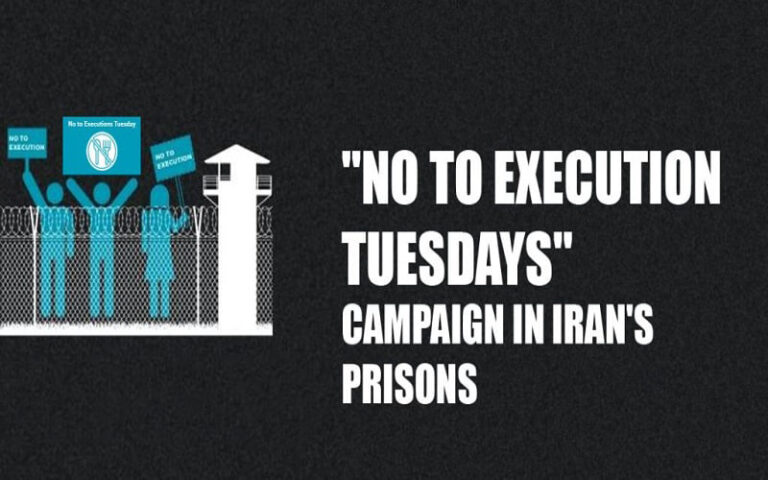
84th Week Of The “No To Execution Tuesdays” Campaign In 51 Prisons

0

On Tuesday, September 2, prisoners in 51 prisons across the country went on hunger strike in the 84th week of the “No To Execution Tuesdays” campaign to protest the widespread executions and issuance of death sentences.

The statement of the prisoners in the 84th “No To Execution Tuesdays” campaign is as follows:

“The continuation of the ‘No To Execution Tuesdays’ campaign in 51 different prisons in the 84th week.

Rise In Executions in Iran; Ten Prisoners Hanged in One Day

Joining of Langarud Prison in Qom to the ‘No To Execution Tuesdays’ campaign.
We are approaching the 40th day since the cowardly executions of Mehdi Hassani and Behrouz Ehsani, two executed political prisoners whose families and friends remain unaware of their burial place even after 36 days. This inhumane act, which amounts to enforced disappearance and the torture of the bereaved families, is part of the ongoing pattern of human rights violations against mourning families in Iran.”

“The widespread and ruthless executions carried out weekly in our country—with the alarming figure of 39 executions, including two women prisoners in the past week, and 704 executions since the beginning of this year [which started on March 21, 2025]—are not only a blatant violation of fundamental human rights but also a sign of the bloody repression of the people and the regime’s attempt to maintain power by instilling fear and silencing the voices of freedom and justice.”

“Despite all this, we believe that the victims of these injustices belong not in the soil of oblivion but in the hearts of every free Iranian. Their blood continues to flow and surge in the veins of the youth, and their path remains a beacon of hope for a future without executions and violence.”

“With a group of prisoners from Langarud Prison in Qom joining the campaign in its 84th week, the number of prisons participating in ‘No To Execution Tuesdays’ has increased to 51. This demonstrates the widespread resistance of prisoners and society against executions.”

Iran’s “No To Execution Tuesdays” Campaign Marks 83rd Week in 50 Prisons

“The ‘No To Execution Tuesdays’ campaign is determined to remain the voice of bereaved families, prisoners, and all freedom-loving people until the complete abolition of death sentences in Iran and the guarantee of respect for human rights and justice.”

“In conclusion, this campaign sincerely offers condolences to the honorable family of Mr. Vali Daneshvarkar, the father of political prisoner Shahrokh Daneshvarkar, who played an active role in the gatherings, as well as to all the supporters and members of the ‘No To Execution Tuesdays’ campaign, for his passing.”

Iran’s Regime Agriculture Minister Admits to ‘Toughest Conditions Of Food Security’

Gholamreza Nouri Ghezeljeh, Iran’s regime agriculture minister, referring to the “abnormal” state of Iran’s macroeconomic indicators, said that the country is in the toughest situation in terms of food security. Earlier, the Ministry of Intelligence had confidentially warned about food security.

On Sunday, August 31, Nouri Ghezeljeh also referred to what he called “the most unprecedented droughts” in a press conference, and urged agricultural sector workers to help the government ensure food security.

The British magazine The Week warned in a report that Iran is on the verge of water bankruptcy—a crisis caused by drought, climate change, and chronic mismanagement—which, according to analysts, may become a turning point for the Iranian regime.

“70 Percent” of Iranian Farmers Are Illiterate

While cities across the country have increasingly faced frequent water cuts after the 12-day war, official reports show that 80% to 90% of the country’s water resources are used in agriculture. In Iran, traditional farming methods still dominate.

In this press conference, Nouri Ghezeljeh said, “Reducing water consumption in agriculture is our duty,” adding, “We still haven’t received the exact figure in the program that we must reduce. That figure is even lower than what was considered in the program, meaning the situation is much tougher than what we are facing.”

The shortage of water for urban consumption and the need to secure food supplies have placed the Iranian regime in a deadlock.

Alireza Abbasi, the regime MP from Karaj, said in a July 18 meeting with managers of Alborz Regional Water Company: “Although providing drinking water is a priority, we should not sacrifice food security. No country ignores its food security, even if it has abundant water resources.”

Warning from the Ministry of Intelligence

On April 25, Ebrahim Rezai, spokesperson of the regime’s Majlis (parliament) National Security Commission, said that in a meeting with the commission’s members, the defense minister expressed readiness for his ministry to take part in food security projects.

Although no specific news or statistics have been officially published in this area, statements and leaked reports from within the Iranian regime’s structure indicate a level of concern among regime officials.

In addition to drought and water shortages, the country’s economic situation has fueled further concerns.

The Ministry of Intelligence has warned ministries and major companies that the consequences of reactivating the snapback mechanism could lead to a halt in Iran’s oil sales, major economic and security crises, rising unemployment, and escalating social unrest in the country. One of the points highlighted in this letter was food security.

Despite extensive propaganda and efforts to achieve self-sufficiency in wheat—one of the very causes of water shortages in the country—the Iranian regime still relies on imports of grains, livestock feed, and some agricultural products.

Problems with certain products have emerged in the past six months. For example, there was a potato and legume crisis in March.

Dangerous Land Subsidence Kerman and Tehran

0

On Sunday, August 31, the state-run Mehr News Agency reported, citing Eskandar Sayedaei, head of Iran’s National Cartographic Center, that a “classified atlas of land subsidence in Iran” has been prepared.

In this document, which is said to have been presented to responsible institutions “for warning and policymaking,” statistics and information have been released that some Tehran city officials have described as “horrifying.”

According to the report, the head of the National Cartographic Center of the Iranian regime announced that the highest rate of subsidence is “in the Bahraman plain in Kerman province with 31 centimeters, and also in one of the areas of Tehran with about 30 centimeters.”

Iran Ranks Third Globally in Extent of Land Subsidence

The head of the National Cartographic Center further noted that this level of land subsidence in Iran occurs while, according to global standards, subsidence of more than about three centimeters is considered a warning.

Sayedaei, stating that the rate of land subsidence in Iran is several times higher than the global average, added that this issue has “turned into a serious threat to the country’s environmental and construction security.”

Without giving further details about the reason for the secrecy of the land subsidence report in Iran, he said: “We provide this information in the form of classified reports, correspondences, and files to the relevant institutions that inquire from us, with clear percentages, quantities, and qualities.”

The head of the National Cartographic Center stated that the main reason for land subsidence in Iran at this scale is “excessive extraction of groundwater” and added: “If this continues, infrastructure, buildings, power transmission lines, and even historical monuments will be at risk.”

He added: “Subsidence has no immediate solution, and the only sustainable remedy is to stop excessive water extraction.”

The National Cartographic Center had previously warned that in addition to Tehran, parts of other major cities, including Isfahan and Tabriz, are also at risk of subsidence.

The situation of land subsidence has also been reported as severe in other provinces, including Alborz, Fars, Kerman, Hamedan, Semnan, Qazvin, Razavi Khorasan, North Khorasan, and Yazd.

The statistics of land subsidence in Tehran are “horrifying”

Continuing the remarks about land subsidence in Tehran and other parts of the country, Mohammad Aghamiri, head of the Urban Development Committee of Tehran’s City Council, told reporters on August 28: “The statistics of subsidence in Tehran are classified and I cannot disclose them. Just know that these figures are horrifying.”

Land Subsidence Warnings in Tehran and the Critical Situation of 70% of Iran’s Plains

According to Aghamiri, in Tehran’s District 18, which sits on one of the city’s main aquifers, “excessive extraction of water from the aquifer has been so intense that the area is now experiencing 20 centimeters of subsidence.”

In 2022, the former head of Tehran Municipality’s Environmental Department also declared Tehran the “world record-holder of land subsidence” and described this phenomenon as a “silent earthquake or the cancer of the earth.”

Previous studies by Iran’s Geological Survey had shown that some areas around Tehran experience an annual subsidence of 25 centimeters, although this subsidence is not uniform across all parts of Tehran’s outskirts.

Some experts, referring to satellite images from the research institute “IntelLab” on land subsidence around Tehran, had previously described this phenomenon as a “silent time bomb” and a “threat to the 13 million people living in these areas.”

According to experts, the pressure caused by groundwater extraction, combined with the capacity of land in aquifers to subside, creates an interaction that makes the rate of land subsidence vary from year to year.

Based on this, land subsidence mainly occurs in agricultural lands on the outskirts of cities and villages that are composed of sediments or fine-grained soils.

Previous studies by the Geological Survey had shown that subsidence exists in all plains of Iran that “contain extractable fresh water,” and that “there is no plain left in Iran that has been spared from subsidence.”

Experts believe that land subsidence “means the death of aquifers,” and when aquifer particles are compressed due to land subsidence, they can no longer return to their original state. Therefore, subsidence is considered an irreversible hazard.

The Heavy Shadow of Snapback Sanctions Over Iran’s Regime

0

On Thursday, August 28, the three European powers triggered the “snapback” mechanism (the reinstatement of broad UN sanctions), setting in motion the process of restoring previous international sanctions.

On August 27, an analytical report from the International Affairs Department of Iran’s Chamber of Commerce was published in the media and on social networks, outlining three scenarios for the country’s economy if snapback sanctions are implemented.

The “unconfirmed” three scenarios of the Chamber of Commerce

The report, drawing on the experience of past sanctions and multilateral pressures, examined the outlook for indicators such as the exchange rate, inflation, economic growth, and unemployment.

Iran’s Deepening Crisis: Expanding Bureaucracy, Shrinking Livelihoods

According to the report, in the “optimistic scenario,” Iran’s economy, even with the return of sanctions, could at best achieve a positive growth of 1.5%. In this case, the dollar (currently about 1,060,000 rials) would rise to about 1,150,000 rials, inflation would reach 60%, unemployment would hit 10.5%, and the stock market value would grow relatively to about $120 billion.

According to the “likely scenario,” the most probable outcome would be stagflation. The dollar would rise to 1,350,000 rials, inflation would peak at 75%, economic growth would fall to -1%, unemployment would reach 12%, and the stock market value would shrink to $90 billion.

The report also outlined a “pessimistic scenario,” describing the bleakest outlook as a surge in the dollar to 1,650,000 rials, inflation above 90%, and unemployment at 14%. Economic growth would drop by 3%, deepening the recession, while the stock market would collapse to $65 billion. The report attributed this outlook to a combination of dwindling foreign currency reserves, restrictions on oil sales, heightened inflationary expectations, and geopolitical risks.

The “unconfirmed” Chamber of Commerce report was published at a time when the foreign exchange market was going through turbulent days, with the dollar already surpassing the 1,060,000 rial mark.

Tasnim’s narrative of the “psychological effect” of snapback

In contrast, Tasnim News Agency, affiliated with the Islamic Revolutionary Guard Corps (IRGC), dismissed the unconfirmed Chamber of Commerce analysis as “fueling tension,” claiming that the “psychological effects” of snapback outweigh its actual impact.

Tasnim also considered comparing today’s situation with the early 2010s as inaccurate, arguing that Iran’s economy has already endured some of the effects of sanctions and developed alternative mechanisms for oil sales and foreign trade.

Tasnim further claimed that oil exports are no longer reliant on European intermediaries, saying Iran has created new routes and, despite U.S. rewards for identifying buyers of Iranian oil, has managed to stabilize sales at 1.8 million barrels per day.

Iranian Regime FM: Snapback Sanctions Will Cost Heavily

The implementation of snapback will, at least diplomatically, bring further isolation for the Iranian regime. The official return of UN sanctions could strengthen the global legitimacy of measures against the regime and give Western countries even more leverage for coordinated pressure.

From an economic perspective, even if much of the UN Security Council sanctions had already taken their toll, the psychological and political impact of their return could further strain foreign investment, financial transactions, and the business environment.

Given that Iran’s economy is already grappling with crippling inflation, chronic budget deficits, and currency fluctuations, any new shock could intensify this fragility.

What is certain, however, is that Iran’s economy—whether under an optimistic or pessimistic scenario—is on a difficult path.

Consequences of “snapback” for Iran’s economy

Snapback is a mechanism envisioned in the 2015 nuclear deal with the Iranian regime, allowing any member of the agreement (JCPOA) to reimpose all suspended UN sanctions against Iran in the event of a “serious breach,” without the possibility of a Security Council veto, within a maximum deadline of 30 days.

Once snapback is activated, all previous UN Security Council sanctions—including the ban on buying and selling conventional weapons, missile-related sanctions, and the blacklist of individuals and entities—become legally binding again, with all countries obligated to comply.

The return of UN sanctions is not necessarily an authorization for military action against Iran, but it does deepen the regime’s political isolation and strengthens broader coalitions. At the same time, Tehran has threatened to limit cooperation with the International Atomic Energy Agency (IAEA) or even put harsher options on the table in response—moves that could further narrow the negotiating space and increase the risk of war.

With snapback activated, not only will legal risks accelerate, transaction costs rise, and financial-trade channels tighten, but political divisions will also deepen, making any return to dialogue more costly.

Iran’s Regime Plans to Execute 100 People on Charges of Spying for Israel

The British newspaper Sunday Times reported on the crackdown on female prisoners in Iran following Israel’s attack on Evin Prison on June 23, during the 12-day war. It wrote that there are concerns that 100 people may be executed on charges of spying for Israel.

The UN Human Rights Office announced on Friday, August 29, that at least 841 people have been executed in Iran this year. According to this report, just last month 110 people were executed in Iran, a figure that has doubled compared to the same month last year.

A former student activist had previously written in a series of Instagram stories that regime agents in Evin Prison, at the time of Israel’s attack, intended for the prisoners to be buried under the rubble of war.

UN Human Rights Office: At Least 841 People Executed in Iran This Year

She explained that after the explosion, the security agents first transferred them to the quarantine section of Qarchak Prison, and after two days, sent them to a safe house belonging to the Ministry of Intelligence at an undisclosed location.

The Sunday Times wrote that it independently confirmed that before Israel’s attack, an early warning had been given to a prison guard at Evin. He, along with some of his colleagues, left the area but did not evacuate the prisoners or other staff.

Asghar Jahangir, spokesperson for the Iranian regime’s judiciary, announced on June 29 that in Israel’s attack on Evin Prison, 71 people were killed, including administrative staff, soldiers, convicted inmates, families of prisoners who had come for visits or legal follow-ups, and neighbors living near the prison.

Possible execution of 100 political prisoners

The Sunday Times added that for the surviving prisoners, the Iranian regime has launched a revenge campaign after the war, seemingly using the prison attack as an excuse to harass and abuse them. Lawyers fear that more than 100 of them may now face execution.

A human rights lawyer from Tehran, who did not wish to be named, told the newspaper that a spirit of revenge dominates the judiciary. “A judge told me: our commanders and officials have been killed and we must take revenge. He didn’t even allow me to speak,” the lawyer said.

The lawyer added that the Iranian regime’s judiciary is confirming executions unusually fast and without following legal procedures. Some of those accused of spying for Israel were initially imprisoned for participating in anti-regime protests, but now, without any evidence against them and solely based on fabricated cases by security agents and confessions extracted under torture, they are being sent to their deaths.

The Sunday Times wrote that Evin Prison is internationally recognized as a symbol of the Iranian regime’s oppression, a highly secure facility notorious for torture and abuse of detainees.

Increased pressure on female prisoners after the Evin attack

According to the Sunday Times, the day after Israel’s airstrike, authorities transferred 61 female political prisoners to Qarchak Prison on the outskirts of Tehran. Qarchak lacks clean water, toilets, ventilation, and medical care.

The women live there in 40-degree Celsius (104°F) heat, with 65 of them crammed into five small rooms in a ward originally designed for temporary holding of new arrivals.

Human rights lawyers believe the Iranian regime is using accusations of spying for Israel as a means to exact revenge on innocent individuals who, under torture by intelligence agencies, have confessed to crimes they never committed.

On August 9, the spokesperson for the Iranian regime’s judiciary introduced 20 citizens arrested after the 12-day war with Israel as “spies and supporters of Mossad,” saying they had been arrested by the Ministry of Intelligence in Tehran and other provinces and that their cases were under review.

In his Saturday press conference, he said that the cases of these individuals were immediately opened and were under review, but he provided no details such as their identities or locations of detention.

Under such circumstances, there is no guarantee of fair trials, especially in cases where defendants have been subjected to physical and psychological torture.

Protests By Various Social Groups Against Poverty And Injustice Are Escalating

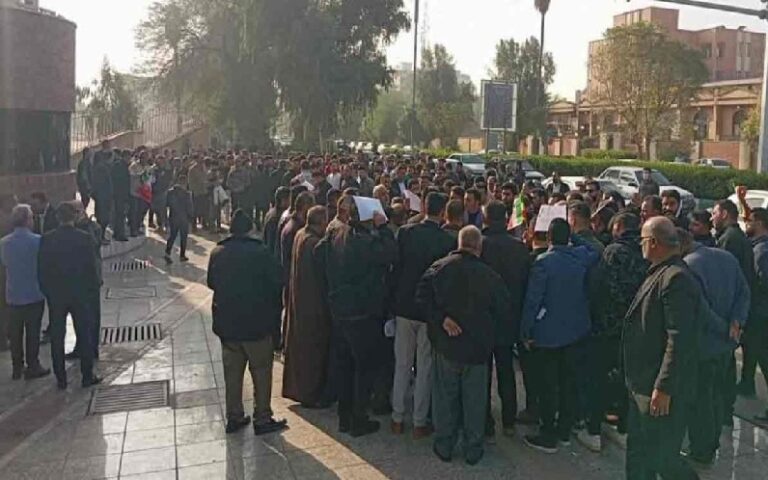
On Sunday, August 31, Isfahan witnessed protests by retired steel and mining workers. Dozens of retirees voiced their anger at their dire living conditions and the neglect of regime officials.

One of the main chants of the protest was “Hey, Mr. President, you lied to the nation,” which was repeated several times by the demonstrators.

The participants stressed that after years of hard labor in the steel and mining industries, they are now struggling with empty tables and severe livelihood problems. They declared that remaining silent in the face of oppression and injustice is no longer possible, and their presence in the streets is a direct response to officials’ indifference.

Protest of Loshan residents against the water crisis

Residents of Jamalabad in Loshan, Gilan Province—one of Iran’s rainiest regions—blocked the old road by burning tires to protest the lack of drinking water. This crisis, which has persisted for years, symbolizes the authorities’ failure to provide even the most basic needs of the people. Despite repeated promises from regime officials, no operational plan has been presented to resolve the problem. In a province with abundant water resources, this failure is not only shocking but also a sign of systemic neglect of people’s livelihoods.

Gathering of Refah store employees in Hamedan

On August 30, employees of the Refah store in Hamedan staged a protest over the non-payment of three months’ wages and insurance. This store is affiliated with regime-linked institutions. Their protest reflects the broader struggles of workers across the country who are grappling with wage arrears and a lack of job security.

Protest of Paband villagers in Zanjan against the solar power plant project

Residents of Paband village in Zanjan gathered along the route of the energy minister’s convoy to protest the forced seizure of their farmland for the construction of a solar power plant. They emphasized that these lands are their only source of livelihood and that they would not accept forced handover. Notably, the minister avoided confronting the protesters and chose an alternate route.

Protest of Arghavan-Gostar petrochemical workers in Ilam

Laid-off workers of Arghavan-Gostar Petrochemical in Ilam gathered in front of the governor’s office to protest unfair employment exams and unjust layoffs. These protests are part of a broader wave of dissatisfaction with economic and employment policies that have endangered workers’ livelihoods.

Protest of teacher recruitment applicants

On August 29, applicants for the teacher recruitment exam in Tehran and Mashhad gathered in front of the Ministry of Education buildings. They protested sudden changes in exam conditions and the allocation of special privileges to a certain group. With passionate chants, they demanded an immediate review and the removal of the employee coefficient from the exam results, highlighting deep dissatisfaction with non-transparent and discriminatory processes.

Protest of medical interns in Shahr-e Kord

Medical interns in Shahr-e Kord gathered in the courtyard of Kashani Hospital to protest the third incident of their colleagues being assaulted. They declared that their job security and physical safety are at risk and that they can no longer remain silent. This protest reflects the unsafe working conditions of healthcare workers and the system’s disregard for protecting this vital sector.

Protest of victims of the 12-day war

The victims of the 12-day war, whose homes were destroyed since June 13 and who had been sheltered in hotels, staged protests after receiving eviction orders. They gathered first in front of the judiciary’s Public Communications Center and then in Tehran’s Pasteur Square. Carrying placards that read “Our homes and lives are destroyed; for 60 days we have been displaced in hotels,” they demanded compensation and housing. This protest illustrates how war victims have been abandoned in critical conditions.

UN Human Rights Office: At Least 841 People Executed in Iran This Year

The UN Human Rights Office reported that at least 841 people have been executed in Iran this year. According to the report, in the past month alone, 110 people were executed in Iran, which is double the number compared to the same month last year.

On Friday, August 29, the UN Human Rights Office issued a statement warning about the unprecedented rise in executions in Iran, declaring that officials of Iran’s regime continue the widespread use of the death penalty despite repeated calls from the international community to halt it.

Iran’s Regime Lays Groundwork for Expanded Executions

Ravina Shamdasani, spokesperson for the Office of the High Commissioner for Human Rights, said that from the beginning of this year until August 28, at least 841 people have been executed in Iran—figures that show Iran’s regime is disregarding its international obligations.

According to her, in July alone, 110 people were executed in Iran, a figure more than double that of the same period last year, confirming the continuing upward trend in executions in the first half of 2025.

She warned that due to lack of transparency, the real number may be even higher.

On August 23, the human rights website HRANA, in its latest monthly report on human rights violations in Iran, wrote that in July this year, at least 160 people were hanged in prisons across the country.

Execution as a tool of intimidation

The UN Human Rights Office emphasized that these figures demonstrate the systematic use of the death penalty by Iran’s regime as a tool to instill fear and intimidation, disproportionately targeting ethnic minorities and migrants.

The office also reported at least seven public executions in Iran, stressing that this is a further insult to human dignity and has severe psychological impacts, especially on children.

According to the report, currently, the death sentences of 11 people with political charges are pending execution, including six accused of “rebellion” for “membership in the People’s Mojahedin Organization of Iran (PMOI/MEK)” and five others in connection with the nationwide uprising of 2022.

Additionally, on August 16, Iran’s Supreme Court upheld the death sentence of Sharifeh Mohammadi, a labor rights activist.

According to reports from human rights organizations, around 70 prisoners across Iran are currently at risk of having their death sentences confirmed or carried out for political and security-related charges.

Call for immediate halt to executions

The spokesperson of the Office of the High Commissioner for Human Rights stressed that the death penalty is incompatible with the right to life and human dignity, warning that it always carries the risk of executing innocent people and should never be applied to acts protected under international law.

The UN Human Rights Office once again urged Iran’s regime to immediately halt executions.

Volker Türk, the UN High Commissioner for Human Rights, also called for the immediate suspension of these sentences as a first step toward the complete abolition of the death penalty.

Tehran-Backed Hackers Carried Out a Cyber Intrusion Against Mediators in the Gaza Ceasefire Negotiations

The cybersecurity company “Dream” announced that it had uncovered a sophisticated cyberattack originating from Iran. According to the company, the attack was “designed to undermine mediation processes and trust between countries” and even infiltrated the Cairo negotiations over a ceasefire in Gaza.

According to this report, published on Friday, August 29 in Israeli media, Iranian hackers managed to infiltrate the real email account of an employee at the Omani embassy in Paris. Through this, they gained the ability to send messages that appeared identical to official diplomatic correspondence.

Iranian Regime Hackers Threaten to Release Emails of Trump’s Close Aides

According to the company, which develops artificial intelligence platforms to protect governments and national assets, messages were sent from that account to diplomatic networks. These included Microsoft Word files that appeared harmless but contained advanced malware that activated when opened.

In this way, the cyberattack directly penetrated Egyptian mediators who were in the midst of the Cairo ceasefire talks.

Dream, which develops AI-based systems to protect governments and critical infrastructure, described this attack as “one of the most advanced cyber operations identified in recent months.”

Iranian hackers targeting Israel

Israel’s Channel 12 television broadcaster reported on August 14 that Iran’s regime hacked the phone of Ayelet Shaked, Israel’s former Justice Minister, during the 12-day war.

This move is part of Tehran’s ongoing efforts to spy on and infiltrate the devices of current and former Israeli officials.

According to the report, hackers from Iran’s regime made several attempts to hack the phone of the former leader of the Yamina party and eventually succeeded in tricking her into clicking a link that gave them access to the device.

Israel’s internal security agency, Shin Bet, announced in a statement on May 28 that since the beginning of this year, it had foiled 85 cyberattacks attributed to Iran’s regime targeting Israeli security officials, politicians, academics, and journalists.

According to the statement, these attacks mainly consisted of “phishing” attempts aimed at infiltrating victims’ devices and digital accounts to obtain sensitive personal information.