Home Blog Page 68

Widespread Blackouts in Iran Paralyze Half of Production and Industries

Abdolvahab Sahlabadi, head of Iran’s Chamber of Industry, Mining, and Trade, told the state-run Mehr news agency about the state of production and industries: “The biggest crisis today for production units, in addition to economic pressures, is repeated power outages which have practically taken half of the country’s production capacity out of service… nearly 50% of factories in the country have gone out of service due to blackouts, and the constant switching on and off of electricity imposes enormous financial damages on industries.”

Power outages and the paralysis of industry and production: dimensions of an economic catastrophe

According to the state-run Mehr news agency on August 20, Sahlabadi said: “About 50% of the country’s factories have been taken out of productive operation due to repeated blackouts. These blackouts, which in areas such as Kashan and Aran va Bidgol are scheduled from August 26 until further notice, three days a week (Tuesdays, Wednesdays, and Thursdays) from 7 a.m. to 11 p.m., have imposed enormous financial damages on industries.” This situation has not only disrupted the production chain but also destroyed raw materials and left workers in a state of livelihood uncertainty.

The Real Price of Electricity for Industries in Iran Has Increased Up To 30 Times

Roots of the crisis: decaying infrastructure and mismanagement

A large portion of industrial machinery in Iran is outdated and worn out, and raw materials are often low-quality and supplied with delays. These factors, along with low efficiency and high energy consumption, have caused industrial units to operate at best only 14 to 17 days a month, with just two to three days of effective work per week.

Power outages have exacerbated this vicious cycle and pushed the country’s industrial economy to the brink of collapse. These blackouts have not only halted production but also endangered the economic security and livelihoods of millions of Iranians.

Sahlabadi also stated about natural gas cuts for industries: “Just as industries and production suffer from blackouts in the summer, in the winter the problem of gas shortages will recur. This issue existed last year and will be much worse this year; for example, cement factories are forced to work several hours or even several days less each week, which also affects people’s daily lives.”

Structural corruption and the role of the regime in deepening the crisis

The roots of this crisis go beyond technical problems and stem from entrenched structural corruption and mismanagement in the government. Non-transparent policies, misallocation of resources, and prioritizing the interests of power-linked groups over infrastructure development have trapped the country in a whirlpool of inefficiency. A regime that has for decades spent national resources on repression, censorship, and unnecessary projects has lost the ability to meet society’s basic needs, including providing reliable electricity and modern industrial infrastructure.

The ineffectiveness of reforms within Khamenei’s oppressive rule

Past decades of experience show that Iran’s regime, because of power concentrated in the hands of one dictator, is not reformable. Today’s environmental, economic, and social crises—including power outages, water shortages, and the collapse of production—are the direct result of the regime’s policies. Widespread blackouts, which have paralyzed half of the country’s production, are only one sign of the crisis.

The current situation in Iranian society, with accumulated economic, social, and political discontent, is extremely explosive. Blackouts, lack of water, and the collapse of production are only part of the hardships that the people of Iran have endured under the current regime.

Warnings About a Wave of Worker Layoffs in Iran Intensify as Industrial Power Outages Continue

Labor activists in Iran have warned about rising unemployment, bankruptcies of production units, and the expansion of informal jobs as the energy crisis deepens. At the same time, the growth of informal work and inflationary pressures on workers’ livelihoods have further darkened the outlook of the labor market.

The state-run newspaper Jahan Sanat, on Monday, August 25, in a report warning about the consequences of the energy crisis on employment in Iran, wrote that electricity shortages and repeated blackouts in factories have “shut down the engine of the economy” and pose a serious threat to jobs and production.

The report emphasized that the energy shortage crisis not only destroys the labor market but also, by reducing investment, severely threatens future employment and exposes society to dangerous social consequences.

Water And Electricity Supply Crisis; Efforts for the Rapid Transfer of Water to Tehran

In recent weeks, following repeated power outages in various Iranian cities, several citizens reported on social media that the blackouts disrupted their businesses and economic activities.

Industrial blackouts and the threat to workers’ jobs

Power outages have hit energy-intensive industries such as steel, cement, aluminum, petrochemicals, and automotive, causing production line shutdowns, reduced efficiency, and higher costs, and in some cases, leading to factory closures and workers losing their jobs.

According to Jahan Sanat, the blackouts have increased industries’ reliance on diesel generators, leading to “higher commodity prices, reduced demand, and ultimately lower production and workforce downsizing.”

Hamid Hajesmaeili, a labor market expert, told this newspaper that blackouts caused by the energy crisis have severely pressured businesses and industrial units, resulting in a 40% reduction in production capacity.

On August 5, industry activists also warned that with widespread blackouts imposed since May, steel production is expected to decline by 33% this year.

Warnings from experts and labor activists about a wave of unemployment

Tasnim News Agency, affiliated with the IRGC, also wrote in a report that repeated power outages and the ongoing energy crisis in recent months have created serious problems for both large industries and small- and medium-sized workshops, warning that the unemployment rate may rise in the coming months.

Tasnim noted that many workshops, due to repeated power cuts, have been forced to reduce working hours or shut down part of their production lines, warning that continued energy outages will directly affect unemployment rates.

At the same time, Fathollah Bayat, head of the Union of Contractual and Temporary Workers, warned that with ongoing power outages in Iran, many factories and companies will be forced to lay off workers and downsize.

Meanwhile, Mohammadreza Tajik, a member of the Supreme Labor Council, pointed to high inflation and the sharp rise in living costs, saying that the minimum wage of workers must be revised for the second half of the year.

Malek Hosseini, deputy labor minister in the government of regime president Masoud Pezeshkian, also stated that 57% of Iran’s labor market is in the hands of informal jobs, with workers in these sectors mostly lacking insurance coverage.

How The IRGC Eliminated The Private Water Sector In Iran

The former head of Iran’s Department of Environment warned about the water crisis in the country, saying that the mismanagement of water resources threatens Iran’s seven-thousand-year-old civilization. He referred to Mahab Ghods Company as the policymaker of the “water mafia” and said that Khatam al-Anbiya Construction Headquarters (controlled by the IRGC) and “SEPASAD” (an IRGC-linked engineering firm) have destroyed the private water sector in Iran.

Isa Kalantari, on Monday, August 25, in an interview with the state-run Didban Iran website, discussed issues such as the water crisis, dam construction, the water mafia, mismanagement of water resources, water waste in agriculture, mismanagement by the Energy Ministry, land subsidence, air pollution, and other water and environmental problems.

Water Reserves in 19 Major Iranian Dams Fall Below 20%

He said that the country’s water problems have been building over recent decades and were predictable: “All the problems we are facing today were mentioned 20 years ago, but everyone was chasing water extraction, water transfer, deep-water and shallow-water withdrawal, brokerage, mafia games, and so on.”

The former head of the Department of Environment, in response to a question about the existence of a water mafia in the country, said: “Our water policymakers, water consultants and contractors, along with their colleagues in the Ministry of Energy, are the ones who impose the policies. How can we dry up all our rivers and build dams? Yes, there is a dam-construction mafia, but this stems from the weakness of the water policymakers in the country.”

A multi-layered mafia that plays a role in policymaking, exploitation, and project implementation is the main factor behind Iran’s water and energy crisis.

In this context, the former agriculture minister described Mahab Ghods Company as the “policymaker of the water mafia and the hidden hand behind water shortages, dam construction, and water projects in the country,” adding: “This is a monopolistic company under whose supervision all dam constructions are carried out.”

He added: “Before this company was transferred to Astan Quds Razavi (a powerful religious-economic conglomerate) and later returned to the Energy Ministry, all the country’s water studies were given to Mahab Ghods. This company operated at 1,500% capacity, distributing studies among other companies, taking its cut, and becoming a monopoly.”

Khatam al-Anbiya and SEPASAD

In another part of the interview, when asked about the role of Khatam al-Anbiya and Sepasad in water transfer projects, Kalantari said: “They are contractors, and a contractor is basically like a gravedigger; they take the plan and budget from someone else and just execute the project. But the problem is that they have also become monopolies, and the private sector has almost disappeared.”

This former environmental official described policymaking contractors as the “main culprits of today’s water situation” and added: “Our decision-makers are not very knowledgeable and only repeat a few social and populist slogans like such-and-such a city needs water or such-and-such a city needs agricultural development.”

He added that in the water sector, the policymakers have mainly been water consultants and contractors who have prioritized their personal interests over national interests: “They present projects in this field to the Energy Ministry, and the minister then takes them to the government and parliament for approval and implementation.”

Kalantari stressed that the contracting mafia is certainly behind the water transfer projects from the Sea of Oman to central Iran, including Isfahan, Kerman, and Yazd, saying: “The same applies to deep-water projects, which have already been rejected worldwide.”

In May, U.S. President Donald Trump, during his trip to the Middle East, described Iran’s regime as a “corrupt regime,” “destructive for the region,” and “trapped in a water mafia.” He said that due to decades of mismanagement, Iran has sunk into darkness and that the water mafia has caused drought.

Overnight Queues Outside the Chinese Embassy in Iran

Photos published of Iranians queuing overnight outside the Chinese embassy in Tehran once again drew public attention to one of the most important social realities in Iran today: the widespread desire among people to leave the country.

Hossein Selahvarzi, former head of Iran’s regime Chamber of Commerce, reacted to these images by calling them “a source of shame” and criticizing the situation. He wrote: “A nation whose country imports more than 70% of its goods from China should not have to sleep on the ground to get permission to travel.”

He also called on Masoud Pezeshkian, the president of Iran’s regime, to “order the removal of these humiliating queues” before his upcoming trip to Beijing.

Growing Wave of Professor Migration Poses Serious Challenge To Iran’s Scientific Future

These images were published while the Iranian regime has consistently emphasized strengthening strategic ties with Eastern countries, including China, in its official propaganda. Yet at the same time, scenes of people waiting overnight for visa appointments show the growing desire among Iranians to emigrate—even to countries such as China.

Experts believe that rising inflation, systemic corruption, political deadlock, and the lack of job and welfare prospects—especially for the youth and middle class—are among the main factors driving this widespread desire to emigrate. The increasing demand in recent months for student, work, and even tourist visas to Asian and European countries reflects this reality.

Masoud Pezeshkian’s upcoming trip to China has now come under the shadow of such criticism and public pressure. Many social media users have demanded that instead of expanding symbolic political relations, the government should find real solutions to Iran’s economic and social crises so citizens do not have to spend the night on sidewalks outside embassies just to leave the country.

In this regard, on August 22, Rahim Zare, a member of the parliament’s Budget and Planning Commission, referred to the consequences of the 12-day war between the Iranian regime and Israel, stating that many Iranians had put their houses up for sale as they seek to emigrate.

Zare said: “If we look at the reality, many Iranians have put their houses up for sale and are seeking to emigrate due to the current conditions, and this is one of the factors contributing to the rise in currency exchange rates.”

He added: “Within 48 hours, 240,000 housing units in Tehran were put up for sale, which is alarming and is one of the factors with a significant impact on the rising price of the dollar.”

Escalation of emigration from Iran

The wave of emigration from Iran had already been accelerating long before the recent war between the Iranian regime and Israel, and various institutions and organizations had previously warned of its consequences.

On July 28, Bahram Salavati, the former head of Iran Migration Observatory, said that nearly 4% of Iran’s educated population and students had left the country.

He had previously reported that the number of Iranian students abroad had reached over 100,000, and only 1% of them return to Iran.

The emigration of elites, healthcare workers, university professors, and skilled laborers in recent years has sparked widespread concern among experts and the Iranian public.

The Real Price of Electricity for Industries in Iran Has Increased Up To 30 Times

The results of a study show that the real price of electricity for industries in Iran is up to seven times higher than the official rates. Between 2018 and 2025, the official price of industrial electricity rose about 12 times, while in practice the real increase has been around 30 times.

According to a study by the Institute for Trade Studies and Research, published on Sunday, August 24, in the current conditions of the country, industrial electricity bills include not only the base rate but also additional costs such as obligations under Article 16, non-green electricity purchases, fuel price differences, and transit costs.

Unprecedented Energy Crisis and Government’s Inability Force Shutdowns in 27 Provinces in Iran

These additional charges ultimately increase the electricity cost up to seven times the base rate.

A review of changes in industrial electricity rates between 2018 and 2025 shows that over six years, while the base price rose 12 times, the actual increase has been about 30 times.

Meanwhile, contrary to the Iranian regime officials’ frequent claims that electricity prices in Iran are lower than in other countries, the study shows that the average price of one kilowatt-hour for energy-intensive industries in the Persian Gulf countries is 4.3 cents, while for Iran it is set at 11.86 cents. In other words, the electricity price for energy-intensive industries in Iran is nearly three times higher than the regional average.

Between 2018 and 2025, industrial electricity prices increased by 3.7% in India, 19% in Turkey, and remained unchanged in the United Arab Emirates. But in Iran, the official increase in industrial electricity prices reached 1,223%.

The domino effect of industrial electricity, from factories to markets and workers’ livelihoods

The shock from this severe price hike, along with frequent power outages, has affected the final prices of industrial products. For instance, in June 2025, cement prices in the Iranian market rose by up to 228% compared to the previous year due to production halts in manufacturing units.

Industrial sector representatives have warned that due to widespread power outages starting in May, steel production in 2025 is expected to decline by 33%.

The electricity crisis in industries has created a domino effect on other sectors as well. On August 1, Mahmoud Najafi-Arab, head of the Tehran Chamber of Commerce, said: “Electricity in industrial units is cut off three days a week, and despite having assets, including human resources, we cannot achieve the necessary productivity from the industry.”

In these conditions, labor activists across different provinces have warned about the collapse of workers’ livelihoods following the closure or partial shutdown of industrial units.

According to them, reduced shifts, the elimination of production bonuses, and the possibility of layoffs have put the lives of thousands of workers at risk.

Akbar Showkat, executive secretary of the Workers’ House in Qom province, stated that some industrial towns in this province are without electricity for up to two days a week, and reduced shifts have led to lower wages for workers.

Australia Closes Embassy in Tehran and Expels Iranian Regime Ambassador

The Prime Minister of Australia announced that after confirming the Iranian regime’s role in at least two antisemitic attacks, Australia expelled the regime’s ambassador, suspended the operations of its embassy in Tehran, and intends to designate the Islamic Revolutionary Guard Corps (IRGC) as a terrorist organization.

On the morning of Tuesday, August 26, Prime Minister Anthony Albanese, accompanied by the Minister of Foreign Affairs, the Minister of Home Affairs, and the Director-General of the Australian Security Intelligence Organisation (ASIO), attended a press conference at the country’s parliament and stated that the Iranian regime had directed at least two attacks against Australia’s Jewish community.

He described the two “terrorist attacks” on the Adass Israel synagogue in Melbourne and the Louis Continental restaurant in Sydney as “extraordinary and dangerous aggressions” and said that the Iranian regime had likely carried out more attacks on Australian soil.

He called the Iranian regime’s terrorist actions an attempt to destroy social cohesion and sow division in Australian society, adding that his government would take immediate and decisive measures in response to these subversive acts.

The Australian Prime Minister also announced that Australia’s embassy in Tehran had been closed, and all Australian diplomats previously stationed there had now left Iran and were safe in a third country.

The Iranian regime’s ambassador is the first ambassador expelled from Australia since World War II.

The Australian Foreign Minister announced that Iranian regime officials have seven days to leave Australia.

Penny Wong said that there was no doubt these extraordinarily dangerous and aggressive actions had crossed all red lines, and therefore, Australia has declared the Iranian regime’s ambassador in Australia a persona non grata.

Wong added that this was the first time since World War II that an ambassador had been expelled from Australia, and the reason was Iran’s completely unacceptable conduct.

The Foreign Minister described Australia’s embassy in Iran as a channel for pursuing national interests and protecting Australian citizens but added that the government had now decided to recall its ambassador from Iran and suspend embassy operations in order to safeguard its diplomats and protect Australia’s border security.

Use of proxy groups for sabotage in Australia

Mike Burgess, Director-General of ASIO, said that the IRGC had used a “sophisticated network of proxy groups” to conceal its role in antisemitic attacks on Australian soil.

He added that he did not believe the Iranian regime was responsible for all antisemitic attacks in Australia but said it might be responsible for more than the two announced that day.

He also called the Iranian regime’s actions “completely unacceptable,” adding that they endangered lives, terrorized society, and targeted Australia’s social fabric. He said that the Iranian regime and its proxies, both literally and figuratively, lit the matches and stoked the flames.

In an interview with ABC Australia, the ASIO chief confirmed that the Iranian regime was among “at least three or four” countries involved in foreign interference in migrant communities in Australia.

The ASIO chief said that publicly naming all the countries interfering in Australia would shock the public.

He added that since a federal minister had already confirmed the Iranian regime’s involvement, Tehran’s role had become public.

Burgess did not name the other countries but warned that if the threat posed a serious danger to Australians, their names would be disclosed.

Last month, the Australian federal government unveiled plans to introduce several new measures to combat the growing threat of foreign interference.

These plans include making permanent the task force established four years ago to counter foreign interference, which has since expanded to agencies such as the Australian Taxation Office.

Ecological Collapse of Lake Urmia and the Caspian Sea in Iran

0

Wetlands and lakes in Iran have long faced the threat of drying up. The Caspian Sea (the world’s largest lake) is under water shortage stress, while Lake Urmia, once the world’s largest saltwater lake, is now on the verge of total desiccation.

According to the state-run Khabar Online website, Iran is simultaneously facing two major water crises: Lake Urmia, which experts say is “practically dead” and only a few days away from complete evaporation, and the Caspian Sea, where the alarming decline in water levels poses a serious warning for Iran’s northern coastline.

The report notes that Lake Urmia, once one of the world’s largest salt lakes, now contains only about 100 million cubic meters of saline water spread across roughly 200 square kilometers, with a depth of less than half a meter. Isa Kalantari, former head of Iran’s regime Environmental Protection Organization, described the situation as “catastrophic” and warned that the lake would completely evaporate within 20 days.

Complete Drying of Lake Urmia by the End of Summer Is Certain

Kalantari pointed to excessive dam construction, unsustainable agricultural expansion, and failure to allocate environmental water rights as the main causes of the lake’s destruction. He warned that with the complete drying of Urmia, its 13-billion-ton salt bed would turn into a source of toxic dust, threatening the health of the people of Azerbaijan in terms of respiratory, sanitary, and genetic risks.

Meanwhile, in northern Iran, the Caspian Sea is also in a concerning state. Sergei Shipulin, an official from Russia’s Fisheries and Oceanography Research Institute, announced that the Caspian’s water level has been steadily declining since 2015, and this year it will reach its lowest recorded point in decades. He predicted that by the end of this year, the Caspian water level will drop by 20 to 30 centimeters, and if the trend continues, a one-meter decline by 2030 is likely.

The Russian official also warned that the Caspian littoral states, including Iran, must take measures to adapt to declining water levels, as the southern shores and shallow northern areas are at the greatest risk.

According to experts, the two water bodies that once symbolized life and national pride in Iran now stand on the brink of ecological collapse — the result of decades of neglecting sustainable development, destruction of natural resources, and disregard for environmental priorities.

Continuing warnings about the consequences of Iran’s water crisis, Ghorbanali Mohammadpour, Director-General of the Environmental Protection Department in Alborz Province, announced the unprecedented drying of the Salehiyeh wetland, saying it has now become an active source of dust storms affecting Karaj and even Tehran. He also reported land subsidence in the wetland area and in Mehrshahr, Karaj, stressing that Alborz can no longer sustain water-intensive industries or flood irrigation agriculture. He called for an immediate change in consumption patterns and the implementation of water recycling programs. According to this environmental official, continued neglect of these warnings could intensify environmental, health, and even social crises in one of the most densely populated provinces of the country.

The water crisis in Iran and its impact on people’s lives

The water crisis in Iran has long gone beyond being an environmental issue, becoming a widespread crisis with economic, social, health, and security dimensions. According to official statistics, more than 70% of Iran’s renewable water resources have been consumed or lost, and most of the country’s watersheds face resource deficits. In recent years, this problem has been exacerbated by persistent droughts, rising average annual temperatures, reduced rainfall, and excessive extraction from groundwater resources.

One of the most significant consequences of this crisis is environmental migration. Many families, due to dried wells, farmland loss, and the collapse of their livelihoods, have been forced to abandon villages and small towns. This forced migration has not only placed pressure on urban infrastructure but has also triggered social tensions and increased unemployment rates in the host areas.

Furthermore, the decline in groundwater levels and land subsidence has now become a chronic problem in many plains across Iran, particularly in provinces such as Tehran, Isfahan, Kerman, and Hamedan. This phenomenon poses a serious threat not only to vital infrastructure (such as metro lines, roads, and buildings) but also to food security, since Iranian agriculture is heavily dependent on groundwater resources.

Alongside these issues, the crisis of lakes and wetlands has further deepened the problem. The drying up of lakes such as Hamun, Bakhtegan, Gavkhuni, Maharloo, and now Urmia has not only destroyed biodiversity and local ecosystems but also severely disrupted the lives of millions of people living around these water bodies.

Experts have repeatedly warned in recent years that these crises are so deeply interconnected that they require a fundamental overhaul of Iran’s water policies, sustainable development strategies, and environmental approaches. Otherwise, the country’s future may be tied to dryness, poverty, migration, and social and political instability.

Rising Dollar Rate and Stock Market Decline in Iran

The US dollar exchange rate in Iran’s free market surpassed 960,000 rials. By the close of trading on Monday, August 25, the main stock index dropped by 33,000 points, and 6.56 trillion rials (about 68 million USD) flowed out of the stock market.

On Monday, August 25, the foreign exchange market experienced about a 1% increase in the dollar rate compared to the previous day.

On July 31, coinciding with the implementation of new US sanctions and growing speculation that Europe might trigger the snapback mechanism, the dollar rate in Iran’s free market rose again after several weeks, reaching 906,500 rials.

United Kingdom Sanctions Companies Affiliated With Iran’s Regime

The stock exchange also saw its fourth consecutive day of decline, with the main index falling by 1.33%.

The stock index dropped by about 33,000 points, returning to 2,438,000 units.

Economic media in Iran reported that this was the lowest level of the stock index so far this year.

According to these reports, 6.57 trillion rials (about 68 million USD) in retail money was withdrawn from trading in stocks, preemptive rights, and equity funds.

The value of retail trades reached 30.83 trillion rials (about 321 million USD).

On Monday, August 25, 88% of stock market symbols closed in negative territory, while only 12% remained in positive territory.

With the Tehran Stock Exchange’s retreat that day, the market’s return since the beginning of the year reached -10%. Over the past three months, the value of Iran’s stock market has dropped by about 35%.

Some economic experts believe that the stock market collapse, alongside the rising value of the dollar and gold, is not only due to sanctions but also stems from “public concerns about the country’s political outlook and reduced currency supply in the market.”

Iran Ranks 95th In Global Internet Quality; Higher Costs, Lower Speeds

The state-run Shargh daily wrote: “By ranking 95th, Iran has the worst internet quality among the top 100 GDP countries,” placing it lower than countries such as Sudan, Congo, and Ethiopia.

According to Shargh: “By ranking 95th, Iran has the worst internet quality among the top 100 GDP countries, meaning the world’s largest economies.”
The report states that Iran’s internet experience is only better than in countries such as Cuba, Turkmenistan, Sudan, and Ethiopia, a situation that places Iran alongside war-torn and underdeveloped nations.
This decline in quality is a direct result of entrenched corruption and regime policies that sacrifice citizens’ free access in favor of control and censorship.

Approval of Accelerated Implementation of Class-Based Internet in Iran

In the winter of 2023, the Ministry of Communications raised internet tariffs by 30% with promises of improved quality, but Shargh emphasized that the quality “not only did not improve but actually got worse.”

Shargh reminded that in the winter of 2023, the Ministry of Communications raised tariffs by 30% with a commitment to improve quality. However, “in practice, quality did not change noticeably and even got worse,” leaving the gap between “higher prices” and “lower quality” intact.
This trend shows that the cost increases only served to fill the pockets of telecom operators and networks tied to the regime’s power structure, not for infrastructure development. The judiciary, through silence and inaction, has paved the way for the continuation of this cycle of corruption and profiteering.

Experts say the roots of the internet crisis lie not in tariffs but in filtering and restrictive regime policies— a clear example of structural corruption and lack of accountability from the judiciary and government.

Experts interviewed by Shargh stressed that the internet crisis stems more from restrictive policies and filtering than tariffs: “What seriously affects both internet quality and operators’ revenue is the imposition of restrictions and filtering on the network.”
Restrictions imposed by security and regime institutions have not only disrupted people’s lives and businesses but have also driven the telecommunications industry to the brink of collapse.
This clear picture of structural corruption once again shows how national interests and people’s well-being have been sacrificed to a network of profiteering, censorship, and a corrupt judiciary.

Iran’s “No To Execution Tuesdays” Campaign Marks 83rd Week in 50 Prisons

On Tuesday, August 26, prisoners in 50 prisons across the country went on hunger strike as part of the “No To Execution Tuesdays” campaign, protesting against the widespread executions in Iran.

This week, with the prisoners of Dehdasht joining the “No To Execution Tuesdays” campaign, the number of participating prisons increased to 50.

Political prisoners participating in this campaign called on all international institutions and human rights activists to echo the Iranian people’s protest against executions.

The full statement of the prisoners participating this week is as follows:

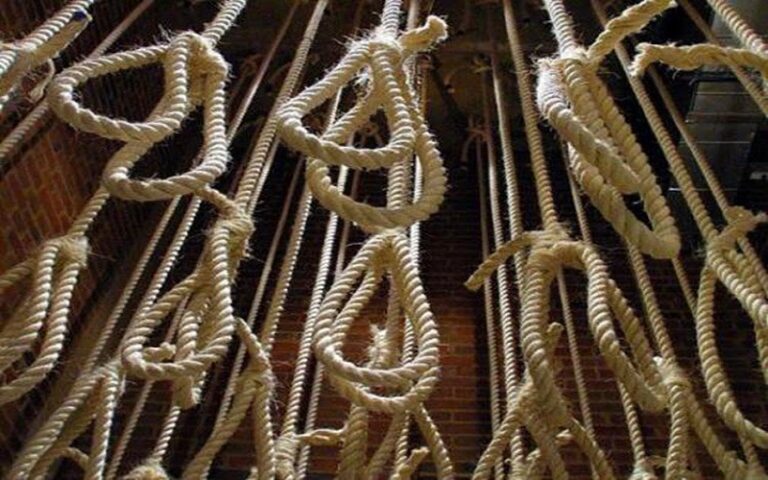
In Iran under the rule of the Supreme Leader, the execution machine continues to ruthlessly claim victims. Between July 23 and August 22 alone, 166 people were hanged; and in the past week, 31 of our compatriots, including one woman, were executed. Two of the victims were publicly hanged in Kordkuy and Beyrom in Larestan. The execution-driven government seeks to humiliate and normalize violence, plunging society into fear.

Rise In Executions in Iran; Ten Prisoners Hanged in One Day

According to reports, a group of prisoners in Dehdasht prison joined the “No To Execution Tuesdays” campaign in its 83rd week. The addition of Dehdasht prison to the campaign list is a bitter reminder that no corner of Iran is safe from the shadow of execution.

At the same time, we are confronted with another shocking piece of news: the transformation of Section 41 of Behesht Zahra Cemetery (a section that reminds us of the thousands of political prisoners of the 1980s and the unforgettable crimes of those years) into a parking lot. This action is not only a disgraceful attempt to erase collective memory and the traces of regime crimes but also an overt insult to the victims and their families, an act condemned by Amnesty International as well.

The “No To Execution Tuesdays” campaign once again cries out:

Execution is not a solution.

Execution is a blatant violation of the right to life.

Execution is a tool for creating terror and consolidating political repression.

This campaign calls on all international institutions, human rights activists, and all awakened consciences to stand against this cycle of death and to reflect the Iranian people’s protest against executions.

On its 83rd week, the “No To Execution Tuesdays” campaign continues on Tuesday, August 26, with prisoners in 50 prisons across the country on hunger strike.