Home Blog Page 73

Protests Continue Over Frequent Power Outages in Iran with A Gathering in Babolsar

A group of Babolsar residents gathered early on Sunday, August 10, to protest long power outages in the city. This protest in Babolsar is the latest example of such demonstrations.

Videos and reports circulated on social media show protesters in Babolsar gathering in front of the local electricity office in Mazandaran province. Earlier, residents of Fereydunkenar, a neighboring city to Babolsar, had also held a similar protest.

In addition to Mazandaran, gatherings have also taken place in Gilan province—in Rasht, Khomam, and Khoshkebijar—to protest the power outages.

The Ongoing Electricity Crisis in Iran

Protest gatherings in Iran began in late July in Sabzevar, the second-largest city in Razavi Khorasan province, and have since spread to other cities and counties.

Parliament’s stance on protests over water and electricity outages

Following the protests in Babolsar and Fereydunkenar, the state-run IRNA news agency wrote about the frequent electricity cuts in Mazandaran province: “The people of Mazandaran, like other compatriots, have adapted themselves to the scheduled outages announced by the provincial electricity distribution company, enduring two- and even four-hour daily blackouts.”

Meanwhile, on Saturday, August 9, Esmaeil Hosseini, spokesperson for the Energy Commission of Iran’s regime parliament, referred to citizens’ protests over water and electricity shortages, saying: “The most important issue the enemy focuses on is dissatisfaction, and one of the ways it seeks to create dissatisfaction is through the energy sector.”

Despite this warning from the Energy Commission member, Vahid Ahmadi, a member of the regime parliament’s National Security Commission, told the state-run Didban Iran website that while various crises such as water shortages or lack of energy may exist, “if proper management is applied, there is not much to worry about.” He added, “Despite the problems with water and electricity, we are still prepared to enter another war.”

Water And Electricity Supply Crisis; Efforts for the Rapid Transfer of Water to Tehran

However, on Sunday, Massoud Pezeshkian, president of Iran’s regime, warned of a 40% decrease in rainfall across the country, saying Iran is facing a “serious and unimaginable” water resources crisis.

In a meeting with managers and media representatives, he emphasized that unplanned development has led to “having no water under our feet and none behind the dams.” Pezeshkian said: “Today we are in a state of compulsion and have no choice; we cannot avoid cutting water supplies.”

Power outage program for embassies

Meanwhile, the state-run Fars News Agency, affiliated with the Islamic Revolutionary Guard Corps (IRGC), reported on Sunday, August 10, that power had been cut to three embassies in Tehran.

The issue of embassy electricity consumption has been raised by the regime’s official media since last year. In July 2024, reports emerged of high electricity consumption by certain embassies in Tehran.

At that time, Fars reported that the highest electricity consumption among diplomatic premises was linked to a garden house belonging to one of the embassies—a claim later attributed by the state-run Qods newspaper to the British Embassy Garden.

In winter 2024, some media outlets named embassies of countries such as the Netherlands and Italy in Tehran, accusing their diplomatic premises of cryptocurrency mining.

Finally, in June 2025, electricity tariffs for embassies were increased. Embassy electricity consumption in Tehran does not appear to have a significant impact on the country’s total electricity usage. However, whenever public dissatisfaction over frequent power outages rises, the issue of embassy electricity consumption is raised by the regime’s official media.

Iran’s Regime Extends Prison Sentence of Two Elite Students Under New Made-Up Charges

Mostafa Nili, a lawyer, announced that new prison sentences have been issued for Amirhossein Moradi and Ali Younesi, two imprisoned elite students, on charges of “propaganda against the state” and “supporting Israel.”

On Saturday, August 9, Nili wrote on the social media platform X that Branch 29 of the Revolutionary Court sentenced Moradi and Younesi to 15 months in prison on the charge of “propaganda activities against the state.”

According to the lawyer, in another case against Younesi, the Iranian regime’s judiciary sentenced him to five years in Kerman Prison on the charge of “endorsing and supporting” Israel.

Amirhossein Moradi And Ali Younesi on Mahsa’s Anniversary: A Spark Can Ignite The “Uprising Until Khamenei’s Overthrow”

Nili added: “As an additional punishment, Mr. Ali Younesi is banned from using any virtual platforms or making phone calls outside the prison, except in urgent cases under the direct supervision of the prison warden, during his prison term.”

Ali Younesi’s brother says the reason for his brother’s sentence was a “false” report by Hedayatollah Farzadi, the warden of Evin Prison, claiming that after the killing of Hezbollah leader Hassan Nasrallah by Israel, Younesi distributed sweets.

According to Reza Younesi, the sit-in and protest by prisoners following the execution of Mojahed Korkor was another incident cited in the Evin warden’s report as the basis for the new ruling against Ali Younesi.

Mojahed Korkor was a protester from Izeh whom the Iranian regime executed at dawn on Wednesday, June 11. Following this, political prisoners in Ward 4 of Evin Prison, including Ali Younesi and Amirhossein Moradi, staged a sit-in in protest.

This is not the first time the Iranian regime has accused citizens of “supporting Israel.” Following the 12-day war and ceasefire between the Iranian regime and Israel, hundreds of citizens in Iran have faced fabricated cases by security and judicial bodies, putting them at risk of harsh sentences such as execution and imprisonment.

On August 9, the Iranian regime’s judiciary spokesperson identified 20 citizens arrested after the recent war as “espionage agents and supporters of Mossad” and said their cases are under review.

The new prison sentences for Younesi and Moradi come as they have already been imprisoned for more than five years.

These two elite students, arrested in 2020, were only 19 years old at the time of their detention.

Younesi, born on March 4, 2001, is a computer science student at Sharif University of Technology and the winner of a gold medal in the 2018 International Olympiad on Astronomy and Astrophysics in Beijing, China. Together with the Iranian team, he won first place globally by earning five gold medals in the 12th edition of the competition.

Moradi, born on February 19, 2001, is another student at Sharif University and the holder of a silver medal in Iran’s National Astronomy Olympiad in 2017.

PMOI Supporters Given Double Death Sentences by Iran’s Regime

In May 2020, then-judiciary spokesperson Gholamhossein Esmaili accused the two students of having ties with “anti-regime groups,” including the People’s Mojahedin Organization of Iran (PMOI/MEK).

He also claimed that “explosives were found” in their homes — an allegation strongly denied by Younesi, Moradi, their families, and people close to them.

After nearly two years of interrogation and pressure to obtain televised confessions, in May 2022, the Revolutionary Court sentenced Younesi and Moradi to 16 years in prison on “national security-related charges.”

Hossein Mousavian, A Former Iranian Regime Diplomat, Has Been Dismissed from Princeton University After Fifteen Years

Princeton University in the United States announced that Hossein Mousavian, a former Iranian regime diplomat, has “retired” from the university. Mousavian is accused of being involved in the assassinations of several prominent opponents of the Iranian regime in Europe.

In an official statement, Princeton University described Mousavian’s departure as “retirement.”

Mousavian served as a “Middle East security and nuclear policy expert” in Princeton University’s Program on Science and Global Security.

He is accused of involvement in the assassination of at least 24 Iranian regime opponents in Europe during the 1980s and 1990s, including Shapour Bakhtiar, Fereydoun Farrokhzad, Abdolrahman Ghassemlou, and Kazem Rajavi.

The Mykonos restaurant assassinations and the historic verdict of the Berlin court, which held the Iranian regime responsible for the killing of four Iranian dissidents in 1992, can and should serve as the basis for prosecuting Mousavian.

In recent years, Iranian dissidents, political and civil activists, families seeking justice, and several international organizations and associations have demanded that Princeton sever ties with Mousavian and remove him from the university.

In November 2023, Fox News reported that the U.S. Congress’s Education Committee had launched an investigation into Princeton University’s connection with Mousavian.

The hiring of Mousavian at Princeton and the employment of Mohammad Jafar Mahallati, the former Iranian regime ambassador to the United Nations, at Oberlin College, indicate a troubling and unique pattern concerning the Iranian regime, as former ambassadors of no other oppressive government have ever held such prestigious positions at U.S. universities.

This trend gives a platform and legitimacy to individuals directly involved in assassinations, terrorist acts, and crimes against humanity.

Recent revelations by Mohsen Rafighdoost, the first minister of the Iranian regime’s Islamic Revolutionary Guard Corps (IRGC), provide new grounds for reopening cases in which Mousavian is accused of involvement.

In March 2024, Rafighdoost admitted in an interview that the IRGC maintained a secret account at the Bank Saderat branch in Frankfurt to finance the assassination of regime opponents abroad through money laundering.

Rafighdoost’s statements, along with court documents — including German intelligence reports showing links between the Iranian regime’s embassy in Bonn and the perpetrators of the Mykonos assassinations through encrypted telephone communications — provide a solid legal basis for prosecuting Mousavian.

Kazem Rajavi: Iran human rights advocate remembered

Dr. Kazem Rajavi, the brother of Massoud Rajavi, leader of the Iranian opposition, was assassinated in Switzerland by Iranian regime agents on April 24, 1990.

More Than 125 Political Prisoners Are Being Held in Inhumane and Unbearable Conditions in Sheiban Prison in Ahvaz

Ward 5 of Sheiban Prison in Ahvaz, which has an official capacity of 100 people, is currently holding more than 125 political prisoners. These inmates face numerous problems, including overcrowding and a severe health crisis, and have announced that if their problems are not addressed immediately, they will go on hunger strike.

The Karun Human Rights Organization reported on Saturday, August 9, that following mass arrests after the 12-day war, at least 80 of those detained were transferred to Ward 5 of Sheiban Prison in Ahvaz.

After enduring physical and psychological torture and forced confessions, these individuals were sentenced to long prison terms, severely increasing the population of this ward.

Overcrowding and unsuitable living space

Although Ward 5 of Sheiban Prison was designed to hold a maximum of 100 people, overcrowding has severely impacted sanitary and human living conditions.

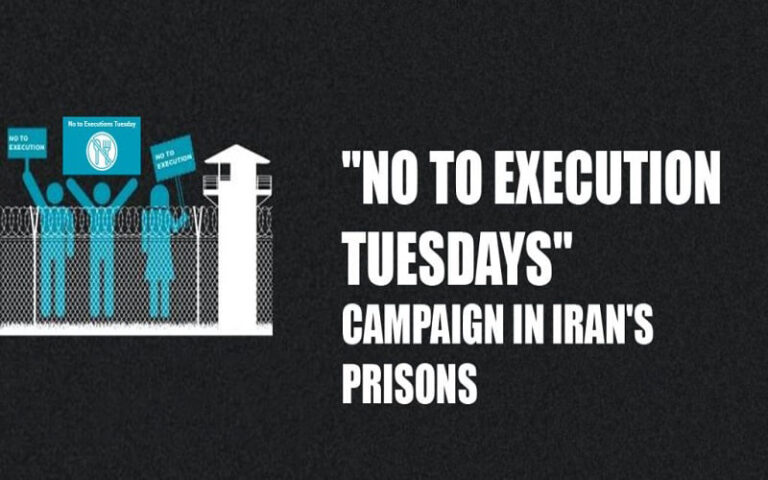
The 80th Week of the “No To Executions Tuesdays” Campaign Took Place Across 48 Different Prisons

Rooms in this ward, each with an area of less than 20 square meters, were intended for 12 to 15 people, but due to overcrowding, some rooms now hold more than 20 prisoners.

The yard of this ward measures only 60 square meters, and due to a broken sewage system, contaminated water and sewage have accumulated there, filling the prison with a foul stench.

The prison’s high walls, 12 meters tall and six meters thick, block the flow of fresh air and natural ventilation in the yard. Prisoners cannot walk, move around, or exercise there and are only transferred to another ward once every two weeks for exercise.

Rising illnesses and a severe health crisis

According to the Karun Human Rights Organization, the sanitary conditions in Ward 5 of Sheiban Prison are “extremely critical,” and various diseases have spread among the prisoners.

In addition to specific illnesses, the spread of skin diseases such as scabies, as well as influenza, has increased sharply.

The Exile of Political Prisoner Saeed Masouri to Zahedan Prison in Southeastern Iran

Another concern is that cooking is carried out in the ward’s yard, next to contaminated water and sewage, further endangering prisoners’ health.

This ward has only two toilets, forcing prisoners to endure long queues to use them.

There are also only two showers available for prisoners in this ward, and due to overcrowding, the waiting time to use them can reach two to three hours.

The available air coolers are ineffective, and the hot climate of Ahvaz makes conditions even more unbearable for prisoners.

Threat of hunger strike

In response to these critical and inhumane conditions, political prisoners in this ward have threatened to launch a “collective hunger strike” if their problems are not addressed immediately.

They stated that this action would be carried out in protest against the “inhumane conditions in the prison.”

Many prisoners in Iran are forced to use hunger strikes as a last resort to achieve their demands, putting their lives at risk.

They often go on strike in protest against unmet demands, including delays in processing their cases and the failure to respect their rights as prisoners.

Death row inmates and long-term prisoners

Ward 5 of Sheiban Prison in Ahvaz is one of the most overcrowded wards for political prisoners in Iran and houses a number of inmates sentenced to death or long prison terms.

Seyed Salem Mousavi, Habib Deris, Mohammad Davarshenas, Mehdi Sharifi, Mohammad Amin Abiat, Morteza Mehnapur, Masoud Jamei, Alireza Mardasi, and Farshad Etemadifar are among the death row inmates held in this ward.

Several political prisoners serving life sentences or long-term imprisonment — including Gholamhossein Kalbi, Abdol Emam Zaeri, Abdol Zahra Helichi, Yahya Naseri, Nazem Bureihi, Mohammad Ali Amourinejad, Seyed Yaber Albushouka, Seyed Mokhtar Albushouka, Ali Halfy, Ayoub Porkar, Fares Ramahi (Amouri), Saman Hormatnejad, and Davoud Hormatnejad — are also held in this ward.

In its report, the Karun Human Rights Organization wrote that human rights activists, expressing deep concern about the prisoners’ situation, have urged international bodies and human rights organizations to act swiftly to improve conditions and protect the lives and health of political prisoners in Ahvaz prisons.

These groups have called on international organizations to exercise closer monitoring of prisoners’ situations and prison conditions to prevent any human rights violations.

Transfer of 5 Political Prisoners Sentenced to Death to Ghezel Hesar Prison

During a prisoner transfer from Fashafouyeh Prison to Evin Prison on the morning of Friday, August 8, 2025, five political prisoners sentenced to death—Mohammad Taghavi, Shahrokh Daneshvarkar, Vahid Bani-Amrian, Pouya Ghobadi, and Babak Alipour—were transferred to Ghezel Hesar Prison.

According to informed sources, this occurred as part of a mass transfer of prisoners from Fashafouyeh to Evin Prison. Reports indicate that these prisoners were separated from others with violence and beatings by prison guards and transferred to an undisclosed location without the ability to contact their families. These political prisoners protested their transfer but were brutally beaten.

Iran’s Regime Executes Political Prisoners Mehdi Hassani and Behrouz Ehsani

Over the past two days, more than 600 political, security, and financial prisoners have been transferred from Fashafouyeh Prison to Evin Prison without prior notice to their families. This transfer comes while many damaged sections of Evin Prison—especially those affected during the “12-Day War” missile attack—are still under reconstruction.

According to reports, in the early hours of Thursday, August 7, a group of financial prisoners, and in the early hours of Friday, August 8, a large number of political and security prisoners were transferred from Fashafouyeh to wards 7 and 8 of Evin Prison. These transfers occurred rapidly and under an atmosphere of uncertainty, with prisoners given no chance to collect their personal belongings.

The cases of six political prisoners—Vahid Bani-Amrian, Seyed Mohammad Taghavi, Babak Alipour, Pouya Ghobadi, Shahrokh Daneshvarkar, and Abolhassan Montazer—were jointly tried in Branch 26 of the Tehran Revolutionary Court, presided over by Judge Iman Afshari, on October 6, 2024.

On Saturday, November 30, 2024, the six political prisoners were sentenced to death and prison on charges of “armed rebellion, assembly and collusion against national security, and membership in the Mojahedin (PMOI/MEK).”

In a statement, the National Council of Resistance of Iran (NCRI) called on “the UN High Commissioner, the Human Rights Council, the Special Rapporteur on the situation of Human Rights in Iran, and international human rights organizations to take immediate action to inquire about the status of these five prisoners and to save their lives, as they are at risk of execution.”

In an urgent call, Amnesty International called on the regime to “halt any plans to execute” the five prisoners and warned, “Global action is needed NOW urging Iranian authorities to halt any plans to execute them!”

Extreme Heat Puts Lives of Iran’s Oil Industry Workers at Risk

0

Several labor-focused media outlets have criticized the extremely harsh conditions faced by workers in Iran’s oil industry amid soaring temperatures and have warned that their lives are at risk.

Oil industry workers are operating in extreme heat of 60°C (140°F) under critical water and electricity shortages and without any facilities or support, while contractors are failing to pay their wages and benefits.

A recent video showing a heat-stricken worker at the Kangan Petrochemical Complex has sparked strong criticism of the dangerous working conditions in the South Pars sites and other operational oil zones.

Water Reserves in 19 Major Iranian Dams Fall Below 20%

In the video, a worker says, “This hell is the story of our lives,” describing the dire and hazardous working conditions under extreme heat and warning that workers’ lives are in danger.

He added: “According to the law, work must stop when temperatures exceed 50°C, but we are forced to continue working in this scorching heat without any cooling facilities or proper sanitary and living accommodations.”

One worker addressed the authorities of Iran’s regime, saying the heat is threatening workers’ lives, yet no official cares about them.

Workers are demanding a halt to work under these critical conditions with full pay, the provision of standard facilities for dormitories, the dismissal of negligent contractors, and attention to their livelihood and welfare rights.

Widespread heatwave enters Iran

Sadegh Ziaian, head of the National Center for Forecasting and Crisis Management at the Meteorological Organization of Iran, stated on Thursday, August 7, in an interview with the state-run Mehr News Agency, that with a widespread heatwave entering Iran in the coming days, temperatures in some southern cities will rise to 50°C (122°F).

According to Ziaian, over the next three days, the provinces of Sistan and Baluchestan, Kerman, and parts of Hormozgan will experience rising temperatures along with wind and dust storms.

The report states that the weather across most parts of the country will be hot, with an upward trend in temperatures.

Meanwhile, Mohsen Farhadi, head of the Occupational Health Center at the Ministry of Health, warned about the dangers of direct sunlight exposure, stating that ultraviolet rays cause serious harm, especially to children.

Skin cancers and eye diseases are among the common consequences of exposure to ultraviolet rays from the sun.

Warning over heatstroke among corporate workers in Asaluyeh

Previously, on July 29, labor activist Maziar Gilani-Nejad, who closely follows the conditions of oil and gas project workers, told the state-run ILNA news agency that heatstroke and food poisoning are the two main causes of illness among project workers in Asaluyeh and other hot regions during the summer.

Gilani-Nejad stated, “In recent days, as the heat in Asaluyeh has reached over 50 or even 60°C (122–140°F), many workers have suffered from heatstroke.” He added, “Although we do not have exact figures, dozens of workers are being sent daily to the clinics in Kangan and Asaluyeh due to heat-related illnesses.”

He further said: “Fainting from heatstroke during work is a daily occurrence in various projects. Humidity and temperatures sometimes reaching 60°C or more are putting all project workers—whether permanent, contract-based, or third-party employees—at risk of numerous diseases and hazards.”

According to this labor activist, during the days when workers in Asaluyeh and Khuzestan protest against working in extreme heat, many contractors, indifferent to the horrific weather conditions, force workers to continue without any shade, proper ventilation, or even rehydration drinks—and they take pride in this mistreatment.

United States Imposes New Sanctions On 18 Individuals and Entities Linked to Iran’s Regime

The U.S. Department of the Treasury has imposed new sanctions on 18 individuals and entities linked to Iran’s regime due to their central role in the regime’s efforts to generate revenue and evade U.S. sanctions.

On Thursday, August 7, the U.S. Treasury reported that in response to severe financial restrictions caused by international isolation, Iran’s regime has engineered complex banking schemes and alternative payment systems specifically designed to evade sanctions and safeguard its ability to collect export revenues, particularly from illicit oil sales.

The Treasury emphasized that these systems also enable the regime to continue funding its proxy forces and repressing the Iranian people.

U.S. Imposes Largest Sanctions Package Against Iranian Regime’s Shipping Industry

According to the Treasury’s statement, the sanctioned IT and financial companies have also provided advanced surveillance technologies to the regime, which are used by Iranian regime security forces to restrict internet access and target women who violate compulsory hijab laws.

Who are the sanctioned individuals?

According to the statement, Adel Berjisian, Hadi Nouri, and Alireza Fatahinojokambari are connected to the offshore bank Cyrus; Ali Morteza Birang, Seyyed Mahmoud Reza Sajjadi, and Mohammad Shafipour are linked to the clearing company RUNC; and Shahab Javanmardi is affiliated with Arvand Arian Pasargad Communications and Information Technology Payment Company, known as FANAP Tech.

The U.S. Treasury statement also lists 11 sanctioned entities.

U.S. Treasury Secretary emphasizes maximum pressure

Scott Bessent, U.S. Treasury Secretary, wrote in a published statement: “As a result of President Trump’s maximum pressure campaign and increasing isolation from the global financial system, the Iranian regime is running out of places to hide.”

He added: “Treasury will continue to disrupt Iran’s schemes aimed at evading our sanctions, block its access to revenue, and starve its weapons programs of capital in order to protect the American people.”

Less than two weeks after the start of Donald Trump’s second presidential term, a new campaign of “maximum pressure” against Iran’s regime was launched.

In the first 100 days of action, the Trump administration imposed a total of 17 rounds of sanctions related to Iran’s regime, targeting 40 individuals, 117 companies and entities, and 77 oil tankers.

All individuals and entities added to this list are barred from accessing assets in the United States, and U.S. persons and companies are prohibited from engaging in transactions with them.

Additionally, secondary sanctions mean that non-U.S. individuals or companies may also be subject to sanctions if they do business with these designated persons and entities.

Iran’s Deepening Crisis: Expanding Bureaucracy, Shrinking Livelihoods

0

A multi-layered crisis is paralyzing Iran’s economy and society, as bloated institutions expand while citizens face mass unemployment and rising poverty.

Iran is not merely experiencing an economic downturn—it is confronting what experts describe as a “layered and interdependent crisis.” In a striking interview with Shargh newspaper, regime-affiliated economist Hossein Raghfar warned that the Iranian regime is now in its most fragile state in decades. “We are not facing a simple crisis,” he said. “This is a crisis nested within other crises—each one reinforcing and amplifying the others.”

This dangerous synergy between political deadlock, economic collapse, social alienation, and cultural stagnation is pushing the country to the edge. The erosion of public hope is not only weakening Iran’s internal stability but also undermining its diplomatic leverage abroad. In such a state of national exhaustion, even the most basic reforms are difficult to implement, let alone ambitious policy shifts.

The Crippled Economy of Iran and the Irreversible Paths

The Human Cost of Economic Collapse

While official narratives continue to emphasize “resistance” and “resilience,” the lived reality for millions of Iranians tells a different story. In just the past two months, over 5 million motorbike couriers reportedly lost their jobs. Alongside them, 8 million gig economy drivers, who relied on digital platforms for income, have seen their earnings disappear or shrink dramatically.

These figures point to a staggering contraction in Iran’s informal labor market—one of the last remaining economic lifelines for a society battered by sanctions, inflation, and deindustrialization. Yet despite this unprecedented wave of unemployment, government policies have remained largely indifferent, offering neither direct aid nor wage increases to the most vulnerable.

The Irony of a Growing Government

Amidst this economic free fall, Iran regime’s presidential institution has undergone a massive expansion—both in personnel and spending. In 2019, the budget for the presidency stood at 292 billion tomans. By 2025, it is projected to reach a staggering 8,504 billion tomans, reflecting a 2,800% increase in just six years.

The number of employees in the presidential administration has also exploded. While the U.S. White House operates with approximately 400 mostly expert staff, estimates suggest Iran’s presidential office now employs between 4,000 to 5,000 people. This surge is not just wasteful—it contradicts long-standing promises to “shrink government” and improve efficiency.

New and expensive departments, such as the Strategic Transformation Secretariat, have been added, along with the construction of new office buildings and the hiring of more administrative staff. Ironically, as the people grow poorer, the government becomes richer—at least in terms of its own apparatus.

Bureaucracy Without Merit

This state expansion is not accompanied by professionalism or accountability. As Ham-Mihan daily reports, Iran’s bureaucracy has become “fat, slow, and dysfunctional”—particularly since the presidency of Mahmoud Ahmadinejad. Hiring practices increasingly favor ideological loyalty and tribal affiliation over competence or expertise.

Many administrative processes are redundant or deliberately prolonged, and the bloated system often requires more people to do less work. In one telling example, a routine task requiring five qualified employees is now assigned to ten underqualified ones—and still takes longer and yields worse results.

Worse still, corruption has become entrenched. In such an environment, inefficiency, nepotism, and financial mismanagement thrive, feeding the very crises that are destroying the economy.

Symbolic Gestures, Systemic Failures

Perhaps nothing illustrates the hollowness of the regime’s approach better than a recent widely circulated image: five government officials and a cleric traveling to a remote village in Sistan and Baluchestan to deliver an air conditioner to a needy family. The unit appeared second-hand, and the cost of transporting officials—likely involving staff wages, transport, and security—almost certainly exceeded the value of the gift itself.

This public relations stunt reflects a broader pattern of performative charity in place of policy—a regime more interested in symbolic displays than in real solutions. As the Persian proverb goes, “They bring seven sets of bowls and ladles, but there’s no dinner.”

Rhetoric vs. Reality

Regime president Masoud Pezeshkian recently declared that the government must “know the condition of the people” and that “no citizen should be left unheard.” Yet the contradiction between such statements and actual policy is stark. If leaders are truly aware of the people’s suffering, why have wages not been raised? Why is direct financial support still so limited, especially for informal workers, retirees, and the unemployed?

These are not rhetorical questions. They are existential ones—for millions of Iranians whose survival is at stake. The government’s inaction in the face of economic collapse, coupled with its lavish spending on itself, points to a deeper truth: Iran’s crisis is not only economic—it is systemic.

Crisis at the Core: Shifting Power, Strategic Confusion, and Growing Public Distrust in Iran

0

After the 12-day war, Iran’s leadership faces growing cracks in the political structure, a faltering diplomatic strategy, and increasing public disillusionment, revealing a system under deep internal strain.

The political landscape in Iran has entered a phase of turbulence following the 12-day conflict, with evidence of both internal dissent and ideological disarray. While hardline outlets like Keyhan insist that the war is ongoing—portraying it as a hybrid battle that includes information warfare and global conspiracy—other voices warn that the regime is dangerously detached from both global realities and the demands of its own people.

Rather than unified messaging, Iran regime’s leadership is engaged in a “war of narratives”. Conflicting statements about nuclear diplomacy, the role of the UN’s atomic agency, and engagement with the West reflect a fractured state apparatus unable to articulate a coherent post-war strategy. The regime simultaneously denies the persistence of war while ramping up media control and reviving security legislation like the controversial anti-fake news bill.

Diplomacy Deadlocked, War Logic Prevails

Diplomatic uncertainty looms large. Former regime MP Heshmatollah Falahatpisheh noted that “no diplomat speaks of the death of diplomacy,” warning that if a second war erupts, it will be a “war for survival” where all norms are discarded. His criticism of the regime’s foreign minister Abbas Araghchi highlights a deeper issue: Tehran maintains backchannels but refuses to commit to structured negotiations.

The cold war in U.S.–Iran relations continues. Despite hopes for de-escalation, experts agree that no meaningful change has occurred since the conflict. Washington continues to demand zero enrichment, while Tehran asserts its right to nuclear advancement. The strategic ambiguity of Iran’s foreign policy, torn between confrontation and diplomacy, is now harming its international standing and economic recovery prospects.

The Legitimacy Crisis: Cracks in the System’s Core

Perhaps more alarming than diplomatic confusion is the deepening rift between state and society. Multiple commentators describe a growing “nation–state gap,” where citizens no longer trust their rulers. This was underscored by the resignation of Tehran’s Friday Prayer Leader, Kazem Seddiqi, a figure closely tied to the regime’s religious-political legitimacy. Though framed as a voluntary retreat for “scientific and religious activities,” his departure followed public backlash over his son’s corruption case—a scandal emblematic of the public’s waning faith in clerical leadership.

Far from healing public distrust, such symbolic exits are seen as cosmetic. Critics argue that if the regime continues its current path—marked by opacity, factional power struggles, and media repression—public cynicism will only deepen.

Power Reshuffling and Hardliner Decline?

Behind the scenes, power dynamics appear to be shifting. Ali Larijani becoming the head of the regime’s Supreme National Security Council (SNSC), and discussions of sidelining hardliners like Saeed Jalili, suggest a repositioning of the regime’s security doctrine. If true, this would indicate the marginalization of ideologues who opposed the nuclear deal and international engagement in favor of pragmatists seeking damage control.

Even pro-regime outlets acknowledge the internal strain. The shift could be seen as the early stages of a political “molting” process—an attempt to adapt to a changing domestic and international environment without conceding core power.

Government Gridlock and Structural Inefficiency

Meanwhile, tensions between the so-called technocrats appointed by previous regime president and Parliament remain unresolved, now playing out under Masoud Pezeshkian. Parliament continues to push for impeachments and greater control over ministries, including culture and energy—areas already plagued by blackouts and mismanagement.

The Pezeshkian government, according to analysts, is trapped between limited resources, a legacy of 20 years of policy failures, and systemic dysfunction. Without sweeping structural reforms—including price rationalization, private investment, and decentralized governance—the risk of state collapse in some sectors grows.

The Burden of the Past: A Political Deadlock Engineered by the Hardliners

Some editorials place the blame for this impasse squarely on the Principlist (conservative) political establishment, accusing them of empowering Mahmoud Ahmadinejad and Ebrahim Raisi while sabotaging efforts like the 2015 nuclear deal (JCPOA). The symbolic burning of the JCPOA in Parliament, now seen as a strategic blunder, gave Israel and the U.S. grounds to reapply pressure and isolate Iran internationally.

As the country stumbles through this uncertain phase, more voices are demanding a reassessment of past ideological choices, especially regarding foreign policy and internal governance.

A Regime at a Crossroads

The overlapping crises—from diplomatic deadlock and economic freefall to leadership reshuffling and rising public distrust—paint a clear picture: Iran’s ruling system is in transition, but without a clear direction. The gap between the rulers and the ruled has widened to a dangerous degree. Calls for structural reform, transparency, and pragmatism are growing louder, even within the system itself.

Yet without decisive action—beyond symbolic resignations or media manipulation—the regime risks not just political recalibration, but systemic collapse. Whether the leadership chooses suppression or adaptation in the coming months will define Iran’s trajectory in a post-war world.


Over 20 Provinces in Iran Shut Down Due to Power and Water Shortages

Iranian regime officials have announced the widespread closure of government offices, banks, and educational centers in more than 20 provinces due to extreme heat and an unprecedented water and electricity supply crisis. This has recurred several times in the past weeks. These closures are scheduled for Wednesday, August 6, and even include colder provinces such as Ardabil, Zanjan, and Kurdistan.

The governor of Tehran had earlier stated that “due to rising temperatures and the need to manage energy consumption,” all executive branches in the capital would also cease operations that day. With temperatures reaching 40°C in Tehran, the public has been urged to avoid outdoor activity during peak heat hours and conserve water and electricity.

Water And Electricity Supply Crisis; Efforts for the Rapid Transfer of Water to Tehran

This wave of shutdowns is far-reaching. Some provinces, such as East Azerbaijan, were already shut down on Tuesday, while in West Azerbaijan, offices operated remotely. In Fars Province, too, officials announced remote work for government offices on Wednesday.

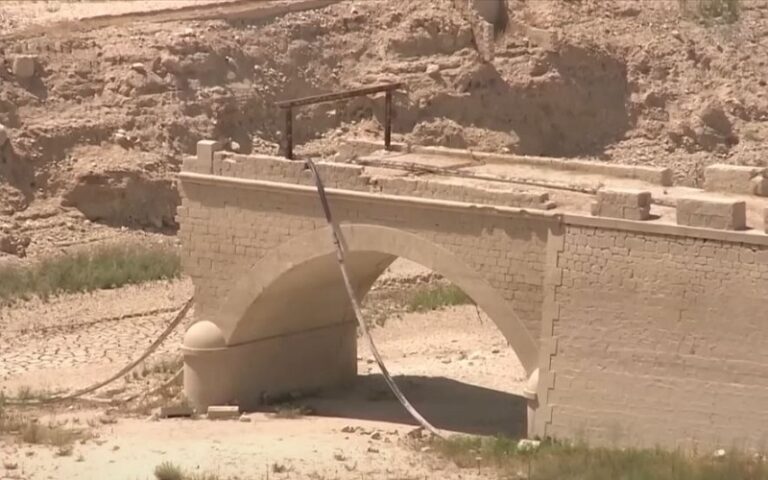
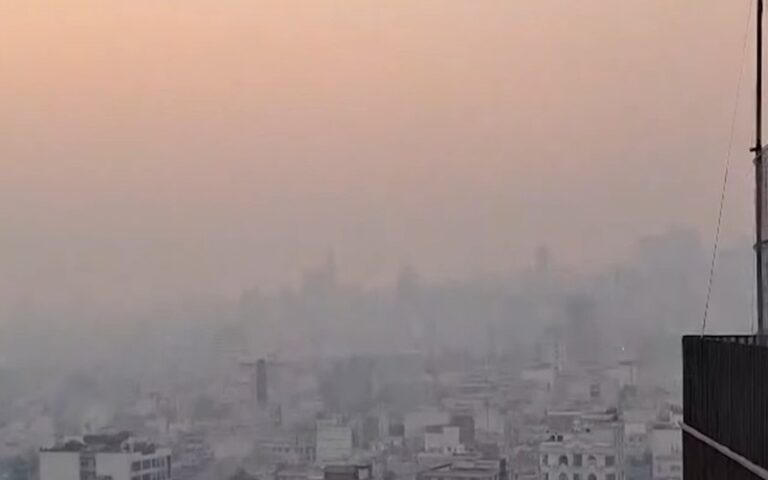
According to the Ministry of Energy, Iran produces around 62,000 megawatts of electricity at peak capacity, while current demand has surpassed 77,000 megawatts. At the same time, the country’s water reserves have reached their lowest levels in decades. Severe declines in rainfall and ongoing drought have compounded the strain on existing resources. Official statistics show that water reserves in 15 of the country’s key dams have dropped by more than 50% compared to last year.

Regime officials have repeatedly warned in recent months about the consequences of the water and power crisis. Masoud Pezeshkian, Iran’s regime president, even stated that if the current trend continues, “Tehran may no longer be viable as the capital,” and proposed relocating the country’s political center to the south.

Industry Struggles and Public Anger Grow Amid Water and Power Crisis in Iran

The Root of the Crisis: Nuclear, Missile, and Terrorism Spending

Although regime officials blame the current crisis solely on drought and past mismanagement, a major factor lies in the regime’s budget priorities. In recent years, tens of billions of dollars have been funneled into the nuclear program, the development of ballistic missiles, and financial and military support for regional proxy militias. These expenditures have done nothing to improve public welfare and have severely drained funds needed for the development of water and electricity infrastructure.

At a time when the country desperately needed immediate investment in its power grid, modern power plants, and water resource management, these funds were diverted to military projects and interventionist activities abroad. The result: widespread blackouts, low water pressure, and the simultaneous shutdown of more than half of the country’s provinces.