Home Blog Page 74

Crisis at the Core: Shifting Power, Strategic Confusion, and Growing Public Distrust in Iran

0

After the 12-day war, Iran’s leadership faces growing cracks in the political structure, a faltering diplomatic strategy, and increasing public disillusionment, revealing a system under deep internal strain.

The political landscape in Iran has entered a phase of turbulence following the 12-day conflict, with evidence of both internal dissent and ideological disarray. While hardline outlets like Keyhan insist that the war is ongoing—portraying it as a hybrid battle that includes information warfare and global conspiracy—other voices warn that the regime is dangerously detached from both global realities and the demands of its own people.

Rather than unified messaging, Iran regime’s leadership is engaged in a “war of narratives”. Conflicting statements about nuclear diplomacy, the role of the UN’s atomic agency, and engagement with the West reflect a fractured state apparatus unable to articulate a coherent post-war strategy. The regime simultaneously denies the persistence of war while ramping up media control and reviving security legislation like the controversial anti-fake news bill.

Diplomacy Deadlocked, War Logic Prevails

Diplomatic uncertainty looms large. Former regime MP Heshmatollah Falahatpisheh noted that “no diplomat speaks of the death of diplomacy,” warning that if a second war erupts, it will be a “war for survival” where all norms are discarded. His criticism of the regime’s foreign minister Abbas Araghchi highlights a deeper issue: Tehran maintains backchannels but refuses to commit to structured negotiations.

The cold war in U.S.–Iran relations continues. Despite hopes for de-escalation, experts agree that no meaningful change has occurred since the conflict. Washington continues to demand zero enrichment, while Tehran asserts its right to nuclear advancement. The strategic ambiguity of Iran’s foreign policy, torn between confrontation and diplomacy, is now harming its international standing and economic recovery prospects.

The Legitimacy Crisis: Cracks in the System’s Core

Perhaps more alarming than diplomatic confusion is the deepening rift between state and society. Multiple commentators describe a growing “nation–state gap,” where citizens no longer trust their rulers. This was underscored by the resignation of Tehran’s Friday Prayer Leader, Kazem Seddiqi, a figure closely tied to the regime’s religious-political legitimacy. Though framed as a voluntary retreat for “scientific and religious activities,” his departure followed public backlash over his son’s corruption case—a scandal emblematic of the public’s waning faith in clerical leadership.

Far from healing public distrust, such symbolic exits are seen as cosmetic. Critics argue that if the regime continues its current path—marked by opacity, factional power struggles, and media repression—public cynicism will only deepen.

Power Reshuffling and Hardliner Decline?

Behind the scenes, power dynamics appear to be shifting. Ali Larijani becoming the head of the regime’s Supreme National Security Council (SNSC), and discussions of sidelining hardliners like Saeed Jalili, suggest a repositioning of the regime’s security doctrine. If true, this would indicate the marginalization of ideologues who opposed the nuclear deal and international engagement in favor of pragmatists seeking damage control.

Even pro-regime outlets acknowledge the internal strain. The shift could be seen as the early stages of a political “molting” process—an attempt to adapt to a changing domestic and international environment without conceding core power.

Government Gridlock and Structural Inefficiency

Meanwhile, tensions between the so-called technocrats appointed by previous regime president and Parliament remain unresolved, now playing out under Masoud Pezeshkian. Parliament continues to push for impeachments and greater control over ministries, including culture and energy—areas already plagued by blackouts and mismanagement.

The Pezeshkian government, according to analysts, is trapped between limited resources, a legacy of 20 years of policy failures, and systemic dysfunction. Without sweeping structural reforms—including price rationalization, private investment, and decentralized governance—the risk of state collapse in some sectors grows.

The Burden of the Past: A Political Deadlock Engineered by the Hardliners

Some editorials place the blame for this impasse squarely on the Principlist (conservative) political establishment, accusing them of empowering Mahmoud Ahmadinejad and Ebrahim Raisi while sabotaging efforts like the 2015 nuclear deal (JCPOA). The symbolic burning of the JCPOA in Parliament, now seen as a strategic blunder, gave Israel and the U.S. grounds to reapply pressure and isolate Iran internationally.

As the country stumbles through this uncertain phase, more voices are demanding a reassessment of past ideological choices, especially regarding foreign policy and internal governance.

A Regime at a Crossroads

The overlapping crises—from diplomatic deadlock and economic freefall to leadership reshuffling and rising public distrust—paint a clear picture: Iran’s ruling system is in transition, but without a clear direction. The gap between the rulers and the ruled has widened to a dangerous degree. Calls for structural reform, transparency, and pragmatism are growing louder, even within the system itself.

Yet without decisive action—beyond symbolic resignations or media manipulation—the regime risks not just political recalibration, but systemic collapse. Whether the leadership chooses suppression or adaptation in the coming months will define Iran’s trajectory in a post-war world.


Over 20 Provinces in Iran Shut Down Due to Power and Water Shortages

Iranian regime officials have announced the widespread closure of government offices, banks, and educational centers in more than 20 provinces due to extreme heat and an unprecedented water and electricity supply crisis. This has recurred several times in the past weeks. These closures are scheduled for Wednesday, August 6, and even include colder provinces such as Ardabil, Zanjan, and Kurdistan.

The governor of Tehran had earlier stated that “due to rising temperatures and the need to manage energy consumption,” all executive branches in the capital would also cease operations that day. With temperatures reaching 40°C in Tehran, the public has been urged to avoid outdoor activity during peak heat hours and conserve water and electricity.

Water And Electricity Supply Crisis; Efforts for the Rapid Transfer of Water to Tehran

This wave of shutdowns is far-reaching. Some provinces, such as East Azerbaijan, were already shut down on Tuesday, while in West Azerbaijan, offices operated remotely. In Fars Province, too, officials announced remote work for government offices on Wednesday.

According to the Ministry of Energy, Iran produces around 62,000 megawatts of electricity at peak capacity, while current demand has surpassed 77,000 megawatts. At the same time, the country’s water reserves have reached their lowest levels in decades. Severe declines in rainfall and ongoing drought have compounded the strain on existing resources. Official statistics show that water reserves in 15 of the country’s key dams have dropped by more than 50% compared to last year.

Regime officials have repeatedly warned in recent months about the consequences of the water and power crisis. Masoud Pezeshkian, Iran’s regime president, even stated that if the current trend continues, “Tehran may no longer be viable as the capital,” and proposed relocating the country’s political center to the south.

Industry Struggles and Public Anger Grow Amid Water and Power Crisis in Iran

The Root of the Crisis: Nuclear, Missile, and Terrorism Spending

Although regime officials blame the current crisis solely on drought and past mismanagement, a major factor lies in the regime’s budget priorities. In recent years, tens of billions of dollars have been funneled into the nuclear program, the development of ballistic missiles, and financial and military support for regional proxy militias. These expenditures have done nothing to improve public welfare and have severely drained funds needed for the development of water and electricity infrastructure.

At a time when the country desperately needed immediate investment in its power grid, modern power plants, and water resource management, these funds were diverted to military projects and interventionist activities abroad. The result: widespread blackouts, low water pressure, and the simultaneous shutdown of more than half of the country’s provinces.

67 Political Prisoners at Risk of Execution; At Least 110 Executed Last Month

According to human rights sources, the Iranian regime executed at least 110 individuals in prisons across the country last month (July 2025). Alongside this wave of executions, the issuance or confirmation of death sentences for political prisoners has intensified, and at least 67 individuals charged with political offenses are currently at risk of execution.

On Tuesday, July 27, the Iran Human Rights Organization reported that at least 110 individuals were executed in July 2025. Among those executed were nine Baluch citizens, seven Afghan nationals, four Kurdish citizens, three Arab citizens, and one woman.

According to the report, this figure represents more than double the number of executions in July 2024, when 48 people were executed.

During this period, three executions were carried out in public, with children present at the scenes, witnessing the hangings.

Out of the total executions, 59 individuals—making up 54%—were executed on drug-related charges, and 44 people—accounting for 40%—were executed for alleged murder.

At Least 716 Executions in Seven Months

The Iran Human Rights Organization stated that in the first seven months of 2025, it has recorded at least 716 executions. However, official institutions and domestic media inside Iran have only publicly acknowledged 55 of these cases.

Among those executed were 347 individuals on drug-related charges, 310 for alleged murder, 35 for charges such as “enmity against God,” armed rebellion, and “corruption on earth,” and 24 for alleged rape, in various prisons across Iran.

Among those executed during the first seven months of 2025 were 18 women, 47 Afghan nationals, one Iraqi national, one person referred to by Iranian media as a “foreign national,” and five public executions.

Among those executed for political and security-related charges, eight individuals had been accused of “espionage for Israel,” and two political prisoners were sentenced to death for membership in the People’s Mojahedin Organization of Iran (PMOI/MEK).

67 Political Prisoners at Risk of Execution

In another section of its report, the Iran Human Rights Organization stated that it has compiled the names and case details of 67 prisoners currently at risk of having their death sentences confirmed or carried out.

According to the report, among the 67 prisoners at risk of execution, there are three women, 13 Baluch citizens, 12 Kurdish citizens, 11 Arab citizens, one dual-national prisoner, and one Kurdish citizen of Turkey — highlighting the notable presence of ethnic minorities on this list.

Of these individuals, the death sentences of 22 have already been confirmed by the Supreme Court, placing them at the highest risk. Thirty-nine sentences have been issued and are awaiting the Supreme Court’s decision, while six cases have been referred back to parallel courts.

Among the 67 individuals on this list, 58 death sentences were issued by the Revolutionary Court, 10 by the Criminal Court, and one person was sentenced to death in both courts.

Iran’s Regime Executes Political Prisoners Mehdi Hassani and Behrouz Ehsani

Charges Against Political Prisoners Sentenced to Death

The most frequently used charge leading to death sentences is baghi (armed rebellion), which appears in 54% of the cases.

According to the Iran Human Rights Organization, baghi, defined as armed rebellion against the Islamic government, was formally introduced into Iran’s penal code in 2013. In recent years, it has been used in many politically motivated death sentences.

In the one-year period from August 1, 2024, to August 1, 2025, at least 32 protesters and political or ideological prisoners received death sentences for the first time.

These 32 individuals include 15 protesters and 17 political prisoners. Of the 17 political prisoners sentenced to death in the past year, 13 were accused of ties to the People’s Mojahedin Organization of Iran (PMOI/MEK).

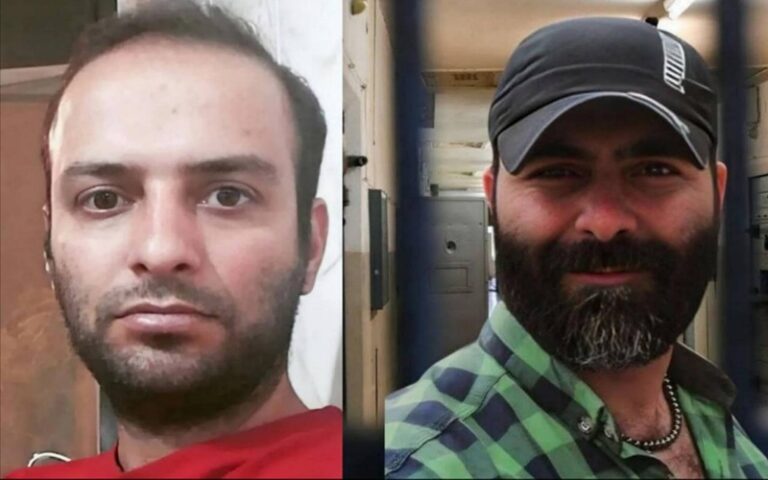
On July 27, the Iranian regime executed two prisoners—Behrouz Ehsani, age 69, and Mehdi Hassani, age 48—on charges of membership in the People’s Mojahedin Organization of Iran.

The People’s Mojahedin Organization of Iran is the country’s largest opposition group. Since the inception of Iran’s regime, members of this organization have faced the highest number of executions.

PMOI Supporters Given Double Death Sentences by Iran’s Regime

The sharp increase in executions last month and the positioning of dozens of political prisoners on death row serve not only as a serious warning about escalating repression in Iran, but also as a sign of the regime’s systematic use of the death penalty as a tool of political revenge and societal intimidation.

While the Iranian regime’s judicial system issues these verdicts under conditions of secrecy and lack of transparency, human rights organizations have once again stressed the urgent need to halt the current wave of executions, cancel death sentences against political prisoners, and conduct a thorough overhaul of death-penalty-based criminal laws.

Cities in Iran Shut Down Amid Energy Crisis

0

As Iran’s energy crisis intensifies alongside soaring temperatures, several provinces have announced closures at the end of the week or instructed employees to work remotely.

According to official statements, banks, government offices, educational centers, schools, and executive institutions in provinces such as Ardabil and Golestan will be closed on Tuesday, August 5, while Isfahan will be closed on Wednesday, August 6.

Closures will also take place in East and West Azerbaijan, Khuzestan, and Yazd provinces on both Tuesday and Wednesday.

Rising temperatures and the need to “manage water and electricity consumption” have been cited as reasons for these shutdowns.

Analysts believe such decisions reflect deep-rooted and chronic shortcomings in infrastructure management and development—failures that Iran’s regime has not been able to overcome in recent years.

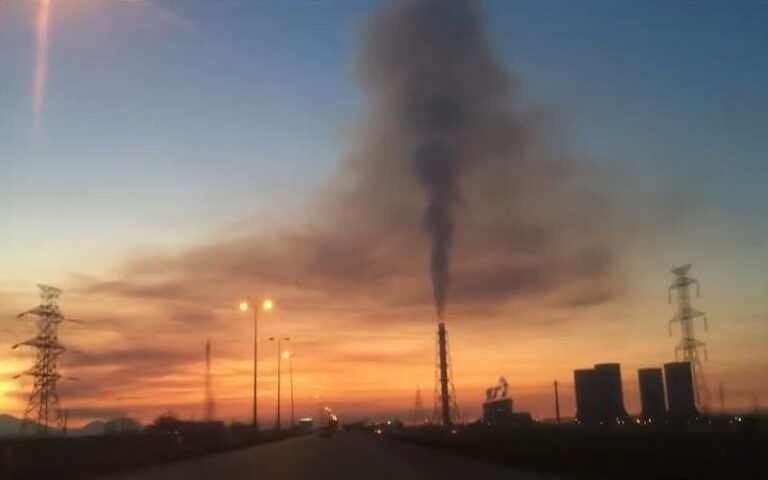
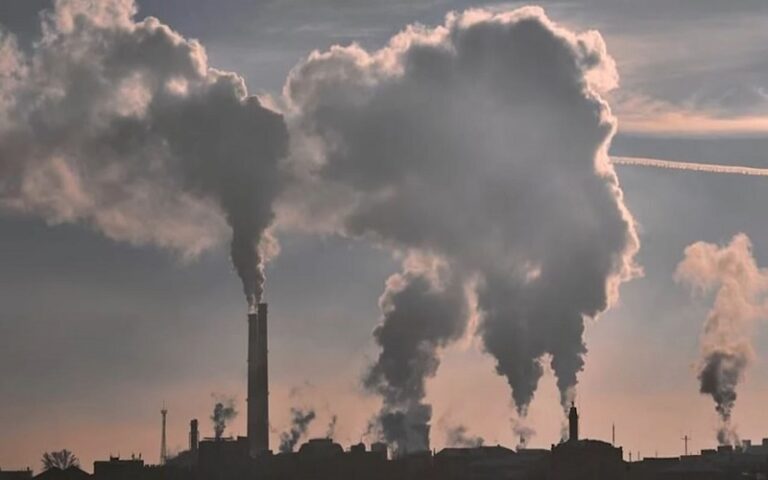
Air Pollution: A Crisis Added to Crises

In addition to extreme heat, data from Iran’s national air quality monitoring system shows that the air in Dezful and Masjed Soleyman, two cities in Khuzestan Province, is at a “hazardous” level.

Twelve other cities in Khuzestan are experiencing “very unhealthy” or “unhealthy for all age groups” air quality conditions.

The intense heat, unprecedented decline in dam inflows—especially in Tehran—and relentless pressure on the power grid have already led to repeated closures of public institutions in various cities across Iran in recent weeks as a crisis management measure.

Amid warnings about dwindling water reservoirs in dams supplying drinking water to several Iranian cities, ongoing multi-hour blackouts and repeated water pressure drops, or outright cuts have occurred in parts of the country.

The crisis reached such severity that the government declared Wednesday, July 23 a public holiday in some cities—and later touted the outcome as a “success.”

Based on proposals from executive bodies and government agencies, Wednesday closures were initially planned to continue as a strategy at least until the end of summer. However, the government later abandoned this plan itself.

Despite the official opposition, several provinces, citing delegated authority to provincial governors, took a different approach and repeatedly closed public institutions on various weekdays.

On Monday, August 4, the state-run newspaper Donya-e-Eqtesad referred to this situation as a “gap between national decisions and local actions.”

Donya-e-Eqtesad, highlighting serious concerns over the ongoing energy crisis, wrote that disorganization, contradictory decisions, and unstructured delegation of authority could ultimately lead to consequences beyond just the water and electricity crisis.

The paper added: “If the heat and water shortage persist in the coming weeks, will each province go its own way? Or will a unified and coherent decision finally be made by top-level institutions?”

Coinciding with the announcement of these closures, on August 4, Abdollah Fazeli Farsani, Deputy for Protection of the Central Plateau Watershed, warned that the total water stored in Tehran’s five major dams is at just 20% of their capacity—down by 266 million cubic meters compared to the same period last water year.

Mohsen Ardakani, CEO of Tehran Province’s Water and Wastewater Company, stated that under normal rainfall years, dam reservoirs in Tehran at this time of year typically reached 60% to 70% of capacity.

According to him, storage in the four main dams supplying Tehran’s water has now dropped to 12%.

While Iran has been plagued by energy shortages for years and no serious or structural measures have been taken to address it, Mohammad Mokhber, a senior aide to Ali Khamenei, said that if “everyone works together,” they could present a “practical and indeed successful model” to resolve the water crisis.

The Rise in Dairy Prices and Its Elimination from Iranian Households’ Tables

The Iranian regime’s inability to contain the economic crisis has led to the continued rise in the prices of essential goods, including dairy products, placing unprecedented pressure on household budgets.

In recent days, dairy prices have risen sharply, and in some areas, the cost of a single pack of cheese or a container of yogurt has exceeded an entire family’s daily budget.

Many people have said they can no longer afford to buy dairy products. Some have written that they haven’t purchased any dairy items for months, and families have opted to buy only “necessary and cheap” items.

Iran’s Dairy Market Faces Impending 42% Price Hike

Similar accounts show that dairy has become a “luxury item” for many, even though nutrition experts have always considered it a core component of a healthy diet.

For some, comparing dairy with other goods reveals a broader crisis.

A large portion of public reports circulating on social media point to a steep increase in dairy prices. One of the most frequent complaints is the constant price fluctuations.

Messages from some citizens indicate that the price hikes in dairy are so severe that, for some low-income families, buying dairy products now equals one to three days of wages.

These accounts point to the emergence of a serious nutritional crisis—one that, amid the Iranian regime’s inaction, poses a threat to public health.

The gradual elimination of dairy—especially for children and the elderly—can lead to irreparable consequences.

In the absence of supportive policies, the dairy crisis is merely a small symbol of the widespread nutritional poverty plaguing Iran.

The 80th Week of the “No To Executions Tuesdays” Campaign Took Place Across 48 Different Prisons

The 80th week of the “No to Executions Tuesdays” campaign was held. This followed the brutal crackdown on campaign participants in Ghezel Hesar Prison, which included the execution of two political prisoners and the forced transfer of Saeed Masouri to an unknown location—demonstrating the campaign’s unwavering determination to achieve its demands.

In their statement, the prisoners referenced recent executions, the barbaric amputation of fingers of three inmates in Urmia prison, Amnesty International’s stance on the issue, and the lack of information regarding the fate of several political prisoners in Unit 4 of Ghezel Hesar after they were violently assaulted.

Prisoners who participated in the 80th week of the “No to Executions Tuesdays” campaign said that the intensified repression is intended to instill fear and silence a society that, since the 1906 Constitutional Revolution, has thirsted for justice and freedom.

Systematic Human Rights Violations and a Threat to Saeed Masouri’s Life After 25 Years of Imprisonment

The full statement of the political prisoners who participated in the 80th week of the “No to Executions Tuesdays” campaign is as follows:

“We begin the 80th week of the ‘No to Executions Tuesdays’ campaign across 48 different prisons.

Since last week, at least 30 prisoners—including two women—have been executed, and one execution was carried out in public. The cycle of violence and executions continues without pause.

Last week, in an extremely savage and inhumane act, the fingers of three inmates were amputated in Urmia Prison.

Amnesty International strongly condemned this act in a statement and called Iran’s judiciary “a cog in the machinery of torture.”

The UN Special Rapporteur, Ms. Mai Sato, described it as an “inhuman and degrading” act.

Mai Sato Condemns Iran’s Amputation Sentences for Three Prisoners

We begin the 80th week of the campaign under circumstances where we still have no information about the fate of several campaign members held in Unit 4 of Ghezel Hesar Prison. On July 26, they were brutally attacked by prison guards and security agents, then transferred to solitary confinement in the secure ward of Unit 3. Some of them were returned to the ward after five days. The political ward is now fully restricted and heavily surveilled with multiple security cameras installed. There is still no news on the whereabouts of five of them: Loqman Aminpour, Hamzeh Savari, Reza Salmanzadeh, Sepehr Emamjomeh, and Mostafa Ramezani. Zartosht Ahmadi Ragheb has again been transferred to the secure ward. The condition of Saeed Masouri is extremely concerning. What we know is that Zahedan Prison refused to accept this campaign member, and he is currently held in solitary confinement in the special ward of Unit 1 in Ghezel Hesar Prison, under harsh and uncertain conditions.

We, the members of the “No to Executions Tuesdays” campaign, condemn the brutal assault, abuse, and torture of prisoners and salute the resistance and steadfastness of our executed and defiant comrades. We express our gratitude to all those who have echoed and continue to echo the pain and suffering of the prisoners.

We believe that the intensification of executions, repression, amputations, and the constant use of blatant violence serves no purpose other than to inject fear and silence society—a society that, since the 1906 Constitutional Revolution, has yearned for justice and freedom, and has persistently defended human dignity and the right to self-determination, paying the price daily through imprisonment, execution, and torture.

We continue to call on all awakened consciences and freedom-seekers—both inside the country and internationally—to amplify the cry of “No to executions” by actively supporting the “No to Executions Tuesdays” campaign. Expanding this campaign—despite the regime’s efforts and its overt and covert backers—must be prioritized by all possible means.

Today, Tuesday, August 5, our comrades in the secure and special wards of Ghezel Hesar Prison are on hunger strike along with participants from 48 other prisons involved in the “No to Executions Tuesdays” campaign.

The Snapback Mechanism Increases Likelihood of Global Consensus Against Iran’s Regime

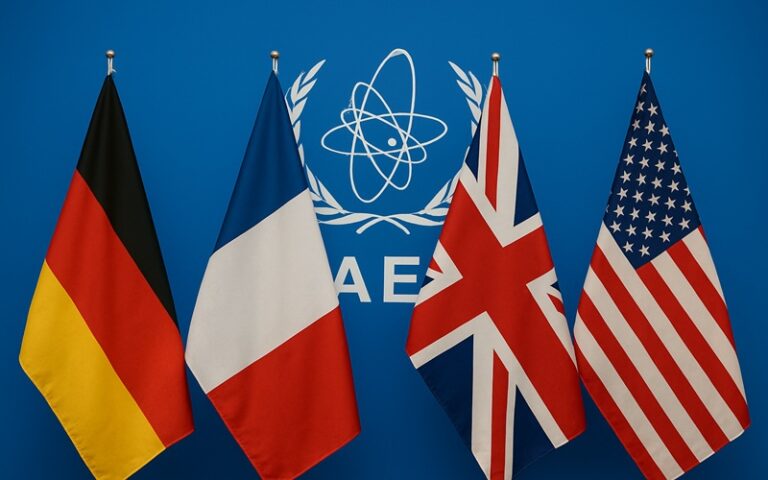
The state-run daily Farhikhtegan, in an article about escalating tensions, warned of the possibility of military conflict and the formation of global consensus against Iran’s regime if the European countries potentially activate the so-called “snapback mechanism.”

On Monday, August 3, Farhikhtegan reported that if sanctions are reimposed, measures such as a ban on arms sales to Iran, freezing assets linked to sanctioned entities such as the Islamic Revolutionary Guard Corps (IRGC) and Iran Shipping Lines, mandatory inspections of suspicious cargo, and a ban on financial and insurance services in the nuclear field will be on the international community’s agenda.

European Troika: We Are Ready to Activate the Snapback Mechanism

The newspaper wrote: “Oil sales are not directly subject to UN Security Council sanctions. Although the scope of UN sanctions is narrower compared to the unilateral sanctions imposed by the U.S. and Europe, they carry greater psychological and diplomatic weight due to their multilateral nature. Moreover, because of the interpretability of the sanctions language, member states can implement these sanctions strictly or leniently based on their political will.”

According to Farhikhtegan, Russia’s refusal to deliver the S-300 missile system to the Iranian regime and Pakistan’s decision to halt the gas pipeline project from Iran to Pakistan and India—known as the “Peace Pipeline”—are examples of how political will shapes countries’ implementation of sanctions.

In recent days, speculation has intensified regarding the European troika’s decision to activate the snapback mechanism.

Officials of the Iranian regime, during a meeting in Istanbul with representatives from Germany, France, and the United Kingdom, threatened that if the snapback mechanism is activated, Tehran will withdraw from the Nuclear Non-Proliferation Treaty (NPT).

Return of sanctions and “political legitimization of military actions”

Farhikhtegan continued its report by warning that the activation of the snapback mechanism, in addition to its economic and trade consequences, could lead to the formation of a “global consensus against Iran.” It wrote: “The return of UN Security Council resolutions imposes two risks on Iran: the economic consequences of the reinstated sanctions on Iran’s economy, and the groundwork for securitization and potential military action against Iran.”

Iran’s Regime Threatens to Cause Insecurity in the Region If Snapback Sanctions Are Enacted

The newspaper added: “Countries can use the sanctioning environment created by the UN Security Council to politically legitimize military actions, even if those actions lack legal legitimacy.”

According to this report, Tehran’s potential move to withdraw from the Nuclear Non-Proliferation Treaty (NPT) in response to the European troika could escalate tensions both regionally and globally, and increase the likelihood of military confrontation.

Alaeddin Boroujerdi, a member of the National Security Commission in the Iranian regime’s parliament, stated on July 29 that during the Istanbul negotiations, European countries sought a six-month extension before using the trigger mechanism, but Iran’s regime rejected the proposal.

The “vital” role of China and the UAE

Farhikhtegan also addressed the “vital” role of China and the United Arab Emirates as Iran’s economic partners, warning that the return of international sanctions could affect Tehran’s economic ties with Beijing and Abu Dhabi.

The newspaper wrote: “In recent years, the UAE has become Iran’s main hub for financial and goods exchange, under tacit U.S. approval. A large portion of Iran’s imports of essential goods comes through the UAE. If sanctions return, the United States may invoke UN Security Council resolutions to demand that the UAE limit its economic ties with Iran.”

The newspaper added: “China is Iran’s main oil buyer and the second-largest exporter of goods to Iran. Past sanction experiences show that Beijing has taken a dual-track approach… What is certain is that China will not openly defend non-compliance with UN sanctions, but it may implement them in a limited and interpretive manner. Therefore, a gradual reduction in trade relations (rather than a complete cut-off) is likely.”

On August 3, The Jerusalem Post, citing Chinese researchers, reported that the “Ayatollah’s regime” in Iran is on the brink of collapse and no longer aligns with China’s strategic interests in the region.

Al-Hadath TV reported that the United States, as part of its efforts to achieve its objectives regarding Iran’s nuclear program, is consulting with China to stop it from continuing oil purchases from Iran.

According to the report, Beijing, in response to Washington’s pressure, has stated it would be willing to halt imports from Tehran—if it can receive oil at a lower price elsewhere.

Iranian Regime’s FM: Government Remains Committed to Legislation Suspending Cooperation With IAEA

Kazem Gharibabadi, deputy foreign minister of the Iranian regime, stated during a session of the National Security and Foreign Policy Commission of the parliament that the government is committed to the law suspending cooperation with the International Atomic Energy Agency (IAEA).

Ebrahim Rezaei, spokesperson for the Majlis (Parliament) National Security Commission, said on Sunday, August 3, that Gharibabadi presented a report to the commission about the Istanbul meeting with the three European countries, as well as his recent trip to New York.

A Decade After the Signing of the JCPOA, Will the Snapback Mechanism Be Triggered?

Rezaei quoted the deputy foreign minister as emphasizing that the law passed by parliament regarding the suspension of cooperation with the IAEA is “mandatory and enforceable.”

Meanwhile, Al Mayadeen, a Lebanese outlet affiliated with Hezbollah, reported on August 3—citing “informed sources”—that during next week’s visit by IAEA officials to Tehran, a “new chapter” in relations between the two sides will begin.

The outlet added that the upcoming trip is “political” in nature and that IAEA inspectors will not be part of the visiting delegation.

On July 2, Iranian regime president Masoud Pezeshkian issued an executive order to implement the law titled “Obliging the Government to Suspend Cooperation with the International Atomic Energy Agency.” This law had previously been approved by the regime’s parliament and ratified by the Guardian Council.

Gharibabadi: Europe has no right to trigger the snapback mechanism

Continuing his remarks in parliament, Gharibabadi stated that Iranian regime foreign minister Abbas Araghchi had sent a letter to the UN Secretary-General and members of the Security Council, declaring the activation of the snapback mechanism to be “legally and procedurally unfounded.”

Gharibabadi said: “The European countries have not honored their commitments under the nuclear agreement and therefore have no right to activate the snapback mechanism.”

He added: “In terms of sanctions, activating [the snapback mechanism] does not add anything new to the existing sanctions, but it has psychological effects that must be managed.”

On August 2, German Foreign Minister Johann Wadfull stated that Tehran’s long-range missile program threatens not only Israel but also Europe and must be part of the negotiations with the Iranian regime.

He also said he did not have much hope for the success of these negotiations.

Gharibabadi further emphasized that the Iranian regime is coordinating with China and Russia on how to respond to the potential activation of the snapback mechanism by the European troika, and that a trilateral meeting has already taken place.

Gharibabadi’s remarks about coordination between Tehran, Beijing, and Moscow on the Iranian regime’s nuclear dossier come amid previous criticisms regarding the level of support China and Russia have shown for Iran’s regime during Israeli attacks.

On August 3, Yadollah Javani, the IRGC’s political deputy, responded to these criticisms—specifically, why China and Russia did not support Iran during the 12-day war—by saying that Tehran had not asked them for assistance.

He added: “Long-term agreements with these two countries do not obligate them to defend the Iranian regime during wartime.”

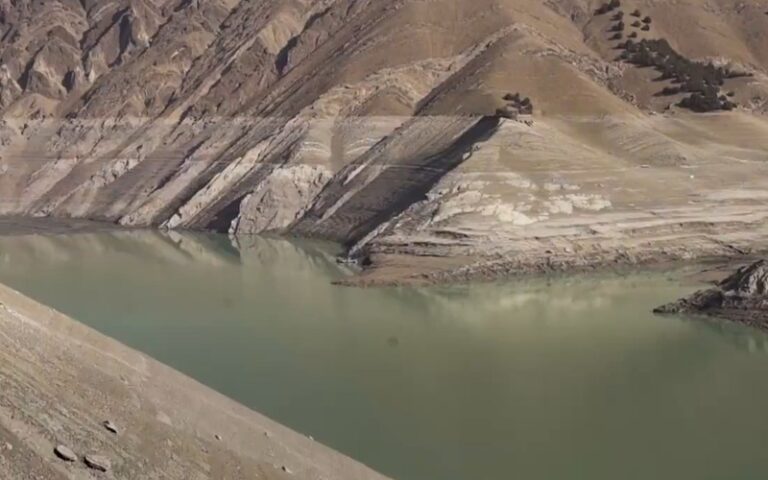
Water Reserves in 19 Major Iranian Dams Fall Below 20%

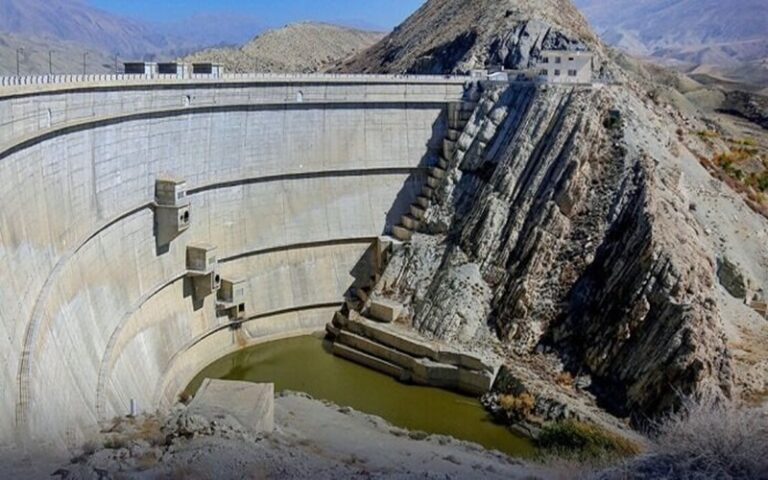
As Iran’s energy crisis intensifies, a new report reveals that the water reserves in 19 of the country’s major reservoir dams have dropped to below 20%.

On Sunday, August 3, Iranian media published statistics showing that from the beginning of the water year to August 2, only 23.26 billion cubic meters of water have flowed into Iran’s dams.

This figure reflects a 42% decrease compared to the 40.2 billion cubic meters recorded during the same period last year.

Industry Struggles and Public Anger Grow Amid Water and Power Crisis in Iran

Currently, there are around 22.02 billion cubic meters of stored water in the country’s dams, yet 57% of total dam capacity remains empty.

The situation is even worse for the major dams that supply drinking and agricultural water.

According to reports, more than 80% of the storage capacity of 19 major and vital dams in Iran is empty.

Among these dams, 16 are classified as being in a “red” status, with water reserves ranging from 0% to 15%.

Shamil and Niyan dams in Hormozgan are at 0%. The combined reserves of the Golestan and Boostan dams in Golestan Province stand at 1%, Rudbal in Fars Province also has 1%, Esteghlal Dam in Hormozgan has 4%, and both Lar in Tehran and Doosti in Razavi Khorasan have 6%.

Other dams on this red list are located in provinces such as Gilan, Kerman, Zanjan, Baluchestan, Markazi, and South Khorasan.

The water levels behind Amir Kabir (Karaj), Lar, and Latian dams have reached their lowest points in modern history.

This represents a state of water bankruptcy, with irreversible damages.

On August 3, Mohsen Biglari, a member of parliament from Saqqez and Baneh, reminded the chamber that the country’s drinking water needs are less than 10%, and addressing regime president Masoud Pezeshkian, said: “It is not fitting for any government to be unable to manage such a small amount of drinking water to prevent its people from facing hardship.”

Mohammadreza Rezaei Koochi, head of the parliament’s Construction Commission, also stressed that due to the “lack of proper forecasting by the Ministry of Energy,” Tehran is now facing a serious shortage of drinking water.

According to Rezaei Koochi, the rise in population and rainfall patterns had made this situation foreseeable, but proper planning was not carried out.

The MP said the Ministry of Energy is attempting to solve Tehran’s problem by transferring water from dams in neighboring towns but added: “This is not a fundamental solution.”

Abbas Keshavarz, research deputy of the National Water Studies Center at Iran’s Chamber of Commerce, also told the state-run ILNA news agency that the situation had been trackable since the start of spring. He added: “Why were no measures taken in March and April, and now we have reached a crisis?”

He described the situation as “a strategic failure in water policy and management.”

It Would Take 70,000 Years to Restore Iran’s Groundwater Resources

As Iran’s water crisis intensifies, Mohammad Darvish, an environmental activist, stated that restoring the country’s groundwater resources would require at least 65,000 to 70,000 years. At the same time, a British publication warned that Tehran may be only weeks away from “Day Zero”—the day when water taps in the city run dry.

The state-run Etemad newspaper, on Saturday, August 2, published a report titled “We Must Wait 70,000 Years for Groundwater to Return,” citing environmental expert and university professor Mohammad Darvish. The article noted that Iran has reached a stage of desertification so advanced that even if water extraction stops, the aquifers cannot be restored.

Water Crisis in Iran: An Uncertain Future

Darvish explained that Iranians have extracted 150 billion cubic meters more than what has been naturally recharged into aquifers over the past three decades. This has led to land subsidence across at least 57,000 square kilometers, averaging one centimeter per year.

In an interview with Etemad, when asked, “So, should we never hope for groundwater restoration?” Darvish responded: “You can wait, for at least another 65,000 to 70,000 years. If you have the patience, you can hope that groundwater conditions will return to their ideal state.”

According to Darvish, today’s situation in Iran is the result of years of excessive extraction and neglect of aquifer replenishment.

He described Iran’s condition as the “final stage of desertification,” stating that many lands no longer have the capacity for construction, road-building, or even laying pipelines and towers, and are effectively unusable.

According to Darvish, based on a report by the Geological Survey of Iran, annual land subsidence now affects 100,000 square kilometers, reaching a rate of two centimeters per year—up from just 11,000 square kilometers in 2016. This alarming growth signals the rapidly accelerating nature of the crisis.

Weeks Away from Day Zero

The British magazine The Week reported on Iran’s critical water situation, stating that Tehran—a city of 10 million—may be only weeks away from Day Zero.

The publication defined Day Zero as the day when water taps across large parts of Tehran run completely dry.

According to the report, Iran is on the brink of water bankruptcy—a crisis driven by drought, climate change, and mismanagement of resources. Analysts warn that it could become a serious threat to Iran’s regime.

At the same time, Tehran’s water authority announced the closure of public restrooms due to water shortages—a decision that seriously impacts the daily lives of children, workers, patients, and city commuters.

Masoud Pezeshkian, the president of Iran’s regime, warned on July 31 that the country is “on the verge of a serious water crisis.”

He had previously stated: “If urgent decisions are not made, we will face a situation in the future that will not be solvable.”

The Week, referring to statements by regime officials, wrote that the water shortage crisis is not only due to recurring droughts, but also the result of excessive groundwater extraction, inefficient agricultural practices, and uncontrolled urban water consumption.

Experts warn that without long-term planning and immediate reform of consumption patterns, the water crisis could not only fuel social unrest but may also become a serious threat to the country’s environmental and political stability.