


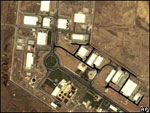
 Reuters: Iran has been setting up extra equipment which could improve the way it enriches uranium to higher levels, diplomats said, a move which shows Tehran seeking to enhance its atomic work as big powers discuss new sanctions.
By Sylvia Westall
VIENNA (Reuters) – Iran has been setting up extra equipment which could improve the way it enriches uranium to higher levels, diplomats said, a move which shows Tehran seeking to enhance its atomic work as big powers discuss new sanctions.
Iran first started enriching small amounts of uranium to higher levels in February, saying it wanted to make fuel for a medical research reactor. This raised Western suspicion as Iran is seen to lack the ability to make the fuel assemblies needed.
Western powers, which called the move provocative, fear the Islamic Republic ultimately aims to stockpile potential material for nuclear weapons. Iran says its aims are purely peaceful.
Iran has been using one set or “cascade” of 164 centrifuge machines to refine small amounts of uranium to up to 20 percent purity, according to the International Atomic Energy Agency’s last report in February.
But a system using just one cascade is inefficient, analysts said, as it produces a large proportion of leftover low-enriched uranium (LEU) alongside the sought-after highly enriched material.
In recent weeks Iranian officials have been adding a second cascade at the Natanz pilot plant to allow the leftover material to be re-fed into the machines more easily, obtaining its full potential and making the work more efficient, diplomats said.
“The second cascade is aimed at supporting the work of the first,” a Western diplomat said. It is not yet operational.
The changes do not appear be aimed at increasing the amounts produced or to raise the enrichment level further, moves which would ring alarm bells, diplomats said. But they said the second cascade could be reconfigured to do this should Iran decide to.
This is why the IAEA has been trying to boost monitoring at the site. The work also shows Iran seeking to improve its technique should it wish to expand later.
“It contributes to their knowledge of how to do this recycling at higher levels of enrichment,” said Mark Fitzpatrick of London’s International Institute for Strategic Studies.
“Any acquisition of such tacit knowledge, of knowledge that comes from actually doing the operation, does contribute to any future effort to push for highly enriched uranium.”
The IAEA declined to comment.
KEEPING TABS
Western officials fear Iran’s decision to enrich to higher levels is ultimately meant to advance it on the road to generating arms-grade uranium — refined to 90 percent purity.
Iran denies this and says its operation will only produce 20 percent refined uranium with a capacity of 3 to 5 kg a month, enough to make fuel for the research reactor.
Since the higher enrichment started, the IAEA has sought to improve monitoring and inspections at the site. Talks with Iran have yielded some progress, but IAEA chief Yukiya Amano said earlier this month that arrangements were still not “proper.”
The better monitoring is key because inspectors need to ensure the work is not being diverted for military purposes.
Tehran has said it was forced to enrich to higher levels after the breakdown of a fuel deal with Western powers and IAEA, under which it would have sent 1,200 kg of its low-enriched uranium abroad in return for fuel rods for the medical reactor.
“Iran’s moves make it clear that it is not serious about the fuel proposal,” another Western diplomat said.
The Islamic Republic has voiced optimism about Turkish and Brazilian mediation efforts to revive the fuel offer. Western officials have dismissed the moves as stalling tactics.
(Editing by Philippa Fletcher)


