


 AP: Iran authorities have threatened to take legal action against gold merchants in Tehran’s main bazaar if they don’t call off their two-week-old anti-tax strike, local media reported Thursday.
The Associated Press
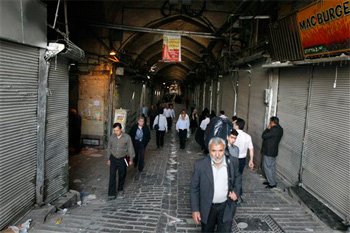 TEHRAN, Iran (AP) — Iran authorities have threatened to take legal action against gold merchants in Tehran’s main bazaar if they don’t call off their two-week-old anti-tax strike, local media reported Thursday.
Iran’s government has been trying to find ways to boost revenue — including by raising taxes — amid low oil prices and other woes that have hampered the country’s ailing economy. But it has had to be cautious in the face of widespread public discontent.
Several newspapers, including the state-owned Jamejam and the Donya-e Eqtesad economic daily, quoted Tehran chief prosecutor Abbas Jafari Dowlatabadi as saying the “judiciary will confront whoever disturbs public order by closing the bazaar.” He did not elaborate.
Tehran’s gold merchants began their strike in September to protest a government plan to impose a 3 percent sales tax. Iran suspended the tax in 2008 after a rare strike by merchants, who fear it could lead to more income tax in the future.
Experts say the tax will make the merchants’ income more transparent.
The merchants — known as bazaaris in Farsi — are a powerful sector, and a series of merchant strikes helped lead to the 1979 Islamic revolution that toppled the pro-U.S. shah. Since then, the bazaaris have been seen as a religiously conservative bedrock of support for Iran’s Islamic clerical leadership.
The battle over taxes comes as Iran wrestles with a slew of economic troubles.
The country has been hit hard by lower revenues from oil, which brings in some 80 percent of the state’s income. Even before the drop in oil prices, the government of President Mahmoud Ahmadinejad talked of dramatically cutting subsidies on fuel, food and other items in a bid to cut the budget.
But so far, the government has stayed away from substantial changes in the subsidies system, apparently wary that it fuel greater price increases and stoke public anger. Authorities say they have succeeded in bringing inflation down to less than 10 percent, but some experts believe it is more than 20 percent on certain basic needs.
Iran’s economy has also been hit by U.N. sanctions over Tehran’s disputed nuclear program.


